Interview with Festival Director Miguel Sevilla (CINEMATOGRAFO INTERNATIONAL FILM FESTIVAL)

The CINEMATOGRAFO Originals Contest gives voices to emerging Filipino filmmakers from around the world. It is an annual competition that provides seed grants worth up to $100,000 for full-length features, either documentary or narrative.

Matthew Tofolo: What is your Film Festival succeeding at doing for filmmakers?

Miguel Sevilla: Our festival centers in on a new generation of Filipino-American filmmakers who offer a different perspective owing to their different upbringing and experiences. Our festival aims to showcase this new generation and put them on the world stage, along with the best of the world.

What would you expect to experience if you attend the festival this year (2017)?

Attendees can expect to experience new visions, new perspectives and new stories from a generation of storytellers that are part of the Filipino diaspora. Filipinos are one of the most migrant populations in the world and can be found in all corners of the world where they thrive in any industry.

What are the qualifications for the selected films?

As mentioned, we are looking for stories from the Filipino diaspora. The themes and genre may vary but what is important is that the filmmaker is part of the migrant Filipino generation, growing up and experiencing a different kind of life abroad from other Filipinos.

Do you think that some films really don’t get a fair shake from film festivals? And if so, why?

Over the years, we’ve seen a lot of niche film festivals launch alongside the major festivals. While the big ones showcase the elite art house content, that’s not to say that there is no market for films with a unifying theme or specialized content. The reality is that you can only program so much into a festival, and every film can’t be in Cannes or Sundance. But it’s a big world, a diverse world – and so are the stories in it. And as long as there is interest, there will be an audience. And festivals offer that platform where the audience can find those movies.

What motivates you and your team to do this festival?

Until now, there has been no institution that has given production grants solely to Filipino-American filmmakers. Our team’s passion is fueled by the Filipino’s passion for storytelling, wherever they may be in the world. And it’s about time we put that passion front and center.

How has your FilmFreeway submission process been?

Overwhelming. We received four times the number of submissions we expected and thus, are truly grateful for everyone who showed their support for the festival

Where do you see the festival by 2020?

Aside from being the premier Filipino-American film festival, I see the festival branching off into educational, training and technical support for all Filipino filmmakers outside the Philippines. I see the festival as a resource for all storytellers, unifying them into a vibrant community.

What film have you seen the most times in your life?

Chinatown by Roman Polanski

In one sentence, what makes a great film?

More than escapism, any film that makes you consider a point of view that you never had before and conveys empathy for a character that is truly opposite from who you are is most likely a great film.

How is the film scene in your city?

Incredibly diverse. The Bay Area is a melting pot for different cultures and the interests of moviegoers vary to a great degree.
 

cinematografo1.jpg

____

Interviewee Miguel Sevilla. Screenwriter, novelist and filmmaker, born and raised in the Philippines. Now based in California. Made directorial debut in 2008 with Cul de Sac. Nominated for FAMAS (Filipino Academy of Movie Arts and Sciences) in 2010.


Interviewer Matthew Toffolo is currently the CEO of the WILDsound FEEDBACK Film & Writing Festival. The festival that showcases 20-50 screenplay and story readings performed by professional actors every month. And the FEEDBACK Monthly Festival held in downtown Toronto, and Los Angeles at least 2 times a month. Go to www.wildsound.ca for more information and to submit your work to the festival.

SUBMIT your TV PILOT Screenplay or TV SPEC Script
Voted #1 TV Contest in North America.
Screenplay CONTESTSUBMIT your Short Screenplay or FEATURE Script
FULL FEEDBACK on all entries. Get your script performed
Screenplay CONTESTFIRST SCENE (first 10pgs) Screenplay CONTEST
Submit the first stages of your film and get full feedback!

Interview with Festival Director Edda Manriquez (Les Femmes Underground Film Festival)

 The International Les Femmes Underground is a film festival centred on the subversive, unique, and innovative. LEFUFF, showcases artists from all walks of life creating work which redefines the manner in which women are represented in mainstream cinema. Making its debut in 2016, Les Femmes Underground is premiering in Los Angeles as the first ever traveling women’s underground film festival. Les Femmes Underground was created as a response to the decline of feminist icons and role models in the media. As feminists, they believe it is our responsibility to empower new generations of young women to generate work which breaks away from society’s gendered roles.

http://lesfemmesinternational.org/
 
Matthew Toffolo: What is your Film Festival succeeding at doing for filmmakers?

A: LEFUFF, is an underground women’s traveling film festival featuring work from intersectional feminist artists from all around the world. We provide fee waivers for at need artists, low pro-rated submission rates, and offer opportunities for artists to attend through our traveling component. We bring films to the locations with the most artists; thereby alleviating costs of travel. Our festival features the gritty, raw undervalued marginalized stories and people in our community. A lot are emerging diy artists whose approach is millennial in aesthetic featuring digital, film, video, and glitch forms. We provide a space through which narrative artists can transition and experience experimental work, as well as a space where experimental filmmakers can glean and learn from narrative artists. We provide an edgy artistic underground world of queer-trans , experimental, phycho-trophic non-heteronormative art forms as well as insight into different cultures and the differences which bring us together as a community.

MT: What would you expect to experience if you attend the festival this year (2017)?

A: Our lineups are divided into 5 sections. This year we have included a documentary portion to our festival, where marginalized characters are examined. Our second portion showcases experimental work such as glitch art, experimental animation, and psycho-trophic films. Our third section features coming of age narrative shorts where the characters undergo cultural clashes and self-acceptance. Our fourth section features horror shorts, where we will showcase horror from a female lens. The last section is our adult rated showcase, where female sexuality will be examined through a variation of shorts.

MT: What are the qualifications for the selected films?

A: Films must be directed, produced or written by female artists or have strong female leads. The films can be made by men, after all feminists come in all shapes and forms, the only requirement that women aren’t one dimension.

MT: Do you think that some films really don’t get a fair shake from film festivals? And if so, why?

A: The world of film is split into 2 major demographics. Hollywood and Indie Films. As most have made a reference to in the past couple years is that Hollywood is now Super Hero movies, and Indie is none other than large production companies making drama genre films. AKA not super heros. Then that leaves the rest of us…. Well more like then there’s commercial films ( people with good cameras who shoot boring basic content) …. And then the rest of us… the artists. The people who want more than just a pop-up book of movies. We crave substance, form, and mental stimulation. There in lies the bias in film festivals. If you look like you belong in Sundance due to your budget and the quality of camera you have then you are chosen. The quality of story is boring and has been seen many times before. If you have a budget for special effects.. you get in. If you have a celebrity in your film… you’re in. Why? Because most festivals want numbers. They want attendees, and celebrities bring that to you. They bring revenue. But they don’t bring diversity other than their token minorities with stories to claim to feature hardships of certain demographics, but are often directed by white rich men. So some films don’t make the cut. Then theres the world of experimental films, and those can be biased too. They have their own underground world of celebrities. If you are a certain name then you will play because you bring prestige to the festival . And so many times, people aren’t given opportunities. Also they don’t teach you this in art school or film school, festivals prefer shorter pieces to program more. So anything under 11 mins are preferred and 20 mins is pushing it. You have to remember these people are watching hundreds of movies. We’ve seen the same movie over and over again, or more like the same plot lines being retold. So yours has to stick out within the first shots. Also you can have an awful camera but if your sound is good and your story is compelling then you have a chance as a indie filmmaker.

MT: What motivates you and your team to do this festival?

A: We want to create a positive social change for women in the media cinematic arts. As a minority female artist, I understand my resume is skipped because I have a latin last name. I know because I am female I will also be questioned by production companies when it comes to tech knowledge. I know this because I’ve been there. I know because I have experienced being spoken over and disregarded. So we do this because we are all intersectional feminists, some of us are minorities, some of us are queer, some of us are male, some of us are Caucasian. We have the gambit of participants. So we know what it means to have to push against adversity. We do this so we can succeed as a community, to change the way films and women are viewed through different mediums of art.

MT: How has your FilmFreeway submission process been?

A: FilmFreeway is intuitive, it helps tracking and allows very easy sharing among other judged. Withoutabox is still very much a task. I want to compare it to apple vs pc. One just has more steps to customize. Filmreeway gives you the indie flavor and withoutabox has a lot of great narrative pieces with higher budgets. They both offer great resources and diverse options.

MT: Where do you see the festival by 2020?

A: We hope to continue to grow and eventually offer grants to at need artists to continue with their art. We would have traveled a couple more cities, as we did Venice Los Angeles last year and will be doing San Diego this year.

MT: What film have you seen the most times in your life?

A: Funny enough I realize that my favorite film isn’t the best in technique, its not artistic, and its not a cinematic masterpiece. It’s the film which first made me feel something. It awakened a sense of awe, it gave me a desire to story tell. It was a film which created a world outside of myself, and of course it was none other than the very basic yet wonderfully whimsical Casper. Yes the kids film. Yes Christina Ricci. Yes my CalArts professors would be smacking me in the face for choosing this. But its true, I have watched this more times than I can count. I don’t need to think. I don’t need to analyze. It just is. Artists often look at me in disgust when I say this. But I believe this to be the most honest non-pretentious truth. This film changed my life when I was 8 years old. I started to write after that. It was raw and it was real and I still love it. Now if you were to ask me my favorite art film… then id get snooty pretentious… because I did go to an experimental Disney school.

MT: In one sentence, what makes a great film?

A: A great film makes you question or embrace your understanding of the world.

MT: How is the film scene in your city?

A: Los Angeles. Right. The capital of film, over stimulation. It is everywhere. It is the Mecca. There’s all kinds of underground societies as well as Hollywood. There’s a huge network of artists out there, grant it I am more familiar with CalArts inspired universes.
 

lesfemme1.jpg

Interviewee: Edda Manriquez- Edda graduated with an MFA in film and video from CalArts and received her BA at UC San Diego. She is southern California based feminist experimental filmmaker and performance artist. She founded LEFUFF in 2015 along side David Leopoldo Gonzalez. She currently works for the Getty Research Institute and is a community activist and educator. She now lives with her pet dog in Santa Clarita.

_____

Interviewer Matthew Toffolo is currently the CEO of the WILDsound FEEDBACK Film & Writing Festival. The festival that showcases 20-50 screenplay and story readings performed by professional actors every month. And the FEEDBACK Monthly Festival held in downtown Toronto, and Los Angeles at least 2 times a month. Go to www.wildsound.ca for more information and to submit your work to the festival.

Interview with Festival Director Matt Croyle (Oil Valley Film Festival)

At the Oil Valley Film Festival, their mission is to bring the voices and films of new and established filmmakers to the heart of Venango County, an area underrepresented in the world of film. Located in Oil City, Pennsylvania, and nestled in the foothills of the Appalachian mountains, attending the Oil Valley Film Festival will grant you the experience of watching engaging cinema within an intimate community with a rich history.

http://oilvalleyfilmfestival.weebly.com/
 
Matthew Toffolo: What is your Film Festival succeeding at doing for filmmakers?

A: Well, we’re only a year in. This year is year two, but I think we’re heading down such a great future track as far as what we’re capable of providing for filmmakers. The “in competition” selections not only get the notoriety of being selected as just that, but each selection is in competition in every award category. Every screenwriting entrant receives an updated copy of the Hollywood Screenwriting Directory, and that’s just for submitting. We’re partnered with the Writers Store for the second year, and the directory is the premiere resource for screenwriters everywhere. It includes industry contacts, writing tips and advice, and is just a priceless addition to a career as a screenwriter.

Outside of those immediate benefits, filmmakers from all over the globe are able to get their films in front of a rural audience. I think it’s imperative that rural audiences get to connect with filmmakers they may not know, filmmakers outside of what flicks are being shown in their local multiplex. We offer that opportunity not only for a rural audience, but the filmmakers too.

MT: What would you expect to experience if you attend the festival this year (2017)?

A: Attending the Oil Valley Film Festival this year will, again, be an intimate gathering of filmmakers, audience members, and the festival staff. We’re in the process of adding panel events this year, which can give audience members an opportunity to learn about the different aspects of creating and marketing movies, but it gives filmmakers and writers the chance to network, and talk about their projects and experiences in doing so. If you want to get away from the city, spend a few days in the beauty of rural Pennsylvania, and enjoy quality cinema from around the globe, then our festival is for you.

MT: What are the qualifications for the selected films?

A: The films selected to screen at our festival go through a vetting process which includes our festival judiciary committee, which consists of filmmakers, producers, and cinema enthusiasts. It’s a select group, and they know their stuff. Each committee member is assigned with specific categories, with the final decision coming down to myself as director of the festival. We’re looking for amazing storytelling and production value, even if you don’t have the budget for the latter. Effort is imperative. Our selected films, while varying in many aspects, all find a distinct way to connect to our audiences on a personal level – as I feel quality cinema should. All selected films must not have been released theatrically or online. Premiere status isn’t a factor.

MT: Do you think that some films really don’t get a fair shake from film festivals? And if so, why?

A: I do think some films don’t get a fair shake. A lot of the established festivals, while they are amazing events and great opportunities for filmmakers, seem extremely selective anymore in order to ensure audiences show up, in order to sell tickets / passes. While some unknown filmmaker – with an amazing first feature – may be on the fence, pitted against a name filmmaker with a so-so flick, an established festival may go the route of the latter for the fact that they know more people will attend the established filmmaker’s screening, even if that film isn’t as good. But, then again, “good” is subjective. We have to remember that movies, like anything else, are a business, and that’s especially true on the festival end of the industry.

MT: What motivates you and your team to do this festival?

A: I think the thing that motivates us more than anything is our love of movies. It’s really that simple. Growing up I always got excited when I saw a new film that spoke to me, and I couldn’t wait to run and tell my friends about it, set them down and watch it with them, watch their reactions. This festival is almost an extension of that same excitement. But now, as an adult, I have a larger venue in which to share that excitement with more people than just my friends. It’s finding a way to connect a lot of people with movies that mean something.

MT: How has your FilmFreeway submission process been?

A: I cannot say enough great things about FilmFreeway. Their service is absolutely integral to our submission process. It’s organizationally comprehensive, yet simple enough for your entire team to use. Their online marketing options are worth the time, and they’re fairly priced. We’ve already received half of our total submissions from last year by this year’s early bird deadline.

MT: Where do you see the festival by 2020?

A: Well, 2020 will be our fifth year. By then I would love for us to be an Academy-Award qualifying event for short films. That seems quite doable at this juncture, by the way we’re steadily growing. It’s not out of reach. And, by our fifth year, I hope that we can establish ourselves as a premiere event in Pennsylvania. There’s a lot of love for the process of filmmaking here, and a great reception for quality cinema from the people in the area.

MT: What film have you seen the most times in your life?

A: Wow. That’s a tough question. I’m not exactly sure which film I’ve seen the most, but I will say that I can probably recite every line from both Peter Jackson’s ‘The Fellowship of the Ring’ and Kevin Smith’s ‘Clerks II.’

MT: In one sentence, what makes a great film?

A: How about one word? “Connection.” Everyone has a favorite film. If you connect to it, it’s “great” to you.

MT: How is the film scene in your city?

A: Oil City, Pennsylvania isn’t the hub of film in the area, but we’re looking to make our mark with what we do at the Oil Valley Film Festival. It’s nice for film lovers here for the fact that we’re about halfway between Pittsburgh and Erie, and we’re looking to bridge that gap not only with the film festival, but by making our own films here – promoting the area for other productions is another thing we’re striving to do. We’re a Rust Belt city, but that doesn’t mean there isn’t a love and need for culture and art here. We’re adding to that need, helping it to grow.

oilvalley1.jpg

_____

Interviewer Matthew Toffolo is currently the CEO of the WILDsound FEEDBACK Film & Writing Festival. The festival that showcases 20-50 screenplay and story readings performed by professional actors every month. And the FEEDBACK Monthly Festival held in downtown Toronto, and Los Angeles at least 2 times a month. Go to www.wildsound.ca for more information and to submit your work to the festival.

Interview with Festival Founder Matt Beurois (Paris Art and Movie Awards Film Festival)

The Paris Art and Movie Awards is the leading independent film festival in Paris. The « PAMA » has been ranked, as soon as its second year, the second festival not to miss in Paris, by The Culture Trip Magazine. Their goal is to help independent filmmakers screening their films, awarding them, show their films to high level industry talents and public figures.

http://parisartandmovieawards.com/

Matthew Toffolo: What is your Film Festival succeeding at doing for filmmakers?

A: The best feedback proof we have is filmmakers coming back to the PAMA and submit again when they have a new film. They tell us our festival is a real opportunity to network. We had directors finding actresses, we had filmmaker matching with a producer, scriptwriters connecting with directors. And of course with the audience. We’re going to try and continue this so the Paris Art and Movie Awards stay human and films connected.

MT: What would you expect to experience if you attend the festival this year (2017)?

A: As we move to a new movie theatre every year, audience and filmmakers will have the films screen in a new location in 2017 again. Every year we get bigger in attendance, so in seats capacity.

Also the Judges : we usually have about 5 international judges. We had Mark Dacascos, and French legendary actor Alain Doutey. This year, we already announced 10 judges, and I can tell you two more are coming, minimum.

MT: What are the qualifications for the selected films?

A: We’re looking for quality of course, but we’re not ashamed to say we’re expecting ambition. The PAMA is the leading independent film festival in Paris, and we want to screen and promote filmmakers who want to reach out, to jump out of the box, to achieve something. Out selection process rewards the ambition you have, and how you manage to make a movie, to fully complete it, which is no easy task.

MT: Do you think that some films really don’t get a fair shake from film festivals? And if so, why?

A: It is less and less true. Because there are more and more film festivals, and that’s, in some ways, good for filmmakers : they can target the events that fit them, where their films will be a match. What I personally think, is that there is a huge gap between the A-Class worldwide film festivals, and the indy festivals. This is why the Paris Art and Movie Award was created ; to stand there, remain accessible, but clearly offering high quality screenings, events, networking.

MT: What motivates you and your team to do this festival?

A: The people. The filmmakers, and the lovers of cinema. During the 2016 opening speech of the festival, I said we care about the people who make the films, and I mean it. When you se all the artists and filmmakers that stayed in touch after the different editions of the festival, that is truly rewarding to us. That feeling makes me want to go on and on for that.

MT: How has your FilmFreeway submission process been?

A: We just opened submissions, and that’s amazing : that’s the biggests start we had since the creation of the festival. It’s like people were somehow expecting us to accept entries and… Here we are !

MT: Where do you see the festival by 2020?

A: I would love the festival to reach a large venue, and even several venue to host the many screenings and events. 2020, I’d also say we’ll have secured partnerships with USA and the festival being included in an international network connecting Paris, Los Angeles, Vancouver and London…

MT: What film have you seen the most times in your life?

A: The Frighteners, by Peter Jackson. The perfect, most ignored and under-estimated feature by Jackson, which is the perfect balance between comedy and genre. And Terminator 2 by James Cameron. One of the film that founded my love for cinema.

MT: In one sentence, what makes a great film?

A: Not a sentence, a word: script.

MT: How is the film scene in your city?

A: The festival scene is booming, but I wonder how many festivals will still be around in two to three years. As for the movie business in Paris, the films in the middle -between 1 and 4M€ budget- are disappearing and that’s a dramatic loss for independent filmmakers. The influence of Luc Besson did some real good, for tax rebate and obviously to give something the new generation of artists can build from. Regarding the independent short films scene, it is hard to tell as it’s mostly in the dark. I will tell you that when we’ll have the 2017 selection at the PAMA.


parisart1.jpg

_____

Interviewer Matthew Toffolo is currently the CEO of the WILDsound FEEDBACK Film & Writing Festival. The festival that showcases 20-50 screenplay and story readings performed by professional actors every month. And the FEEDBACK Monthly Festival held in downtown Toronto, and Los Angeles at least 2 times a month. Go to www.wildsound.ca for more information and to submit your work to the festival.

Interview with Festival Director Janet Rose (EQUUS International Film Festival)

 From the heart of the American West, in the cradle of the Northern Rockies, the EQUUS INTERNATIONAL Film Festival fills a niche in international film and media programming with an exclusive focus on the world of EQUUS, and all things equine. It was the first all-equine film event, launching in 2011 with a global view of the equine arena. An outreach project of an equine rescue and adoption organization, our mission is to enhance the equine/human bond and improve the welfare of the horse and other equines through excellence in film, television and other media.

Matthew Toffolo: What is your Film Festival succeeding at doing for filmmakers?

A: It is our greatest hope that the EQUUS INTERNATIONAL Film Festival is giving a voice and a platform to filmmakers for whom equine issues is their focus. For many years, there have been magnificent and important films made about equine topics and issues but there hasn’t been a platform in which to share these incredible stories. Through EIFF, we now hope there is.

MT: What would you expect to experience if you attend the festival this year (2017)?

A: Attending the festival this year is an opportunity to both tell your story in a receptive environment, in a place where film and horses go hand in hand because Missoula is becoming a very significant place for film, filmmakers and film festivals. It’s also a breathtaking environment. So we expect great networking opportunities, great exposure for the films and a magnificent place to experience.

MT: What are the qualifications for the selected films?

A: As it should be with all films, excellent story-telling, great cinematography, an inspiring, interesting or significant subject. But the centerpiece of selected films is that they tell a great story on an equine issue or subject.

MT: Do you think that some films really don’t get a fair shake from film festivals? And if so, why?

A: Absolutely yes. Sometimes the judging criteria are skewed. Sometimes there are just too many good films entered into a festival for all of them to get the best judgment on their entry into the festival. In, other words, sometimes there is simply so much competition, such as with film festivals that have hundreds or thousands of entries, it’s almost impossible to pick out all of the good ones.

MT: What motivates you and your team to do this festival?

A: That’s a really easy question — a passion for the subject matter (equine) and a realization and knowledge that a film festival and the films are incredible tools for raising awareness and promoting an understanding of issues. This is a venue where we can engage, inspire, educate and at the same time provide a platform for filmmakers to share the essence and the “heart” of what they do. That certainly is our goal.

MT: How has your FilmFreeway submission process been?

A: It’s been great – it’s a very easy, affordable way to both receive and review film entries. I think the more we can promote FilmFreeway as a means for filmmakers to get their films entered, it will be a wonderful outlet for film entries. We also love the simplicity and ease of use.

MT: Where do you see the festival by 2020?

A: We hope that the EQUUS INTERNATIONAL Film Festival will continue to grow and become a louder and a stronger voice for films on equine issues. We hope to elevate and enhance its impact as a place for filmmakers whose genre is pretty subject specific to network with a wide range of others in the equine arena with a shared interest. We expect and hope to see an expansion of its impact and its outreach and certainly to build the audience that becomes a more global, international as well as national one. This is currently the premier venue for equine film but we would still like to expand our awards recognition, the festival’s benefits to filmmakers and the global reach of EIFF for the sake of filmmakers, equine advocates and many others concerned with or passionate about equine welfare.

MT: What film have you seen the most times in your life?

A: Oh, that’s a tough one since I don’t generally like to see a film many times over but because it’s a holiday tradition in our home, probably Gremlins. LOL, no horses in that one but it’s still in my mind, about animal welfare. J

MT: In one sentence, what makes a great film?

A: It’s a film that rocks your world, touches you to the core, moves you, inspires you, makes you come away just saying “wow.”

MT: How is the film scene in your city?

A: The film scene in Missoula, Montana is thriving — part of it is probably the incredible setting of the Northern Rockies, some of it is simply that a number of major film festivals had their birth in Missoula, and it’s a creative environment with great subject matter so Missoula is definitely a film capital of the west – casual sophistication mixed with incredible creative inspiration and a backdrop like few others.

equus1.jpg

_____

Interviewer Matthew Toffolo is currently the CEO of the WILDsound FEEDBACK Film & Writing Festival. The festival that showcases 20-50 screenplay and story readings performed by professional actors every month. And the FEEDBACK Monthly Festival held in downtown Toronto, and Los Angeles at least 2 times a month. Go to www.wildsound.ca for more information and to submit your work to the festival.

Interview with Festival Producer Tiha Modrić (History Film Festival)

History Film Festival is an international festival of historical documentary films. The first edition of the Festival will be held in Rijeka, Croatia from September 6 to 9, 2017. History Film Festival is founded and organized by Istra Film, an art association from Rijeka (Croatia). History Film Festival aims at offering viewers and film experts an insight into contemporary film and TV production of historical documentary films, at the same time providing a place where film professionals can meet and share their creative ideas for future projects.

http://www.historyfilmfestival.com/

 
Matthew Toffolo: What is your Film Festival succeeding at doing for filmmakers?

Tiha Modrić: History Film Festival aims at offering viewers and film experts an insight into contemporary film and TV production of historical documentary films, at the same time providing a place where film professionals can meet and share their creative ideas for future projects. Since our submitters come from either independent production companies or TV companies, History Film Festival grants filmmakers an opportunity to present their work and establish new business relations.

MT: What would you expect to experience if you attend the festival this year (2017)?

TM: I am not a person who likes making plans ahead, but I am definitely planning on attending History Film Festival from September 6 to 9, 2017. I hope to meet filmmakers from all over the world, watch great movies, make new friends and contacts which would be important for some future projects. Also, since we are planning to take our guests on a tour around Kvarner Bay (in the Adriatic Sea), present them with the best of our food, wine and culture, I hope that we shall have fun and enjoy History Film Festival’s first edition as much as possible.

MT: What are the qualifications for the selected films?

TM: We accept historical documentaries regardless of their length and year of production. Films are divided in two categories: films by independent production companies and films produced by TV companies. By historical documentary I don’t mean only typical documantaries on World Wars and famous battles, but also documentaries which deal with events, ideas and people who shaped our world and left an indelible mark in human history.

MT: Do you think that some films really don’t get a fair shake from film festivals? And if so, why?

TM: I think that most filmmakers agree with that thesis. In my opinion, the main problem with festivals is always the problem of taste. Also, I think that some wonderful films are left unattended because of shy promotion, insufficient budget and the endless lobby game.

MT: What motivates you and your team to do this festival?

TM: Well, there are countless film festivals around the globe, but neither one of them deals exclusively with historical documentaries. For that reason our festival is really unique.

Since this is the first edition of History Film Festival, our team is doing a wonderful job trying to organize the best possible Festival with available funds and in the years to come maybe ours will be one of those big name festivals. We believe it will be successful.

MT: How has your FilmFreeway submission process been?

TM: From a perspective of a film producer who submitts films to many different festivals, I think that FilmFreeway is a great tool. It is simple, fun and because of it submitting films has never been easier. Regarding our Festival, filmmakers can still submit their films to History Film Festival through FilmFreeway because the official deadline for submissions to our Festival has just started. We are excited about new submissions.

MT: Where do you see the festival by 2020?

TM: 2020 is an important year for the city of Rijeka where History Film Festival will take place because Rijeka has been declared European Capital of Culture for the year 2020. By that time I hope that our Festival will become acknowledged around the world, that it will establish a strong institutional and financial backup and most importantly that it will attract more and more filmmakers and viewers. If it becomes famous maybe we won’t need to charge submission fees anymore 

MT: What film have you seen the most times in your life?

TM: There are three films which I have seen a zillion times: Godfather, Big Wednesday and The Warriors. And I hope to watch them another zillion times.

MT: In one sentence, what makes a great film?

TM: Good story, unconventional creative solutions and a crew of enthusiasts who love doing what they do.

MT: How is the film scene in your city?

TM: Although Rijeka is a small city it has an interesting film scene. As there are many film enthusiasts in our city, I think there would be more films produced here if they had more funds and most importantly if those funds are fairly and evenly shared.

historyfilmfest1.jpg

_____

Interviewer Matthew Toffolo is currently the CEO of the WILDsound FEEDBACK Film & Writing Festival. The festival that showcases 20-50 screenplay and story readings performed by professional actors every month. And the FEEDBACK Monthly Festival held in downtown Toronto, and Los Angeles at least 2 times a month. Go to www.wildsound.ca for more information and to submit your work to the festival.

Interview with Festival Director Jax Griffin (The Drunken Film Festival)

Drunken Film Fest started after an angry tweet about the discontinuation of the major film festival in Bradford, West Yorkshire. It took off from there and had its first season in July 2016. Aimed at the independent filmmaker, DFF is currently accepting submissions worldwide for its second season, set to take place in Bradford across 10 days in 13 venues.

 Matthew Toffolo: What is your Film Festival succeeding at doing for filmmakers?

Jax Griffin: DFF works really hard to represent filmmakers from around the globe and level the playing field a bit. So low budget, big budget, we are less concerned with that. What we want is to give an audience to films with something interesting to say, and I’m proud to say that we’re definitely succeeding in that goal.

MT: What would you expect to experience if you attend the festival this year (2017)?

JG: Our festival is a little different. Our venues are almost all bars or cafes – non-theatre spaces. So the tone is more conversational and relaxed, but still very respectful to the filmmakers and their work. We incorporate local live music into the events – Bradford has an amazing live music scene – and this year we’re looking at bringing some interactive installation style pieces for some of the bigger parties.

MT: What are the qualifications for the selected films?

JG: As long as a film is engaging and interesting, I’m willing to give it space in our program. I try to remember that one person’s idea of interesting is different from another’s, and I think our programming reflects the diversity of submissions as well as the diverse nature of the city of Bradford.

MT: Do you think that some films really don’t get a fair shake from film festivals? And if so, why?

JG: Definitely and it’s one of the reasons this festival exists. If you scraped your film together on favours and blood, sweat, and tears, you don’t have a ton of money at the end for submission fees, so a lot of the bigger festivals are immediately not available to you. Yes, most festivals depend on submission fees to function and it’s an important part of the process, but it does create a bit of a boundary and that’s something we’re trying to find a balance for.

MT: What motivates you and your team to do this festival?

JG: Is it too cheesy to say passion? I’m a filmmaker myself and I love the idea of finding and promoting new talent from unexpected places. When you see a film from a 10 year old Iranian girl, it kind of changes your view on what’s possible.

MT: How has your FilmFreeway submission process been?

JG: I can not express enough how amazing it is working with Film Freeway. When I began the festival, I hadn’t heard of them and thought I was going to be stuck with Withoutabox, which I’d used extensively as a filmmaker. Luckily I came across Film Freeway first and haven’t looked back. The support team is always gracious, helpful, and expedient and the ease of use makes sorting submissions far less of a task than anticipated.

MT: Where do you see the festival by 2020?

JG: I’m ambitious, so I’d like us to be one of the top festivals for independent filmmakers. By 2020, my dream is that my plans to move the festival into production both locally and abroad will not only be in action, but successful and we’ll be active in promoting the local independent film industry.

MT: What film have you seen the most times in your life?

JG: Dr. Strangelove. I even have a tattoo of Slim Pickins riding a nuke on my forearm.

MT: In one sentence, what makes a great film?

JG: A great film is entertaining, with no dead space, and leaves you with something to think about.

MT: How is the film scene in your city?

JG: Bradford has a very rich film culture. It’s actually the very first UNESCO City of Film and has a fascinating history of local production with films like Meaning of Life, Billy Liar, and Room At The Top. The National Media Museum is here where a few years ago they discovered the first ever colour film that was actually from 1902. Major productions are constantly in and out of the city doing filming and the indie scene is growing, if a bit hidden from view.

drunkenfilmfest1.jpg

Interviewee BIO: Jax Griffin moved to her ancestral homeland of Great Britain from the US nearly five years ago to complete a masters. She’s happily settling into British life, though she refuses to say “aluminium”. Aside from the film festival, Jax co-owns a small media production company in Bradford with fellow University of Bradford alum Rachel Bottomley. She actually hates long walks on the beach because sand is course and rough and irritating and it gets everywhere, but she does enjoy video games, live music, and puzzles.

_____

Interviewer Matthew Toffolo is currently the CEO of the WILDsound FEEDBACK Film & Writing Festival. The festival that showcases 20-50 screenplay and story readings performed by professional actors every month. And the FEEDBACK Monthly Festival held in downtown Toronto, and Los Angeles at least 2 times a month. Go to www.wildsound.ca for more information and to submit your work to the festival.

Interview with Festival Director Jennifer De Carolis (RedCorner Film Festival)

RedCorner FilmFestival is an event not to be missed for international filmmakers. There is the opportunity to compete with the best emerging and famous artists, making you achieve a higher level of international filmography. They decided to encourage filmmakers that use film. A wide area of the event will be dedicated to all those who make films with 35 mm and 16 mm camera. Section 35 mm will also have special prizes.

 
Matthew Toffolo: What is your Film Festival succeeding at doing for filmmakers?

Jennifer De Carolis: The RedCorner Film Festival was created with the intention and ambition to promote the works of filmmakers in a historical and international context, giving the possibility of securing international awards and certificates of merit on the part of a multi ethnic jury. The major developments concerning the possibility to compete in the category of films in 16 -35 mm. We have divided the festival into two six-month sessions, each of them with a live screening appropriate, in order to facilitate the promotion of the submitted work, guaranteeing the filmmakers of the more chance than other festivals.

MT: What would you expect to experience if you attend the festival this year (2017)?

JD: First of all I expect professional success and that the filmmakers can feel pleased to have participated. What I am learning is that most every movie / script entered has its own soul, this makes me proud and is giving me extensive experience to make the tough eligibility decisions.I also hope that the synergistic relationship that is being created between the staff and the filmmakers become increasingly close.

MT: What are the qualifications for the selected films?

JD: The difficult process of selection of films is very complex and in several stages. Initially there is a visual assessment, evaluating the quality of the film (do not accept low-resolution film). Subsequently evaluating the audio quality and finally the average level of acting. are frequent cases in which, improvised filmmakers, have of the work which are too far apart from acting and look like small movies filmed in the family. Then our judges (are from 8 varying number 10) viewing the film and give a 1-5 rating, this is called “preliminary report”. Usually the next step is to relate the film a second time to confirm or deny the assigned rating. different however is done for scripts. The judges are chosen from a week earlier in odd numbers and attribute in a first phase a pass, or a YES / NO on the script. When the majority of the judges expressed positive assessment the script passes the evaluation phase, otherwise it is excluded from the festival.

MT: Do you think that some films really don’t get a fair shake from film festivals? And if so, why?

JD: I think that not all festivals are equal. Many festivals tend to a more economic aspect not valuing the filmmakers and their films. The RCFF is a partner and supporter of filmmakers, promoting their initiatives and acting much on social networks. We think that the small productions also in this way can have their spaces.

MT: What motivates you and your team to do this festival?

JD: I have always loved the cinema. Ever since I was a little girl. The reasons arise independently. I carefully chose my staff, element by element, working with my partner Alexandre Di Martini (director and stunt). Alexandre, thanks to his experience, he helped me a lot to manage the different directors who have signed up at the festival. Actually RCFF cooperate with USA Directors, Producers and actors.

MT: How has your FilmFreeway submission process been?

JD: Through the site FilmFreeway, one of the best in terms of promotion and filmmakers, we assign our judges some categories of registration. Some will have films and documentaries, other scripts and other trailers. Alexandre Di Martini has its film category in 16-35mm he cares a lot and we are honored to be one of the few to have this category Festival. The selection process is quite difficult. 70% of judges must agree on the choice of the film. In this way we avoid that the value of a film is only linked to an arithmetical average

MT: Where do you see the festival by 2020?

JD: I hope with all my heart that the RCFF can aspire to great international stages. Our goal is to organize the festival in the most important cities in the world.

MT: What film have you seen the most times in your life?

JD: Resident Evil. I love Milla Jovovich in action films

MT: In one sentence, what makes a great film?

JD: The plot, the acting level of the cast and what is transmitted to the viewer. In one sentence: the soul of a movie!

MT: How is the film scene in your city?

JD: Generally they shoot films that have themes those linked to the Mafia. Not infrequently, we witness some detective film. Although our local producers, such as the Unconventional Movies, produced by years of quality indie horror themes and action. I myself am making a short film on violence against women entitled “Unloved” and is due out in March.


redcorner1.jpg

_____

Interviewer Matthew Toffolo is currently the CEO of the WILDsound FEEDBACK Film & Writing Festival. The festival that showcases 20-50 screenplay and story readings performed by professional actors every month. And the FEEDBACK Monthly Festival held in downtown Toronto, and Los Angeles at least 2 times a month. Go to www.wildsound.ca for more information and to submit your work to the festival.

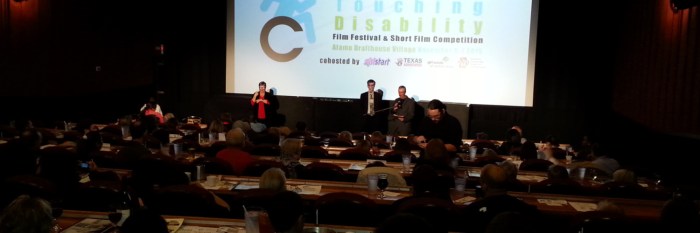
Interview with William Greer (Cinema Touching Disability, Festival Director)

 Now in its fourteenth year, the Cinema Touching Disability Film Festival helps dispel misperceptions about disability by screening films that portray people with disabilities living full lives. Film entries should avoid stereotypical representations. Instead, the festival seeks imaginative, multifaceted portrayals of people with disabilities.

http://www.ctdfilmfest.org/

Matthew Toffolo: What is your Film Festival succeeding at doing for filmmakers?

William Greer: Cinema Touching Disability gives filmmakers a chance to show their films about and starring people who have disabilities. We focus on films that have a positive and accurate representation of disability. cinema Touching Disability puts a central focus on these films, and events surrounding them.

We featured, for instance, an interview with Dr Temple Grandin, the most famous person in the world with Autism the year we featured a dramatic biography about her. We had a guest appearance by Jessica Cox, the only licensed armless pilot in the world when we featured “Right Footed”, the documentary about her. We had a live demonstration of American Sign language (ASL) poetry when we featured “Deaf Jam”, a documentary about ASL poets who compete alongside spoken word poets in 2016.

MT: What would you expect to experience if you attend the festival this year (2017)?

WG: This year we are featuring films that focus on service animals and animals with disabilities. we will have live service dogs at the theater before the festival. People will have an opportunity to see the winners of our short film competition, the feature film and a chance to meet service dogs.

MT: What are the qualifications for the selected films?

WG: The films need to have an accurate, interesting and compelling story about disability. We feature films that dispel common misperceptions about disability, entertain the audience and are informative.

The films must not have stereotypical representations about disability and show honest and accurate portrayals of people who have disabilities.

MT: Do you think that some films really don’t get a fair shake from film festivals? And if so, why?

WG: Some films definitely do not get a fair shake. There would not be film festivals that specialize in certain genres, such as science fiction, horror, asian and disability if all of these films had an equal chance at festivals. There are so many films being made that the sheer number of them makes it impossible for every film to have an equal opportunity.

In the case of disability there is simply a lack of interest in the subject. Many people do not think disability films will be either interesting or entertaining. This, combined with the history of bad representation of disability and people who have disabilities, makes it very hard for disability films to gain an equal opportunity.

MT: What motivates you and your team to do this festival?

WG: We are motivated by the desire to give people with disabilities equal opportunities and to raise awareness about disability. Our organization is a non-profit dedicated to promoting equal civil and social rights of people with disabilities, so the festival is a natural outgrowth of this.

MT: How has your FilmFreeway submission process been?

WG: Outstanding. Tracking and receiving the submissions has been incredibly easy. The submission process is also improving steadily.

MT: Where do you see the festival by 2020?

WG: I hope to see the festival expand to include an additional evening and the audience to grow enough to require a larger theater.

MT: What film have you seen the most times in your life?

WG: That is a difficult question to answer because I have seen so many films. I might have seen “The Empire Strikes Back” the most times because I was so young when I first saw it. This is an excellent film that I have had an opportunity to see for 27 years. I have had many chances to see it, in other words.

MT: In one sentence, what makes a great film?

WG: An interesting, thought provoking and engaging story.

MT: How is the film scene in your city?

WG: Incredible. Experimental, international and mainstream films are regularly featured at many theaters here.

cinematouchingdisability1.jpg

—–

About the interviewee: I became legally blind at the age of 17 as the result of an open skull wound. Since then I graduated from college worked in a variety of political campaigns, gained a job at a non-profit organization and started running marathons.

I created a film festival as one of the fund raising projects for the disability advocacy organization I work for. The festival has grown to take place on multiple evenings, include an international short film competition and have stars of our feature films visit as speakers.

I also oversee various other fund raising events, ranging from hand cycle marathons to participation in annual fun runs.

For recreation I run in marathons. The 15 I have run so far include the 2013 Boston marathon and the Prickly Pear, a 30 mile ultra marathon.
Cinema Touching Disability (www.ctdfilmfest.org)

Cinema Touching Disability is designed to raise awareness of and dispel common misperceptions about disability. This festival, which started in 2004, features films, has guest speakers and often has special events.

The events range from a demonstration of martial arts by a team of people with disabilities. This demonstration included Jessica Cox, the only armless pilot in the world, since she also holds two black belts in Tae Kwan do. Another special event featured a demonstration of people in wheelchairs demonstrating mobility dancing, which happened before a film about wheelchair dancers.
_____

Interviewer Matthew Toffolo is currently the CEO of the WILDsound FEEDBACK Film & Writing Festival. The festival that showcases 20-50 screenplay and story readings performed by professional actors every month. And the FEEDBACK Monthly Festival held in downtown Toronto, and Los Angeles at least 2 times a month. Go to www.wildsound.ca for more information and to submit your work to the festival.

Interview with Jorge Gonzalez, Launch Pad Screenwriting Competitions

The Launch Pad is a place dedicated to launching writing careers. Going well beyond what other competitions offer, we have created a platform that has helped more than 180 writers launch their careers. Utilizing our three competitions – pilots, features and manuscripts – as well as our advanced coverage services, we provide a hub that reaches far beyond a simple prize with your name listed on a site. The Launch Pad is a community of writers, executives, agents, managers and producers working together with one focus in mind – THE WRITER.

https://tblaunchpad.com/

Matthew Toffolo: What is your Film Festival succeeding at doing for filmmakers?

Our competition has been able to get more writers signed in the last 4 years then any other competition out there. We pride ourselves in using our deep industry relationships with agents, managers, and executives to give writers the necessary exposure to take the next step in their writing career.

MT: What would you expect to experience if you attend the festival this year (2017)?

If you enter our competition we guarantee that your script will receive at least two complete reads from professional readers who have read or currently still read for major agencies, management companies, studios, and production companies. A large number of scripts receive additional internal reviews as well. We take great pride and responsibility in the submissions we receive and so we work tirelessly trading hundreds of emails, texts, and phone calls with reps to help everyone from our Top 75 to our Winners get the recognition they deserve.

MT: What are the qualifications for the selected films?

Our competition is open to writers of all levels. Their script needs to be an original work, which must be their sole property and not have previously sold or placed Top 25 or higher in one of our previous competitions.

MT: Do you think that some films really don’t get a fair shake from film festivals? And if so, why?

That’s a really great question. I know for some of the bigger festivals that carry a lot of prestige like Sundance, TIFF, SXSW, and Austin, they are flooded each year with a huge number of entries. So the competition is fierce and many great films still may not make the cut. That said, I think those festivals really pride themselves in curating their films with thought provoking and unique films while simultaneously looking to identity new and emerging creators. There are also countless other respected festivals that are great ways for creators to gain recognition and get the exposure necessary to help their career. These festivals may be more accessible and a good first step along the journey.

MT: What motivates you and your team to do this festival?

For many of us here we come from a writing background and have also worked at management and production companies. Having been on both sides of the business we’re able to understand the needs of our writers and the reps that we work with. What gets us fired up is working with writers who if it weren’t for our competition may not have access to Hollywood and couldn’t otherwise get their material in the hands of some of the industries biggest agencies and management companies. The way that we see it is we’re here to try and help people jumpstart a professional writing career, and instead of climbing up from the bottom of a ladder we want to give them a boost so they can start half way up. With each of our competitions we’re able to help dozens of new writers land representation or set up their projects. Writers who have placed or won our competitions have sold six-figure spec scripts
to studios like Fox and Paramount and are currently writing for shows like Timeless, i-Zombie and Stranger Things amongst others. We’re truly humbled by the amount of success our writers have been able to achieve as a result of our competition.

MT: How has your FilmFreeway submission process been?

Film Freeway has been great. They have such a streamlined and easy way to connect with writers and have become the premiere hub for festivals and competitions.

MT: Where do you see the festival by 2020?

In space! Just kidding. We’ve been fortunate enough in the last year to partner with some of the biggest companies in the business. Just last year we partnered with Ridley Scott’s – Scott Free Productions, Roy Lee’s Vertigo Entertainment, and Brooklyn Weaver’s Energy Entertainment to name a few. These partnerships give us an opportunity to offer entrants prizes that include guaranteed signing and guarantee option opportunities from some of the biggest names in Hollywood. As we continue to grow we want to find new and innovative ways to partner with more companies to offer writers unique career opportunities that can’t be found anywhere else.

MT: What film have you seen the most times in your life?

Oh man this is a tough one! I’d say its a tie between Toy Story and Gladiator. Two widely different movies but both were staples during different times in my life. Toy Story was definitely my go to VHS movie growing up, and Gladiator was the first DVD I ever bought. The movie is a masterpiece!

MT: In one sentence, what makes a great film?

Strong characters who are led by their convictions regardless of their morality.

MT: How is the film scene in your city?

LA is the movie capital of the world. You really can’t go anywhere without running into someone who isn’t connected to the entertainment industry in some capacity. There is such a wealth of talent and creativity here that is remarkable. You never know who you’ll meet and as far as the the entertainment industry is concerned, there are so many chances to work or collaborate with amazing people. Los Angeles is one of those special cities where you can truly see your dream and passion come to life. Oh and lets not forget the never ending sunshine!

launch_pad

_____

Interviewer Matthew Toffolo is currently the CEO of the WILDsound FEEDBACK Film & Writing Festival. The festival that showcases 20-50 screenplay and story readings performed by professional actors every month. And the FEEDBACK Monthly Festival held in downtown Toronto, and Los Angeles at least 2 times a month. Go to www.wildsound.ca for more information and to submit your work to the festival.