Interview with Festival Director Pavel Pankov (World International Film Festival)

The World International Film Festival is a global industry event held around the year in the world’s biggest cities:  New York City, Los Angeles, Toronto, London, Hong Kong, Singapore, Amsterdam, Reykjavík, and more to come – an around-the-world film festival tour bringing together filmmakers and film fans, auteurs and cineastes, great new independent movies and a global audience.

The around-the-world film festival tour option showcases some of the very best independent films on the scene today, in a truly international event bringing new cinema to audiences on a global scale.  

See more at: http://worldinternationalfilmfestival.com/about

Interview with Pavel Pankov:

MT: What would you expect to experience if you attend the festival this year (2016)?

Pavel Pankov: The very international aspect of WIFF is immediately evident from the great number of “foreign” films we’ve selected — “foreign” if you’re from the U.S.A., not so foreign if you live elsewhere in the world. We’ll be screening exciting work from filmmakers from all over the map.

Of course, we do have a few American movies too, including one picture with real breakout potential, “Near Myth: The Oskar Knight Story,” an award-winning Hollywood biopic about the “legendary” director Oskar Knight, played by Lenny Von Dohlen. It’s a very funny mockumentary, and ultimately, quite touching.

MT: What are the qualifications for the selected films?

PP: Our festival jury is a wide-ranging team of industry veterans from about 20 countries. We have a big internal world forum online where we exchange opinions and make decisions on the films.

MT: Do you think that some films really don’t get a fair shake from film festivals? And if so, why?

PP: I can’t speak for the decision process at other festivals. But I’ll say, in terms of getting a response when your film actually screens at a festival, because 99.9% of filmmakers don’t have any publicity budget and don’t do a Q&A, that really diminishes your chances of drawing a big crowd. But WIFF itself is promoting its events more and more, and we strongly encourage and assist filmmakers in setting up Q&A’s.

MT: What motivates you and your team to do this festival?

PP: I can tell you, it’s actually not money.

In the festival business, unless you are Cannes or Sundance or the like, you are just trying to maintain, so you can achieve your goal: discovering and spotlighting great new works of cinema. And helping them find their audience.

MT: How has the festival changed since its inception?

PP: We are changing every day… A year ago we started with one festival. This year we’ll be hosting as many as 25 festivals in 20 different countries.

MT: Where do you see the festival by 2020?

PP: In most of the biggest cities and cinema capitals on this lovely cinema planet of ours.

MT: What film have you seen the most times in your life?

PP: “Once Upon a Time in America.”

MT: In one sentence, what makes a great film?

PP: Great buzz…? Or so it seems.

But more seriously: There are many “Great things” which it takes to make a great film: Great idea, great script, great shooting, great producer, great director, great actors, great voice, great cutting, great marketing.

All these great things make one big great cake. If any “great” is missing
— that cake isn’t going to rise.

Even when a film has all these ingredients, just like a cake it needs time to rise. Hopefully, the films we’re getting behind will rise to the attention they deserve this year.

MT: How is the film scene in your city?

PP: I’m really never in one city longer then a month, these days, as I need to manage and host up to 25 locations as you know.

But the World International Film Festival has five basic centers now: Los Angeles, Toronto, Brisbane, Singapore, and Hong Kong, and we’ll be showing many films in all of those great cities.

world_international.jpg
_____
Interviewer Matthew Toffolo is currently the CEO of the WILDsound FEEDBACK Film & Writing Festival. The festival that showcases 10-20 screenplay and story readings performed by professional actors every month. And the FEEDBACK Monthly Festival held in downtown Toronto on the last Thursday of every single month. Go towww.wildsound.ca for more information and to submit your work to the festival.

Interview with Festival Director Stanley Cobos (Action Packed Film Festival)

Action Packed Film Festival, is an event that is solely dedicated to films that are covered under that genre of action. Any project that has stunts, well coordinated fighting scenes and can be easily categorized as an action film can finally find a dedicated home at this film festival.All films that we receive will be viewed by industry professionals, and only a few of the best that we received will be officially selected to screen at the festival.

http://actionpackedfilmfest.weebly.com/
https://www.facebook.com/actionpackedfilmfestival

Interview with Stanley Cobos:

Matthew Toffolo: What is your Film Festival succeeding at doing for filmmakers?

Stanley Cobos: We’re setting up for a community of filmmakers that love to make films, more focused on action genre. We’re not opposed to other genres, but this festival in particularly focuses on the action genre. Action packed films are usually the tentpole films of the industry. Blockbuster films, that generate followings and an automatic hit (for the most part) in the box office. Most award ceremonies and film festivals appeal to the comedy,lighthearted and drama films. Regardless of the box office success of the action packed film. The action packed film is pure entertainment. What we intend to do and what is makes it succeeding for our filmmakers, is to focus on them now and push them further in their career. Our festival will showcase two seminars, networking events, and a special award ceremony where we intend to award three individuals (that are not in the festival) that are professionals working and mainly focused in the action film genre as stunt performers.

MT: What would you expect to experience if you attend the festival this year (2016)?

SC: I would hope that it will be a complete success and entertaining, but most important, that our filmmakers have an amazing and memorable experience. It’s important that they continue in their path towards this at time difficult journey as a filmmaker. We want to acknowledge them.

MT: What are the qualifications for the selected films?

SC: A well executed film that has action and well coordinated stunts. It took a great deal of time and dedication to make these films, especially if they had little to no budget. When we see a project and we like it, and found it truly entertaining, it makes the cut. It wasn’t easy. Our judges viewed hundreds of film. We had to decline a handful of amazing and just plain beautifully shot films that looked so beyond professional, it was hard to say no; but they did not fit our genre – action. So the films have to be considered an action type film. Regardless if it’s action-thriller, or any other type of film; as long as it falls in the action classification (chases, stunts, fighting sequences, etc.) that’s what we’re looking for. As well as the obvious, good story telling.

MT: Do you think that some films really don’t get a fair shake from film festivals? And if so, why?

SC: I really do. It’s a lot of based on who you know and if you have the right amount of funding backing your project. There are amazing films that exist, but don’t get the full amount of recognition because there wasn’t enough money to place it in-front of enough eyes. That’s why web content is starting to gain momentum. Also, it’s difficult to succeed without a name talent. It’s not easy to have someone watch a film if there is no “attachment” to it. It’s unfortunate because there are a lot of great actors out there that will act and do a stellar performance without the need of hassling through the red tape of managers and agents and payment that at times is more than the films project, especially if it’s independently made.

MT: What motivates you and your team to do this festival?

SC: We’re filmmakers ourselves and know that feeling of making it. Even if it’s just for one day. We want to spread that. Spread the hope and allow for a great networking opportunity, it’s key in this industry.

MT: How has the festival changed since its inception?

SC: Well, this is our first year and so far, it’s been doing great. We focused on a good genre and have been able to watch some great films and are looking forward to showcasing it for all to see! August 20-21, 2016!

MT: Where do you see the festival by 2020?

SC: It will be a milestone, and we hope to see the growth of it and the expansion of it become something that filmmakers will look forward to seeing and being a part of. We hope that generate a good community and be able to assist in funding other projects.

MT: What film have you seen the most times in your life?

SC: The Fifth Element, it’s one of those films that I can’t ever get enough of. I also enjoy Total Recall, The Professional and V for Vandetta.

MT: In one sentence, what makes a great film?

SC: Great story with an amazingly talented cast and crew.

MT: How is the film scene in your city?

SC: Well we’re based in Los Angeles, so it’s a thriving scene, I’m just glad the tax incentive’s are starting to catch-up.

action_packed.jpg

_____
Interviewer Matthew Toffolo is currently the CEO of the WILDsound FEEDBACK Film & Writing Festival. The festival that showcases 10-20 screenplay and story readings performed by professional actors every month. And the FEEDBACK Monthly Festival held in downtown Toronto on the last Thursday of every single month. Go towww.wildsound.ca for more information and to submit your work to the festival.

Interview with Festival Director Umberto Santacroce (The Gulf of Naples Film Festival)

The aim of the Festival is to promote and circulate cinema and cutting-edge films, foster discussion between various branches of learning, and provide a space for the cinematic arts and other disciplines to engage with each other and grow.

Go to Website

Interview with Umberto Santacroce:

Matthew Toffolo: What is your Film Festival succeeding at doing for filmmakers?

Umberto Santacroce: GoN IFF is a new festival, the result of the encounter of three filmmakers with different experiences in cinema, television and theatre. The difficulties we have experienced in distributing our works led us to create a new opportunity for all lo-to-no budget producers; thanks to this opportunity, all those who make low cost yet valuable films, like we do, have the chance to promote their artwork and exchange ideas and expertise.

MT: What would you expect to experience if you attend the festival this year (2016)?

US: This is the second edition of the GoN IFF. Thanks to the serious approach shown in the first edition, our Festival is getting more and more popular and prestigious day by day. There has been an increase in the number of films submitted and of media interested in our Festival. Accordingly, the better the quality of the Festival, the greater the attention given by media to the participants who will enjoy the opportunity to show their works to increasingly wider audiences. And, last but not least, films will be awarded based on their quality.

MT: What are the qualifications for the selected films?

US: Although we have decided to select indie films which are not promoted and distributed through the main channels, our Festival is actually open to everyone, but definitely, the films that benefit from a strong budget will not be evaluated from a technical point of view, but only for their concepts and scripts.

MT: Do you think that some films really don’t get a fair shake from film festivals? And if so, why?

US: I believe that in the main festivals the awards usually go to the filmmakers who simply had the chance to spend more money on their production, so, they could hire popular actors, as well as skillful technicians and professionals. Moreover, for the support of their high investments, producers and distributors launch massive – at times even deceptive – campaigns, overrating the films and attracting huge audiences. While low budget films usually do not get the success they deserve.

MT: What motivates you and your team to do this festival?

US: The fact that different people from different countries with different cultures, sharing the love for this form of art, may gather and become a source of mutual inspiration, getting beyond all borders and potential prejudices.

MT: How has the festival changed since its inception?

US: Now it is too early to talk about a proper change; anyway, since the first year, many more participants have joined our festival and public institutions have started giving us some attention. We are now considering implementing new sections, in order to enhance the cultural value of the festival.

MT: Where do you see the festival by 2020?

US: In Naples, of course. With key partners in the national and international institutions. People need quality and we want to continue what we started last year, growing year after year, promoting new awards and turning our festival into the true celebration of top quality films, involving a bigger audience. We also hope to extend the festival’s calendar from 3 days, which is the period set now, to 10 or 15 days. We are well aware that this is very challenging, but there are good conditions and encouraging signs for improvement!

MT: What film have you seen the most times in your life?

US: Well, it happened many times. Every film expresses emotions and fortunately, every film is very different. I love many genres but I am particularly keen on those which are milestones in the story of this art, I mean, the films produced in the 50’s and the 60’s both in Italy and in the U.S.A. Each film represents a step forward in the growth of this sector. For example, just compare “Clash of the Titans” – the 1981 epic film by Desmond Davis, featuring an all-star cast, with well done animated scenes – with its 2010 remake. Even if I prefer the original film, its remake represents the natural evolution of filmmaking with special effects and animations which are light years ahead of the first production. And I could go on indefinitely…

MT: In one sentence, what makes a great film?

US: The depiction of universal values, such as justice, equality, solidarity, and the ability to communicate emotions.

MT: How is the film scene in your city?

US: There was a time when Naples was a sort of capital city of the film industry. The famous Galleria Umberto arcade and its lively cafés were the meeting area of people from different backgrounds and the birthplace of hundreds of new production companies. This happened in the years between the 19th and 20th century, a time of intense film production, and implementation of new techniques and art styles.

However, after Cinecittà was built, Rome attracted the whole world of film industry.

Nowadays, the new digital techniques have greatly reduced the costs of film making allowing everyone to easily record a video. The young generations are definitely showing a growing involvement in this art. Cinema schools and training courses are now becoming increasingly popular, and I believe that there are some talented artists among the emergent filmmakers, who will be successful in the next future. However, the national institutions still do not acknowledge and support cinema with adequate fundings.

gulfofnaples

_____
Interviewer Matthew Toffolo is currently the CEO of the WILDsound FEEDBACK Film & Writing Festival. The festival that showcases 10-20 screenplay and story readings performed by professional actors every month. And the FEEDBACK Monthly Festival held in downtown Toronto on the last Thursday of every single month. Go to http://www.wildsound.ca for more information and to submit your work to the festival.

Interview with Festival Director Janice Kurbjun (Breckenridge Film Festival)

Since its opening event in 1981, the Breckenridge Film Festival has celebrated the art of filmmaking. Each year a unique and varied array of independent films, premieres, receptions, educational programs and retrospectives honoring featured guests takes place high in the Colorado Rockies. Currently celebrating its 36th year, the Festival has hosted such guests as Alan Arkin, James Earl Jones, Robert Loggia, Marsha Mason, Sydney Pollack, Mary Steenburgen, Donald Sutherland, Eva Marie Saint, Jon Voight, Lou Diamond Phillips, Jon Favreau, Michael York , Jo Beth Williams, Connie Nielsen, Irvin Kershner, Thomas Haden Church, AnnaSophia Robb and DB Sweeney. Educational outreach programs, children’s films, celebrity guests, independent filmmaker forums and other events celebrating the art of film, contribute to the Festival’s diverse program. The University of Colorado at Boulder has presented classic and foreign films with faculty members leading interrelated discussions.

breckfilmfestWebsite: http://www.breckfilmfest.com/

Interview with Janice Kurbjun

Matthew Toffolo: What is your Film Festival succeeding at doing for filmmakers?

We host roughly 30 filmmakers at our festival each year. These are filmmakers who submit their films and are accepted through our review process. In attending the Breckenridge Film Festival, they are presented the opportunity to mix and mingle with each other as well as with distributors scouting talent, the Colorado Film Commission, staff of which regularly attends the festival, and with high-level industry talent attending the festival in support of our featured films. We pride ourselves on offering an excellent visit for filmmakers both in terms of quality of experience as well as quality of industry relations.

MT: What would you expect to experience if you attend the festival this year (2016)?

Filmmakers attending each festival can expect the excellent opportunity to take advantage of first-come, first-served complimentary lodging, which helps facilitate filmmakers’ ability to attend festivals to promote their films, interact with audiences and discover new and interesting partnerships, distribution ideas and other creative direction while enjoying the fabulous scenery of the Rocky Mountains. The festival provides support in promoting films, offering unique and interesting opportunities to mix with industry professionals and generally, to enjoy fall and all the wonderful activities offered in the mountains at that time.

MT: What are the qualifications for the selected films?

Films must fall into one of eight categories: Drama, Short Drama, Comedy, Short Comedy, Documentary, Animation, Spiritual and Adventure. Films also must have been completed in March 2015 to May 2016 to be considered.

MT: Do you think that some films really don’t get a fair shake from film festivals?

The Breckenridge Film Festival believes in allowing all filmmakers to submit films for consideration, making the playing field as level and fair as possible. We curate only a handful of films every year, and so we pride ourselves on our high acceptance rate of approximately 15%. Filmmakers take notice. We receive excellent films each year, showcasing that not only are there drastic striations in the industry, but that there are excellent films just waiting to be seen. Our audiences marvel at the variety of films we screen annually and leave the festival with a deeper understanding of the depth and breadth of the independent film community.

MT: What motivates you and your team to do this festival?

We believe in the power of film and media to inspire, educate and entertain. The best films for our festival will touch on issues in new and interesting ways that resonate with our audiences. The best films will leave audiences feeling inspired. And of course, the best films will entertain audiences as they accomplish the first two goals.

MT: How has the festival changed since its inception?

In 1981, the Breckenridge Film Festival showcased Hollywood front runner films. As the industry has changed, so too has the Breckenridge Film Festival, as it has opted to focus on the broadening world of independent film and up and coming filmmakers. Today, we are primarily an independent film festival featuring unique talent from across the globe.

MT: Where do you see the festival by 2020?

We intend to be a vibrant, interactive festival focused on the power of storytelling and featuring excellent pictures that resonate with our audiences. We intend to continue to be a place for filmmakers to mix and mingle with each other and find inspiration of their own.

MT: What film have you seen the most times in your life?

Either Star Wars or Amelie. Might be a toss up…

MT: In one sentence, what makes a great film?

To quote a great man, “the movies are like a machine that generates empathy. It lets you understand a little bit more about different hopes, aspirations, dreams and fears. It helps us to identify with the people who are sharing this journey with us.” – Roger Ebert.

MT: How is the film scene in your city?

Rich. Our residents are more in tune with art house films than they are with first-run Hollywood features. They seek and crave the inspirational, empathetic experience art house films can provide.

_____
Interviewer Matthew Toffolo is currently the CEO of the WILDsound FEEDBACK Film & Writing Festival. The festival that showcases 10-20 screenplay and story readings performed by professional actors every month. And the FEEDBACK Monthly Festival held in downtown Toronto on the last Thursday of every single month. Go to www.wildsound.ca for more information and to submit your work to the festival.

Interview with Festival Director Celia Xavier (Tribal Film Festival)

Tribal Film Festival seeks Indigenous films from around the world. TFF plays an important part in pushing for the accessibility of Indigenous films with inspiring and uplifting stories that change people’s lives.

Website: http://tribalfilmfestival.com/

Interview with Celia Xavier:

Matthew Toffolo: What is your Film Festival succeeding at doing for filmmakers?

We showcase films highlighting international indigenous content as well as projects produced by Oklahoma Native filmmakers.

MT: What would you expect to experience if you attend the festival this year (2016)?

The excitement of seeing films that you can’t see anywhere else, certainly not in theaters in Oklahoma. We create events centered on blocks of programming – such as our children’s films with ice cream donated by our local Ice Cream Social – turning those events into celebrations. This year Native American Straight dancers will be on hand to celebrate a local film on ceremonial dancing . Opening night features our Silent Auction Red Carpet event and a wine and cheese tasting, which always attracts a large crowd.

MT: What are the qualifications for the selected films?

Indigenous content or features Indigenous actors

MT: Do you think that some films really don’t get a fair shake from film festivals?

Absolutely. Some festivals are political, which is an unfair advantage to most of us. But that is great because that is one of the reasons we started ours.

MT: What motivates you and your team to do this festival?

We are filmmakers ourselves. Personally, I have been to numerous of festivals. There are numerous great films that don’t get into the “Big Three,” and we have the option of screening those for our audience. Speaking of the “Big Three,” we dislike the caste system that has evolved in the festival world: the VIP ticket sales, the high ticket prices, the separation this creates amongst “the have and the have nots”. Our festival is free to anyone and everyone. We treat everyone like a VIP!

MT: How has the festival changed since its inception?

Filmmakers can now choose whether to be distributed on our TribalTV digital platform after screening at our festival.

MT: Where do you see the festival by 2020?

In four years we hope to have expanded, holding screenings in the theater at our neighboring university NSU and showing children’s movies outdoors in the center square. These locations are all within walking distance from our current theater and are one of the reasons we picked this town for our festival. We’d also envision a famous band open our reception.

MT: What film have you seen the most times in your life?

What a timely question. The only film I have seen more than once is “Purple Rain”.

MT: In one sentence, what makes a great film?

The unexpected, authentic journey a film takes you on.

MT: How is the film scene in your city?

Not very much of a scene at all.

_____
Interviewer Matthew Toffolo is currently the CEO of the WILDsound FEEDBACK Film & Writing Festival. The festival that showcases 10-20 screenplay and story readings performed by professional actors every month. And the FEEDBACK Monthly Festival held in downtown Toronto on the last Thursday of every single month. Go to www.wildsound.ca for more information and to submit your work to the festival.

Interview with Festival Director Connie Spielberg (Creative Arts Film Festival)

The Creative Arts Film Festival is an annual international film festival that is designed to showcase and promote short films and filmmakers. CAFF runs throughout the entire month of December and we offer worldwide exposure, free promotional listings, international audiences, and the prestigious “Perfect Spirit Film Awards”. And, yes, we do accept Music Videos in any of the genres.

December 1-31, 2016
http://www.creativeartsfilmfestival.com/

Interview with Connie Spielberg:

Matthew Toffolo: What is your Film Festival succeeding at doing for filmmakers?

Getting them noticed in the industry, getting them fans, and getting them to believe in themselves.

MT: What would you expect to experience if you attend the festival this year (2016)?

Well, we’re online, so attendance is quite different. But, generally, as always, we expect excitement and rabid curiosity for the films and filmmakers.

MT: What are the qualifications for the selected films?

Under 60 minutes and some kind of mind-blowing moment that isn’t a slick trick or a bourgeois attempt at being smarter than the audience. That’s it.

MT: Do you think that some films really don’t get a fair shake from film festivals?

Of course. I want to say most, but I won’t, so…some film fests won’t even watch our film unless there’s something alluring attached, like a star, a celeb, a writer, etc. Something that says money or influence. To be quite honest, almost every star vehicle we’ve ever received, we’ve denied. They can get very boring, very fast, and everyone expects the star to carry the project. Most times, no. Not that it’s the star’s fault. Mostly it’s the producer or director’s fault for just bad filmmaking. RULE OF THUMB — Spend your money on making awesome moments happen, not on celebrities. Or mix it up somehow…think Slingblade. Or get a star that CAN act. What we really like is finding some diamond in the rough that has real story-telling power. Something that excites the viewer with fresh new ideas.

MT: What motivates you and your team to do this festival?

Discovering True Talent.

MT: How has the festival changed since its inception?

It hasn’t. We were a pain in the ass when we started, and we still are. If the film is great, we can’t stop talking about it. If the film sucks, we can’t stop talking about it.

MT: Where do you see the festival by 2020?

Exactly the same. Offering up really great new films by really great new filmmakers.

MT: What film have you seen the most times in your life?

“Robocop” (Verhoeven). It’s SO much more than just a superhero movie and it told so many stories within it’s 90 minute frame.

MT: In one sentence, what makes a great film?

In one sentence? …if it doesn’t suck? No, no…seriously, this is a tough one. I mean, why was “Kick-Ass” so awesome, and “Kick-Ass 2” so lame? Why did “Legends of the Fall” make me cry like a little child, and “The English Patient” make me want to blow my brains out from boredom? Plus, there’s esoteric, and there’s practical. Okay, I think I have it. Here it is…What makes a great film, esoterically? Everybody knowing, and doing, their job passionately. AND, what makes a great film, practically — tell the story honestly. Don’t be clever or slick. Just tell the story honestly. Actually, swap those two answers and I think that nails it.

MT: How is the film scene in your city?

The film scene is always abuzz with everything from sucky to savvy. ut the movie scene is completely jaded and stale.
_____
Interviewer Matthew Toffolo is currently the CEO of the WILDsound FEEDBACK Film & Writing Festival. The festival that showcases 10-20 screenplay and story readings performed by professional actors every month. And the FEEDBACK Monthly Festival held in downtown Toronto on the last Thursday of every single month. Go to www.wildsound.ca for more information and to submit your work to the festival.

Interview with Writer/Director David Bezmozgis (Natasha)

It was a pleasure sitting down with the writer/director of the feature film “Natasha”, which is the opening film for the 24th annual Jewish Film Festival on May 5, 2016.

For tickets and information, go to: http://tjff.com/

David Bezmozgis is an award-winning writer and filmmaker. He is the author of the story collection, Natasha and Other Stories (2004), and the novels, The Free World (2011), and The Betrayers (2014). David’s stories have appeared in numerous publications including The New Yorker, Harpers,  Zoetrope All-Story, and The Walrus. “Natasha” is his 2nd feature film as a director.

Interview with David Bezmozgis:

Matthew Toffolo: The tagline on the film’s poster is “It is the opposite that is good for us.”…

David Bezmozgis: Yes, that’s HERACLITUS. That’s the quote from the novel that’s the basis of the film.

MT: What does it mean?

DB: It’s a contradictory statement. Everyone wants the opposite. The overall theme of the film.

MT: From directing your first film “Victoria Day” to now directing “Natasha”. What is the biggest thing you learned?

DB: I’ve loosened up. I think “Natasha” is a much looser film in the way we shot it. My approach on set was better. The first film was heavily storyboarded. This film was planned out with Guy Godfree (Cinematographer), but we gave ourselves more freedom to create on set. I was much more open on the day. Some decisions are hard to change because we’ve planned out so much in prep, but we can change the blocking and some wardrobe changes for example on the day. It made for a better film.

MT: Did you rehearse before production began?

DB: Oh yeah. Just a couple of days, but it’s so important. The biggest thing is that the actors can get to know each other and form a bond before we begin filming.

MT: The female lead, Sasha K. Gordon, is very new to acting…

DB: Her first time on set. Her first film.

MT: She’s really good. A lot of depth and emotion to her character. There’s a darkness to her. How did you find her?

DB: We looked and looked and looked. She found us more than we found her. She really pulled off this performance. She’s tremendous.

MT: Most of this film is shot on a hand-held camera.

DB: There was some tri-pod blocking, but as the film progresses the film is definitely much looser.

MT: You mentioned your cinematographer Guy Godfree. How was your collaboration together?

DB: Terrific. This is a small film. Low budget. So everyone needs to be on board. From Guy to all of his keys and their crew. They need to believe in the project because there are a lot of productions happening in Toronto and they can definitely be working on higher paying projects. So they have to believe and it starts with Guy.

You come up with a look and come up with an idea and everyone has to believe in the process and the project. It worked.

MT: Was the entire film shot on location?

DB: Every single frame. We couldn’t afford a studio.

MT: Did the Production Design team do a lot of changes to the location, or was most of it shot close to the location you shot?

DB: Some locations we didn’t dress much, as others we re-did everything from scratch, like the basement scene. Other places, like Natasha’s apartment, the main house, is as is. This is a Russian neighborhood and a Russian character driven film, so a lot is what it is.

MT: Who is the audience for “Natasha”? Most of the film is in Russian? How are Russians reacting to this film?

DB: It’s played at some festivals where Russians were in the audience and they were thrilled. They’ve never seen their world portrayed before. I hope this is a film for everyone as most cultures can relate to this story and situation.

MT: In very generic terms, this is a coming of age story, like your last film “Victoria Day”. Is this a theme in a lot of your novels and writings?

DB: When making a coming of age story, family is mostly involved. I wanted to tell a story about this culture and the family within this culture of a boy hitting a crossroads in his teenage life.

The character Natasha is a twist to this story as she enters an English world but speaks only Russian. The character Mark is drawn back to his culture as she draws him back. And there are many twists and turns with him doing that. So it’s “coming of age”, but it’s a 2nd generation story about a boy coming back to the 1st generation.

MT: In the synopsis, it describes Mark as a slacker. I really don’t see him that way. I see a boy who’s really trying to figure out who he is in the strange world that he lives in.

DB: I really don’t see him as a slacker either, but people need shorthand.

MT: This is also a tale of sexuality. Mark is inexperienced. As Natasha, even though she’s still the same age, is much more worldly.

DB: She’s more mature. She is more worldly. Yet she’s still a kid. There are a lot of things that she sets in motion in the story where she’s too young to handle it all.

MT: It’s also about power.

DB: Well you can say that the major theme of this film is power. Family power. Generational power. There’s a major power struggle between the mother and sister, and it takes everyone down with them.

PHOTO: Actors Alex Ozerov, and Sasha K. Gordon in “Natasha”

natasha_1.jpg

****

Interviewer Matthew Toffolo is currently the CEO of the WILDsound FEEDBACK Film & Writing Festival. The festival that showcases 10-20 screenplay and story readings performed by professional actors every month. And the FEEDBACK Monthly Festival held in downtown Toronto on the last Thursday of every single month. Go to www.wildsound.ca for more information and to submit your work to the festival.

davidbezmozgis.jpg


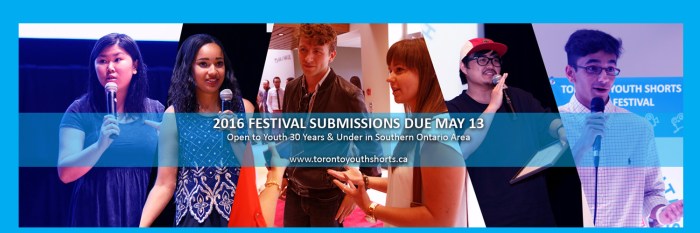
Interview with Festival Director Henry C.M. Wong (Toronto Youth Shorts Festival)

Toronto Youth Shorts is a spotlight showcase of cinematic short form content created by young emerging artists in the Greater Toronto and Southern Ontario Area. Each year, the festival acts as a professional forum for these young artists to engage their peers and the industry whilegrowing their professional profiles through learning and networking opportunities. An industry jury hands out the annual festival awards that come with production prizes. Behind the scenes, Toronto Youth Shorts is run by a volunteer force of savvy young professionals with a combination of training in the arts, event management, marketing, and media.

Go to Website 

Watch Video Testimonials of Festival

Interview with Henry C.M. Wong:

Matthew Toffolo: What is your Film Festival succeeding at doing for filmmakers? 

Henry C.M. Wong: Toronto Youth Shorts primarily serves the young filmmaking crowd of the Greater Toronto and Southern Ontario area. A lot of our participants are either students or young graduates getting their start in the industry and Toronto Youth Shorts act as a platform for them to see what the market is like. We invite established pros each year to give the filmmakers feedback on their work so the festival is also a great learning opportunity for them.

MT: What would you expect to experience if you attend the festival this year (2016)?  

HW: As an emerging filmmaker showing your film at Toronto Youth Shorts, there will be many opportunities for you to engage your peers, the industry, and potentially win cash prizes and production services toward their next project. As an audience, you will see what the future of the industry looks like through the lens of a young person in the city. The content we show tends to be raw, provocative, whimsical, and emotionally engaging and I predict this year’s lineup to be the same.

MT: What are the qualifications for the selected films?  

HW: For Toronto Youth Shorts, you have to be 30 years old or younger and your film must be 20 minutes or under. Any genre is accepted. Other than your typical drama, comedy, animation, and documentary pieces, we’ve screened video art, web series, news type pieces, experimental works, music videos, and PSAs. Content is becoming more and more of a blur that these distinctions don’t really matter anymore in a festival cinematic context.

MT: Do you think that some films really don’t get a fair shake from film festivals? And if so, why?  

HW: I don’t think that’s a fair statement to make. Just looking at Toronto as an example, there are hundreds of submissions-based events with different mandates and programming sensibilities. Even two festivals working within the same genre space will not be identical. Sure, there are some big events like TIFF and Hot Docs that are extremely competitive but overall, with the available platforms there are out there, a good film with audience appeal will likely find a home somewhere.

MT: What motivates you and your team to do this festival?  

HW: I enjoy the engagement with these young artists. It’s great to see content that’s different from your standard wide-release made on almost nonexistent budgets with a local touch.

MT: How has the festival changed since its inception?  

HW: I was a student in my postgraduate program when I started this festival. My personal and professional growth since have certainly influenced the way the event is structured. I look at films from that demographic a lot differently than when I first started and my tastes have certainly evolved. But I have a wonderful dedicated team that ensures there is an array of viewpoints and perspectives involved when choosing the films.
Our program is bigger than before due to the accessibility of the artform. The work we show is more daring and bold than it has ever been. One thing I take pride in though is how we still manage to maintain that intimacy for young emerging filmmakers in such a setting. It can be extremely daunting to try and navigate a beast like Cannes or TIFF when you’re new to this world and I hope Toronto Youth Shorts can provide the adequate baby steps for these young filmmakers to climb towards the diving board, so to speak.

MT: Where do you see the festival by 2020?  

HW: I hope Toronto Youth Shorts will become the official hub for young emerging filmmakers starting out in the industry. In a way, it already is as we have a lot of industry support and what we offer for young filmmakers is very unique even in the festival space. But it would be nice to see the same level of funding support come to us in the way that some of our peer festivals have.

MT: In one sentence, what makes a great film?  

HW: A great short film has a strong but concise story with compelling characters.

MT: How is the film scene in your city?  

HW: As an audience member, Toronto has a very vibrant film scene. Many big titles from all around the world play in Toronto on a regular movie screen. There are also many film festivals taking place in any given month, showcasing all kinds of content that could please any niche audience. Between blockbusters at the multiplex, the indie screening of a local artist at a community cinema, and critically acclaimed work playing at the local arthouse theatre, there is literally something for everyone.

torontoyouthshorts.jpg

__

Festival Director Bio: Henry founded Toronto Youth Shorts in 2009. His industry experience includes event management and marketing for the Banff World Media Festival, the Toronto Reel Asian International Film Festival, the Canadian Film Festival, and the Planet in Focus Environmental Film Festival. Henry was awarded a Legacy Award in 2016 and a Chinese Canadian Youth Achievement Award in 2011 for his contributions to the Toronto arts community.

Interviewer Matthew Toffolo is currently the CEO of the WILDsound FEEDBACK Film & Writing Festival. The festival that showcases 10-20 screenplay and story readings performed by professional actors every month. And the FEEDBACK Monthly Festival held in downtown Toronto on the last Thursday of every single month. Go to www.wildsound.ca for more information and to submit your work to the festival.


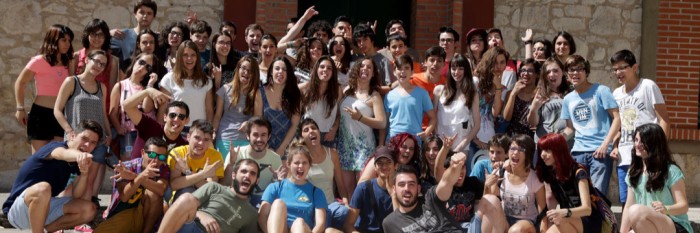
Interview with the Festival Director of Cinema Camp

Cinema Camp Film Festival is a festival connected to the Cinema Camp film course, in wich teenagers from 13 to 17 spend a week learning the process of filmmaking. The Film Festival has a double purpose, on one hand it seeks to give visibility to the short film as a whole, on the other it wants to serve the students of the film course as a formative tool that may be inspiring by its original ideas or unique techniques.

Interview with the Festival Director: 

Matthew Toffolo: What is your Film Festival succeeding at doing for filmmakers? 

We’re a very special festival, because we’re part of a summer film academy called “Cinema Camp” (http://cinemacamp.es/), so we’re screening shortfilms to aspiring filmmakers. This way, Cinema Camp students can appreciate the works that filmmakers create from a full perspective, as well as obtain inspiration in order to create their own films. There’s a complete recognition to the filmmakers whose works are screened.

MT: What would you expect to experience if you attend the festival this year (2016)?  

A great selection of works from all around the world, really, I’m quite surprised about how easy is to get a piece of almost any important cinematography in the world. Great stories that are told in an original way.

MT: What are the qualifications for the selected films?  

They must be less than 15 minutes, and they should be in spanish or have subtitles in spanish or in english. We also appreciate that they’re not older than 2014.

MT: Do you think that some films really don’t get a fair shake from film festivals? And if so, why?  

Maybe. The problem I think, is that there are thousands of films outhere, so sometimes is hard for a film festival that has recieved hundreds of submissions to value properly each film. In Cinema Camp Film Festival, we’re doing pretty well with this, our selection comitee is working really hard and, don’t know why, we still haven’t recieved many submissions, (I think we’re around 50), so filmmakers, there’s a high probability of getting a selection if you send us your work!

MT: What motivates you and your team to do this festival?  

Two things, creating new points of exhibition for fantastic pieces that otherwise would be difficult to watch, and give the Cinema Camp Students a great lesson about how many ways there are in order to create a story.

MT: How has the festival changed since its inception?  

Not very much, we’re still a young festival, however there are little changes, this year for example, we’re becoming a competitive festival with a 100$ cash for the best film, and also special mentions.

MT: Where do you see the festival by 2020?  

We’d like to become bigger, givving more awards, having a bigger budget and inviting some filmmakers to present their works

MT: What film have you seen the most times in your life?  

Mmm, It’s difficult to answer that one, dont really know, there are lots of films, as diverse as The Godfather or Star Wars, that I’ve seen lots of times

MT: In one sentence, what makes a great film?  

A great story told from an original point of view.

MT: How is the film scene in your city?  

Honestly not very good… But we’re working on that 😉

cinemacamp

___

Interviewer Matthew Toffolo is currently the CEO of the WILDsound FEEDBACK Film & Writing Festival. The festival that showcases 10-20 screenplay and story readings performed by professional actors every month. And the FEEDBACK Monthly Festival held in downtown Toronto on the last Thursday of every single month. Go to www.wildsound.ca for more information and to submit your work to the festival.

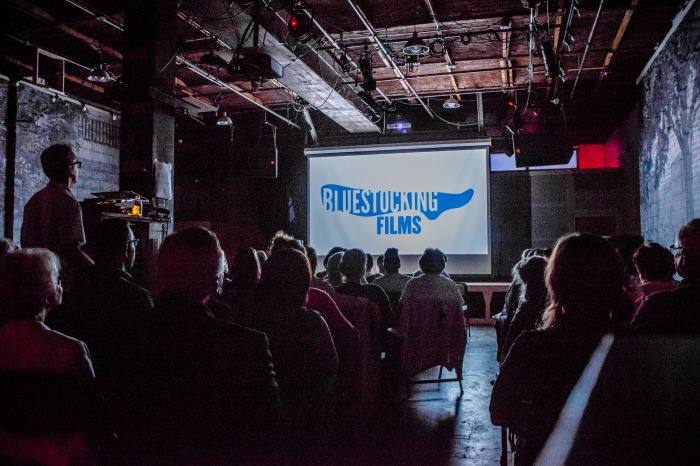
Interview with Artistic Director Kate Kaminski (Bluestocking Film Series)

Bluestocking Film Series celebrates and amplifies women’s voices and stories on-screen and promotes talented, emerging and established filmmakers who take the creative risk of placing female characters front and center. Founded in 2010, Bluestocking focuses exclusively on female-driven films that pass the Bechdel-Wallace Test (a film with at least two female characters speaking to each other about something other than men). The only women in film event in Maine, Bluestocking was also the first U.S. film event to receive Sweden’s A-Rating (informing consumers that the festival passes the Bechdel-Wallace Test).

Interview with Kate Kaminski

Matthew Toffolo: What is your Film Festival succeeding at doing for filmmakers? 

Bluestocking Film Series is a dedicated space for celebrating films that center female characters. We have a vested interest in finding, promoting and nurturing those filmmakers we believe have the chops to succeed in the commercial marketplace, and to influence the future of female representation on-screen. Our relationships with filmmakers extend beyond the annual screenings and, after six years, we’ve connected to an incredibly diverse, global network of people committed to changing the ratio and making great movies.

MT: What would you expect to experience if you attend the festival this year (2016)?  

This year is a total immersive experience of female-driven cinema in every genre. We’ve got wacko comedies, moving dramas, sharp satirical scifi and horror films, and road movies that radically reinterpret a narrative often exclusively male. And we’re also dubbing our 6th annual fest as The Year of The Bad Girls, so people can expect women behaving badly too.

MT: What are the qualifications for the selected films?  

We specifically seek out well-produced films that offer an alternative, more complicated view of what women and girls are capable of. We’re always interested in seeing stories that offer insight into the complex relationships we have with each other. With our focus exclusively on fiction films, good acting is probably the most important qualification for any selected film.

MT: Do you think that some films really don’t get a fair shake from film festivals? And if so, why?  

Considering that people pay for that consideration, film festivals, by definition, should be giving every filmmaker a fair shake. Does every programmer to an extent have their own taste that drives selection curation? Speaking for myself, yes. There are certain types of characters and situations that especially excite my interest, but I’m open to an extremely wide range of cinematic expression.

MT: What motivates you and your team to do this festival?  

We’re driven by a desire to see (and nurture) films that provoke new thinking about the possibilities for female-driven stories. Bluestocking screenings are an exciting experience for the audience. We also feel like we’re part of the greater movement toward gender equality in the world of cinema and in general. Of course, we’re motivated by love of the art. Movies have the ability to transport audiences, move them emotionally, and even change them — which is the point of it all.

MT: How has the festival changed since its inception?  

We started as a biannual showcase and have evolved into an annual celebration of female protagonists. We’re also expanding to 3 days of programming in 2016, opening the festival with an all-star panel of women in film talking about the state of female representation on- and off-screen. We remain committed to the art of the short film, but we are also open to the possibilities of eventually screening features and running a screenwriting competition.

MT: Where do you see the festival by 2020?  

That will be Bluestocking’s 10th anniversary! Hopefully, by then, Bluestocking is a destination for film lovers who are as fascinated by complex female protagonists as we are, and they’re making an annual trek to see what cinematic riches we have in store for them.

MT: What film have you seen the most times in your life?  

This is probably the hardest question of all! I’ve seen so many movies multiple times. If I’m pressed, I admit that I re-watch “Jaws” every year so it probably wins for most times. Plus, shark-driven films are perhaps my second favorite genre. But I’ve also watched (and taught) Barbara Loden’s film “Wanda” enough times that it’s a close second.

MT: In one sentence, what makes a great film?  

My notion of a great film might be somebody else’s trash, but I know it when I see it.

MT: How is the film scene in your city?  

I’ve been making films in Portland since the early 1990s when there were only a few of us, so I’ve seen the scene grow exponentially in the last 15-20 years. Now there’s a very active indie scene for sure. The beauty of being a low-budget, indie filmmaker in Portland (and Maine, in general) is that you really have your pick of locations. You can shoot urban or rural scenes, seaside or mountain, and do so with very little travel time. So that’s pretty sweet.

Aud watch_Blue logo-156_lg.jpg


Kate Kaminski is an independent filmmaker whose films have screened all over the world. As Gitgo Productions, she and partner Betsy Carson have produced more than 30 films, including 4 feature films and numerous short fiction and non-fiction films. Gitgo’s 53-episode improvised Willard Beach was the first web series produced in Maine. In 2010, Kaminski founded the Bluestocking Film Series.

Interviewer Matthew Toffolo is currently the CEO of the WILDsound FEEDBACK Film & Writing Festival. The festival that showcases 10-20 screenplay and story readings performed by professional actors every month. And the FEEDBACK Monthly Festival held in downtown Toronto on the last Thursday of every single month. Go to www.wildsound.ca for more information and to submit your work to the festival.