Interview with Festival Director Freda Sideroff (Garifuna International Indigenous Film Festival)

garifunaThe GIIFF was founded in 2012 with a mission to preserve the values and aspirations of all indigenous people and Garifuna cultures. Founded by Freda Sideroff an indigene of the Garifuna, the GIFF’s mission is to specifically support the preservation of all indigenous cultures in the world through art and film.

Official Website: http://www.garifunafilmfestival.com/filmfestival

Interview with Freda Sideroff

Matthew Toffolo: What is your Film Festival succeeding at doing for filmmakers?

Freda Sideroff: GIIFF is succeeding at creating a platform uniting filmmakers from around the globe with common causes to share the stories

MT: What would you expect to experience if you attend the festival this year (2016)?

FS: 41 films with 18 films/docs making Worldwide premieres Screening at 5th Annual GIIFF with a global impact , indigenous art installation International Symposium and cultural performances.

MT: What are the qualifications for the selected films?

FS: Supporting the preservation of indigenous cultures. Our filmmakers and films must consist of characters that offers cultural diversity.

MT: Do you think that some films really don’t get a fair shake from film festivals?

FS: I suspect that some films don’t get a fair shake from certain film festival if they don’t serve the best interest of the film festival .

And if so, why?

FS: If you choose to accept a certain film subject it means that in some way you become responsible or forced to become aware with what it means to deal with the issues.

MT: What motivates you and your team to do this festival?

FS: What motivates me and my team is knowing that the contribution that GIIFF is making brings together leaders from communities from around the globe creating a platform for their voices and the voices of their communities to be heard.

MT: How has the festival changed since its inception?

FS: The first year GIIFF screened only Garifuna related films and now it includes films and documentaries about the indigenous from around the globe including our international symposium which will include leaders from indigenous communities from Fiji , West Papua ,Guatemala , Honduras, Belize , Hawaii, Tribal Leaders from North America to name a few .

MT: Where do you see the festival by 2020?

FS: By 2020 my hope is that GIIFF will attract sponsors and it will no longer be costing us out of personal pocket .

MT: What film have you seen the most times in your life?

FS: Sarafina by director Stephen Spielberg starring Whoopi Goldberg

MT: In one sentence, what makes a great film?

FS: What makes a great film is when you find yourself impacted by the story.

MT: How is the film scene in your city?

FS: Hollywood is here we are in the land of where films are made need I say more.

___

Interviewer Matthew Toffolo is currently the CEO of the WILDsound FEEDBACK Film & Writing Festival. The festival that showcases 10-20 screenplay and story readings performed by professional actors every month. And the FEEDBACK Monthly Festival held in downtown Toronto on the last Thursday of every single month. Go to www.wildsound.ca for more information and to submit your work to the festival.

Interview with Festival Director Chris Grigsby (Cinevision Film Festival)

Cinevision Film Festival is an international competition for short filmmakers located in Santa Fe, NM at the heart of the city.  We aim to help amateur filmmakers make the professional leap.  This year’s competition is a little bit different than in the past.  We’re focusing more on shorter films to allow more directors the opportunity to be seen.  This year’s festival is directed by Chris Grigsby who is partnering with film4change and this is our film to help create the best program we’ve had yet.

http://cinevisionsfuad.com/

Interview with Chris Grigsby:

Matthew Toffolo: What is your Film Festival succeeding at doing for filmmakers?

Chris Grigsby: Cinevision Film Festival is located in Santa Fe, New Mexico. For those who don’t know, Santa Fe, Nm is indeed a real place and it happens to be a film and artist hub. Independence Day 2, Seth Rogan’s new project, “Preacher” and the ever popular Netflix show, “Longmire,” are just some of the recent project that are taking place here. With the film Festival, we like to give the opportunity for Filmmakers to showcase their work to an audience that is very involved in the business, and hopefully be a bridge between the amateur and professional realm.

MT: What would you expect to experience if you attend the festival this year (2016)?

CG: Laughing. Crying. Puking. Walk-outs and the occasional standing ovation is what I’m praying for. This year we had over 700 submissions from around the world and the program is shaping into one of the best showcases I’ve seen, but then again I’m biased.

MT: What are the qualifications for the selected films?

CG: Cinevision is an International Short Film Festival, so fifteen minutes or less is kind of our style. If you think punk-rock teen angst meets ballroom reception with a splash of comedy, this would be our qualifications. You won’t see to many heart felt documentaries this year.

MT: Do you think that some films really don’t get a fair shake from film festivals? And if so, why?

CG: I can’t say with any certainty but I’m sure you could make a case for it. The beautiful thing about today, is that there are film festivals springing up all around the world that gives filmmakers an even greater chance to be seen and heard. So I would say try your chance and if it doesn’t work out, try again.

MT: What motivates you and your team to do this festival?

CG: Cinevision is part of a weekend art festival held at Santa Fe University of Art and Design. Were right in between Outdoor Vision Festival, which is an art instillation and projection exhibit, and Quadstock Music Festival. Their always seems to be a friendly rivalry between the events, and we want to win that rivalry. There is always a large crowd that comes out every year and we want them to come for the art, stay for the film and relax on the music.

MT: How has the festival changed since its inception?

CG: We’ve shifted the program to focus on shorter works and opened up the competition more internationally, just to give the opportunity for more filmmakers to show their work. The competition abroad was really strong this season and I know the audience will appreciate that. If you’ve ever been to Santa Fe, then you’ll understand just how worldly the community is.

MT: Where do you see the festival by 2020?

CG: I’d like for the festival to keep its small town feel, and still support major competition. The great thing about being in Santa Fe, is that the filmmaker never gets lost in the shuffle and has the opportunities that any major film market could provide.

MT: What film have you seen the most times in your life?

CG: Probably John Carpenters, Halloween. I started watching that around the age when I wasn’t supposed to and feel in love with it. And because of that, I’ll never get the soundtrack outta my head.

MT: In one sentence, what makes a great film?

CG: A great film breaths life from pictures.

cinevision_film_festival

___
Interviewer Matthew Toffolo is currently the CEO of the WILDsound FEEDBACK Film & Writing Festival. The festival that showcases 10-20 screenplay and story readings performed by professional actors every month. And the FEEDBACK Monthly Festival held in downtown Toronto on the last Thursday of every single month. Go tohttp://www.wildsound.ca for more information and to submit your work to the festival.

Interview with Festival Director Antoine Leonetti (Fire!! Barcelona LBGT Film Festival)

The FIRE!! Mostra is the first LGBT film festival in Spain: established in 1995 by Casal Lambda, in Barcelona, it addresses affective diversity in its broadest sense through a careful selection of feature films, documentaries and short films. A selection of art-house cinema and an educational approach are its main characteristics.

www.mostrafire.com

Interview with Antoine Leonetti:

Matthew Toffolo: What is your Film Festival succeeding at doing for filmmakers?

Antoine Leonetti: Our festival only screens movies that haven’t been shown, at least, in Barcelona, though they’re generally almost all Spanish premieres. So that’s a great opportunity for a filmmaker to introduce its movie in our country in order to find, eventually, a local distributor so to show the movie in many other theatres. We also – as far as our contacts with the embassies can work for that – try to invite them from their country, in order to attend the festival. It’s then a great chance for them to meet new publics, to speak with the festival organisers about the cultural life in the country, to meet other directors and make good contacts with the cultural attachés at the consulates… and to know and enjoy Barcelona, of course!

MT: What would you expect to experience if you attend the festival this year (2016)?

AT: The FIRE!! festival is basically a great place to watch the best international art house movies in the LGBT field, with long feature films, documentary films and short movies. Apart from the very screenings, the audience can also enjoy many other activities: books presentations, an educational programme, some exhibitions, and a few great, great parties… All that during 10 days, in different venues of Barcelona, though mainly at the French Institute.

MT: What are the qualifications for the selected films?

AT: When making the selection, we always have in mind two basic criteria: on one hand, we try to show really good movies, that are well done in a strict cinematographic sense and, on another hand, we try to pick up movies that can convey to non-LGBT people a positive and somewhat educational view on what it is to be gay or transsexual nowadays. And when saying “really good movies”, I mean movies that may be shown to anyone in any good art house cinema, opposed to LGBT movies that seem to be produced sometimes only for the average LGBT film festival circuit and only for LGBT people.

MT: Do you think that some films really don’t get a fair shake from film festivals? And if so, why?

AT: Maybe that’s unfortunately inevitable, for different reasons: first of all because of the huuuge quantity of movies received by festivals, which makes very difficult not only to make (surely unfair) choices between very, very good movies, but also to actually really watch all the screeners we get… And I don’t refer to the big film festivals that have sufficient money to pay several programmers to make the selection. I speak about midsize or small festival like ours, especially in Spain where the financial crisis has reduced drastically the public and the private money to support culture. The programmer, in festivals like ours, usually has another job and has to spend all its spare time watching movies… and not really good ones, in 95% of the cases. So yes, that can be quite frustrating for a good filmmaker to not having been selected in a festival. But if a movie is actually really good, it’ll end up for sure in some good film festivals… And luckily, they’re a lot of them!

MT: What motivates you and your team to do this festival?

AT: Being a festival with a strong social content – the LGBT topic –, we are obviously powerfully driven by the message that wants to convey the festival: to improve the visibility and, in the end, the life conditions of the LGBT people. There is a strong “activist” mentality, so to say, that lies within all of the member’s team. But there is also, obviously, the love for good cinema. And after having watched maybe 20 really, really bad movies, when you suddenly find a good one, the pleasure is really orgasmic! You generally start to speak to yourself, you may start dancing as well in the middle of your living room, and you generally always want to grab a phone or any other communication device to call anyone right away, so to spread the good news (something that your relatives may have difficulties understanding). So yes, that’s quite addictive…

MT: How has the festival changed since its inception?

AT: It’s grown a lot, basically, in quantity and quality. We are the first LGBT Film Festival in Spain, created 21 years ago, so we begun with a small selection of maybe 10 movies screened in Barcelona, and we now screen around 40, not only in Barcelona, but also in 4 other Catalan cities. We have also developed a lot the parallel activities (book presentations, educational program, parties, master classes, workshops) and the venue where the festival takes place has also been improved a lot, with a great terrace to have some drinks and grab some food, to meet people, to speak with the filmmakers, the actors, the festival team, etc.

MT: Where do you see the festival by 2020?

AT: We would like to show more movies, first of all, maybe between 60 and 80. We also would like to meet more confident sponsors! Big brands are still somewhat reluctant in Spain to support LGBT cultural events… Being able to secure private investments would allow us, for instance, to give better awards to the filmmakers. That would also allow us to communicate better, to get more non-LGBT audiences (which is, in the end, one of our main goal), and to be present in more theatrical venues in Barcelona and the rest of Catalonia.

MT: What film have you seen the most times in your life?

AT: Excepted comic movies of my childhood that I was looking in loop again and again (I guess that Delusions of Grandeur, by Gérard Oury and played by Louis de Funès and Yves Montand, must be in a good position), I then totally fall in love with Wim Wenders Wings of Desire, when I was like 16, and saw it maaany times afterwards…

MT: In one sentence, what makes a great film?

AT: A great movie for a film festival programmer, it’s when you never had the temptation to go forward during the screening, and you whish it lasted maybe 2 or 3 more days.

MT: How is the film scene in your city?

AT: Barcelona is a big city with still a lot of good theatres, but, as for Spain in general, the exhibition sector is very much in crisis and a lot of theatres did had to close because of a drastic audience drop along the last 10 years. However, Barcelona is a unique case in Spain because the city hosts a huge number of very good film festivals. The Catalonia Film Festivals network now includes no less than 23 “good quality” midsize or big active members (http://catalunyafilmfestivals.com/en/membres-3/), with festivals of any kind (featuring environment movies, independent movies, short movies, horror movies, women movies, LGBT movies, sport movies, Jewish movies, etc.), not to speak about the rest of smaller festivals. Also, a tiny bunch of very good art-house theatres have understood the advantage of hosting a film festival to better survive amongst the crisis. This is, for sure, this kind of alliance that can boost a return of the audience to our cinemas.

fire

___
Interviewer Matthew Toffolo is currently the CEO of the WILDsound FEEDBACK Film & Writing Festival. The festival that showcases 10-20 screenplay and story readings performed by professional actors every month. And the FEEDBACK Monthly Festival held in downtown Toronto on the last Thursday of every single month. Go to http://www.wildsound.ca for more information and to submit your work to the festival.

Interview with Director Ben Wheatley (HIGH-RISE)

Chatting with director Ben Wheatley on the phone in the midst of his press junket for “High-Rise” gave me a brief insight of who he is. He gives a lot of thought to the questions you ask him (even if he’s been asked a similar question dozens of times by reporters). He really loves his wife (see answer to final question). And he really likes directing films. 

benwheatley.jpgInterview with Ben Wheatley, promoting his film “High Rise”:

Matthew Toffolo: When did you first read the novel HIGH-RISE? Did you ever imagine that you would be the director of the film version.

Ben Wheatley: I first read the book when I was 16 years old. It stuck with me. Directing the film version, or any film in general, was the farthest thing on my mind then. Directing came later in my life.

MT: Tell us about your collaboration with screenwriter Amy Jump. From developing the script to editing the film together.

BW: She wrote the script and then passed it to me. There was no conversation. I gave her zero notes and zero feedback after I read it. I took the script and began the process of making the film. She knows me and what I’m capable of. And she knows the budget. So it was a seamless handoff.

After the film ended, we began to edit the film together.

MT: Was she on set? Did she watch the dailies?

BW: No. She first saw the footage when we began editing.

MT: How does your editing relationship work? I can’t think of another film where the writer and director edited the film together?

BW: I operate the machine, I guess like a traditional editor. She sits and has a conversation with me about what moment we’re piecing together.

Even with the credits in the film, we share the first title together. We are equal collaborators. We each have a job to do and our jobs are equally important.

MT: Producer Jeremy Thomas has wanted to make this film for over 30 years. What was his contribution on the film?

BW: He’s chafed that it’s completed. We (Amy and I) actually went to him, he didn’t come to us. We knew he had the rights to the novel and we were interested in doing it. We had no idea how long he was trying to get it made. From the day we spoke with him for the first time to the final product, it was about two years.

Amy’s weird in that she doesn’t like to take money to write. She told him , “I’ll write the script on spec. If you like it, then let’s do it. If you don’t, no problem.”

She did that, wrote the script and he did the rest to have it made.

MT: The film has a striking Production Design. How was your working relationship with Production Designer Mark Tildesley?

BW: I storyboarded the entire film. We drew together to set up certain scenes in pre-production and had a good relationship. We made a low budget film look expensive. We were very meticulous in how we set up each scene.

PHOTO: Tom Hiddleston stars in HIGH-RISE
high_rise_2.jpg

MT: The film has a very claustrophobic feel to it. Like we’re also trapped inside of this building and can’t get out. Was that your cinematic intention?

BW: The general sense of any movie is to wrap the audience in the film. So I wanted the audience inside that building relating to the characters. Yes, that was my intention.

MT: You like to present themes of the class war system in all of your films….

BW: Yes. The class system is all around all of us. Class is not just about money. It’s about the pressures of succeeding. And the misery of not succeeding. This around all of us, no matter what society we live in. I think everybody has issues with class, no matter what country you live in.

MT: What film have you seen the most times in your life?

BW: Blade Runner. I’ve seen it 30-40 times.

MT: Who would you love to have dinner with, dead or alive?

BW: My wife. It’s miserable being away from home. I miss her. (Ben’s wife is Amy Jump, the writer/editor of High-Rise.)

MT: Can you give us a sneak peak of your next film “Free Fire”?

BW: It’s set in America, but the process of making it has been the same as before. It’s a genre action/crime film, so it was fun to make. The film is wrapped and edited and ready to be released. So stay tuned! It stars Brie Larson, Cillian Murphy, Sharlto Copley, and Armie Hammer.

Read Gilbert Seah’s Review of HIGH-RISE

_____

Interviewer Matthew Toffolo is currently the CEO of the WILDsound FEEDBACK Film & Writing Festival. The festival that showcases 10-20 screenplay and story readings performed by professional actors every month. And the FEEDBACK Monthly Festival held in downtown Toronto on the last Thursday of every single month. Go to www.wildsound.ca for more information and to submit your work to the festival.

Interview with Festival Director Ron Bonk (Scare-A-Con Film Festival)

Scare-A-Con started off as The B-Movie Film Festival back in 1999 and has run nonstop ever since.  It takes place during the convention which attracts 5,000 attendees and 100s of celebrity guests.

Website: http://www.scareacon.com/

Ron Bonk is a producer, director and distributor for SRS Cinema, having produced some 40+ movies and directed 10 himself, most recently a homage to 1970’s Grindhouse films, “She Kills”.

Matthew Toffolo: What is your Film Festival succeeding at doing for filmmakers?

Ron Bonk: I think exposure to distributors, a lot of the motion pictures we screen secure distribution, including the shorts.

MT: What would you expect to experience if you attend the festival this year (2016)?

RB: Some of the most offbeat, obscure indie flicks you will eveer see anywhere.

MT: What are the qualifications for the selected films?

RB: We are open to all motion pictures as long as they are horror, sci-fi or fantasy.

MT: Do you think that some films really don’t get a fair shake from film festivals? And if so, why?

RB: Certainly, and hard to say, it can be different from fest to fest. Some just go thru the motions, only watching a handful and just selecting those. Others it can be who you know.

MT: What motivates you and your team to do this festival?

RB: Just pure love of indie and underground cinema.

MT: How has the festival changed since its inception?

RB: Well it has zeroed in on horror, scifi and fantasy, plus developed from the B-Movie Film Festival to Scare-A-Con as part of the convention.

MT: Where do you see the festival by 2020?

RB: It’s growing rapidly, I see higher profile screenings among the regular festival entries, and more showing slots for the entries, with more and more guest attendance and participation.

MT: What film have you seen the most times in your life?

RB: Star Wars, the original one, A New Hope, tho Jaws is only a screening or two behind.

MT: In one sentence, what makes a great film?

RB: A great film entertains its intended audience.

MT: How is the film scene in your city?

RB: We have quite a few filmmakers, 99% work under the radar but they are making movies!


scare_a_con

_____

Interviewer Matthew Toffolo is currently the CEO of the WILDsound FEEDBACK Film & Writing Festival. The festival that showcases 10-20 screenplay and story readings performed by professional actors every month. And the FEEDBACK Monthly Festival held in downtown Toronto on the last Thursday of every single month. Go to www.wildsound.ca for more information and to submit your work to the festival.

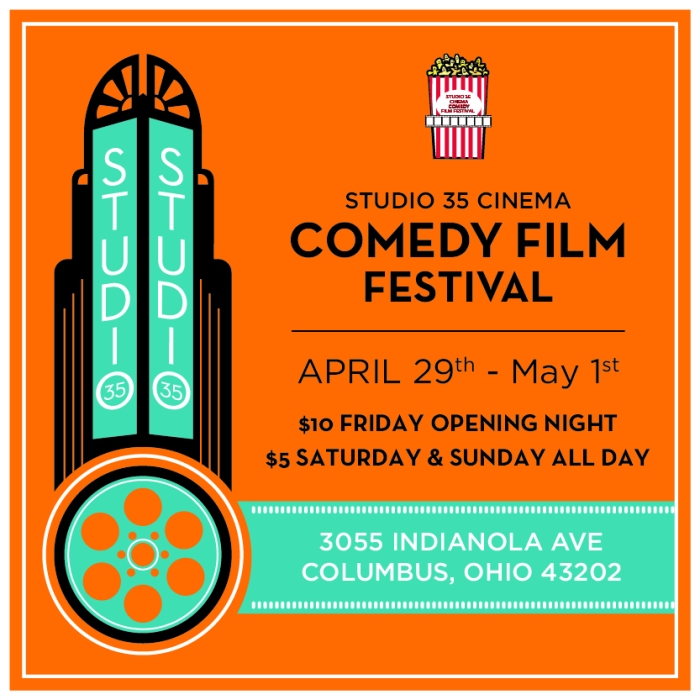
Interview with Festival Director Tim Baldwin (Studio 35 Cinema Film Festival)

Get ready for the second annual Studio 35 Cinema Comedy Film Festival (S35CCFF) taking place at Columbus’ oldest independent movie theater. Located in the heart of Clintonville, the S35CCFF features the newest and funniest independent film and shorts from around the country. What goes better together than comedy and a beer! A whole weekend is dedicated to showing the best independent comedy features and shorts, while drinking the best draft beers of the Midwest.

Website: http://www.studio35.com/

Interview with Tim Baldwin:

Matthew Toffolo: What is your Film Festival succeeding at doing for filmmakers?

Tim Baldwin: We’re able to show their shorts and features on a big screen in DCP format. Not on a pull up screen in a hotel auditorium, or something like that. We’re an independent theater in Columbus, and we can show what we want. You make a movie to see on the big screen, and we will do that. I wish we had some panels for filmmakers, but we will do a Q&A. And since we’re small, there’s a lot of opportunities to just hang out and discuss films. We love supporting films after they’re been here as well.

MT: What would you expect to experience if you attend the festival this year (2016)?

TB: Some funny international short films. We’ve had a great submission year for international shorts. This sounds ridiculous, but we have a swag bag this year that I think is great for filmmakers. Great draft beer. A Ghostbusters pinball game.

MT: What are the qualifications for the selected films?

TB: Since we’re a comedy film fest, it’s as easy as make us laugh. We’ve received a lot of shorts and features that are good, but not funny. They would play great at a film festival, but not at a COMEDY film festival. And the regular technical aspects like make sure we can hear the film, and see it. The judges and I struggle with shorts that are technically not good, but maybe humorous. It needs to look good, maybe not polished or too polished, but look like it wasn’t shot with a camcorder. And the story has to be great. That’s the least expensive thing about a film you can do. Make a good story that we care about. All the best equipment in the world won’t make an unfunny story funny.

MT: Do you think that some films really don’t get a fair shake from film festivals? And if so, why?

TB: If you mean, why don’t films get selected, it could be a lot of reasons. As a filmmaker who has submitted to over hundreds of festivals, I wonder the same. And I’ve found out that it’s just subjective to some extent. Some movies don’t fit the program, or some are too long to be included, or just not the genre they were looking for. But a lot of it comes down to, someone didn’t like it or get it. Doesn’t mean it wasn’t good or anything, just didn’t fit.

MT: What motivates you and your team to do this festival?

TB: I wanted to create a festival to show shorts and features that our community would not normally see. I wanted to create a fun atmosphere of filmmakers and moviegoers. And I wanted to meet filmmakers. Good film motivates me.

MT: How has the festival changed since its inception?

TB: Well, it’s only our second year, so not a lot. We shortened the festival to three days this year. Since our attendance wasn’t as great as I hoped, we don’t have an awards ceremony or anything. I hope to have something more substantial in future years.

MT: Where do you see the festival by 2020?

TB: If we’re still doing it, lol, I’d like to have more shorts and films from well known artists but below the radar studio pictures. I’d like to have it be a cool location for filmmakers to come see their films. I’d like to have more of the community to attend, and in return give something back to local groups and events. I hope to make it more of an event for our community. We’re finding our footing now, seeing where we fit.

MT: What film have you seen the most times in your life?

TB: Easy. Star Wars. I’m a small filmmaker as well, producing and making short films for twenty years. So Star Wars was a huge inspiration and influence in my life.

MT: In one sentence, what makes a great film?

TB: A great film makes me care about the characters and what will happen to them.

MT: How is the film scene in your city?

TB: We have a nice little film production community here in Columbus. Many people help out with other people’s productions. Columbus is working hard to bring the bigger budgeted movie here. Many of the professional crew work on these, and national spots. Columbus, also, has tons of international companies headquartered here that do production work. For viewing films, we have the Ohio State’s Wexner Center, which is second to none in programming films. The Gateway Film Center is also amazing in programming films and having special events that the people can get involved with. Our little single screen theater is great for community events, and watching movies with a great crowd as well.

Tim Baldwin BIO: Loving movies all his life, Tim entered Bowling Green State University with an emphasis of film production and studies. After taking an internship in Columbus, Ohio, Tim moved there in 1994. Tim worked at a production house for four year, moving from grip/production assistant to online editor. As a second job, he was a projectionist at three movie theaters in town, watching movies all the time. Wanting something more, he moved to Los Angeles in 1998 to expand his career and fulfill a dream of working in movies. After working on six films, including “The Heist”, “Buddy Boy” and “Way of the Gun” as a post production assistant, Tim wanted to try a different avenue to get his films made. So he moved back to Ohio and has worked as an AVID editor and video producer since 2000. He loves watching movies with his young son and spending time with his Key Make-up Artist wife.

Tim has wrote, directed and edited six short films, one feature length film “Garage Sale” and a documentary about Studio35, the longest running single screen movie theater in Ohio. He also is program director for the Studio35 Comedy Film Festival, now in it’s second year.


Studio 35 Film Festival FB_2016-01

Interviewer Matthew Toffolo is currently the CEO of the WILDsound FEEDBACK Film & Writing Festival. The festival that showcases 10-20 screenplay and story readings performed by professional actors every month. And the FEEDBACK Monthly Festival held in downtown Toronto on the last Thursday of every single month. Go to www.wildsound.ca for more information and to submit your work to the festival.

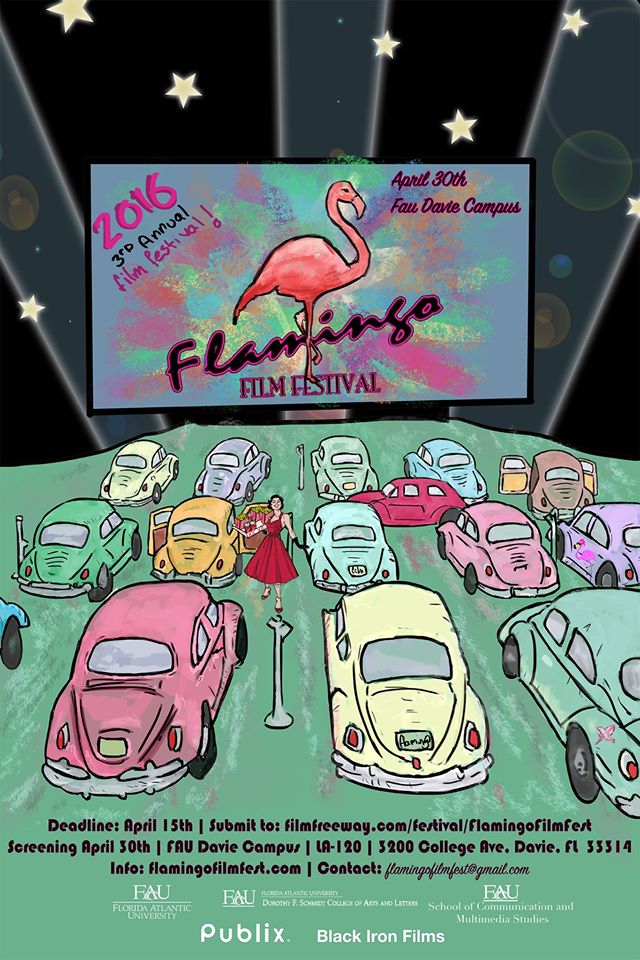
Interview with Festival Director Nathalia Lemos (Flamingo Film Festival)

The Flamingo Film Festival is dedicated to exhibiting the international short films and videos produced by student filmmakers. For the past 3 years, this event, held in South Florida, has honored outstanding narrative, documentary, experimental, and animated projects created by students while enrolled in a college, university, or other post-secondary institution.

Website: flamingofilmfest.com

Interview with Nathalia Lemos:

Matthew Toffolo: What is your Film Festival succeeding at doing for filmmakers?

Nathalia Lemos: The festival is giving student filmmakers the opportunity to have their work screened not only for their peers, but also for a diverse audience of festival goers.

MT: What would you expect to experience if you attend the festival this year (2016)?

NL: Anyone attending the festival this year can expect a diverse showcase of student films. Festival goers will have the unique opportunity to see a variety of films not only from local student filmmakers, but also student films from abroad.

MT: What are the qualifications for the selected films?

NL: Well, we are definitely looking for films that are creative and original. We want to offer our audience the opportunity to discover new voices that have fresh and interesting perspectives.

MT: Do you think that some films really don’t get a fair shake from film festivals? And if so, why?

NL: The goal of a festival is to curate a well rounded program. While yes, I am sure that there are films that don’t get a “fair shake,” here at the Flamingo Film Festival we are giving filmmakers from all over the world the opportunity to have their films reach a wider audience.

MT: What motivates you and your team to do this festival?

NL: The Flamingo Film Festival is dedicated to exhibiting the short films from student filmmakers from all over the world. Our goal is to continue to encourage student creativity and to recognize achievement in the film and video medium.

MT: How has the festival changed since its inception?

NL: The festival is now in its 3rd year. And while the mission and goals remain the same, the festival has definitely increased it’s traction with international student filmmakers.

MT: Where do you see the festival by 2020?

NL: By 2020 I definitely see the Flamingo Film Festival as one of the most important international student film festivals in the country.

MT: What film have you seen the most times in your life?

NL: Bram Stoker’s Dracula.

MT: In one sentence, what makes a great film?

NL: In my opinion, a great film is one that remains interesting and engaging no matter how many times you see it. A film that can remain relevant 20 or more years from now.

MT: How is the film scene in your city?

NL: The South Florida film scene is very diverse and vibrant. South Florida is offering filmmakers the opportunity to create fresh and interesting work. I would say that South Florida is currently a terrific haven for independent filmmakers looking for the ease and space to develop their work.

flamingo_film_festival

_____

Interviewer Matthew Toffolo is currently the CEO of the WILDsound FEEDBACK Film & Writing Festival. The festival that showcases 10-20 screenplay and story readings performed by professional actors every month. And the FEEDBACK Monthly Festival held in downtown Toronto on the last Thursday of every single month. Go to www.wildsound.ca for more information and to submit your work to the festival.

Interview with Executive Director Nina Streich (Global Peace Film Festival)

Since its inception in 2003, the GPFF has shown over 500 films from around the world. The critically acclaimed programming has included Academy Award winning, nominated and short-listed films. In his blog, former Orlando Sentinel film critic Roger Moore called the GPFF “…one of the best festivals in this part of the country” and said, “Global Peace has the best documentaries of any festival.” GPFF’s leadership believes that to further its mission, success should not simply be measured by attendance numbers but by the engagement the films inspire from the audience – at the festival and beyond.

Interview with Nina Streich

Matthew Toffolo: What is your Film Festival succeeding at doing for filmmakers?

Nina Streich: The Global Peace Film Festival (GPFF) is about actively engaging audiences to do something about the issues in the films they see. Watch Films, Get Involved, Change Things is our tagline and we seek films, mainly documentary but narratives too, that have been produced to have an impact on the issues they address. Filmmakers find enthusiastic audiences and meet leaders of organizations that are working on the issues the their films address. In the past few years, we have begun to offer other services for filmmakers beyond the festival including impact consulting and fiscal sponsorship.

MT: What would you expect to experience if you attend the festival this year (2016)?

NS: Most films are followed by discussions with filmmakers and also representatives from local organizations that work on the issue(s) raised in the films. The Q&As are often longer than those at most film festivals. Filmmakers find the audiences engaged and interested in their films as well as the issues they raise. Festival staff and volunteers work to make the GPFF a warm and welcoming experience for filmmakers and audiences alike.

MT: What are the qualifications for the selected films?

NS: We program features and shorts – documentary, narrative and animation. The majority of the program is non-fiction but we always want to include fiction work. We have always programmed films that are “mediums” – between 40 and 65 minutes. Our approach to the definition of “peace” is very broad and includes everything from conflict resolution, social inequality (class, race, gender, age, mobility, etc.), environment/environmental justice, LGBT rights, fair trade and new business models, human trafficking, sports and recreation, comedy/satire. We look for films that inspire and educate. We also include an online selection of films, mainly shorts, in addition to the main program, during the week of the festival.

MT: What motivates you and your team to do this festival?

NS: We are motivated to present a great program that addresses the many aspects of peace and produce an event that is a catalyst for community engagement.

MT: How has the festival changed since its inception?

NS: The festival has grown in both size and impact. 2016 will be our 14th festival. We recognized the changing model of film festivals and decided early on to steer the festival in a direction that served the community in a deeper way, beyond bringing a crowd to a downtown venue for a passive viewing experience. We sought to develop relationships with the filmmaking community that focused on the “why” motivating filmmakers. This involved moving to pull other partners into the festival to build a new structure that would serve as a networking hub. This includes schools, libraries and universities to add depth, variety and timeliness to their community offerings. We reached out to community groups to bring the same benefits of our programming to help educate, energize and increase their member base. Our programming has always been centered on active engagement with our audience.

MT: Where do you see the festival by 2020?

NS: As the festival has evolved, we have begun to offer services to filmmakers (whether their work has been in the festival or not) including impact consulting and fiscal sponsorship.

MT: What film have you seen the most times in your life?

NS: I’m always looking for and want to see new films so I can’t think of what I’ve seen the most times! Rather than the films that I’ve seen the most times, I think more about the films that have influenced me the most. It’s a long list…

MT: In one sentence, what makes a great film?

NS: A great story.

MT: How is the film scene in your city?

NS: I live in New York and the festival is in Central Florida. New York, of course has an incredible film scene. Central Florida doesn’t have anywhere near the size of the film scene as New York, but it is just as engaged, passionate and exciting.

****
Nina Streich has an extensive background in both the film/TV/media industries and in the political arena. She held senior management positions in other film festivals prior to creating the Global Peace Film Festival in 2003 including Festival Manager of the Newport International Film Festival and Development Director of the Nantucket Film Festival. She began her career as a film editor, cutting trailers and marketing material for over 50 major studio and independent features, including The Elephant Man, Raiders of the Lost Ark and Scandal. In politics, she has worked for many candidates, from local to presidential campaigns. She was a coordinator of the Inauguration of Mayor David N. Dinkins in New York City in 1990 and was appointed Deputy Film Commissioner for the NYC Mayor’s Office of Film, Theatre & Broadcasting. After leaving the Mayor’s Office, she was the Deputy Executive Director of the NYC Host Committee for the 1994 Grammy Host Committee. An accomplished events producer, she has organized film premiers, music festivals, conferences, parades, street fairs and press conferences. She has produced several documentaries on subjects she is passionate about.

_____

Interviewer Matthew Toffolo is currently the CEO of the WILDsound FEEDBACK Film & Writing Festival. The festival that showcases 10-20 screenplay and story readings performed by professional actors every month. And the FEEDBACK Monthly Festival held in downtown Toronto on the last Thursday of every single month. Go to www.wildsound.ca for more information and to submit your work to the festival.

Interview with Festival Director Michael Helman (WILLiFest)

http://www.willifest.com

facebook | twitter | youtube

Interview with Festival Director Michael Helman:

Matthew Toffolo: What is your Film Festival succeeding at doing for filmmakers?

Michael Helman: Our festival gives independent filmmakers an opportunity to have their film screened professionally in New York City. There are not many opportunities for that in NYC. The few opportunities that do exist like Tribeca and NY Film Festival are incredibly difficult or impossible for the small filmmaker to get into. There are many other film festivals in NYC but screenings at many of them are not quite professional.

We also offer additional events like networking events and panels. Many festivals skip or skimp on these important events. When filmmakers are traveling from another city, it is the festival’s responsibility to play host and at a minimum, entertain and educate those filmmakers who have spent the money to travel to NYC and support the festival.

MT: What would you expect to experience if you attend the festival this year (2016)?

MH: Our festival is continuing to narrowly focus on the emerging filmmaker. We have offered many other events at our festival, street fairs, concerts but we have found that filmmakers find these to be a distraction for what they are really interested in, which is watch film, talk film and learn about film. We have heard them and are focusing on doing just that as well as we can.

MT: What are the qualifications for the selected films?

MH: Nothing specific. We offer many categories of films and are simply looking for the best in those categories. We have reduced the number of films this year that we plan on exhibiting in order to make entry into the festival more competitive and feature the best of independent film at the festival for the audience.

MT: Do you think that some films really don’t get a fair shake from film festivals? And if so, why?

MH: Of course. Top tier festivals are very political and are somewhat slaves to their sponsors and partners so they have only so many slots available to discover new filmmakers and small films. Very small festivals are not receiving enough submissions and variety to find the next major filmmaker. Mid-tier festivals are the sweet spot because they receive enough varied submissions to discover new talent each year. One year we showed a short film from an NYU filmmaker and saw something in the film. That film went on to win the Academy Award that year for Best Short. This film was passed over by the larger festivals.

MT: What motivates you and your team to do this festival?

MH: We are filmmakers ourselves with a long history in film production. We produced a short film several years ago. The film was accepted to a bunch of festivals so we decided to travel the country with it and see what festivals we like. We were quite unimpressed and decided we could do a better job. Producing a good festival is an incredibly difficult process. We have found it to be as complex as producing a feature film… perhaps more difficult. Pulling off a well run event with limited staff and financial resources is no easy feat. We enjoy the challenge and the opportunities it brings to struggling filmmakers to find an audience and have their work be seen.

MT: How has the festival changed since its inception?

MH: We started as a LARGE, multi-disciplined arts festival. Our first year included an arts exhibit, storytelling competition, 47 indoor/outdoor concerts, street fair, half a dozen parties, opening night gala, closing day awards ceremony and almost 200 screenings. It was a monster spread out over 12 venues throughout Brooklyn. We have learned from the first year successes and stumbling blocks and have adjusted the festival each year. The rest of the answer was addressed in question 2.

MT: Where do you see the festival by 2020?

MH: No clue. We see our focus continuing to narrow. Depending on how this upcoming festival goes, we will probably continue to narrow the focus of the festival and numbers of screenings. We are continuing to grow our screenplay competition. We are trying to offer our filmmakers more benefits that they don’t always receive at other festivals like full festival passes for them and their co-producers so anyone coming out to support the festival can enjoy the entire event at no cost. We have always had an issue that most festivals charge visiting filmmakers to attend any events as well as screenings. The festival only exists and excites audiences because these talented filmmakers are attending these out-of-town festivals so they can address the audience who has chosen to view their film and answer any questions they might have. Q&A is pretty much the only thing that separates the festival experience from the movie-going experience.

MT: What film have you seen the most times in your life?

MH: The Graduate or Back To The Future.

MT: In one sentence, what makes a great film?

MH: Story. We look for a professionally produced film with good lighting, camera work, acting and especially sound. However, we have accepted less technically proficient films because the story was so compelling. Entertainment these days are driven by content. Youtube videos can be most poorly produced disaster you have ever seen but still achieve over a million views because the content is compelling to a large, general audience. If you start with a good idea, take your time and turn this compelling story into a well-written screenplay, you are already ahead of most films out there, including Hollywood films. It starts with the story and the script and everything else just enhances it and hurts it. Bad acting is a killer, so there is no easy path to making a great film. But it all starts with an interesting story. It is a lot more difficult to achieve then it sounds.

MT: How is the film scene in your city?

MH: What is there to say, New York City is arguably the center of the entertainment world. You feel it as you walk these storied streets through Manhattan and Brooklyn. If your film is going to show anywhere in this world, most filmmakers dream of a New York City screening and we aim to offer just that.

_____

Interviewer Matthew Toffolo is currently the CEO of the WILDsound FEEDBACK Film & Writing Festival. The festival that showcases 10-20 screenplay and story readings performed by professional actors every month. And the FEEDBACK Monthly Festival held in downtown Toronto on the last Thursday of every single month. Go to www.wildsound.ca for more information and to submit your work to the festival.

Interview with Festival Director Jonáš Vacek (The WE Festival)

The WE Festival
April 24th — May 1st 2016
The aim of The WE Festival is to stimulate local culture by connecting all groups present in the city, and use that collective empowerment to achieve together what would be impossible on our own. This can be hosting a workshop promoting sustainability, presenting at one of our Pecha Kuchas, performing at one of our music events or parties or organising something outside of the box. We’ve now had 6 years of experience and each year only gets bigger and better!
Interview with Jonáš Vacek
 

1) What is your Film Festival succeeding at doing for filmmakers?

We are giving a voice to the unheard. Since we have blocks that aren’t seen at many other film festivals, focussed on diversity with multicultural and lgbtq community content. We even have blocks that are focussed on coexistance and sustainability. We love new talent and different forms of audiovisual expressions which is why we welcome new talent and experimental films.

2) What would you expect to experience if you attend the festival this year (2016)?

The finest selection of films from all over the world. World-renowned artists but also new talent. There are Q&A’s happening after different films to get even more closer into the experience you just had. We have an event called One Night stand, where you make and finish a whole short film in the same time it would take you to have a one night stand. The participants films are screened during the festival and can win awards for their accomplishments. We have lectures from teachers, filmmakers from the field. We have awards given by our jury as well as our audience has a voice to award films with prizes. The WE Film festival is part of the WE Festival so there is music, amazing food and other artistic expressions.

3) What are the qualifications for the selected films?

We focus in on films that were made in the last 48 months. And the films have to be in english one way or another.

4) Do you think that some films really don’t get a fair shake from film festivals? And if so, why?

Jonas: Yes, it is a bit sad to cinsider how many films we had to reject only becasue we only have so much time to project. A lot of good talent is rejected this way, pretty uch against our will, but there’s only so much we can do…

Aiman: I agree with this. The difficult thing is that every festival has an identity. And as Festival Director you have to honor that identity which means that some movies, however great they are don’t match with the identity of certain film festivals and that is why they aren’t chosen. I wish there would be clearer communication towards why each film is not selected, but with thousands and thousands of submissions it’s humanly impossible to explain that to every filmmaker.

5) What motivates you and your team to do this festival?

Jonas: I love the ambience and vibes of a film festival, binge-watching films that you would never have the chance to see otherwise, and the discussions that come afterwards. I’ve always admired the work of the organisers and I feel that my current city really deserves a thematically wide festival.

Aiman: From when I can remember I have always been fascinated by film. It was also a thing I did with my dad growing up, watching films that challenged our life views and have discussions about them. Also as a filmmaker it’s challenging to get your work be viewed. I know so many talented filmmakers and felt we could add something awesome to this beautiful city!

6) How has the festival changed since its inception?

The WE Festival itself has never included a film festival up until this year. Since 2010, WE have transformed ourselves from a three day festival with a few workshops and some DJ performances into full-blown, city-wide 8-day cultural feast with Art Exhibitions, Pecha Kuchas, Workshops ranging from cooking, pole dancing, DJing, ceramics, street photography; as well as an insanely varied list of musical performances throughout the week, or the addition of the film festival in this year’s edition.

7) Where do you see the festival by 2020?

At the current rate, probably a two week long festival taking over pretty much most of the city… More screening blocks, more venues, and more Q&As!

8) What film have you seen the most times in your life?

Jonas: Probably Pelíšky (Cozy Dens, 1999), a film about a few neighbouring families during the Communist regime, and how they interact within and between each other. It’s a got-it-all film with great drama, love, humor, dilemma, pretty shots and conflict. I haven’t been born until more than a decade after the fall of the regime, but I feel it is one of the best portrayals of the complicated stories due to the country’s politics of those times.

Aiman: The Matrix, even though not the Best film ever made. Was for me growing up the film that made the most impact for the time it came out. Even when I watch it now, I still feel the magic that I felt when I watched it as a 12 year old teen.

9) In one sentence, what makes a great film?

Jonas: I don’t think there’s a single recipe to make a “great” film, but for me it is the way the creators handle balancing aesthetics against a story that should truly mak your consider what are the reasons why characters behave the way they do, and how well-thought out these “forces” are.

Aiman: For me it’s very clear what makes a great film. Every film is made out of ingredients necessary to make it great. You can see pretty clearly when they lack or when every ingredient simmers beautifully together.

10) How is the film scene in your city?

Jonas: Maastricht is a small city with around 100k inhabitants, but considering its small size, there is a very large group of people who truly want to push what we would consider as “worthwhile” cinema, demonstrated by the many initiatives from the international students as well as the proud locals, with a nie selection of art-house cinemas, other film festivals and organisations helping people create their projects

Aiman: I am from Utrecht myself. The National film festival is held there every year as well as many other festivals. I am pretty happy with the scene. I just wish that there would be more visitors of film in our city. Everybody turns up for the big ones, but the smaller important ones don’t get viewed by as many people as I would like to. Also film funding in Utrecht could be structured in a clearer way.


****

Interviewer Matthew Toffolo is currently the CEO of the WILDsound FEEDBACK Film & Writing Festival. The festival that showcases 10-20 screenplay and story readings performed by professional actors every month. And the FEEDBACK Monthly Fesival held in downtown Toronto on the last Thursday of every single month. Go tohttp://www.wildsound.ca for more information and to submit your work to the festival.