Movie Review: THE 400 BLOWS, 1959. Directed by Francois Truffaut

THE 400 BLOWSTHE 400 BLOWS, 1959
Movie Reviews

Directed by Francois Truffaut

Cast: Jean-Pierre Leaud, Claire Maurier, Albert Remy, Guy Decomble, Georges Flamant, Patrick Auffay, Daniel Couturier
Review by Vinny Borocci

SYNOPSIS:

A young adolescent boy by the name of Antoine is not cared for at home by his parents. The boy begins to misbehave in class, steal from his parents, form lies, and engage in criminal activities. He escapes with his friend and finds other places to stay, while avoiding his parents. Ultimately, the parents send him to reform school in order to help clear his thoughts and shape his poor behavior. While there, he is left with a choice: to cooperate and attempt to work out his problems, or continue to act inappropriately. What will this troubled young boy decide?

REVIEW:

As we all should know, Francois Truffaut first made his name working for the film journal, Cahiers du Cinema, a magazine which spent heavy time evaluating Hollywood films and directors. Unabashed and undaunted, Truffaut zealously began writing critically on films offering his own unique style. Spending arduous time studying the works of Alfred Hitchcock, Howard Hawks, and Nicholas Ray, bringing a new perspective to criticism, combining somewhat blatant words with sincere appreciation, Truffaut helped solidify the idea that the director has omnipotence and authority for engineering the cinematic experience. Through his passion for films and literature, Truffaut’s uncommon criticism became the forefront in cinema evaluation. It was in this way, Truffaut’s name caught the attention of readers and avid cinema followers. The result: recognition and popularity, culminating in Truffaut venturing out to make his first (personal) feature film, The 400 Blows.

In The 400 Blows, Truffaut continues his writing approach and simply applies it to directing his first feature film, becoming the so-called “author” of the film. From the very beginning sequence, as the opening shots are beautifully shot, with the camera gracefully capturing various shots of the Eiffel Tower, Truffaut sends a message that the director’s artistic vision “towers” over the medium itself. Incorporating his own techniques while also including overt references to his admirers (mainly of Renoir in this film with the use of long tracking shots), Truffaut creates an environment dedicated to the distinct visual styles in which the director exhibits. For The 400 Blows, in recognition of his writing icon, Andre Bazin, who died just before production, the director’s style is clearly nothing more than a personal exposition.

The story revolves around a young, troubled preadolescent boy named Antoine, whom Truffaut utilizes to represent his own childhood struggles. Through multiple instances, Antoine is presented with a set of unprincipled values: we see in the classroom Antoine initiating disturbance by mocking his teacher; Antoine roguishly scampers through his own parents belongings and steals money, along with stealing a typewriter from his father’s work later in the film; not only performing an ill-advised action by ditching school and his studies, Antoine foolishly creates lies to cover his school’s absence by falsely claiming his own mother’s death. In these ways, however, Truffaut is not depicting Antoine’s character to distribute a sense of immoral behaviors, but rather establishing Antoine as an image of pathos, to voice his idea on the meaning of family and parenting, while in the process, brazenly expressing his deprecation for his own childhood upbringing.

As we see Antoine repeatedly scurry through the bustling city streets, almost all of the time on his own, Truffaut reinforces the idea of the importance of the parent in a child’s life. The boy’s mother gives him harsh orders, while never showing an offering of care – only after the boy catches her having an affair with another man is when she attempts to suck up to him. The relationship between Antoine and his mother’s husband – as we find out that the father is not Antoine’s – is nothing more than a token friendship. They talk about sports and women, but the man never gives Antoine a sense of “fatherly” direction. In some ways, the man looks forward to the boy getting out of the house for good. On multiple occasions we hear the man and mother having conversations about sending the boy away to reform school, while Antoine listens in the background, dejected but unruffled.

In the scene where Antoine skips school with his friend, the boys wander off to an amusement area. While there, Antoine decides to go on a “Wheel-spinning” ride, where Antoine stands against a wall, and the ride spins at an incredible rate, forcing Antoine and the other adventurers to rise in the air and stick to the wall. Truffaut decides to capture this scene with mostly point of view shots, where we see through Antoine’s eyes the blurry and chaotic vision in which he sees, or in some ways, understands. Because of the insecurity provided by his parents, Antoine deliberately acts foolish; with the lack of comfort in his own home, filled with displeasure, punishment, and alienation, Antoine does not recognize a sense of stability, but identifies with the jumbled interactions which he finds in the streets causing disarray and confusion. Ironically, it is here, on the lively, brisk and active streets, running away from the lack of affection from his parents, where Antoine finds his repose and his depth of solitude.

After Antoine continues to create havoc for his parents, they finally agree to send him away to reform school. As this happens, Antoine is taken away in a truck, as he looks out from the vertical, impenetrable bars, blocking his view and access from the city streets. In some ways, as we see from Antoine’s point of view, or Truffaut’s own, we can say that the bars are blocking his sense of freedom; Antoine can no longer escape from his struggles, but must find within himself a sense of self-determination. Later, at reform school, Truffaut expands this message when Antoine is presented within the confines of a cell, with images of similar bars like those of the truck, surrounding the boy in four corners. This time, we see the bars suffocate the boy, as he exhaustingly enhales the smoke from his tattered cigarette.

Finally, while the group of problematic children are playing a game of soccer, Antoine escapes the surveillance of authorities. In the same fashion as escaping from his parents, Antoine runs away from the reform school. This time, running through the barren woods, Truffaut utilizes an extremely long, tracking shot following Antoine running. It is in this way, by shooting this long, tense, and fatiguing take, that Truffaut reflects the “auteur’s” approach by indicating the pain and suffering produced not only in Antoine’s life, but of his own. When Antoine arrives at a shore, still running from authorities, trying to keep his breath, he continues toward the ocean. After taking a few steps into the water, Antoine quickly and suddenly looks back. Truffaut ends the film on this frame exactly, as he provides the shot of Antoine’s face with a still image; even though Antoine senses freedom as he enters the ocean, his footprints will remain: Truffaut splashes away his troubled past, but his childhood isolation will never be forgotten. As a result, it is not whether or not Antoine has looked back because the authority might be there, but rather Truffaut asking if he can avoid revisiting his troubled youth. In the same fashion with Antoine, the end result is probably not good.


Full Review: SEARCHING FOR INGMAR BERGMAN (Germany/France 2018) ****

Searching for Ingmar Bergman Poster
Trailer

Internationally renowned director Margarethe von Trotta takes a closer look at Bergman’s life and work and explores his film legacy with Bergman’s closest collaborators, both in front and … See full summary »

Writers:

Margarethe von Trotta (concept), Felix Moeller (concept)

German director Margarethe von Trotta pays tribute to Swedish director Ingmar Bergman

in honour of the centennial of his birth. Von Trotta presents a detailed account of his life and his impact on filmmaking through excerpts of his work and interviews with family and contemporaries (Olivier Assayas, Mia Hansen-Love, Ruben Ostlund).  

Her film begins with a segment of THE SEVENTH SEAL with actor Max Von Sydow and explanation of each shot in detail.  Von Sydow is seen waking up on a beach with his squire by his side.  He is seeing washing his face before meeting the Grim Reaper.  There is a fadeout of a chess board with the pieces washed away by the sea.  Each shot is explain by the voiceover, thus allowing the audience to see a different interpretation of the details as well as the mastery of Bergman’s work.

There is a compilation of Bergman’s other films including his more famous ones like WILD STRAWBERRIES, CRIES AND WHISPERS, HOUR OF THE WOLF and his later works like my personal favourite, the over 3-hour long FANNY AND ALEXANDER.

These and many other films are also displayed and put into perspective by actresses who have worked on many of Bergman’s films like Liv Ulmann who speak fondly of the man.  His thoughts and inability to love his own children are also revealed.  FANNY AND ALEXANDER however showed his brilliant portrayal of children.  Von Trotta maintains that all the children portrayed in his films are images of himself.  

The film briefly traces his personal life living in Stockholm as a child.  Nothing is said of his birthplace, the religious town of Uppsala, which I visited when I was in Sweden, being an ardent Bergman fan.

The film has limited footage of Bergman in interviews and on the set.  But these are rare footages prized in the documentary. 

The film is a bit long because it includes quite a few clips from the past Bergman classics.  But thy are an absolute pleasure to watch, so who is one to complain?  The most famous scene of all the Bergman’s films (the one where the elderly man looks into a coffin to see himself in it) is of course, in it.  I am surprised there was no shot of the image with the clock which has no hands.

The film whets the appetite for watching Bergman films, a retrospective of the Master’s work that will be presented by TIFF Cinematheque the fall of 2018.  Extremely insightful and a treasure for cineastes!  Von Trotta’s own film THE GERMAN SISTERS was selected by Bergman as one of his favourite films.

SEARCHING FOR INGMAR BERGMAN is a doc to be seen by all those who not only love the Master but for all those who love the medium of film.  (Bergman was the first auteur that introduced me to non-commercial film in Singapore, his films provided courtesy by the Swedish Institute in Singapore).

Trailer: https://www.youtube.com/watch?v=E91QEXSJ1Es

Film Review: THE OATH (USA 2018) ***

The Oath Poster
Trailer

The Oath is a fictional black comedy about American citizens given the supposedly option of signing a loyalty oath to the President.   As far as black comedies go, they do not often generate many laughs, and neither does this one.  THE OATH can be best considered a comic look at America and something that could but hopefully never happen.  Citizens are required to sign before the next Thanksgiving is up.  The oath is hopefully to isolate terrorists in America.  The incentive given to those who sign is a huge tax cut, but it seems that those opposing are being persecuted.

This controversial White House policy turns family member against family member when Chris (Ike Barinholtz), a high-strung progressive news junkie, and his more level headed wife Kai (Tiffany Haddish) learn bout it.  Their reaction is disbelief, followed by idealistic refusal.  But as the Thanksgiving deadline to sign approaches, the combination of sparring relatives, and the unexpected arrival of two government agents sends an already tense family gathering completely off the rails.  Chris mentions that this is not the America he knows or the one he wants to grow up with.

Director Barinholtz keeps the film’s budget in check.  Instead of showing an actual riot with cars and buildings set on fire, the above is seen on the television screen.  Most of the action takes place at the dining table with a few exteriors.

The film’s best joke also happens on the television when it is announced (heard) that actor Seth Rogen has disappeared because he was opposed to the oath. 

For a man so geared on Thanksgiving, the film allows the man (Chris) to throw away etiquette and allow him to use his cell phone.  This incident is the catalyst for the big break up at the Thanksgiving dinner. This is a scene well done with tempers flaring and foul language running loose.

Performances-wise, every actor seems to be overdoing their parts.  All this looks normal for the fact that the events unfolding are so over the top.

The film reaches great intensity once the CPU (Citizens Protection Unit) agents invade Chris’s home without a warrant.  Someone in the dinner party had complained that Chris is advising others not to sign the oath, and hence the agents’s sudden intrusion.  Agent Mason (Billy Magnussen) taunts Chris to the point that he pushes him resulting in him taking out his gun, and punches Chris.  As a result Chris’s dad hits Agent Peter (John Cho) with the chimney stoker knocking him out cold.  Mason is tasered and is tied up.  Mason is crazy and continue to threaten Chris while Agent Peter appears the rational one.  Director Marinholtz surprisingly keeps the audience at the edge of their seats during all the action combined with verbal shouting.  The children of the family are never seen during all the commotion, having being conveniently locked in another room or whisked off to another location.

One troubling flaw are the mixed messages sent by Barinholtz’s film.  Should one stand up for ones belief despite opposition from family or should one put family first and personal principles second?   The message is blurred more by the words uttered by Chris’s dad: “One has to do whatever it takes to keep ones family safe.”

When one wonders how all the mayhem and violence will end, Barinholtz gears his film towards an unexpected plot twist.  THE OATH ends up disappointing audiences’ expectations despite some solid compelling set-up drama.

Trailer: https://www.youtube.com/watch?v=9LcVhhno-Uo

Film Review: RESTORING TOMORROW (USA 2018) ***

Submit your Film & Screenplay via FilmFreeway:

Restoring Tomorrow Poster
Trailer

In these divided times, religious institutions are losing young members and even closing their doors at an alarming rate. Director Aaron Wolf’s personal journey of rediscovery comes alive …See full summary »

Director:

Aaron Wolf

Star:

Aaron Wolf

The film begins with these announcements, on titles as well as heard aloud as voiceover.  ‘Historically, the percentage of Americans without religious affiliation has been 10%.  Since 2012, the number of young Americans in this category has been growing 30%.  Historical houses of worship around the world have been closed forever.’

The religion under study here is the Jewish religion, with thought centred on the destruction of their magnificent synagogues.  What is feared that, in the words of an interviewee, these buildings will be brought down like a beautiful cut flower fading in a vase.

The film then narrows down on one person, a good thing as to make the documentary more personal.  The person is Aaron Wolf (the doc’s writer, director and actor), who has moved from L.A. to New York to study and then returned to L.A. He was a third generation belonging to the Wilshire Temple – a huge and handsome structure, but he feels that the connection is lost when he returned.

As religious institutions are losing young members and even closing their doors at an alarming rate, director Aaron Wolf’s personal journey of rediscovery comes alive in RESTORING TOMORROW, a universal story of hope as a treasured local temple near demise, is lifted up by a community’s determination to achieve the impossible.  Wolf’s journey explores how when any community puts their mind to it, the impossible becomes possible.  Wilshire Boulevard Temple, a Los Angeles treasure built by the original Hollywood moguls, needs to raise millions to restore its majesty and vibrancy, thus also restoring the future of the Jewish community, the greater Los Angeles community-and on a personal level, Wolf himself.

  One of the great men examined in the film is Rabbi Edgar Magnin, a well connected man (a photo is shown with human his wife with the Reagans).  Another Rabbi examined in the doc is Rabbi Alfred Wolf, The director’s own father who is described as a visionary and dreamer.  He was selected between two German Jews to study in the U.S. (this meant, at that time, the difference between life and death) and he left Germany.  He founded an inter-religious group that aimed to make peace and give respect to all different religions.  This is the segment of the doc that not only makes most sense and is the most interesting but also more relevant in today’s current affairs.  

Though the documentary lacks a climax (though not without many inspirational moments including the rending of the well-known Hal David and Burt Bacharach song ‘What the World needs Now’ ), it makes up for it by an important message.  The last portion  of the film shows the restoration of the temple in L.A. from its planning to its physical restoration.  The message, and one of one of the Jews’s fulfilment is to make more Jews who will themselves make even more Jews, so that they can do good for the Earth.  

Trailer:  https://vimeo.com/220395027

Full Review: WHAT THEY HAD (USA 2018) ****

Submit your Film & Screenplay via FilmFreeway:

What They Had Poster
Trailer

Bridget (Hilary Swank) returns home at her brother’s (Michael Shannon) urging to deal with her ailing mother (Blythe Danner) and her father’s (Robert Forster) reluctance to let go of their life together.

Director:

Elizabeth Chomko


Before reading this review, it be best noted that the writer’s mother passed away from Alzheimer’s.  The film thus hits more than a number of soft spots, and though WHAT THEY HAD a film about a mother with the decease is occasionally flawed, the film kept me at most parts in tears. 

Playwright and theatre actress Elizabeth Chomko delivers a gut wrenching directorial debut with her award winning screenplay.  The film is fortunate to have four top notch actors delivering unforgettable performances – Hilary Swank and Michael Shannon playing duelling siblings trying their utmost best to look after their parents, Robert Forster playing the father looking after his dementia stricken wife played by Blythe Danner.

The film’s plot can be summed up simply with a few lines tut it is the drama and details that create the movie (i.e. the writing and direction).  Bridget (Hilary Swank) returns home at her brother Nicki’s (Michael Shannon) urging to deal with her ailing mother, Ruth (Blythe Danner) and her father Burt’s (Robert Forster) reluctance to let go of their life together.

The film fails to identify the ugly aspects of living with the disease.  For example, my mother did not shower for 8 months before I discovered it and and to get a caregiver come into help her shower weekly.  And still, every week she would forget and we and to literally drag her to the bathroom.   She would also do her number two before reaching the toilet and not remember about it a day after.  The film also never showed at any point Burt’s loss of patience over his wife’s forgetfulness.

The drama works as the script offers each of the family’s point of view on the problem.  And each member is right and has sacrificed in her or his own way.  There is no one correct solution.  As the Burt character talks about love: “You find someone you can commit to, and then you work at it.”  This line is also true even if you one finds ones soulmate or love at first sight.  One has to work at it.  The film contains many dramatic sets-ups with excellent dialogue and tearful moments.

The script shows its occasional brilliance.  One is the use of the scenario of the dementia-ridden mother hitting on Nicki, her son.  The incident is first milked for laughs and then the same one for sympathy.

One might complain that the film tugs too are at the heartstrings.  The Christmas setting adds on to the sentiment especially in the exchanging of gifts scenes.  But audiences love a good cry just as a good laugh at the movies.

Two-time Oscar Winner Hilary Swank (MILLION DOLLAR BABY and BOYS DON’T CRY) who not only stars in the film but co-produced it is known to make films about subjects that matter.  They might have been successful such as in BOYS DON’T CRY about LGBT rights or less successful such as in FREEDOM FIGHTERS about at-risk students.  WHAT THEY HAD is an earnest and sincere film about a subject every human beings will face in their families at one time or other, sooner of later.

Trailer: https://www.youtube.com/watch?v=1kBGxsyp__o

Full Review: TRANSFORMER (USA 2018) ***

Submit your Film & Screenplay via FilmFreeway:

Transformer Poster
Trailer

In the summer of 2015, former US Marine and world record weightlifter Matt “Kroc” Kroczaleski was publicly outed as being transgender. The reaction was universal: her sponsors abandoned her… See full summary »

Writers:

Michael Del MontePaul Kemp (story editor)

Better a big muscular woman or a small weak man?

TRANSFORMER, the true transgender story of a muscled power lifter undergoing a sex change operation offers an unique perspective on the transgendered community and how each transition is unique to the person transitioning.  Janae (aka Matt) Kroc was as masculine as you can be prior to her transition, a world record powerlifter renowned for her masculinity. When she transitioned, she struggled with remaining true to her passions as a powerlifter while wanting to become more feminine.  The film illustrates a lesson that transitioning doesn’t mean leaving one person behind to become another – so audiences should be prepared to be taking for quite the ride.

Krocs’s personal and family are also on display.  Kroc bears all his secrets.  He admits to the origin of his power weightlifting.  He was bullied as a very young boy and never liked to be in that position.  After getting bigger. no one would mess with him.  That is until he started dressing up as a female.

The film follows not only Kroc through his weight lifting exhibitions and contests, but also through his personal life.  He is shown swimming with his three boys in the house pool.  He informs the audience that his wife would not allow him to dress in front of her or the children.  Unlike his children, she never understood or gave him a chance, which means it best if they separated.  The children speak highly of their cross-dressing father, saying that everyone should be able to do what he or she wants. 

It is indeed sad to see that there are still people in the world who are unacceptable of gays or people who are different in general.  A moving while disturbing segment shows protesters during an LGBT march.  These people carry just awful and nasty signs like LGBT (Let God Burn Them) and HOMO Sex is Sin.  Well, Kroc has admitted earlier in the film that he is still attracted to females and not men.  One really nasty sign reads” Get AIDs yet?”  What is wrong with these people?  Why is there a need to be plain nasty?  After that segment, the camera then focuses on Kroc back in male clothes.  One certainly gains a new respect for this man – one who is able to stand up for what he believes and to challenge all the unacceptable idiots in the world, who are the ones who should burn in hell.  Kroc is also shown boding with other transgender power lifters.  They share their emotions and experiences in a very sensitive moment. 

But one can tell the film is short of material.  Director Del Monte inserts Krocs’ pumping training sessions as filler.

TRANSFORMER turns out to be everything a solid documentary should be – a well. made doc on an intriguing subject based on a  character that inspires and teaches, an one who will persevere despite all odds.  The doc opens the audiences eyes to the good and the bad.  The good being that here are still people that are giving and understanding like Kroc’s children and the bad or very bad, the homophobic who are bullies, idiots and just plain nasty people.  The film premiered at Hot Docs 2018 and it is rewarding to see this well deserving piece get a full wide distribution.  A film that celebrates man’s diversity and one that demands to be seen, if not for just one transgender’s personal fight against all odds – a case of the underdog winning in a sort of feel-food documentary.

Trailer: : https://vimeo.com/233416373

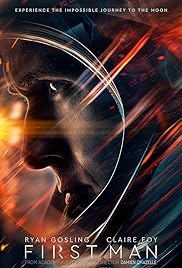
Film Review: FIRST MAN (USA 2018) ***

First Man Poster
Trailer

A look at the life of the astronaut, Neil Armstrong, and the legendary space mission that led him to become the first man to walk on the Moon on July 20, 1969.

Director:

Damien Chazelle

Writers:

Josh Singer (screenplay by), James R. Hansen (based on the book by)

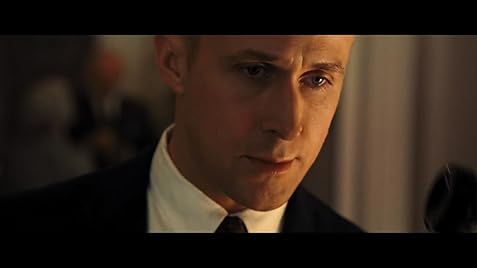
FIRST MAN tells the trials and triumphs of astronaut Neil Armstrong as he trains, tests and finally lands on the moon.  The film is written by Oscar winner Josh Singer (SPOTLIGHT) adapted from James. R. Hansen’s book with cinematography by Linus Sandgren whose visuals are the best thing about the movie.  It is best seen in IMAX, as the screen jolts during the segment of the moon landing, as if to remind the audience of the glorious IMAX format.

The film opens with Armstrong (Ryan Gosling) in the cockpit of a rocket as it tries to re-enter the earth’s atmosphere.  It has troubles as it is bouncing off the atmosphere with altitude rising instead of decreeing.  The ship rattles like crazy.  It is a long 15-minute or so sequence with screeching metal and jittery frames, enough to give anyone a headache.  It is clear that director Chazelle wants the audience to realize the absolute torture that the astronauts endure, which he repeats more than once again during his film.  Subtlety is clearly not Chazelle’s strong point.  Chazelle loves to inflict torture on his subjects like in Armstrong as in Miles Teller’s drummer in WHIPLASH and career bound musician Ryan Gosling in LA LA LAND – two of Chazelle’s previous outings.

The film unfolds during the period of 1961 to 1969, ending with the success of the moon landing and of course Armstrong’s famous words: “One small step for man, one giant leap for mankind.”  But the euphoria is again diminished by Chazelle insisting on reminding the audience (though flashback) that Armstrong lost his little girl, Karen through cancer.

FIRST MAN is extremely choppy in its storytelling.  It requires that titles onscreen to tell the audience the year a segment is set and and what point NASA is at in its testing.  There are scenes that are disorienting that the audience is left for a while not knowing where the film is at.  An example is the wife Janet (Claire Foy) distraught at her husband’s survival followed by a scene when all is well.

Chazelle’s film and Singer’s script capture both the intimacy of Armstrong’s family life and camaraderie of his fellow astronauts more effectively.  The confrontation between Janet and Neil where she loses it, forcing her husband to talk to the boys makes one of the film’s best segments as in the astronauts beer drinking segment.  The choice of the musical score and the songs chosen by the astronauts to play in space is also interesting,

FIRST MAN is Chazelle’s biggest project and it looks superb not only for the moon segments but the ones on earth.  No expense has been spared to provide the 60’s atmosphere from the vintage cars, clothing, wardrobe and 60’s dialogue.

FIRST MAN is visually more arresting than most space movies, excepting Kubrick’s 2001: A SPACE ODYSSEY.   But Philip Kaufman’s THE RIGHT STUFF remains the best space movie about astronauts and their families.  A little lengthy at 2 hours and 20 minutes, FIRST MAN is a solid experience demonstrating what Armstrong went through for success but unlike the other two aforementioned films, seeing FIRST MAN once is more than enough.

Trailer: https://www.youtube.com/watch?v=PSoRx87OO6k

Film Review: STUDIO 54 (USA 2018) ***

Studio 54 Poster
Trailer

Studio 54 was the epicenter of 70s hedonism–a place that not only redefined the nightclub, but also came to symbolize an entire era. Its co-owners, Ian Schrager and Steve Rubell, two …See full summary »

Director:

Matt Tyrnauer

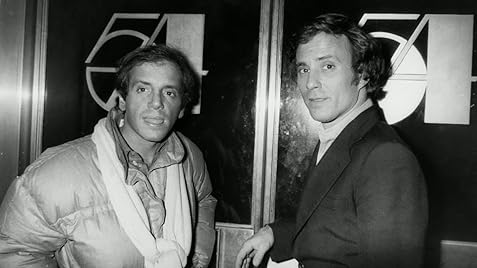
Everyone has heard of STUDIO 54, arguably the most famous of all the dance clubs in the world.  Studio 54 is now closed and is currently a Broadway theatre, located at 254 West 54th Street, between Eighth Avenue and Broadway in Midtown Manhattan, New York City. The building, originally built as the Gallo Opera House, opened in 1927, after which it changed names several times, eventually becoming CBS radio and television Studio 52.

The doc is set in the late 1970s, at the peak of the disco dancing and music trend when the building was renamed after its location and became a world-famous nightclub and discotheque.

But director Matt Tyrnauer’s doc centres more on the nightclub founders than on the club itself.  The founders Steve Rubell and Ian Schrager spent hundreds of thousands of dollars on professional lighting design and kept many of the former TV and theatrical sets, in the process creating a unique dance club that became famous for its celebrity guest lists, restrictive (and subjective) entry policies (based on one’s appearance and style), and open club drug use. Founded in 1977, the club was final sold in 1980 to Mark Fleischman who reopened the club after it had been shut down following the conviction of Rubell and Schrager on charges of tax evasion. In 1984, Fleischman sold the club, which continued to operate until 1986.  Long history, here, provided with credit to Wikipedia for the invaluable information.

Everyone loves a trip down nostalgic memory lane – especially when one is older and memories involve their youth.  Rubell is now deceased, having passed away from the AIDs epidemic while Schager is now an old man.  But it is good to see these two hard working individuals during their height of their powers and youth giving everything to their baby, STUDIO 54.

Director Tyrnauer is fortunate to be able to obtain old footage of the club, since there are lots as the club was ultra famous.  There are many clips of past interviews with both Rubell and Schrager including them with many celebrities.  Tyrnauer begins with a recent interview with Schager.  In the words of Schrager, this is a story that needs to be told as it is, and after 40 years, Schrager is now comfortable to have his say to the camera.

STUDIO 54 is as much a story about the club (or studio) as it is about Rubell and Schrager.  The film documents the two boys from Brooklyn who met in college and became fast friends like a husband and wife, in the words of Schrager.  

The film’s first 50 minutes show the club’s upside.  The pair can do no wrong, but make lots of money with their club.  The approval of a liquor license seems a minor problem.  They had to turn down hundreds of partygoers who could not get into the club.  There are lots of shots of the celebrities who celebrated at STUDIO 54 including the Rolling Stones, Liza Minnelli, Paul Newman with a list of countless other celebs.  But all good things have a turning point.  The film also documents the jail sentences served by the pair due to tax evasion and drugs.

STUDIO 54 will probably not be cater to the non-partying crowd.  But for the majority who love to have a good time forgetting all their troubles while dancing in a club, STUDIO 54 brings back fine memories and serves as a worthy tribute showing immense trouble comes hand in hand with the success of any huge club venue.

Trailer: https://www.youtube.com/watch?v=w99oGMwbTy4

Film Review: BIGGER (USA 2017) **

Trailer

The inspirational tale of the grandfathers of fitness as we now know it, Joe and Ben Weider. Facing anti-Semitism and extreme poverty, the brothers beat all odds to build an empire and inspire future generations.

Director:

George Gallo

Originally entitled BIGGER THAN LIFE, the film has had its title changed to just BIGGER, perhaps not to be confused with the Nicholas Ray 1956 film.  The title LARGER THAN LIFE has also already been taken by the Carol Channing documentary.  BIGGER tells the story of two Canadian boys and how they shaped the fitness industry into the multibillion-dollar industry it is today.

The film unfolds in flashback as told by an elderly Joe Welder (Robert Forster) during his brother, Eddie’s funeral.

BIGGER falls into the trap of being too willing to please.  Director Gallo includes too many romantic episodes and too many incidents that have Joe ending up looking good.

Gallo’s script is so manipulative, it becomes too obvious what he is trying to do.  In one scene, Joe (Tyler Hoechlin) is trying to get his health/bodybuilding magazine financed by a big publisher who when seeing him, is coughing and smoking like a chimney.  The irony is noted.  Gallo does this a second time when Joe seeks finance from a smoking and fat banker.  Joe is supposed to be short in the emotions side.  This fact is made known in bed right after a lovemaking session where his girl, Betty (Julianne Hough) freaks out at not knowing anything about him.  Ok – the audience gets the point.  There is no need for her to go on and on nagging him with Joe maintaining his “je ne sais quoi” facial expression.  The musical score is also there to ensure the audience feels the way they are supposed to during the different scenes.

Subtlety is clearly lacking in the film.  This is not helped by Kevin Durand overacting in his role as arrival publisher, Hauk, who in desperation in one scene, punches Joe up.  The script treats Hauk as a super villain, the type found in action hero movie, so one might not blame Durand for this horrid performance.  As far as other performances go, the accent seems to be placed in terms of great importance.  Hoechlin speaks with a strong mixed Jewish accent throughout the movie and in short spurts.   Australian built actor, Calum Von Moger who plays Arnold Schwarzenegger does a solid Schwarzenegger accent.

BIGGER has a lot of solid well built and toned bodies, both male and female, for one to gawk at.

It is ironical that American actor Hoechlin plays the Canadian title role while Canadian Kevin Durand (from Thunder Bay, Ontario) plays an American.  Durand overdoes his part proving himself to be the worst actor in the movie.  It is not helped that he plays a despicable, arrogant ashore in the film.

Gallo’s film turns quite different during the last third when Joe starts sporting a ridiculous (laughable) moustache.  Once the Schwarzenegger character appears, the film turns unintentionally funny.  But surprisingly, one gets used to the Schwarzenegger character who lifts the film out of the doldrums.

BIGGER can best described as a relatively entertaining but cheesy biography of the two brothers that put bodybuilding into sports.  But Joe’s predictions have come true.  There are now gyms all over every city and solid portion of the population (myself included) now have gym memberships.

Trailer: https://www.youtube.com/watch?v=G3k1BKNIV9c

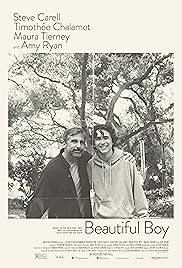
Film Review: BEAUTIFUL BOY (USA 2018) ***

Beautiful Boy Poster
Trailer

Based on the best-selling pair of memoirs from father and son David and Nic Sheff, Beautiful Boy chronicles the heartbreaking and inspiring experience of survival, relapse, and recovery in a family coping with addiction over many years.

Writers:

Luke Davies (screenplay by), Felix Van Groeningen (screenplay by) |2 more credits »

Films about addiction no matter how well made are a difficult watch.  Acclaimed films of this genre in the past, Blake Edwards’s DAYS OF WINE AND ROSES (alcoholism) and Otto Preminger’s THE MAN WITH THE GOLDEN ARM (drugs) are examples.  The title of this latest opus on drug addiction supposedly crystal meth addiction, attempts to disguise the unpleasant material at hand.

Based on the bestselling pair of memoirs by father and son David and Nic Sheff, Belgium director Felix van Groeningen’s first English language film chronicles the heartbreaking and inspiring experience of survival, relapse, and recovery in a family coping with addiction over many years.  The son is the addicted one, and the father a mild user of drugs when younger goes all out to save his son from devastation.  As the story is derived from their memoirs, one can safely assume that all the events that occur in the film are true, maybe with just a little bit of dramatization.

Academy Award nominee Timothée Chalamet delivers a better performance here than in the over-rated CALL ME BY YOUR NAME.  But it is Steve Carell than achieves the acting honours.  At times, one hates his character for being too controlling and at other times, sympathize for his defeat.  It is when one never notices an actor’s performance that he is doing a phenomenal role and Carell achieves this feat proving himself apt at both comedy and drama.

Nic is indeed a beautiful child with two brothers.  Nic’s drug use grows uncontrollably.  The film traces his genuine attempt at rehabilitation, then coming clean before a relapse.  His parents (Amy Ryan plays the mother) are always there for him, though too angry and controlling (understandably) at times.  Nic comes close to death as well.  As said, it is a chore to watch the downward spiral of a drug addict.

Though film’s press kit says that the drug of addiction is meth, the film shows otherwise.  Nic is shown at various point heating up a liquid in a spoon and then injecting the solution into his veins.  Meth is just mixed with water when injected, so Nic must have progressed to crack, which is not explained to the audience.  In another scene, David, the father sniffs a line of powder as he claims he wishes to experience first hand of the drug.  Again, nothing is explained to the audience as meth is normally consumed by snorting (as David did) but more commonly by smoking it in a meth pipe (never shown) though the use of injection (which gives a faster high) is less common.

The film is well shot (the surfing segment) and there are no complaints with regards to the other departments.

BEAUTIFUL BOY premiered at TIFF together with another drug addiction film, Baldvin Z’s LET ME FALL from Iceland set in the capital of Reykjavik.  Baldvin Z draws his film on true stories and interviews with the families of addicts and is clearly the better film in terms of raw authenticity.  In this film Magnea the addict is never really keen of rehab and constantly lies to her long-suffering parents who finally gives up on her.  BEAUTIFUL BOY in comparison is American and the boy Nic genuinely wishes to come clean though the film proves this an extremely difficult task.  But BEAUTIFUL BOY proves once again the triumph the human spirit over adversities like meth addiction.

Trailer: https://www.youtube.com/watch?v=y23HyopQxEg