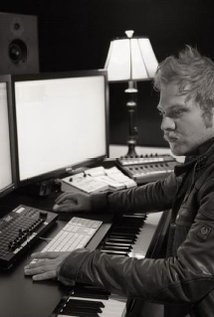
Interview with Kami Asgar, Oscar Nominated Sound Editor

matthewtoffolo's avatarMatthew Toffolo's Summary

A sound editor is a creative professional responsible for selecting and assembling sound recordings in preparation for the final sound mixing or mastering of a motion picture.

I was fortunate enough to sit down with the brilliant Sound Designer Kami Asgar. He has been the Supervising Sound Editor on over 100 films including, “Ride Along 1 and 2”, “Sisters”, “Pitch Perfect 1 and 2”, “The Muppets”, “Country Strong”, “Secretariat”, “Obsessed”, “Passion of the Christ” and “Apocalypto” which earned him an Oscar nomination.

kami_asgarMatthew Toffolo: In a typical studio film, how many post-production sound crew members are there? Do you usually work with the same team?

Kami Asgar: As far as the first part, that really depends on the budget the schedule and type of project. Typically you have Supervising Sound Editor/s, ADR supervisor, Dialog editor/s, Sound FX editor/s, Assistant/s, Foley artists, Foley mixer, ADR Mixer/s and Re-Recording mixers. The number…

View original post 1,182 more words

Interview with Sound Effects Editor Matt Snedecor (Revolutionary Road, The Jinx)

matthewtoffolo's avatarMatthew Toffolo's Summary

Starting off as an Engineer in the music industry, Matt Snedecor worked with Beyonce, Kelly Clarkson, Faith Hill, and Luther Vandross, to name a few. Since 2005, he’s one of the top  movie sound effects designers working today. It was an honor to chat with Matt about his job and career.

Matthew Toffolo: What is the main job being a sound effects editor?

Matt Snedecor: Effects editors are responsible for building the entire sonic environment for a film, everything from backgrounds to the sync effects we see on screen. The majority (90% and up) of the sounds heard in film are added by editors. But it’s more than just see car, hear car. We also need to come up with sounds that identify with characters or moods or that tell stories without the audience having to see something on screen to know what’s happening. There’s also sound design moments we…

View original post 1,249 more words

Interview with Emmy Winning Sound Designer Andy Kennedy (Band of Brothers, Generation Kill)

matthewtoffolo's avatarMatthew Toffolo's Summary

Andy Kennedy is easily one of the most skilled Sound Designers working today. He has worked on many landmark productions besides his two Emmy winning shows for Best Sound in “Band of Brothers” and “Generation Kill”. He has worked on “Game of Thrones”, “Batman Begins”, the recent “War & Peace” series, 5 of the “Harry Potter” films, and “The Imitation Game” to name a few.

Go to his website: www.resonancesoundesign.com

It was a pleasure to chat with Andy about the art of Sound Design in film and his career.

Matthew Toffolo: You’ve worked on over 90 productions in the sound department in the last 35 years. Is there a job you’ve done that you’re most proud of?

Andy Kennedy: Some of the early projects – It was a time of mixed technology and a challenge creatively. ‘The Secret Adventures of Tom Thumb’ was made in Bristol by animators who worked with…

View original post 2,250 more words

Interview with Music Editor/Composer John M. Davis (Pride and Prejudice and Zombies)

matthewtoffolo's avatarMatthew Toffolo's Summary

The music editor is a type of sound editor in film responsible for compiling, editing, and syncing music during the production of a soundtrack. Among the music editor’s roles is creating a “temp track”, which is a “mock-up” of the film’s soundtrack using pre-existing elements to use for editing, audience previews, and other purposes while the film’s commissioned score is being composed.

John M. Davis is one of the most talented people I have had the pleasure to interview. Just go to this website http://www.johnmdavis.com and explore his world of music.

Matthew Toffolo: I love the photo of you on your website. It describes who you are in one picture. Composing attire. The dog you obviously love. Cup of coffee. Piano. A rocking chair for thinking. Art Work. And a relaxed but determined look on your face. As they say, a picture says a 1000 words, or in your case a 1,000,000 words! 

John…

View original post 1,227 more words

Interview with Composer/Vocalist Dominic Lewis (Money Monster, Batman v Superman)

matthewtoffolo's avatarMatthew Toffolo's Summary

Dominic Lewis is a pure talent in the industry. He is a master vocalist, and composer of the new film “Money Monster”, directed by Jodie Foster and starring George Clooney & Julia Roberts. I had the privilege to interview him and talk about his career and the art of music in film.

dominic_lewis_3.jpgInterview with Dominic Lewis:

Matthew Toffolo: You were credited at “Featured Vocalist” on Batman v Superman: Dawn of Justice. What did you do on that assignment for the film?

Dominic Lewis: A lot of vocals!!! Hans had created this incredible texture of a very distressed voice (in harmony sliding up to a single pitch and sliding back down to the chord) It was a long process and I couldn’t talk for a week after.

MT: How many instruments do you play? Do you have a favorite? And/or an instrument you’re most skilled at?

DL: I play a few…

View original post 550 more words

Interview with Composer David Buckley (The Good Wife, The Town)

matthewtoffolo's avatarMatthew Toffolo's Summary

What a joy it was to chat with the extremely talented composer David Buckley. You can hear his music every Sunday on the hit TV series “The Good Wife”. He was also the composer on the upcoming film “The Nice Guys”, directed by Shane Black.

To learn more about David, you can go to his website: http://davidbuckleymusic.net/

davidbuckley_good_wifeMatthew Toffolo: The action/comedy “Grimsby” is out in theaters. What can we expect to see? How was your working experience composing music on that film?

David Buckley: Well, the truth is now out! It’s a total flop. Shame really, as a lot of people spent a lot of time working on the film. Maybe the problem was that too much time was spent on it and it started to lose focus. I’ve always been a fan of Sacha’s work. I can see it’s harder for him to make movies like Borat and Ali…

View original post 1,106 more words

Interview with Composer/Musician Michael Abels (GET OUT)

matthewtoffolo's avatarMatthew Toffolo's Summary

michaelabels.jpgMichael Abels is an African-American composer known for his orchestra works Global Warming, Delights & Dances, and Urban Legend, and choral pieces such as Be The Change and Limitless. “GET OUT” was his first foray as a composer in the film industry, and it definitely won’t be his last. It was great interviewing this extremely talented musician.

Matthew Toffolo: Where were you born and raised? Was music something you always wanted to do as your career?

Michael Abels: I was born in Phoenix AZ, although I lived on a farm outside Aberdeen, SD with my grandparents from infancy through age 6. My earliest memories are of music — seriously, I can remember my grandmother’s recording of Edvard Grieg’s In The Hall Of The Mountain King terrifying me in the crib. Ironically, that’s now my job.

MT: How did you get the job composing the film “Get Out”?

MA: Writer/director Jordan…

View original post 591 more words

1997 Movie Review: PRINCESS MONONOKE, 1997 (Directed by Hayao Miyazaki)

PRINCESS MONONOKE MOVIE POSTER
PRINCESS MONONOKE, 1997
Movie Reviews

Directed by Hayao Miyazaki
Voices by: Yôji Matsuda, Yuriko Ishida
Review by Amish Mulmi

SYNOPSIS:

On a journey to find the cure for a Tatarigami’s curse, Ashitaka finds himself in the middle of a war between the forest and Tataraba, a mining colony. In this quest he also meets San, the Mononoke Hime.


REVIEW:

Princess Mononoke (1997) is indeed a very deceptive film. It may be an animation, but that does not mean it’s a children’s film. Its complexities and multiple themes layered within mean that it is very different from the Disney-esque animations that children are rather fonder of. It begins in an idyllic rural setting, but soon jumps into a battle between forest-gods and humans. A decapitation—probably a first for a Hayao Miyazaki film—later, it engulfs the audience into a debate between development and sustainability, greed and satisfaction, and war versus pacifism.

Japan’s highest grossing film until Titanic overtook it, Mononoke, a Studio Ghibli production, is a testament to the power of animated films and their visual capabilities that allow them to capture elements which are impossible to otherwise capture in a live-action film. It seeks to answer the eternal questions pertaining to human greed and relationships, society’s evolution and civilization’s progress. It seeks to leave the audience enraptured in its visual detail, yet lets them question the themes of the film by themselves.

The film begins in a rustic village, where Ashitaka battles a demon that threatens his village. But, it turns out—the demon is actually a forest god, Nago, corrupted into hatred by human intervention. Ashitaka is cursed by the god’s ailment, and he leaves his village to seek a cure before the hatred engulfs him completely. He meets a monk, Jigo, who informs him of a forest deep into the west, where gods and spirits are still alive.

This particular forest borders an upcoming mining town called Irontown, and is ruled by a very ambiguous Lady Iboshi. The town’s economy is based around the extraction of iron ore from the surrounding mountains, and the human’s devastation of the forests causes the direct intervention of the forest gods, and a human girl called San, who has been raised by the Wolf-Goddess Nara.

Ashitaka is drawn into the battle between San and Iboshi—he realizes he is attracted towards San, and is repulsed by Irontown’s wanton destruction of virgin forests. But, the lepers and the prostitutes that Iboshi has taken under her wing assure him the lady isn’t an evil person, and only has the good of the town in her mind.

However, Ashitaka is gravely injured while saving San, who takes him to the Forest Spirit. The spirit, a deer-shaped creature that has the power to give or take life, heals Ashitaka, but does not lift the curse. San cares for her human benefactor, viewing him with both fascination and revulsion, as he represents a race she has come to hate, despite her being a part of it.

Soon after, as Irontown’s exploitation continues, the boar-god Ikkoto arrives with his warrior boars, who have decided to attack Irontown and take back the forest. However, the humans are aware of their plan—made aware by Jigo who seeks the Forest Spirit’s head for the Emperor, as it is believed to bring immortality. Irontown lays a trap for the boars, blasting them with their newly made rifles and grenades, and the boar army is annihilated. However, behind their backs, the Emperor has laid siege to Irontown, where their women defend the town against marauding samurais. Ashitaka is asked to take a message to Iboshi.

Ikkoto, however, survives and is led towards the Forest Spirit’s pool by San. But he has been poisoned by the same hatred that engulfed Nago—and his hatred begins to overcome San, who is saved by Nara. The Forest Spirit grants both Nara and Ikkoto a peaceful death for all their tribulations, and as he is transforming into the Night-Walker, a sort of a mythical kirin beast, Iboshi shoots his head off.

The Forest Spirit now becomes an all-encompassing blackness that brings death and barrenness to anything it touches, and destroys Irontown completely, including the foundry that was the key to its wealth. San and Ashitaka seek out the Spirit’s head, and upon reuniting it with the headless void, all the land which had turned barren burst out in a kaleidoscope of life and beings. Iboshi realizes her mistakes, and though she loses a hand, vows to rebuild Irontown in a much better way. Ashitaka, cured of his curse, pledges that he will never be very far away from San, as he will help in rebuilding the town.

At first glance, Mononoke seems to be a fantasy love story between San and Ashitaka; however, at its core, it includes diverse themes within itself—an anti-war sentiment, development at the cost of environment, sociological statements such as feminism, gender bias and discrimination and the idea of living at peace with nature. Miyazaki is famous for his environmentalism—this movie is a continuation of the themes explored in My Neighbour Totoro and Nausicaa of the Valley of the Winds in this respect, and explored further in his Academy Award-winning Spirited Away. Only, he brings it to the forefront over here, explaining the cause behind the displeasure of the forest spirits—being the reckless and wanton destruction of nature for the pursuit of human development. The eternal debate, prevalent even today among political and social commentators, of development versus sustainability is brought to the pedestal, and Miyazaki, in this film, provides a very different solution that should please conservationists around the world—stop the unjustifiable destruction of virgin forests, probably alluding to the vast deforestations that have been going on across the planet.

Mononoke is also a very anti-war film, in that it tries to seek reason in war through the character of Ashitaka, who questions the motives behind both the boars’ and Iboshi’s decisions to fight. He is indeed a pacifist if there ever was one, and seeks to explain the futility of the fighting, though unsuccessfully. He is not a coward—but wants to impress upon both parties the outcome of all the hatred: a continuous cycle of further hate and war-mongering.

These two major themes aside, Mononoke is also an exploration into sociological relationships, especially into the ideas of gender bias, discrimination and social structures. Irontown’s wealth has been made possible by its women, who were prostitutes earlier until rescued by Lady Iboshi, who herself comes across as a supremely ambiguous character. As the lepers tell Ashitaka, “she’s the only one who saw us as human beings. The world fears us…but she is the only one who took us in and washed our rotting flesh and bandaged us…” Yet, she is a ruthless expansionist, willing to go to any lengths to ensure the survival of Irontown.

Lady Iboshi’s proclaimed nemesis, San, is herself an individual driven by a singular sense of direction—to kill Iboshi and halt the destruction of the forest. And while the other forest gods are all driven by their hatred towards the humans in varying degrees, it is remarkable that the most powerful god, the Forest Spirit himself does not bear any such acrimony and even forgives the humans despite them shooting his head off.

Mononoke, thus, is a tale that speaks of volumes about reconciliation and the power of pacifism. Ashitaka is singled out as a champion, but the Forest Spirit, along with the tree-spirits Kodamas are themselves unmindful of the hatred that fosters around them, and perceive their lives to be an intricate part of the surrounding environment.

Miyazaki once again blurs the line between fantasy and reality in this film, which, despite having overt fantasy elements, never really ventures into becoming a fairy tale. Its protagonists are very real, and the presence of paranormal elements in the chain of events does not amaze the viewer at all; rather the spirits and gods contrast with the human ways, and allow the audience to juxtapose the two races and judge them accordingly.

The English translation does the filmmaker a disfavor by toning down the language and Japanese terms, so as to make the film more accessible to global audiences. However, it could be argued that without the translation, millions of viewers would not have been able to watch this fantastic film. Atleast, the English version has not been mutilated, like Miyazaki’s earlier films. Maybe it was the katana that he sent with the message ‘No cuts’ when Disney, Studio Ghibli’s American partners, suggested a few edits to make the film more child-friendly which did the trick. Or it could be the fact that acclaimed writer Neil Gaiman adapted the story for English audiences. Whatever the reason, Mononoke is truly what landmark cinema stands for—and long after the audience exits the movie theater, they will ponder over the questions that the film raises.


PRINCESS MONONOKE, 1997

1997 Movie Review: METRO, 1997 (Eddie Murphy)


  MOVIE POSTERMETRO, 1997 
Movie Reviews

Directed by: Thomas Carter

Starring: Eddie Murphy, Michael Rapaport, Kim Miyori, James Carpenter, Art Evans, Donal Logue, Jeni Chua, Denis Arndt

Review by Russell Hill

SYNOPSIS:

Roper, a hostage negotiator catches a murderous bank robber after a blown heist. The bank robber escapes and immediately goes after the man who put him behind bars. The ending is played out with Roper and his partner McCall attempting to rescue Roper’s kidnapped girlfriend. A major element in the plot is the relationship between Roper and his girlfriend.

REVIEW:

I am always thankful to the BBC for their late night films. Not only do they show movies which otherwise escape many people’s attention but the movies which they do show star some bone-fide legendary actors and actresses which shout out to you that you should be watching this movie; this can certainly be said about this movie in particular.

A respected yet unorthodox hostage negotiator, Inspector Scott Roper (Murphy) is at the top of his game. Resolving any tricky situation with whatever approach he believes is best, he might not act by the books but Roper gets the job done. To his dismay, a new hostage negotiator arrives in town and it is down to Roper to teach Kevin (Rapaport) how it’s done. Not only does Roper have this to deal with but also a former-bank robber who has been released and has a vendetta against Roper. Who will survive?

Although his career has gone downhill recently, it is only the “Shrek” movies which have saved his career and given it a new lease of life. Eddie Murphy was once the funniest man in Hollywood but has lost that edge thanks to many forgettable roles. This film is not one of them and shows one of his last great films that he has appeared in.

One actor whose career has not dwindled is Rapaport. Regular in work, in the other films and television shows I have seen him appear in he has excelled and after looking on his profile on http://www.imdb.com he has appeared in nearly ninety different projects in just over two decades. This man’s workrate is nothing short of remarkable; maybe Murphy should take a leaf out of his book and not keep his expectations so high?

The director at the helm is Thomas Carter. A respected director who has worked for over thirty years, he directs the high-pace action extraordinarily well. There are multiple scenes where cars come crashing over one and other along with Trams smashing into whatever comes to hand. For action sequences to be shot in this convincing way is remarkable and if there was ever another “Die Hard” film (with one rumoured to be released in 2012) then Carter should be considered to front this.

Not one of Murphy’s most well-known films, this should be corrected as the comedy which he displays is top-notch and with support by the likes of Rapaport and directed by Carter this is a must-see for anyone who prefers their ‘cop’ movies to be fast-paced and full to the brim with action scenes.

METRO, 1997

1997 Movie Review: NIL BY MOUTH, 1997 (Directed by Gary Oldman)

NIL BY MOUTH, 1997
Movie Reviews

Directed by Gary Oldman
Starring: Ray Winstone, Kathy Burke, Charlie Creed-Miles, Laila Morse, Edna Doré, Chrissie Cotterill, Jon Morrison
Review by Russell Wray

SYNOPSIS:

The family of Raymond, his wife Val and her brother Billy live in working-class London district. Also in their family is Val and Billy’s mother Janet and grandmother Kath. Billy is a drug addict and Raymond kicks him out of the house, making him live on his own. Raymond is generally a rough and even violent person, and that leads to problems in the life of the family.

CLICK HERE and watch 2009 MOVIES FOR FREE!

What is WILDsound?

REVIEW:

In 1960 Albert Finney starred in Saturday Night Sunday Morning, a film which brought social realism to British Cinema. It stood out as it showed working class characters in extremely realistic scenarios. These characters usually struggled in their down and out positions in society. Saturday night Sunday Morning attempted to break stereotypes of working class people by showing them as intelligent and articulate youngsters. We fast forward almost forty years to see Gary Oldman bringing social realism back to the screen but with a much bleaker view for a modern audience.

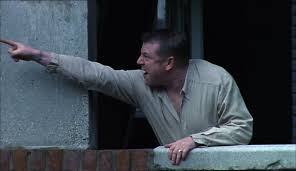
The film focuses on the Raymond family in working class London. Raymond (Ray Winston) is the alpha male of the house hold. He is an aggressive alcoholic who is always out for a good time at the expense of someone else. Val (Kathy Burke) is the subservient wife who is victimised by her husband and does not have the strength to leave him. Their son Billy is a drug addict. He is forced to live on the street due to his father finding out about his addiction. Nil by mouth shows these characters struggle but is it their fault or the fault of their hierarchy in society?

Nil by mouth is a film about failures but there are not many to be seen here. The cinematography works brilliantly to provide beauty in the strangest of down and out places, the performances are terrifyingly accurate, and the direction is brilliantly constructed. The only problem is with the script.

The story may be a little bit too observant at times. The constant arguments and scenes of failure make it hard to maintain attention for some parts of the film as it almost slips into an x rated watershed soap opera. The film is relentless as there is not much comic relief provided. This is forgivable by the scenes which really stand out, such as Ray Winston on the lash with his mates.

This scene strangely forces the audience to relate to the characters playing drunken fools around town but also makes them scared of them at the same time. Oldman is not afraid of getting close to these characters. His frequent use of big close ups allows the audience to see every action and reaction from the characters in precise detail. Being an actor himself Oldman understands the importance of performance especially in an intense character which is presented here.

Winston is comfortably at home here playing the working class villain. The intensity of the character is evident but also the humanity is presented brilliantly by Winston who shines in those drunken moments in the film where he is on his own. Here Winston is allowed to bring the character to life as the audience witnesses his self destruction. Burke also offers an effective performance but is not as memorable as other characters because of the shy nature of the character in which she is playing.

Nil by mouth is an unflinchingly hopeless film. The characters are not taunted of a better life in anyway even though that is their desire. The film simply allows the characters to live without any feeling of pre constructed character arcs.


NIL BY MOUTH, 1997