1967 Movie Review: I AM CURIOUS, 1967


I AM CURIOUS POSTERI AM CURIOUS, 1967
Movie Reviews

Directed by Vilgot Sjoman

Starring: Lena Nyman, Börje Ahlstedt, Vilgot Sjoman.
Review by Jordan Young


A film that revolves around Lena, a young Swedish sociologist, that is on a quest to find an answer to every question that her mind creates. These questions usually revolve around love, politics, sexuality, and Sweden’s current cultural taboos.SYNOPSIS:


REVIEW:

Sometimes a film makes headlines just because of the controversy that it creates. This is certainly the case with Vilgot Sjoman’s ” I Am Curious (Yellow)”. In this bizarre, pseudo-documentary, Lena interviews and investigates a myriad of people to try to determine answers to the hot button issues of that time.

This film was shot in the same fashion as the New Wave films. There are a lot of non-linear jump cuts that are very distracting, but nonetheless, some of the subjects explored are captivating topics. One of which, being sexuality, became a giant controversy and prevented the release of the film in the States. Sjoman was not reportedly not a fan of the policies of censorship in the States, or in his native Sweden.

Serious subject matter within this film is shown in a very light manner. On several occasions through out the film, the effects used, come off as campy and smarmy. Sjoman is telling us to not take his subject matter too seriously.

In addition to the “plot” of Lena investigating, there is an aspect of this film that focuses on the how this film is being made. There are some very interesting dynamics between the director and actress. This relationship only raises more questions for the viewer. How much of Lena’s role in the film is due to the director wanting to sleep with her? This is a nice addition to the already confusing sexual politics of the 1960’s.

Easily the most controversial scene in the film, the sex scene, is one of the most anti-climactic sex scenes in the history of the film. It is clear that Sjoman didn’t intend for this to be viewed as a “Showtime Red Shoe Diary” type of sex scene. As a viewer, you disconnect from all erotic aspects of this scene, and you view it almost from a sociological perspective.

It is just a sex scene, which is a nice change of pace from the over-stylized, big presentation type of sex scenes of films we are currently used to… there is no payoff. However, I was a little distracted by thinking about how Sjoman himself feels about filming a sex scene with a girl he wants to have sex with.

This film should be taken in as a time capsule of the 1960’s. There are many political causes that Lena is protesting. The film itself should just be viewed as one giant protest. It comes off as anything you would normally expect from a 60’s protest film, but it shows it in the styles of the French New Wave. This new ideology combined with these new aesthetics creates a really refreshing package as a whole. Also, a appearance and speech by Dr. Martin Luther King Jr. makes this film a must see for budding sociologists, as well as anyone interested in activism.

1967 Movie Review: HOW TO SUCCEED IN BUSINESS WITHOUT REALLY TRYING, 1967
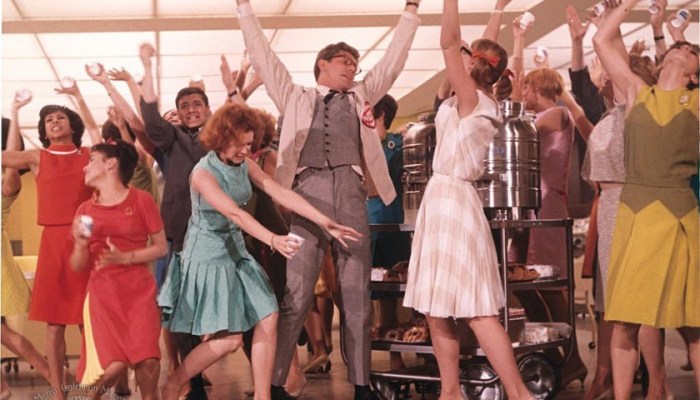
HOW TO SUCCEED IN BUSINESS WITHOUT REALLY TRYING, MOVIE POSTERHOW TO SUCCEED IN BUSINESS WITHOUT REALLY TRYING, 1967
Movie Reviews

Directed by David Swift
Starring: Robert Morse, Michele Lee, Rudy Vallee, Anthony ‘Scooter’ Teague, Maureen Arthur, John Myhers
Review by Jayvibha Vaidya

SYNOPSIS:

J. Pierpont Finch, a window washer, has dreams of rising up the corporate ladder. With the help of a little book, he follows all the instructions and finds himself exactly where he wants to be in a matter of days! But now he actually has to work – or pretend to.


REVIEW:

“Mediocrity is not a mortal sin.”

At a nearby newspaper stand, J. Pierpont Finch (Robert Morse) grabs a book titled “How to Succeed in Business Without Really Trying.” Peeling off his window washing uniform, he strides into The World Wide Wicket Company and sings:

“In a three-button suit,
With that weary executive smile.
This book is all that I need:
How to, how to succeed!”

Based on a Pulitzer Prize winning play and Tony Award winning Broadway production, How To Succeed In Business Without Really Trying is a fast-paced, amusing satire about American corporate politics in the 1960s. Climbing his way to the top through a series of chance encounters, misunderstandings and blatant trickery, Finch travels from the mail room to an executive office in a rapidly short time. He’s unqualified and unprepared, except he’s got more guts, charisma and smarts than anyone in the company.

Finch charms his way to the president, Mr. Biggley (Rudy Vallee) by pretending to pull all-night shifts and sharing his favourite hobby: knitting. Exclaiming, “I feel sorry for men who don’t knit. They lead empty lives,” Finch grabs Mr. Biggley’s attention and favour. Instant promotion! Targeting the man whose job he wants, Finch finds his weakness and exposes it – sexual appetite, a rival alma mater, nepotism – and promptly steps into a new role – every few days! With all this back-stabbing and corporate shifting, no one really knows anyone in the world of business. But along comes Rosemary Pilkington (Michele Lee), a warm, helpful secretary who befriends Finch on his first day. She’s smart, level-headed and quick on her feet. And she’s sincere; taking the time to find out who Ponty Finch really is. In many ways she’s the stereo-typical ‘60s secretary; groped by sexist old men and crushing on the new employee, but she also shines as the only character that displays honesty and integrity.


“A secretary is not a thing
The musical numbers are delightfully tongue-in-cheek, commenting on company promotions, the role of secretaries and office rivalry. Legendary choreographer Bob Fosse’s original staging is kept intact for the film, showing up especially in “A Secretary is Not a Toy” where movements match the sounds of a typewriter or pencils scratching on notepads. Complex blocking utilizing a large group of dancers are coupled with lyrics like:

Wound by key, pulled by string.
Her pad is to write in
And not spend the night in.
A secretary is not …
A secretary is not a toy.”

It’s an amusing, satirical number; fascinating to watch decades after the Women’s Liberation movement. “Been A Long Day” also stands out as it is well-timed, sweet and fun to watch. Using tableau, blocking and voice-over, the songs are staged well and the lyrics hilarious with sharp touches of truth.

Robert Morse as Finch carries the film with consistent energy, infusing all his scenes with the right amount of comedy, smarm and goofiness so the audience roots for him despite his sneaky maneuvering. Reprising his role from the Broadway production, Morse displays excellent timing and a great voice. In her film debut, Michele Lee as Rosemary is fresh and sincere, showcasing a beautiful voice in “I Believe in You.” From Mr. Biggley to his bumbling nephew Bud (Anthony Teague) to Hedy LaRue (Maureen Arthur) the ditzy receptionist/mistress, the supporting characters are comic creations of personalities one may encounter in a corporate environment.

Regularly cutting to shots of New York City, gliding through busy streets or observing from a bird’s eye view, the film has a gorgeous look. Interiors are ‘60s mod; bright colours and unusual shapes. When Finch finally makes it to the very top – Chairman of the Board – his office has high ceilings, pillars and archways. Resembling a church, his final achievement is the ultimate corporate office; a place where power and money can be worshipped. And does he get the girl? Of course! But only when he displays some honesty, gaining the approval – and job! – of the Chairman. Such is “the company way.”

How To Succeed In Business Without Really Trying is a musical poking fun at American corporate politics, ‘How-To’ books and office romances. Although at times it feels like the camera is merely capturing the stage production, using static shots to frame the musical performances, the actors bring a consistent energy that keeps the story moving at an enjoyable pace. With an ending that wraps up everything in a neat bow with a dash of cheesy fun, the film is a great look into the corporate game one must play to get to the top as rapidly as possible.

HOW TO SUCCEED IN BUSINESS WITHOUT REALLY TRYING

Happy Birthday: Selena Gomez

festreviews's avatarFestival Reviews

selenagomez.jpgSelena Gomez

Born: July 22, 1992 in Grand Prairie, Texas, USA

THE MUPPETS
dir. James Bobin
Stars
Amy Adams
Jason Segel
MOVIE POSTERHOTEL TRANSYLVANIA
dir. Genndy Tartakovsky
Stars:
Adam Sandler
Kevin James
MOVIE POSTERGETAWAY
2013
dir. Courtney Solomon
Yaron Levy
Stars:
Ethan Hawke
Selena Gomez
MOVIE POSTERSPRING BREAKERS
2013
dir. Harmony Korine
Stars:
Vanessa Hudgens
Selena Gomez
MOVIE POSTERAFTERSHOCK
2013
dir. Nicolas Lopez
Stars:
Eli Roth
Andrea Osvart

TOP SELENA GOMEZ PHOTOSSEE – ALBUM COVER PHOTO

SEE – AND ASHLEY COOK PHOTO

SEE – AND TAYLOR LAUTNER PHOTO

SEE – BOOBS PHOTO

SEE – COLORING PAGES PHOTO

SEE – DOLL PHOTO

SEE – MTV AWARDS PHOTO

SEE – NAKED PHOTO

SEE – POSTER PHOTO

SEE – RED HAIR PHOTO

SEE – SCARF PHOTO

SEE – SEXY DRESS PHOTO

SEE – YELLOW DRESS PHOTO

SEE – WITHOUT MAKEUP PHOTO

SEE – CREME PHOTO

SEE – TEEN VOGUE PHOTO

SEE – CLEO PHOTO

SEE –…

View original post 450 more words

1967 Movie Review: BONNIE AND CLYDE, 1967

BONNIE AND CLYDE, 1967
Movie Reviews

Directed by Arthur Penn

Cast: Warren Beatty, Faye Dunaway, Gene Hackman, Michael J. Pollard, Estelle Parsons, Gene Wilder
Review by Martyn Warren

SYNOPSIS:

Based on the true story on the famed bank robbers during the great depression, we see the life of Bonnie (Faye Dunaway) and Clyde (Warren Beatty) as they rob banks and become iconic in the newspapers. However, even with their exciting lifestyle, there’s always an obstacle to test the famed duo around every corner.


REVIEW:

Being recognised as one of the first films to inspire the ‘New Hollywood’ film movement that would change the industry drastically, Bonnie and Clyde (dir. Arthur Penn) still stands as being one of the best American films of all time and having one of Warren Beatty’s finest performances.

Based on the true story of the famed duo who robbed banks during the great depression, the film opens up with Bonnie Parker (Faye Dunaway) and Clyde Barrow (Warren Beatty) having an encounter outside Bonnie’s family house and quickly become attached to one another. Their interests for one another deepens when Clyde reveals himself to be a robber, while Bonnie is tired of her boring job as a waitress.

The two young adults soon decide to both rob banks and lead an exciting life as people against the law, encountering new characters to be involved in their gang, including the innocent C.W. Moss (Michael J. Pollard) and Clyde’s older brother, Buck Barrow (Gene Hackman).

During the course of the story, we see how all these characters become highly recognised within the newspapers, how they each suffer with the different consequences of their actions and the police force getting closer in stopping their crime spree.

   With the cast being made up of actors and actresses who were famous and non-famous before the film’s release, they manage to bring together brilliant performances that reflect on each other.


Both Gene Hackman and Warren Beatty were very well known for the types of roles that they played during the time, with Hackman playing secondary characters while Beatty played the handsome leading man. Their performances both offer great characters that are very interesting to watch since they are equally great with the less familiar cast members show how this film managed to expand their horizons, especially with Hackman’s career in particular.

The remaining key cast members who were unfamiliar for audience members before this film all did a brilliant job in playing very human and individual characters. Faye Dunaway’s portrayal as the leading lady is absolutely superb in exploring the different challenges and emotions that she’s faced with, while Michel J. Pollard does a great job in playing the innocent-yet-unintelligent Moss. Also, look out for an early cameo by legendary comedic actor Gene Wilder!

Directed by Arthur Penn, his direction over everyone involved within the crew is done very interestingly to bring an original perspective on the screenplay.

Penn often refers to the guns used in the film as power and one very iconic scene is where Clyde shows Bonnie his gun secretly, which happens to be placed near his crotch area and Bonnie stares at it with such excitement and seduction towards such a dangerous object. Another key scene involving a gun is when Clyde actually uses it for the first time on a man that was trying to stop him and we see Clyde struggling with the fact that he actually used his weapon to kill rather then showing it off when doing a robbery.

The director also uses colour as a way to show off the emotions and the lifestyle of America during that time, as well as being used on the two main characters. For example, there’s a scene where Bonnie meets up with her family again after spending sometime doing crimes and it’s shown as a montage with a bronze filter over the shot to make it look like an old fashioned photo and preserve this precious moment for the troubled female character.

As one of the key films that started a new and exciting Hollywood movement, Bonnie and Clyde is one of the most important films in American history and one of the best films that is based on a true story. Creatively made with lovable characters, this is a film that everyone should really see if they truly appreciate American cinema.

BONNIE AND CLYDE

1967 Movie Review: BAREFOOT IN THE PARK, 1967

BAREFOOT IN THE PARK MOVIE POSTERBAREFOOT IN THE PARK, 1967
Movie Reviews

directed by Gene Saks

Starring: Robert Redford, Jane Fonda, Mildred Natwick, Charles Boyer
Review by Virginia DeWitt

Paul and Corie Bratter are newlyweds in mid-’60s New York, who have just moved into a walk up in Greenwich Village and are trying to cope with all the problems that come with living in an old building in New York City, including the eccentric neighbors. Their biggest problem, though, is their distinctly different outlooks on life. Paul is a buttoned down attorney who insists that every problem must have a logical solution. Corie is a free spirit who insists that Paul has to learn to walk “barefoot in the park”.

REVIEW:

“Barefoot In The Park” was the first Neil Simon play to be made into a movie. It was a major success on Broadway in 1963 and Simon adapted the play for the screen himself. He worked with Gene Saks, who was better known as a television actor, and who made his feature film debut as a director with “Barefoot”. Saks would go on to direct other Simon adaptations such as “The Odd Couple” (1968), “The Last of the Red Hot Lovers” (1972) and “Brighton Beach Memoirs” (1986). Saks’ television background shows through in this film. His direction of the actors and the staging of the action are straightforward, with nothing original added to the concept of a filmed play. The look of the movie, its use of colour and lighting, is just marginally better than a TV show of the era.

 Saks is good at directing his actors for comedy, however. Pacing and timing is everything in delivering Simon’s dialogue. The repartee requires rapid fire delivery because, funny and sharp as he is, Simon’s effects are all on the surface. This exchange between Paul and Corie is a good example, beginning with Paul saying to her:

“You want me to be rich and famous don’t you?”

“During the day. At night, I want you here and sexy.

“I tell you what, tomorrow night – your night – we’ll do whatever you want.”

“Something wild and crazy and insane?”

“Fine”

“Like what?”

“I’ll come home early. We’ll wallpaper each other.”

Or, a later argument where Corie gets to air her feelings about Paul’s inability to loosen up:

“You’re always dressed right. You always look right. You always say the right thing. You’re very nearly perfect!”

“That’s a rotten thing to say.”

“Before we were married I thought you slept with a tie.”

“No, just for very formal sleeps.”

Over forty years later, the film still works well and it is largely due to the terrific chemistry between its two stars. A very young Robert Redford and Jane Fonda each exhibit a wonderful naturalness in their performances. Given their later, much more serious work, both Redford and Fonda are surprisingly funny and relaxed here and their handling of the verbal and physical comedy is expert. Redford makes the uptight, anxiety ridden Paul sympathetic. In the early scenes where he spars with Corie, his exasperated reactions to her often impossible demands are perfect. In the final scenes, where he is drunk and wandering barefoot through Washington Square Park, Redford matches Fonda’s earlier exuberance with ease. For her part, Fonda is fun, sexy and spontaneous as Corie. She makes Corie’s capriciousness and emotional immaturity attractive, which is no small feat.

The cast is completed by two well known character actors. Charles Boyer, a big star in an earlier era of the movies, makes for a charming eccentric as the upstairs neighbour, Victor Velasco. Mildred Natwick, as Ethel Banks, is endearing as Corie’s slightly confused mother, subject to the same kinds of anxieties which Paul suffers from. In fact, in the scene that is the centre piece of the film – a double date at an Albanian restaurant – Simon gets a lot mileage, and laughs, from pairing off Paul with his middle aged mother-in-law. Paul, born middle aged, and Ethel commiserate with each other over the crazy night they have had to endure at the hands of Corie and Victor, both maddening in their unpredictability. Nothing comes from any of this, of course, as the couples inevitably realign, each paired off appropriately and happily once again.

“Barefoot In The Park” is still a fun movie largely due to the highly successful casting of its two young stars and Neil Simon’s writing, which is both light hearted and sharp at the same time.


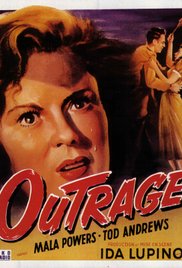
Film Review: OUTRAGE (USA 1950) ***

Deadlines to Submit your Screenplay, Novel, Story, or Poem to the festival: http://www.wildsound.ca

outrage.jpgA young woman who has just become engaged has her life completely shattered when she is raped while on her way home from work.
Director: Ida Lupino
Writers: Collier Young (written for the screen by), Malvin Wald (written for the screen by)
Stars: Mala Powers, Tod Andrews, Robert Clarke

 Though dated as the film may seem, OUTRAGE was controversial at the time of release being only the second film dealing with the subject of rape – thigh the word was never used and the rape implied and never spoken of in detail. The first film was JOHNNY BELINDA that earned Jane Wyman the Best Actress Oscar.

OUTRAGE deals with a single young lady, Ann (Mala Powers) about to be married. But when she is raped one night by a man with a scar on his neck, Anne leaves home, totally traumatized and unable to function properly in a social setting. She meets a sympathetic Rev. Bruce Ferguson (Tod Andrews) who helps her recover. At a party, she almost kills a man who make advances towards her, she imagining him to be her attacker.

Lupino’s film clearly has a strong feminine presence as observed in many scenes, the story and characters. Ann’s office is made up of a larger female than male staff. The males often perform more tedious tasks compared to the females, perhaps Lupino’s preferred take on an alternative universe. For example, Ann’s male colleague neighbour is given the arduous monotonous job of stamping a pile of pages, one after another non-stop. Ann’s father is a Geometry teacher, bogged down by a boring teaching job teaching what is widely well known as a boring subject – Mathematics, and down to an even more boring branch of it, Geometry. Ann’s mother is the more sympathetic one and shown to be the stronger of the two parents n terms of making in impact on Ann’s happiness.

Lupino, who co-wrote the script with two other writers is a simple enough story that traces the traumatic effects of a night assault on an innocent young woman, how her life is affected by it, and how she slowly but finally recovers with the help of kind human beings. No mention of the details of the assault are given, the nastiness just put aside, leaving the audience to imagine the worst, as observed by Ann’s after-attack behaviour.

Lupino builds up suspense and audience anticipation whenever she can. The scar of the coffee seller is shown on camera close-up early in the film, implying the man to be of questionable character. He is later revealed to be Ann’s attacker. Ann agrees to work late one night, which prompts the audience to fear for her.
Ann’s after assault behaviour is drastically different undergoing changes such as visions of her attacker, denial of her engagement and paranoia that everyone around her is looking at her and judging her. This is drastic behavioural change that almost results in Ann killing a man at a party who has made advances towards her. Lupino shows the aftermath of a sexual assault in all its fury and unpleasantness.

OUTRAGE ends with the attacker getting caught as informed casually to Anne, though nothing is shown of the incident.

OUTRAGE is an ok film, solid for its time, but a bit dated considering how films have progressed since with censorship now relaxed.

OUTRAGE will be screened on August 24th at the Bell Lightbox in its 35mm archive print as part of the TIFF Cinematheque Retrospective on Ida Lupino entitled INDEPENDENT WOMEN that runs from August 4, 2017. Watch for the Lupino article that will include capsule reviews of selected films from this retrospective.

Film Clip: https://www.youtube.com/watch?v=YBzfd0yqFY4

Also, Free logline submissions. The Writing Festival network averages over 95,000 unique visitors a day.
Great way to get your story out: http://www.wildsound.ca/logline.html

Deadlines to Submit your Screenplay, Novel, Story, or Poem to the festival:http://www.wildsound.ca

Watch recent Writing Festival Videos. At least 15 winning videos a month:http://www.wildsoundfestival.com

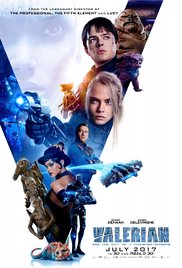
Film Review: VALERIAN AND THE CITY OF A THOUSAND PLANETS (France 2017) ****

Deadlines to Submit your Screenplay, Novel, Story, or Poem to the festival: http://www.wildsound.ca

 valerian.jpgA dark force threatens Alpha, a vast metropolis and home to species from a thousand planets. Special operatives Valerian and Laureline must race to identify the marauding menace and safeguard not just Alpha, but the future of the universe.

Director: Luc Besson
Writers: Pierre Christin (comic book), Jean-Claude Mézières (comic book)
Stars: Dane DeHaan, Cara Delevingne, Clive Owen

Review by Gilbert Seah

 
VALERIAN AND THE CITY OF A THOUSAND PLANETS is the new widely anticipated French science fiction action film written and directed by Luc Besson best known for THE FIFTH ELEMENT and LUCY. The film, based on the French science fiction comics series Valérian and Laureline, written by Pierre Christin and illustrated by Jean-Claude Mézières is to date the most expensive French film ever made at a price rage of $197 million euros. To break-even it has to make $350 million worldwide. It is a big a risk as James Cameron’s AVATAR but the film is stunning in its visuals and imagination and comes highly recommended for Besson’s vision and delivery of this space opus to the big screen. It be best seen in 3D and on the biggest screen possible.

The film opens with an alien species on a distant planet. They speak a different language and lead a different lifestyle, in tune with nature giving their planet back what they receive from it. This is reminiscent of the blue AVATAR creatures in the James Cameron’s film. An apocalypse happens and their planet is destroyed. On the other side of the Universe, a dark force threatens Alpha, a vast metropolis and home to species from a thousand planets. Special operatives Valerian and Laureline must race to identify the marauding menace and safeguard not just Alpha, but the future of the universe. Nothing makes much sense in the film’s first half, but writer/director Besson keeps the audience’s curiosity strong. It is during the second half that the story comes together, becoming more of a conventional film with the fight between good and evil, with Valerian and Laureline being the space fighters and peace keepers working for ‘the government’.

But it is not the story that will astonish the audiences. The visionary action sequences consisting of computer generated landscapes and creatures of all shapes and sizes will mesmerize. The best of these are three information selling beaked liked creatures who speak both simultaneously but separately forming sentences that are hilarious and brilliant. The capture of the jellyfish on the mammoth sea creature providing some genuine action and thrills and the butterfly bait fishing are inspirational set pieces. Another memorable scene has Laureine wearing a huge hat with the top of her head exposed only to find her brains about to be eaten by an Alien Emperor, the way Chinese used eat monkey brains as a delicacy before the practice was banned.

Much negative reviews have been posted of the lead actor’s Dane DeHaan’s performance as Major Valerian. DeHaan is a young 31-year old American actor with some Dutch background, hence his Dutch surname, who has proven himself able to carry a lead role in the recent but badly received A CURE FOR WELLNESS. In that film DeHaan demonstrated a different kind of hero, a vulnerable one, as in this one, full of character flaws like impulsive decision making, unlike other space action heroes like hans Solo or Luke Skywalker. His partner, co-fighter for good against evil and love interest, Lareline is played by Cara Delevingne who emits sexiness and charisma. They do exhibit good chemistry on screen, and her speech on love at the film’s end though cliched, works. Supporting performances by Clive Owen as the villain and Ethan Hawke are also impressive.
Rihanna plays an alien dancer who performs a Sally Bowles in CABARET type dance forms one of the film’s best musical dance numbers – amazing and unforgettable combined with special computer effects. Music is by Alexandre Desplat.

For all its flaws, Besson’s brilliantly conceived film still scores top marks as a futuristic space action adventure. Much better than THE FIFTH ELEMENT and the new STAR WARS film series.

Trailer: https://www.youtube.com/watch?v=XawbuBCj-Fo
 

Also, Free logline submissions. The Writing Festival network averages over 95,000 unique visitors a day.
Great way to get your story out: http://www.wildsound.ca/logline.html

Deadlines to Submit your Screenplay, Novel, Story, or Poem to the festival:http://www.wildsound.ca

Watch recent Writing Festival Videos. At least 15 winning videos a month:http://www.wildsoundfestival.com

Inside the Chaos: Cinema writing 101- 5 Things About Overwriting

festreviews's avatarFestival Reviews

overwriting.jpgEveryone who has ever put fingers to keys on a computer with the attempt to write a cinematic piece has probably had to deal with overwriting. Everyone has overwritten something and it’s nothing to be ashamed about- as long as you know how to correct it.  But in this reviewer’s’ time as a script coverage provider, it is surprising how much, (and how easily) overwriting happens. Below are five things about overwriting you might want to refresh on for your next revision.

  • YOU DON’T DIRECT YOUR STORY


Writing is often considered to be playing God to a very tiny universe. In novels, this is certainly true. Collaboration pieces, where many hands touch the work before it is seen by the eyes of the masses, such as stage plays or screenplays, have a slightly different approach. Specifically for Screen writing, the script provides dialogue, setting and action- the combination of…

View original post 882 more words

Inside the Chaos: Cinema writing 101- 5 Things About Overwriting

overwriting.jpg
Everyone who has ever put fingers to keys on a computer with the attempt to write a cinematic piece has probably had to deal with overwriting. Everyone has overwritten something and it’s nothing to be ashamed about- as long as you know how to correct it.  But in this reviewer’s’ time as a script coverage provider, it is surprising how much, (and how easily) overwriting happens. Below are five things about overwriting you might want to refresh on for your next revision.

  • YOU DON’T DIRECT YOUR STORY


Writing is often considered to be playing God to a very tiny universe. In novels, this is certainly true. Collaboration pieces, where many hands touch the work before it is seen by the eyes of the masses, such as stage plays or screenplays, have a slightly different approach. Specifically for Screen writing, the script provides dialogue, setting and action- the combination of which creates story. But it is important to understand the parameters of that confine: you don’t direct the piece.

BASIC RULE: In cinematic writing, you want to avoid overt descriptions of the way a character moves, delivers or reacts to their lines, their micro expressions or mannerisms, or excessive details of their minute actions.


EXAMPLE: It is established that Character X always rings their hands when they lie. They are lying in this scene and Character Y needs to find out. Then you can write “Character X rings their hands. Character Y sees.”


EXCEPTION: If a scene or line is otherwise ambiguous and clarity can only be reached with a direction, or that direction is crucial to understanding the context of the scene.

 WSB1.jpg

  1.  DON’T TELL US WHAT WE DO NOT NEED TO KNOW

Sixteen years earlier the mother of Character A and the Father of Character B had an affair, but no one knows or will ever find out and it’s all water under the bridge now. Characters 1, 2, 3, 4 and 6 are staying at the Bed and Breakfast once owned by character 3’s great-great-grandmother whose husband fought in the war.  The details that make your characters rich, robust histories might be incredibly satisfying to read about in a novel, where we have hundreds of pages to bring out full deep back stories and elaborate web. But Cinema has time constraints. Constraints on the reader, and constraints on the audience. Stick to the story that is relevant.


BASIC RULE: If it’s not going to show up directly in the story, then we don’t need to know.


EXAMPLE: If it’s important, have a character make reference to it. If it’s not important enough to waste a line of dialogue on, or if the plot is not directly entangled in it, don’t bother putting it in.


EXCEPTION: Historical pieces, where details about characters’ based on real life people may, in fact, be needed. Consider adding them into a director’s’ note at the end of the piece instead of building them into a scene.


  1. BE CONCISE WITH YOUR ACTION

It is absolutely okay to reference that action in your scene, but you must say it plainly and to the point. Elongating the piece by over explaining the work only hurt the piece in the long run.


BASIC RULE: The Best Cinematic writing will create the clearest and most vivid images necessary, with as few words as possible.


EXAMPLE: Character X punches Character A in the face. Character A falls hits the floor. Their nose is broken and bleeds profusely. OR: Character X punches Character A. A crashes to the floor, smashed nose bleeding, instantly plastering in blood.


EXCEPTION: It is not unheard of to see the occasional flowery sentence in the scene description. Use the greatest discretion with these; one per page is often enough. If you use a more flowery or poetic line in your work, make sure it draws together the scene clearly and purposefully.
showdonttell.jpg

  1. SHOW, DON’T TELL, and TRUST YOUR AUDIENCE

Anyone who has ever had to write an essay gets caught up in over explaining ourselves in order to make ourselves perfectly clear…and fill up those huge required word counts. But you want to disregard that training in cinematic writing. Utilize the power of suggestion and trust your audience is smart enough to pick up the clues. Don’t have Character 1 tell his buddies he’s going out on the town to cheat on his wife. SHOW Character 1 ignoring his wife’s calls, removing his wedding band and offering to buy a girl at a bar a drink.


BASIC RULE: Consider how’d you get this information across visually- then describe exactly what you see.


EXAMPLE: (After slug line establishes Character is at the Bar) Character 1 removes his wedding band, puts it in his pocket. Gestures for two drinks from the bar tender. Sees a call from his wife. Ignores it.


EXCEPTION: “On-the-nose” Lines, or lines that are overtly obvious, can be very impactful and incredibly useful WHEN USED SPARINGLY. Like, once an entire piece kind of sparingly. For an example, check out TV shows like BOJACK HORSEMAN. This show employs excellent and tactful use of on-the-nose lines. They are always emotionally compelling because they are done strategically and with exceptional care.

trust.jpg

  1. REMEMBER- OVERWRITING HURTS YOUR PIECE


Overwriting can hurt your work. Excessive or unnecessary details can weigh down the action of your script, making your piece read heavy and slow. The quicker your story starts into the action and more fluidly (and clearly) that action moves, the stronger your piece will read.


BASIC RULE: Be clear, quick and efficient. Show, don’t tell.


EXAMPLE: *Taken from Graeme Manson’s Pilot script of Orphan Black.

Shower running.  Sarah undresses.  Beneath the clothes, bruises hint at a rough exit from her life with Vic.


EXCEPTION:  Historical, fantasy and Science-Fiction may require a slightly full description to establish world building.


Writing is a craft, and art and an on-going process. First drafts will always be rough and ideas will always need polishing. The clearer and quicker you can be, the better your work will read.


TIFF Cinematheque Presents – The Films of Kathryn Bigelow

festreviews's avatarFestival Reviews

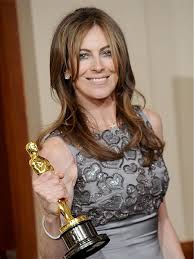
kathryn bigelow.jpgThe TIFF Cinematheque first retrospective on Kathryn Bigelow entitled KATHRYN BIGELOW: ON THE EDGE begins July 21.

Bigelow’s first film was the low-budget debut THE LOVELESS (an arty, hipster spin on ’50s biker movies, co-directed with Monty Montgomery and starring Willem Dafoe)  Following that, she  made her critical (but commercial unsuccessful) breakthrough with NEAR DARK, a grimy yet wickedly stylish tale of a pack of vampires traversing the American Southwest.  This was followed by a slew of films including POINT BREAK, STRANGE DAYS and others culminating with her glorious Oscar winner THE HURT LOCKER.  The retrospective arrives in time with the release of her new film DETROIT.

Bigelow was married to and divorced from director James Cameron.  Their collaboration can be seen in his script of STRANGE DAYS which Bigelow directed.

Bigelow’s best films are NEAR DARK, BLUE STEEL and STRANGE DAYS, all three of…

View original post 695 more words