Movie Review: HOW TO BE ALONE (Israel), LGBT, Drama

Played at the June 2017 LGBT Toronto Film Festival

Directed by Erez Eisenstein

Relying on “How To Be Alone” – a self-improvement audio book – a heartbroken woman, struggling with her lonesome existence, decides to embrace solitude and to learn how to survive without love. 

CLICK HERE – and see full info and more pics of the film!

Review by Kierston Drier

 HOW TO BE ALONE is a pensive film. Coming to us from Israel from director Erez Eisentein, this is a piece that makes you question introversion and healing from a broken heart. Our heroine, a newly single woman gets a self-help audio book about solitude, and following its’ advice, beings to live a life alone.

Regardless of the stoic, yet occasionally humorous advice the audio-book gives her, our protagonist can not seem to shake the image of her lover from her mind. Can her life be lead to it’s fullest without love in it? Will this book with it’s lonely advice deliver her to happiness and self-sufficiency, or will it drive her crazy?

This piece is a thinking piece. It takes us in, and engulfs us in our hero’s world so completely, that by the emotionally packed final scenes we are left to wonder if the book is real, or if it is all in her head.

A testament to good filmmaking, by the end of this film, we watch our hero take a plunge to get her lover back, and we are filled with the overwhelming urge to tell her to stop. Only a well crafted film could make a viewer feel so strongly for the hero’s well being.

Eisenstein has done an excellent job on examining love and human relationships through the lenses of solitude, while crafting emotion with a character that rarely speaks in the film. Silence and space are characters as much as our hero and her lover are. An introspective and poignant cinematic short.

how_to_be_alone_movie_poster.jpg


Movie Review: WAJOOD (SELFHOOD) (India) LGBT, Drama/Romance

Played at the June 2017 LGBT Toronto Film Festival

Directed by Vishal Srivastava

Revolves around a young hijra’s (trans-woman) life, who seems to fancy herself with an auto-rickshaw driver. When confronted by the elders of her community about her unrealistic expectations, she goes on a quest to know if somebody will ever fall in love with her or is this thought as naive as told by everyone around her? 

CLICK HERE – and see full info and more pics of the film!

Review by Kierston Drier

WAJOOD, or Selfhood, is a powerful short coming to us from Indian by director Vishal Srivastava. Bright with colors and boasting gorgeous cinematography, this piece sheds light on a little known part of Indian culture. The Hijra, known as the Third Gender, are a community of transwomen who are often misunderstood and shunned in society.

Yet WAJOOD takes a look at this section of society kind, compassionate and sensitive eyes. We follow our heroine through her emotional journey of dissecting her sense of self. She pines for the attractive rickshaw driver near her community, and wakes every morning to watch him. But her community members remind her that there is no future for people like herself. Her fate has been determined- she is not to be understood, and not to find conventional love. Her life, will be a lonely one. Yet a kind stranger will change her mind about what it means to be who she is.

What make WAJOOD special is it’s bravery. It tackles a topic worthy of discussion, about a group deserving of attention. More than that, it stands before adversity and shouts for recognition. But it will charm you as it does so. It will charm you with its stunning images, it’s entrancing music and it’s’ undeniably lovable and sympathetic main character.

If you watch WAJOOD, you may not identify with my main character right away, but you will love her. WAJOOD reminds us that we are far more similar that we are different.

wajood_movie_poster.jpg

Movie Review: SHAPING SCARS (UK) LGBT, Dance

Played at the June 2017 LGBT Toronto Film Festival

Directed by Zsolti Szabo

A dance journey about two girls who once loved each other, but while one is able to embrace herself openly (and therefore their relationship), the other is struggling to step into the light and shake off her demons.

CLICK HERE – and see full info and more pics of the film!

Review by Kierston Drier

This 7 minute UK experimental Dance piece is a gorgeous intimate dance piece set to a riveting and sparkling slam poem. Director Zsolti Szabo must be commended on the vision behind the work, for not only is a stunning visual dance performance, but film captures its intricacies and puts the performers talents under a microscope.

Two dancer go through the motions (both symbolically and literally) of a relationship gone wrong. Beautifully choreographed and light, a special nod must be given to the performers who engage in the incredibly intricate dance and the spoken word artist who performs the piece.

What sets this piece apart from the usual, is the camera work! The shots in this piece give the feeling that you are standing right beside the dancers. Turely, as much choreography was needed for the camera person as for the dancers themselves. If the film is the eye through which we see this art, then SHAPING SCARS invites you to join the dance.

The film itself has a deeper symbolic meaning as well. Our dancers are partners, but their love is not meant to be. Perhaps what is so touching about this piece is that underneath the vibrant poetics and stunning visuals is a message: that it is better to have loved and lost, than never to have loved at all. A film worth seeing, if for nothing else than that.

shaping_scars_movie_poster.jpg

Movie Review: THE 3RD TRY (USA) LGBT, Drama

Played at the June 2017 LGBT Toronto Film Festival

Directed by Alfonso Rodriguez

An emotionally unstable lesbian couple tries to find solace after experiencing a traumatic loss.

CLICK HERE – and see full info and more pics of the film!

Review by Kierston Drier

In 5 short minutes, this USA film directed by Alfonso Rodriguez will pull you in, break your heart and fill you with hope. Efficient, cutting and a packing a home-run in right in the “feels” The 3rd Try is nothing short of breath taking in its simplicity.

We barely know our main characters, except that they are couple desperate to turn their loving union into a bigger family, but for whatever reason they are never able to have a child.

Part of what is excellent about this piece, is that is not weighed down with expositional, and unnecessary dialogue. It doesn’t tell you what is exactly causing the couple’s’ pain- just that, once again, they are not having the baby they were hoping for.

It is a pain not exclusive to the LGTB community, but a pain certainly not foreign to the community either. The hope, joy, anxiety, disappointment and pain associated with expectation and loss of a child is universal. That is one of the strongest parts of this piece- anyone who has ever contemplated the love and loss of anticipated parenthood is included in this couples tragedy.

But what sets this film above others is its unquestioning resilience. Every tragedy must include hope. And this piece does not fail to deliver that either.

If you have a heart, The 3rd Try will move you. Exceptionally well acted and exquisitely cast, beautifully simply and utterly impactful, this is a film not to miss.

the_3rd_try_movie_poster.jpg

Film Review: LOVE AT FIRST CHILD (ANGE ET GABRIELLE) (France 2015) ***

Deadlines to Submit your Screenplay, Novel, Story, or Poem to the festival: http://www.wildsound.ca

LOVE AT FIRST CHILD.jpgGabriell is a single mother, her 17-year-old daughter Claire is pregnant, however the child’s father Simon has no desire to be involved with his future baby.

Director: Anne Giafferi
Writers: Anne Giafferi (dialogue), Anne Giafferi (screenplay)
Stars: Isabelle Carré, Patrick Bruel, Alice de Lencquesaing

Review by Gilbert Seah
 
The English title tells it all. LOVE AT FIRST CHILD is a French romantic comedy of a couple that falls in love as a result of a baby. But the baby are not theirs but their kids’. This film seems ideal for a Hollywood remake as follows the line of many French comedies. The screenplay by Anne Giafferi and Anne Le Niy is based on a play by Murielle Magellan.

The film begins with a semi-hysterical woman, Gabrielle (Isabelle Carre) barging into the office of Womanizer Ange (singer and actor Patrice Brunel). He is accused of having an uncaring son, Simon (Thomas Soliveres) who has impregnated her daughter, Claire (Alice de Lencquesaing) now studying in school. All this is a lame excuse for Ange and Gabrielle to argue and eventually fall in love.
But writer/director Giaferri’s film is not without its charm. It is difficult to dislike a film that has charm and nice human touches spread throughout the movie, despite the fact that this is a typical Harlequin romance complete with obstacles to the romance and an obvious happy ending. This fact might be the reason the film is going straight to vod in North America after doing only so-so at the box-office.

Director Giafferi takes the play out into the open so that the audience is never aware of the film’s source. There is a neat scene where Angie and Gabrielle kiss in a playground surrounded by children and another showing two loving pigeons on a rooftop. The film also updates the story to include political correctness of a gay marriage of one of Ange’s colleagues.

Like the French comedy THREE MEN AND A BABY, LOVE AT FIRST CHILD contains lots of shots of a cute baby. The baby featured in this film is really cute, impossible to dislike and director Giafferi has captured and exploited (in a good way) all the best baby moments.

Heart throb singer star Patrick Bruno is now 58 and his age shows. But his charm is not lost and his womanizing character and romanced comes across convincingly enough. Cesar winner Isabelle Carrie is also charming enough, looking so much like Diane Keaton with her glasses, But the two young a actors, Thomas Soliveres and Alice de Lencquesaing give he film a fresh look. It is a pity that they only deliver supporting performances. A full movie could have been made on young love, of their characters, perhaps a young adult romantic drama similar to the ones Mia Hansen-love makes.

LOVE AT FIRST CHILD makes its debut on vod (video on demand) Nationwide on Tuesday, July 11 on all major platforms including iTunes, Google Play, Amazon,
Microsoft, Vudu, Comcast, Charter, Cox, Vimeo, and various other cable operators. The film makes a good romantic evening home with a loved one for an alternate night at the movies.

Trailer: https://m.youtube.com/watch?v=SrhGDhu9IzM

Also, Free logline submissions. The Writing Festival network averages over 95,000 unique visitors a day.
Great way to get your story out: http://www.wildsound.ca/logline.html

Deadlines to Submit your Screenplay, Novel, Story, or Poem to the festival:http://www.wildsound.ca

Watch recent Writing Festival Videos. At least 15 winning videos a month:http://www.wildsoundfestival.com

TIFF CINEMATHEQUE Presents – FRENCH CRIME CLASSICS

Deadlines to Submit your Screenplay, Novel, Story, or Poem to the festival: http://www.wildsound.ca

elevator in the gallows.jpgThis new Cinematheque series showcases post war French Crime classics, may of which are seldom seen. One of the best films in this series is the newly restored PANIQUE, a 1945 black and white film (remade by Patrice Leconte as MONSIEUR HIRE in 1989) which I got to see for the first time, and must say is the BEST film I have seen this year.

PANIQUE was selected for both the Cannes and New York Film Festivals and was received with critical accolades when it opened at New York’s Film Forum. The film is capsule reviewed below. A MUST-SEE! (Panique screens on Thursday, July 20 at 6:30 p.m.)

French Crime Classics running from July 6 to September 3 is curated by James Quandt, Senior Programmer, TIFF Cinematheque. There is a total of 25 classic crime films, several in new or restored prints.

CAPSULE REVIEWS OF SELECTED FILMS:

ASCENSEUR POR L’ECHAFAUD (ELEVATOR TO THE GALLOWS)
(France 1957) ****
Directed by Louis Malle

One of Jeanne Moreau’s early films that director Louis Malle help put on the filmmaking map. Moreau does a lot of sulking and wandering around the city like a crazed lady when her lover (Marurice Ronet) fails to turn up for the rendezvous after being locked and trapped in an elevator after office hours as a result of a murder they both conspired on. The victim is the husband and the target the prize money that the two lovers hope to live happily ever after with. But as stories like these are, nothing goes as planned. A young couple steal the car and murder two German tourists with Ronet being the prime suspect. Director Malle fills his suspense thriller with lots of details that aid the story’s authenticity, especially in the segments in which Ronet is trapped in the lift. The black and white cinematography (by Henri Decae) is superb and aided by an excellent jazz trumpet score by Miles Davis. A beautifully stunning and entertaining suspense thriller!

LES DIABOLIQUES (France 1955) ***** Top 10
Directed b H.G Clouzot

Undoubtedly the best suspense murder thriller of all time! Based on the novel by Pierre Boileau, the film is the typical Hitchcock movie. It was rumoured that Clouzot bought the rights of the novel just before Hitchcock could, thus infuriating the Master of Suspense. But Hitchcock could not have made a better film. Shot in black and white with the word sinister printed on every scene, DIABOLIQUE tells the story of a mistress and wife of a boarding school owner conspiring together to commit the perfect murder. As one school colleague put it – it is really strange to see the wife comforting her husband’s mistress.

Simone Signoret plays the strong mistress while Vera Clouzot plays the weak hearted wife, both abused physically and mentally by the man they plan to murder. Of course in stories like these, things never go as planned. The body goes missing and the plot twists more than once at the end. Clouzot ‘s film contains some wickedly brilliant moments. The one in which the wife begins to warn her husband of the poisoned wine he is about to down only to get slapped by him is a classic. She then quietens to pour him more of the poisoned wine.

Another has her burn the evidence with a match, the light brightening up her face to reveal her reaction. As the two women leave in the car to drive back to the school with corpse in the boot, the neighbour says casually that the cops are around the major intersections theses days. One sentence of dialogue such as this one is sufficient to drum up the audience anticipation for the entire car trip. The atmosphere of the 50’s countryside France, the boarding school and emotional trappings of the two women are all wonderfully created. DIALBOLIQUE was remade with Sharon Stone and Isabelle Adjani in the 90’s, but some films like this one (and all Hitchcock films) should never be remade.

JUDEX (France/Italy 1963) ****
Directed by Georges Franju

JUDEX (original creator Louis Feuillade) is a French mysterious hero who punishes evil men like a judge passes sentences. The plot revolves the evil banker Favraux, receiving a threatening note from Judex (Channing Pollocak) demanding that he pay back people he has swindled. He is later drugged by Judex and locked away. But Favraux is not the only villain in the piece. Meanwhile, the former governess, Diana (Francine Berge) , kidnaps Favraux’s daughter Jacqueline (Edith Scob) to try to get the banker’s money. At the same time, private detective Cocantin (Jacques Jouanneau) bumbles his way (like an Inspector Clouseau) trying to figure out what is going on. The film is rich in period atmosphere especially in the costume ball segment where JUDEX makes a surprise appearance wearing a costume with the head of a hawk. The film wonderfully transports the audience into the style of early French cinema.

PANIQUE (PANIC) (France 1946 ) ***** Top 10
Directed by Julien Duvivier

The first film (before Patrice Leconte’s MONSIEUR HIRE with Michel Blanc) based on the novel Les Fiançailles de M. Hire by Georges Simenon, PANIQUE has all the elements of a film classic. The plot is a beauty and the beast like story with all the villagers at the end of the film lynching who they think is the murderer of a an innocent girl. After an elderly woman is murdered, the murderer realizes that Monsieur Hire (Michel Simon), a solitary Jewish neighbor on the courtyard where the main characters live, knows who is responsible. The murderer and his girlfriend, Alice (Viviane Romance) manipulate local opinion against Hire, who is ostracized by the community. It does not help that M. Hire falls in lvd with Alice. He tells Alice his every move, making him more vulnerable to the murderer. They then plant evidence in Hire’s apartment to confirm popular suspicions. Director Duvivier builds up on the suspicion and mistrust by the villagers on the stranger, criticizing the small French town mentality. The butcher questions the the preference of his pork chops to be bloody hen M. Hire buys the, and another is suspicious of the gifts M. Hire offers to a little girl. The town is interested in cheap gossip, tacky entertainment like lady wrestling and taking matters into their own hands. Beautifully shot in black and white with M. Hire wonderfully performed by Michel Simon, PANIQUE is a thrilling tragedy from start to finish.

TIREZ SUR LE PIANIST (SHOOT THE PIANO PLAYER) (France 1960 ) ****
Directed by Francois Truffaut

One of Truffaut’ more obscure but no less impressive feature, SHOOT THE PIANO PLAYER follows the adventures of a bar’s pianist, Charlie played by French singer Charles Aznavour after his bother runs to him for hiding. The film is part thriller part romance but it is these little details of the film that creates the charm and magic of this sensitive film. One scene has Charlie contemplating whether to ask Lena (Marie Dubois) to have a drink or to be more subtile by asking her if she was thirsty. When he immediately turns to her to utter by mistake, “Let’s go for a drink,” she has already walked off. The execution of musical numbers like the rendering of “Framboise” also does the trick. Aznavour is no great actor, by Truffaut milks the charm that has made this singer so famous. Again, the are lots of shots of women’s sexy long legs here as in Truffaut’s other films especially L’HOMME QUI AIMES LES FEMMES. I saw the film only once 20 years ago and was not really impressed then, but am now.


Also, Free logline submissions. The Writing Festival network averages over 95,000 unique visitors a day.
Great way to get your story out: http://www.wildsound.ca/logline.html

Deadlines to Submit your Screenplay, Novel, Story, or Poem to the festival:http://www.wildsound.ca

Watch recent Writing Festival Videos. At least 15 winning videos a month:http://www.wildsoundfestival.com
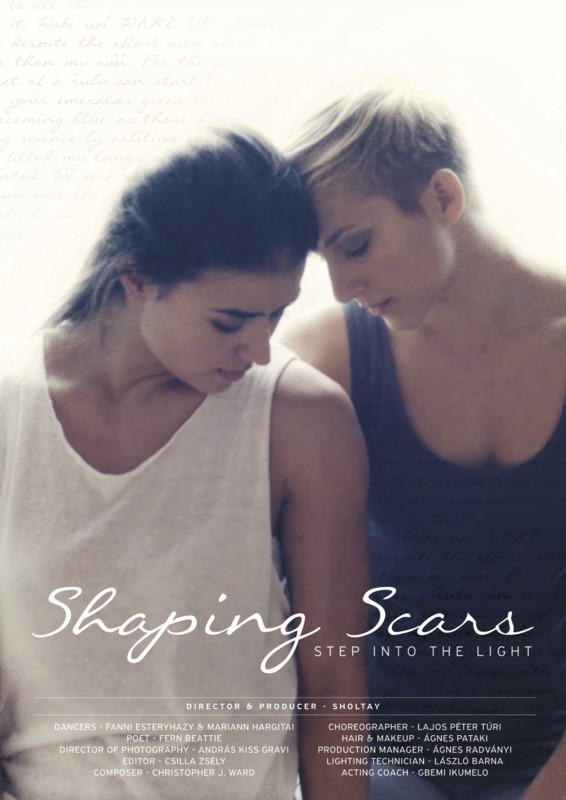
Interview with Festival Director Cristyn Steward (Columbus Black International Film Festival)

The primary objective of the Columbus Black International Film Festival is to showcase Black filmmakers locally, nationally and internationally, while highlighting a spectrum of stories told by people of the African diaspora.

Contact

Matthew Toffolo: What is your Film Festival succeeding at doing for filmmakers?

Cristyn Steward: The Columbus Black International Film Festival (CBIFF) is a movement that centers positive media representations of African American and African Diaspora communities. It provides a unique platform in Columbus, Ohio, to showcase films that are often not at the forefront of the mainstream film festival circuit, especially at the local level. This festival’s goal is to show the value of independent black cinema and highlight the importance of black filmmakers being in charge of their own narratives.

What would you expect to experience if you attend the festival this year (2017)?

In its inaugural year, the festival is setting the stage for a culture shift in Columbus. There will be three days of entertainment featuring 28 films from around the world. There will also be many moments for black filmmakers to network and build community. Festival workshops will also be featured to engage new and intermediate filmmakers to cultivate local talent.

What are the qualifications for the selected films?

This mission of the Columbus Black International Film Festival is to unapologetically uplift media representations of the African American and African Diaspora experience. All films submitted to the festival were required to feature black filmmakers in front of and behind the camera. A jury featuring black filmmakers, business owners and media critics rated the films based on creativity, direction, cinematography and acting, among other things. Films were also required to feature a valuable story uplifting the African American and/or the African Diaspora experience.

Do you think that some films really don’t get a fair shake from film festivals? And if so, why?

Black voices have a long documented history of being ignored or suppressed in mainstream film. Many films that feature marginalized communities aren’t given their just due. There are many reason why this is. Our society has been built on structural oppression and the idea of uplifting certain voices over others. This of course also plays out in the film industry as well. Luckily there are many niche festivals that now uplift marginalized voices, from the American Black Film Festival in Miami to the OUTFest Film Festival in Los Angeles. The Columbus Black International Film Festival is simply creating space to fill a similar void in Columbus, Ohio.

What motivates you and your team to do this festival?

The motivation for the CBIFF Board of Directors and Staff to do this festival is to start a movement and uplift black filmmakers in Columbus in an unprecedented way. My personal passion comes from how beneficial this film festival can be to the City of Columbus, its artists and its filmmakers. Nothing like this has been done before and we want to make sure we create something that is truly lasting.

How has your FilmFreeway submission process been?

I am a strong advocate of FilmFreeway. It is very easy to navigate and they have created new additions to make film festival management much more convenient and efficient. I think it was because of FilmFreeway and its reputation among filmmakers that we were able to garner 81 submissions in our first year.

Where do you see the festival by 2020?

Once the festival makes it to its fourth year in 2020, we hope that it will become a staple statewide and nationally for black film. We hope to have doubled our submissions by then and will have expanded the festival to a week-long series of showcases and workshops hosted in various neighborhoods throughout the city.

What film have you seen the most times in your life?

Being a film nerd, I don’t think there is just one, but I would have to say “Crooklyn” or “Baby Boy.” During my “starving artist” period as a film student living in San Francisco without cable, I couldn’t stop watching these movies.

In one sentence, what makes a great film?

It’s quite simple, a valuable story that universally touches everyone who watches it. It’s simply put, but very hard for even the best filmmakers to accomplish.

How is the film scene in your city?

Columbus will surprise you. It has a growing film scene with many new filmmakers coming out of The Film Studies Program at The Ohio State University and the Columbus College of Art and Design who are looking to build more opportunities locally. There are several popular film festivals here, including the Columbus International Film + Video Festival, the LGBT Fest and the Columbus Jewish Film Festival. There are also several filmmakers that have set up successful production companies, including our 2017 Keynote Speaker, Mark A. Cummings’ Awalkonwater Entertainment, which has sold out several theaters in the city for his films because of his unique approach to creating universally comedic films that feature black actors and filmmakers, and expertly highlights the black experience.

columbusblack1.jpg

—-

Interviewer Matthew Toffolo is currently the CEO of the WILDsound FEEDBACK Film & Writing Festival. The festival that showcases 20-50 screenplay and story readings performed by professional actors every month. And the FEEDBACK Monthly Festival held in downtown Toronto, and Los Angeles at least 2 times a month. Go to www.wildsound.ca for more information and to submit your work to the festival.

SUBMIT your TV PILOT Screenplay or TV SPEC Script
Voted #1 TV Contest in North America.
Screenplay CONTESTSUBMIT your Short Screenplay or FEATURE Script
FULL FEEDBACK on all entries. Get your script performed

Netflix Original Film Review: OKJA (South Korea/USA 2017) ****

Deadlines to Submit your Screenplay, Novel, Story, or Poem to the festival: http://www.wildsound.ca

okja.jpgMeet Mija, a young girl who risks everything to prevent a powerful, multi-national company from kidnapping her best friend – a massive animal named Okja.

Director: Joon-ho Bong (as Bong Joon Ho)
Writers: Joon-ho Bong (screenplay) (as Bong Joon Ho), Jon Ronson (screenplay)
Stars: Tilda Swinton, Paul Dano, Seo-Hyun Ahn

Review by Gilbert Seah

Ever since films like LASSIE COME HOME enchanted audiences, a lost pet reuniting
with its owner has been a favourite theme. In the new Netflix original movie OKJA, director Bong (MEMORIES OF MURDER, MOTHER, SNOWPIERCER) has broken all rules with the darkest kids movie since BABE IN THE CITY.

OKJA courted controversy at Cannes when it was argued that films like this Netflix original not slated for theatre release be disqualified from competition. Surprisingly, OKJA opens at the TIFF BELL Lightbox same day it opened on Netflix last week.

OKJA is a tale of a girl and her lost pet. The only difference is that the pet is a super pig named OKJA. For 10 idyllic years, young Mija has been caretaker and constant companion to Okja – a massive animal and an even bigger friend – at her home in the mountains of South Korea. But that changes when family-owned, multinational conglomerate Mirando Corporation takes Okja for themselves and transports her to New York, where an image-obsessed and self-promoting CEO has big plans for Mija’s dearest friend. With no particular plan but single-minded in intent, Mija sets out on a rescue mission. She encounters the Animal Rights group helping her.

The film can be divided into three parts. The first and most family friendly shows Mija in the Korean countryside playing with OKJA. Bong includes a suspenseful sequence where OKJA saves Mija’s life. The second occurs after OKJA is abducted to Seoul. This is the funniest segment which shows how an individual can infiltrate a big conglomerate armed with a strong will never to give up. No glass doors or metal walls can stop Mija. It is hilarious watching the little girl pursued by security calling her ‘a little shit’. The third and darkest segment is OKJA ‘s rescue from New York City. Mija sees an abattoir complete with pig carcasses, something really unpleasant to even an adult. Bong does not shy away from violence. The animal rights group are the main target for the violence as many of them are beaten with batons and kicked on the ground.

Mija is played convincingly by South Korean child actress An Seo-hyun. Hollywood stars Jake Gyllenhaal has a field day with his over the top performance as TV personality Dr. Johnny. Tilda Swindon plays the villain of the piece, Lucy Mirando who wants to put OKJA on the dinner table. Paul Dano is equally winning as the animal rights group leader who aids Mija rescue her pig.

The question is why Netflix financed a film like OKJA. It is reported that most studios would stay away from films that do not fit a certain mould, like the recent Brad Pitt Netflix movie WAR MACHINE. It is clear the reason studios might be afraid of the adult dark tale of OKJA with its dose of violence and company satire. But thanks to Netflix, Bongs’s OKJA got to be made. OKJA is a brilliant dark and original piece of filmmaking complete with excellent special effects. Highly recommended!

Trailer: https://m.youtube.com/watch?v=AfAIP7dqnm8

Also, Free logline submissions. The Writing Festival network averages over 95,000 unique visitors a day.
Great way to get your story out: http://www.wildsound.ca/logline.html

Deadlines to Submit your Screenplay, Novel, Story, or Poem to the festival:http://www.wildsound.ca

Watch recent Writing Festival Videos. At least 15 winning videos a month:http://www.wildsoundfestival.com

Film Review: PAST LIFE (Israel/Poland 2016)***

Deadlines to Submit your Screenplay, Novel, Story, or Poem to the festival: http://www.wildsound.ca

past life.jpgPast Life tracks the daring late 1970s odyssey of two sisters – an introverted classical musician and a rambunctious scandal sheet journalist – as they unravel a shocking wartime mystery that has cast a dark shadow on their entire lives.

Director: Avi Nesher
Writer: Avi Nesher
Stars: Nelly Tagar, Joy Rieger, Doron Tavory

Review by Gilbert Seah

 Director Avi Nesher (THE MATCHMAKER, TURN LEFT AT THE END OF THE WORLD) sets the stage in the film’s first scene when Sephi (Joy Rieger) performs (she is a tenor in a choir) in Berlin. An elderly woman ( Katarzyna Gniewkowska) reproaches her after, in public, accusing her of being a murderer’s daughter.

Back home, she relates the incident to her feisty sister, Nana (Nelly Tatar), a writer for her husband’s journal and she insists of finding the truth of what happened in the war with their father, Dr. Baruch Milch (Doron Tavory).

The film is a period piece, beautifully mounted with vintage cars and sets and set in the year 1977. It is a spellbinding tale that tracks the trans-European odyssey of two sisters as they try to unravel a wartime mystery that has cast a shadow on their lives. Sephi is an aspiring composer, determined to succeed in the male-dominated classical music world. Her older sister Nana is a scandal-sheet journalist and aspiring playwright. The daughters of Holocaust survivors, the two are bent on uncovering the truth behind a dark family secret.

The entire film hinges on what the secret is. To keep the film interesting from start to end, Nesher inserts a rift between the siblings.

Sephi is content not to unravel the skeleton in the closet while Nana is the opposite. Nesher paints a more interesting character in Nana as she is one hot female, always searching, always wanting the truth which damages her relationship with her husband who owns the journal she writes for. To make matters worse, Nana believes that he flirts with Sephi. This makes the story more down to earth though the tension feels forced at times. Nesher also inserts a segment that involves the timely discovery of the father’s document in the archives just before the starting of a concert. This tactic is obvious to heighten tension though it compromises the authenticity of the story.

Nesher’s film is also clearly devoid of humour. The light touches in dialogue come mainly from Nana’s lines, especially the ones in the hospital or seeing the doctor. But rather than being funny, they come across as cynicism.

Neshe’s strength are in the dramatic parts. The film’s best segment is unexpectedly the meeting in the park at night of the girl’s mother (Evgenia Dodina) and the elderly woman at the concert at the film’s beginning. The mother’s begging of her forgiveness for her and her husband is both moving and riveting.

The film was inspired by Dr. Baruch Milch’s book Can Heaven Be Void?, which is based on a diary he kept during WWII, and the extremely difficult decisions he had to face during the times. Nana in real life edited the father’s book while the sister Sephi composed the orchestral piece to exorcise their demons.

Nesher is himself a Holocaust survivor, so making this film must be a story he wanted to tell from his heart. PAST LIFE eventually turns out to be a powerful film about the importance of forgiveness.

Trailer: https://m.youtube.com/watch?v=2nJsh8BHMQ0

Also, Free logline submissions. The Writing Festival network averages over 95,000 unique visitors a day.
Great way to get your story out: http://www.wildsound.ca/logline.html

Deadlines to Submit your Screenplay, Novel, Story, or Poem to the festival:http://www.wildsound.ca

Watch recent Writing Festival Videos. At least 15 winning videos a month:http://www.wildsoundfestival.com
Film Review: THE JOURNEY (UK 2016) ***

Deadlines to Submit your Screenplay, Novel, Story, or Poem to the festival: http://www.wildsound.ca

THE JOURNEY.jpgA fictional account of the extraordinary story of two implacable enemies in Northern Ireland.

Director: Nick Hamm
Writer: Colin Bateman
Stars: Timothy Spall, Colm Meaney, John Hurt

Review by Gilbert Seah
 
Who would think that former enemies Rev. Ian Paisley and Martin McGuiness nicknamed ‘The Chuckling Brothers’ would remain friends for life after their meeting that finally resulted in the long awaited peace in Northern Ireland. No more bombings! No more bullets! Director Hamm underlines the violence as the film starts.

Nick Hamm’s THE JOURNEY is a dramatization about how these two two political opposites came together to change the course of history – an event that resulted in the Democratic Unionist Party and Sinn Féin (the political party of the Irish Republican Army) signing a 2006 agreement, bringing peace to Northern Ireland after nearly 40 years of violence.

Hamm’s journey is basically a two-handler, performed by two actors, one known for his humour the Irish Colm Meaney (THE SNAPPER) and the other for his dead seriousness, Timothy Spall (the Mike Leigh films). Most of the scenes involve banter between both of them. The film imagines a trip in a minivan where the two sort out their differences, come to an agreement and finally bring peace to the different groups. It is a real event though that minivan trip was imagined, as written in the script by Colin Bateman. The real trip took pace in an airplane. But the facts remain true. The reason the film changed the venue is not given but the change offers a visual treat, with lush greenery and rocky shores seen through rain-splattered windows. The drive was to the airport in Glasgow, Scotland.

Spall and Meaney are a pleasure to watch. Other British actors in the film include the late John Hurt (THE ELEPHANT MAN) as M15 boss Harry Patterson and Toby Stephens as Prime Minister Toby Stephens. Freddie Highmore has a small but mischievous role as the chauffeur, a British agent in disguise.

Director Hamm takes his time to set up the stage for the action when the two are finally the car and talking. The chauffeur, through his head set, is prompted to instigate the conversation. It is comical to see two grown men behaving just like children, fighting and wanting their own way. The conversation starts when McGuinness’s mobile is unable to get a signal but Paisley refuses to lend his. Bateman’s script, which imagines the actual conversation involves lots of funnily one-liners and rebuttals. The script is also believable in the way the ice is broken and the two eventually get talking. At the same time, hatred, humour and hard-nosed stubbornness are on full display.

They is a little film that documents a real life-changing event through imagined conversation. It is an entertaining exercise that also reflects strength overcoming the weaknesses of the human character in the strife for the good of mankind. But at the time of writing this review, problems are beginning to resurface again as observed in the recent news.

Trailer: https://www.youtube.com/watch?v=pc3jqf4cdfc

Also, Free logline submissions. The Writing Festival network averages over 95,000 unique visitors a day.
Great way to get your story out: http://www.wildsound.ca/logline.html

Deadlines to Submit your Screenplay, Novel, Story, or Poem to the festival:http://www.wildsound.ca

Watch recent Writing Festival Videos. At least 15 winning videos a month:http://www.wildsoundfestival.com