Film Review: THE STAIRS (Canada 2016) ***1/2

Directed by Hugh Gibson

Review by Gilbert Seah

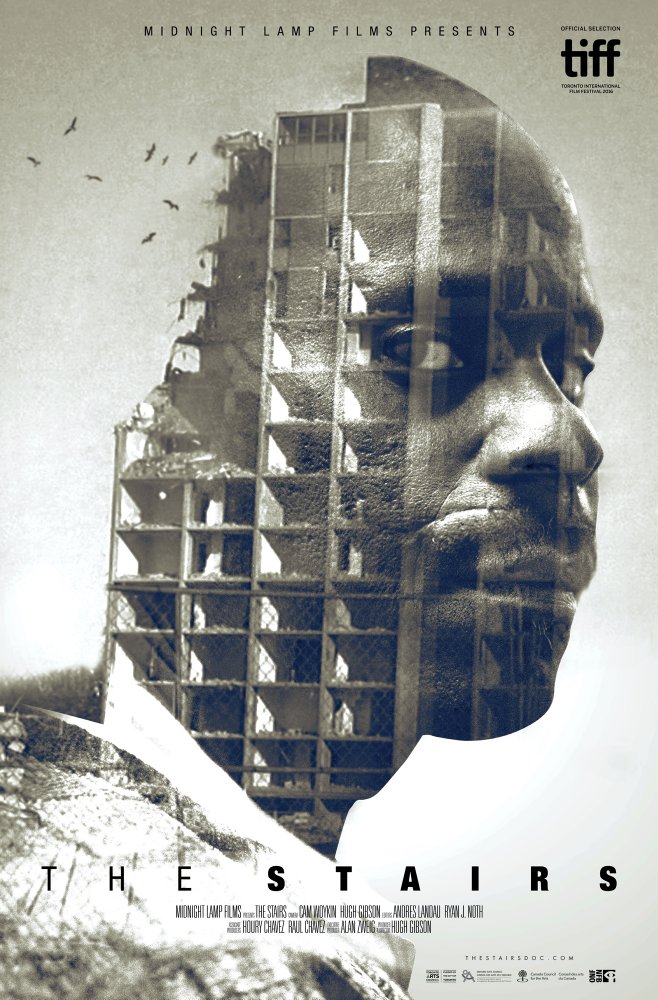
There are certain stories that need to be told. THE STAIRS is one of them. THE STAIRS refer to the back stairs is of an apartment building where homeless drug users that frequent Regent Park live. One step is the bathroom, another step the kitchen and so on. THE STAIRS is also the place where they congregate for drug usage. But it is a safe haven for these people as they can partake safely here than out in the open. As one user says, “If you buy it and try to it in in the open, it is not going to happen.”

This documentary by Hugh Gibson took five years in the making and tells stories of Toronto’s marginal people – not the ones that live in high-rise condos downtown or in large houses in the Greater Toronto Area but the drug users of Toronto’s Regent Park.

The centre of the film is Regent Park Community Health Centre, whose staff of social workers includes both former and current drug users. These workers understand all too well what their clients are going through.

The film is quietly effective as Gibson narrows his film to concentrate on only three subjects, all three of which are staff embers of the Health Centre. One is the loquacious, seemingly tireless Marty, who was so addicted at one point that, after being shot in a deal that went south, he stopped for a hit before going to the hospital; the second is Roxanne, a former sex worker whose tales of life in the trade are beyond harrowing; and finally Greg, a biracial child of the 1960s consumed with a long-delayed legal case hinging on a police officer’s use of excessive force. Gibson spends equal screen time on each of the three subjects, each just as interesting as the next.

One would think that the stories are morbid and horrifying. True but the subjects are thankful to be living and they share a sense of humour. Marty is extremely funny when he confesses that he has never been called grandpa even by his grandchild. Roxanne has a scary tale of being kidnapped that rival the one in the hit film ROOM. She relates how she escaped, naked and hit by a car before being brought down to the police station, and how she identified the house from memory and got her abductor a long prison sentence. She also talks about the sex trade. These stories are human as they come from real people. It is hard for anyone not to feel sorry for Roxanne and also for Greg who was beaten up by the cops for no reason.

The film also challenges prejudices and preconceived notions. It also underlines how tentative sobriety and stability can be for people who have lived in addiction for years. THE STAIRS has been nominated by the Toronto Film Critics Association (TFCA) for the Best Canadian Feature. It has my vote!

Trailer: https://www.youtube.com/watch?v=7WBlH8Sm-ZM
the_stairs_movie_poster


Watch Winning Best Scene Readings:

TV CONTESTSUBMIT your TV PILOT or TV SPEC Script
Voted #1 TV Contest in North America.
FILM CONTESTSUBMIT your SHORT Film
Get it showcased at the FEEDBACK Festival
writing CONTEST1st CHAPTER or FULL NOVEL CONTEST
Get full feedback! Winners get their novel made into a video!
SCREENPLAY CONTESTSUBMIT your FEATURE Script
FULL FEEDBACK on all entries. Get your script

Film Review: CAMERAPERSON (USA 2016)

cameraperson_movie_poster.jpgDirected by Kirsten Johnson

Writers: Doris Baizley (consulting writer), Lisa Freedman (consulting writer)

Star: Kirsten Johnson

The director’s vision is seen through the lens of the cinematographer’s camera. Oscar winning cinematographers? Who can forget Freddie Young’s sandstorm in LAWRENCE OF ARABIA, Haskell Wexler’s locust invasion in BOUND FOR GLORY or Gordon Willis’ city silhouette in Woody Alllen’s MANHATTAN? In the new documentary CAMERAPERSON that premiered at Sundance this year, female cinematographer Kirsten Johnson delivers a uniquely insightful memoir-cum-critical-treatise on the nature and ethics of her craft.

At the film’s start, Johnson declares that she is a documentary cinematographer who for the past 25 years has shot footage for other films. She declares that this film is her memoir – images that have marked for life and many that have still kept her wondering. These are strong words – and sets up the audience for a documentary that will hopefully astound and mesmerize.

As for Johnson’s credit, she has worked behind the camera for well-known films like FAHRENHEIT 9/11- there is one shot of Michael Moore making a comment, DARFUR NOW and CITIZENFOUR among others. She has travelled around the globe in different continents uncovering hidden truths.

A boxing match in Brooklyn; life in postwar Bosnia and Herzegovina; the daily routine of a Nigerian midwife; an intimate family moment at home: these scenes and others are woven into the film, a tapestry of footage captured over the twenty-five-year career of documentary cinematographer Kirsten Johnson. Through a series of episodic juxtapositions, Johnson explores the relationships between image makers and their subjects, the tension between the objectivity and intervention of the camera, and the complex interaction of unfiltered reality and crafted narrative.

Her documentary uses images to tell the story. There is little voiceover to put the audience into any perspective of the images or places or people on display. By looking at her images on screen, the audience is to make up their own minds on what is perceived. But each snippet is preceded with a title, mostly the name of the place where the images to be seen are taken – from as diverse locations as Foca, Bosnia, to Westport, New York. Certain placers are re-visited again in the film. Some snippets last no more than a minute while others longer.

There are plusses and negatives for this approach. The plusses include the audiences having a less biased opinion of the activities that take place – and some of these are political. A few teases the audience’s curiosity. One snippet for example traces a boxer’s activities just before he enters the ring and then ends. Other images are plain stunning and need no commentary. On the negative side, some feel out of place and difficult to follow – especially the reason for Johnson’s inclusion into her film. The short snippet of the outside of an airline as shot from inside that lasts about minute is a puzzling one. One would also like to know more about Johnson’s background, her influences and who she respects working for in the past or who she would like to wok with in the future. Her take on cinematography for fiction films would also be an insightful inclusion for this film. The closing credits list the details of all the films Kirsten has used in this doc.

Regardless, CAMERAPERSON is still a fascinating film for all those who love cinema. It is these pioneers that capture the stuff of dreams and translate it into celluloid for everyone’s benefit and pleasure.

CAMERAPERSON will have a limited run at Toronto’s Hot Docs Ted Rogers Cinema.

Trailer: https://vimeo.com/179496166

TV CONTESTSUBMIT your TV PILOT or TV SPEC Script
Voted #1 TV Contest in North America.
FILM CONTESTSUBMIT your SHORT Film
Get it showcased at the FEEDBACK Festival
writing CONTEST1st CHAPTER or FULL NOVEL CONTEST
Get full feedback! Winners get their novel made into a video!
SCREENPLAY CONTESTSUBMIT your FEATURE Script
FULL FEEDBACK on all entries. Get your script performed

Film Review: AN EYE FOR AN EYE (Documentary)

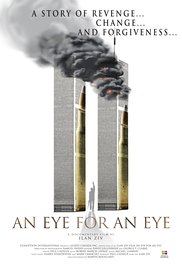
an_eye_for_an_eye_poster.jpgAN EYE FOR AN EYE (USA/Canada 2016) **
Directed by Ilan Ziv

Review by Gilbert Seah

Israeli filmmaker Ilan Ziv’s (SIX DAYS IN JUNE) documentary tells the story of death row inmate Mark Stroman and the friendship he forges with one of his surviving victims Rais Bhuiyan, who set about to save Stroman from death row as part of his Muslim faith beliefs.

From 2004 and for the next 7 years, filmmaker Ilan Ziv met and befriended Mark Stroman on Texas’ infamous Death Row, where he had been since his capital murder conviction in 2002. At trial Stroman was described by the prosecutor as a “monster, a cancer to society”, yet Ilan was perplexed to meet a complex man full of contradictions, who shared the same troubled soul as the most recent “lone wolves” who used Jihad as a cover for their personal failings and justification for their crimes. By then, Stroman had become a man in search of meaning and redemption. So Ziv set out to document what he called “the enigma of Mark Stroman.”

Unfortunately the film concentrates on Stroman. The interviews conducted by Ziv’s visits in prison depict Stroman as not a very bright person. A film is often as interesting as its subject – and Stroman is simple minded fellow. Stroman declared himself a ‘lone wolf’ and began killing random Arabs in retaliation for the 9/11 town towers attacks. But Stroman believed his victims were Muslims from the Middle East – but they were actually immigrants from Pakistan, Bangladesh and a Hindu from India who had absolutely nothing to do with the 9/11 attacks. He killed two and partially blinded a young man from Bangladesh. Arrested and sentenced to death in the state of Texas, this man’s life is just one big mistake that few can feel sorry for.

Ziv spends too much time in the film trying to convince the audience that Stroman is not a bad guy. When the film begins, Ziv says in voiceover, that when he first visited Stroman he expected to see the eyes of a killer but did not. Ziv also shows the explosions of the twin towers in all their horror not once but twice in the film to convince the audience the reason for Stroman’s motive. He further explains Stroman’s childhood background – how he was always beaten by his step-father and arrested at the early age of 12. Despite the horrors of Stroman’s crime, Stroman is not a very interesting person, so investing so much interview time on him drags the film. Stroman’s former boss/employer’s description of Stroman sheds more light on him.

When Stroman asked for forgiveness from his victims, one of his surviving victims Bhuiyan publicly forgave him, in the name of his religion and its notion of mercy. The film shifts to the two months before Mark’s execution when Rais waged a legal and public relations campaign against the State of Texas and Governor Rick Perry, to have his attacker spared from the death penalty.

The film has one moving part when director Ziv is invited by Stroman to witness his execution. Ziv says that this is the time he crossed the line from a reporter to being Stroman’s friend.

What does not work in the film is Ziv attempts to create some excitement in the film by counting down of the days before Stroman’s execution while showing the desperate legal tactics used one by one by the lawyers till there were none left.

Ziv’s film has a strong message of peace and redemption. He uses the wrong devices to deliver the message ending up sentimentalizing and muddling up the film’s power.

Please note that in a special appearance, the inspiring and hopeful Rais Bhuiyan will engage in discussion at screenings of AN EYE FOR AN EYE on Monday, November 14th at 5:20 p.m. and 7:50 p.m. at Canada Square Cinemas, 2190 Yonge St, Toronto.

Trailer: https://vimeo.com/177747964


SUBMIT your TV PILOT or TV SPEC Script
Voted #1 TV Contest in North America.
FILM CONTESTSUBMIT your SHORT Film
Get it showcased at the FEEDBACK Festival
writing CONTEST1st CHAPTER or FULL NOVEL CONTEST
Get full feedback! Winners get their novel made into a video!
SCREENPLAY CONTESTSUBMIT your FEATURE Script
FULL FEEDBACK on all entries. Get your script performed

Interview with the director/star of THE EAGLE HUNTRESS

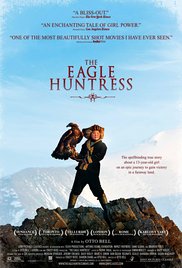
the_eagle_huntress.jpgWhat a thrill it was to chat with the team of one of the best documentary films of 2016 in THE EAGLE HUNTRESS.

Director Otto Bell and his subject, the eagle huntress Aisholpan Nurgaiv chatted with me in a press junket hotel room in downtown Toronto during the Toronto International Film Festival. It was a bit of a surreal moment for me walking in as Aisholpan was dressed in her full huntress gear. English isn’t her first language so she didn’t have much to say in this interview. What was striking for me was her demeanor and eyes. At 13 years old, there was wisdom way beyond her years. It was interesting to hear what her next passion is (read below) too. Enjoy. And make sure you check out the film. It’s playing in all of the big cities in North America today.

Matthew Toffolo: Who is taking care of the Eagles right now while you’re in Toronto?

Aisholpan Nurgaiv: My older and younger brothers are taking care of them right now.

MT: What attracted you to making this documentary and going to Mongolia to film Aisholpan and her family?

Otto Bell: I saw a BBC photograph on the day it was posted. I was struck by it immediately. The backdrop and setting was beautiful. It was almost like an oil painting. She (Aisholpan) was training with her father’s bird at the time and the eagle had a 7 foot wingspan – like it was from prehistoric times. And I saw her face, it was striking. Those three factors got me thinking. Is there a movie here?

I found the photographer on facebook that day. Skyped him and then was on a plane to Mongolia in a matter of days.

MT: Wow. What was your headspace like when you saw the photograph?

OB: I was in my cubicle at work.

MT: I mean mentally. spiritually. What propelled you to skype with the photographer and then jump on a plane?

OB: I was in New York making short documentary films for IBM, Philips etc…. I was looking to make a feature film. At least attempting to make one. And the photograph came at the right time. It had to be the right film in order for me to plunge my life savings and go for it.

I got into some pretty tight corners making this film and I was luckily saved by Morgan Spurlock who set me up with more financing. I was able to finance about 2/3rds of the film and then they (Morgan and his team) were able to add some checks and balances to the film and legalize everything. I’m grateful

MT: (to Aisholpan) What is your feeling having Otto and his camera team consuming your lives for so many months?

Aisholpan: We got used to the cameras quickly and it was fine.

MT: Is this your film time in Toronto, Canada?

Aisholpan: Yes.

MT: How do you like the North American culture?

Aisholpan: We were in Utah for Sundance and the culture there with the mountains was fine. Not used to New York or Toronto yet.

MT: Would you ever want to live in North America?

Aisholpan: Yes.

MT: What would you like to do if you lived here?

Aisholpan: First I want to study. I want to be a doctor. I like to be a surgeon.

MT: Did you have a script already completed when you started shooting? Or did you make it ala cinema verte?

OB: I made the film with a compass, not a map. Things kept coming up and I was able to adjust. What made me able to finish was the story map of her going through the stages of being a true Huntress. So that was good.

I first thought it was going to be a “girl power” film, but the strongest theme that came out of it is a story of a father/daughter relationship.

MT: There is still a lot of social commentary happening with the female empowerment.

OB: Yes, I didn’t want to hit people over the head with that. It comes out and that’s great.

MT: You were able to grab Daisy Ridley to do the voice over. How did that come to be?

OB: Initially, there wasn’t a voice over when we first showed it at Sundance. We sold the film to Sony Pictures Classic. Through Morgan Spurlock’s machine at CAA, they had Daisy on the books and they showed it to her.

She called me up saying that she loved the film and she really got it. That was nice.

Then Sony suggested that I add some voice over in it. What they wanted to provide was a little bit of a hand-hold for the viewers. To make it easier for kids to watch. I was hesitant at first, but when they suggested Daisy I thought it would work. She has a fantastic voice and it really needed to be from a female perspective. So I was sold and it makes the film better.

MT: Tell us your experience working with your cinematographer Simon Niblett? What an amazing job he did.

OB: Simon and I made about 8 short films together around the world. I was very used to him and vice versa. He’s a natural world documentarian. And he’s an inventor. He brought in a lot of equipment, which was my biggest expense. And that’s how we got all the terrific landscape shots in the film.

MT: When I watched the film and the credits came up, I was shocked by how small the list was. A DP. An assistant. An editor. That’s it.

OB: Yes. It was very small. And we made it look like there was a whole lot more.

MT: (to Aisholpan) What is your all-time favourite movie?

Aisholpan: Ice Age. Animation films are my favourite.

MT: What film have you watched the most times in your life?

OB: The Quiet Man. I love that film.

PHOTO: Aisholpan Nurgaiv – THE EAGLE HUNTRESS:

aishpolan.jpg

****

Interviewer Matthew Toffolo is currently the CEO of the WILDsound FEEDBACK Film & Writing Festival. The festival that showcases 10-20 screenplay and story readings performed by professional actors every month. And the FEEDBACK Monthly Festival held in downtown Toronto on the last Thursday of every single month. Go to http://www.wildsound.ca for more information and to submit your work to the festival.

Movie Review: THE SOUNDS OF STREET VENDORS (2016)

  MOVIE POSTERTHE SOUNDS OF STREET VENDORS, 8min., USA/Cuba, Documentary
Directed by Michael Brims

A portrait of the music and the sounds of street vendors in Havana.

Shown at the September 2016 DOCUMENTARY FEEDBACK Film Festival

Movie Review by Kierston Drier

The Sounds of Street Vendors is a soundscape portrait of Havana’s bustling daily marketplace. As colorful as it is musical, this piece, directed by Kyle Chen is especially interesting given the recent changes to the political and economic scene in Cuba. This film stands as a testament to Cuba’s economic essence: entrepreneurs sell their wares- flowers, peanuts, fabrics kitchen supplies- or their services, like knife sharpening, all in order to make a living. This cinematic piece is as engaging to the ear as it is to the eye, every vendor seems to be singing to attract their business. As though each vendor where birds, chirping to attract their mates.

To the arm chair sociologist or the culturally curious, this piece is a cultural rosetta stone- likening itself to market places everywhere. To a cinema-buff however, it may be frustrating, as the film is more an exploration of a city’s streets and sounds, than it is a dedication to a specific plot or storyline. The film is framed nicely with the larger-than-life vaudevillian style peanut vendor, whose sultry and enticing voice both opens and closes the piece. Beyond that, however, there is not much in the sense of story development. Instead a story that develops following central cast, crew or plot you are brought along as through a journey of discovery, as thought you were a tourist in the street yourself. The characters we see are each individual vendor, and while their moments in the film may be short, they are colorful and clear. Each vendor with their own song, their own items or services and their own clear selling tactics.

Fun, light, bright and whimsical musical The Sounds of Street Vendors is a rich documentary, that shows the audience another type of world. Like many other excellent documentaries, you are not told what to think, but if you leave this film craving peanuts, the vendors of this marketplace have worked their magic on you.

Watch the Audience FEEDBACK Video of the short film:

Movie Review: WAR OF SPACE (2016)

  MOVIE POSTERWAR OF SPACE, 5min., USA/Kenya, Documentary
Directed by Matt Mays

As human and elephant populations increase across the Serengeti ecosystem, the Maasai Mara region of Kenya is struggling with room for both to exist peacefully. Conflict is daily and sometimes deadly. A group of dedicated rangers is working to find a way to end the war of space.

Shown at the September 2016 DOCUMENTARY FEEDBACK Film Festival

Movie Review by Kierston Drier

A stunningly beautiful short, War on Space, by Matt Mays, tells the story of on-going conflict between the human and elephant populations of the Maasai Mara region of Kenya. Poignant musical composure and spectular footage of the Kenyan Landscape are not the only strengths of this piece; this film is an investigation of human ingenuity and hope.

Human-elephant relations have been a long troubling issue in the Maasai Mara region- with human growth crowding out the roaming lands for herding elephants. Elephants attacks have claimed human lives and the ever shrinking room for elephant movement have lead to attacks on elephants as well. Yet War on Space investigates the solutions to these problems with human advancements in technology. In an effort to find harmony with humans and wildlife, new legions of troops now assist in peacefully navigating elephants away from human habitats via GPS devices and drone usage, sparing countless elephants lives. To help instruct the future generations, local schools teach the importance of protecting the elephant population.

This film shows a beautiful type of hope. A future where humans live in peace with the world we are a part of. It shows the transformative power of education and technology. It brings light to an issue many North American audiences have never known about. It is gorgeously produced and exceptionally well executed as a piece of cinema. Most importantly for our cinema lovers- it it successful in it’s attempts to create a visually beautiful spectacle while also weaving a compelling and meaningful message. A wonderful documentary about humans and our impact on this amazing, awe-inspiring world.

Watch the Audience FEEDBACK Video of the short film:

Movie Review: THE CHAMPION (2016)

  MOVIE POSTERTHE CHAMPION, 17min, USA, Documentary
Directed by Patrick McGowan

A former Iraqi boxing champion, Estaifan Shilaita overcomes tremendous hardships as he builds a special bond with his family and taxi cab customers in Chicago.

Shown at the September 2016 DOCUMENTARY FEEDBACK Film Festival

Movie Review by Kierston Drier

The Champion, a powerful short film hailing from the USA, directed by Patrick McGowan, is the story of Estaifan Shilaita, former Iraqi boxing champion turned taxi driver. The story follows Estaifan in his pursuit for a better life for himself in Chicago. Full of stunning re-enactments, brilliant cinematography, powerful composition and above all, breath taking humanity in its’, The Champion is all at once heartbreaking and humorous, compelling and inspiring.

Estaifan may seem on the outside like any other metropolitan taxi driver- friendly, smiling, overtly chatty. But under his ever-calm and ever beaming face is a story of rich history and deep roots. Achieving great fame in his youth in Iraq as a light weight boxer, Estaifan fled to find a better life for himself. He fell in love in Greece and took his new wife to Chicago under refugee status, where they began raising their four children under the American dream.

This film boasts excellent production value, rivaling any highly acclaimed feature. But it is not the visual beauty of the film that makes it sing- it is the honesty, the heart and humanity of Estaifan’s life. His resilience and happiness in the face of conflict is nothing less than a testament to human triumph. As a film, The Champion, glosses over the political and economic tensions that propelled our hero’s to flee Iraq. It glosses over the struggles a young refugee family must have faced in a new country. The film only briefly touches on the pain of loss that Estaifan and his wife feel, at having spent nearly forty years in the USA without ever being able to access their family in Iraq. It glosses over all of these things so that is can focus on joy. For Estaifan’s life is so utterly full of his own encapsulating joy it is tangible. The audience cannot help but be uplifted by it. And it makes this film spectacular.

Watch the Audience FEEDBACK Video of the short film:

GLEASON (USA 2016) *** Directed by Clay Tweel

Deadlines to Submit your Screenplay, Novel, Story, or Poem to the festival: http://www.wildsound.ca

gleasonGLEASON (USA 2016) ***
Directed by Clay Tweel

Starring: Steve Gleason, Mike Gleason, Scott Fujita

Review by Gilbert Seah

Clay Tweel’s GLEASON is a documentary that chronicles the journey of former New Orleans Saints football star Steve Gleason after being diagnosed with ALS at age 34. The doc was assembled from footage taken by Steve’s family, friends and caregivers.

Gleason became a local hero after he blocked a punt during the team’s first game at the Superdome following Hurricane Katrina – a play that resulted in a touchdown for the Saints and became a symbol of recovery for the city. He retired in 2008 and married New Orleans artist Michel Varisco. Three years later, the ALS news came, just as they discovered that Michel was expecting their first child. Given two to five years to live, he begins recording a video diary for his son.

GLEASON is not the first film made about football injuries. The 2012 Steve James documentary HEAD GAMES told Chris Nowinski’s story based on Nowinski’s 2006 book by the same name. Nowinski suffered multiple concussions during his career as a football player and professional wrestler, and he has been diagnosed with post-concussion syndrome. Nowinski has dedicated his life to advocating and researching brain trauma. It is no coincidence that Nowinski’s work has coincided with the plethora of lawsuits filed by former players alleging the NFL hid information regarding brain trauma.

GLEASON touches the subject of the course of his ALS and hints that it was likely due to football. But nothing more is said of the subject. One can only guess that Gleason’s father and him had put in more effort to possible faith healing than to go after the culprits.

The two most almost unwatchable scenes, involve him having to take a shit, aided by his loved ons and caregiver and an argument with him and his father. The father argues that if his son, Steve does not believe in faith healing, he will not be saved, while Steve cries his heart out that he truly believes he is saved regardless. Other ones like Steve’s venting on life or his difficulty in breathing are necessary.

But the hero in all this, apart from Steve Gleason achieving Obama’s bill on providing speech machines to ALs patients is his wife, Michel. Caring for both their son and Steve at the same time requires the patience of an angel. The most effective scene in the film is the one where the two lie in bed next to each other. Steve is complaining that she ignores him. But the audience can see that she is just tired and wants to be left alone and Steve will not let her. Her tireless patience is nothing short of angelic.

The film features two celebrities, the lead guitarist of Gleason favourite and, Pearl Jam and a glimpse of physicist Stephen Hawking, another victim of ALs.

As described as a warts and all documentary on Gleason’s life, the film concentrates more on the warts. GLEASON is a brutal watch with many segments almost unbearable.

GLEASON has won many praises including the Audience Award at SXSW 2016. It is the honesty of Gleason’s misery that have captivated the hearts of audiences.


Also, Free logline submissions. The Writing Festival network averages over 95,000 unique visitors a day.
Great way to get your story out: http://www.wildsound.ca/logline.html

Deadlines to Submit your Screenplay, Novel, Story, or Poem to the festival:http://www.wildsound.ca

Watch recent Writing Festival Videos. At least 15 winning videos a month:http://www.wildsoundfestival.com

Film Review: THE MISSING INGREDIENT: WHAT IS THE RECIPE FOR SUCCESS?

the_missing_incredient.jpgTHE MISSING INGREDIENT: WHAT IS THE RECIPE FOR SUCCESS?

Review by Gilbert Seah

THE MISSING INGREDIENT: WHAT IS THE RECIPE FOR SUCCESS? is the question posed throughout this new documentary of the same name. The answer is given near the end of the film by one of the owners of Gino’s, the successful restaurant that became an institution in NYC. However, one might argue if that is the correct answer- or that there are more ingredients to its success.

Whatever the point is, this Canadian documentary is strangely totally set in NYC. One wonders of the reason the effort was not taken up by an American filmmaker. Maybe it takes an outsider to be able to see the whole picture.

The film centres on two restaurants in NYC. One is already a success as an institution, the Italian Gino’s and the other, another Italian restaurant, Pescatore that strives desperately to be one. Director Sparaga interviews the owners of both restaurants, the clientele and workers. It is difficult to define the success of Gino’s. Gino’s is an unpretentious place, where the customers become family. Gino’s does not accept credit cards, but allows credit as kept in the log of a handwritten book. Gino’s has bright orangey red zebra wallpaper that became the restaurant’s icon. A big part at the end of the film has Pescatore using, after Gino’s has closed, the identical wallpaper with zebras but in yellow – to disastrous results.

Sparaga’s film flows easily. It is a very likeable documentary that never passes judgement on any one of his subjects. Even when Charles, the owner of Pescatore steals Gino’s wallpaper, a definite no-no, as opinionated by everyone interviewed on this subject, Sparaga goes on to film Charle’s view on the topic, even as he he says at his restaurant that if anyone working there will not support the wallpaper would best be looking for a job someplace else. Sparaga later allows Charles as he opens his new restaurant to be respected for his hard work and dedication despite a bad decision in the past.

This is where Sparaga’s film succeeds. Despite having a restaurant’s success as the subject, his film is also a candid study of people’s behaviour – their loyalties; their dedication; their goals and their pleasures. Restaurant come and go. People don’t. Gino’s though terribly successful had to finally close its doors. It is what can be learnt from the people and not from the restaurant that is priceless.

By the time the last reel is played, the audience will remember the sad faces of the founders of Gino’s, the face of Charles who tried so hard to make Pescatore work as well as the words of the loyal customers of Gino’s. But many will not recall the dishes at Gino’s that were displayed in the film.

THE MISSING INGREDIENT: WHAT IS THE RECIPE FOR SUCCESS? turns out to be a very likeable documentary that is easy to watch. It dishes out life lessons as famously as Gino’s dished out great food.

Also, Free logline submissions. The Writing Festival network averages over 95,000 unique visitors a day.
Great way to get your story out: http://www.wildsound.ca/logline.html

Deadlines to Submit your Screenplay, Novel, Story, or Poem to the festival:http://www.wildsound.ca

Watch recent Writing Festival Videos. At least 15 winning videos a month:http://www.wildsoundfestival.com

WEINER (2016) Documentary Movie Review

Deadlines to Submit your Screenplay, Novel, Story, or Poem to the festival:http://www.wildsound.ca

weinerWEINER (USA 2016) ***1/2
Directed by Josh Kriegman and Elyse Steinberg

Review by Gilbert Seah

WEINER is the documentary of the rise and fall and rise and again fall of young congressman, Anthony Weiner. His final run for mayor of New York City forms the gist of the film though it ends with his complete defeat.

Weiner’s (his name made fun of, throughout his sex scandal) downfalls (twice) are due to his uncontrollable sex urges. He posted pics of him self in underwear as well as engaged in telephone sex. Weiner was caught once causing him to finally resign from his post as congressman. He was largely forgiven as he ran his campaign for mayor, with wife, Huma (she is Arabic) by his side. Huma forgives him. But his phone sex is again discovered and his fans were reluctant to forgive him a second time. The media, obviously has a field day.

But who really wants to watch a not so well known politician fail because of a sex scandal? There are more pressing topics in the world such as ISIS attacks and environmental issues. But directors Josh Kriegman (who also served as cinematographer) and Elyse Steinberg keep their film a fascinating and absorbing watch. Part of this is due to Weiner granting them almost full access in filming both his private and political life. Some of these segments, particularly the ones dealing with his wife and aide reactions are almost unbearable to watch. But it is these issues and the life lessons demonstrated that lift this doc above the average.

One is the side story of Huma, the long-suffering wife who has to stand by her husband for better or for worse. If the story sounds similar to what Hilary Clinton went through, Huma is at present one of Hilary’s top aides in her campaign. Though the husband was caught only sex texting or sex phoning and not having actual sex, it is the humiliation that gets the better of Huma – especially when Weiner commits the sex thing the second time.

The human race is so unforgiving for any politician caught in a sex scandal though a notable majority f human beings cheat and watch porn in real life.

Well, the people did forgive Weiner the first time as evident by the booing whenever Weiner’s politicians bring up the scandal in their speeches. But people were not forgiving the second time. This sociological behaviour also makes the film completely compelling.

The directors create suspense with captions like day 2 before election day; day of election day; using the countdown to the film’s effect. The camerawork is top notch, as evident in the segment in which one crew of cameramen follow Weiner and wife as they escape from their pursuers while the other trail the pursuers. This segment has the thrill like a chase in an action film.

WEINER succeeds as an absorbing documentary about betrayal and its sad effects. There are clearly no winners.

Also, Free logline submissions. The Writing Festival network averages over 95,000 unique visitors a day.
Great way to get your story out: http://www.wildsound.ca/logline.html

Deadlines to Submit your Screenplay, Novel, Story, or Poem to the festival:http://www.wildsound.ca

Watch recent Writing Festival Videos. At least 15 winning videos a month:http://www.wildsoundfestival.com