Interview with Festival Director Jaka Polutnik (Student Cuts Film Festival)

Student Cuts film festival is aimed at young authors in the early stages of their film careers. Their independence lets them work on unconventional, creative, energetic and subtle ideas. Such films are an important insight into the local environments and everyday themes seen from a different perspective. By joining Student Cuts network the authors not only gain access to the big screen, but a network of audiences all over Europe, contacts with experts and simply gain exposure. In the end, films are made to be watched.

Website: www.studentcuts.eu

Interview with Jaka Polutnik

Matthew Toffolo: What is your Film Festival succeeding at doing for filmmakers?

Jaka Polutnik: Student Cuts film festival is giving opportunity to be seen to film makers, who are not professionals and they learn the film language through diverse sources. In the 5 years since we started our festival the growth of affiliated events and films submitted has been staggering. We went from 30 submitted films in the first year to more than 2000 for the latest edition. We expanded film screenings to 5 countries: besides Slovenia we are also present in Croatia, Finland, Spain and Portugal. The most screened films have been shown to the audiences up to 13 times at various locations. Films from the festival can also be seen on the regional public television station. We do not have illusions that we will create a new Martin Scorsese as our festival is not dedicated to similar film maker profiles. But we would like to show, there is more than just professional production. We would like to show ideas of amateur film makers that are equally good or even better. Their ideas are unlimited and less self-censored – they are honest and film makers believed in them, and it can be seen on the big screen.

MT: What would you expect to experience if you attend the festival this year (2016)?

JP: We make small steps to progress each year. This year the main driving force is a change of venue. The old city cinema where we hosted the festival over the past few years has unfortunately closed its door so we had to find a new place. Even though the new venue is not a cinema, we believe the ambience is going to be even better. We will be able to offer more of a connection between our guest experts, so our visitors will be able to have some informal time with them, not just listen to their lectures.

MT: What are the qualifications for the selected films?

JP: We have to distinguish between two categories. If we are talking about films at the official selection program, who are in the running for symbolic prizes, we impose several criteria: (1) films need to be under 15 minutes in duration, (2) film maker had to be 30 years old or less at the time the film was finished, (3) films had to be finished in the past two years relative to the date of the festival and (4) films had to be produced without any professional help. All other aspects are open for film makers (topic, techniques, technology etc.). On the other hand we have many promotional events (not all of them are under our organizational control) where we have no limitations. All films, registered to the festival, can be shown at promotional events regardless of the length and other criteria mentioned earlier. It is not against our policy to show films by professionals as well, but they have to be aware we cannot offer any financial compensation in return. Our festival is dedicated to amateur film makers and those who normally do not have the possibility to come show their work on the big screen.

MT: Do you think that some films really don’t get a fair shake from film festivals?

JP: Film festivals come in various shapes and sizes. Especially with digitalization the possibilities really are endless. Every author can find a way to distribute her film, if she wants to do it. What we see as a problem, are films done outside of film schools or by other young authors, who learned the film language on their own and really know how to use it. These films are far from perfect, but they can tell us so much. Film language is a language like any other, so I can compare our philosophy with usage of a foreign language. Pretty much everyone has to (or at least should) learn a foreign language at some point. In most cases this just happens to be English, however we could use any other as an example. Some people come close to native speaking proficiency and others have minor or major difficulties with that language. The latter will likely never succeed in a storytelling competition as they cannot compete against those who know how to use the language really well. Nevertheless, people with poorer language proficiency still might have something to tell. And even though sometimes the message is not very clear, the message can be strong and powerful. If they would be heard, it might increase their motivation to improve their language skills and start telling more stories to a bigger audience. And that is what we are trying to do with young film makers. Such niche films are not very interesting for sponsors or wider support, but we believe they are an important step for those who are learning the language of film through alternative ways. The support of our institution, University of Maribor, Faculty of Electrical Engineering and Computer Science (UM FERI) enables us to work with these films on a low budget and this is the only way we can keep the festival alive and well. Otherwise there is simply not enough financial support to run such a festival as we would like to have. On the other hand the reception by the audience is continuously improving as we have been steadily logging more than 100 people at monthly screenings. Compared to often miserable attendance for major motion pictures at the big city cinemas it clearly shows that such films have a storytelling potential. Film makers just need the opportunity.

MT: What motivates you and your team to do this festival?

JP: We have to understand the beginning of the festival to understand the motivation. Everything started as a small local event, where students of Media Communication at the UM FERI wanted to present their work. As the youngest study program we were constantly facing questions like: ”What are you guys actually doing?” or: ”What can you become when you finish the studies?”. We wanted to show, who we are. This was back in 2010. In six years the local media event transformed into a global film festival, our work is on display around Europe from Portugal to Finland and we would like to establish connections with even more partners. It is not about the festival itself, it is about film makers. And even if we achieve all that, we still want to follow the same aim as when we started: to show films of local film makers to diverse audiences. For me, and my closest coworkers, the festival represents a valuable insight into diverse production centers enabling us to forward the knowledge gained to the next generations of students. On the other hand the project is run by students, who get practical experience, references, they meet new people, maybe even contacts for future jobs. Students also want to learn whatever is new in film production and they are a bit oversaturated with Hollywood production. The team of students working on this changes more or less annually and new talents start to organize everything that takes place throughout the year (film festival itself and eight more monthly film nights hosting talks with local authors). The only constant are teaching assistants at the Institute of Media communication, who try to harness everything and focus the work of students towards the main aim of Student Cuts.

MT: How has the festival changed since its inception?

JP: As mentioned, we did not plan to organize the festival in the first place. We just wanted to show the work of our students to the public. Among other work there were some documentary films we wanted to show. Until 2012 the film projections were part of the one day event called Media day. But in 2012 we found that films simply don’t fit to the structure of the event, so we decided that we will screen films separately. The first day was reserved for film projections and the second day was structured around talks by media experts. We invited some partner institutions to join us and send films their students made and we enjoyed a cozy little festival shaped event in 2012 as part of Media day. This was still just 30 films from 5 countries. The following year Mojca Pernat from Film Factory joined the organizing team and with her experience from other festivals we tried to find a form that would fit our needs and that would be more like a festival oriented event. Mojca also used her contacts to promote our film festival and the result was almost 100 films from around 20 countries. As such a response surprised us we did not know what to expect in the future. Nevertheless, so many films gave us a chance to do something more. It panned out in a way that the film festival became the dominant part of the event, taking over the Media day and so the Student Cuts brand was born. As submissions for the 2016 festival just closed, we already know we are dealing with 2519 registered film from 114 countries and during this festival year we will organize, or be a part of, more than 30 events. Such massive growth would not be possible without dedicated students, who work hard and care about the idea behind it. There have been more than 40 students over these years who all deserve massive appreciation for their work; partners, who share a similar philosophy and they see the potential in our idea; and last but not least my coworkers, who have been around for all these years and took care of all the issues largely behind the scenes. As soon as we finish the renovation of our web page, all of them will get a proper place and honorable mention there as Student Cuts would never be so successful without them. So thanks to all who helped Student Cuts to become what it is.

MT: Where do you see the festival by 2020?

JP: As our development in the past 6 years was fast and unpredictable, this becomes a bit of a trick question. I don’t expect any further growth in the amount of submitted films and it would be great if we can remain at the level we are now. We do not predict any major changes for the festival itself at the moment. If financial resources allow, we would like to extend the festival over several days and invite more foreign film makers to the festival, not just the locals. But as long as we are dependent on local companies to support us financially, we do not plan any major changes in near future. The festival is free for film makers and the audience, as this is based on our core philosophy, and it will remain that way in the future as well. Our plans with the festival are aimed more at expanding the Student Cuts affiliate network. We would like to find new, strong partners, who would support us with regular screenings for a growing variety of local communities. It would be nice if these promotional affiliate events would increase to more than 50 per year. That would mean there is on average at least one projection of Student Cuts films per week during the festival year. That would be a nice increase in exposure for all of our film makers. But let’s wait and see what the future brings.

MT: What film have you seen the most times in your life?

JP: Huh, difficult question. I would say War Photographer by Christian Frei from 2001.

MT: In one sentence, what makes a great film?

JP: In very simplistic version I would say the film is great, if the audience accepts the message, the idea of the film, and that it gives them something to think about. Even if it is a light comedy, where you just switch your mind off, you can still get the promising idea behind it. But now these are two sentences already.

MT: How is the film scene in your city?

JP: Well, Maribor is a sleeping giant at this point. In the past we had several city cinemas, but this year the last of them closed its doors and only two multiplexes are operational. Official numbers of sold tickets in these multiplexes rise year to year, but every time I’m in the cinema, it is more or less empty and I can often enjoy the film alone or with only a handful of other moviegoers. As there is no real alternative in the city anymore, we had a giant problem searching for a new place for our festival. The last cinema closed due to many financial problems when the local government denied the support and they refused to return some overpaid rents to the cinema. At the same time Maribor was the only city in Slovenia, where the city cinema didn’t get digital technology for the main screen. Beside the infrastructure, the film offerings are quite poor and we can hardly talk about film diversity. Besides the usual Hollywood films it is hard to find any other production. One of the multiplexes is trying to bring art films in town, but the concept is still under development as this was in the domain of the recently closed cinema in the past. And last but not least, professional film production in this area is poor or almost nonexistent. Even some promising groups of film makers have to move to other parts of Slovenia or abroad in search of better opportunities to create films. That is why it is essential that we encourage our students to produce films and that we keep working on Student Cuts film festival and enrich the local film culture. But in the end you have to accept the fact it is not only up to us to do that.

studentcuts.png

Interviewer Matthew Toffolo is currently the CEO of the WILDsound FEEDBACK Film & Writing Festival. The festival that showcases 10-20 screenplay and story readings performed by professional actors every month. And the FEEDBACK Monthly Festival held in downtown Toronto on the last Thursday of every single month. Go to www.wildsound.ca for more information and to submit your work to the festival.
Interview with Festival Director Richard Sowada (Revelation Perth International Film Festival)

Revelation started life in 1997 as an ‘underground’ event in the back room basement of the Greenwich Club, at the time Perth’s smoothest jazz and music venue. All works were screened purely on 16mm film and the festival also featured live music, poetry and guest presentations. Revelation was designed to showcase a range of unique and progressive short, feature, documentary, archival and animated works which were at the forefront of contemporary underground filmmaking, at the same time contextualising these works through a variety of curated archival programs highlighting pivotal points in independent filmmaking. Rapidly outgrowing the intimate surrounds of the Greenwich Club, Revelation now spans venues across Perth and Fremantle and features some of the most acclaimed films from the international film festival scene and includes gallery and installation works, live performances, an academic conference and a unique seminar and masterclass series.

Website: www.revelationfilmfest.org

Interview with Richard Sowada

Matthew Toffolo: What is your Film Festival succeeding at doing for filmmakers?

Richard Sowada: The festival environment – just like the wider distribution and exhibition environment – is growing increasing conservative.

We’re very aware of that and as such deliberately take a lot of risks with the kind of films we program. So…there’s many breaks for many films that for other festivals simply are unnoticed. It’s also been a long time since any film festival in Australia was a point of active acquisition for distributors. Rev is becoming that so there’s eyes on what the event is doing and the kinds of movements it’s highlighting.

I really feel we’re exploring new directions in event management, in creative choices and in a long-term view of the creative sector internationally. That can only benefit filmmakers, audiences and the wider community.

MT: What would you expect to experience if you attend the festival this year (2016)?

RS: We’re quite an informal event and really have pushed the red-carpet idea aside for a much more real approach. We have quite a number of local, national and international filmmakers attend so there’s lots of late nights over lots of bottles of wine. We also have an academic conference so there’s lots of late nights over lots of bottles of wine. We also have a number of film industry functions, workshops and masterclasses so there’s lots of late nights over lots of bottles of wine. All this happens all at the same time so all these groups – and audiences – are involved. It’s lots of fun and there’s lots of friends to be made.

MT: What are the qualifications for the selected films?

RS: We don’t have any prizes – we feel that all films selected are on the same level – they’re all excellent! As to the type of films we select…we really try and stay unclouded by what other festivals are doing and any ancillary material that is sent with a film. We look at everything as objectively as we can on a single merit – the film itself. We try and e as open as we can so there’s lots of experimental material in there. Lots of low-budget too but there’s also lots of work from the festival world internationally.

MT: Do you think that some films really don’t get a fair shake from film festivals?

RS: Many films don’t get a fair shake.

It’s quite simple for festival directors and programmers to go to Sundance, Berlin, Rotterdam and Toronto and get the big titles. It’s much harder to look beyond what everyone else is doing.

The festivals will generally have selection panels that look at everything else submitted to the event or as advisors on more specialised content. As a result I feel that most festivals are disconnected within themselves…there’s too many opinions and given the imperative to be financially and strategically successful risk is being leeched out – there’s a lack of cohesion across the program and rather than an emphatic statement of the creative world they’re often a diluted tasting plate.

With us there’s only two people that look at ALL the work – including the hundreds of titles submitted in the call for entries. As a result I feel Rev has a real consolidated energy and can get a real fix of the mood of the international creative community and join as many dots together as we can. That allows us to deliver a picture made up of hard choices and editorial comment.

MT: What motivates you and your team to do this festival?

RS: The fact that we’re constantly doing something new and dealing with and responding to new ideas. The people and ideas we deal with on a daily basis are brilliant – and we’re doing it in a very tough town to do it in. Our team all understand the grand experiment and that keeps it alive and fresh. We all keep ourselves open to learning new things about ourselves, the event and audiences all the time so things are constantly on the move for us creatively and intellectually. We’re never bored.

MT: How has the festival changed since its inception?

RS: Not much really – it’s just got bigger. We have introduced new components – like the academic conference and gallery based moving image shows but in principle the ideas, energy and to a large extent the programming ethos is still the same as it was. Everything we’re doing now is in early business plans of close to 20 years ago and we new back then these kinds of things take a long time to grow and cement their place – and we’re still here and still growing.

Overall though we do have more guests and a greater level of logistic and more films but in essence the event core is as it was which is good. It doesn’t try to second guess itself. It doesn’t try to second guess any other event and it doesn’t try to be something it’s not. This is what gives it such a strong personality. It’s genuine and approachable. You’ll see all our crew and guests and others eating pizza and drinking and socialising with anyone who wants to join us at any time.

MT: Where do you see the festival by 2020?

RS: It’s nearly that now! But we’re looking at involving other language groups and cultures more directly in the programming by mentoring young people at risk in areas of event management, publicity and logistics. The aim is that they’d present smaller curated programs to their communities within their communities. This will of course broaden our reach but also have a very real and positive community impact.

MT: What film have you seen the most times in your life?

RS: The Towering Inferno. I love it.

MT: In one sentence, what makes a great film?

RS: An understanding of what makes a great film.

MT: How is the film scene in your city?

RS: In Melbourne where I live it’s quite good. Lots of festivals, lots of independent filmmaking and the audiences are very responsive. In Perth where Revelation takes place it’s come a very long way. There’s now a high-level of production with some excellent filmmakers coming from there. The films – including the shorts – have a real sense of identity and you can tell the films made in WA. I think it needs to open its mind a little more and change perspectives on what a film is and what it can do…but that’s our job to assist with…and I think we’ve have a big hand in helping the industry in Western Australia grow.

revelation.jpg

Interview with Festival Director Freda Sideroff (Garifuna International Indigenous Film Festival)

garifunaThe GIIFF was founded in 2012 with a mission to preserve the values and aspirations of all indigenous people and Garifuna cultures. Founded by Freda Sideroff an indigene of the Garifuna, the GIFF’s mission is to specifically support the preservation of all indigenous cultures in the world through art and film.

Official Website: http://www.garifunafilmfestival.com/filmfestival

Interview with Freda Sideroff

Matthew Toffolo: What is your Film Festival succeeding at doing for filmmakers?

Freda Sideroff: GIIFF is succeeding at creating a platform uniting filmmakers from around the globe with common causes to share the stories

MT: What would you expect to experience if you attend the festival this year (2016)?

FS: 41 films with 18 films/docs making Worldwide premieres Screening at 5th Annual GIIFF with a global impact , indigenous art installation International Symposium and cultural performances.

MT: What are the qualifications for the selected films?

FS: Supporting the preservation of indigenous cultures. Our filmmakers and films must consist of characters that offers cultural diversity.

MT: Do you think that some films really don’t get a fair shake from film festivals?

FS: I suspect that some films don’t get a fair shake from certain film festival if they don’t serve the best interest of the film festival .

And if so, why?

FS: If you choose to accept a certain film subject it means that in some way you become responsible or forced to become aware with what it means to deal with the issues.

MT: What motivates you and your team to do this festival?

FS: What motivates me and my team is knowing that the contribution that GIIFF is making brings together leaders from communities from around the globe creating a platform for their voices and the voices of their communities to be heard.

MT: How has the festival changed since its inception?

FS: The first year GIIFF screened only Garifuna related films and now it includes films and documentaries about the indigenous from around the globe including our international symposium which will include leaders from indigenous communities from Fiji , West Papua ,Guatemala , Honduras, Belize , Hawaii, Tribal Leaders from North America to name a few .

MT: Where do you see the festival by 2020?

FS: By 2020 my hope is that GIIFF will attract sponsors and it will no longer be costing us out of personal pocket .

MT: What film have you seen the most times in your life?

FS: Sarafina by director Stephen Spielberg starring Whoopi Goldberg

MT: In one sentence, what makes a great film?

FS: What makes a great film is when you find yourself impacted by the story.

MT: How is the film scene in your city?

FS: Hollywood is here we are in the land of where films are made need I say more.

___

Interviewer Matthew Toffolo is currently the CEO of the WILDsound FEEDBACK Film & Writing Festival. The festival that showcases 10-20 screenplay and story readings performed by professional actors every month. And the FEEDBACK Monthly Festival held in downtown Toronto on the last Thursday of every single month. Go to www.wildsound.ca for more information and to submit your work to the festival.

Interview with Festival Director Antoine Leonetti (Fire!! Barcelona LBGT Film Festival)

The FIRE!! Mostra is the first LGBT film festival in Spain: established in 1995 by Casal Lambda, in Barcelona, it addresses affective diversity in its broadest sense through a careful selection of feature films, documentaries and short films. A selection of art-house cinema and an educational approach are its main characteristics.

www.mostrafire.com

Interview with Antoine Leonetti:

Matthew Toffolo: What is your Film Festival succeeding at doing for filmmakers?

Antoine Leonetti: Our festival only screens movies that haven’t been shown, at least, in Barcelona, though they’re generally almost all Spanish premieres. So that’s a great opportunity for a filmmaker to introduce its movie in our country in order to find, eventually, a local distributor so to show the movie in many other theatres. We also – as far as our contacts with the embassies can work for that – try to invite them from their country, in order to attend the festival. It’s then a great chance for them to meet new publics, to speak with the festival organisers about the cultural life in the country, to meet other directors and make good contacts with the cultural attachés at the consulates… and to know and enjoy Barcelona, of course!

MT: What would you expect to experience if you attend the festival this year (2016)?

AT: The FIRE!! festival is basically a great place to watch the best international art house movies in the LGBT field, with long feature films, documentary films and short movies. Apart from the very screenings, the audience can also enjoy many other activities: books presentations, an educational programme, some exhibitions, and a few great, great parties… All that during 10 days, in different venues of Barcelona, though mainly at the French Institute.

MT: What are the qualifications for the selected films?

AT: When making the selection, we always have in mind two basic criteria: on one hand, we try to show really good movies, that are well done in a strict cinematographic sense and, on another hand, we try to pick up movies that can convey to non-LGBT people a positive and somewhat educational view on what it is to be gay or transsexual nowadays. And when saying “really good movies”, I mean movies that may be shown to anyone in any good art house cinema, opposed to LGBT movies that seem to be produced sometimes only for the average LGBT film festival circuit and only for LGBT people.

MT: Do you think that some films really don’t get a fair shake from film festivals? And if so, why?

AT: Maybe that’s unfortunately inevitable, for different reasons: first of all because of the huuuge quantity of movies received by festivals, which makes very difficult not only to make (surely unfair) choices between very, very good movies, but also to actually really watch all the screeners we get… And I don’t refer to the big film festivals that have sufficient money to pay several programmers to make the selection. I speak about midsize or small festival like ours, especially in Spain where the financial crisis has reduced drastically the public and the private money to support culture. The programmer, in festivals like ours, usually has another job and has to spend all its spare time watching movies… and not really good ones, in 95% of the cases. So yes, that can be quite frustrating for a good filmmaker to not having been selected in a festival. But if a movie is actually really good, it’ll end up for sure in some good film festivals… And luckily, they’re a lot of them!

MT: What motivates you and your team to do this festival?

AT: Being a festival with a strong social content – the LGBT topic –, we are obviously powerfully driven by the message that wants to convey the festival: to improve the visibility and, in the end, the life conditions of the LGBT people. There is a strong “activist” mentality, so to say, that lies within all of the member’s team. But there is also, obviously, the love for good cinema. And after having watched maybe 20 really, really bad movies, when you suddenly find a good one, the pleasure is really orgasmic! You generally start to speak to yourself, you may start dancing as well in the middle of your living room, and you generally always want to grab a phone or any other communication device to call anyone right away, so to spread the good news (something that your relatives may have difficulties understanding). So yes, that’s quite addictive…

MT: How has the festival changed since its inception?

AT: It’s grown a lot, basically, in quantity and quality. We are the first LGBT Film Festival in Spain, created 21 years ago, so we begun with a small selection of maybe 10 movies screened in Barcelona, and we now screen around 40, not only in Barcelona, but also in 4 other Catalan cities. We have also developed a lot the parallel activities (book presentations, educational program, parties, master classes, workshops) and the venue where the festival takes place has also been improved a lot, with a great terrace to have some drinks and grab some food, to meet people, to speak with the filmmakers, the actors, the festival team, etc.

MT: Where do you see the festival by 2020?

AT: We would like to show more movies, first of all, maybe between 60 and 80. We also would like to meet more confident sponsors! Big brands are still somewhat reluctant in Spain to support LGBT cultural events… Being able to secure private investments would allow us, for instance, to give better awards to the filmmakers. That would also allow us to communicate better, to get more non-LGBT audiences (which is, in the end, one of our main goal), and to be present in more theatrical venues in Barcelona and the rest of Catalonia.

MT: What film have you seen the most times in your life?

AT: Excepted comic movies of my childhood that I was looking in loop again and again (I guess that Delusions of Grandeur, by Gérard Oury and played by Louis de Funès and Yves Montand, must be in a good position), I then totally fall in love with Wim Wenders Wings of Desire, when I was like 16, and saw it maaany times afterwards…

MT: In one sentence, what makes a great film?

AT: A great movie for a film festival programmer, it’s when you never had the temptation to go forward during the screening, and you whish it lasted maybe 2 or 3 more days.

MT: How is the film scene in your city?

AT: Barcelona is a big city with still a lot of good theatres, but, as for Spain in general, the exhibition sector is very much in crisis and a lot of theatres did had to close because of a drastic audience drop along the last 10 years. However, Barcelona is a unique case in Spain because the city hosts a huge number of very good film festivals. The Catalonia Film Festivals network now includes no less than 23 “good quality” midsize or big active members (http://catalunyafilmfestivals.com/en/membres-3/), with festivals of any kind (featuring environment movies, independent movies, short movies, horror movies, women movies, LGBT movies, sport movies, Jewish movies, etc.), not to speak about the rest of smaller festivals. Also, a tiny bunch of very good art-house theatres have understood the advantage of hosting a film festival to better survive amongst the crisis. This is, for sure, this kind of alliance that can boost a return of the audience to our cinemas.

fire

___
Interviewer Matthew Toffolo is currently the CEO of the WILDsound FEEDBACK Film & Writing Festival. The festival that showcases 10-20 screenplay and story readings performed by professional actors every month. And the FEEDBACK Monthly Festival held in downtown Toronto on the last Thursday of every single month. Go to http://www.wildsound.ca for more information and to submit your work to the festival.

Interview with Festival Director Tim Baldwin (Studio 35 Cinema Film Festival)

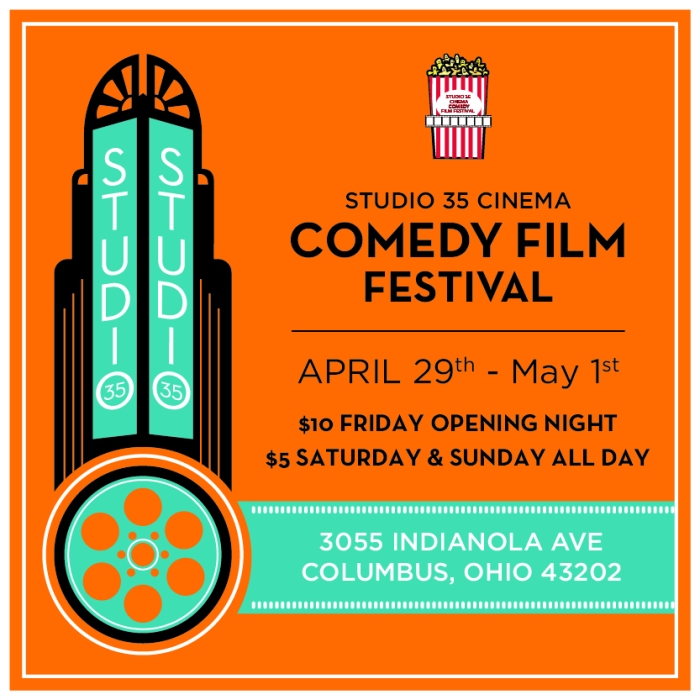
Get ready for the second annual Studio 35 Cinema Comedy Film Festival (S35CCFF) taking place at Columbus’ oldest independent movie theater. Located in the heart of Clintonville, the S35CCFF features the newest and funniest independent film and shorts from around the country. What goes better together than comedy and a beer! A whole weekend is dedicated to showing the best independent comedy features and shorts, while drinking the best draft beers of the Midwest.

Website: http://www.studio35.com/

Interview with Tim Baldwin:

Matthew Toffolo: What is your Film Festival succeeding at doing for filmmakers?

Tim Baldwin: We’re able to show their shorts and features on a big screen in DCP format. Not on a pull up screen in a hotel auditorium, or something like that. We’re an independent theater in Columbus, and we can show what we want. You make a movie to see on the big screen, and we will do that. I wish we had some panels for filmmakers, but we will do a Q&A. And since we’re small, there’s a lot of opportunities to just hang out and discuss films. We love supporting films after they’re been here as well.

MT: What would you expect to experience if you attend the festival this year (2016)?

TB: Some funny international short films. We’ve had a great submission year for international shorts. This sounds ridiculous, but we have a swag bag this year that I think is great for filmmakers. Great draft beer. A Ghostbusters pinball game.

MT: What are the qualifications for the selected films?

TB: Since we’re a comedy film fest, it’s as easy as make us laugh. We’ve received a lot of shorts and features that are good, but not funny. They would play great at a film festival, but not at a COMEDY film festival. And the regular technical aspects like make sure we can hear the film, and see it. The judges and I struggle with shorts that are technically not good, but maybe humorous. It needs to look good, maybe not polished or too polished, but look like it wasn’t shot with a camcorder. And the story has to be great. That’s the least expensive thing about a film you can do. Make a good story that we care about. All the best equipment in the world won’t make an unfunny story funny.

MT: Do you think that some films really don’t get a fair shake from film festivals? And if so, why?

TB: If you mean, why don’t films get selected, it could be a lot of reasons. As a filmmaker who has submitted to over hundreds of festivals, I wonder the same. And I’ve found out that it’s just subjective to some extent. Some movies don’t fit the program, or some are too long to be included, or just not the genre they were looking for. But a lot of it comes down to, someone didn’t like it or get it. Doesn’t mean it wasn’t good or anything, just didn’t fit.

MT: What motivates you and your team to do this festival?

TB: I wanted to create a festival to show shorts and features that our community would not normally see. I wanted to create a fun atmosphere of filmmakers and moviegoers. And I wanted to meet filmmakers. Good film motivates me.

MT: How has the festival changed since its inception?

TB: Well, it’s only our second year, so not a lot. We shortened the festival to three days this year. Since our attendance wasn’t as great as I hoped, we don’t have an awards ceremony or anything. I hope to have something more substantial in future years.

MT: Where do you see the festival by 2020?

TB: If we’re still doing it, lol, I’d like to have more shorts and films from well known artists but below the radar studio pictures. I’d like to have it be a cool location for filmmakers to come see their films. I’d like to have more of the community to attend, and in return give something back to local groups and events. I hope to make it more of an event for our community. We’re finding our footing now, seeing where we fit.

MT: What film have you seen the most times in your life?

TB: Easy. Star Wars. I’m a small filmmaker as well, producing and making short films for twenty years. So Star Wars was a huge inspiration and influence in my life.

MT: In one sentence, what makes a great film?

TB: A great film makes me care about the characters and what will happen to them.

MT: How is the film scene in your city?

TB: We have a nice little film production community here in Columbus. Many people help out with other people’s productions. Columbus is working hard to bring the bigger budgeted movie here. Many of the professional crew work on these, and national spots. Columbus, also, has tons of international companies headquartered here that do production work. For viewing films, we have the Ohio State’s Wexner Center, which is second to none in programming films. The Gateway Film Center is also amazing in programming films and having special events that the people can get involved with. Our little single screen theater is great for community events, and watching movies with a great crowd as well.

Tim Baldwin BIO: Loving movies all his life, Tim entered Bowling Green State University with an emphasis of film production and studies. After taking an internship in Columbus, Ohio, Tim moved there in 1994. Tim worked at a production house for four year, moving from grip/production assistant to online editor. As a second job, he was a projectionist at three movie theaters in town, watching movies all the time. Wanting something more, he moved to Los Angeles in 1998 to expand his career and fulfill a dream of working in movies. After working on six films, including “The Heist”, “Buddy Boy” and “Way of the Gun” as a post production assistant, Tim wanted to try a different avenue to get his films made. So he moved back to Ohio and has worked as an AVID editor and video producer since 2000. He loves watching movies with his young son and spending time with his Key Make-up Artist wife.

Tim has wrote, directed and edited six short films, one feature length film “Garage Sale” and a documentary about Studio35, the longest running single screen movie theater in Ohio. He also is program director for the Studio35 Comedy Film Festival, now in it’s second year.


Studio 35 Film Festival FB_2016-01

Interviewer Matthew Toffolo is currently the CEO of the WILDsound FEEDBACK Film & Writing Festival. The festival that showcases 10-20 screenplay and story readings performed by professional actors every month. And the FEEDBACK Monthly Festival held in downtown Toronto on the last Thursday of every single month. Go to www.wildsound.ca for more information and to submit your work to the festival.

Interview with Festival Director Nathalia Lemos (Flamingo Film Festival)

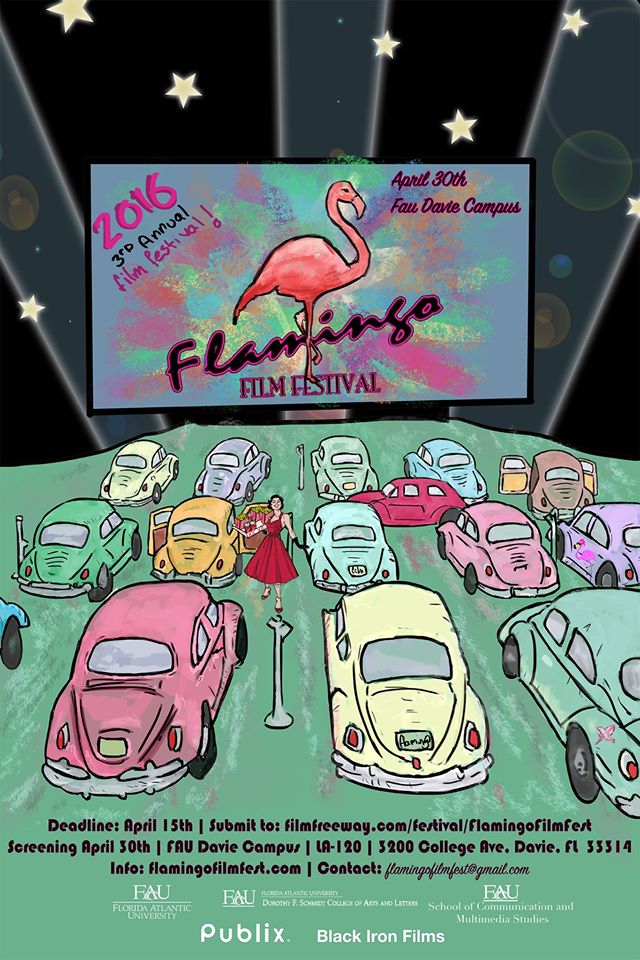
The Flamingo Film Festival is dedicated to exhibiting the international short films and videos produced by student filmmakers. For the past 3 years, this event, held in South Florida, has honored outstanding narrative, documentary, experimental, and animated projects created by students while enrolled in a college, university, or other post-secondary institution.

Website: flamingofilmfest.com

Interview with Nathalia Lemos:

Matthew Toffolo: What is your Film Festival succeeding at doing for filmmakers?

Nathalia Lemos: The festival is giving student filmmakers the opportunity to have their work screened not only for their peers, but also for a diverse audience of festival goers.

MT: What would you expect to experience if you attend the festival this year (2016)?

NL: Anyone attending the festival this year can expect a diverse showcase of student films. Festival goers will have the unique opportunity to see a variety of films not only from local student filmmakers, but also student films from abroad.

MT: What are the qualifications for the selected films?

NL: Well, we are definitely looking for films that are creative and original. We want to offer our audience the opportunity to discover new voices that have fresh and interesting perspectives.

MT: Do you think that some films really don’t get a fair shake from film festivals? And if so, why?

NL: The goal of a festival is to curate a well rounded program. While yes, I am sure that there are films that don’t get a “fair shake,” here at the Flamingo Film Festival we are giving filmmakers from all over the world the opportunity to have their films reach a wider audience.

MT: What motivates you and your team to do this festival?

NL: The Flamingo Film Festival is dedicated to exhibiting the short films from student filmmakers from all over the world. Our goal is to continue to encourage student creativity and to recognize achievement in the film and video medium.

MT: How has the festival changed since its inception?

NL: The festival is now in its 3rd year. And while the mission and goals remain the same, the festival has definitely increased it’s traction with international student filmmakers.

MT: Where do you see the festival by 2020?

NL: By 2020 I definitely see the Flamingo Film Festival as one of the most important international student film festivals in the country.

MT: What film have you seen the most times in your life?

NL: Bram Stoker’s Dracula.

MT: In one sentence, what makes a great film?

NL: In my opinion, a great film is one that remains interesting and engaging no matter how many times you see it. A film that can remain relevant 20 or more years from now.

MT: How is the film scene in your city?

NL: The South Florida film scene is very diverse and vibrant. South Florida is offering filmmakers the opportunity to create fresh and interesting work. I would say that South Florida is currently a terrific haven for independent filmmakers looking for the ease and space to develop their work.

flamingo_film_festival

_____

Interviewer Matthew Toffolo is currently the CEO of the WILDsound FEEDBACK Film & Writing Festival. The festival that showcases 10-20 screenplay and story readings performed by professional actors every month. And the FEEDBACK Monthly Festival held in downtown Toronto on the last Thursday of every single month. Go to www.wildsound.ca for more information and to submit your work to the festival.

Interview with Executive Director Nina Streich (Global Peace Film Festival)

Since its inception in 2003, the GPFF has shown over 500 films from around the world. The critically acclaimed programming has included Academy Award winning, nominated and short-listed films. In his blog, former Orlando Sentinel film critic Roger Moore called the GPFF “…one of the best festivals in this part of the country” and said, “Global Peace has the best documentaries of any festival.” GPFF’s leadership believes that to further its mission, success should not simply be measured by attendance numbers but by the engagement the films inspire from the audience – at the festival and beyond.

Interview with Nina Streich

Matthew Toffolo: What is your Film Festival succeeding at doing for filmmakers?

Nina Streich: The Global Peace Film Festival (GPFF) is about actively engaging audiences to do something about the issues in the films they see. Watch Films, Get Involved, Change Things is our tagline and we seek films, mainly documentary but narratives too, that have been produced to have an impact on the issues they address. Filmmakers find enthusiastic audiences and meet leaders of organizations that are working on the issues the their films address. In the past few years, we have begun to offer other services for filmmakers beyond the festival including impact consulting and fiscal sponsorship.

MT: What would you expect to experience if you attend the festival this year (2016)?

NS: Most films are followed by discussions with filmmakers and also representatives from local organizations that work on the issue(s) raised in the films. The Q&As are often longer than those at most film festivals. Filmmakers find the audiences engaged and interested in their films as well as the issues they raise. Festival staff and volunteers work to make the GPFF a warm and welcoming experience for filmmakers and audiences alike.

MT: What are the qualifications for the selected films?

NS: We program features and shorts – documentary, narrative and animation. The majority of the program is non-fiction but we always want to include fiction work. We have always programmed films that are “mediums” – between 40 and 65 minutes. Our approach to the definition of “peace” is very broad and includes everything from conflict resolution, social inequality (class, race, gender, age, mobility, etc.), environment/environmental justice, LGBT rights, fair trade and new business models, human trafficking, sports and recreation, comedy/satire. We look for films that inspire and educate. We also include an online selection of films, mainly shorts, in addition to the main program, during the week of the festival.

MT: What motivates you and your team to do this festival?

NS: We are motivated to present a great program that addresses the many aspects of peace and produce an event that is a catalyst for community engagement.

MT: How has the festival changed since its inception?

NS: The festival has grown in both size and impact. 2016 will be our 14th festival. We recognized the changing model of film festivals and decided early on to steer the festival in a direction that served the community in a deeper way, beyond bringing a crowd to a downtown venue for a passive viewing experience. We sought to develop relationships with the filmmaking community that focused on the “why” motivating filmmakers. This involved moving to pull other partners into the festival to build a new structure that would serve as a networking hub. This includes schools, libraries and universities to add depth, variety and timeliness to their community offerings. We reached out to community groups to bring the same benefits of our programming to help educate, energize and increase their member base. Our programming has always been centered on active engagement with our audience.

MT: Where do you see the festival by 2020?

NS: As the festival has evolved, we have begun to offer services to filmmakers (whether their work has been in the festival or not) including impact consulting and fiscal sponsorship.

MT: What film have you seen the most times in your life?

NS: I’m always looking for and want to see new films so I can’t think of what I’ve seen the most times! Rather than the films that I’ve seen the most times, I think more about the films that have influenced me the most. It’s a long list…

MT: In one sentence, what makes a great film?

NS: A great story.

MT: How is the film scene in your city?

NS: I live in New York and the festival is in Central Florida. New York, of course has an incredible film scene. Central Florida doesn’t have anywhere near the size of the film scene as New York, but it is just as engaged, passionate and exciting.

****
Nina Streich has an extensive background in both the film/TV/media industries and in the political arena. She held senior management positions in other film festivals prior to creating the Global Peace Film Festival in 2003 including Festival Manager of the Newport International Film Festival and Development Director of the Nantucket Film Festival. She began her career as a film editor, cutting trailers and marketing material for over 50 major studio and independent features, including The Elephant Man, Raiders of the Lost Ark and Scandal. In politics, she has worked for many candidates, from local to presidential campaigns. She was a coordinator of the Inauguration of Mayor David N. Dinkins in New York City in 1990 and was appointed Deputy Film Commissioner for the NYC Mayor’s Office of Film, Theatre & Broadcasting. After leaving the Mayor’s Office, she was the Deputy Executive Director of the NYC Host Committee for the 1994 Grammy Host Committee. An accomplished events producer, she has organized film premiers, music festivals, conferences, parades, street fairs and press conferences. She has produced several documentaries on subjects she is passionate about.

_____

Interviewer Matthew Toffolo is currently the CEO of the WILDsound FEEDBACK Film & Writing Festival. The festival that showcases 10-20 screenplay and story readings performed by professional actors every month. And the FEEDBACK Monthly Festival held in downtown Toronto on the last Thursday of every single month. Go to www.wildsound.ca for more information and to submit your work to the festival.

Interview with Festival Director Michael Helman (WILLiFest)

http://www.willifest.com

facebook | twitter | youtube

Interview with Festival Director Michael Helman:

Matthew Toffolo: What is your Film Festival succeeding at doing for filmmakers?

Michael Helman: Our festival gives independent filmmakers an opportunity to have their film screened professionally in New York City. There are not many opportunities for that in NYC. The few opportunities that do exist like Tribeca and NY Film Festival are incredibly difficult or impossible for the small filmmaker to get into. There are many other film festivals in NYC but screenings at many of them are not quite professional.

We also offer additional events like networking events and panels. Many festivals skip or skimp on these important events. When filmmakers are traveling from another city, it is the festival’s responsibility to play host and at a minimum, entertain and educate those filmmakers who have spent the money to travel to NYC and support the festival.

MT: What would you expect to experience if you attend the festival this year (2016)?

MH: Our festival is continuing to narrowly focus on the emerging filmmaker. We have offered many other events at our festival, street fairs, concerts but we have found that filmmakers find these to be a distraction for what they are really interested in, which is watch film, talk film and learn about film. We have heard them and are focusing on doing just that as well as we can.

MT: What are the qualifications for the selected films?

MH: Nothing specific. We offer many categories of films and are simply looking for the best in those categories. We have reduced the number of films this year that we plan on exhibiting in order to make entry into the festival more competitive and feature the best of independent film at the festival for the audience.

MT: Do you think that some films really don’t get a fair shake from film festivals? And if so, why?

MH: Of course. Top tier festivals are very political and are somewhat slaves to their sponsors and partners so they have only so many slots available to discover new filmmakers and small films. Very small festivals are not receiving enough submissions and variety to find the next major filmmaker. Mid-tier festivals are the sweet spot because they receive enough varied submissions to discover new talent each year. One year we showed a short film from an NYU filmmaker and saw something in the film. That film went on to win the Academy Award that year for Best Short. This film was passed over by the larger festivals.

MT: What motivates you and your team to do this festival?

MH: We are filmmakers ourselves with a long history in film production. We produced a short film several years ago. The film was accepted to a bunch of festivals so we decided to travel the country with it and see what festivals we like. We were quite unimpressed and decided we could do a better job. Producing a good festival is an incredibly difficult process. We have found it to be as complex as producing a feature film… perhaps more difficult. Pulling off a well run event with limited staff and financial resources is no easy feat. We enjoy the challenge and the opportunities it brings to struggling filmmakers to find an audience and have their work be seen.

MT: How has the festival changed since its inception?

MH: We started as a LARGE, multi-disciplined arts festival. Our first year included an arts exhibit, storytelling competition, 47 indoor/outdoor concerts, street fair, half a dozen parties, opening night gala, closing day awards ceremony and almost 200 screenings. It was a monster spread out over 12 venues throughout Brooklyn. We have learned from the first year successes and stumbling blocks and have adjusted the festival each year. The rest of the answer was addressed in question 2.

MT: Where do you see the festival by 2020?

MH: No clue. We see our focus continuing to narrow. Depending on how this upcoming festival goes, we will probably continue to narrow the focus of the festival and numbers of screenings. We are continuing to grow our screenplay competition. We are trying to offer our filmmakers more benefits that they don’t always receive at other festivals like full festival passes for them and their co-producers so anyone coming out to support the festival can enjoy the entire event at no cost. We have always had an issue that most festivals charge visiting filmmakers to attend any events as well as screenings. The festival only exists and excites audiences because these talented filmmakers are attending these out-of-town festivals so they can address the audience who has chosen to view their film and answer any questions they might have. Q&A is pretty much the only thing that separates the festival experience from the movie-going experience.

MT: What film have you seen the most times in your life?

MH: The Graduate or Back To The Future.

MT: In one sentence, what makes a great film?

MH: Story. We look for a professionally produced film with good lighting, camera work, acting and especially sound. However, we have accepted less technically proficient films because the story was so compelling. Entertainment these days are driven by content. Youtube videos can be most poorly produced disaster you have ever seen but still achieve over a million views because the content is compelling to a large, general audience. If you start with a good idea, take your time and turn this compelling story into a well-written screenplay, you are already ahead of most films out there, including Hollywood films. It starts with the story and the script and everything else just enhances it and hurts it. Bad acting is a killer, so there is no easy path to making a great film. But it all starts with an interesting story. It is a lot more difficult to achieve then it sounds.

MT: How is the film scene in your city?

MH: What is there to say, New York City is arguably the center of the entertainment world. You feel it as you walk these storied streets through Manhattan and Brooklyn. If your film is going to show anywhere in this world, most filmmakers dream of a New York City screening and we aim to offer just that.

_____

Interviewer Matthew Toffolo is currently the CEO of the WILDsound FEEDBACK Film & Writing Festival. The festival that showcases 10-20 screenplay and story readings performed by professional actors every month. And the FEEDBACK Monthly Festival held in downtown Toronto on the last Thursday of every single month. Go to www.wildsound.ca for more information and to submit your work to the festival.

Interview with Festival Director Korina Mavrikidou (Athens Animation Festival)

The 11th ATHENS ANIMFEST starts on Thursday, 7th of April and runs until Wednesday, 13th of April, 2016, at the Greek Film Archive. Screenings will also be held in Romantso (11-13 April, 2016) and the Cine Club Vrilissia (9-10 April, 2016). This year preselection juries have selected a large number of animated movies submitted from all over the world, confirming Athens as part of the high quality animation festival association. The program includes competition sections for experimental, student and short animated movies, a tribute and some events.

Interview with Korina Mavrikidou:

Matthew Toffolo: What is your Film Festival succeeding at doing for filmmakers?

Korina Mavrikidou : Athens Animfest is a festival dedicated to animation films. Both artists and students of animation are given the opportunity to create their films and cinephiles are able to enjoy them. This interactive relationship has a remarkable effect on the evolution of animation, in general. Also, it contributes to reveal talented filmmakers that people may not be aware of. The last two years, Athens Animfest attracts artists from all around the world who meet each other in Athens. We are convinced that, beyond the promotion of animation, our festival cultivates relationships between artists and cinephiles.

MT: What would you expect to experience if you attend the festival this year (2016)?

KM: Cinephiles have the opportunity to enjoy screenings of inspirational films created by notable filmmakers and a 7-day program full of parallel special events about the art of animation all over the world.

MT: What are the qualifications for the selected films?

KM: The selected films should be inspirational and should be distinguished for conceptual, technical and aesthetic excellence.

MT: Do you think that some films really don’t get a fair shake from film festivals? And if so, why?

KM: The evaluation process is really very difficult. Most of the films submitted for the festival are technically robust, due to technological developments and their themes are imaginative as well. Nevertheless, a great film will stand out among the rest and will get what it deserves.

MT: What motivates you and your team to do this festival?

KM: Apart from our passion for the animated films, which is for granted, we have supported this effort so much, because through this, new talents are emerging which are so necessary in our country.

MT: How has the festival changed since its inception?

KM: Some things have remained unchanged, such as our passion for this project, but some things have changed radically. Now we get submissions from more countries and we have regular fans that attend Athens Animfest every year. We become famous through social networks and the world seems to embrace this festival.

MT: Where do you see the festival by 2020?

KM: Hmm, I wish I am running it until then …! Also, I hope to have gained a good reputation and attract even more participants.

MT: In one sentence, what makes a great film?

KM: A great film should have a great story to reveal, including new or unique ideas. Also, sound, acting, filming and editing are important elements for a good result. In a few words, the film should have the whole package to be considered as great.

MT: How is the film scene in your city?

KM: One is for sure: There is much to be done. You see, there are efforts which are remarkable, but they do not have adequate support from the state and thus they collapse. Nevertheless, we remain optimistic and supporting our efforts and the efforts of other festivals that take place in Athens, we are looking forward to a better tomorrow.

_____

Interviewer Matthew Toffolo is currently the CEO of the WILDsound FEEDBACK Film & Writing Festival. The festival that showcases 10-20 screenplay and story readings performed by professional actors every month. And the FEEDBACK Monthly Festival held in downtown Toronto on the last Thursday of every single month. Go to www.wildsound.ca for more information and to submit your work to the festival.

Interview with Festival Director Jonáš Vacek (The WE Festival)

The WE Festival
April 24th — May 1st 2016
The aim of The WE Festival is to stimulate local culture by connecting all groups present in the city, and use that collective empowerment to achieve together what would be impossible on our own. This can be hosting a workshop promoting sustainability, presenting at one of our Pecha Kuchas, performing at one of our music events or parties or organising something outside of the box. We’ve now had 6 years of experience and each year only gets bigger and better!
Interview with Jonáš Vacek
 

1) What is your Film Festival succeeding at doing for filmmakers?

We are giving a voice to the unheard. Since we have blocks that aren’t seen at many other film festivals, focussed on diversity with multicultural and lgbtq community content. We even have blocks that are focussed on coexistance and sustainability. We love new talent and different forms of audiovisual expressions which is why we welcome new talent and experimental films.

2) What would you expect to experience if you attend the festival this year (2016)?

The finest selection of films from all over the world. World-renowned artists but also new talent. There are Q&A’s happening after different films to get even more closer into the experience you just had. We have an event called One Night stand, where you make and finish a whole short film in the same time it would take you to have a one night stand. The participants films are screened during the festival and can win awards for their accomplishments. We have lectures from teachers, filmmakers from the field. We have awards given by our jury as well as our audience has a voice to award films with prizes. The WE Film festival is part of the WE Festival so there is music, amazing food and other artistic expressions.

3) What are the qualifications for the selected films?

We focus in on films that were made in the last 48 months. And the films have to be in english one way or another.

4) Do you think that some films really don’t get a fair shake from film festivals? And if so, why?

Jonas: Yes, it is a bit sad to cinsider how many films we had to reject only becasue we only have so much time to project. A lot of good talent is rejected this way, pretty uch against our will, but there’s only so much we can do…

Aiman: I agree with this. The difficult thing is that every festival has an identity. And as Festival Director you have to honor that identity which means that some movies, however great they are don’t match with the identity of certain film festivals and that is why they aren’t chosen. I wish there would be clearer communication towards why each film is not selected, but with thousands and thousands of submissions it’s humanly impossible to explain that to every filmmaker.

5) What motivates you and your team to do this festival?

Jonas: I love the ambience and vibes of a film festival, binge-watching films that you would never have the chance to see otherwise, and the discussions that come afterwards. I’ve always admired the work of the organisers and I feel that my current city really deserves a thematically wide festival.

Aiman: From when I can remember I have always been fascinated by film. It was also a thing I did with my dad growing up, watching films that challenged our life views and have discussions about them. Also as a filmmaker it’s challenging to get your work be viewed. I know so many talented filmmakers and felt we could add something awesome to this beautiful city!

6) How has the festival changed since its inception?

The WE Festival itself has never included a film festival up until this year. Since 2010, WE have transformed ourselves from a three day festival with a few workshops and some DJ performances into full-blown, city-wide 8-day cultural feast with Art Exhibitions, Pecha Kuchas, Workshops ranging from cooking, pole dancing, DJing, ceramics, street photography; as well as an insanely varied list of musical performances throughout the week, or the addition of the film festival in this year’s edition.

7) Where do you see the festival by 2020?

At the current rate, probably a two week long festival taking over pretty much most of the city… More screening blocks, more venues, and more Q&As!

8) What film have you seen the most times in your life?

Jonas: Probably Pelíšky (Cozy Dens, 1999), a film about a few neighbouring families during the Communist regime, and how they interact within and between each other. It’s a got-it-all film with great drama, love, humor, dilemma, pretty shots and conflict. I haven’t been born until more than a decade after the fall of the regime, but I feel it is one of the best portrayals of the complicated stories due to the country’s politics of those times.

Aiman: The Matrix, even though not the Best film ever made. Was for me growing up the film that made the most impact for the time it came out. Even when I watch it now, I still feel the magic that I felt when I watched it as a 12 year old teen.

9) In one sentence, what makes a great film?

Jonas: I don’t think there’s a single recipe to make a “great” film, but for me it is the way the creators handle balancing aesthetics against a story that should truly mak your consider what are the reasons why characters behave the way they do, and how well-thought out these “forces” are.

Aiman: For me it’s very clear what makes a great film. Every film is made out of ingredients necessary to make it great. You can see pretty clearly when they lack or when every ingredient simmers beautifully together.

10) How is the film scene in your city?

Jonas: Maastricht is a small city with around 100k inhabitants, but considering its small size, there is a very large group of people who truly want to push what we would consider as “worthwhile” cinema, demonstrated by the many initiatives from the international students as well as the proud locals, with a nie selection of art-house cinemas, other film festivals and organisations helping people create their projects

Aiman: I am from Utrecht myself. The National film festival is held there every year as well as many other festivals. I am pretty happy with the scene. I just wish that there would be more visitors of film in our city. Everybody turns up for the big ones, but the smaller important ones don’t get viewed by as many people as I would like to. Also film funding in Utrecht could be structured in a clearer way.


****

Interviewer Matthew Toffolo is currently the CEO of the WILDsound FEEDBACK Film & Writing Festival. The festival that showcases 10-20 screenplay and story readings performed by professional actors every month. And the FEEDBACK Monthly Fesival held in downtown Toronto on the last Thursday of every single month. Go tohttp://www.wildsound.ca for more information and to submit your work to the festival.