Interview with Festival Director Craig Higgins (Norwich Film Festival)

norwich_1.jpgThe Norwich Film Festival is now preparing for it’s sixth year (2016). They have an amazing array of celebrity patrons and judges (including Bernard Hill, Tim McInnerny, Olivia Colman and Martin Walsh) who are all eager to watch your films and read your screenplays. The people of Norwich are also committed to supporting artists of all media and have been wonderful throughout our four previous years, turning up in their droves to see the best the festival has to offer.

www.norwichfilmfestival.co.uk

Interview with Festival Director Craig Higgins:

Matthew Toffolo: What is your Film Festival succeeding at doing for filmmakers?

Craig Higgins: The Norwich Film Festival is passionate about screening filmmaker’s work from not just Norwich but from all over the world. We love that we get the opportunity to help the audience see something they generally wouldn’t see, and I feel this helps to give filmmaker’s a voice and the recognition they deserve. We have also just started to screen local feature films made in Norfolk throughout the year which we screen free of charge to help raise the profile of filmmakers. There really is an incredible amount of talent out there and we are just doing our little bit to help the world see it.

MT: What would you expect to experience if you attend the festival this year (2016)?

CH: Fantastic short films made by the some of the most talented filmmakers you will ever see.

We have not yet released the programme, so here is a little bit of a spoiler. The festival will be looking to screen 50 short films, 2 feature films (both are premiers for Norwich), an industry panel of getting your film made, a talk from one of the best Editor’s in the world, BAFTA regional shorts tour, along with lots of a Q&A’s from filmmakers. We are also going to ensure that we offer lots of networking too!

MT: What are the qualifications for the selected films?

CH: We have 5 competitive prizes this year including best short, best animation, best student, best documentary and best script. The standard of submissions this year as been incredibly high, so short listing is going to be tricky! Luckily enough we have a fantastic team who have helped to judge and score your film. What is also exciting, the best of the best films are sent to industry judges who will watch them and decide who should win our competition. Some of our judges this year include Damian Jones (Producer – The Iron Lady, Lady in the Van, Dad’s Army), Nick Moore (Editor – Love Actually, Notting Hill), William Osborne (Scriptwriter – Twins, Scorpian King), Julian Jarrold (Director – Kinky Boots, A Royal Night Out), Steven Hall (DOP & Camera Operative), Jane Gull (Director – Sunny Boy, My Feral Heart) & Hugh Fraser (Actor)

MT: Do you think that some films really don’t get a fair shake from film festivals? And if so, why?

CH: That’s a good question. It’s difficult, because festival’s only have so much allocated time to screen films and usually the best of the bunch are the one’s which are screened. However, you sometimes have that middle pile of films which are good, but don’t always make it through due to another film being submitted with maybe a similar theme but can be slightly stronger in terms of its narrative. What, I would say is even if your film doesn’t get through to one festival don’t stop trying! If you believe in your work, get it out there to festivals, screen it in local bars etc….

MT: What motivates you and your team to do this festival?

CH: Easy – we love films! We also enjoy that we are the first people who get the opportunity to watch some of the most exciting, engaging and inspiring films out there and we get to screen them! How brilliant is that? We also love meeting and hearing from filmmakers and anything which can help showcase and bring people together is fabulous.

MT: How has the festival changed since its inception?

CH: Well this year as been a huge development shift in the festival, keeping in mind that everyone involved with the Norwich Film Festival are volunteers. We are now running as a small charity (but are due to apply shortly to become a Charitable Incorporated Organisation in the next few weeks), we have increased our web content for filmmakers, increased our social media fan base, built up an impressive list of judges & patrons (Brian Cox, Olivia Colman, John Collee & Tim McInnerny), offered monthly screenings and an increased networking opportunities for filmmakers. We have worked really hard this year and we are planning bigger and better things for 2017 already!

MT: Where do you see the festival by 2020?

CH: I would love to see the festival become BAFTA accredited. That is my dream! It would be great if we could also continue to build the level of submissions we receive each year and offer the audience even more than we are providing now.

MT: What film have you seen the most times in your life?

CH: Jaws….. I love this film!

MT: In one sentence, what makes a great film?

CH: Great story, originality, creativity & something that stay’s with you even when the film ends.

MT: How is the film scene in your city?

CH: Norwich is such a creative city, we have a host of incredibly talented filmmakers, a brilliant picturehouse cinema, 2 Universities which offer film related courses and a lot of love from the people of the city who welcome all creative types. Norwich as also played host as a location setting for big budget films such as Averngers: age of ultron, Tulip Fever, Stardust, James the Giant Killer and so on. I would love filmmakers to come to Norwich to continue filming as it offers so much diversity.

Don’t forget the Norwich Film Festival will holding it’s annual festival from the 10 – 13th November. It’s gonna be fun! Come along and enjoy something different.

norwich_2.jpg

Interviewer Matthew Toffolo is currently the CEO of the WILDsound FEEDBACK Film & Writing Festival. The festival that showcases 10-20 screenplay and story readings performed by professional actors every month. And the FEEDBACK Monthly Fesival held in downtown Toronto on the last Thursday of every single month. Go to http://www.wildsound.ca for more information and to submit your work to the festival.

Interview with Festival Director Elena Ringo (Vienna Independent Film Festival)

VIFF Vienna Independent Film Festival invites filmmakers from all over the world to submit their films to their international film festival which takes place in Vienna.  The goal of our festival is to find new talented filmmakers who will be able to approach the heights of cinematography created by geniuses like Antonioni, Fellini, Tarkovsky, Bergman, Visconti, Godard. Now, when the whole world has a tendency towards commercialization, they appreciate free spirit, new ideas an independent point of view and new approaches. Not the budget of the film but solely talent should be the criteria for the film’s success.

http://www.vienna-film-festival.com/

Interview with Festival Director Elena Ringo

Matthew Toffolo: What is your Film Festival succeeding at doing for filmmakers?

Elena Ringo: VIFF 2016 – Vienna Independent Film Festival took place for the first time in July and it laid the foundation for the future. There were 38 films screened at the festival, almost all of them were Austrian premieres and the films were introduced to a varied audience. The participants had a lot of opportunities for networking and have received exposure via social media and press coverage.

MT: What would you expect to experience if you attend the festival this year (2016)?

ER: Our festival took place in July 2016 and now we are preparing for the next edition.

MT: What are the qualifications for the selected films?

ER: We value artistic quality of the films, independent point of view, cinematographic innovations and appreciate auteur cinema. Many films were directed, produced, shot and written by the directors themselves and the films were often based on real stories and personal experiences which brings truth to the films and makes the films more authentic and believable.

For example, the film Imperfect Sky which received the award for Best Feature Film, was written, directed and shot by Graham Streeter and was based on true events. Another interesting film which received the Grand Prix – Let’s Dance to the Rhythm was written, directed and edited by Bardroy Barretto and tells the story of real jazz musicians from Goa.

MT: Do you think that some films really don’t get a fair shake from film festivals? And if so, why?

ER: I think that when festivals are very well-known they receive an enormous volume of submissions and very limited number of people actually select them on the first stage so many films are not noticed at all. Also, many festivals are more interested in big names rather than discovering new talents and do not want to take any risks.

MT: What motivates you and your team to do this festival?

ER: I hope that our festival will become a bigger event but will still preserve our main principles; independence, artistic quality, lack of political motivation and no discrimination against any genre or countries.

MT: Where do you see the festival by 2020?

ER: I hope that our festival will become a bigger event but will still preserve our main principles; independence, artistic quality, lack of political motivation and no discrimination against any genre or countries.

MT: What film have you seen the most times in your life?

ER: The Mirror by Andrei Tarkovsky. This is a film which you can watch many times and every time discover something new.

MT: In one sentence, what makes a great film?

ER: Artistic vision and deep ideas make a great film.

MT: How is the film scene in your city?

ER: There are many cinemas and film lovers in Vienna. There are several film schools and there is a demand for more festivals in this cultural center.

viennafilmfestival.jpg

Interviewer Matthew Toffolo is currently the CEO of the WILDsound FEEDBACK Film & Writing Festival. The festival that showcases 10-20 screenplay and story readings performed by professional actors every month. And the FEEDBACK Monthly Fesival held in downtown Toronto on the last Thursday of every single month. Go tohttp://www.wildsound.ca for more information and to submit your work to the festival.

Interview with Christopher J. Gervais, Founder & CEO (Wildlife Conservation Film Festival)

The Wildlife Conservation Film Festival (WCFF) is an academic organization. The WCFF MISSION is to inform, engage and inspire audiences about the need for and importance of the protection of global biodiversity. The WCFF does this through the annual film festival in New York and Beijing, the annual biodiversity conference in New York. WCFF also engages in monthly programs in New York and other cites that include film screenings, business & social networking events, and presentations.

www.WCFF.org

Matthew Toffolo: What is your Film Festival succeeding at doing for filmmakers?

Christopher J. Gervais: The WCFF helps filmmakers to build relationships for existing and future projects. We also make connections between talented filmmakers that have exceptional content to networks for broadcasting and distribution.

MT: What would you expect to experience if you attend the festival this year (2016)?

CJG: An attendee will experience over 90 exceptional and award winning films, over 65 are World Premieres at the WCFF and another 26 will be north America premieres. In addition to the film screenings, there are panel discussion, Q&A with the film producers, receptions, and a biodiversity conference. Attendees get to meet international filmmakers that attend the WCFF from across the globe.

MT: What are the qualifications for the selected films?

CJG: Film are reviewed by a jury selection committee. We look for exceptional content. A film that has a message about a specific species or ecosystem. The films we select are not just meant to entertain the audience but to inform, engage and inspire.

MT: Do you think that some films really don’t get a fair shake from film festivals? And if so, why?

CJG: Some films are not selected for political reasons. An example, this past spring a film festival held event related to one specific species. The announced award winners were from film producers or productions companies that were board members to the film festival. This is a conflict of interest and in our opinion was not ethical.

MT: What motivates you and your team to do this festival?

CJG: What motivates myself and my team is commitment to protect global biodiversity. We do this through the power of film.

MT: How has the festival changed since its inception?

CJG: The festival was a 2 day event in a small town on Long Island the first year. Within two years we moved to New York city and within the 5th year the festival has grown to 10 day event that included a biodiversity conference and filed trips. visiting scientists, film producers and members of the press have identified the WCFF as one of the most important film festival on the planet for wildlife conservation.

MT: Where do you see the festival by 2020?

CJG: Our goal by 2020 is to have the film festival remain in New York and ad another key America city as a venue. We are also looking to bring the WCFF to one if not several countries is Asia.

MT: What film have you seen the most times in your life?

CJG: There is not one but several mainstream films; Dancing with Wolves and JAWS.

MT: In one sentence, what makes a great film?

CJG: A great documentary film has exceptional cinematography, narration and a unique story.

MT: How is the film scene in your city?

CJG: New York city is a great film town. There is exceptional mainstream and documentary films screened all the time. Something for everyone as there is such a variety in the subject matter.

wcff.png

Interviewer Matthew Toffolo is currently the CEO of the WILDsound FEEDBACK Film & Writing Festival. The festival that showcases 10-20 screenplay and story readings performed by professional actors every month. And the FEEDBACK Monthly Fesival held in downtown Toronto on the last Thursday of every single month. Go tohttp://www.wildsound.ca for more information and to submit your work to the festival.

Interview with Festival Director Jacob Javor (South Florida Student Film Festival)

The South Florida Student Film Festival (SFSFF), open to middle and high school students world wide and taking place at Movies of Delray/Lake Worth, is an organization founded by students designed to bring about awareness concerning the art of student filmmaking. SFSFF shines a positive light upon Middle & High School students who love the beauty of motion pictures.

http://www.sfsff.org

Interview with Jacob Javor:

Matthew Toffolo: What is your Film Festival succeeding at doing for filmmakers?

Jacob Javor: As we are in our debut year, we only hope to help local young filmmakers get jumpstarts on their careers, by learning, creating, and meeting new people.

MT: What would you expect to experience if you attend the festival this year (2016)?

JJ: At SFSFF, both filmmakers that submitted and attendees alike can expect a valuable experience in which you can learn more about your passion by speaking to industry professionals and conversing with your peers; all while having a great time watching student short films and enjoying the company of our amazing sponsors!

MT: What are the qualifications for the selected films?

JJ: At SFSFF, we are looking for GOOD STORIES. We primarily focus on the story your short film tells, and how it could connect to a potential audience. We also search for films that are well edited, shot and produced. We are not sticklers on visual appeal in the sense of using big-budget cameras and equipment. In fact, we encourage the opposite! Resourcefulness is extremely important in this industry, (and beyond) and we love to see filmmakers make use of what they have. So if all you have is your phone to shoot, worry not and film on!

MT: Do you think that some films really don’t get a fair shake from film festivals? And if so, why?

JJ: Absolutely. Although we have not experienced many film festivals in particular, we think it’s very possible some judges may penalize submissions based only on their visual appeal. We entirely understand the limitations tight or non-existed budgets may set, and feel strongly that films should not be judged on anything but the quality story it tells.

MT: What motivates you and your team to do this festival?

JJ: We, the co-founders of SFSFF, are but high school students ourselves, and have a mutual passion for storytelling. We attempt to help young aspiring filmmakers like ourselves get jumpstarts on our careers, and the excitement of such a passion motivates us to drive on!

MT: How has the festival changed since its inception?

JJ: As we said previously, we are in our first year, and we are constantly developing and preparing for what we hope to be a successful and beneficial experience.

MT: Where do you see the festival by 2020?

JJ: By 2020, or even sooner, we hope to be known and recongnized near and far as a beneficial event that attendees enjoy and look forward to.

MT: What film have you seen the most times in your life?

JJ: Probably Forrest Gump, or The Lion King.

MT: In one sentence, what makes a great film?

JJ: Great films make you feel something.

MT: How is the film scene in your city?

JJ: South Florida is home to a few big independent film festivals: including the Palm Beach & Ft. Lauderdale International Film Festivals (PBIFF and FLIFF). We only dream to be as successful as them, and greatly appreciate all they’ve done to help us in our passionate pursuits!

sfsff.png

_____
Interviewer Matthew Toffolo is currently the CEO of the WILDsound FEEDBACK Film & Writing Festival. The festival that showcases 10-20 screenplay and story readings performed by professional actors every month. And the FEEDBACK Monthly Festival held in downtown Toronto on the last Thursday of every single month. Go towww.wildsound.ca for more information and to submit your work to the festival.

Interview with Festival Director Eric Quander (Joshua Tree International Film Festival)

The 2016 Joshua Tree International Film Festival’s mission is to provide a platform for independent and noteworthy films and filmmakers to connect with industry professionals and the diverse audience that recognizes Joshua Tree as an oasis of creativity, art and culture throughout the international arts community. With special focus and support for projects that encompass the diverse vision of the urban and LBGTQ communities and bring to light the perspectives of indigenous cultures from around the world, we hope to cast the widest possible net to grow future generations of filmmakers and movie goers in Joshua Tree and beyond.

http://www.jtiff.org/

Interview with Eric Quander: 

Matthew Toffolo: What is your Film Festival succeeding at doing for filmmakers?

Eric Quander: The Joshua Tree International Film Festival offers filmmakers the opportunity to exhibit their work before an enthusiastic, curious and intelligent audience, in a community known for its creativity and mystic surroundings.

MT: What would you expect to experience if you attend the festival this year (2016)?

EQ: The theme for this year’s festival in “SACRED SPACE”, and will feature an eclectic mix of features and shorts that exhibit filmmakers and characters exploring their relationship to both their inner and exterior spaces.

MT: What are the qualifications for the selected films?

EQ: Submitted films are screened by a panel of judges, who are committed to the vision of the JTIFF. Films are distributed and are based on a set of criteria which are scored 1 (the lowest) to 10 (the highest). Films with the highest cumulative scores are submitted to the Programming Committee who make final determinations based on the festival’s theme and anticipated level of audience interest.

MT: Do you think that some films really don’t get a fair shake from film festivals? And if so, why?

EQ: I can’t really speak for other festivals, but JTIFF screeners and judges are trusted to view each submission with an open mind. We received over 100 submissions to this year’s festival, and undoubtedly among them, there were more than a few that simply don’t meet the standard of the type of films we want to screen before an audience. We don’t force screeners and judges to endure an obviously amateurish work, or those that lie far beyond the theme.

MT: What motivates you and your team to do this festival?

EQ: Our inaugural event last years was motivated by a challenge as to if a film festival in our community could attract an audience, in that we succeeded; however, admittedly, neither my staff or myself were not prepared for the technical difficulties that we experienced, which really threw the entire schedule off. We learned a lot from that experience, and this year, we are motivated to produce as professional event as possible. We have ½ as many films, a trained volunteer staff and venues that make it easier for attendees to see more films.

MT: How has the festival changed since its inception?

EQ: The JTIFF is much more organized this year. We have taken the time to really coordinate our efforts with venue owners, and we all recognize that he festival is a community effort, that will benefit all. We have been able to educate ourselves on how a festival should go, how to make seeing films easy for attendees and how to prepare technically, to ensure that every film on the schedule is screened. We’re proud of the work we have done, and know that returning attendees will see a big difference, while first time attendees will enjoy the experience.

MT: Where do you see the festival by 2020?

EQ: That will be our 6th festival, and honestly, I have no idea how the JTIFF will change in the intervening years. I do know that we will be around; between now and then, I would mid engaging in building a permanent space for the JTIFF, that shows films monthly. In the meantime, we will aim to exhibit independent films that challenge audiences, encourage introspection, and stimulate audiences to contribute to the positive growth of the local and global community.

MT: What film have you seen the most times in your life?

EQ: Night of the Living Dead (b&w version)

MT: In one sentence, what makes a great film?

EQ: A great film’s main character stimulates its viewer(s) to consider their life and environment.

MT: How is the film scene in your city?

EQ: Although there are a few sporadic screening throughout the year, the JTIFF is our community’s main platform to see independent films in the hi-desert.

joshua_tree.jpg

_____
Interviewer Matthew Toffolo is currently the CEO of the WILDsound FEEDBACK Film & Writing Festival. The festival that showcases 10-20 screenplay and story readings performed by professional actors every month. And the FEEDBACK Monthly Festival held in downtown Toronto on the last Thursday of every single month. Go towww.wildsound.ca for more information and to submit your work to the festival.

Interview with Bill Hass, Programming Director (Fort Worth Indie Film Festival)

The goal of the FWIFS is to promote grassroots collaboration between and among filmmakers. They want to call attention to the quality work produced within the independent film movement. They want to do their part to provide a platform for independent artists to share their work and unique voices; to network and gain encouragement from their peers.

Website: http://fwindiefilm.com/

Interview with the Festival’s Programming Director Bill Hass:

Matthew Toffolo: What is your Film Festival succeeding at doing for filmmakers?

Bill Haas: We are just three years old so we are still growing and discovering our persona. We’re seeing that we are becoming successful at relationship building. We work really hard to create an environment of collaboration versus competition. We are structured so that everything is physically close. This provides opportunity for filmmakers to see each other’s films and network. We are also building strong relationships with other festival directors who attend FWIFS. The filmmakers have opportunity to meet those directors and learn about other festivals to which they can successfully submit. For filmmakers that are actually from the Dallas-Fort Worth Metroplex, we’re providing a platform for them to show their work to family and friends in a festive environment. We’re still growing, but I can see that in the years to come, one of the key things that we will be successful at is building bridges. Establishing relationships with filmmakers, helping them grow their audience in the Fort Worth area and helping new and young filmmakers establish relationships with other filmmakers and festivals so they can continue to grow in their craft.

MT: What would you expect to experience if you attend the festival this year (2016)?

BH: If you attend the festival this year you can expect to have a complete independent film experience. We have quality films from around the world. A lot of the filmmakers will be in attendance, so you will get to meet and talk to the people who are creating the art. As a filmmaker, if you attend, you can expect a highly positive experience. All filmmakers will be celebrated for their work and treated like the professional artists they are.

MT: What are the qualifications for the selected films?

BH: A strong story. Whether it is a documentary or a narrative, the story needs to be interesting. We look for good writing, plausible concepts and a strong production value relative to the budget. Beyond that, we like to see good acting that results in characters that we believe an care about. Basically, we want to see a respect for the craft for filmmaking. If the person that made the film has a love for the craft, that will show; and the film made with respect for the craft is a strong candidate for acceptance to the festival.

MT: Do you think that some films really don’t get a fair shake from film festivals? And if so, why?

BH: I see this topic come up in some form or fashion quite a bit. I honestly believe that all legitimate festivals fully consider every film submitted. Ultimately though, I can only speak for myself. We have a diverse screening committee that watches all of the submitted films. I don’t vote and I don’t speak to the committee about the films so as not to influence them with my biases. When making decisions regarding which films will be accepted, I lean heavily on their assessments. Beyond that, there are films I had a negative opinion of based on the synopsis. But then I watched the film and the story and production value turned me around, and we accepted the film. I honestly thing that all legitimate festivals fully consider every submitted film; I know for a fact that we do.

MT: What motivates you and your team to do this festival?

BH: We’re filmmakers ourselves. We know how difficult it is to get a low budget independent film in front of an audience. We want to do what we can to help other filmmakers connect with an audience and grow in the craft. That being said, this festival is not about us. We hardly ever show our own films, and if we do, we’re not eligible for awards.

MT: How has the festival changed since its inception?

BH: We’ve not really changed a lot since our inception. Our target is the true independent low budget filmmaker. We want to show the films produced by the teams that are telling quality stories with little to no budget. That is where we started and that is where we plan to stay. We have grown. We have two screens this year so we’re showing twice as many films. Aside from that, we’re the same festival that we were in year one. Next year, we’re planning to add a screenplay competition.

MT: Where do you see the festival by 2020?

BH: By 2020 we’ll be seven years old. By then we should be in a position to add at least one more day to the festival, or another screen (or both). We may be in a position to increase the value of our awards and possibly provide some level of assistance or sponsorship to student filmmakers.

MT: What film have you seen the most times in your life?

BH: The Five Heartbeats.

MT: In one sentence, what makes a great film?

BH: A great story makes a great film.

MT: How is the film scene in your city?

BH: The film scene in Fort Worth is getting better. We have a new film commission and the film community is really excited about that. We’re looking forward to more opportunities developing at all levels over the next several years.

forth_worth.jpg

_____
Interviewer Matthew Toffolo is currently the CEO of the WILDsound FEEDBACK Film & Writing Festival. The festival that showcases 10-20 screenplay and story readings performed by professional actors every month. And the FEEDBACK Monthly Festival held in downtown Toronto on the last Thursday of every single month. Go towww.wildsound.ca for more information and to submit your work to the festival.

Interview with Festival Director Todd Looby (BendFilm Festival)

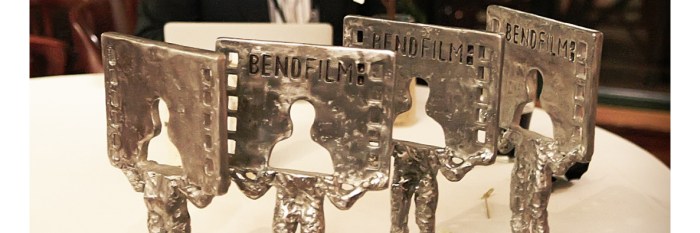
A near-constant fixture of MovieMaker magazine’s 50 Film Festivals Worth the Entry Fee, BendFilm celebrates independent films and the risky, passionate, tough and talented people who make them. This year’s festival runs from Thursday, Oct. 6 – Sunday, Oct. 9, with most venues located in Bend’s historic downtown in Oregon and the nearby Old Mill District.

Website: http://bendfilm.org/

Interview with Festival Director Todd Looby

Matthew Toffolo: What is your Film Festival succeeding at doing for filmmakers?

Todd Looby: BendFilm is committed to considering each film that comes in our door fairly. We want to champion the work of independent filmmakers who deserve more attention – whether we premiere ‘discoveries’ or present the work of established filmmakers whose work is under-appreciated by commercial audiences. We fundraise to pay travel expenses for our feature filmmakers and provide free lodging for all of our filmmakers. Last, but definitely not least, we award up to $8,500 in cash awards including $5,000 for the “Best of Show” as well as a $60,000 camera package from Panavision.

MT: What would you expect to experience if you attend the festival this year (2016)?

TL: We received a great grant from the Roundhouse Foundation to host at least 5 female filmmakers and their films. We want to be a force to overcome the vast gender disparity in filmmaking. A huge part of that is introducing and championing accomplished work to our audience. Though our programming process is still in an early stage, we have an incredibly promising crop of films to present to our audience. We are lining up intriguing panels, one of which will hopefully be our 3rd straight Film Fatales panel. Finally, we have commitments from some of Bend’s best venues to host what we think will be our best parties yet where our filmmakers and audience will continue make lasting bonds.

MT: What are the qualifications for the selected films?

TL: Selected films for the majority of our slots will not already have screened in the region, not yet have wide distribution and must be solidly independent.

MT: Do you think that some films really don’t get a fair shake from film festivals? And if so, why?

TL: I can’t speak for other festivals, but it is something I felt as a filmmaker myself. Our Programmer Erik Jambor and our programming team make an extraordinary effort to give everyone a fair shake by watching each submitted film at least twice. Every film that we accept or have to reject will be fairly vetted and include input from our loyal and talented screening committee.

MT: What motivates you and your team to do this festival?

TL: I fell in love with the film festival experience as an aspiring filmmaker attending the Chicago International Film Festival. That love was solidified when I presented my first film festival at the Iowa Independent Film Festival. Since those early years, I’ve screened at dozens of festivals and they all reinforced the importance of the festival world in building filmmaking careers. We want to make discoveries to champion the work of filmmakers that should be doing this for a living. And, perhaps most importantly, connect those filmmakers with such a generous, critical and appreciative audience that we have here in Bend.

MT: How has the festival changed since its inception?

TL: Our festival was great since its inception in 2004. For many years it was a “best kept secret” festival to the independent filmmaking community. Now we have 3-4 times the amount of submissions than we did just 3 years ago, so it is catching on quickly. With our community’s incredible support and enthusiasm for our programs we’ve added many year-round screenings and education programs that meet our community’s demand for greater access to films while at the same time foster more filmmaking from aspiring filmmakers.

MT: Where do you see the festival by 2020?

TL: That’s hard to quantify, but what the Board, Erik and I really want to do is make BendFilm a “must-stop” on the festival circuit. By 2020, we want to parlay our commitment to discovery to gain filmmakers the distribution and larger audiences that they deserve.

MT: What film have you seen the most times in your life?

TL: It’s probably a tie between “Midnight Run”, “Dances with Wolves” and “Blues Brothers”. The first 2 stem from the late 80s when I was a teen with a lot of time discovering the magic of film at the same time we first got cable at home. Those films still resonate with me, though I haven’t seem them in years. “Blues Brothers” was one of the first films I saw in the theaters at the age of 5. Growing up in Chicago, it was a mainstay on all of our TVs and VCRs. I think each of those films holds up so well and serve as the standard-bearers in their respective genres.

MT: In one sentence, what makes a great film?

TL: To me, as someone who’s made (or attempted to make) 3 narrative films for under $10,000, I love films that overachieve their budgets and transcend what the script may look like on paper. That “litmus test” can be applied to films working on every level – from independent to Hollywood or Academy-nominated films. 3 films that come to mind in recent years are Eric Steele’s “Bob Birdnow’s Remarkable Tale of Human Survival and the Transcendence of Self”, Asghar Farhadi’s “A Separartion” and Ruben Ostlund’s “Force Majeure”.

MT: How is the film scene in your city?

TL: Almost every week I get emails from filmmakers that are new in Bend or are seeking to move here. We already have solid production companies doing great work and a lot of talented filmmakers living here, but mostly working outside of Oregon. With the support of the Oregon Film Office and the newly formed “Central Oregon Film Office”, we hope to see a better utilization of that talent and more narrative and documentary work produced right here.
bendfilm.jpg

_____
Interviewer Matthew Toffolo is currently the CEO of the WILDsound FEEDBACK Film & Writing Festival. The festival that showcases 10-20 screenplay and story readings performed by professional actors every month. And the FEEDBACK Monthly Festival held in downtown Toronto on the last Thursday of every single month. Go towww.wildsound.ca for more information and to submit your work to the festival.

Interview with Festival Director Michel Zgarka (Views of the World Film & Music Festival)

Born in the creative brains of four Film, TV and Production and Marketing professionals, the originally US based Views of the World Film & Music Festival’s primary goal is to present films, scripts & film scores which have the power to raise awareness about vital social issues and inspiring audiences to take positive action. This year (2016), and for at least 2 more years, the beautiful city of Montréal will be the home of the Views of the World Film and Music Festival. This year, it will be from September 22 to 25.

http://www.viewsoftheworldfestival.com/

Interview with Michel Zgarka:

Matthew Toffolo: What is your Film Festival succeeding at doing for filmmakers?

Michel Zgarka: As our name and mission statement indicates clearly, we open the eyes of the attendees, participants and supporters on the rich existence of many cultures around the world, some ignored by the public, some too weak to spread their own message and some having no easy access to the modern Media

MT: What would you expect to experience if you attend the festival this year (2016)?

MZ: Solidity of the script
Quality of production
Being closed to our mission statement
Originality and creativity

MT: What are the qualifications for the selected films?

MZ: As there are thousands of film festivals on our planet, good films can be seen in many places. What is missing is the right context that makes the festival goer better understand and at times discover these new films popping up around the globe. Most festivals are more geared to media attention due to major talent attendance rather than the inherent quality of the properties (film, script and/or music), our main goal is to show talent through a complete work.

MT: What motivates you and your team to do this festival?

MZ: Discovering little “gems” and sharing these discoveries with all of the Festival attendees.

MT: How has the festival changed since its inception?

MZ: Little by little we become more attuned to the needs of producers and filmmakers from outside of the main media centers and our festival develops better tools to serve everyone

MT: Where do you see the festival by 2020?

MZ: Among the 10 best Festivals on Earth

MT: What film have you seen the most times in your life?

MZ: LA Confidential, Night Porter,

MT: In one sentence, what makes a great film?

MZ: The story (its script)

MT: How is the film scene in your city?

MZ: Blooming!

_____
Interviewer Matthew Toffolo is currently the CEO of the WILDsound FEEDBACK Film & Writing Festival. The festival that showcases 10-20 screenplay and story readings performed by professional actors every month. And the FEEDBACK Monthly Festival held in downtown Toronto on the last Thursday of every single month. Go towww.wildsound.ca for more information and to submit your work to the festival.

Interview with Festival Director Lynn M. Holley (Fine Arts Film Festival Santa Barbara)

The Fine Arts Film Festival premiered in Santa Barbara, California in 2010; it then occurred as a film festival in Venice, CA in 2015. In 2016 it will explode as an International Fine Arts Film Festival full of shorts plus a few full length features back in fabulous Santa Barbara, California! It will screen at more than one venue, including an outdoor night-time extravaganza. Originally conceived as a festival of films about the fine arts, it now incorporates dance and experimental art forms and approaches.

Interview with Lynn M. Holley:

Matthew Toffolo: What is your Film Festival succeeding at doing for filmmakers?

Lynn M. Holley: Exposure they might not get in major, all-purpose festivals.

MT: What would you expect to experience if you attend the festival this year (2016)?

LMH: Diversity of place, thought and disciplines. We will screen films from around the world.

MT: What are the qualifications for the selected films?

LMH: Made within the last 3 years; related to the visual arts or dance and have some importance to the field.

MT: Do you think that some films really don’t get a fair shake from film festivals? And if so, why?

LMH: All-purpose film festivals often ignore the disciplines in the arts: visual, dance, music, science and technology collaborations, etc..

MT: What motivates you and your team to do this festival?

LMH: The love film and the love of arts.

MT: How has the festival changed since its inception?

LMH: We now take in entries through http://www.Filmfreeway and focus on more genres in the arts.

MT: Where do you see the festival by 2020?

LMH: A larger, more international scene in Santa Barbara CA, which helps promote other film festivals here including the main one SBFF and the Jewish Film Festival.

MT: What film have you seen the most times in your life?

LMH: Caught-In-Paint by Rita Blitt (6 min); and numerous spy films over decades.

MT: In one sentence, what makes a great film?

LMH: There is an importance, a purpose for viewing it that does not require long narratives or dialogue.

MT: How is the film scene in your city?

LMH: Incredible; we are, after all, Santa Barbara, CA, home to Hollywood and the world.

fine_arts_film_festival.jpg

Lynn M. Holley is an executive consultant to the arts, a resident curator at the new center in Santa Barbara, CA for art, science and technology (SBCAST.org). She was initiated into film as a young film reviewer for a daily newspaper, and then as a journalist and director of galleries and an art center. She is a former journalist, narrative writer and filmmaker for promotions in the arts. She has a B.S. in Communications and an MA in Museum Studies. Ms Holley just returned from giving a presentation to a Global Conference in England on Museums, titled: The Dance of the Muses from Las Vegas to the Louvre.

_____
Interviewer Matthew Toffolo is currently the CEO of the WILDsound FEEDBACK Film & Writing Festival. The festival that showcases 10-20 screenplay and story readings performed by professional actors every month. And the FEEDBACK Monthly Festival held in downtown Toronto on the last Thursday of every single month. Go towww.wildsound.ca for more information and to submit your work to the festival.

Interview with Film Festival Director R. Presley Stephens (Tampa Bay Underground Film Festival)

The Tampa Bay Underground Film Festival was founded in 2014 by award-winning Bay Area filmmakers, actors, critics, artists and cinephiles to catch the independent films that fall through the cracks and end up… underground.  TBUFF celebrates good quality low budget films from Tampa and around the world and provides a professionally presented showcase for them.  The festival is usually held in early December, which is known as “late summer” in central Florida, and features more than a hundred films of all genres and lengths.

http://tbuff.org/

https://www.facebook.com/TampaBayUndergroundFilmFestival/

Interview with R. Presley Stephens:

Matthew Toffolo: What is your Film Festival succeeding at doing for filmmakers?

R. Presley Stephens:: We think film festivals should be about the filmmakers, which really isn’t the case with many other festivals. The original purpose of regional film festivals like ours was to showcase a lot of Sundance-type independent films that many people who lived far from Utah, Los Angeles and New York would have no opportunity to easily see since most such films weren’t going to get wide theatrical distribution.

But this was decades ago, before the proliferation of cable TV in general, before Sundance Channel specifically, before the internet and high quality streaming. What’s the point in every regional festival showing the “best of” Sundance, Cannes and Toronto when those movies are going to be on Sundance TV and Netflix six months later? Meanwhile filmmakers themselves don’t need festivals for distribution quite as much as they used to because there are so many other avenues to get those deals now and if all else fails, put it on YouTube and let the people decide. So the key festival selling points for most filmmakers now are networking, accolades and the relatively rare opportunity to see their work on a TRULY big screen in front of an enthusiastic live audience, all of which TBUFF provides.

And we try to go the extra steps of making that experience as exciting and fulfilling as possible with very thoughtful Q&A sessions for every film, marketing opportunities and meet & greet events. We also strive to excel with professional presentations (several TBUFF founders have worked at movie theaters and know a thing or two about projection), thorough preparation and frequent communication, which we’ve been told by our filmmakers is impressive enough to help set us apart from many other festivals.

MT: What would you expect to experience if you attend the festival this year (2016)?

RPS: TBUFF 2016 will once again be at a real cinema, offering the cast and crew and their friends and family and other festival attendees the opportunity to see the films on the big screen with digital sound. It’s usually a 4 day event (Dec. 1-4 this year), and we have movies all day and night long followed by after-parties with free appetizers at classy area restaurants most nights. We had a film panel on microbudget production and distribution last year and plan to have more this year. We have yet to have a Hollywood celebrity show up but certainly lots of local celebrities. We’ve been told that the crowning jewel of our event is our Oscars-like awards ceremony (“The Buffys!”) featuring clips of each nominated film (giving the always sold-out audience an opportunity to see why the films they probably didn’t get to watch are nominated), teary acceptance speeches, professional photo ops, engraved trophies and other ceremony trappings. For many of the nominated filmmakers, it’s basically another opportunity for a large audience to experience their films.

Undoubtedly one of the biggest selling points for northern filmmakers planning to attend is that TBUFF is held in subtropical Florida during the middle of winter, with highs usually in the 70s and the famous Pinellas County beaches less than 30 minutes away. Our attendance by selected filmmakers from outside the Sunshine State has been phenomenal – our main theme revolves around “native films” standing their ground against “invasive films” (hence the alligator-python tussle in our logo), so we usually have a fairly even split between Florida and non-Florida films, and so far more non-Florida filmmakers have shown up to represent their movies than Florida filmmakers! Last year that included not only several New York, Los Angeles and Canadian filmmakers, but also filmmakers from Ireland, England and Poland! Usually more than 60% of our films have representation at TBUFF, which seems crazy to us considering how young the festival is and its “underground” roots. This was even true the first year, before we had built up any real reputation at all, and we’re not all that sure why, but we’re certainly proud of our status.

MT: What are the qualifications for the selected films?

RPS: If you mean, the technical qualifications, we don’t really have a lot. Thus far we don’t even have a time limit on how long after completion a film can be submitted, but as we get bigger, that could change. As far as what we look for with selections… it’s honestly a mostly Potter Stewart scenario: we know it when we see it. But variety is very important to us – we have at least one short block of almost every genre, and we like conventional movies as much as weird stuff that our “underground” name would suggest. We showcase dramas, comedies, action, adventure, crime, musicals, horror, sci-fi, thrillers, fantasies, mysteries, romances, animation, children’s, religious, lgbt, foreign, documentaries, experimental – basically anything, and it doesn’t have to bizarre or on the fringe, though we definitely delight in those. Thanks to some good relationships with the theaters we’ve worked with, we’ve been able to program a lot of movies – 125 last year, which is on par with a lot of bigger “international” festivals. That included more than 20 features.

MT: Do you think that some films really don’t get a fair shake from film festivals? And if so, why?

RPS: It obviously depends on the festival, but certainly features without known talent have much more uphill battles on the overall circuit than features with stars or most any short, although “long shorts” (like 30-45 minutes) are difficult to program and often glossed over by festivals regardless of quality. TBUFF certainly isn’t going to turn its nose up at a celebrity-filled feature if it fits our program (we showcased a horror film in 2014 that had a bunch of well-known actors in it, including one who grew up in our area), but probably because of the word “underground” in our name, we rarely get such submissions, and we would indeed like to give as many slots as possible to good quality starless features that unknown “starving artist” filmmakers practically sacrificed their livelihoods to make. As far as long shorts, some of the best shorts that have been submitted to us were on the long side, so we found room for them. Again, we’ve been able to program a lot more movies than the typical underground film festival thanks to our good relationship with the movie theaters that we’ve worked with, as our festival has been much more of an asset than a burden to them.

MT: What motivates you and your team to do this festival?

RPS: Most of the TBUFF founders (including co-executive director Jason Beck, co-executive director Kelly Nunez, marketing director Chris Maria Reyes, assistant programming director Jay Franks, social media director Jaden Mikes, photography directors Nicholas Barrera and Lisa Shorts, audio-visual directors Chris Cook and Geoff Langhans, as well as myself) worked on several Liberty Lane Productions films, including the recently released feature “Poltergeist of Borley Forest.” Before its distribution, that movie had a film festival tour that took it from New York to Miami to Louisville to California, which was such a wonderful experience for us that we wanted to share it with other filmmakers, particularly in our home market of Tampa. This area already had a couple of prominent festivals but they were more centered around celebrity-driven independent productions than true “underground” projects in the vein of such indie classics as “Clerks,” “El Mariachi” and “Blair Witch Project,” which were all made on shoestring budgets by then-unknowns without any notable cast members. Their level of success is the exception-to-the-rule but these passion projects embody the spirit of filmmaking that TBUFF seeks. But we did want to give these filmmakers a more “international” festival-type experience than most other “underground” festivals do, so we incorporated what we felt like were the best aspects of all the festivals we’ve attended into our festival – the best aspects that would fit into our “underground” budget, of course.

MT: How has the festival changed since its inception?

RPS: TBUFF is only 3 years old, so not much! We were at a beach theater our first year, but it closed before the second year and we had to move inland into the main city, so that was a bit of a culture shock and led to different kinds of parties and a new technology learning curve. Otherwise our third year is largely looking the same as the first year, except bigger and better, with the same philosophy and a similar number of films. One very positive change is the substantial increase in submissions, with filmmakers seeking us out based on their previous positive experiences and word of mouth from other filmmakers, rather than us having to do a lot of scouting and convincing, as was the case in year 1. We’ve also expanded our staff beyond just the original founders, so hopefully this year will be a little less chaotic for the board members than in the past. But probably not!

MT: Where do you see the festival by 2020?

RPS: Being in a city with two other established, world-renown all-genre festivals, we certainly don’t see ourselves as being the preeminent festival at that or any point, especially considering our “underground” nature, but we do hope by then that we have connected with both the local and international film community in such a significant manner that we’ll be the “Big Three” instead of there just being the “Big Two.” We already get some media exposure, but hopefully in 4 years newspapers and TV stations will seek us out instead of the other way around and far more people in the area will know about us.

MT: What film have you seen the most times in your life?

RPS: Like most people of my era, probably “The Wizard of Oz” because it was on TV at least once a year for most of my childhood. “Pulp Fiction” seems likely the movie I saw most in theaters, because for 6 months it was at a theater I worked at, and I watched it religiously during my breaks and before and after my shifts, leading to it greatly influencing my own screenwriting style. As I’ve worked at several theaters over a two decade period, there are many movies I’ve seen the best parts of dozens of times each.

MT: In one sentence, what makes a great film?

RPS: A great film is one that truly becomes an escape from the real world – not just the first time you watch it, but all the many times you are compelled to watch it.

MT: How is the film scene in your city?

RPS: As is the case with most Florida markets, Hollywood isn’t exactly overrunning Tampa with major productions due to the lack of state tax incentives, but a fair number of true independent features are produced in the area every year, usually by filmmakers putting their own money into the projects and getting as much of their community involved as they can, and we definitely have a very supportive, interconnected film community. More of these are horror than any other genre, sometimes leading to Tampa being called the “Splatter Capital” of the state, but there are also conventional dramas and comedies as well as art films being produced. There are an abundance of young filmmakers in the area who are attending or have recently graduated from area schools with respected film programs such as the University of Tampa’s, University of South Florida’s and the Art Institute of Tampa, along with Central Florida and Full Sail in nearby Orlando and Ringling College in Sarasota, and these artists are cranking out a steady diet of high quality short films. Tampa-St. Pete has about 10 total film festivals of varying stature and many other film-related events, quite a few of which have strong attendance, so the film scene is very lively here indeed, and TBUFF is very excited and proud to be part of it and hopes to continue to be for years to come.
tampa_bay_underground_film_festival

Programming director and co-founder R. Presley Stephens has written and produced several underground films himself, including the starless Tampa supernatural horror flick “The Poltergeist of Borley Forest,” which somehow found its way into Redbox’s Top 20 rentals rankings in October 2015.  He was also a TV station film critic for 7 years and did weekend cinema projection work for half of his life, so he is about as deeply immersed in film culture as a person can get

_____
Interviewer Matthew Toffolo is currently the CEO of the WILDsound FEEDBACK Film & Writing Festival. The festival that showcases 10-20 screenplay and story readings performed by professional actors every month. And the FEEDBACK Monthly Festival held in downtown Toronto on the last Thursday of every single month. Go towww.wildsound.ca for more information and to submit your work to the festival.