Interview with Festival Director Elena Ringo (Vienna Independent Film Festival)

VIFF Vienna Independent Film Festival invites filmmakers from all over the world to submit their films to their international film festival which takes place in Vienna.  The goal of our festival is to find new talented filmmakers who will be able to approach the heights of cinematography created by geniuses like Antonioni, Fellini, Tarkovsky, Bergman, Visconti, Godard. Now, when the whole world has a tendency towards commercialization, they appreciate free spirit, new ideas an independent point of view and new approaches. Not the budget of the film but solely talent should be the criteria for the film’s success.

http://www.vienna-film-festival.com/

Interview with Festival Director Elena Ringo

Matthew Toffolo: What is your Film Festival succeeding at doing for filmmakers?

Elena Ringo: VIFF 2016 – Vienna Independent Film Festival took place for the first time in July and it laid the foundation for the future. There were 38 films screened at the festival, almost all of them were Austrian premieres and the films were introduced to a varied audience. The participants had a lot of opportunities for networking and have received exposure via social media and press coverage.

MT: What would you expect to experience if you attend the festival this year (2016)?

ER: Our festival took place in July 2016 and now we are preparing for the next edition.

MT: What are the qualifications for the selected films?

ER: We value artistic quality of the films, independent point of view, cinematographic innovations and appreciate auteur cinema. Many films were directed, produced, shot and written by the directors themselves and the films were often based on real stories and personal experiences which brings truth to the films and makes the films more authentic and believable.

For example, the film Imperfect Sky which received the award for Best Feature Film, was written, directed and shot by Graham Streeter and was based on true events. Another interesting film which received the Grand Prix – Let’s Dance to the Rhythm was written, directed and edited by Bardroy Barretto and tells the story of real jazz musicians from Goa.

MT: Do you think that some films really don’t get a fair shake from film festivals? And if so, why?

ER: I think that when festivals are very well-known they receive an enormous volume of submissions and very limited number of people actually select them on the first stage so many films are not noticed at all. Also, many festivals are more interested in big names rather than discovering new talents and do not want to take any risks.

MT: What motivates you and your team to do this festival?

ER: I hope that our festival will become a bigger event but will still preserve our main principles; independence, artistic quality, lack of political motivation and no discrimination against any genre or countries.

MT: Where do you see the festival by 2020?

ER: I hope that our festival will become a bigger event but will still preserve our main principles; independence, artistic quality, lack of political motivation and no discrimination against any genre or countries.

MT: What film have you seen the most times in your life?

ER: The Mirror by Andrei Tarkovsky. This is a film which you can watch many times and every time discover something new.

MT: In one sentence, what makes a great film?

ER: Artistic vision and deep ideas make a great film.

MT: How is the film scene in your city?

ER: There are many cinemas and film lovers in Vienna. There are several film schools and there is a demand for more festivals in this cultural center.

viennafilmfestival.jpg

Interviewer Matthew Toffolo is currently the CEO of the WILDsound FEEDBACK Film & Writing Festival. The festival that showcases 10-20 screenplay and story readings performed by professional actors every month. And the FEEDBACK Monthly Fesival held in downtown Toronto on the last Thursday of every single month. Go tohttp://www.wildsound.ca for more information and to submit your work to the festival.


Interview with Festival Director Joseph Hardin (HorrorQuest Film Festival)

HorrorQuest Film Festival is the worlds only 100% free Horror film festival. Held each year at Cinefest Film Theatre, located on the Georgia State University campus, HorrorQuest has no set submission fee. All HorrorQuest screenings and events are free and open to the public on a first come, first served, basis.

Named one of the “Top 10 Film Festivals Every Filmmaker Should Know About” by Movie Maker Magazine, HorrorQuest has been praised by Filmmakers such as Kevin Smith (Clerks) and Lloyd Kaufman (The Toxic Avenger) for it’s business model and ethics.

http://www.thehorrorquest.com/

Interview with Festival Director Joseph Hardin 

Matthew Toffolo: What is your Film Festival succeeding at doing for filmmakers?

Joseph Hardin: I think HorrorQuest provides an alternative to filmmakers who might not have extra money to spend on festival submission fees. While we do charge a small fee for online submissions, filmmakers can still submit for free by mail. While this makes it harder to keep the festival running, it also is what makes HorrorQuest stand out.

MT: What would you expect to experience if you attend the festival this year (2016)?

JH: First, all screenings are 100% free to the public. HorrorQuest has always tried to put the films first. We do not have Q&As, red carpets or press junkets. Instead we try to cram in as many films as possible. We try to create a good mix of content, we do not have themed blocks of content, instead we try to give you a bit of everything in each block of films.

MT: What are the qualifications for the selected films?

JH: It can vary from film to film, but mostly we look for something interesting. When you watch hundreds of films years after year, it is easy to become bored when you see another slasher or zombie film. While we enjoy a good slasher or zombie film, it can be hard to bring something new to those sub-genres. That is what we really look for, films that try something new. If a film plays with an interesting idea or subject matter, HorrorQuest will often overlook the films technical shortcomings.

MT: Do you think that some films really don’t get a fair shake from film festivals? And if so, why?

JH: I think that is absolutely true, even more so when you talk about larger festivals. If you do a simple Google search, you will find story after story about film festival corruption. Larger festivals are a business and they operate as such. They want to sell tickets and ad space, so it befits them to program differently than a festival like HorrorQuest. We can take a risk and program something experimental or extreme and not have to worry about what the sponsor is going to think about it. Not to mention bribes, HorrorQuest is a very small festival, yet well still get bribes from movie studios or indie distributors asking us to program their films. I would assume they offer more to larger festivals, on that scale, I am sure it becomes a strong temptation.

MT: What motivates you and your team to do this festival?

JH: Every one who is or has been involved with HorrorQuest, does it for free, no one gets paid. We all do it because we enjoy watching movies. We get to get together and watch films many people will never see. Everyday fells a bit like Christmas, when you check the mailbox, you never know what your are going to find. We get submissions from all over the world and it is still amazing to see what people can create. When it stops feeling like Christmas, it will be time to stop.

MT: How has the festival changed since its inception?

JH: Not much has changed. It costs more to keep the festival going. The price to rent a theater never goes down. We still average the same about of guests, some years are better than others. We now accept online submission, which was something we put off for as long as possible. While it has made somethings easier, it has created more work over all. If anything, we have more name recognition. We are still the same hole-in-the-wall festival we were when we started.

MT: Where do you see the festival by 2020?

JH: Hopefully the festival will still be going. It is getting harder and harder each year to keep the festival as free as possible and not be out of pocket. Thankfully, we get by and have a theater that works with us as much as they can. There are a lot of things HorrorQuest wants to do. Right now, we are just glad to still be here.

MT: What film have you seen the most times in your life?

JH: I have no idea, it is probably something like Back to the Future or Flight of the Navigator. One of those movies I watched as a kid. I still watch Back to the Future, Navigator, Monster Squad and The Goonies (among others) at least once a year.

MT: In one sentence, what makes a great film?

JH: If I knew that, I probably wouldn’t tell you. I don’t think anyone knows. I think you can know what works, but even then, great filmmakers still make stinkers. Just make something you would want to see, odds are there is someone out there who will agree with you.

MT: How is the film scene in your city?

JH: Atlanta is crazy, everything seems to be filming here, Ant-man, Captain America, Hunger Games. I think it was just voted the number one place to live as an indie filmmakers. There seems to be a lot of opportunities here. Georgia is a great place for film, hopefully the state won’t screw it up.

horrorquest

Interviewer Matthew Toffolo is currently the CEO of the WILDsound FEEDBACK Film & Writing Festival. The festival that showcases 10-20 screenplay and story readings performed by professional actors every month. And the FEEDBACK Monthly Fesival held in downtown Toronto on the last Thursday of every single month. Go tohttp://www.wildsound.ca for more information and to submit your work to the festival.


Interview with Christopher J. Gervais, Founder & CEO (Wildlife Conservation Film Festival)

The Wildlife Conservation Film Festival (WCFF) is an academic organization. The WCFF MISSION is to inform, engage and inspire audiences about the need for and importance of the protection of global biodiversity. The WCFF does this through the annual film festival in New York and Beijing, the annual biodiversity conference in New York. WCFF also engages in monthly programs in New York and other cites that include film screenings, business & social networking events, and presentations.

www.WCFF.org

Matthew Toffolo: What is your Film Festival succeeding at doing for filmmakers?

Christopher J. Gervais: The WCFF helps filmmakers to build relationships for existing and future projects. We also make connections between talented filmmakers that have exceptional content to networks for broadcasting and distribution.

MT: What would you expect to experience if you attend the festival this year (2016)?

CJG: An attendee will experience over 90 exceptional and award winning films, over 65 are World Premieres at the WCFF and another 26 will be north America premieres. In addition to the film screenings, there are panel discussion, Q&A with the film producers, receptions, and a biodiversity conference. Attendees get to meet international filmmakers that attend the WCFF from across the globe.

MT: What are the qualifications for the selected films?

CJG: Film are reviewed by a jury selection committee. We look for exceptional content. A film that has a message about a specific species or ecosystem. The films we select are not just meant to entertain the audience but to inform, engage and inspire.

MT: Do you think that some films really don’t get a fair shake from film festivals? And if so, why?

CJG: Some films are not selected for political reasons. An example, this past spring a film festival held event related to one specific species. The announced award winners were from film producers or productions companies that were board members to the film festival. This is a conflict of interest and in our opinion was not ethical.

MT: What motivates you and your team to do this festival?

CJG: What motivates myself and my team is commitment to protect global biodiversity. We do this through the power of film.

MT: How has the festival changed since its inception?

CJG: The festival was a 2 day event in a small town on Long Island the first year. Within two years we moved to New York city and within the 5th year the festival has grown to 10 day event that included a biodiversity conference and filed trips. visiting scientists, film producers and members of the press have identified the WCFF as one of the most important film festival on the planet for wildlife conservation.

MT: Where do you see the festival by 2020?

CJG: Our goal by 2020 is to have the film festival remain in New York and ad another key America city as a venue. We are also looking to bring the WCFF to one if not several countries is Asia.

MT: What film have you seen the most times in your life?

CJG: There is not one but several mainstream films; Dancing with Wolves and JAWS.

MT: In one sentence, what makes a great film?

CJG: A great documentary film has exceptional cinematography, narration and a unique story.

MT: How is the film scene in your city?

CJG: New York city is a great film town. There is exceptional mainstream and documentary films screened all the time. Something for everyone as there is such a variety in the subject matter.

wcff.png

Interviewer Matthew Toffolo is currently the CEO of the WILDsound FEEDBACK Film & Writing Festival. The festival that showcases 10-20 screenplay and story readings performed by professional actors every month. And the FEEDBACK Monthly Fesival held in downtown Toronto on the last Thursday of every single month. Go tohttp://www.wildsound.ca for more information and to submit your work to the festival.

LITTLE MEN (USA 2016) ***1/2 Directed by Ira Sachs

Deadlines to Submit your Screenplay, Novel, Story, or Poem to the festival: http://www.wildsound.ca

little_menLITTLE MEN (USA 2016) ***1/2
Directed by Ira Sachs

Starring: Greg Kinnear, Jennifer Ehle, Paulina García, Alfred Molina

Review by Gilbert Seah

As Jesus said in the Bible, “And a child will lead them.” In the case of Ira Sach’s occasionally brilliant new film LITTLE MEN, pre-teens lead the way for the adults that have gone astray.

The film begins with the death of 13-year old Jake’s (Theo Taplitz) grandfather. Jake’s dad, Brian (Greg Kinnear) inherits the grandfather’s building and move in. Below is a store that the grandfather leases to a seamstress, Leonor (Paulina Garcia) and her son, Tony (Michael Barbieri). Trouble arises when Brian needs to raise the rent money as he is short of income. Leonor is unable to pay. A bad state of affairs result when Brian evicts Leonor.

Though premiering at the Toronto Inside Out LGBT film festival, there is no explicit gay theme on display in the film. The friendship that develops between the two boys hints that one might be gay (the other pines over a girl in he neighbourhood), but still one can never be sure. The hint arrives when Jake’s mind immediately rushes to think of Tony when asked to write a poem above love in his English class. No use in labelling. No matter whether one of the boys is gay or not, it is of no importance. Sach’s little film astounds in many avenues, particularly in the subtlety department. But the bond that exists between the two boys is nothing short of wonderful. They stand up for each other. Tony gets beaten up in school for Jake. Both boys refuse to talk to their parents when they learn that their parents are not getting along.

The film is seen mostly from the points of view of the two boys, which makes the film more interesting.

The script has two characters, Brian’s sister and Brian’s wife which could easily have been moulded into one character. They collectively could serve the same function as one person.

When Brian finally confesses the problem to his son Jake, Jake offers a solution so simple that the adage “and a child will lead them” comes to mind.

Films about kids often have them speak in adult dialogue that would unlikely come from them. This occurs regularly in many of Neil Simon’s plays, Woody Allen films and also in this film. But here at least, the boys still behave like boys. They play video games, ignore their parents, get into trouble (and fights) in school while growing up and learning about life. The great thing about all this is that they teach their parents a thing or two on the way.

Sach’s film succeeds tremendously from the performances of it two young actors. They are able to elicit sympathy and humour, strength and vulnerability in their characters. One of the best performances occurs in the segment in a training dialogue between Tony and his acting coach in his new school.

The film contains a non-Hollywood but rather clever under-stated ending. LITTLE MEN is a good example of how brilliant a little film with a good script and direction can turn out.

Also, Free logline submissions. The Writing Festival network averages over 95,000 unique visitors a day.
Great way to get your story out: http://www.wildsound.ca/logline.html

Deadlines to Submit your Screenplay, Novel, Story, or Poem to the festival:http://www.wildsound.ca

Watch recent Writing Festival Videos. At least 15 winning videos a month:http://www.wildsoundfestival.com

Film Review: SUICIDE SQUAD (USA 2016)

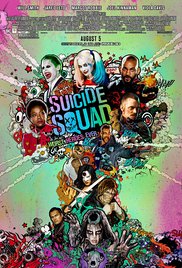
suicide_squad.jpgSUICIDE SQUAD (USA 2016) *
Directed by David Ayer

Starring: Will Smith, Jared Leto, Margot Robbie

Review by Gilbert Seah

SUICIDE SQUAD is the third D.C. comics extended universe film, following the awful BATMAN V. SUPERMAN that barely made its money back from its costly production. SUICIDE SQUAD has so far received awful reviews, including this one from your humble reviewer. It has also been reported that Suicide Squad fans have petitioned to shut down Rotten Tomatoes after negative reviews.

The film has been reported to be rushed out to meet time schedules with lots of editing and rushed scripting by David Ayer (FURY). It shows!

The Suicide Squad initiative functions as an unorthodox work release program. The modern incarnation, the Suicide Squad, is an antihero “strike team” of incarcerated, death row supervillains. Acting as deniable, covert assets of the United States government, it undertakes high-risk, black-ops missions in exchange for commuted prison sentences. The group operates out of Belle Reve Penitentiary under the directorship of Amanda Waller (played with dead seriousness by Viola Davis).

The members of the squad in this film is taken from different the different volumes of the comic books. In the aftermath of Superman’s death in BATMAN V. SUPERMAN, intelligence operative Amanda Waller assembles a team of dangerous criminals – the deranged Harleen Quinzel (Margot Robbie), also known as “Harley Quinn”; elite hitman Floyd Lawton (Will Smith getting star billing), who longs to be reunited with his daughter Zoey; pyrokinetic ex-gangster Chato Santana (Jay Fernandez), who refuses to fight after accidentally killing his wife and children and opportunistic thief Digger Harkness (Jai Courtney) who is supposed to use his boomerang among others. Each member is introduced at the start of the film with a famous tine. Harleen is introduced with the song “Super Freak”; Lawton with “Spirit in the Sky” etc. The Suicide Squad are offered reduced sentences in exchange for their services and implanted with nanobombs so Waller can terminate them should they go rogue. Flag (Joel Kinnaman) leads the squad under instruction from Waller.

Though billed as a comedy action film, the film’s comedy lie mainly in the one-liners. THE SUICIDE SQUAD’s comedy is similar to that of GUARDIANS OF THE GALAXY. Margot Robbie and Oscar Winner Jared Leto (as the Joker) steal the movie. Leto is plain creepy delivering a performance of equal stature to Heath Ledger’s.

One of Waller’s recruits is Flag’s girlfriend, Dr. June Moone, an archaeologist who has become possessed by a malevolent spirit witch known as “The Enchantress” after touching a cursed idol. She and her brother form the villains of the film that have to be taken out by the squad in an extended action sequence in which a barely recognizable downtown Toronto (where the film is shot) is destroyed. (Dundas Square can still be recognized at least.)

Beware. Characters that die midway in the film can suddenly appear live and well in later parts of the film. There is a 2-minute meeting between Waller and Bruce Wayne (Ben Effleck) midway during the end credits, indicating that it might serve as an entry point to a sequel.

Like BATMAN V. SUPERMAN, SUICIDE SQUAD is plain awful. The 2 films contain the similar traits of being incoherent and a complete mess. If there are 10 D.C. comics films slated till 2020, heaven help the D.C. Universe!

Film Review: OPERATION CHROMITE (South Korea 2016)

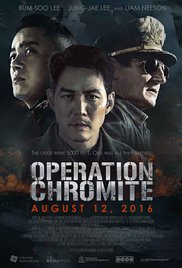
operation_chromite.jpgOPERATION CHROMITE (South Korea 2016) **
Directed by Lee Jae-han (John H. Lee)

Starring: Liam Neeson, Sean Dulake, Jung-jae Lee

Review by Gilbert Seah

In order to appreciate the film, a bit of Korean/American history is required. The first is a knowledge of the Battle of Inchon.

The Battle of Inchon was an amphibious invasion and battle of the Korean War that resulted in a decisive victory and strategic reversal in favour of the United Nations. The operation involved some 75,000 troops and 261 naval vessels, and led to the recapture of the South Korean capital of Seoul two weeks later. The code name for the operation was OPERATION CHROMITE, the title of this film. Though not seen in the film, the epic battle began on 15 September 1950 and ended on 19 September.

The battle ended a string of victories by the invading North Korean People’s Army (NKPA). The United Nations and South Korean forces were commanded by General of the Army Douglas MacArthur (Liam Neeson) of the United States Army. MacArthur was the driving force (heavily emphasized in the film) behind the operation, overcoming the strong misgivings of more cautious generals to a risky assault over extremely unfavorable terrain.

The plot of the film has General Douglas MacArthur and 8 South Korean troop members led by a South Korean Navy Lieutenant (Lee Jung-Jae) carry out a covert “X-ray” operation. The “X-ray” must succeed in order to carry out “Inchon” Landing Operation. The film concentrates of the X-ray operation and not the Battle of Inchon.

Nothing much is said of this covet X-ray operation in the history books, so a lot of the action going on in the film is likely made-up by the script which takes liberties to create a big budget action film. Extra sentiment is provided whenever possible for example in one scene, by one of the soldiers in the X-Ray operation meeting up with his wife and baby son. General MacArthur also adds his spill on how it is to grow old and hold on to ones principles.

The action segments (chases through the city amidst machine gun fire) are exciting enough but they tend to undermine the reality of a film based on historical events. The segment set on the eve of September 15 to secure a lighthouse, however, is clumsily done as it is hard to see what is going on in the dark of night.

OPERATION CHROMITE is more an action movie than a film based on historical events. The background of the film is the history lesson. Other than that, the group of men that have gone on fighting to make the Battle of Inchon and their exploits are hardly plausible. A parallel can be drawn of the about to be released ANTHROPOID on the real assassination of Rienhard Heydrich.

North Korea would be flabbergasted with premise, story and delivery of this South Korean propaganda piece. The film has already broken South Korean box-office records with an opening weekend box-office gross of $18.5 million on its $15 million production. South Koreans love the film. But the North Korean state-run outlet Uriminzokkiri called the film a product of “ridiculous bravado from ignorant lunatics”.

That said, OPERATION CHROMITE is a pretty bad war film. But for less discerning moviegoers who like that action heroes to be true to life, this film will be a hit, as already proven by the film’s box-office success.

UNLOCKING THE CAGE (USA 2015) ***

unlocking_the_cage.jpgUNLOCKING THE CAGE (USA 2015) ***
Directed by D A Pennebaker and Chris Hegedus

Review by Gilbert Seah

Do animals have certain rights as humans? Animals are caged and cannot argue their way out. The same can be said for the inhuman way chicken and cattle are reared for food.

UNLOCKING THE CAGE closely follows animal rights lawyer Steven Wise in his unprecedented challenge to break down the legal wall that separates animals from humans. After 30 years of struggling with ineffective animal welfare laws, Steve and his legal team, the Nonhuman Rights Project (NhRP), are making history by filling the first lawsuits that seek to transform an animal from a “thing” with no rights to a “person” with legal protections.

Supported by affidavits from primatologists around the world, Steve maintains that, based on scientific evidence, cognitively complex animals such as chimpanzees, whales, dolphins and elephants have the capacity for limited personhood rights (such as bodily liberty) that would protect them from physical abuse. Using writs of habeas corpus (historically used to free humans from unlawful imprisonment), Wise argues on behalf of four captive chimpanzees in New York State.
The film spends a considerable amount of time trying to convince the audience of the supposedly monumental shift in our culture, as the public and judicial system show increasing receptiveness to Steve’s impassioned arguments. It is an intimate look at a lawsuit that could forever transform out legal system, and one man’s lifelong quest to protect “nonhuman” animals. But he audience gets the point quite wary without the idea having to be constantly drummed into the audience.

There is nothing really wrong with this well intentioned documentary that achieves its aim of what it is supposed to do – which is to inform and to rally up people for animal rights and more. But being so straight forward, it is quite a boring doc tailing the activists from start to finish. There is more anger generated in the many other documentaries about abuse of other animals like sharks (for their fins), dolphins and other animals. UNLOCKING THE CAGE, though moving at times, is tame in comparison.

UNLOCKING THE CAGE had its world premiere at the Sundance Film Festival in January 2016 and its Canadian Premiere at the Hot Docs Film Festival in May 2016. It will open in Toronto on August 19th at the TIFF Bell Lightbox. The opening night screening in Toronto will be followed by a Q & A session with Steven Wise, via Skype, moderated by Canada’s first animal rights lawyer, Lesli Bisgould.

BAD MOMS (USA 2016) ***

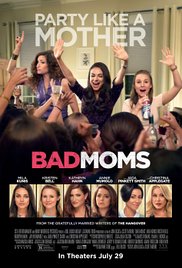
bad_momsBAD MOMS (USA 2016) ***

Directors: Jon Lucas, Scott Moore

Stars: Mila Kunis, Kathryn Hahn, Kristen Bell, Christina Applegate

Review by Gilbert Seah

he story centres on a young mother, Amy Mitchell (Mila Kunis) who appears to have the perfect family. She has a good mortgage broker husband, two smart over-achieving children and a career. But she is overworked and the husband does not do much except maybe watch porn. She catches him, kicks him out and finally has had it at being a good mom. Teaming with two friends Carla (Kathyrn Hahn) and Kiki (Kristen Bell) who she gets drunk with, she decides, with them to f*** it and become BAD MOMS. Amy does not make breakfast for her kids anymore and stops going to her meaningless job meetings.

The film picks picks up when the three meet the good moms headed by the head of the PTA, Gwendolyn Jones (Christina Applegate). The war starts when Amy decide to run for the post of the head of the PTA.

If the film sound trivial, it actually is. But the script by Lucas and and Moore, treats its subject very seriously. This is the comedy duo that did the successful HANGOVER male raunchy comedies. BAD MOMS does the same for the opposite sex. So expect lots of foul language and lewd humour. The moms here get drunk, laid and stoned. For the most part, the males (husbands) in the film are all idiots (like the black school principal), clueless (Amy’s husband) or sexual objects (sexy latino Jay Hernandez s Amy’s fling). But as the script is written by two guys, some redeeming qualities are written into Amy’s husband’s character as the two do share a moment and hug, after a big quarrel.

One of the best things about BAD MOMS is actress Kathryn Hahn. She has a supporting role as Carla, one of Amy’s best friends who drinks and sleeps her way as a ultra bad mom. Hahn has the ability to do both drama and comedy exceptionally well. In the recent CAPTAIN FANTASTIC, she played the victimized mom at the dinner table. In BAD MOMS she proves she is versatile also as an antagonist, Carla. When not spurring Amy on to do bad things, her character is hounding other victims. Hahn brings the most laughs in the movie, steals very scene and still has the audience wanting for more. It would be difficult to imagine how funny the film would be without her.

The product placements (Arby’s and Bed Bath and Beyond) are a little too obvious. The supermarket sequence where the three go on a drunken shopping spree is simply priceless. Hahn is the funniest of the three. This segment alone is worth the price of the ticket. The film includes two cameos by Martha Stewart (very funny) and Wanda Sykes (not so funny).

BAD MOMS ends up a guilty pleasure for all mothers. There are quite a lot of mothers out there that make up a good target audience number. The film should do for females what The HANGOVER films did for the males. Even the males can sit through and laugh through BAD MOMS.

Film Review: LIGHTS OUT (USA 2016)

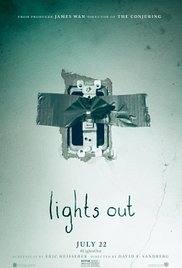
lights_outLIGHTS OUT (USA 2016) **
Directed by David F. Sandberg

Starring: Teresa Palmer, Gabriel Bateman, Maria Bello

Review by Gilbert Seah

LIGHTS OUT is a new low budget horror produced by HOSTEL’s James Wan and directed by David F. Sandberg based on his short story.

LIGHTS OUT is based on several potentially scary premises. There is the mother with mental health problems, the imaginary friend who could be a figment of mother’s imagination (or not), a boy scared of the dark and a monster that disappears and burns in light, surviving only in the dark. But one second thoughts, none of those are original concepts. The last one, though seemingly new is the same premise used in all vampire films.

But the movie plays confidently as a film that scares from things that go bump in the night. A large part of the film obviously takes place at night. The majority of the scares come from the ghoul called Diana who can appear out of nowhere, but only in the dark. As the lights go out in the house, a large mansion of course, the survivors have to arm themselves with torches or flashlights, batteries that soon run out of juice. This ‘novelty’ runs out very fast. After half an hour, the film really gets monotonous, with Diana appearing and disappearing. A bit of distraction is also provided in the script in which Diana might be imaginary and in the head of the mother, Sophie (Maria Bello), who was previously a mental patient.

Sandberg knows how to incite fear from small and dark enclosed spaces. But it takes much more to make a complete horror film.

The story goes like this. When the film opens, a creature kills a man who had promised to return home to his son who had complained of his mother being mental. The boy, Martin (Gabriel Bateman) is still afraid years later with the mother still having problems now manifested in Diana, who she has befriended in the mental hospital. Now Diana is able to appear as a creature but only in the darkness. Diana is breaking her promise that she will not hurt the mother’s children. Enter (out of nowhere), Rebecca (Teresa Palmer), Martin’s older sister and her sexy boyfriend, Bret (Alexander DiPersia) to rescue Martin from crazy mom and monster Diana.

The film makes the rules of the monster as it goes along – how it exists and so forth. The actors all do their screaming convincingly with Bret being the beau in distress. This is more of a female film where the women are heroes with the male and female roles reversed. No complaint here, as it is good to see things going the other way for a change.

But LIGHTS OUT would have succeeded as a 30-minute short film. It is stretched out too long, even at only 80 minutes. Boring, over manipulative and predictable, the film is a good idea that unfortunately does not play out as a full length feature. But it should make its money owing to its low budget. It would be interesting to see what writer/director Sandberg comes out with next.

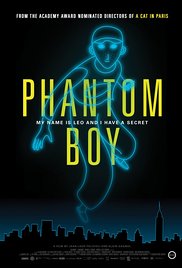
Film Review: PHANTOM BOY (France/Belgium 2015)

phantom_boy.jpgPHANTOM BOY (France/Belgium 2015) **
Directed by Jean-Loup Felicioli and Alain Gagnol

Starring: Edouard Baer, Jean-Pierre Marielle, Audrey Tautou

Review by Gilbert Seah

PHANTOM BOY is the next animated feature after the French directors Felicioli and Gagnol’s successful Oscar nominated A CAT IN PARIS. While the latter film took a distinct Parisienne personality, the new film hopes to do the same with New York City where the story is set.

The film begins with a boy reading a story to his little sister. It is revealed then that the boy has a sickness and has to go to hospital for extended periods of time. The boy somehow (don’t ask!) attains supernatural powers of being able to leave his body. He befriends a cop who is wheelchair bound. The cop is in the process of saving NYC from a computer hacker that will hold the city ransom. A girl (Audrey Tatou from AMELIE) helps destroy the virus and saves the city with the help of both he cop and the boy.

PHANTOM BOY as an animated feature looks like the older toons such as BETTY BOOP unlike the slicker animated features from Disney, Pixar or Dreamworks that North Americans are spoilt with. Inevitable comparison will make PHANTOM BOY look inferior despite the directors attention to detail The stars on the socks of a character can be seen just as clearly as any of the character movements.

The film is screened in French with English subtitles. The French is simple enough so that those learning the language can understand the dialogue without resorting to reading of the subtitles. But as much as foreign films should not be dubbed and shown in their original languages, the characters in New York City speaking French look odd. The film loses its credibility.

Despite the supernatural story, the story is quite plain and predictable. A lot of rules are dictated into the story. The boy, for example will die if he does not return to his body after a certain amount of time. How does he know and how did this rule come about? Strange supernatural reasonings make little sense in the film.

There is nothing super exciting or super funny. The main humour is derived from the black mayor who is always screaming at the cop for all the accidents caused while doing his duty.

The film is progressive in featuring a black NYC mayor. The film is current with the fact that hacking a central computer can bring the entire modern city down as just last year the whole New York stock exchange was brought to a halt because of a virus.

I have not seen A CAT IN PARIS but assume that that film is better than PHANTOM BOY which might also be called A PHANTOM IN NEW YORK. The film might have worked better if set again in Paris, France in the home country of the two directors.