Movie Review: STAGE FRIGHT, 1950 Directed by Alfred Hitchcock

Deadlines to Submit your Screenplay, Novel, Story, or Poem to the festival: http://www.wildsound.ca

STAGE FRIGHT MOVIE POSTER
STAGE FRIGHT, 1950
Classic Movie Review

Directed by Alfred Hitchcock
Starring Jane Wyman, Marlene Dietrich
Review by Steven Painter

SYNOPSIS:

Eve Gill (Jane Wyman), an aspiring young actress, shelters a fellow acting student, Jonathan Cooper (Richard Todd), from the police. He is suspected of murdering the husband of his mistress, Charlotte Inwood (Marlene Dietrich), a famous singer. Jonathan claims that he became implicated when he tried to help Charlotte destroy the evidence. Eve’s eccentric father, Commodore Gill (Alastair Sim), agrees to hide Jonathan in his house while she proves his innocence. To do this, Eve becomes Charlotte’s temporary maid. Eve’s Father devises a plan to force Charlotte to confess in front of the inspector investigating the case, Wilfred Smith (Michael Wilding). When the plan doesn’t work, Eve tries blackmailing Charlotte into a confession while the police listen outside her dressing room. Charlotte agrees to pay, but insists that Jonathan is the real killer.

REVIEW:

For most directors, making a good movie is something to be proud of. When your name is Alfred Hitchcock, making a good movie is considered mediocre. Stage Fright (1950) is an example of a good, solid movie that would be a highlight for many directors. That is not the case with Hitchcock. The movie is rarely mentioned as one of his best and does not compare with his other masterworks of the 50s.

It isn’t that Stage Fright is bad. It has a little of everything. A big star in Marlene Dietrich. A hit song as Miss Dietrich gives a wonderful rendition of Cole Porter’s “I’m the Laziest Gal in Town.” There is a good story filled with romance, suspense and comedy. The story even has an original twist to it. But for me, there are better Hitchcock movies. The highlights really come at the beginning and the end.

In a bold and controversial move, Hitchcock begins the movie with a flashback. Starting with a flashback is not bold or controversial as a lot of Hollywood movies have done that. What is different about this one is that the flashback is untrue. This ruffled a few feathers with critics and audiences. Hitchcock even admitted later that he probably should not have included the false flashback. A few people, including myself, thought the inclusion of a fake flashback was brilliant.

People tend to assume that flashbacks are true for some reason. Perhaps it is because what we are being shown can never be confirmed since it happened before the time of the story we are watching. It also seems like there would be no point in deceiving the audience through a false flashback. Although in this case, the use could be justified.
Jane Wyman plays Eve, an aspiring actress. Her boyfriend, Jonathan, played by Richard Todd, happens to have the hots for the more established Charlotte (Marlene Dietrich). The movie opens with Jonathan explaining to Eve that Charlotte’s husband has been murdered and he needs her help to get away from the police as he is the prime suspect. In flashback, he explains to her how he is innocent. We later learn that this is not true and that he in fact did murder Charlotte’s husband. So the flashback is justifiable because it comes from the mind of a psychopathic killer.

Eve believes Jonathan though and agrees to infiltrate Charlotte’s house in order to figure out how she murdered her husband. Eve does this in the guise of the maid’s cousin. Eve gets rid of the maid by paying her off and saying that she needs to get access to Charlotte in order to write a newspaper story. With Eve being so many different things to so many different people, it is funny watching her try to keep it all together. A farce has broken out in the middle of a murder mystery. This might be one of the reasons why I personally dislike the movie. Hitchcock was no Billy Wilder or Howard Hawks when it came to comedy.

The middle of the movie is filled with comedy and mystery as Eve tries not to be exposed as just an actor, while trying to find out how Charlotte killed her husband. A romantic plot is even introduced as Eve begins to fall for police Inspector Wilfred Smith. This is all very nice, but nothing special.


Also, Free logline submissions. The Writing Festival network averages over 95,000 unique visitors a day.
Great way to get your story out: http://www.wildsound.ca/logline.html

Deadlines to Submit your Screenplay, Novel, Story, or Poem to the festival:http://www.wildsound.ca

Watch recent Writing Festival Videos. At least 15 winning videos a month:http://www.wildsoundfestival.com
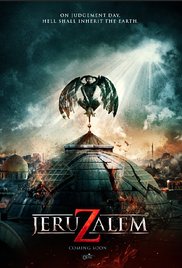
Movie Review: JERUZALEM (2016) Israeli Zombie Film!

Deadlines to Submit your Screenplay, Novel, Story, or Poem to the festival: http://www.wildsound.ca

jeruzalem.jpgJERUZALEM (Israel 2015) ***
Directed by the Paz Brothers

Review by Gilbert Seah

Touted as the first Israeli zombie horror film, JERUZALEM (the Z in the word referring to ‘zombie’) takes many lessons from the found footage low budget horror flicks from the U.S. In fact, the main two characters are American girls travelling to the old city of Jerusalem. They were supposed to go to Tel Aviv when they get side-tracked by a cutie fellow-traveller to go visit Jerusalem, a decision that they will soon regret.

Sarah Pullman (Danielle Jadelyn) and her best friend, Rachel (Yael Grobglas) are partying it up. They dance, meet boys, drink, do drugs (not the hard ones) and have sex. So when they meet cutie, Kevin (Yon Turmarkin), they are easily convinced to go to Jerusalem. They meet a tour guide, an Arab, Omar (Tom Graziani).

The politics of the film are present but the conflict between the Palestinians and Jews are kept at a minimum. Soldiers are always present but their main enemy switches from the Palestinians to the zombies.

The film begins, seriously enough with a quote from the Book of Jeremiah, Chapter 19 in the Old Testament. The audience is informed from the text that there are 3 gateways to hell – the ocean, the desert and the third, Jerusalem. A woman is resurrected from the dead only to sprout winds, then shot. The first two thirds of the film are free and easy flowing with the zombies and real horror only occurring during the last third.

The first two third sees the two girls touring the city, smoking hashish an having a great time. The two are quite funny and everything is seen from the point of view of an app on Sarah’s cell phone. When they enter an underground cave, the words fatal error, or no connection flashes on the screen, as on a cell phone. This tactic is carried out throughout the film, and is quite funny, despite it being repeatedly used. As such, the Paz Brothers (Yoav and Doron), who also penned the script appear very tech-savvy with the film obviously aimed at the younger crowd who will go everywhere with their iphone, iPad or laptop.

Everyone seems to be having a hilarious time – the directors, crew and actors and this rubs off on the audience.

When the zombies attack, the film wanes a bit, as the film falls back to familiar horror film territory, which audiences are already too familiar with. But the Paz Brothers keep it funny. Rachel gets infected by the zombie virus and is slowly turning into one. When Sarah sees the wound, she tells Rachel, so as not to alarm her: “It is nothing, it is just a scratch!” That is probably the film’s funniest line, used again later on. Another character utters too as they scramble to escape through the underground caves: “Don’t know what’s happening out there, but I hope the good guys are winning!” And Sarah says: “It’s all a fucking video game!”

The film also offers the audience a good touristy look at Jerusalem, for what is – the old buildings, the market bazaars and the temples.

Despite a few flaws, the Paz Brothers keep their film stylish, hilarious and scary while being smart and entertaining at the same time.

Also, Free logline submissions. The Writing Festival network averages over 95,000 unique visitors a day.
Great way to get your story out: http://www.wildsound.ca/logline.html

Deadlines to Submit your Screenplay, Novel, Story, or Poem to the festival:http://www.wildsound.ca

Watch recent Writing Festival Videos. At least 15 winning videos a month:http://www.wildsoundfestival.com

Interview with Festival Director Asher Segelken (Teen Faith Film Festival)

Christian filmmakers from high schools across California come together through the celebration of filmmaking in a place of collaboration and exposure!

Go to the website for more information: http://teenfaithfilmfest.weebly.com/

I sat down with the Festival Director to talk about the festival.

Matthew Toffolo: What is your festival succeeding at doing for filmmakers?

Asher Segelken: The Teen Faith Film Festival is succeeding on three major fronts, the first is exposing stories of faith exploration through film. Our first year hosted very powerful narratives, documentaries and Art-House films that conveyed something deeply spiritual.

Secondly we are succeeding in the networking, for a second year event we have been able to network with Biola University, and other Christian Filmmaking Professionals to bring an event that is very active for networking and internships.

Thirdly we are succeeding in the quality of submissions attracting the best of faith based High School films from across the country.

Matthew: What would you expect to experience if you attend the festival?

Asher: If I was at a festival I would expect to see people represented from a lot of places and perspectives I would expect to be blown away by the efforts of the student committee who put on and market the festival as well as expect to know the essential details of each film before I left the Nechita Center.

Matthew:  What are the qualifications for the selected films?

Asher: All films must be under ten minutes and made by a teenager.  That’s it. We assess the spirituality of different submissions looking for profound insights coupled with good filmmaking and then we send the films on to professionals judges that then score the films.

Matthew: Do you think that some films really don’t get a fair shake from film festivals? And if so, why?

Asher: I think festivals want what would sell in that they want the publicity of being the festival where a deal was made because that is what festivals are after. I also think festivals want to see innovation in film and so if either extreme is not met a spiritual margin somehow disqualifies you. At teen faith we look for the best filmmaking and the best story. The only way a film is subjectively disqualified at teen faith after qualifying by being 10  minutes and made by a teen is if that film ignores spirituality which is frankly a difficult thing to ignore in while telling a story.

Matthew:  What motivates you and your team to do this festival?

Asher: What motivates my team and I to do this festival is the idea of celebrating what our peers are doing through an art form we love to express faith of all kinds and to further story in a unique way as students.

Matthew:  How has the festival changed since its inception?

Asher: The Festival was originally supposed to be a closed festival to selected schools but then became a much more open and international event.

Matthew:  Where do you see the festival by 2020?

Asher: By 2020 I see the Teen Faith Film Festival being the place to see up and coming christian filmmakers celebrated and then going on to continue to innovate Christian filmmaking changing it for the better by going away from cheesier films that we are used to cringing at when they are in the box office to making films that create legitimate hype regardless of a person’s religious standings.

Matthew:  What film have you seen the most times in your life?

Asher: For me I can’t stop watching Birdman or the Dark Knight those films are so well done and speak so much to the complexities of societial and individual humanity.

Matthew:  In one sentence, what makes a great film?

Asher: A Great film is made when realism is balanced with reasonable suspense forcing the viewer to be present, while also being provocative in a way that changes ones perspective when they leave the theater.

Matthew:  How is the film scene in your city?

Asher: Orange County is better known for the amazing contract/freelance filmmakers in the area who make a good profit for providing film services. The Art-form itself is very beloved being in the greater Los Angeles area.

asher_segelken

Interviewer Matthew Toffolo is currently the CEO of the WILDsound FEEDBACK Film & Writing Festival. The festival that showcases 10-20 screenplay and story readings performed by professional actors every month. And the FEEDBACK Monthly Festival held in downtown Toronto on the last Thursday of every single month. Go to www.wildsound.ca for more information and to submit your work to the festival.

Movie Review: KUNG FU PANDA 3 (2016)

Deadlines to Submit your Screenplay, Novel, Story, or Poem to the festival: http://www.wildsound.ca

kung_fu_panda_3KUNG FU PANDA 3 (USA/China 2016) ***
Directed by Jennifer Yuh Nelson and Alessandro Carloni

Starring: Jack Black, Bryan Cranston, Dustin Hoffman, Angelina Jolie, J.K. Simmons, Seth Rogen, Lucy Liu

Review by Gilbert Seah

The third of the KUNG FU PANDA animated features provides more of the same. However, being family fun entertainment, critics should not be too hard on the filmmakers. As long as KUNG FU PANDA delivers a safe product, everyone especially a less discerning audience should not complain.

The first one in the series that is a Chinese co-production, Fox obviously has an eye for the large Chinese market. There is a Chinese version with Chinese dubbed voices. The previous two films grossed more than $600 million each and this $120 million production should beat those records. To be super safe, the script by Jonathan Aibel and Glenn Berger have added many more pandas into the film – in the form of a secret panda sanctuary.

Po finally gets to meet his real biological father in this film. The segment of their meeting, as shown in a promotional clip before is the funniest of the film. Of course, his adoptive father, Mr. Ping (James Hong) the goose who wants to open his own dumpling stall is incredibly jealous. Po is brought to a Panda sanitary where he trains panda students in martial-arts. Po also meets Mei Mei, an overly eager panda, who had been promised to Po through an arranged marriage when they were children. But the main plot involves an evil ancient supernatural spirit called Kai begins terrorizing China and stealing the powers of defeated kung fu masters. Now in the face of incredible odds, Po must learn to train the village of clumsy, fun-loving pandas to become a band of Kung Fu Pandas.

Added to the film are new characters like Po’s (Jack Black) biological father, Li Shan (Bryan Cranston) and Mei Mei (a brilliant Kate Hudson), a female panda who has the hots for Po. Hudson does a marvellous job resulting in the audience wanting to see more of Mei Mei. The villain of the piece is Kai (Oscar winning J.J. Simmons) who adds a some humour to his role. His voice is easily recognized from the low tones. The usually Po gang is still present. So, for those KUNG FU PANDA fans, Viper (Lucy Liu), Mantis (Seth Rogen), Monkey (Jackie Chan), Crane (David Cross) and even Shifu (Dustin Hoffman) are back.

The climatic fight between Po and Kai is ok but nothing too exciting nor out of the ordinary. But the antics of Po is enough to entertain despite the relatively weak plot.

The Chinese influence in this entry is clearly evident. There is more oriental folklore, more oriental colours and more oriental architectural drawings. This entry is also the most colourful of the three with the animation at its peak. The ‘Kung Fu Fighting’ song is also given a Chinese slant. Hans Zimmer hits with the overall musical score.

KUNG FU PANDA 3 should be a big hit. At the end of the promo screening, kids can be seen in front of the screen imitating the martial-arts moves of their hero, Po.


Also, Free logline submissions. The Writing Festival network averages over 95,000 unique visitors a day.
Great way to get your story out: http://www.wildsound.ca/logline.html

Deadlines to Submit your Screenplay, Novel, Story, or Poem to the festival:http://www.wildsound.ca

Watch recent Writing Festival Videos. At least 15 winning videos a month:http://www.wildsoundfestival.com

Movie Review: THE FINEST HOURS (2016)

Deadlines to Submit your Screenplay, Novel, Story, or Poem to the festival: http://www.wildsound.ca

the_finest_hoursTHE FINEST HOURS (USA 2016) **
Directed by Craig Gillespie

Starring: Chris Pine, Holliday Grainger, Casey Affleck

Review by Gilbert Seah

Following hot on the heels (or rather on the keel) of Ron Howard’s recently released sea adventure, the critically and box-office flop IN THE HEART OF THE SEA, THE FINEST HOURS follows a crew of men fighting the elements, which is just as intense though without a Moby Dick-type monster. The plus of the two films is the authentic claustrophobic atmosphere in the vessel when the men are sailing, something that will surely discourage those intending to take a cruise some time soon.
The title ‘based on a true story’ immediately flashes on the screen at the film’s start and the film is clear to remind its audience of this fact throughout the film.

The film is a Hollywood account of the daring 1950s rescue mission by the American Coast Guard. An oil tanker, the Pendleton is split in half by a perfect storm. The surviving sailors are left adrift with no means of communication exempt to blast the horn. A member of the nearby community hears the call and a coast guard boat led by the hero, Bernie Webber (Chris Pine) with his crew then risk their lives to find and rescue the sailors. On the tanker’s side, the hero is the chief engineer, Ray Sybert (Casey Affleck).

Director Gillespie spends too much screen time at the start with the romance between Webber and Miriam (Holliday Grainger). All this is to emphasize the heroism and sacrifice of both the men and the women by their side. Gillespie directed LARS AND THE REAL GIRL and therefore uses his past experience in putting in relationships into this film. As in most Disney films, the money making formula is kept to a ’t’.
Romance, action, a happy ending with good heroic dialogue like: “We are all going home.” The problem resulting is a too predictable film.

There is one segment in which all power is lost in the town as a result of the storm and the rescue boat, without a compass needs to find land. I could predict all the cars turning on the headlamps to signal the boat way before that scene occurred.

Once the storm occurs, Gillespie crosscuts between the action in the oil tanker and the action in the Coast Guard boat. It is a 50-50 division. What occurs inn the tanker turns out the more interesting, aided by the fact that the script emphasizes problems between Ray and a disagreeable mate (Michael Raymond McTavish) who has his own ideas on survival. The introduction of a singing cook (Abraham Benrubi) lifts the spirit of an otherwise too serious film.

But one can only endure special effects (not bad ones though) for only so long.

Disney’s THE FINEST HOURS ends up one of the most boring tales of an incredible true mission despite all the enormous effort put in. THE FINEST HOURS is a tad better than IN THE HEART OF THE SEA but that is not saying much.


Also, Free logline submissions. The Writing Festival network averages over 95,000 unique visitors a day.
Great way to get your story out: http://www.wildsound.ca/logline.html

Deadlines to Submit your Screenplay, Novel, Story, or Poem to the festival:http://www.wildsound.ca

Watch recent Writing Festival Videos. At least 15 winning videos a month:http://www.wildsoundfestival.com

Movie Review: UNDER CAPRICORN, 1949. Directed by Alfred Hitchcock

Deadlines to Submit your Screenplay, Novel, Story, or Poem to the festival: http://www.wildsound.ca

UNDER CAPRICORN, 1949
Movie Review
Directed by Alfred Hitchcock
Starring: Ingrid Bergman, Joseph Cotten
Review by Steve Painter

SYNOPSIS:

In 1831, Irishman Charles Adare travels to Australia to start a new life with the help of his cousin who has just been appointed governor…

REVIEW:

Alfred Hitchcock is known as “The Master of Suspense.” It is rare to see a movie made by him without much suspense in it then. Typically the movies that he made without suspense did not do well with critics or at the box office. It was something that Hitchcock had to live with his whole career. He wanted to do more than suspense movies, but he knew audiences would reject them. He learned this tough lesson after making Under Capricorn (1949).

The movie is set in colonial Australia. That might be all you need to know about what type of movie this will be. It is a costume drama. It is similar in some respects to Rebecca (1940). Rebecca of course won the Academy Award for Best Picture. Under Capricorn did not. Based on this alone, there must be a big difference in the quality of each picture.

Under Capricorn doesn’t suffer because of its cast though. Ingrid Bergman and Joseph Cotton star. It would be the last time each appeared in a Hitchcock movie. Bergman and Hitchcock got into a dispute over her character. This dispute led Hitchcock to never call her again when he was casting a movie. Cotton would appear in a few Alfred Hitchcock Presents episodes in the 1950s, but didn’t get another shot in a full length Hitchcock movie.

Michael Wilding plays Charles Adare, the nephew of the governor of Australia. He is visiting the English colony. At this point in time Australia was being used to hold convicts. One of the convicts, who has done well for himself since coming to Australia, is Cotton’s character, Sam Flusky. Flusky has become a respected businessman in the colony and is married to Bergman’s Lady Henrietta, a wealthy woman.

Flusky has been banished to Australia because he has murdered Lady Henrietta’s brother. At this point in time the caste system was in effect, so Flusky and Charles, members of the upper-class, would attend the same parties and host dinners for each other.

Since Charles has arrived in Australia he has heard about Lady Henrietta. He is disappointed when at Flusky’s dinner party she is unable to come down to eat because she is sick. Midway through the meal Lady Henrietta makes an appearance, in probably one of the best entrances in all of Hitchcock. She is an alcoholic and ends up embarrassing herself and her husband at the dinner. This doesn’t stop Charles though, as he has become smitten by her.

Housekeeper, Millie, is not smitten with Lady Henrietta. She acts like she is taking care of her, but she is slowly killing her. First mentally, by blaming all of the household’s problems on her because she is unable to be the lady of the house. Then she begins killing her physically, by giving her poison.

This does not stop Charles from taking an interest in Henrietta’s affairs. He believes that he is capable of reforming her. He seems to be making some progress. The two begin to fall in love. This doesn’t sit well with Flusky. Spurred on by Millie, who is in love with Flusky, he takes a gun and shoots Charles.

Charles doesn’t die, but enough sympathy is stirred in Henrietta that she leaves Flusky for Charles. Things seem like they will end happily for Charles and Millie, as they will both get what they want. Then Henrietta reveals that it was she, not Flusky, who murdered her brother and Flusky took responsibility for the act.

This act by Flusky stirs something in Henrietta and she wants to go back to him. Charles is reluctant to let her go, but he finally does. As a parting gift, Charles tells Flusky that Millie has been poisoning his wife. Flusky takes care of Millie. Henrietta and Flusky finally are able to live a normal life.

Under Capricorn is not a good movie if you expect to see an Alfred Hitchcock-type story. But if you enjoy historical costume pictures, this might be for you. There is enough here to keep you entertained, just ignore the directed by credit.


Also, Free logline submissions. The Writing Festival network averages over 95,000 unique visitors a day.
Great way to get your story out: http://www.wildsound.ca/logline.html

Deadlines to Submit your Screenplay, Novel, Story, or Poem to the festival:http://www.wildsound.ca

Watch recent Writing Festival Videos. At least 15 winning videos a month:http://www.wildsoundfestival.com

Interview with Festival Director Charles McNeil (Cape Fear Independent Film Festival)

The Cape Fear Independent Film Network is dedicated to promoting independent film and preserving the Cape Fear region’s rich film history.

Go to the film site for more information: http://www.cfifn.org/

I recently sat down with festival director Charles McNeil to learn more about the festival.

Matthew Toffolo: What is the CFI: Film Festival succeeding at doing for filmmakers?

Charles McNeil: We consider the Cape Fear Independent Film Festival a Filmmaker’s festival. For Filmmakers that attend we ensure that They first off have a good time, but we also like to focus on the networking aspect of a film festival, we encourage all of the filmmakers in attendance to meet the other filmmakers. For those who can’t attend we offer the notoriety of being in the festival, we are a very competitive festival.

Matthew: What would you expect to experience when you attend the festival?

Charles: We are a welcoming festival, those who attend, whether a filmmaker or someone who is just out for some entertainment, should expect to be approached by a member of the festival and engage them in conversation. We also encourage our filmmakers to engage with our audience and our audience to engage with our filmmakers.

Matthew: What are the qualifications for the selected films?

Charles: What is most likely to get a film into our festival is its entertainment and engagement value. Our screeners are looking to be compelled to watch the film they are reviewing, and we want our audiences to be compelled also. Short, feature, documentary, doesn’t matter, tell us a good story that draws our attention.

Matthew: Why would a filmmaker be motivated to submit to your festival?

Charles: The Cape Fear Independent Film Festival offers two monetary prizes, $250 for best short and $500 for best feature, however this isn’t the only reason to submit to our festival. Wilmington NC has always been a film hub, since Frank Capra Jr. brought Firestarter to film here over 30 years ago.

Matthew: What motivates you and your team to do this festival?

Charles: We do the film festival because we are filmmakers. We have attended festivals as filmmakers and audience members and love the sense of community you can get from some of the really great ones, and that’s what we are doing here. Creating a sense of community for our filmmakers and audience members, it’s great to see the same filmmakers submit again, not only because it’s great to have them visit if they make it into the festival, but it’s great to see the evolution of their craft.

Matthew: How has the festival changed since its inception?

Charles: At it’s heart it’s the same, but when we started we did a lot more screenings in local bars, they embraced us and made it easy for us to put films in front of an audience. We have grown over the years and now we use larger venues. But we are still there to make sure the filmmakers have a good time and network.

Matthew: Where do you see the festival by 2020?

Charles: This year we are showing films over 3 days. I would like to expand that in the next few years, our aim is to be a 5 day festival by 2020. More films, more filmmakers, more awesome. But we won’t change the fact that we are a filmmakers festival and want to not only show them a good time, but offer the chance at networking and honing their craft.

Matthew: What film have you seen the most in your life?

Charles: The film I have probably seen more times than any other, and it is my favorite film, is Chitty Chitty Bang Bang with Dick Van Dyke. People don’t realize it’s essentially James Bond for kids with singing and dancing. Written by Ian Fleming, produced by Albert R. Broccoli, with Desmond Llewelyn ( the original Q) and Gert Fröbe (Goldfinger) as the bad guy. It’s gotten under my skin and I watch it at least a couple of times a year.

Matthew: In one sentence, what makes a great film?

Charles: What makes a great film is it’s ability to hold your attention, horrified, laughing, crying, edge of your seat, the emotion doesn’t matter.

Matthew: How is the film scene in your city?

Charles: With the reduction of the film incentive a lot of productions have gone elsewhere, but we are bringing it back, when NC went from a Tax Credit to a Film Grant it was originally $10 million, but now that has been increased to $30 million. Productions are coming back to North Carolina and to Wilmington in particular. Having a professional base of crew makes for a great independent film scene.

Interview with Festival Director Michael Wearing (The Rob Knox Film Festival)

The Rob Knox Film Festival is held annually in Bexley, London. in memory of the actor who played Marcus Belby in Harry Potter and the Half Blood Prince.

Go to the Film Freeway submission page to submit your film: https://filmfreeway.com/festival/RobKnoxFilmFestival

I sat down with the Festival Director to learn more about this unique festival.

rob_knoxMatthew Toffolo: What is the Rob Knox Film Festival succeeding at doing for filmmakers?

Michael Wearing: The Rob Knox Film Festival has been extremely successful at identifying talented individuals at an early stage in their career and given them recognition, and a renewed motivation to move on to better things. Perhaps the best example of this is Stephen Fingleton who won his first ever award at the festival. (Best director for the his film Driver). This year he was nominated for a BAFTA award for outstanding debut feature by a British writer, Director or Producer. Another good example is Gareth Fient who won his first award at the festival aged just 15, and now aged 21 is getting regular work as a director and editor from producers in New York, LA and London.

Matthew: What would you expect to experience if you attend the festival?

Michael: The festival exhibits films from around the world, but is proud to ensure that locally made films are screened as well. There’s a real sense of community. Alongside the main awards night we lay on 8days of film related activity, this will include screenings at community venues and workshops. The festival ends with an awards evening and a free networking event.

Matthew: What are the qualifications for the selected films?

Michael: We are very keen to experience films of all genres and lengths. The festival is named after and held in memory of Rob Knox who played Marcus Belby in Harry Potter and The Half-Blood Prince and was murdered a week after filming his scenes aged just 18. His parents are active in the organisation of the festival, so we are mindful of their sensitivities and wishes.

Matthew: What makes a great independent film?

Michael: It’s a difficult question, I’m often surprised by the decision of the judges…. But from my point of view a great independent film will tell a story in no more time than is required to tell the story. We will allow slight imperfections in the visuals but the sound should be of a high quality.

Matthew: What motivates you and your team to do this festival?

Michael: My principle motivation is to honour the memory of Rob, and I think that is so with the whole team. A side effect of the festival is the increased networking opportunities it has provided to me and the others involved. I’m also keen to raise the positive profile of young people and so we get them involved in all aspects of the festival…

Matthew: How has the festival changed since its inception?

Michael: The main change is that from being a totally free festival. we have introduced a charge to filmmakers for most categories. This was done to reduce the quantity of entries we receive. The festival is run by volunteers and we were aware that the amount of entries we were receiving would eventually overwhelm the judges. Another change was accepting entries via film freeway instead of requiring DVDs…

Matthew: Where do you see the festival by 2020?

Michael: It would be good to get some increased sponsorship, and more volunteers, so that we can increase the offer.. The general format We see as remaining as it is, but we are always open to suggestions on ways to improve.

Matthew: What film have you seen the most in your life?

Michael: I’ve seen many films more than once, a few I would put as having seen 100s of time but there is one film that I have seen thousands of times. And that is Tootsie starring Dustin Hofmann. An incredible piece of writing, I just love the way there are so many sub stories weaved together impeccably.

Matthew: What country (or countries) seem to make the bests short films year after year?

Michael: We get great films from all over the world. I don’t think country comes into it. Our audience is predominately British, but we have had films from Russia, USA, Greece, France, Belguim, Spain, Ireland and Brazil all win awards. We are happy to show films with subtitles..

Matthew: How is the film scene in your city?

Michael: The Rob Knox Film Festival takes place in Bexleyheath in South East London, and part of the reason we started it was because there was nothing going on in this particular area… However across London there is always film related activity going on.

_____

Interviewer Matthew Toffolo is currently the CEO of the WILDsound FEEDBACK Film & Writing Festival. The festival that showcases 10-20 screenplay and story readings performed by professional actors every month. And the FEEDBACK Monthly Fesival held in downtown Toronto on the last Thursday of every single month. Go to www.wildsound.ca for more information and to submit your work to the festival.

Movie Review: I Confess (1953) Directed by Alfred Hitchcock

Deadlines to Submit your Screenplay, Novel, Story, or Poem to the festival: http://www.wildsound.ca

I CONFESS MOVIE POSTER
I CONFESS, 1953
Classic Movie Review

Directed by Alfred Hitchcock
Starring Montgomery Cliff, Anne Baxter, Karl Malden
Review by Steve Painter

SYNOPSIS:

Refusing to give into police investigators’ questions of suspicion, due to the seal of confession, a priest becomes the prime suspect in a murder.

REVIEW:

Alfred Hitchcock was notorious for loathing actors. He once famously remarked that actors should be “treated like cattle.” His least favorite kind of actors were those who used “The Method” technique pioneered by Stanislavski and taught by Lee Strasberg at The Actors’ Studio. Despite his dislike for method actors, one of Hitchcock’s best films starred one of the greatest Method technicians. The movie was I Confess (1953), and its star was Montgomery Clift.

I Confess is not one of Hitchcock’s well known movies. This is hard to believe considering that the cast includes Clift, Anne Baxter and Karl Malden. The story is also top notch. Its premise involves the binding nature of the confession on Catholic priests.

The story begins as the church’s groundskeeper, Otto, happens to get in an argument one night with a man, Villette, who he gardens for on the weekends. Otto wants Villette’s money, but the he won’t give it to him, so Otto kills Villette.

The only witnesses to the murder are two young girls who say that they saw a man wearing a cassock walking from the scene. A small note about the cassock needs to be inserted here. Not only does the cassock play a large role in the movie’s story, but it played an even bigger role in the movie’s filming. Quebec was the only city Hitchcock could find where priests still wore cassocks. So, the cast and crew shot most of the movie on location in Quebec.

Feeling remorse, Otto heads to the confessional. There Father Logan, played by Clift, hears Otto confess to the murder of the rich lawyer Villette. Of course, being a priest who is bound to keep confessions a secret, Father Logan can not go to the police.

The suspense becomes enhanced when it is learned that Father Logan has become the prime suspect in the murder. Hitchcock has created his trademark “innocent man accused” situation. He then ratchets up the suspense like only he can.

We learn that before becoming a priest, Father Logan had been a war hero who had fallen for Anne Baxter’s character, Ruth. The two were lovers before World War II, but Logan never wrote her during the war. When he returns he finds Ruth. The two spend the day together and get caught in a rainstorm, while on an island. They spend the night in a gazebo. In the morning, a man appears and he asks Logan why he spent the night with a married woman.

From here on the man, who happens to be Villette, begins to blackmail Ruth. When Father Logan comes to view the body the day after hearing Otto’s confession, he spots Ruth who tells him that she was being blackmailed by Villette.

Karl Malden’s Inspector Larrue sees the two talking and begins to investigate their relationship. He figures out that Ruth still loves Logan and that she was being blackmailed by Villette. Putting two and two together he accuses Logan of the murder. The climax of the movie occurs in the courtroom where all the major players are. Otto sits in his seat, smugly knowing that Logan will not break his vow. Ruth knows Logan is innocent, but can’t provide any proof. Worst of all, Logan knows who the real killer is, but can’t say anything about it.

I will stop the plot summary here, as I don’t want the end of the movie to be ruined. This great story is also filmed brilliantly. The murder is pointed out to us during one of the best opening sequences Hitchcock ever did. This movie should really be on more lists of the best movies made by Alfred Hitchcock. It is a worthwhile watch for any fan of Hitchcock, Baxter or Clift.


Also, Free logline submissions. The Writing Festival network averages over 95,000 unique visitors a day.
Great way to get your story out: http://www.wildsound.ca/logline.html

Deadlines to Submit your Screenplay, Novel, Story, or Poem to the festival:http://www.wildsound.ca

Watch recent Writing Festival Videos. At least 15 winning videos a month:http://www.wildsoundfestival.com

Interview with Festival Director Roger Sampson (Focus International Film Festival)

Roger’s creative journey started late in life. He didn’t realize his passion for the theater arts until his 30th birthday.  In 2003, Roger moved from Dallas, TX to Los Angeles, CA to pursue his dream. Since then, Roger has enjoyed acting, screenwriting, and directing success through the years.
Roger started the Focus International Film Festival in the fall of 2015.  His mission was to celebrate and honor the best in independent cinema through a festival which lets the working professional community judge the material presented.

Interview with Roger Sampson: 

Matthew Toffolo: What is the Focus International Film Festival succeeding at doing for filmmakers?

Roger Sampson: The Focus International Film Festival provides film makers a platform to showcase their skills and talents using the opinions of the working professionals that film makers hope to work with and impress as the baseline to providing them a level of credibility many festivals lack. Its more meaningful to the films and the film makers.

Matthew: What would you expect to experience when you attend the festival?

Roger: The festival is actually online only at this time. We hope to grow into a live festival with screenings, but we’re just starting out with this format and need time for it to grow legs before we venture into a live event.

Matthew: What are the qualifications for the selected films?

Roger: The grading system used to select the films looks at three primary areas of focus, which are production quality, performance and story. Many films excel in one area or another, but great films excel in 2 or more areas. We seek out the most well rounded material. Story well told with excellent production quality given in excellent performances. As film makers ourselves, we are all students of the craft and all have areas to improve on. But we seek to honor those film makers advanced in their craft enough to produce quality material but have yet to be recognized on a larger scale by the entertainment community.

Matthew: Why would a filmmaker be motivated to submit to your festival?

Roger: Since the event is online only at this time, we are able to keep our submission fees low, which is an aid to all film makers. Add in the credibility of our celebrity jury and if a film maker can spend a small amount and be able to promote their film as having been voted the best by working entertainment industry professionals, that is something as a film maker I would do without hesitation.

Matthew: What motivates you and your team to do this festival?

Roger: Our primary motivation relates to our own festival experiences. Festival choices are always subjective, and determined by the education and experience level of the decision makers. So we figured if those decisions should be made in terms of cinematic excellence at the independent level, who better to judge that than the working professionals the film makers are striving to be and work with.

Matthew: How has the festival changed since its inception?

Roger: We’ve actually had only 1 event so far, in the winter of 2015. The jury voting period expires January 31. The Spring 2016 event is the first with the celebrity jury panel. In the summer we’re planning expansion efforts to include longer trailers, longer shorts and feature films in addition to other changes.

Matthew: Where do you see the festival by 2020?

Roger: Its hard to tell at the moment if this format will find a sustainable market, but we’re confident that the celebrity jury format will take hold and by 2020 we will host a live event once or twice a year and with any luck feature appearances by the jury itself. For this article though, lets call that a wish list.

Matthew: What film have you seen the most times in your life?

Roger: The film I’ve seen the most times would have to be The Lord of the Rings Trilogy.

Matthew: In one sentence, what makes a great film?

Roger: A great film is an amazing story well told with excellent production quality and committed performances which provides the audience a meaningful emotional experience.

Matthew: How is the film scene in your city?

Roger: The film scene in Dallas and North Texas as a whole is vibrant and active. Film makers are hungry for quality story telling and take steps toward mastery of the craft every day.

_____

Interviewer Matthew Toffolo is currently the CEO of the WILDsound FEEDBACK Film & Writing Festival. The festival that showcases 10-20 screenplay and story readings performed by professional actors every month. And the FEEDBACK Monthly Fesival held in downtown Toronto on the last Thursday of every single month. Go to www.wildsound.ca for more information and to submit your work to the festival.