1957 Movie Review: 3:10 TO YUMA, 1957


Submit your Screenplay to the Festival TODAY

3:10 TO YUMA, 1957
Movie Review
Directed by Delmer Daves
Starring: Glenn Ford, Van Heflin
Review by Alan Barkley

SYNOPSIS:

Against all odds, a man must deliver a captured outlaw to the afternoon prison train.

REVIEW:

In 1974 Toronto took the bold step of enhancing its system of electric streetcars at a time when they had been virtually abandoned in North America as city transportation. A new design was in order and industrial designer Claude Gidman was the handed the task and the question: should a new streetcar be a sleek urban bullet of contemporary design or something less dramatic. Gidman chose to extend the visual legacy of the streetcar rather than upend it and, while the new design incorporated relevant ergonomic and environmental upgrades from the 1930s version, riders experienced the newer streetcars like compatible cousins of the vintage cars that shared the same downtown tracks. 3:10 to Yuma which began as a short story in 1953 and has seen two film adaptations made in 1957 and 2007 exists in much this way: spanning five decades, these three iterations of the story shift along on the same rails, each version advancing the narrative while remaining deferential to its predecessor.

Elmore Leonard’s short story was published in 1953, the year after the successful release of High Noon in which tension builds towards the arrival of a fateful train carrying outlaws sworn to kill Gary Cooper’s marshal. Echoing High Noon’s ticking clock, Leonard’s lawman guards a prisoner in a hotel awaiting the arrival of the 3:10 train that will take the outlaw to a prison in Yuma Arizona. Standing in the way of the lawman’s duty is the outlaw’s vicious gang surrounding the hotel and the handcuffed outlaw himself who uses all his wiles to undermine the deputy’s resolve.

Screenwriter Halsted Welles kept Leonard’s hotel conflict as the centerpiece of the 1957 film adaptation and backed it up with an invented story of a rancher (Van Heflin) living on hard times who accepts Wells Fargo’s two hundred dollars to take outlaw Ben Wade (Glen Ford) to the prison train. In turn, writers Michael Brandt and Derek Hass (2 Fast 2 Furious) kept Halsted’s backstory for their 2007 adaptation but upped the ante for Christian Bale’s rancher, giving him the additional burdens of a sickly son and an amputated foot, his legacy from the Civil War.

If all this seems like excessive motivation it’s certainly true that audiences didn’t always want such explicit crosses for their heroes to carry. The short story’s deputy marshal doesn’t need special reasons to do his job and both films depart from the original’s understated hero who performs his duty bravely and competently because those qualities are simply part of who he is. Leonard’s story cares less about the hero’s character arc and more about the hero’s character.

These days, however, the John Wayne cowboy is a hard sell. We prefer our heroes to have a plight that intersects with the plot and we want those personal challenges to be detailed and specific. We’ve become suspicious of virtues like courage and resolve that appear shopworn when they’re presented without context. So if Halsted and Hass and Brandt gilded the rancher’s hardship lily, their strategy moves us closer to the action, creating serious doubt about an outcome that might otherwise have felt like a forgone conclusion.

Writer Welles fleshed out the personality of Elmore Leonard’s Ben Wade and created an amalgam of ironic charm, ruthlessness, and womanizing that Hass and Brandt retained including the pivotal scene where Ben Wade seduces the lady bartender while hunting posses and fleeing gang members whirl around him. Ben Wade energizes both movies the way Robert Louis Stephenson’s rogue pirate Long John Silver lit up Treasure Island, his villainy at once repellent and attractive, confounding the viewer’s judgment while pulling one deeper into the story. Glen Ford brought Ben Wade to life in 1957 and Russell Crowe added cockiness and unpredictability to the part in 2007.

Haas and Brandt correctly saw the 1957 version as a two-act play and added a rollicking middle section full of fights, horseback chases, and deadly confrontations that we tend to think western movies are all about. And director Robert Mangold makes the most of it, transforming the earlier black and white film into a vivid and active wild west setting for the solid drama.

Remakes don’t succeed when wrong choices are made about what to keep and what to discard. The 3:10 to Yuma films work because they never try to eclipse the original. It’s interesting to see Halstead Welles’ name listed in the screenwriting credits for the 2007 film, along with Brandt and Haas. Although he had died by the time the new version had begun Welles, like Elmore Leonard before him, had already made his contribution.


Submit your Screenplay to the Festival TODAY

310 TO YUMA

1957 Movie Review: 12 ANGRY MEN, 1957

Submit your Screenplay to the Festival TODAY

12 ANGRY MEN MOVIE POSTER
12 ANGRY MEN, 1957
Movie Reviews

Directed by Sidney Lumet
Starring: Henry Fonda, Lee J. Cobb, Ed Begley, Martin Balsam, John Fieldler, E.G. Marshall, Jack Klugman, Ed Binns, Jack Warden, Joseph Sweeney, George Voskovec, Robert Webber
Review by Christopher Almeida

SYNOPSIS:

A dissenting juror in a murder trial slowly manages to convince the others that the case is not as obviously clear as it seemed in court.

OSCAR nominee for Best Director, Best Picture, Best Screenplay

REVIEW:

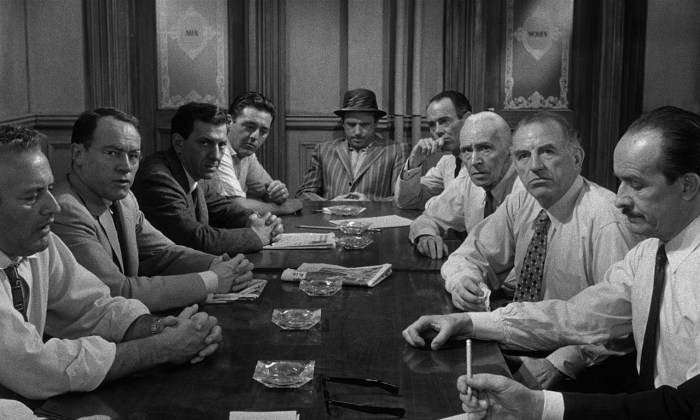
‘All rise…the court is in session…’ Well, actually, it isn’t. The real drama in this Court Room happens in the Jury room. 12 Jurors have to come to an anonymous vote. While everyone votes guilty, our male protagonist, Juror 11, isn’t quite so sure. This case has to be treated delicately – after all, the defendant has the death penalty for murder.

The hero comes in the form of Henry Fonda. The star has appeared in 106 films. The most famous are 12 Angry Men, The Grapes of Wrath and On Golden Pond.

The director comes in the form of Sidney Lumet, who has made the transfer from television to film. However, don’t let that discourage you- judging by this film, he has done it successfully. Lumet churns the issues around the room using character and innuendos and as a result raises the stakes at a steady pace. For further evidence- it won him the Golden Bear award at the Berlin International Film Festival. The film also won three Oscar nominations.

Lumet’s transfer from one Medium to another may explain the number of close-ups. This isn’t bad thing at all – it does create a nice intense, powerful atmosphere. The close-up shots come in handy when searching for empathy. Lumet gives close-ups to every other character except for the hero at the start of the film. It is almost to the effect that we are examining the evidence and, indeed, the other jurors. This creates the most empathy because we don’t know how it’s going to end and neither does Henry Fonda.

Most heroes, in films, are sure of their objective half an hour into a film, this hero is unsure throughout.

At this point you must be thinking what is Henry Fonda’s character name? This is first thing that separates it from other films. We don’t learn any of the character’s names. The film concentrates on hero and his journey. Not a single line is wasted; all the characters are sculpted using actors from the highest caliber. Another distinction is the cinematography. Which mainstream film uses more close-ups than long shots? Yeah, I heard you- except for The Blair Witch Project! The film together with Rose’s screenplay is a masterpiece.

Reginald Rose’s screenplay is very well crafted. Themes of stereotyping, second chances and ageism are perfect ingredients for the story’s substance. A nice cool beer on a hot day and sitting in your deck chair is the only description I have for the story’s substance without using a clinched word such as refreshing. The themes are well placed- two words- pitch perfect!

The only flaws here is that it relies on stereotypical characters to create predictable sub-issues; Sub-issues such as young, naïve boy and angry man. However, Lee.J. Cobbs does such a powerhouse performance that the flaw blows right over your head.

Target audience? It is for anyone who wants to think afterwards ‘Hmm…Now that was worth seeing!’ But seriously though, the ideal target audience is for 20- to however mature you may be.

Twelve Angry Men requires concentrated viewing but that doesn’t mean it’s boring. The dips into and out of story using light humour gives it a nice balance.


Submit your Screenplay to the Festival TODAY
12 ANGRY MEN

Film Review: LOTS OF KIDS, A MONKEY AND A CASTLE (Spain 2017)

Submit your Screenplay to the Festival TODAY

Lots of Kids, a Monkey and a Castle Poster
Spanish actor Gustavo Salmerón steps behind the camera to capture the winsome eccentricities of his extraordinary mother Julita, who had three dreams: having lots of kids, owning a monkey, and living in a castle.


With a castle as a tim set and the film set in Spain, this doc called LOTS OF KIDS, A MONKEY AND A CASTLE plays like a fairy tale.

The film begins with the director’s mother, 80-year old Julita, talking to the camera expressing her three wishes.  Her three wishes form the title of the movie – children, a monkey and a castle.  She says she has 6 children and a monkey but getting a castle was the difficult part.  The film goes on.

The monkey part did not go so well. Julita purchased an aggressive monkey that ended up biting her and attacking another woman when it broke its chain.  They finally had to let it go.  The doc has pictures of the monkey but no live footage.

No one would imagine Julita’s middle-class family coming into money, enabling them to make the harebrained purchase of a castle.  All was captured on film as 15 years earlier, her son Gustavo began filming his eccentric family.  Even though since then they lost their property and castle to the economic crisis, the family members have not been deprived of the disarming spontaneity or the kindheartedness that mark their domestic squabbles.

So what is this documentary about?  It is a home movie of sorts but about the director’s mother.  Before one can dismiss the film as nonsensical personal crap, the film exhibits lots of charm which is the reason this documentary got a standing ovation from the audience during the screening at the Toronto International Film Festival.

The character of the Julita grows on the audience.   Oddly she shares a lot of common traits as my own mother – bless her! when she was still living.  She was a hoarder, she was a controller with very one serving her whims and fancies, she spoke loudly, she was fond of eating and she was loved by all her friends.  The first part of the doc has her son, the director and husband search for two vertebrae of her great grandmother.  He believes keeping the vertebrae is bad karma.  Of course, the hidden item is finally found, and hidden in the weirdest way. The granny is shown to be quite the hoarder,  As they go through hundreds of boxes everything from old teeth, to hat decorations to two urns of the mother’s parents ashes turn up.  It is an amusing revelation of the woman’s life history, while remaining amusing at that.  One inserted musical segment with her playing classical on the piano while her family members move around the house and garden is particularly  riveting, reminiscent of the song of CAMELOT sung by Richard Burton played with Jackie Kennedy going about the house in the film JACKIE.

The film contains sensitive material as well.  Julita speaks candidly of her husband not touching her any more once she became fat.  But old photographs reveals her quite the beauty when she was young.

The film is a glorified home movie – but at least it is an excellent one at that!

Trailer: https://www.youtube.com/watch?v=fXk5pf-JsHI


Submit your Screenplay to the Festival TODAY
Film Review: BAD GRANDMAS (Canada 2016)

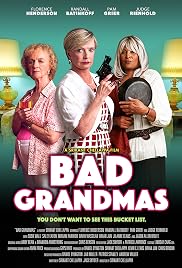
Bad Grandmas Poster
Four grandmothers accidentally kill a con man. When his partner shows up, things go south quickly.

Director:

Srikant Chellappa

Stars:

Pam GrierJudge ReinholdFlorence Henderson

It has barely been two weeks since two films about old ladies hits the screen.  There was THE BEST OF THEIR LIVES and now BAD GRANDMAS, a Canadian feature where one granny accidentally kills her friend’s bad son-in-law resulting in all other cronies trying to hide the body and cover up the deed.

The film’s first scene shows an American flag out front of a building of an insurance company in this IndieCan production.  Obviously, the film is set in the States (Southern U.S.A. to be more accurate) to expand the film’s marketing base.  All the grandmas in the film thus speak with a southern drawl.

The film contains typical scenes of the elderly ladies doing jumping jacks and smoking up, trying to look cool, things that have been done in films on old farts before.

Four grandmothers spend their twilight years in peace playing card games and baking cakes.  Their world is turned upside down when one of ladies (Bobbi played by Susie Wall) son-in-law Jim (David Wassilak) cons the lady.  In the process of trying to fix the problem, Mimi (chief protagonist, ringleader and brains played by Florence Henderson) accidentally kills him. Things go from bad to worse but the ladies are smarter than they seem.  The premise does not sound original and this plot of accidental killing has been done more than once in other films, for example in the best film dealing with accidentally killing, Robert Carlisle’s THE LEGEND OF BARNEY THOMSON, where a barber’s accidental killing leads to another to another.  BUT BAD GRANDMAS is hardly funny, despite many opportunities for comedy.  The film is a clear textbook example where timing is essential in comedy.

The addition of the character of the investigating Detective Randall Mclemore (Randall Batinkoff) is puzzling.  His character is a smug rather good-looking man who charms the daughters of the grandmothers.  He does not add much humour either but not for want of trying.

There is also one bug flaw in the script.  If the ladies have in their possession  the CCTV video of the villain kidnapping Bobbi, why don’t thy just go to the police in the first place?

The film is performed by a cast of mostly little heard actors except for veterans Pam Grier and Judge Reinhold,who do nothing to lift this piece out of the doldrums.

The film contains countless attempts at humour but none too successfully.   The only laugh out loud joke for me is the one when one of the grandmas remarks after seeing a dead body: “This makes me more nervous than a long tail cat in a room full of rocking chairs.”  But this is not because the joke itself is funny but because it has ben ions when I used to repeat that line.  The film improves during the second half, story-wise.

BAD GRANDMAS attempts to cash in on the successful comedy BAD MOMS by adding the murder angle.  Better skip this one and wait for BAD MOMS AT CHRISTMAS or BIG DADDY 2 where the 2 grandpas (played by Mel Gibson and John Lithgow) are added to the story.

Trailer: http://indiecanent.com/movies/bad-grandmas/

Interview with Festival Directors Nick John Whittle & Stuart Wheeldon (9LadiesFilmFestival)


9LadiesFilmFestival is a distinguished independent film festival showcasing short films from around the world to an audience of film fans and movie-makers.

Contact

What is your Film Festival succeeding at doing for filmmakers?

9LadiesFilmFestival brings cinematic exposure for independent filmmakers. That’s what filmmaking is essentially about: getting audiences to see your creation. And with exposure comes possibilities. It isn’t just about letting the common man see your film. There are scores of studios out there watching indie films. If they see something that ticks boxes they’ll grab it. Famous case in point: Paranormal Activity.

There are also the laurel stamps for the winners. Films showing laurel stamps in their credits are proven to be the ones most watched. True, it’s not necessarily the mark of an all-round incredible film but it shows it has been scrutinized by professionals and that one element of it (or several) passes muster. It also proves that the filmmakers have a belief in their product and have put in the man hours (and money) to get it through the festival process.

What would you expect to experience if you attend the festival this year (2017)?

Our finalists this year will enjoy a specific location for their live screening, from historical houses to modern cinemas. We’ve worked hard to secure theatres that in some way add a cultural essence to the screenings. This isn’t just town-hall-and-sandwiches stuff; it’s a festival with a difference. Always has been.

9LadiesFilmFestival promotes the work of inventive, original, free-thinking and independent filmmakers; to raise their profile throughout the web and connect them with established industry professionals around the world. One of the ways we do this is by creating and taking care of your online presence; creating a web page for your winning film and promoting it like hellfire across social media platforms.

What are the qualifications for the selected films?

9LadiesFilmFestival accepts short films and documentaries and we take submissions from filmmakers all around the world. We stipulated that the language of the piece has to be in English (or at least subtitled) but we’ve left things very free and easy deliberately. The films are required to be either 9 mins or less or 10-29 minutes long. The whole theme of this year’s festival is “nine” in honour of our parent company’s title.

 Do you think that some films really don’t get a fair shake from film festivals? And if so, why?

We believe every film gets a fair shake. Film festivals are an essential part of the growth of an indie moviemaker. If the festival is managed correctly and in a just and reasonable way everyone has equal chance of becoming a winner. Festivals open gateways to the Bigger Picture, to distribution possibilities…a festival like ours represents equal opportunity for everyone – from beginner to expert.

What motivates you and your team to do this festival?

A passion for making great movies and helping others through the process.

How has your FilmFreeway submission process been?

We have found the FilmFreeway submission process very good, we are already up on the number of entries for the current time of year. With recent tweeks to the way the FilmFreeway program works it is easier to manage the film festival process. And it seems that more and more filmmakers are now using the FilmFreeway Submission process.

Where do you see the festival by 2020?

We’d like to think the festival will have grown to the point where we can award substantial funding and great distribution opportunities to the winners.  There are a huge number of inspiring and culturally stand-out filmmakers out there and we look forward to viewing their work.

 What film have you seen the most times in your life?

Nick: Casino Royale (the good one!)

Stuart. The Red Shoes

In one sentence, what makes a great film?

Basically, a great story. A movie is like a book in some ways with scene cuts instead of page turns…if you’re bored by the plot of a book you won’t turn a page. On the other hand, if you love it, you can’t stop turning pages. A movie is also story – whether you pour millions of dollars into a project or not, if the story doesn’t hit the spot it won’t be successful. Add superb characters to your story and plenty of subtext and you have a winner.

There is a technical consideration as well, something we like to look at in the festival. Sound, direction, visuals, lighting, props are all taken into consideration as technical achievements of a movie. After all, they are important aspects of the art.

 How is the film scene in your city?

We are fortunate that in the Midlands the film scene is thriving, there are a number of very good Independent Cinemas that show films that otherwise wouldn’t get a release, the indie film making scene is also very good, with the likes of cities such as Nottingham, Sheffield and Birmingham all  have a thriving Indie scene.

9LadiesFilmFestival1.jpg

Nick John Whittle – Producer. Nick is an award winning writer and producer based in Birmingham. His work includes the award winning film Faith, The Adventures of Joshua (TV mini-series), No Way Back (short/horror) Nick’s cinematic influences include Beckett, Hitchcock, Buñuel, Mamet, Allen, Jarmusch, and Bergman. http://www.imdb.com/name/nm7825353/. nick is the co- director of the 9ladiesfilmfestival.

Stuart Wheeldon. Writer/Director Stuart is an award winning writer and director and founder of Nine Ladies Film. Stuart’s work as included theatrical plays, radio and film shown and featured around the world. His work includes In Limbo, The Telephone, The Collector (Pre-Production)and The Wasteland.  Stuart was also the founder of 9ladiesfilmfestival which in it’s first year attracted over 200 entries from around the world. http://www.imdb.com/name/nm7240661

 *****

Interviewer Matthew Toffolo is currently the CEO of the WILDsound FEEDBACK Film & Writing Festival. The festival that showcases 20-50 screenplay and story readings performed by professional actors every month. And the FEEDBACK Monthly Festival held in downtown Toronto, and Los Angeles at least 2 times a month. Go to www.wildsound.ca for more information and to submit your work to the festival.

SUBMIT your TV PILOT Screenplay or TV SPEC Script
Voted #1 TV Contest in North America.
Screenplay CONTESTSUBMIT your Short Screenplay or FEATURE Script
FULL FEEDBACK on all entries. Get your script performed

Interview with Festival Director Vanna Nauk (Fresno’s State Asian Pacific Film Festival)

The Asian Pacific Islander Programs and Services will be hosting the 1ST EVER Asian Pacific Islander Film Fest at Fresno State! They will be hosting this event along with CineCulture! It’s a two day event beginning on Friday, October 20, 2017 to Saturday, October 21, 2107.

Contact


What is your Film Festival succeeding at doing for filmmakers?

We are providing them a space to display their work in Fresno, which is the fifth largest city in California, so we were definitely due for an Asian Pacific Islander Film Festival of our own.

What would you expect to experience if you attend the festival this year (2017)?

I hope that I see a sense of solidarity amongst the Asian Pacific Islander groups here in the Central Valley, and I hope that this can be an opportunity for others outside of our group to see that Asian Pacific Islanders are actually very talented in film. Overall, I hope to feel a sense of pride amongst my peers.

What are the qualifications for the selected films?

Sense it is an Asian Pacific Islander Film Festival, the films have to have some sort of Asian Pacific Islander element in there or involved in the making.

Do you think that some films really don’t get a fair shake from film festivals? And if so, why?

I do, I think that some ethnic groups are overlooked, which is why we are trying to promote Southeast Asian films as much as possible because their visibility tend to go silent.

What motivates you and your team to do this festival?

You do not see very many Asians on screen, so we decided to create a space for ourselves.

How has your FilmFreeway submission process been?

FilmFreeway has been extremely helpful and the submissions are pouring in quite rapidly.

Where do you see the festival by 2020?

I hope that the festival becomes an annual event that will connect the university with the community. I see a lot of potential in our greater Asian Pacific Islander community here in the Central Valley, and I hope that this Festival will grow into something that they can take pride.

What film have you seen the most times in your life?

Hercules [laugh out loud]
In one sentence, what makes a great film?

The theme/plot!

How is the film scene in your city?

The film scene in our city is most renowned for the Reel Pride Film Festival, which is one of the largest, if not the largest, LGBTQ Film Festival in the west coast. We also have Filmworks and Cineculture, which are great film organization here in Fresno. However, there are definitely room for the film scene to grow here.

 *****

Interviewer Matthew Toffolo is currently the CEO of the WILDsound FEEDBACK Film & Writing Festival. The festival that showcases 20-50 screenplay and story readings performed by professional actors every month. And the FEEDBACK Monthly Festival held in downtown Toronto, and Los Angeles at least 2 times a month. Go to www.wildsound.ca for more information and to submit your work to the festival.

SUBMIT your TV PILOT Screenplay or TV SPEC Script
Voted #1 TV Contest in North America.
Screenplay CONTESTSUBMIT your Short Screenplay or FEATURE Script
FULL FEEDBACK on all entries. Get your script performed

Interview with Festival Director Alessandro Cassa (FICMAN/INSFF)

What is FICMAN/INSFF in a few words ? 12 months. 12 finalists. 1 great winner! Filmmakers, get noticed! FICMAN / INSFF is an international film festival and LIVE screening for Short film. Be part of this one of a kind festival for shorts lovers, and give your film and your talent a chance to be shown and noticed by the right people from all over the world.  FICMAN / INSFF is produced by Productions du 3 juin, a company from Québec (Canada) recognized internationally. Since 2007,Productions du 3 juin has focused on production (videos, short films and promotional documentaries) for various renowned clients. This creative company is recognized internationally and followed by people from 47 countries on its WEBTV (P3J.TV) and VIMÉO PRODUCTIONS DU 3 JUIN channel. To celebrate its 15 years in 2017, it has founded the FICMAN International Short Film Festival, in which it excels, and WEBTV by P3J.TV which offers an immersion in emotion, its production line.

Contact

What is your Film Festival succeeding at doing for filmmakers? 

All filmmakers work hard to realise and produce their Short… and FICMAN/INSFF wants to give author’s film a chance to be seen and to be discovered all around the world. This is why FICMAN/INSFF is a monthly international competition that offers the opportunity to be selected for a live screening in Québec (Canada) at the end of the year: a great night of short to present and choose the best of the best. But all year round it is also a moment to be discovered by an international jury from the industry, and most of all, to have its trailer (for monthly winners) relayed on P3J.TV, a cultural WebTV followed by people from 47 countries. And because we all need recognitions in this industry, our Festival will give official Laurels, review on a professional cinema blog (LE PETIT SEPTIÈME) and much more to winners. Prizes of more than $ 15,000 in visibility and recognition will be awarded.

We create this one of a kind festival for short films lovers, to give to filmmakers a chance to be shown and noticed by the right people from all over the world. So, each month, for a year, a winner will be chosen in a monthly competition from the submissions received during the past month, what means we will have more than 12 Films Finalists. The trailer of this Finalist Short Winner will be shown on P3J.TV with a bio of the Director, the poster of the Film and a description of the Short. FICMAN/INSFF offers international visibility, recognitions, and a chance to be discovered!

What are the qualifications for the selected films? 

FICMAN/INSFF is really a simple and friendly user Short Film Festival for author’s film. Shorts submitted must have a trailer that will be shown on the international cultural WebTV called P3J.TV. Short must have been made for 5 years or less, and our festival is also open to first films and student films. Of course, the film will not be shown online, but on the yearly live screening. The following categories of fiction films are eligible: author’s film, narrative film, silent film, art film, animated film, experimental film, student film, first work, documentary fiction, video clip, web series. Short films must be under 15 minutes and all Submissions must be subtitled in English (for non-French speaking films). Silent films are also accepted. All the details are on our website (www.ficman-insff.com) and FILMREEWAY.

What motivates you and your team to do this festival? 

The FICMAN/INSFF team simply loved Short film! Our motivation is simple, we want to help promote inspiring, honest short films that focus on the director’s vision and reflect their personality. Whether the films are poetic, intimate, touching, funny or political, we want to put the spotlight on high-quality works that reflect the personality of the director who wrote and created them from a single idea, a vision of the story they wanted to tell, the universe they wanted to share. As a festival and platform for discovery, FICMAN-INSFF, also wants to help highlight short films in the current cinematographic landscape that were written and directed by the same person. Works that present their own universe. And we simply want to celebrate the many independent shorts from all over.

In one sentence, what makes a great film? 

We believe that all great film begins with a great idea, a flash of genius, and the desire to bring a personal universe to life.

How has your FilmFreeway submission process been? 

From the beginning of the process, and from the beginning of the adventure, the FilmFreeway Team has been there to help us with all the steps for creating our Festival page’s. And we must say that the submission processes each month, of our monthly competition, is easy and friendly user. For us, to manage, and for the Jury. All this offers an great opening and a great opportunity to connect with Filmmakers from all the world, and must of all, with FilmFreeway, we are able to do it the right way.

Where do you see the festival by 2020? 

Our vision is to be, in 2020, one the recognized international Festival, dedicated to narratives Shorts. And we wish that through the years, we will give a chance to Filmmakers to get noticed… to encourage them to continue and to create more shorts. As a Director myself, I know that first of all, we have to believe in us, and to believe in the potential of our film. Our festival is there, simply for that: to help creators to believed in their ideas, by getting visibility and recognitions with FICMAN. And we wish for FICMAN, to be recognized that way in 2020. We have three years do to so!

What film have you seen the most times in your life? 

I must confess to be honest, that one of the first movie I saw, and the one I am always trilled to see again and again, is Signing in the rain with Gene Kelly. For a lot of reasons (quality of actors, music, script, dance numbers of course…) but for one reason in particular. It was the first time I saw, behind the scene. And that day I knew for sure, what I was going to do in my life: filmmaking !

SHORT BIO OF THE DIRECTOR

Vice-President of Productions du 3 juin and Festival Director, Alessandro Cassa is a versatile creator whose works have been selected at various festivals in recent years, recognizing his creativity and sensitive approach. He is an author, chronicler and director and passionate about image and creation.  In 2006 and 2007 he represented Quebec at the Cannes Festival Short Film Corner, with two short films. He was decorated in 2013 with the Queen Elizabeth II Diamond Jubilee Medal for all his achievements in culture, literature and film. His most recent short film that was inspired by his youth series has been screened in 10 countries around the world where he has won several awards: ACARUS DUMDELL OU LA THÉORIE DE LA FICTION is in official selections at 21 international festivals: India, Great Britain, United States, France, Belgium, Italy, Romania and Spain. He hopes that the FICMAN/INSFF will offer the opportunity to highlight and showcase various auteur cinema productions throughout the world.

BANDE ANNONCE ANGLAIS : https://www.youtube.com/watch?v=nh3epbkPo08

SITE FILMFREEWAY : https://filmfreeway.com/festival/FICMAN-INSFF

SITE FICMAN : www.ficman-insff.com

ficman1.jpg

*****

Interviewer Matthew Toffolo is currently the CEO of the WILDsound FEEDBACK Film & Writing Festival. The festival that showcases 20-50 screenplay and story readings performed by professional actors every month. And the FEEDBACK Monthly Festival held in downtown Toronto, and Los Angeles at least 2 times a month. Go to www.wildsound.ca for more information and to submit your work to the festival.

SUBMIT your TV PILOT Screenplay or TV SPEC Script
Voted #1 TV Contest in North America.
Screenplay CONTESTSUBMIT your Short Screenplay or FEATURE Script
FULL FEEDBACK on all entries. Get your script performed

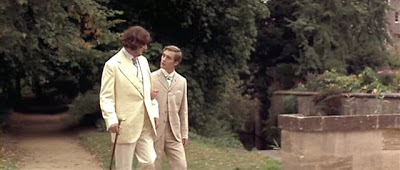
1997 Movie Review: WILDE, 1997 – Starring: Stephen Fry, Jude Law

Submit your Screenplay to the Festival TODAY

WILDEWILDE, 1997
Movie Reviews

Directed by Brian Gilbert

Cast: Stephen Fry, Jude Law, Vanessa Redgrave, Michael Sheen, Tom Wilkinson, Gemma Jones, Jennifer Ehle, Judy Parfit
Review by Stefan Leverton

SYNOPSIS:

The story of Oscar Wilde, genius, poet, playwright and the First Modern Man. The self-realisation of his homosexuality caused Wilde enormous torment as he juggled marriage, fatherhood and responsibility with his obsessive love for Lord Alfred Douglas, nicknamed Bosie. After legal action instigated by Bosie’s father, the mad Marquess of Queensberry, Wilde refused to flee the country and was sentenced to two years at hard labour by the courts of an intolerant Victorian society.

CLICK HERE and watch TV SHOWS FOR FREE!

Take a look at what’s new today!

REVIEW:

Wilde is the biopic telling the infamous story of Oscar Wilde, one of Ireland’s and the Victorian era’s greatest playwright and poet. Above that he represented the rise in the appreciation for all things aesthetic, fashion and style as well as being one of the wittiest historical figures that I can think of. His life wasn’t all plaudits though, and he courted controversy to the full.

The film begins with Wilde returning from America, marrying Constance Wilde and having two boys, Cyril and Vyvyan. Then it begins, not wanting to over-state anything, his rise and fall. Taking the theatre world by storm, Wilde’s plays illuminate the west end and he becomes the toast of the town. With an invigorated zeal for socialising, Wilde acquaints himself with all the lavishness his success affords him.

This ignites a spark within Wilde, especially after becoming familiar with Robbie Ross. After their meeting Wilde’s ‘outs’ himself amongst the homosexual community, and in doing so becomes the person he may’ve always known he was. Then the shift moves from his work to his personal life. An intense affair rises between Wilde and Lord Alfred Douglas, nicknamed Bosie. Bosie is drawn to the artful and wise Wilde, while Wilde is drawn to the youthful pretty Bosie.

Their relationship has its ups and downs, mainly due to Bosie’s impetuousness, but ultimately has its dramatic anchor in the film as in Wilde’s life by being the scandal that brought shame upon Wilde’s family and indeed his professional reputation. Bosie’s father, the Mad Marquess of Queensberry, files a lawsuit against Wilde and his lewd illegal behaviour.

The ensuing court case, is widely publicised and the witch hunt that surrounds it sees the steadfast Wilde prosecuted for his actions and sentenced to four years hard labour after refusing to take exile. Then we witness Wilde’s decline, removed of his style in gaol. Even on his release when he takes refuge in Europe his healthy withers and Wilde dies resolute but very much alone in Paris, 1900.

As a fan of Wilde’s work, I feel this film does tremendous justice to the man, played with sheer perfection by Stephen Fry. Fry said of the role that it was the one he was born to play, and he is in no way over stating that fact. And the filmmakers have done a wonderful job of adding to the creation by giving Fry just the right appearance as a young-twenty-something but also as the broken-aged-man Wilde becomes during his incarceration. And special mention should go to Jude law who, aside from looking good in the role, acts as a great folly to Wilde, being that they are at different stages of their lives.

The only criticism of the film is that those who aren’t familiar with Wilde may struggle to be enraptured by the drama of the film which never really peaks. I think that to be slightly mis-guided as Wilde himself fully understood what was going on, there was no outrage from him, though he did stand resolutely and argued his case to spite all that, though sadly without success. What stands is the memory of such outrageous persecution from the justice system and society to persecute someone, when today that wouldn’t even enter the consciousness.

WILDE, 1997

Submit your Screenplay to the Festival TODAY

1997 Movie Review: WAG THE DOG, 1997 – Starring: Robert DeNiro, Dustin Hoffman

Submit your Screenplay to the Festival TODAY

WAG THE DOG MOVIE POSTER
WAG THE DOG, 1997
Movie Reviews

Directed by Barry Levinson
Starring: Dustin Hoffman; Robert De Niro; Anne Heche
Review by Tom Coatsworth

SYNOPSIS:

When the US President gets caught with his pants down, days before the election, his spin-doctors create a fictitious war to divert attention.

Nominated for 2 Oscars: Best actor in a leading role: Dustin Hoffman;

Best Screenplay: David Mamet; Hilary Henkin

REVIEW:

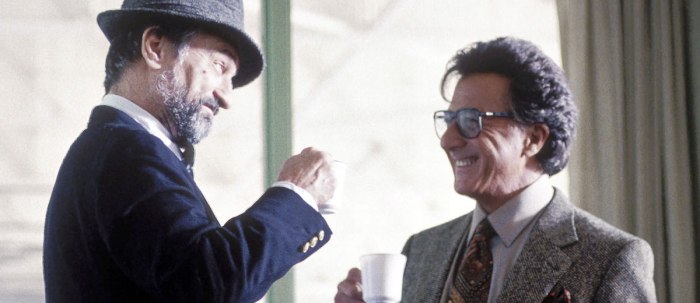
Political satire in feature filmmaking is exceptionally rare. It’s a poor-boy genre that is shunned by producers, who prefer to make money. And so it’s a thrill to see top notch talent driving a witty political script all the way to the bank. On a fifteen million dollar budget ‘Wag The Dog’ grossed sixty-four million box-office worldwide — nothing to sneer at.

The story begins with scandal: the President has been accused by a Firefly Girl of sexual fondling. It’s only days before the election. He has a commanding lead in the polls but the story spells disaster. The President is in China. One of his chief advisors, Winifred Ames (Anne Heche), brings in ‘Mr. Fixit’ – Conrad Brean (De Niro) to handle the crisis. It seems an impossible task.

But lying helps: the President is sick and cannot leave China for at least a day – this buys time. Brean and Ames fly to California where they enlist Hollywood producer, Stanley Motss (Hoffman), to produce their war. (The Motss character was based on movie producer Robert Evans. Hoffman does a pitch-perfect job emulating Evans and was nominated for an Oscar. Evans, a former actor, insisted: “I was wonderful in that part”).

Brean wants a war – not a real war, but a pageant – he wants a song, a story line; he wants patriotic fervor to rise up and quell the Firefly Girl story. He pulls Albania out of the air. “What did they ever do for us? What do we know about them? They seem sort of shifty”. (Motss chimes in: they have ‘the bomb’ – a suitcase bomb – Albanian terrorists with a suitcase bomb in Canada.) Motss calls in his go-to team – John (Willie Nelson), a Nashville songwriter; the Fad King (Denis Leary) and Liz Butsky (Andrea Martin). They brainstorm the night away and by morning they have a song and a strategy.

They create film footage of the “War”. On a Hollywood Soundstage an actress (Kirsten Dunst) is hired to play a refugee fleeing a war torn village. She runs in front of a blue screen while a burning village complete with sirens and crying villagers is supplied digitally. Five hours later it is on the evening news. The Firefly story is buried. “It’s a pageant”, says Brean.

On route to Nashville Brean and Ames are detained by the CIA. There is no war and no bomb and someone has to answer for it. Brean spins the CIA agent (William H. Macy) like a top: if there were peace — you would be out of a job. Mr. CIA appears completely bamboozled and lets them go. However no sooner are they in Nashville they get word the war is over! The CIA has informed the Presidents rival and hence the public that hostilities with Albania have ended and all is right with the world! “This is nothing!” shouts Motss, “I’m producing this war, it’s not over till I say its over – we need an act 2”. Motss and the Fad King quickly spin Act2.

A soldier with a name like shoe has been caught behind enemy lines and is being held by the terrorists — a war hero. This plays perfectly with an ‘old shoe’ song they have dreamed up. The Army searches its ranks for a soldier by that name — William Schumann (Woody Harrelson). The campaign begins anew. The cry goes up: “bring back ‘Old Shoe’”. The new song is planted in the Library of Congress – 1930. Motss and Brean throw old shoes tied together over telephone lines and in tops of trees; catchy idea. The media loves it. (I remember when the movie appeared because so did the shoes – on telephone lines all over town.) School children start letter writing – the Firefly story is buried once again – they are almost home.

And then they meet Schumann – a dangerous psychotic who’s spent fifteen years in a military prison for raping a nun. (Part of the charm of the script is that as easily as the spin-doctors churn out lies and as easily as the public buys them the professional branches of the government – the Army, the CIA — are never really taken in and never quite go along with the charade.)

Harrelson is hilarious as the psycho soldier. I was particularly impressed with De Niro who displays some serious light, comedy chops. His attempts at broad comedy — at playing course, dumb, silly people — have never worked. Here he is at home. Hoffman is clicking as the slick Hollywood mogul; and Anne Heche fills some tall high heels, poised as she is between these two legends.

The script is deliciously funny and a subject of controversy – David Mamet, one of America’s finest, brashest playwrights, wrote the working script. It was nominated for an Oscar. But the original script, based on a book by Larry Beinhart, was written by Hilary Henkin. Barry Levinson has claimed that Mamet wrote his draft without reading the book or Henkin’s draft – but the case went to court and both Mamet and Henkin are now credited with screenwriting: they should get together more often, it’s brilliant.

‘Wag’ was released a month before the Clinton intern scandal, and so it was prescient. What’s more some believe the movie served to hamstring President Clinton’s actions: critics tied the timing of a missile attack on an enemy camp with a Presidential desire to ‘change the subject’. Whether it was true or not ‘Wag’ had spun ‘spin’ out of the box and there was no going back: the public had wised up. Since the days of Aristophanes that’s as good as it gets: ‘Wag The Dog’ is political satire at its finest. Enjoy.

wag the dog

1997 Movie Review: TWIN TOWN, 1997 Dir. Ingmar Bergman

Submit your Screenplay to the Festival TODAY

TWIN TOWN,   MOVIE POSTERTWIN TOWN, 1997
Movie Reviews

Directed by Ingmar Bergman

Cast: Victor Sjöström, Bibi Andersson, Ingrid Thulin, Gunnar Björnstrand, Jullan Kindahl, Folke Sundquist
Review by DJ Haza

SYNOPSIS:

Julian and Jeremy, two brothers known as the “Lewis Twins”, prefer to spend their time on drugs and joyriding. When their father, Fatty Lewis, breaks his leg working for local bigwig Bryn Cartwright, they show up demanding compensation. Underestimating the vicious humour of the twins Bryn brusquely refuses to pay for the un-insured Fatty and unleashes a ferocious feud.


REVIEW:

Kevin Allen’s first outing as a Director is a rip-roaring story of drugs, bent coppers, thieves and family in the Welsh city of Swansea. The stories follows the Lewis Twins, played by Rhys and Llyr Ifans, as they steal cars, barter for prescription drugs and quiz each other as they smoke weed through a home made bong whilst sharing a bath. Life is anything but ordinary for these troublesome Twins. Living in two caravans with their father – Fatty (Huw Ceredig), mother – Jean (Di Botcher), sister – Adie (Rachel Scorgie) and the dog – Cantona, banter is a plenty.

Across town two of Swansea’s finest officers; Greyo (Dorien Thomas) and Terry Walsh (Dougray Scott) meet outside Swansea train station for a drug deal. As they wait they admire the Dylan Thomas quote on the pavement ‘An ugly, pretty town’. However, Terry Walsh refers to Swansea as ‘a pretty, shitty city’. Greyo is alarmed to see the amount of cocaine that Terry has ordered and thinks they are going to struggle to sell it, but Terry has big ideas. Another major player in Swansea is Bryn Cartwright (William Thomas), a local businessman who thinks he’s the big man in town.

When Fatty falls off a roof and breaks his leg whilst doing a job for Bryn the Twins think their father should have some compensation. They appeal to Bryn on their father’s behalf and are told, ‘take your sticky sticky and fuck off back to noddy land’. The Twins are not happy. Their revenge is swift and when the Cartwright’s family dog is found beheaded Bryn wants to send the Twins a message. In cahoots with Terry on the drug deal he asks him a favor – an eye for an eye, a dog for a dog. Terry’s bright idea to plant the Cartwright’s dog collar in Cantona’s dog house and then set to fire to it goes catastrophically wrong. The caravans catch fire and the Twins parents and sister are incinerated in the blaze. Now the Twins mean business.

As Bryn and Terry conspire to keep their actions quiet Greyo is seeking to find the murderer of the Lewis family. As Greyo thinks he’s close to finding the Lewis’ murderer Terry and Bryn blackmail him into stopping his investigations. They remind him his prints are all over the cocaine. However, when Greyo meets with Bryn’s wife, Bonnie, and she admits her suspicions of Bryn and that her and her daughter, Lucy, need to get away Greyo knows he has to do the right thing.

As family and friends gather outside the church to say farewell to the Lewis family the car carrying Fatty’s body goes missing. The Twins begin to hatch their final plan. Bryn is gagged and tied to the motorized garage door with a noose around his neck as the Twins steal his boat. When Greyo and Bonnie arrive at the Cartwright’s house, ‘the Ponda Rosa’, to pack her bags the garage door gets stuck. Greyo clambers into the garage to find Bryn hung.

On Swansea pier Fatty’s male voice choir start to converge. On Bryn’s boat the Twins have Terry tied to Fatty’s coffin and they push it off the boat as the male voice choir begins to sing. Terry’s body sinks with Fatty’s coffin and the Twins salute their father as they fulfill his wishes – to be buried at sea. With their vengeance fulfilled the Twins sail off into the night with dreams of Morocco and finding the source of their marijuana.

The comical Twins are fantastic characters with no redeeming features apart from their will to fulfill their father’s wish and seek vengeance for their losses. Terry and Greyo are absolutely clueless and Bryn is a small time idiot, but believes he is above the law. An array of other characters add amusement to the dark, yet comical story. Bryn’s daughter; who is sleeping with Dai the karaoke king, gets pissed on by the Twins whilst singing in a karaoke contest. Emrys; whilst walking his dog, buys a hotdog filled with magic mushrooms and marijuana off the Twins. Later he is seen cuddling a sheep in a field with his trousers around his ankles. Some hilarious Welsh dialogue including Dai’s – ‘as they say in Llandow, chow for now’ will keep you chuckling before the film takes a dark turn.

Twin Town is a fantastic little film of small time people trying to enhance their own lives in whatever ways are available to them. Every character is outrageously surreal, yet totally believable as they all try to enhance their own lives. Some deal drugs, some rob cars and others want to travel the world singing karaoke. The one thing they all have in common is that they all want more than what Swansea has offered them so far. Twin Town won’t be remembered as an art-house classic or a British blockbuster, but it will be remembered for it’s comical characters, fantastic dialogue and clever story. It may not be to everyone’s taste, but if you think ordinary life is not so ordinary and find regular people hilarious then you could do a lot worse with two hours of your time than watch Twin Town.

TWIN TOWN, 1997

Submit your Screenplay to the Festival TODAY