Full Review: I CALLED HIM MORGAN (Sweden/USA 2016) ***

Deadlines to Submit your Screenplay, Novel, Story, or Poem to the festival: http://www.wildsound.ca

i_called_him_morganDirector: Kasper Collin
Writer: Kasper Collin
Stars: Lee Morgan, Helen Morgan, Wayne Shorter

Review by Gilbert Seah

The film begins with the voice of a radio dj, describing the weather of the fateful stormy night in February of 1972, when the talented and much celebrated jazz trumpeter Lee Morgan was shot dead by his wife Helen during a gig at a club in New York City. The murder sent shockwaves through the music community, and the memory of the event still haunts those who knew the Morgans.

This documentary by Swedish filmmaker Kasper Collin (MY ANME IS ALBERT AYLER) is a love letter to two unique personalities and the music that brought them together. The film title implies that it is a twin story of two people – Lee Morgan and the woman, Helen who utters the sentence “I called him Morgan”. The film is about love, jazz (lots of memorable jazz tunes performed here) and America, with cinematography by Bradford Young and the clever editing by Dino Jonsäter, Hanna Lejonqvist, Eva Hillström and director Kasper Collin.

The dj at the start ends up a lecturer at the university that Helen takes a philosophy course with. The professor tells his class about his love for jazz. When Helen tells him that he is the wife of Morgan, the professor immediately knows her to be the wife of Lee Morgan and asks to interview her at some point. She grants the interview which enables a large portion of the film to achieve its greatest effect – a candid tale about Lee and Helen Morgan rendered by Helen herself.

The documentary traces all the events that lead up to this sad state of affairs. Helen was interviewed after her release from prison, just a month before she passed away, The film succeeds on several levels – as a jazz history on talented trumpeter Lee Morgan – his fight against drugs; the crime of the shooting as well as Helen’s redemption serving the Christian church. Others interviewed, who put a perspective to the proceedings are drummer Albert Heath, saxophonist Billy Harper, and legendary saxophonist and composer Wayne Shorter.

Director Collin does not shy away from describing the individual characters of his two subjects. He shows Helen to be a great cook, a wonderful talker who can make friend easily while Lee to be a classy dresser and big spender who enjoys the riches of his jazz talent. Helen’s background is also under scrutiny, with her poverty and being a mother at a very early age even before being her teen years. Her son is also interviewed. The background gives the audience insight of her behaviour. The jazz atmosphere is also captured on film with performances by Lee and his jazz band.

There is much to appreciate in this documentary – whether it being the love for jazz or the love of watching family drama with murder thrown in for good measure. There also are many lessons in life on display. The climax of the film is the detailed description of the murder as well as Helen’s redemption.

I CALLED HIM MORGAN is also an absorbing and fascinating documentary on life – how strange life can turn out to be – and how one can learn to control life or let bad things just happen.

Trailer: https://vimeo.com/209778666

_________

Also, Free logline submissions. The Writing Festival network averages over 95,000 unique visitors a day.
Great way to get your story out: http://www.wildsound.ca/logline.html

Deadlines to Submit your Screenplay, Novel, Story, or Poem to the festival:http://www.wildsound.ca

Watch recent Writing Festival Videos. At least 15 winning videos a month:http://www.wildsoundfestival.com

Interview with Festival Director Emi Onishi (UPTOGOOD Impact Film Festival)

Combining a traditional student film festival with a powerful online platform built for video-driven social impact campaigns, UPTOGOOD Impact Film Festival asks students to produce and share videos / short films that can catalyze positive social change by highlighting social issues and solutions in their communities—and to use our film festival to amplify that impact.

Matthew Toffolo: What is your Film Festival succeeding at doing for filmmakers?

Emi Onishi: Our film festival succeeds at helping students promote and celebrate the art of impact storytelling, producing, and campaigning for social impact. With our online platform, built in community, and incredible media sponsors we are able to amplify the winning films and help bring more attention to the causes the filmmakers are addressing in their films and campaigns. Submission deadline is 4/5/17 and festival passes are now available at UPTOGOOD Impact Film Festival

What would you expect to experience if you attend the festival this year (2017)?

UPTOGOOD Impact Film Festival is a day-long event with film screenings, panel discussions and networking events that allow students, filmmakers, activists, nonprofits and practitioners to gather at the intersection of storytelling and social impact.

What are the qualifications for the selected films?

Eligible Applicants are U.S. high school students, college and film school students with a <10-minute video detailing a social issue that matters to them, and the steps one can take to make that issue disappear, submitted via online platform, UPTOGOOD.org

Do you think that some films really don’t get a fair shake from film festivals? And if so, why?

There is a lot of competition out there. Films are easier to make these days. The equipment and resources are readily available to most people. In many ways, you have to really submit your best work to film festivals in order to heighten your chances of being accepted into one.

With our festival, we focus primarily on social impact cinema. We live in an increasingly digital world with tools to mobilize a crowd. Millennials are the most cause-centric generation yet. It’s very exciting to see so many documentaries and social impact films being submitted. We do our very best with our staff and judges to make sure each film is watched and judged properly.

What motivates you and your team to do this festival?

There is a growing need to champion GOOD in today’s challenging world. We all care about what’s going on in the world and want do something good and make it a better place. A chance for meaning. We are inspired by the work of amazing storytellers and their ability to move people. We wanted to create a festival and platform where young storytellers can raise awareness on social issues and influence people’s perspectives to encourage debate and inspire actions on social issues. We believe impact and change can happen in numbers. it’s not always one person taking monumental action. It can actually be as simple as lots of people taking a little bit of action too. That is momentum, that is how things move, that is how we make an impact and arrive at a world that is UPTOGOOD. We’re looking forward to seeing as many people as possible getting UPTOGOOD with us even outside of the festival through UPTOGOOD.org.

The film festival offers a unique and timely intersection of social impact campaigning and video storytelling, while providing attendees with the chance to hear from speakers or professional organizations that are pioneers in the field.

Statistically, millennials are not only the largest, most educated and most diverse population in the United States, but they are also the most politically active and socially aware. A 2014 study by the White House Council of Economic Advisers has found that Millennials are the largest generation in the United States. Yet another study by the PwC Council of Economic Advisers has found that Millennials are the most diverse and educated in American history. On average, they also value the opportunity for positive social impact for their children, communities and society as a whole.

In short, millennials want to save the world — one person at a time. Our film festival is a gateway for them to voice their opinions and initiate real change.

How has your FilmFreeway submission process been?

It’s been very helpful in getting our film festival the attention it needed. This is our inaugural year so we were really focused on our submission call. Having our film festival listed on FilmFreeway allowed us to receive many great films and campaigns from around the U.S.

Where do you see the festival by 2020?

We hope to be reaching more people and creating large movements that can meaningfully affect communities and the world through the festival.

What film have you seen the most times in your life?

Any and all social impact films #StoriesThatMatter. We are strong believers in the power of storytelling and its ability to move people to foster new ideas, dialogue, empathy and reflection for social impact together.

In one sentence, what makes a great film?

A great film is memorable and has a story that had to be told through the medium of film.

How is the film scene in your city?

Bustling and busy! The UPTOGOOD Impact Film Festival runs out of Los Angeles which is the movie-making capital of the world. In addition to having Hollywood in our backyard, we are closely connected to an incredibly large community of social impact storytellers and documentarians.

uptogood2.jpg

Interviewer Matthew Toffolo is currently the CEO of the WILDsound FEEDBACK Film & Writing Festival. The festival that showcases 20-50 screenplay and story readings performed by professional actors every month. And the FEEDBACK Monthly Festival held in downtown Toronto, and Los Angeles at least 2 times a month. Go to www.wildsound.ca for more information and to submit your work to the festival.

SUBMIT your TV PILOT Screenplay or TV SPEC Script
Voted #1 TV Contest in North America.
Screenplay CONTESTSUBMIT your Short Screenplay or FEATURE Script
FULL FEEDBACK on all entries. Get your script performed
Screenplay CONTESTFIRST SCENE (first 10pgs) Screenplay CONTEST
Submit the first stages of your film an

Movie Review: PERSONAL SHOPPER (France 2016) ***

Deadlines to Submit your Screenplay, Novel, Story, or Poem to the festival: http://www.wildsound.ca

personal_shopper.jpgDirector: Olivier Assayas
Writers: Olivier Assayas (dialogue), Olivier Assayas (screenplay)
Stars: Kristen Stewart, Lars Eidinger, Sigrid Bouaz

Review by Gilbert Seah

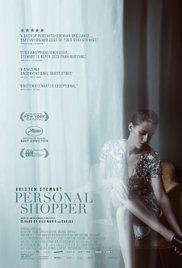
 After the modest box-office success of CLOUDS OF SILS MARIA, director Oliver Assayas (IRMA VEP, CLEAN) and actress Kristen Stewart reunite with a moody ghost story called PERSONAL SHOPPER. The title character, Maureen is as the title implies, a personal shopper for a wealthy German model and designer, Kyra (Nora Von Waltstätten). Maureen also has a ghostly encounter from her recently dead brother who she was quite close with.
The closeness is explained in two reasons – necessary to convince the audience why she is so determined to have a spiritual encounter with him. One is that he is her twin. Second is that the both suffer from the same health issue, though someone could live till a hundred with it. What happened to the brother is explained by the doctor as a rarity. But Maureen cannot indulge in any excessive physical activity.

Within the first 15 minutes of the film’s running time, the only thing established is that Stewart plays a personal shopper and that she has had one ghost encounter. The audience is obvious primed for a slow haul of a movie. Not much has happened except that Stewart has been walking around, mucking around and just looking at dresses for Kyra. The dresses are very glamorous, for those who like to look at dresses. Maureen is forbidden to wear the dresses. But she does, even masturbating in one of the sexier ones.

PERSONAL SHOPPER works off Maureen’s character with a few side incidents. Maureen rides along on a scooter, has a few ghostly encounters (though not fully explained who the apparitions are), runs errands and has an uncomfortable encounter with a stalker on her mobile phone. The film contains a loose narrative but a strong presence in Kristen Stewart’s character. Assayas is in playful mood here milking the most out of his actress.

One side incident involving a murder is done Hitchcock style. Maureen discovers a brutal murder just as in the scene in Hitchcock’s THE BIRDS when the first attack of the birds was discovered.

As a ghost story, the ghost appears as an apparition similar to old ghost films with dust stirred up with blurred figures. The seance scene also looks typical of those in early ghost stories.

In the end, one eventually asks whether this light hearted ghost story is any fun. Well it might be for director Assayas and his star, but it might be too much of a slow and long haul for others. Assayas leaves his film with an open ending that might have some audiences dissatisfied. But on the same hand, PERSONAL SHOPPER is not a film that lends to a Hollywood ending. Having one would have destroyed the entire atmosphere of the film Assayas had so carefully created.

The film is shot in English, with some French and German spoken (and an elaborate German song) with a moody setting in both Paris and London. Interesting but not great!

Trailer: https://www.youtube.com/watch?v=7hghXP4F3Qs


_________

Also, Free logline submissions. The Writing Festival network averages over 95,000 unique visitors a day.
Great way to get your story out: http://www.wildsound.ca/logline.html

Deadlines to Submit your Screenplay, Novel, Story, or Poem to the festival:http://www.wildsound.ca

Watch recent Writing Festival Videos. At least 15 winning videos a month:http://www.wildsoundfestival.com

Film Review: DONALD CRIED (USA 2015) ***

Deadlines to Submit your Screenplay, Novel, Story, or Poem to the festival: http://www.wildsound.ca

donald_cried.jpgDirector: Kris Avedisian (as Kristopher Avedisian)
Writers: Kris Avedisian (as Kristopher Avedisian), Kris Avedisian (screenplay)
Stars: Jesse Wakeman, Kris Avedisian, Louisa Krause

Review by Gilbert Seah

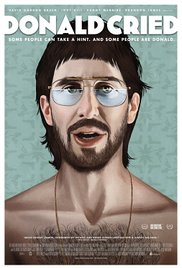
 DONALD CRIED is a weird title for a movie. The reason it is called that comes clear after half the movie has passed – and it is as weird a movie as its title. But not a bad one. DONALD CRIED is a two handler comedy about two losers. But don’t let what has been said turn you off this movie. Kris Avedisian who wrote and directed the film also stars as Donald and in DONALD CRIED has helmed a very original comedy piece that despite its simple setting, is an absorbing watch from start to end.

The first loser is Peter Latang (Jesse Wakeman). Peter had left his childhood home of Warwick, Rhode Island to reinvent himself as a slick, Wall Street mover and shaker. He is suddenly forced to return home to bury his grandmother. He hates Warwick. When the film opens, Peter arrives at the house and finds that he has lost his wallet on the train and unable to pay the cab driver. Peter is so annoying that the cab driver lets him off with the $15 fare instead of taking him to the train station to try to recover the wallet. Stranded and broke, Peter looks to the only person he can think of to help him out – his next door neighbour and former childhood friend Donald (played by Avedisian).

Then, the audience is introduced to an even greater loser – Donald.
Donald is a man-child who is more annoying than Peter. He speaks too close to ones face, is too much of a hugger and wears really bad clothes. Besides going on and on about things no one wants to hear about, Donald also unknowingly insults the one his is talking too. Imagine the question he asks Peter: “Do you masturbate still?” One scene has Donald at his place, almost naked reminiscing to Peter about old times. But the clincher scene has Peter waiting for Donald to finish playing his video game.

The rest of the film just follows the two ‘friends’ as they try to wrangle some cash that Peter desperately needs. They meet old acquaintances and do odd things like play football in the snow.

There are two segments that show the audience how f***ed-up Donald is. It is discovered that Donald had been impersonating Peter while is grandmother was sill alive. Donald pretended to be Peter so that the late grandmother would think her grandson had not left town. Another has Donald busting into the sex-making of Peter and his crush. These set-ups work well to test the relationship of the two buddies.

DONALD CRIED has begun its Toronto run at the Carlton Cinema from March 17th. The film won the American Independents Audience Award at AFI Fest and was an official selection at the 2016 SXSW Film Festival.

Trailer: https://www.youtube.com/watch?v=qc6lSzU5loo

_________

Also, Free logline submissions. The Writing Festival network averages over 95,000 unique visitors a day.
Great way to get your story out: http://www.wildsound.ca/logline.html

Deadlines to Submit your Screenplay, Novel, Story, or Poem to the festival:http://www.wildsound.ca

Watch recent Writing Festival Videos. At least 15 winning videos a month:http://www.wildsoundfestival.com

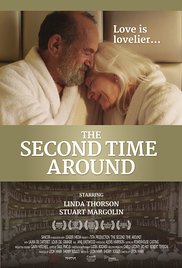
Film Review: THE SECOND TIME AROUND (Canada)

Deadlines to Submit your Screenplay, Novel, Story, or Poem to the festival: http://www.wildsound.ca

the_second_time_around.jpgDirector: Leon Marr
Writers: Leon Marr, Sherry Soules
Stars: Linda Thorson, Stuart Margolin, Laura de Carteret

Review by Gilbert Seah

 
Winner of the Audience Award for Best Feature Film at the Palm Beach Jewish Film Festival, and an audience favourite at numerous festivals such as Whistler Film Festival, U.K. International Jewish Film Festival, and Atlanta JFF, among others, THE SECOND TIME AROUND, the title tells it all, is about a second chance – a second chance at love. This is the kind of film that appears every 4 months or so, catering for the seniors, much like hits like COCOON.

Katherine Mitchell (Linda Thorson), a widowed yet vibrant senior, is not looking for love a second time – not at her age, and certainly not with grumpy Isaac Shapiro (Stuart Margolin). Her first line of dialogue in the film: “I prefer cut flowers to plants. When they die, you just throw them away.” She is entered into a convalescent home by her daughter, Helen (Laura de Carteret) after a hip injury. She is in a wheelchair. Convenient as made so by the script by Marr and Sherry Soules, both are widowed. Isaac and Katherine slowly fall in love, kissing and eventually taking their clothes off to sleep together (Don’t worry, the scene is done in good taste.)
The film moves at a slow pace suitable for the elderly that might be too slow for the video game audience. Director Marr (DANCING IN THE DARK) knows how to work his target audience. He has Mr. Shapiro sing to Katherine while dancing the song “The Second Time Around”. One cannot wish for a more romantic set-up. A few tears are also shed in the scene when the character Ben dies.

An artistically impressive seven is the one doe with shadows on he ceiling. Isaac drink and grumbles while Katherine leaves the room, shown as a shadow on the ceiling diminishing in size.

But as that title implies, the film is about a second chance in other areas as well. Katherine gets to Iive her dream of visiting the Opera House in Milan, Italy. But the film does not shy away from the realities of old age as well. As is the immobility, the intolerance of family members go caring for the elders, sickness an pain like athritis and migraines.

BAFTA Award Winner Linda Thorson (she was the first replacement of Diana Rigg’s Emma Peel in the popular TV series THE AVENGERS) delivers a sympathetic performance showing how dignified an prey her aged character can be. Stuart Margoloin (most famous for TV’s ROCKFORD FILES) also turns on his charm as her love interest. The two leads have good chemistry making the romance believable and charming. The late Don Francks (numerous TV series and the film FINIAN”S RAINBOW) who died last year has a small role as Murray.
The film has a good sweet ending with opera – Katherine’s first love. The soundtrack is full of beautiful music from famous opera pieces like Carmen and La Traviatta.

Trailer: https://www.youtube.com/watch?v=ptLJTYw4WEI

_________

Also, Free logline submissions. The Writing Festival network averages over 95,000 unique visitors a day.
Great way to get your story out: http://www.wildsound.ca/logline.html

Deadlines to Submit your Screenplay, Novel, Story, or Poem to the festival:http://www.wildsound.ca

Watch recent Writing Festival Videos. At least 15 winning videos a month:http://www.wildsoundfestival.com

Film Review: WEIRDOS (Canada 2015) ***1/2

Deadlines to Submit your Screenplay, Novel, Story, or Poem to the festival: http://www.wildsound.ca

weirdos_poster.jpgDirector: Bruce McDonald
Writers: Daniel MacIvor, Daniel MacIvor
Stars: Dylan Authors, Rhys Bevan-John, Francine Deschepper

Review by Gilbert Seah

When talking about this film last year at the Toronto International Film Festival (TIFF), director Bruce McDonald says that he does not go commercial because this way, he gets to make the kind of film he wants. WEIRDOS is an excellent example of an indie film, so uniquely McDonald and East Atlantic (the setting being the province of Nova Scotia) as well being written by East Coast Award winning playwright and film director Daniel MacIvor. MacIvor also won the Canadian Screen Awards this year for Best Film Screenplay for this film.

Bruce McDonald (HARD CORE LOGO, THE TRACEY SEGMENTS) turns down the angst a little while keeping the film just as edgy, with WEIRDOS.

The setting is the town of Antigonish in Nova Scotia on the 4th of July of 1976, the American Bicentennial. Music-loving 15-year-old Kit (Dylan Authors) spends his time either alone in his room listening to Elton John albums, or hanging out with his platonic girlfriend, Alice (Julia Sarah Stone, from WET BUM). Like Kit, Alice feels out of place, and her divorced parents have too many issues of their own to offer much comfort. The film pays tribute to (or copies from, depending on how one wants at look at it) films like Woody Allen’s PLAY IT AGAIN SAM to John Schlesinger’s MIDNIGHT COWBOY. Andy Warhol, played by Rhys Bevan-John advises Kit just as Bogart advises the Woody Allen character. Warhol appears at various points in the film, unseen by anyone except Kit giving silly advice to Kit which Kit never takes anyway. This ploy by MacIvor is remotely funny, but serves no purpose but provide a little humour. The beginning of the film feels like MIDNIGHT COWBOY together with the falsetto part of the song resembling “Everybody’s Talkin’ of me” by John Nilsson.

I did not think too much of WEIRDOS the first time I saw it at TIFF, but this is one film that grows on you. Throughout the entire film, one has the feeling McDonald thinks he is pretty cool and that his film is pretty cool stuff. The film is a little weird, pretty much like its characters and like McDonald himself. WEIRDOS is the perfect title for the movie.

Just like the Oscar winning Best Film, MOONLIGHT, WEIRDOS has an unexpected coming-out gay story. Though gay, Kit has a girlfriend and also attempts sex, though to no avail. In my opinion, the gay subtext cleverer here that in MOONLIGHT.

The young actors Authors and Stone are both superb, innocent and winning. The older actors also stand out particularly Molly Parker as Kit’s slightly crazy mother.

The film also renders a good message for teens. The story has Kit’s dad (Stephen McHattie) drive all the way to pick his son up in Sydney when things go wrong. It shows how much parents love and go all the way out for their kids, even though they don’t realize or appreciate it.

They is arguable Bruce McDonald’s best movie.

_________

Also, Free logline submissions. The Writing Festival network averages over 95,000 unique visitors a day.
Great way to get your story out: http://www.wildsound.ca/logline.html

Deadlines to Submit your Screenplay, Novel, Story, or Poem to the festival:http://www.wildsound.ca

Watch recent Writing Festival Videos. At least 15 winning videos a month:http://www.wildsoundfestival.com

THE SETTLERS (Israel/France/Canada 2016) ***

Deadlines to Submit your Screenplay, Novel, Story, or Poem to the festival: http://www.wildsound.ca

the_settlers.jpgDirector: Shimon Dotan
Writers: Oron Adar, Shimon Dotan

Review by Gilbert Seah

 The film begins with the figure shown in the image above of a Rabbi standing and overlooking the land he has settled in. THE SETTLERS are then explained to be Israelis that have settled in the occupied land of the Palestinians. Why? Because these are the lands occupied by their forefathers and the forefathers of their forefathers, down to the Biblical times of Abraham. These are religious people. They believe the land belongs to them. Director Doton shows that some of these people are religious zealots leaning towards terrorist actions. The map of the region is shown on the screen for audiences to understand better the whole picture.

In the press notes Dotan says: “I made The Settlers because, in my view, the Settlement Enterprise has the most dramatic impact on the future of Israel, and the discussion about it, is often misinformed,” Dotan says. “I set out to explore the reality in the West Bank settlements. But it soon became clear that I had to go back to the roots, to where and when the West Bank settlements began.”

A good point about the film is the fact that desire being directed by an Israeli, it offers two points of view. Dotan himself has lived in a kibbutz when young and served in the Israeli military. Being highly educated, not to be biased but to have an educated point of view, his film takes no sides. He allows a Palestinian, a Human Rights expert a lot of screen time to put the troubles into perspective.

The conflict between the Arabs and Jews, the Israelis and the Palestinians is an unending one. This documentary gives a comprehensive history lesson up to the present time. The events unfolds in chronological order. History can be interesting or boring. Students of history often complain on the irrelevance of the past. The history lesson here is clearly the exception. The assassination of ex-President Rabin is also brought into perspective.

Director Dotan is an all qualified director, as stated above, to present the lesson. Dotan was born in Romania in 1949 and moved to Israel in 1959. He himself grew up in Moshav Arugot, an agricultural cooperative. He then served five years in the Israeli military as a Navy Seal before becoming a filmmaker. He went on to get his BFA at Tel Aviv University, where his student films won Israel’s Best Short Film and Best Director Awards twice. Dotan is the recipient of numerous awards including, the Special Jury Prize for Best World Documentary Feature at Sundance Film Festival (Hot House), Silver Bear for Best Actor at Berlin Film Festival (Smile of the Lamb), Best Film Award at Newport Beach Film Festival (You Can Thank Me Later), two times winner of Israeli Academy Award for Best Film and Best Director (Repeat Dive, Smile Of The Lamb) and others. So, THE SETTLERS is a solid documentary filled with archive footage (many grainy black and white), and interviews from rabbis and the first settlers.

Dotan never judges the extremists, though one feels that his film is a bit biased against these settlers, who just enter and occupy Palestinian land. THE SETTLERS ends up more an important and essential history lesson for those that need to know, less understand the conflict that hopefully will come to a peaceful end in the future. What is clear is that there is too much hatred and racism and there is no impel solution.

Trailer: https://www.youtube.com/watch?v=gO2LRxXeBr0

_________

Also, Free logline submissions. The Writing Festival network averages over 95,000 unique visitors a day.
Great way to get your story out: http://www.wildsound.ca/logline.html

Deadlines to Submit your Screenplay, Novel, Story, or Poem to the festival:http://www.wildsound.ca

Watch recent Writing Festival Videos. At least 15 winning videos a month:http://www.wildsoundfestival.com

Film Review: THE SENSE OF AN ENDING (UK 2016) ***1/2

Deadlines to Submit your Screenplay, Novel, Story, or Poem to the festival: http://www.wildsound.ca

the_sense_of_an_ending.jpgDirector: Ritesh Batra
Writers: Julian Barnes (novel), Nick Payne (adaptation)
Stars: Jim Broadbent, Charlotte Rampling, Harriet Walter

Review by Gilbert Seah

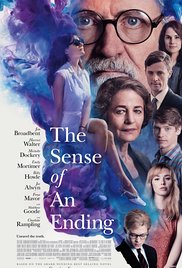
The first thing that should be known when watching the drama THE SENSE OF AN ENDING is that it is based on the 2011 Man Booker Prize winning book of the same name by British author, Julian Barnes. The influence of a writer and the importance of writing are both evident at many points in the film.

The story in the book is told in two parts, narrated by Anthony ‘Tony’ Webster at two stages of his life, the first as a school lad in the 6th form (Grade 12 or Pre-University) and secondly in his elderly retired part of his life. The script by Nick Payne (a playwright with this being his first film script) reverses the process. The film opens with Tony (Oscar Winner Jim Broadbent) in his senior years recounting the past, which is told in flashback. This story-telling better suits a film structure.

The film is the story of how a letter written in anger by Tony in his younger days had affected the girl, Veronica (Freya Mavor) he loved and his best friend, Adrian Finn (Joe Alwyn). The story here emphasizes the importance of writing even as Tony jokes with this line uttered at the start if the film: “No one writes anymore.”

The film is an excellent blend of writing in and direction. The words of the book come alive as the beautiful dialogue is spoken by the actors. Director Ritesh Batra’s (he made the highly successful Indian film THE LUNCHBOX in 2014) English directorial debut is excellent.

Batra plays the film as a mystery with lots of skeletons in the close in addition to false clues to tease the audience. The truth comes out at the very end. Nothing is what it seems. The climax occurs in the pub where a revelation is made to Tony. Batra’s Indian influence can be noticed with the over-excited, chubby Indian postman who delivers the post to Tony’s house.

Despite the seriousness of the story, there is a lot of humour in the film. The humour comes primarily from Tony’s lesbian daughter, Susie (Michelle Dockery). She is a member of the LPL (lesbians impregnating lesbians). When the film opens, she is taking her father to the lesbian baby delivery classes.

But the film, in all earnest, (funny enough) is a coming-of-age story of a senior retired man, disgruntled with his life, as seen as he mutters and grumbles about at the start of the film. After his growing up process, he is shown the kinder gentleman.

Jim Broadbent is again, excellent in his meticulously portrayed Tony without any display of over-acting. Charlotte Rampling (who is always doing roles of frustrated seniors) plays the elderly Veronica while Matthew Goode has a small role as Tony’s teacher in school.

THE SENSE OF AN ENDING is so called because, as quoted from by author Julian Barnes, in life incidents just happen. In books, a meaning to an incident is explained. In the film all events occurring to Tony’s life come with explanations. And very satisfactory ones resulting in a very satisfactory film.

Trailer: https://www.youtube.com/watch?v=pYLNTQGpNQ0
 

_________

Also, Free logline submissions. The Writing Festival network averages over 95,000 unique visitors a day.
Great way to get your story out: http://www.wildsound.ca/logline.html

Deadlines to Submit your Screenplay, Novel, Story, or Poem to the festival:http://www.wildsound.ca

Watch recent Writing Festival Videos. At least 15 winning videos a month:http://www.wildsoundfestival.com

Interview with Festival Director Ivan Wiener (Albuquerque Film & Music Experience)

 
AFME brings award-winning filmmakers, screenwriters, musicians, artists, distributors, industry experts, producers, casting directors and visionaries together from around the world to celebrate the art of storytelling and collaborate into the future.

Their Mission:
The AFME Foundation brings together world-renowned and local filmmakers and musicians with high school and college students to provide educational and cultural opportunities. We support Albuquerque becoming an epicenter for film, music and the arts.
 
http://www.abqfilmx.com/

Matthew Toffolo: What is your Film Festival succeeding at doing for filmmakers?

Ivan Wiener: Providing a platform to share their work with a vast audience including distributors, other filmmakers and industry members. Introducing filmmakers to other attendees where future collaboration, either personally or professionally, goes from a possibility to a reality.

What would you expect to experience if you attend the festival this year (2017)?

Attendees will experience an amazing blend of movies, music and the arts throughout the week where celebrity and industry professionals are just a smile and a handshake away. The cool thing about AFME is the access everyone has to one another. Attendees also experience some of the top hospitality of any film festival in the world. Our staff treats everyone like family throughout AFME.

What are the qualifications for the selected films?

Out of hundreds of films submitted to our festival, the selected films have to stand out with production value and story line and leave the audience wanting more. We take pride in screening the best films that come our way through the submission process and supporting the filmmaker’s desire to screen their project in front of an intelligent, hip and appreciative audience.

Do you think that some films really don’t get a fair shake from film festivals? And if so, why?

I think there are many festivals that are known to hand pick movies that they know will draw distributors immediately. Our screening team takes great pride in watching every movie submitted and having open discussions about the quality of movies. With 45-50 films selected for our program, we take great care in selecting movies with the top production value.

What motivates you and your team to do this festival?

We are motivated by our non-profit’s mission and vision of bringing together world renowned and local filmmakers and musicians with high school and college students to provide educational and cultural opportunities. The more success we have at the festival, the more scholarships we offer to students of film, music and the arts. We are always happy to have celebrities who believe in our mission come along for the ride each June. This year, T Bone Burnett, Jeff Bridges and many others will be in attendance.

How has your FilmFreeway submission process been?

FilmFreeway has been a wonderful submission platform. Easy to use, with tools that give great exposure to our event.

Where do you see the festival by 2020?

We see AFME expanding to more areas of the city and offering a summer institute for talented high school and college students of film, music and the arts.

What film have you seen the most times in your life?

Jaws. Every time it is on television, I can’t help but watch it.

In one sentence, what makes a great film?

A great film is a unique and engaging story that evokes emotion from beginning to end.

How is the film scene in your city?

The film scene in Albuquerque is one of the best in the world. Being one of the top production destinations due to the State incentive, there are weekly events throughout the city that focus on film. Local and international filmmakers love Albuquerque because of its unique vibe and focus on film.

alburquerque_1

Interviewer Matthew Toffolo is currently the CEO of the WILDsound FEEDBACK Film & Writing Festival. The festival that showcases 20-50 screenplay and story readings performed by professional actors every month. And the FEEDBACK Monthly Festival held in downtown Toronto, and Los Angeles at least 2 times a month. Go to www.wildsound.ca for more information and to submit your work to the festival.

SUBMIT your TV PILOT Screenplay or TV SPEC Script
Voted #1 TV Contest in North America.
Screenplay CONTESTSUBMIT your Short Screenplay or FEATURE Script
FULL FEEDBACK on all entries. Get your script performed
Screenplay CONTESTFIRST SCENE (first 10pgs) Screenplay CONTEST
Submit the first stages of your film and get full feedback!

Film Review: AFTER THE STORM (Japan 2016) ***1/2

Deadlines to Submit your Screenplay, Novel, Story, or Poem to the festival: http://www.wildsound.ca

AFTER THE STORM.jpgDirector: Hirokazu Koreeda
Writers: Hirokazu Koreeda (original story), Hirokazu Koreeda (screenplay)
Stars: Hiroshi Abe, Yôko Maki, Satomi Kobayashi

Review by Gilbert Seah

 I was totally amazed with the first Hirokazu Kore-eda film I had seen called AFTER LIFE in 2003, which I considered a minor masterpiece. The British magazine did a 5-page article on him and the film hoping the publicity would get the then undistributed film distribution. It did. Kore-eda followed AFTER LIFE with a few other films, most notable being the Cannes Palme d’Or winner in 2013 LIKE FATHER, LIKE SON – again an excellent film.

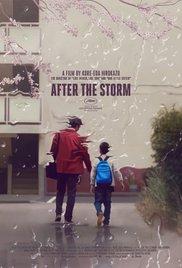
AFTER THE STORM is not Kore-da at his best but at his mildest filmmaking. Don’t expect the drama of LIKE FATHER, LIKE SON or the imagination of AFTER LIFE. Yet AFTER THE STORM is not without its pleasures. On the surface it is a simple film, a kind look at a loser. Ryota (Hiroshi Abe) is a failed writer, a third-rate detective, and a hardened gambler. As the film’s title seems to suggest, the salient moments of his life have already passed before the beginning of the story. He won an important literary award when he was young, but his promising career vanished into thin air. Now, his father has died and his wife has left him. What he makes as a private detective, he loses on gambling and can barely pay his child support. After the death of his father, his aging mother Yoshiko (Kilin Kiki) and his ex-wife Kyoko (Yoko Maki) seem to be moving on with their lives. Renewing contact with his initially distrusting family, Ryota struggles to take back control of his existence and to find a place in the life of his young son, Shingo (Taiyo Yoshizawa). Ryoto seems resigned to his position on the sidelines of the boy’s life. But Ryota works with another young man, his private-eye assistant, who fills in the position of his absent son.

The audience is left to judge Ryoto. Ryoto is a man, not without vices, but still honest man despite dishonest doings. And he is still a handsome man, besides his age, able to attract the opposite sex, as in the old classmate he meets at the beginning of the film.

Thefilm’s climax takes place one night when a typhoon strikes. The broken family is forced to spend the night together at Ryota’s mother’s home. The ensuing interaction that is both bittersweet and tender forms the film’s highlight. “I never want to grow up to be like you.”, the son says. “I will always love them. They are my family.” The father says at one point. These are the sensitivities always prevalent in Kore-eda’s films that make them memorable. Great performances here come not only from Abe but from Kirin Kiki as Ryota’s mother, who is so funny she steals every scene she is in. And as in all Kore-eda’s films, there are a lot of scenes of trains. Kore-eda has said that this film is based on his personal experience of the death of his parents.

Also interesting is the observation of the ex-couple’s arguments. Ryota argues with his ex-wife over seeing his son and child support. In this film, typical of Japanese films, there is argument with reasoning without any shouting or display of cheap theatrics that are common to European and American films.

There is a beautiful shot of a delicious braised pork brewing stew at one point in the film when Yoshiko tells her son: “A stew needs time for the flavours to sink in; so do people.” The same applies in AFTER THE STORM – patience is needed for the audience to savour the pleasures of Kore-eda’s film.

Trailer: https://www.youtube.com/watch?v=DwJcIoFuhto

_________

Also, Free logline submissions. The Writing Festival network averages over 95,000 unique visitors a day.
Great way to get your story out: http://www.wildsound.ca/logline.html

Deadlines to Submit your Screenplay, Novel, Story, or Poem to the festival:http://www.wildsound.ca

Watch recent Writing Festival Videos. At least 15 winning videos a month:http://www.wildsoundfestival.com