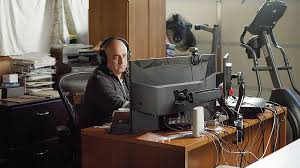
Interview with Kami Asgar, Oscar Nominated Sound Editor

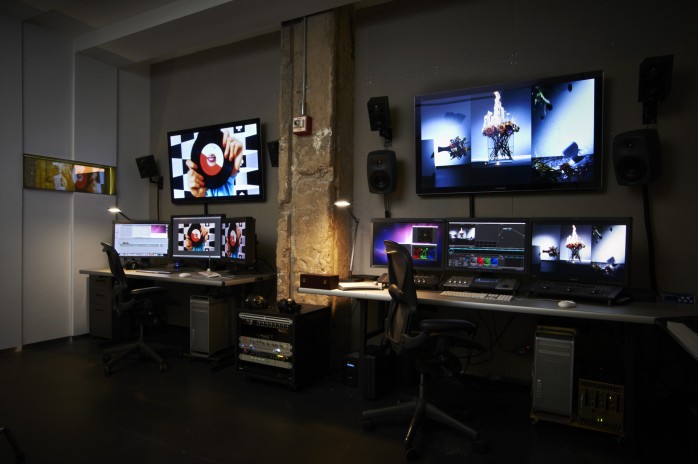
sound editor is a creative professional responsible for selecting and assembling sound recordings in preparation for the final sound mixing or mastering of a motion picture.

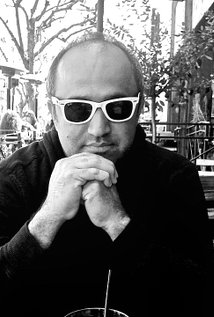
I was fortunate enough to sit down with the brilliant Sound Designer Kami Asgar. He has been the Supervising Sound Editor on over 100 films including, “Ride Along 1 and 2”, “Sisters”, “Pitch Perfect 1 and 2”, “The Muppets”, “Country Strong”, “Secretariat”, “Obsessed”, “Passion of the Christ” and “Apocalypto” which earned him an Oscar nomination.

Matthew Toffolo: In a typical studio film, how many post-production sound crew members are there? Do you usually work with the same team?

Kami Asgar: As far as the first part, that really depends on the budget the schedule and type of project. Typically you have Supervising Sound Editor/s, ADR supervisor, Dialog editor/s, Sound FX editor/s, Assistant/s, Foley artists, Foley mixer, ADR Mixer/s and Re-Recording mixers. The number shrinks or grows based on work load.

As far as the team, we have a core group in our team of editors, and we bring on freelance editors as needed.

Matthew: In the initial stages do you generally have a lengthy discussion with the director about themes, tone etc..? Are some directors more hands on than others when it comes to sound design?

Kami: Yes typically we have a spotting session with the director and picture editor to get the tone and feel for the project. We also discuss ADR and problem scenes as far as dialog and sound design.

Some directors only come for playbacks and give notes and leave, Others listen to every sound that is placed in the track and approve what works for them.

Matthew: You’ve been working in the industry for the last 25 years in over 100 productions. Is there is a film or two that you’re most proud of?

Kami: You spend so much time with every film that they are so much a part of you. There is moments in every film that challenge you, and you have to creatively find a way to overcome them. So there is moments that make you proud to have worked on. But as an entire package my personal favorite sound job is The Passion of the Christ. We spent almost nine months working on creating that world through sound.

Matthew: In recent years you have worked on many successful comedies. Is there is a distinct difference in comedy sound design in comparison to working on your other films, like The Taking of Pelham 123?

Kami: In comedies sound is so much a part of the punchline and finding the right sound to make you laugh is sometimes hard and demanding. Action movies are different there is a flow that has to happens from scene to scene, the sound design encompasses the whole sound scape, from atmospheres, foley, dialog and sound effects to how designed sound elements work with the score to keep the audience engaged.

Matthew: You seem to be the guy to go to when you need sound design for musicals, as you supervised The Muppets, Pitch Perfect (1 and 2), and Country Strong (to name a few). Is working on Musicals something you really enjoy?

Kami: Musicals are such a collaboration between the music camp and sound camp.
It’s unlike a regular movie where each camp shows up to the mix and you work out a balance. In a musical, our sounds really have to be worked out with the music in advance, they have to play seamlessly. Like with the Muppets, the sound effects and the foley have to be in time with the music and have to hit comedy beats too. All of that comes with close collaboration with songwriters, composers and music editors.

Kami: I’ve been blessed to work on a varying body of work, and all have been fun and challenging. Luckily I have been typecast in to a genre.

Matthew: What are you looking for when you first listen to the on-set sound recordings?

Kami: Clean Dialog, the rest we’ll build.

Matthew: When do you first come aboard the film? Most assume it’s after the last day of production, but I’m assuming it’s way earlier than that?

Kami: Depends on the project, Like on Pelham 123, we came on during the shoot to record subway trains in NYC, motorcycles and cars in and around Los Angeles, and supplied the picture editor and his staff with sounds effects throughout the editorial process. By the time we did our first preview screening, 95% of the sound track was already built and approved.

Most other movies we come on right before the first preview and build a temp track for the screening, and then build on that for the final mix.

Matthew: You seem to have consistently worked on 4-5 projects a year. How long do you typically work on a movie?

Kami: That depends on the movie and a lot of outside influences, typically anywhere from 10 to 20 weeks.

Matthew: How often does an actor have to come in and do ADR work (process to re-record dialogue after filming) to complete the dialogue sound mix?

Kami: On every movie. Sometimes we complete all other work and wait till an actor is available to come in and finish the movie

Matthew: Is there a type of film that you haven’t worked on yet that you would love to work on?

Kami: I’d like to do a big action super hero movie, come close a couple of times but that would complete the genre mix

Matthew: How has sound design changed from a technology and creative point of view from the year you started in 1990 to today?

Kami: I literally came in to this field because I worked on Macintosh computers doing graphic design. I was asked to show the guys in my father’s sound studio how to use the new Mac 2 computer with 1st version of sound tools (later protools) they had purchased so they could cut sound effects with.

I taught the editors how computers worked and how to utilize the programs to cut sounds with. In return the guys showed me how to work on an upright Moviola (useless knowledge now) and how to cut dialog and sound effects.

Everything used to be a lot more time consuming and cumbersome.

As an example you had to go down to the sound library and search through reels of sound fx (later CDs) armed with a notebook looking for one sound effect. You usually picked the first one you found, took it back to your room, and sampled it in to the computer and synchronized it to the picture and went to the next effect and the repeated the cycle. since you could only do very short sequences because of lack of computer memory, you laid back to tape and hand wrote (legibly) each event on a cue sheet for the mixer.

Now you audition sounds from your database of hundreds of thousands of sound effects available to you remotely and pick just the right sound, and if you want to alter the sound, you have at your disposal a dizzying amount of plug-ins to change every aspect of your sound to fit the picture. You then upload it for the mixer to open in his session. (no more carrying reels and reels to the stage)

Matthew: Besides the films you’ve worked on, what movie have you seen the most in your life?

Kami: There is three that I can safely say I’ve watched over and over “Top Gun” (best sound movie of all time) “Shawshank Redemption” (best movie of all time) and don’t laugh “Fletch”

—-
Interviewer Matthew Toffolo is currently the CEO of the WILDsound FEEDBACK Film & Writing Festival. The festival that showcases 10-20 screenplay and story readings performed by professional actors every month. And the FEEDBACK DAILY Festival held online and in downtown Toronto on the last Thursday of every single month. Go to www.wildsound.ca for more information.
Interview with Stunt Performer Alex Armbruster (Suicide Squad, X-Men: Days of Future Paste)

Alex Armbruster is one of the most sought after stunt performers working in Canada today. When Hollywood makes an action film, Alex is generally on-set working is various stunt skills and expertise. He has worked on over 60 movies and TV shows in just the last 7 years along.

It was an honor to chat with him about his career:

Matthew Toffolo: How did you get into the stunt game? Was this something you’ve always wanted to do?

Alex Armbruster: Looking back, I suppose it all started when I was 12 years old. One day I saw a Disney movie called “Brink” about competitive aggressive inline skating, and immediately after the movie, I strapped on my skates and started jumping around outside; little did I know that this sport would become my passion that got me into the world of stunts for film and television. Fast forward a few years, I had been very competitive in the inline skating world and had been part of a live action sports group called the “Craz-E-Crew Stunt Team” that took me all over the world including Saudi Arabia, India, and all around North America. One day I happened to visit a skatepark in Brantford, Ontairo where I met these two brothers who happened to be stuntmen in the business already with their father being a stunt coordinator. We hit it off and started hanging out on a regular basis where I would see how much fun they were having and how much money they were making. I remember thinking to myself “I need to get in on this!” So eventually I convinced them to give me a shot on set; which they did. It was on an MTV show called “Skins” to basically be the buffer between the stunt and background performers to make sure they didn’t get hurt from the fight scene we were doing. From the moment I stepped on set, I was hooked. I ended up doing lots of extra and background work to meet other stunt coordinators in the business; always bringing my resume and demo reel with me. I was constantly training different skill sets, getting as good at everything as I could. Eventually, they also gave me a shot and I started to make a pretty decent reputation for myself. Six years later, here I am today!

Getting into stunts was definitely not what I always dreamed of doing when I was younger. Growing up, I always wanted to be a professional rollerblader. As time went on, the sport unfortunately started declining and learned that I couldn’t really make the living i wanted from it. I also went to school for business and thought at one point that I would open up a skateshop/skatepark instead. It was around this time (2008-2009) that I had met my stunt friends and began to see my future that satisfied me the same way that rollerblading did. Stunts became my new passion and allowed me the free time I needed to continue rollerblading to my hearts content.

PHOTO: Alex does some “fire” work on set: 

Alex Armbruster -1.PNG

MT: You work a lot on Toronto based sets. How is the crew experience in Hollywood North?

AA: Yes, I work mainly in Toronto and Montreal at this point. The crews are usually quite good here in the sense that everyone is very organized, kind and for the most part, efficient. I’ve only got the two locations to compare, but I imagine they would be very similar to the crews in the states as well given that we have to cater to American and other international actors’ as well.

MT: What job has been your most valuable experience so far?

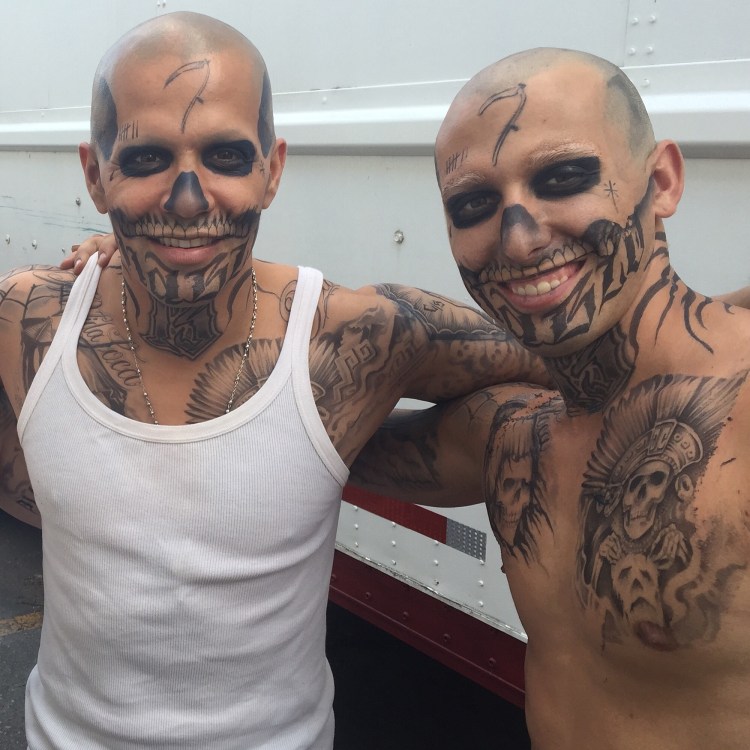
AA: My most valuable stunt job has been stunt doubling for Jay Hernandez who played “El Diablo” in Suicide Squad. It was such an amazing experience working alongside actors like Will Smith and Margot Robbie and just being apart of the DC Comics world. I knew right away when I got the job that it would be a pivotal point in my career in the sense that it would probably be one of the most unique experiences that many stuntmen wouldn’t receive. Getting all dressed up in the makeup, getting the tattoos and shaving my head every morning for this role was very cool and definitely made me feel like a super hero (or villain). Although there were only a handful of stunts for this character in the film, there were a couple of really good ones including when he gets flushed out of the water tank and when Incubus kicks him backwards 60ft over a flight of stairs into a shop window and into a wall in the last train station scene. I’ve now developed a bit of a collecting habit for any Diablo-related merchandise I can find…after all, it’s probably the closest I’ll get to having an action figure of myself!

PHOTO: With actor Jay Hernandez – Suicide Squad stunt double for Diablo Ratchet

alex-armbruster-4

MT: What are the differences between working on a big budget movie (X-Men: Days of Future Paste, xXx) in comparison to working on a television series (Dark Matter, Designated Survivor?

AA: The difference between working on a big feature film and a smaller TV show basically comes down to two things: time and money. On a big feature film like Suicide Squad, they have hundreds of millions of dollars to work with while trying to create a film that’s around 2 hours long in about 4-5 months. On a TV show, they have a few million while trying to create 1 hour episodes every week or two over the course of 3-4 months as well. As a result, the big features move a lot slower on set since they’re usually only trying to get a couple scenes shot everyday. Since the budgets are so big, everything is a little more relaxed and casual since they don’t have to get everyone off the clock so soon. On a TV show, they’ve got usually around 5-6 scenes to film in one day with set shifts in there as well so they tend to move along a bit quicker and more efficiently to get that all accomplished on time.

MT: Is there a type of stunt that you haven’t performed yet that you would love to work on?

AA: One of the things I actually haven’t done yet is to do a full body burn (to be set on fire). It’s just one of those things where the opportunity doesn’t come around too often and when it does, it often goes to someone who has done it already. Even if the opportunity doesn’t come up in film this year, I’ll definitely be getting my friends to set me on fire just so I can experience it and put it on the resume.

MT: What makes a great stunt performer? What skills does he/she need?

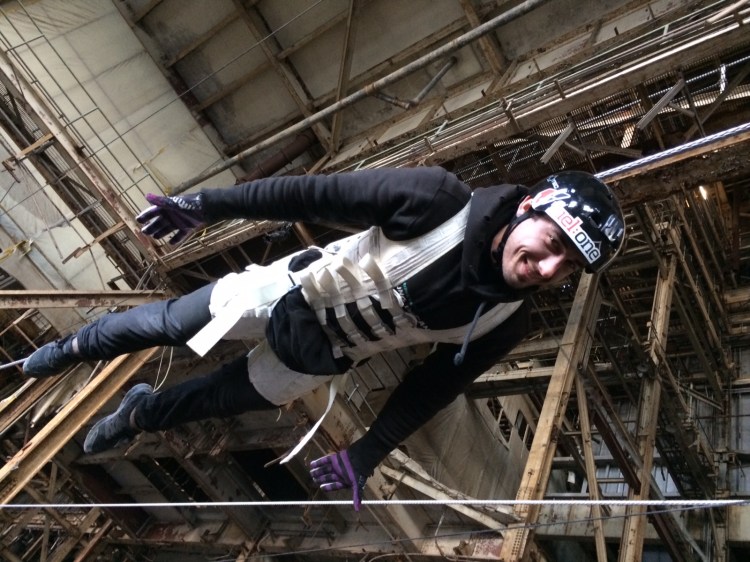
AA: A great stunt performer should first off, have a great positive attitude. The film business can be quite tough to break into and even to make a living in and it takes a very special breed of person that is willing to persevere through all of the ups and downs. They need to be okay with not knowing when they’re going to work next, where they’re going to be working, what they’re going to be performing, etc. They need to be comfortable with being uncomfortable for extended periods of time on set; for example, wearing a prosthetic costume in extremely cold weather for over 14 hours overnight gets pretty tough mentally. Another huge asset that every great stunt performer needs to have is the ability to take and follow direction; even if the stunt performer is one of the best in the world in terms of skill, if they can’t take direction and do what the director or stunt coordinator is asking of them, then they’re essentially useless to the production. In terms of skill required, it is to the performers’ maximum benefit if they are as good at as many skills as possible. Most stunt performers break into the business by having some sort of specialty skill that they excel in, but this skill alone won’t keep you working all of the time. Most of the stunts you see in films include skills such as precision driving, high falls, fight choreography, gun work, wire work, gymnastics, parkour, horsemanship, acting, etc. A great stunt performer should be relatively well-rounded in most of these areas so that they can confidently accept any type of job opportunity that comes their way.

PHOTO: Doing wire work on the TV show Minority Report: 

alex-armbruster-3

MT: What film, besides the ones you’ve worked on, have you watched the most times in your life?

AA: Good question. I’ve always been a huge fan of the Back to the Future trilogy with Michael J. Fox. Every year I usually watch these films a few times. Everything about the trilogy is so well done that it’s just one of those classics that you never really get sick of; the story telling, the music, the characters, the stunts, the one liners… it really is a “timeless” movie… pardon the pun. A career goal would be to be apart of a film as good or even better than that… which these days is pretty hard to come by.

MT: What’s the biggest high risk stunt you’ve performed to date?

AA: The biggest high-risk stunt I’ve performed to date is probably the one on Suicide Squad which i mentioned earlier where I went flying on a wire (we call it a ratchet) backwards 60ft. over a flight of stairs, through a window sill and into a wall. The reason why this one was such high-risk was because of the huge distance that I had to travel backwards and the speed that it was being done at. When the distance is that big between your take-off and your landing, there’s a lot of room for error; it’s very easy for your body position to change into one that’s not very favorable for your landing. The wardrobe I was wearing ( a tank top and jeans) also didn’t allow me to wear any pads on the upper half of my body which was a concern considering I wasn’t landing on any mats. We were planning for me to launch backwards, hit and break through the window sill and then hit the wall with my back pad, landing safe and sound. Here’s what actually happened: from the take-off, everything was going very well until I hit the window sill (which was breakaway so I could go through it easily). Once I hit the window sill, my body position changed unfavorably and my legs swung back behind me and smashed into the wall first before my back which ended up giving me a nasty spiral fracture on my left fibula (ankle). Although the rest of my un-padded body was somehow unscathed, I found myself healing for a good 6 months after that. Sometimes these things happen, and these are the types of risks we take as stunt performers but it definitely could have been a lot worse if I hit my head instead of my leg. However, I did make a full recovery and I’m 100% again.

MT: Where do you see the future of green-screen stunt performing in the motion pictures?

AA: With the steady increase in visual effects technology, there’s without a doubt going to me more green screen stunt performing in the future. Using green screens in the background for stunt performing typically isn’t a big deal since they usually use it to simply put a different background image in the scene which keeps all of the stunts real and authentic. Where we might get into trouble later on is increased CGI replacing stunt performers. For example, even now in some films instead of actually lighting a stunt double on fire, they’ll simply CGI the fire on the actor which eliminates the need for a stunt performer completely in that case. Luckily at this point, CGI only works for certain types of stunts and there’s still a need for real people performing real action. It’s also very costly to involve CGI and it still remains less expensive to pay a stunt performer who will make the stunt look better in the end anyways.

_____

Interviewer Matthew Toffolo is currently the CEO of the WILDsound FEEDBACK Film & Writing Festival. The festival that showcases 20-50 screenplay and story readings performed by professional actors every month. And the Daily FEEDBACK Film Festival held in downtown Toronto, and online. Go to www.wildsound.ca for more information and to submit your work to the festival.

June 2019 – Interview with NEW Filmmakers from around the world.

9 interviews in total conducted by Matthew Toffolo:

Interview with Filmmaker Ciaran R. Maidwell (THERE’S STILL GOOD)
https://matthewtoffolo.com/2019/06/11/interview-with-filmmaker-ciaran-r-maidwell-theres-still-good/

Interview with Filmmaker Adrian Ramirez Leon (ACCOMPLICE)

Interview with Filmmaker Adrian Ramirez Leon (ACCOMPLICE)

Interview with Filmmaker Robbie Lemieux (THE WOODS)
https://matthewtoffolo.com/2019/06/11/interview-with-filmmaker-robbie-lemieux-the-woods/

Interview with Filmmaker Jasper Bronkhorst (BLOODBURN)
https://matthewtoffolo.com/2019/06/11/interview-with-filmmaker-jasper-bronkhorst-bloodburn/

Interview with Filmmaker Rachel Econ (WIDOW)
https://matthewtoffolo.com/2019/06/11/interview-with-filmmaker-rachel-econ-widow/

Interview with Filmmaker David Bradburn (BEFORE YOU WOKE)
https://matthewtoffolo.com/2019/06/11/interview-with-screenwriter-david-bradburn-before-you-woke/

Interview with Writer/Producer Rana Sowdaey (CAUGHT IN THE SPOKES)
https://matthewtoffolo.com/2019/05/31/interview-with-writer-producer-rana-sowdaey-caught-in-the-spokes/

Interview with Filmmakers Marlon Perrier & Keisha Richards Lafleur (THE TALK)
https://matthewtoffolo.com/2019/05/31/interview-with-filmmakers-marlon-perrier-keisha-richards-lafleur-the-talk/

Interview with Filmmaker Michele Manzini (IN THE HOUSE OF MANTEGNA)
https://matthewtoffolo.com/2019/05/31/interview-with-filmmaker-michele-manzini-in-the-house-of-mantegna/

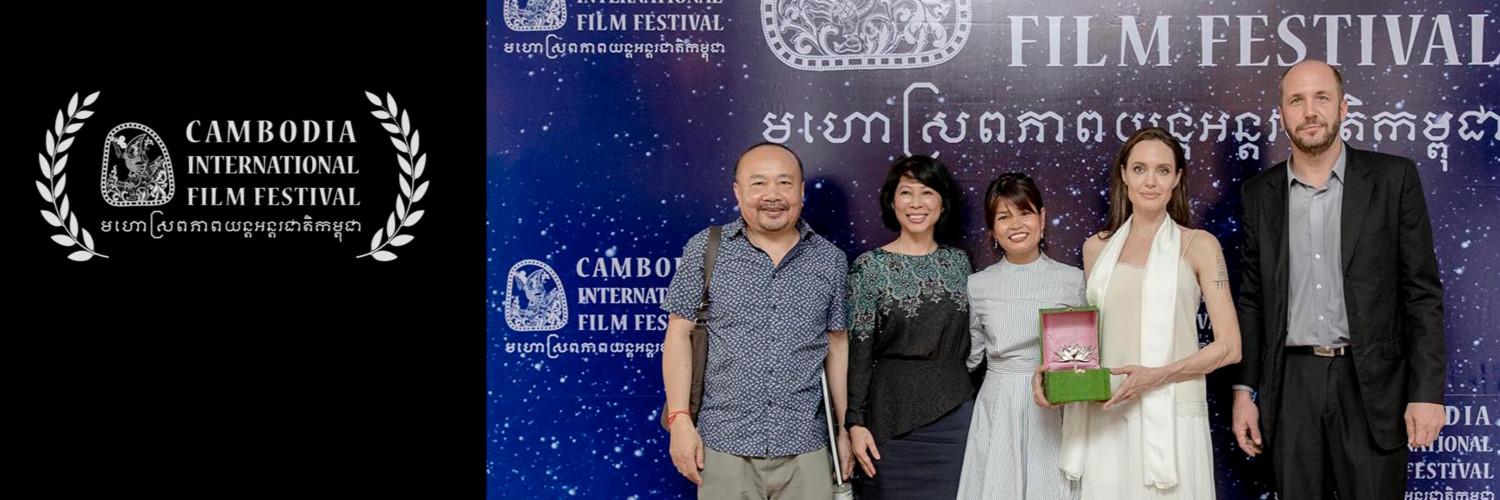
Interview with Festival Director ELOY Cedric (Cambodian International Film Festival)

The Cambodia International Film Festival (10th Edition in 2020) is the most significant and industry driven film event in the Kingdom of Cambodia. Every year, the event features prominent pictures and hosts guests from Cambodia and abroad. CIFF is aimed at sensitizing audiences to the Art of cinema, promote innovative international film making in various forms and present quality productions made in and about Cambodia by national and international filmmakers.

Contact

Matthew Toffolo: What is your Film Festival succeeding at doing for filmmakers?

ELOY Cedric: For Cambodian filmmakers, the Cambodian International Film Festival (CIFF) is the main international platform where they can be visible for festivals, distributors, buyers. Since we started in 2010, we have never seen so many Cambodian film in Festivals around the globe.

For foreigner who have shot a film in Cambodia, we offer a platform that link them to Cambodian content and we usually host a premiere opportunity with cast and crew who have worked on the film, or for documentaries, the topics are subject to discussions.

For other international filmmakers we, are one of the most diversified and open-minded Festival in Southeast Asia. We have over 130 films and have an increasing popularity among Festivals or press interested in Asian or Southeast Asian Cinema.

2) What will attendees experience when they attend your upcoming festival?

CIFF is a wide event as we are spreading in 10 venues around Phnom Penh, including one giant outdoor venue.

Attendees can grab a tuku-tuk (local transportation) and jump from one screening to the other with a very wide choice of venues and movies each day for 6-7 days.
We have feature, shorts, documentaries, animation ranging from independent / Art House film to commercial films. Each year we have one or several country focus, master tributes, special themes, Hollywood Premiere, the best of Southeast Asian features, workshops, panel discussions.

We have a free entrance policy which is becoming less and less usual. For each screening, half of the venue is free and the other half is 1.25 USD. In this way we allow young Cambodian to see movies for free and people who want to come just before the screening can buy a ticket and be sure to have a seat.

3) What are the qualifications for the selected films?

We choose films that can be accessible to Cambodian audience in terms of topics and narration. We also connect Cambodian filmmakers with different way of filmmaking in Asia, creating networking opportunities for filmmakers around southeast Asia to know each other and possibly work together or at least know each other’s work.

Although we have some Premiere, we do not require International Premiere, world Premiere or such requirements. We want CIFF to be a friendly event where attendees can easily meet attending filmmakers, and enjoy the booming city of Phnom Penh’s nightlife and restaurants.

4) Do you think that some films really don’t get a fair shake from film festivals? And if so, why?

Sometimes there is a tendency for festivals to choose films which have been in other festivals, making trendy films and other that don’t get to any. Well to us, it’s important to have some recent quality films which have been recognised by larger Festivals but it’s also important to propose other types of films, more commercial sometimes as to let people know what neighbouring countries produce and what audience like.
We love genre movies and did have programs on horror, comedy, action, love. These more commercial films attract different kind of audience who then end up watching short film program, serious documentaries, animation…As we propose that diversity, our audiences mix and discover films they would not normally watch.

5) What motivates you and your team to do this festival?

When we started in 2010, the concept of Festival was little known in Cambodia, a country that did not have one proper cinema left and produced very few films. Nobody understood why we spent money, energy and time to create a film festival.
We work in collaboration with the Bophana Center, founded by Oscar nominated French-Cambodian filmmaker Rithy Panh, an organisation working on film heritage of Cambodia and contemporary production, and also with the Cambodia Film Commission which attract and assists international productions in Cambodia. These two organisations have a common goal of boosting and developing the film industry, the network and platform that CIFF offers serve this goals among other benefits.

We gathered 1,000 people on the first year, each year it increased greatly, today we have over 20,000 audience ! It’s the youth of Cambodia that is curious about the world and in demand of good content compared to traditional media channels in the country.

6) How has your FilmFreeway submission process been?

We started CIFF by receiving DVDs and paper forms, and moved to online platform about 5 years ago and tried different ones.

We must admit that online platform really facilitate the work for filmmakers/producers/distributors but also for us as a Film Festival. Film Freeway’s interface for us is the best as it’s very quick to find the information, select, communicate, preview the movies.

7) Where do you see the festival by 2023?

Phnom Penh is a booming capital city so I see the Festival growing and growing with it. When we started in 2010, there was not a single DCP theatre in Cambodia and now we have 80 screens and more are to open ! it’s changed a lot. So we are confident that the CIFF has a huge growth potential.

Also local productions are investing more and more in ambitious production and target international markets, so having CIFF to launch and promote movies is a must have tool and most of them today support and understand more and more the role and function of film festival as a non-commercial production platform.
Phnom Penh is a dynamic cultural platform in southeast Asia, the youth is demanding more and more international events and opportunities to discover other culture. Cinema is the perfect medium for that. But CIFF is each year a challenge to finance as it relies almost entirely on sponsor’s support, we hope that the booming economy will allow us to find long term partners and support.

8) What film have you seen the most times in your life?

I’m not sure if it’s THE BIG BLUE by Luc Besson, or John Sturges THE GREAT ESCAPE with Steve MacQueen or the first, misunderstood and underrated STARSHIP TROOPERS by Paul Verhoven.

9) In one sentence, what makes a great film?

A great film makes you stay in your chair, because something tells you that something is going to happen next.

10) How is the film scene in your city?

Cambodia had an incredible Golden Age of cinema in the 60’s as the former King Sihanouk was an artist and a filmmaker. At that time there were over 40 cinemas in Phnom Penh alone and more throughout the country, there was a star system, maker vendors would all go to the movies once in a while and there as so much energy in this yéyé period. In the 70’s the brutal Khmer Rouge regime destroyed all of it, annihilated artists and facilities, it took until the 90’s to see movies come back with the age of video.

Today the industry is still young but booming with the country, half of the population is under 30. in 2010, there was not 1 short films, now we have over 50 each year. It’s great. Also in the last few years, Cambodia was on screen in Cannes, Venice, Toronto, Amsterdam, Busan Tokyo. Cambodia also sold its first film to Netflix last year, so things are going into the right direction.
 

cambodia 2

Interview with the Festival Team of Picentia Short Film Festival

“Picentia Short Film Festival is one of the main international shortfilm festival in Campania (province of Salerno, Italy), born in 2017, produced by the Association of Independent Cinematographic Production ACT Production, a young production formed by filmmakers between 19 and 28 years old which have reached in the last two years the finals and the official selections of some main international shortfilm festival. PSFF has got in these years among the patronages and partnerships Campania Film Commission, World Film Fair (New York), JIFF – Jaipur International Film Festival (India), ToHorror FilmFest (Turin).

The festival – edition 2019 – will take place at the end of the next summer in the little city of Montecorvino Rovella, in the heart of Monti Picentini Regional Park, in province of Salerno.”

Short Bio of the Artistic Direction: “PSFF Artistic Direction is composed by Antonio Palo (M. Rovella, 25 y.o., founder and artistic director), Luca Capacchione (M. Rovella, 19 y.o., deputy artistic director) and Erica De Lisio (Salerno, 23 y.o., deputy artistic director), all of them part of ACT Production’s team.


Contact

 
Matthew Toffolo: What is your Film Festival succeeding at doing for filmmakers?

Picentia Short Film Festival Team: Picentia Short Film Festival’s goal is to award the talented filmmakers giving them an apposite ‘place’ where they could valorize their works, meeting also the main cinematographic productors and artistic directors of the region. Through our parterships the winners have been part of some international events (as World Film Fair) and mentions: it’s a starting point both for emerging filmmakers and also for successfull ones.

2) What would you expect to experience if you attend your upcoming festival?

I would expecting a relaxing contest where to show your abilities, experiences, stories: in a few words, a piece of your life. Picentia Short Film Festival is made by yuong filmmakers for filmmakers: we’d love to share each other and widespread all of the visions of cinema with the people that still believes in it or could be attracted by this form of communication.

3) What are the qualifications for the selected films?

There are 6 categories/genres: “Horror & Thriller”, “Drama & Social”, “Comedy & Comic”, “Past & Future”, “Docs”, “Music Video”. The qualifications is for short films with a maximum duration of 20 minutes; documentaries with a maximum duration of 52 minutes; music videos with a maximum duration of 4 minutes. There will be two juries (technical and public) who will assign each day of the event – from 11th to 15th September, 2019 – the festival prizes (total combined value of about $3.000,00).

4) Do you think that some films really don’t get a fair shake from film festivals? And if so, why?

I think it’s partially true, that’s why some film festivals have become – with the passing of time – a sort of limited circle for some kind of ideas, artists managements, distributions or for the ‘great possibilities’ of their single filmmakers. I personally – as all of the rest of the artistic direction – believe in pluralism and impartiality. So, being Picentia Short Film Festival neutral in terms of judgement, there’s no distintion among tipologies of budgets, distributions or curricula. Here low budget short films can compete with higher budget and distributed short films: the only evaluetion criterion is the quality.

5) What motivates you and your team to do this festival?

My team and me are very motivated doing Picentia Short Film Festival: it represents the making of the job we love to do and the proof that some young boys could build an international company where skills and professionalism could valorize people and places. We want to be an example for the youngest generations to believe in their dreams.

6) How has your FilmFreeway submission process been?

The FilmFreeway process has been great. It’s a really great platform to view films and super user friendly. We’re proud to be there.

7) Where do you see the festival by 2023?

Very hard question… (That’s the first time I’m thinking about!). I wish 2023 festival greater than the previous years, with the same friends and the same values which keep us together. But the first step is now, in 2019!

8) What film have you seen the most times in your life?

I haven’t a favourite or most-seen film, but I can’t remember how many times have seen Eddie Murphy’s and Ben Stiller’s comedies, Leslie Nielsen’s “The Naked Gun” serie, Steve Carell’s “Angie Tribeca”, Monthy Python’s sketches, and fanta-epic series (as “Star Wars” and “The Lord of the Rings”). Really great movies…

9) In one sentence, what makes a great film?

The ability to leave into you something deep inside.

10) How is the film scene in your city?

The film and artistic scene is almost, completely absent: a further incentive to reach our festival’s goals.

picentia 2

Interview with the KanivFest Kaniv International Film Festival

Festival  designed to create a powerful cultural – educational platform that aims to unite Ukrainian and foreign film makers and introduce viewers works with professionals and amateurs.

Contact

 
1. What is your Film Festival succeeding at doing for filmmakers?

Kaniv Film Festival succeeds for filmmaker at monetary awards and advertising especially for the Ukrainian State Film Agency and different film production studios.

2. What would you expect to experience if you attend your upcoming festival?

If you attend Kaniv Film Festival you will get:
– a lot of communication with actors, producers, cameramen and other persons, who involved to movie industry;
– different master-classes connecting the filmmaking processes:
– impressed by the beautiful landscapes and friendly treatment;
– a new friends.

3. What are the qualifications for the selected films?

The films of any genre direction and timekeeping are admitted for participation (Short 25 min., a full meter to 90 minutes.), the production not before 2 years of the festival conducting (not before 2016). For films in a foreign language, the subtitles in Ukrainian and English are the requirement.

4. Do you think that some films really don’t get a fair shake from film festivals? And if so, why?

Speaking about our festival, we hope that our jury finds quality films.

5. What motivates you and your team to do this festival?

Firstly we want to give a chance for filmmakers to get their names and their films known in movie industry. And we also want to do the powerful platform for communication between filmmakers.

6. How has your FilmFreeway submission process been?

Everything was ok. Thanks to FilmFreeway we got a lot of international participants.

7. Where do you see the festival by 2023?

We have a lot of plans. We are improving all the time and we are trying our best for the people who works in cinematography world. We want to see a lot of both Ukrainian and international participants present in our festivals. We also want to attract experts who will share their experience. And we also want to give our participants large monetary awards and world recognition. It’s not by chance our mission is- “If you want to get Cannes- let’s start from Kaniv”.

8. What film have you seen the most times in your life?

We can’t choose just one. Many films left a great impession.

9. In one sentence, what makes a great film?

To our mind the combination of idea, extraordinary and aftertaste makes a great film.

10. How is the film scene in your city?

In our city we have Movie Theater and outdoor screening.


kaniv 1

Interview with Festival Director Sasha Santiago (GRID EDGE FILM FESTIVAL)

Grid Edge Fest wants to live screen your short film in Brooklyn, NY. The festival is one part tech conference, two parts community workshops, and a grand finale live screening event as the centerpiece.

Contact

 
Matthew Toffolo: What is your Film Festival succeeding at doing for filmmakers?

Sasha Santiago: People generally want connectivity and to be part of a community that feels creative, fresh and original. Grid Edge Fest wants to make an event out of the films it selects. To spotlight films that take on the complex subject of climate change and create a space that makes it accessible to a new audience.

2) What would you expect to experience if you attend your upcoming festival?

If you’re like me, you sometimes wonder why don’t people go to movies as much anymore? That last few times I’ve been to a theater, I found it odd how I’m one of maybe a dozen attendees present. Maybe it’s because of the content, maybe it’s the $18 matinee ticket price or maybe it’s the lack of a community.

Grid Edge Fest first and foremost is a film festival, with a series of interactive events that lead up to the live screening event. These include tech talks on innovative breakthrough solutions that look at data as the new fuel of the future (see exergy.energy) to fight back at climate change, as well as family-friendly community workshops that find the fun in educating people on what can be done about climate change at the local level.

3) What are the qualifications for the selected films?

Grid Edge Fest wants the best films yet on the topic of climate change or important environmental stories. The films can DIY stories shot on an iPhone or high caliber professionally produced gems, the sincere hope is that people who watch these films would be both united and inspired and that they will leave the festival with a new commitment in their hearts to combat climate change in a manner that truly resonates.

4) Do you think that some films really don’t get a fair shake from film festivals? And if so, why?

Film is an expensive and competitive art form. Organizing a sustainable film festival isn’t cheap nor easy. New film festivals like Grid Edge Fest have a proven failure rate after the first or second year because they don’t successfully find their audience. As far as giving films a fair shake, I can’t speak for other festivals but I’ll presume it has something to do with targeted demographics. Who will make the pilgrimage to the film festival? Usually, the films selected looks like the audience it’s trying to attract.

The film business has been historically ruled by white men from upper-middle-class socioeconomic backgrounds for a very long time, but the good news is that we’re seeing more evidence of that being reconciled as the old guard dies. I think we’re seeing some pretty good strides and small wins (Boomshakalaka!!!) in the last few years but a film festival that stands for just fairness or diversity sake isn’t enough to be sustainable or engaging. The films still need to be good and a festival’s most important job is to offer a well-curated experience.

6) How has your FilmFreeway submission process been?

We’re totally new to FilmFreeway. It’s a cool service, makes it super easy to submit a film. We’re still looking for more short films to be submitted. Each of the short films selected for the Spring 2019 live screening would be considered a winner and be awarded a $250 prize.

7) Where do you see the festival by 2023?

Grid Edge Fest intends to constantly reinvent itself in order to maintain agility and flexibility while it keeps its eyes peeled for the oncoming 3° freight train, that’s threatening our planet.

In 2023, we see GEF being a seasonal roadshow style film festival. It’ll be outstanding if GEF would have a structure or mechanisms in place to increase the liquidity of film investment and distribution for filmmakers around the world that might not have easy access to resources to tell their environmental stories.

8) What film have you seen the most times in your life?

That’s a personal question I’m not ready to answer here but I’ll give you a hint, he may wear a yellow hat and trench coat.

9) In one sentence, what makes a great film?

A great film is one that you can return to time and time again, like when your hanging with a good ole bud who is aging gracefully with you.

10) How is the film scene in your city?

Rent is too damn high and we’ve been losing too many indie theaters because of it. New York City is a constant hustle. When I asked the same question to my GEF film advisor, Joel Fendelman, he told me that this challenge of high rent is what drives half the city to constantly push through anyway. It’s a melting pot of idealists and artists on the cutting edge filled with ambition. Maybe this is why NYC is the perfect place to launch the festival.

To answer your question, I think the film scene in my city is the company you keep and the projects you put your life into and take over the finish line no matter what.

grid edge 1

Interview with Festival Director Iris Gonzalez (THROUGH MY EYES FILM FESTIVAL)

Through My Eyes is an international and Indigenous short film festival that seeks to showcase the stories of Indigenous peoples from all over the world. The festival aims to redefine the word Indigenous, originally meaning “of the land”, and in doing so, create community through the understanding that we are all indigenous to somewhere. It doesn’t matter if you’re native to the United States, the aboriginal lands of Australia, Europe, Asia, or Africa.

Contact

Matthew Toffolo: What is your Film Festival succeeding at doing for filmmakers?

Iris Gonzalez: Providing a platform for underrepresented, Indigenous, and international independent filmmakers. In addition to providing this essential platform for filmmakers, we are providing that same platform for visual artists, live performers, and dancers.

2) What would you expect to experience if you attend your upcoming festival?

A window into the various cultures of the planet that I am not fully aware of or engaging with. To expand my view on ritual and storytelling.

3) What are the qualifications for the selected films?

We accept shorts, 30 mins and under in all genres who identify as Indigenous or stars as an Indigenous person or whose film’s content is based on Indigenous culture.

4) Do you think that some films really don’t get a fair shake from film festivals? And if so, why?

I’m starting to see more platforms for Indigenous stories in the larger festivals like Sundance and such. This is a good thing but I do feel it’s still harder for Indigneous filmmakers to get a fair shake. This is where we come in. We try to reduce the barriers that some other festivals have.

5) What motivates you and your team to do this festival?

Being Indigenous myself as the executive director and an experienced filmmaker, I’ve seen these barriers firsthand. We also know that we greatly learn through the power of story. These filmmakers have extraordinary things to say and the more festivals like us the better.

6) How has your FilmFreeway submission process been?

It’s been an incredible process. Very friendly to a busy team. We are so grateful for the content that has come through it’s portal. Several of our selections have come through FilmFreeway.

7) Where do you see the festival by 2023?

We hope to partner with great like-minded organizations to bring this festival to it’s fullest potential and hope to guide others wishing to do the same.

8) What film have you seen the most times in your life?

Funnily enough, we see such potential in some of our film submission that have many many problems but are fixable. Through working together, we end up watching these films more often than any other films in our lives.

9) In one sentence, what makes a great film?

The power of the story and the ability to transform our reality.

10) How is the film scene in your city?

We live in the mecca of Los Angeles with great great competition. Which makes it an honor when we see our attendants and the desire for people to want to expand their knowledge about the world around them.
 

through my eyes 1.jpg

Interview with Festival Producers Christine Cannavo & Eafat Newton (WOMEN IN COMEDY FESTIVAL)

Women in Comedy Festival is thrilled to partner with HBO, NBC and Showtime’s Frankie Shaw to work towards closing the gender gap in the film and television industry. The festival will feature original comedic content created by filmmakers and screenwriters from all over the world.

March 2019 Screenwriter Interviews

Read interviews with top screenwriters from around the world.

Interviews conducted by Matthew Toffolo

Interview with Screenwriter David Sabbath (Dancing in the White Room)
https://matthewtoffolo.com/2019/02/25/interview-with-screenwriter-david-sabbath-dancing-in-the-white-room/
 

Interview with Screenwriter Ian White (AMARIS)
https://matthewtoffolo.com/2019/02/25/interview-with-screenwriter-ian-white-amaris/
 

Interview with Screenwriter Kristina Rezek (YOUR ROARING TWENTIES)
https://matthewtoffolo.com/2019/02/25/interview-with-screenwriter-kristina-rezek-your-roaring-twenties/
 

Interview with Screenwriter Ray Cecire (The Prophecies)
https://matthewtoffolo.com/2019/02/25/interview-with-screenwriter-ray-cecire-the-prophecies/
 

Interview with Screenwriter ML De La Garza (Indigenous)
https://matthewtoffolo.com/2019/02/25/interview-with-screenwriter-ml-de-la-garza-indigenous/
 

Interview with Screenwriter Gustavo Freitas (Lies, Hamburgers, and Cufflinks)
https://matthewtoffolo.com/2019/02/25/interview-with-screenwriter-gustavo-freitas-lies-hamburgers-and-cufflinks/
 

Interview with Screenwriter Gregory Allen (HE IS GONE)
https://matthewtoffolo.com/2019/02/25/interview-with-screenwriter-gregory-allen-he-is-gone/