April 2019 – Read FILMMAKER Interviews

19 Filmmaker interviews conducted by Matthew Toffolo:

Interview with Filmmaker Andre Sitolini (THE COOK AND THE CHEF)

Interview with Filmmaker Andre Sitolini (THE COOK AND THE CHEF)

Interview with Filmmaker Filippo Michele Guarna (MISTER EGG)

Interview with Filmmaker Filippo Michele Guarna (MISTER EGG)

Interview with Filmmaker Siqi Xiao (FARTMAN)

Interview with Filmmaker Siqi Xiao (FARTMAN)

Interview with Filmmaker Marco De Ornellas (THE DUCHESS)

Interview with Filmmaker Marco De Ornellas (THE DUCHESS)

Interview with Producer Rebecca Scotti (BUILD RAMPS NOT WALLS)

Interview with Producer Rebecca Scotti (BUILD RAMPS NOT WALLS)

Interview with Filmmaker Cynthia Hunt (ICE FLOW)

Interview with Filmmaker Cynthia Hunt (ICE FLOW)

Interview with Filmmaker Michael McCallum (LOVE IS WILD)

Interview with Filmmaker Michael McCallum (LOVE IS WILD)

Interview with Filmmaker Greg Tudéla (BREAKDOWN)

Interview with Filmmaker Greg Tudéla (BREAKDOWN)

Interview with Filmmaker Greedy Goons (Seth Scott™ – elxr Track3 v2 3)

Interview with Filmmaker Greedy Goons (Seth Scott™ – elxr Track3 v2 3)

Interview with Filmmaker Hadi Moussally (POSITIVE)

Interview with Filmmaker Hadi Moussally (POSITIVE)

Interview with Filmmaker Tim Jockel (HYPRA)

Interview with Filmmaker Tim Jockel (HYPRA)

Interview with Filmmaker Roisin Kearney (THE FAMILY WAY)

Interview with Filmmaker Roisin Kearney (THE FAMILY WAY)

Interview with Filmmaker Mahée Merica (A SIGN)

Interview with Filmmaker Mahée Merica (A SIGN)

Interview with Filmmaker Natacha Thomas (BLOSSOM)

Interview with Filmmaker Natacha Thomas (BLOSSOM)

Video Interview with Filmmaker Sashi Arnold & Stephen Gallacher (UNEXPECTED ITEM)

Interview with Filmmaker Erika Kramer (SHE’S MARRYING STEVE)

Interview with Filmmaker Erika Kramer (SHE’S MARRYING STEVE)

Interview with Filmmaker Camille Liu Nock (BO & MEI)

Interview with Filmmaker Camille Liu Nock (BO & MEI)

Interview with Filmmaker Daniel Montoya (HIM)

Interview with Filmmaker Daniel Montoya (HIM)

Interview with Filmmaker P.J. Norton (EXPIRATION DATE)

Interview with Filmmaker P.J. Norton (EXPIRATION DATE)

Interview with Filmmaker David Lykes Keenan (BODIES OF WATER)

Interview with Filmmaker David Lykes Keenan (BODIES OF WATER)


April 2019 – Read FILM FESTIVAL Interviews

5 interviews conducted by Matthew Toffolo:

Interview with the KanivFest Kaniv International Film Festival

Interview with the KanivFest Kaniv International Film Festival

Interview with Festival Director Sasha Santiago (GRID EDGE FILM FESTIVAL)

Interview with Festival Director Sasha Santiago (GRID EDGE FILM FESTIVAL)

Interview with Festival Director Iris Gonzalez (THROUGH MY EYES FILM FESTIVAL)

Interview with Festival Director Iris Gonzalez (THROUGH MY EYES FILM FESTIVAL)

Interview with Festival Director Paola Melli (SOUTH SOCIAL FILM FESTIVAL)

Interview with Festival Director Paola Melli (SOUTH SOCIAL FILM FESTIVAL)

Interview with Festival Producers Christine Cannavo & Eafat Newton (WOMEN IN COMEDY FESTIVAL)

Interview with Festival Producers Christine Cannavo & Eafat Newton (WOMEN IN COMEDY FESTIVAL)


Interview with the KanivFest Kaniv International Film Festival

Festival  designed to create a powerful cultural – educational platform that aims to unite Ukrainian and foreign film makers and introduce viewers works with professionals and amateurs.

Contact

 
1. What is your Film Festival succeeding at doing for filmmakers?

Kaniv Film Festival succeeds for filmmaker at monetary awards and advertising especially for the Ukrainian State Film Agency and different film production studios.

2. What would you expect to experience if you attend your upcoming festival?

If you attend Kaniv Film Festival you will get:
– a lot of communication with actors, producers, cameramen and other persons, who involved to movie industry;
– different master-classes connecting the filmmaking processes:
– impressed by the beautiful landscapes and friendly treatment;
– a new friends.

3. What are the qualifications for the selected films?

The films of any genre direction and timekeeping are admitted for participation (Short 25 min., a full meter to 90 minutes.), the production not before 2 years of the festival conducting (not before 2016). For films in a foreign language, the subtitles in Ukrainian and English are the requirement.

4. Do you think that some films really don’t get a fair shake from film festivals? And if so, why?

Speaking about our festival, we hope that our jury finds quality films.

5. What motivates you and your team to do this festival?

Firstly we want to give a chance for filmmakers to get their names and their films known in movie industry. And we also want to do the powerful platform for communication between filmmakers.

6. How has your FilmFreeway submission process been?

Everything was ok. Thanks to FilmFreeway we got a lot of international participants.

7. Where do you see the festival by 2023?

We have a lot of plans. We are improving all the time and we are trying our best for the people who works in cinematography world. We want to see a lot of both Ukrainian and international participants present in our festivals. We also want to attract experts who will share their experience. And we also want to give our participants large monetary awards and world recognition. It’s not by chance our mission is- “If you want to get Cannes- let’s start from Kaniv”.

8. What film have you seen the most times in your life?

We can’t choose just one. Many films left a great impession.

9. In one sentence, what makes a great film?

To our mind the combination of idea, extraordinary and aftertaste makes a great film.

10. How is the film scene in your city?

In our city we have Movie Theater and outdoor screening.


kaniv 1

Interview with Festival Director Sasha Santiago (GRID EDGE FILM FESTIVAL)

Grid Edge Fest wants to live screen your short film in Brooklyn, NY. The festival is one part tech conference, two parts community workshops, and a grand finale live screening event as the centerpiece.

Contact

 
Matthew Toffolo: What is your Film Festival succeeding at doing for filmmakers?

Sasha Santiago: People generally want connectivity and to be part of a community that feels creative, fresh and original. Grid Edge Fest wants to make an event out of the films it selects. To spotlight films that take on the complex subject of climate change and create a space that makes it accessible to a new audience.

2) What would you expect to experience if you attend your upcoming festival?

If you’re like me, you sometimes wonder why don’t people go to movies as much anymore? That last few times I’ve been to a theater, I found it odd how I’m one of maybe a dozen attendees present. Maybe it’s because of the content, maybe it’s the $18 matinee ticket price or maybe it’s the lack of a community.

Grid Edge Fest first and foremost is a film festival, with a series of interactive events that lead up to the live screening event. These include tech talks on innovative breakthrough solutions that look at data as the new fuel of the future (see exergy.energy) to fight back at climate change, as well as family-friendly community workshops that find the fun in educating people on what can be done about climate change at the local level.

3) What are the qualifications for the selected films?

Grid Edge Fest wants the best films yet on the topic of climate change or important environmental stories. The films can DIY stories shot on an iPhone or high caliber professionally produced gems, the sincere hope is that people who watch these films would be both united and inspired and that they will leave the festival with a new commitment in their hearts to combat climate change in a manner that truly resonates.

4) Do you think that some films really don’t get a fair shake from film festivals? And if so, why?

Film is an expensive and competitive art form. Organizing a sustainable film festival isn’t cheap nor easy. New film festivals like Grid Edge Fest have a proven failure rate after the first or second year because they don’t successfully find their audience. As far as giving films a fair shake, I can’t speak for other festivals but I’ll presume it has something to do with targeted demographics. Who will make the pilgrimage to the film festival? Usually, the films selected looks like the audience it’s trying to attract.

The film business has been historically ruled by white men from upper-middle-class socioeconomic backgrounds for a very long time, but the good news is that we’re seeing more evidence of that being reconciled as the old guard dies. I think we’re seeing some pretty good strides and small wins (Boomshakalaka!!!) in the last few years but a film festival that stands for just fairness or diversity sake isn’t enough to be sustainable or engaging. The films still need to be good and a festival’s most important job is to offer a well-curated experience.

6) How has your FilmFreeway submission process been?

We’re totally new to FilmFreeway. It’s a cool service, makes it super easy to submit a film. We’re still looking for more short films to be submitted. Each of the short films selected for the Spring 2019 live screening would be considered a winner and be awarded a $250 prize.

7) Where do you see the festival by 2023?

Grid Edge Fest intends to constantly reinvent itself in order to maintain agility and flexibility while it keeps its eyes peeled for the oncoming 3° freight train, that’s threatening our planet.

In 2023, we see GEF being a seasonal roadshow style film festival. It’ll be outstanding if GEF would have a structure or mechanisms in place to increase the liquidity of film investment and distribution for filmmakers around the world that might not have easy access to resources to tell their environmental stories.

8) What film have you seen the most times in your life?

That’s a personal question I’m not ready to answer here but I’ll give you a hint, he may wear a yellow hat and trench coat.

9) In one sentence, what makes a great film?

A great film is one that you can return to time and time again, like when your hanging with a good ole bud who is aging gracefully with you.

10) How is the film scene in your city?

Rent is too damn high and we’ve been losing too many indie theaters because of it. New York City is a constant hustle. When I asked the same question to my GEF film advisor, Joel Fendelman, he told me that this challenge of high rent is what drives half the city to constantly push through anyway. It’s a melting pot of idealists and artists on the cutting edge filled with ambition. Maybe this is why NYC is the perfect place to launch the festival.

To answer your question, I think the film scene in my city is the company you keep and the projects you put your life into and take over the finish line no matter what.


grid edge 1

Interview with Festival Director Iris Gonzalez (THROUGH MY EYES FILM FESTIVAL)

Through My Eyes is an international and Indigenous short film festival that seeks to showcase the stories of Indigenous peoples from all over the world. The festival aims to redefine the word Indigenous, originally meaning “of the land”, and in doing so, create community through the understanding that we are all indigenous to somewhere. It doesn’t matter if you’re native to the United States, the aboriginal lands of Australia, Europe, Asia, or Africa.

Contact

Matthew Toffolo: What is your Film Festival succeeding at doing for filmmakers?

Iris Gonzalez: Providing a platform for underrepresented, Indigenous, and international independent filmmakers. In addition to providing this essential platform for filmmakers, we are providing that same platform for visual artists, live performers, and dancers.

2) What would you expect to experience if you attend your upcoming festival?

A window into the various cultures of the planet that I am not fully aware of or engaging with. To expand my view on ritual and storytelling.

3) What are the qualifications for the selected films?

We accept shorts, 30 mins and under in all genres who identify as Indigenous or stars as an Indigenous person or whose film’s content is based on Indigenous culture.

4) Do you think that some films really don’t get a fair shake from film festivals? And if so, why?

I’m starting to see more platforms for Indigenous stories in the larger festivals like Sundance and such. This is a good thing but I do feel it’s still harder for Indigneous filmmakers to get a fair shake. This is where we come in. We try to reduce the barriers that some other festivals have.

5) What motivates you and your team to do this festival?

Being Indigenous myself as the executive director and an experienced filmmaker, I’ve seen these barriers firsthand. We also know that we greatly learn through the power of story. These filmmakers have extraordinary things to say and the more festivals like us the better.

6) How has your FilmFreeway submission process been?

It’s been an incredible process. Very friendly to a busy team. We are so grateful for the content that has come through it’s portal. Several of our selections have come through FilmFreeway.

7) Where do you see the festival by 2023?

We hope to partner with great like-minded organizations to bring this festival to it’s fullest potential and hope to guide others wishing to do the same.

8) What film have you seen the most times in your life?

Funnily enough, we see such potential in some of our film submission that have many many problems but are fixable. Through working together, we end up watching these films more often than any other films in our lives.

9) In one sentence, what makes a great film?

The power of the story and the ability to transform our reality.

10) How is the film scene in your city?

We live in the mecca of Los Angeles with great great competition. Which makes it an honor when we see our attendants and the desire for people to want to expand their knowledge about the world around them.
 

through my eyes 1.jpg

Interview with Festival Director Paola Melli (SOUTH SOCIAL FILM FESTIVAL)

South Social Film Festival is a trans-geographical, multicultural and multidimensional festival celebrating independent cinema, dance, world music, art and regional cuisine, launched in 2015 in London.

https://www.instagram.com/southsocialfilmfest/

Matthew Toffolo: What is your Film Festival succeeding at doing for filmmakers?

Paola Melli: Creating a platform where they can express and promote themselves.

2) What would you expect to experience if you attend your upcoming festival?

Networking with professionals, a good selection of up and coming filmmakers , discovering talents and culture.

3) What are the qualifications for the selected films?

New and original content, young filmmakers that need to be boosted.

4) Do you think that some films really don’t get a fair shake from film festivals? And if so, why?

Short films unless they go to a short film festival, don’t get enough exposure. A balanced mix of feature films and shorts could be a winning strategy.

5) What motivates you and your team to do this festival?

Passion about diversity, different cultures, innovative kind of filmmaking, discovery of new talents.

6) How has your FilmFreeway submission process been?

It’s been good and helpful, it really put us on the international map.

7) Where do you see the festival by 2023?

Maybe a franchising in different countries.

8) What film have you seen the most times in your life?

Wings of desire by Wim Wenders

9) In one sentence, what makes a great film?

Being symbolic, mesmerising, unique and representing a life changing experience.

10) How is the film scene in your city?

Thriving, lots of diversity and talent that sadly is not widely seen.

south social 1

Interview with Festival Producers Christine Cannavo & Eafat Newton (WOMEN IN COMEDY FESTIVAL)

Women in Comedy Festival is thrilled to partner with HBO, NBC and Showtime’s Frankie Shaw to work towards closing the gender gap in the film and television industry. The festival will feature original comedic content created by filmmakers and screenwriters from all over the world.

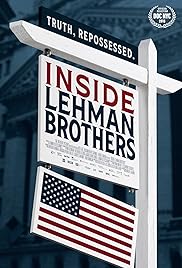
Hot Docs 2019 Review: INSIDE LEHMAN BROTHERS (Canada/France 2018) ***1/2

Inside Lehman Brothers Poster
Messy mortgages taken out by Lehman Brothers caused a real estate crisis in America ten years ago. This led to a global financial crisis. Ten years later, the French journalist Jennifer …See full summary »

INSIDE LEHMAN BROTHER is a documentary about finance.  Those involved in the world of stocks and finance will find this doc timely, insightful and interesting but how about the other group of people not dealing with the financial world.  

Director Deschamps, a French journalist (who co-wrote the script) attempts to bring interest to this group of people as well so that the film will have a larger target audience.  The doc begins with what appears to be an ordinary woman caught in extraordinary circumstances.  She is in a big residence in a large wooded area and says: “I would scream but no one would ever listen.”   

Deschamps clearly has got her audience’s curiosity piqued.   As mortgage brokers for Lehman’s subsidiary BNC, Linda Weekes and her Californian colleagues were at the forefront of the subprime crisis.  The whistle blower is Matthew Lee then headquartered in New York, who was the first leader to have refused to validate the accounts tainted by fraudulent transactions.  Former CEO Richard (Dick) Fuld Jr. is the chief villain on display, an an evil villain at that. 

 There are appearances of President Trump (another villain) and ex-President Obama (the hero) in the film.  If Deschamps’s aim is to infuriate the audience at the injustice, she has done a great job.  The details are explained, making up the bulk the movie.

Trailer: https://www.youtube.com/watch?v=O_2k-OXzgXY

Film Review: THE INVISIBLES (Die Unsichtbaren)(Germany 2017) ***

The Invisibles Poster
Trailer

While Joseph Goebbels infamously declared Berlin “free of Jews” in 1943, 1,700 managed to survive in the Nazi capital through the end of WWII. The Invisibles traces the stories of four young people who learned to hide in plain sight.

Director:

Claus Räfle

Writers:

Claus Räfle (screenplay), Alejandra López (screenplay)

1943.  Four Jewish youths have to hide their identities in Berlin in order to survive the Third Reich.  A true story- as the film continues to remind the audience.

Films from Germany on the injustice of the Nazis have shed new insight.  Audiences learnt that many Germans living today are unaware of the holocaust and the horror the Nazis have committed on the Jew in the concentration camps.  (Sorry, I can’t remember the title of this German movie, but the film traces the exploits of a German proving that the Holocaust exists.)  Audiences also learnt that Germans also committed horrors on their own German people as in the recent Academy Award German nominee for Best Foreign Film – Florian Henckel von Donnersmarck‘s NEVER LOOK AWAY.

While Jospeh Goebbels infamously declared Berlin “free of Jews” in 1943, some 1,700 (out of 6000, as the audience is later informed at the end credits) survived in Nazism’s capital until liberation.  Director Räfle’s gripping docudrama traces the stories of four real-life survivors who learned that sometimes the best place to hide is in plain sight.  While moving between cinemas, cafés and safe houses they dodged Gestapo and a dense network of spies and informants, knowing that certain death was just one mistake away.  Yet their prudence was at odds with their youthful inclination towards recklessness, sometimes prompting them to join the resistance, forge passports, or pose as Aryan war widows.

The four youths are Hanni (Alice Dwyr), Cioama (Max Mauff) , Eugen (Aaron Altaras) and Ruth (Ruby O. Fee).  These are four German Jews coming from different social classes as well as different neighbourhoods.  The film takes its time on each, showing their relationship and difficult separation from their parents and loved ones.  The problem with this, is that the trials each undergo are identical and it makes the narrative repetitive.

For each character, a few solid suspense set-ups are worthy of mention.  One involves a Jewish informer, Stella (Laila Maria Witt) who recognizes Ellen Lewinsky (Victoria Schulz) while she and a friend go to the cinema dressed as war widows.  Stella informs so that she gets special privileges from the Gestapo that her parents do not get deported.  But they do, regardless.  Another suspenseful scene has Jews hiding in a room when a German appears going from room to to room in that house looking for lodging for Germans displaced from bombings.

One plus of the film is the interspersing of the enactments with interviews of the four main characters now much older, which are the survivors in real live.  This tactic adds to the film’s authenticity.  The film is also interspersed with archive 1940’s film footage.

Despite the film’s flaws, THE INVISIBLES is a worthy and insightful account of not only the triumph of the human spirit in surviving but also the inherent good in the few Germans who risk everything in helping the Jews.  Just as the proverb goes ‘Necessity is the mother of invention’, desperation forces the desperate to survive against all odds.

Trailer: https://www.imdb.com/title/tt5586052/videoplayer/vi2626534169?ref_=tt_pv_vi_aiv_1

Film Review: SUNSET (Napszallta)(Hungary 2018) ***1/2

Sunset Poster
Trailer

A young girl grows up to become a strong and fearless woman in Budapest before World War I.

Director:

László Nemes

Writers:

László NemesClara Royer (co-writer) | 1 more credit »

SUNSET, Hungary’s Academy Award entry for the Best Foreign Language Film 2019 is a lavishly mounted production with great attention to detail in dialogue as well as production sets, wardrobe, hair and yes, hats.  One problem of the hair is that Leiter has the perfect curls throughout the film.  The story protagonist is the daughter of the original owners of a established well-successful hat shop in Budapest.  When the film opens, Irisz Leiter (Juli Jakab) arrives at the hat shop seeking employment as a milliner, but is turned down.

Director and co-writer of the script Names already won an Oscar for Best Foreign Film in 2016 for his Jewish concentration camp drama, SON OF SAUL.  Watching SUNSET immediately brings to mind the similarities of both films despite its different settings.  What is most notable is Nemes’ fondest of keeping the camera at neck level of his main character and the story unfolds as if seen from the character’s point of view.  In SUNSET, the camera also reveals, while at neck level, Leiter’s collar of her period dress as well as her hair and of course, stunning hat.  Every line of dialogue appears to be carefully written with subtle innuendoes often found in many of them.  This technique does get tiresome after a while.  Clues to the story and Leiter’s history are also revealed in the dialogue.  Example: when Leiter tells a stranger who inquires the reason of her sadness, she says: “I just got turned down from a job at the hat company.”  “That is not the only hat company in town,” is his reply to which she retorts: “But it is the only one with my name on it.”  The film’s best line: “the horrors of the world (at the brink of the first world war) hides behind these infinitely pretty things (referring to the hats).

The story is set in thriving Budapest in the early 1920s.  It is before the first world war when the Austro-Hungarian was the centre of Europe.  Besides the wealth on display in Budapest, poverty still exists.  When Leiter returns to her boarding house after being rejected from her job, she is told she is returning to dust and bed bugs.

The story is about Leiter leaving the orphanage and finding out the secrets of her family.  Leiter was put in the orphanage at the age of 2 after her parents’ death.  She does not remember anything.  She learns of a  brother, who had committed crime and now presumed gone into hiding.  Her re-appearance at the hat shop generates fears and memories of her brother’s evil deed.  But Leiter is determined to learn the truth surrounding her brother and keeps inquiring despite very bad vibes from those she asks.

The twist in the story occurs around the half way mark in the two-hour over film.

For what the film is worth, the period atmosphere and setting are extremely well done.  The narrative fails to satisfy in what would have resulted in an outstanding film.

Trailer: https://www.imdb.com/title/tt5855772/videoplayer/vi1684650521?ref_=tt_pv_vi_aiv_2