Film Review: LIZZIE (USA 2017) ***1/2

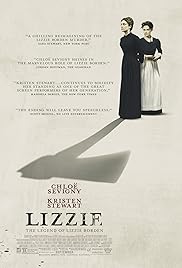
Lizzie Poster
Trailer

A psychological thriller based on the infamous 1892 murders of the Borden family.

Writer:

Bryce Kass

The name LIZZIE will sound familiar to many.  Even to kids, LIZZIE is a well-repeated nursery rhythm containing more sinister connotations.  LIZZIE is also the first name of Lizzie Borden who was accused but acquitted of the vicious hatchet murders of her stepmother and father.  The incident occurred in Fall River, Massachusetts in 1892.

Why would this dated biography be of interest to today’s audiences?  For one, Lizzie is alleged to be a lesbian and the script by Bryce Kass re-imagines Lizzie to be guilty of the heinous crime.  Lizzie is also highly abused by the male gender in a time where gay relationships were disallowed.  One scene has her uncle grabbing her by the throat threatening her. 

The film is bookended with the ghastly murder of a man hacked to death.  The guilt falls on the daughter Lizzie which the film sets to prove committed the deed despite her acquittal.

The film goes back 6 months with the arrival of a female at a three story house, obviously owned by a wealthy family.  The female is revealed to be Brigitte Sullivan (Kristen Stewart), a single Irish woman, who has come to live with the family and work as a live-in maid.  Lizzie, of the film title, is living with her wealthy father (Jamey Sheridan), stepmother (Fiona Shaw) and sister (Kim Dickens).  Her father is up to no good, while her stepmother silently enables.  Worst still, it seems that her uncle (Denis O’Hare) may end up controlling her inheritance.  Socially isolated, with her comings and goings strictly monitored, Lizzie finds solace in her pet pigeons. 

Brigitte works hard.  The patriarch of the family recognizes Brigitte’s hard work but his visits to her room prove him to be a sex abuser.  At the same time, Lizzie and Brigitte start an affair.

The script ups the angst with the father becoming more abusive towards Lizzie.  Lizzie also suffers from fits.

The film benefits from the creation of claustrophobia of the prison of the family home.  Lizzie is discouraged from going out and if allowed, must return by midnight.  The camera is quick to always show the high walls as if acting like imprisoning barriers.  When Lizzie does get to go out, she is attacked by society as the Borden family are cheap and disliked large house renters, still using candle light instead of the new electricity of the times.  The audience is made to feel that Lizzie has no way to escape psychically and emotionally.  Which drives her towards the act.

Whereas in real life Lizzie was acquitted for the fact that the jury could not imagine a woman performing such a violent act, the film shows otherwise with Lizzie hacking her father to death with repeated blows, and in the nude with blood splattered all over her body.  This shows director Macneill over-confident that he has convinced his audience believe that Lizzie is so desperate that she has nothing to lose (she would otherwise lose her inheritance as well as love for Brigitte) but to commit gruesome murder.

Performances are top-notch with Stewart getting away with her Irish accent. But the main star of the film is Noah Greenberg lush cinematography that captures the period atmosphere of the times and the claustrophobic imprisonment of the girls.
Trailer: https://www.youtube.com/watch?v=t-QJ81-k6w8

Film Review: KNUCKLEBALL (Canada 2017) ***1/2

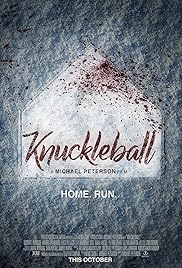
Knuckleball Poster
Alone, and targeted on an isolated farm, 12 year old Henry finds himself at the center of a maelstrom of terror, and a dark family legacy, when his secretive grandfather dies suddenly in the night.

Director:

Michael Peterson

KNUCKLEBALL is a Canadian horror thriller set in the U.S. in the dead of a winter storm.  It is advertised as an R-rated HOME ALONE in which a 12-year old boy must defend himself against a house intruder, in this case not only a killer but a pedophile.

As far as the story goes, it is a straight out too well-thread thriller plot with a few nasty bits added in.  By co-writer Michael Peterson knows how to put on the suspense in this exercise in terror.  Peterson understands the mechanics of a Hitchcockian thriller and applies it at best he can.

The film begins with a husband and wife dropping their son, a 12-year old Henry at his grandfather’s out in the woods while they fly out of the city.  It is clear from the dialogue that the relationship of the couple is estranged, which as expected (cliches occur quite a bit in the story) will improve later on, once they realize their boy is in trouble and they cannot get to him because of the storm.  

As the plot goes, the grandfather unexpectedly dies in the night.  Henry finds himself cut off and alone on an isolated farm.  When his nearest neighbour, Dixon, realizes that the boy has no one to protect him, Henry becomes a target for reasons he cannot understand.  With his parents at least 24 hours from returning and a massive snowstorm brewing,  Henry retreats into the house and prepares for a siege, HOME ALONE-style but so much more brutally violent.  We are talking barbed-wire here.   What follows is a desperate battle for survival that will also unlock the terrifying connection between his family and the killer next door. 

As in true Hitchcockian fashion, the terror does not arrive immediately.  In Hitchcock’s THE BIRDS and also Spielberg’s JAWS, the first attack occurs only after half the movie has passed.  In KNUCKLEBALL, the grandfather is alive with Henry for the first 30 minutes, with the film tending towards simple drama/comedy instead of a thriller.  Grandfather dies in bed at the 30-minute mark.

Peterson’s film contains lots of segments  that prompts audience anticipation.  When grandfather teaches Henry how to throw a knuckleball, one knows that Henry will eventually use his new craft at his intruder.  There is one point that grandfather collapses from a heart attack while climbing the roof.  He screams and utters to himself: “Get up you old sap. Time to call it a day”.  

When Henry is alone with the intruder, a local cop is dispatched to the house.  No need to guess what happens to her – the same thing when a detective or cop is dispatched (Hitchcock’s PSYCHO) to a residence when the occupant is under siege happens here.

KNUCKLEBALL suffers from an all too familiar story.  But Peterson improves this story by an engaging first third and and scary other two thirds.  Peterson’s talent is his ability to draw his audience into the story which results in a very satisfying and absorbing be it ultra-violent thriller.

Trailer: https://www.youtube.com/watch?v=nM-CpDkPOcM

Film Review: THE MAN WHO FEELS NO PAIN (India 2018) ***

The Man Who Feels No Pain Poster
Trailer

Tells the story of a young boy Surya who has a rare condition of incognito sensitivity to pain meaning he can not feel pain, and sets out learn martial arts and hunt down muggers.

Director:

Vasan Bala

THE MAN WHO FEELS NO PAIN is the kind of action comedy that used to be so popular back in the 70s.  Everyone who went to these (the Bud Spencer and Terence Hill western comedies, the SABATA series and the later 90’s Stephen Chow films) know that they were not in to experience a cinematic classic but in for just silly fun.  These comedies made a lot of money but seemed to have disappeared from the screens till this Bollywood-infused martial-arts action film.

The film begins with a saying that mind blowing stories have their origin from bad decisions.  It then goes on to attempt to prove this by the life of a character than was born unable to feel pain.

The doctor explains to the audience the medical ailment called ‘congenial insensitivity to pain’ (jokingly also telling the audience that they can google it later), then that this young boy, Surya is born with this disability.  I did google the term and found out that there is indeed such a disease that has affected maybe only 20 people or so in history.  Many suffer because they might bite their lips or tongue or undergo no pain without realizing the harm they are causing their body parts.  

The film begins in flashback.  As a baby, Surya’s mother is killed, the result of a chain snatching incident.  His grandfather secretly trains Surya (Abhimanyu Dassani) by getting him a series of action videos cassettes like BIG TROUBLE IN LITTLE CHINA and STREETFIGHTER,  So he becomes the Karate Man.  The action involves him and a girl Supri (Radhika Madan) saving her one-legged karate master, Manni from his evil twin brother Jimmy (Culshan Devaiah playing both roles).  All the comedy and action high-jinx take place in the city of Mumbai, India – the birth place of director Bala.

Bala’s film moves breezily along and works very well bringing forth the laughs during the first hour or so.  It is during the second half that the film starts getting into trouble.  It is when the second story (and less interesting one) comes into play. The film is a lengthy 2 hour film, which is considered short for a typical Bollywood film.

At best, the film captures the Indian culture as the action comes along.  When Surya takes off on the roof of a building, it is comical to see dried chillies laid out in the sun for drying.   The grandfather and father are quite the clowns as well. The question “What has India learned from 70 years of independence?” is also comically posed.

Abhimanyu Dassani makes a good-looking, fit occasionally goofy-looking hero.  His kicking and punching look real enough to convey him a fighter to contend with.  The dance choreography and songs are not bad either.

THE MAN WHO FEELS NO PAIN premiered at this year’s Midnight Madness Section at the Toronto International Film Festival.  It won the People’s Choice Midnight Madness Prize.  THE MAN WHO FEELS NO PAIN definitely succeeds as an action packed hilarious crowd-pleaser.

Trailer: https://www.youtube.com/watch?v=pLMShjMlrlU

Full Review: ANTHROPOCENE: THE HUMAN EPOCH (Canada 2018) ***1/2

Anthropocene: The Human Epoch Poster
Filmmakers travel to six continents and 20 countries to document the impact humans have made on the planet.

ANTHROPOCENE – the current proposed geological epoch in which humans are the primary cause of permanent planetary change.

Filmmakers filmmakers Jennifer Baichwal and Nicholas de Pencier return with their latest and third of their trilogy after MANUFACTURED LANDSCAPES and WATERMARK, entitled ANTHROPOCENE: THE HUMAN EPOCH.  The doc, written by Baichwal and narrated by Swedish actress and Oscar winner Alicia Vikander is a disturbing doc that demands to be seen for it explores human’s impact on the Earth.  The term for this impact is terraframing – the resurfacing of land due to human needs.

Scientists believe that human beings have left the Holocene epoch (which started 11,700 years ago when the last ice age receded) and entered the Anthropocene (because humans 

now change the earth and its systems more than all other processes combined).  The film examines this awful age where the planet is altered for its worst.

Baichwal’s films are always stunning to look at, even when displaying the ugliness of the earth.  This is most evident with the landfill segment where the entire screen is composed to human garbage.  One can only imagine the stench of the place.

The film’s first scene is that of molten metal  The site on display is north of the Arctic Circle in what Baischwal describes as Russia’s most polluted city.  This is where the world’s largest metal smelting industry is located.  

Baichwal and her crew travel the world documenting evidence of human domination – from concrete seawalls that cover 60% of China’s mainland coast, to psychedelic potash mines in Russia’s Ural Mountains, to vast marble quarries in Italy, to surreal phosphate tailings ponds in Florida.  In each country, the voiceover is in the country’s languages (in English, Russian, Italian, German, Mandarin and Cantonese with English subtitles) so as to add to the segments’ authenticity.

Baichwal’s film provides a bit of distraction in the form of the segment on extinction.  She shows as well as educates on the extremely endangered species including the white cheek gibbon, the white rhinoceros, the Egyptian tortoise, the chicken frog and the okapi.  I never knew what a okapi was till now.

Baichwal does not provide solutions to the problems nor offers much hope to the saving of the planet.  Perhaps she hopes this document on film might serve the purpose.

Still, ANTHROPOCENE: THE HUMAN EPOCH is a spectacular film – Baichwal’s best of her trilogy.  She has spent an immense amount of time on research and travels resulting in this magnificent educational documentary.

The film is part of The Anthropocene Project that also comprises complementary exhibitions premiering simultaneously on September 28 at the Art Gallery of Ontario and National Gallery of Canada, new Burtynsky photographs, new film installations by Baichwal and de Pencier, experiences in augmented and virtual reality, a book published by Steidl, and education program.

Trailer: https://www.youtube.com/watch?v=44RYqgKwfSQ

Film Review: MANDY (USA 2017)

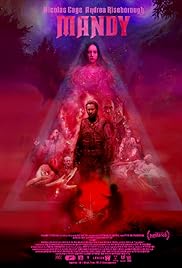
Mandy Poster
Trailer

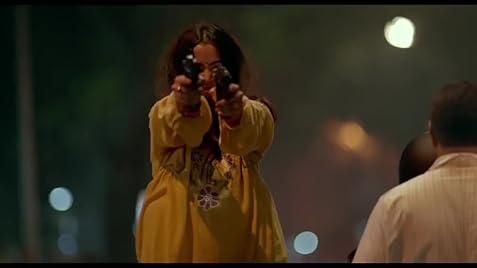
Mandy is set in the primal wilderness of 1983 where Red Miller, a broken and haunted man hunts an unhinged religious sect who slaughtered the love of his life.

MANDY a futuristic horror is director Panos Cosmatos second feature after his ultra-pretentious futuristic drama that I absolutely hated THE BLACK RAINBOW.  RAINBOW was exceptionally slow moving, like the beginning of MANDY as if the director wanted everyone to remember the comatose, rhyming with his last name.  Panos is the son of Greek director George Pan Cosmatos, whose films I also generally dislike.  His most successful film is one I hated THE CASSANDRA CROSSING that starred Sophia Loren.

Panos Cosmatos reaches one step higher in MANDY that it has well-known actors Linus Roache (PRIEST, THE WINSLOW BOY) and Nicolas Cage.

MANDY begins really slowly, so one must be fully attentive as it is easy to doze off.  Consider the inane dialogue.  “Are you ok?”  “I am not ok.”  “Is it my fault?”  “it is totally your fault.”  The dialogue goes on and on without making much sense.  

Cosmatos’ horror movie MANDY pals like an art house horror flick.  Art and horror do not not go well together, as this exercise and Cosmatos’ devious film THE BLACK RAINBOW have proven.

The film is set in at futuristic looking 1983. But this story is a little more steeped in demonic myth than microchips.  

 Red Miller (Cage) lives with his enamored girlfriend, artist Mandy Bloom (Andrea Riseborough), in a cabin near the lake. Red works as a logger, while Mandy has a day job as a cashier at a nearby gas station in the woods. She creates elaborate fantasy art, and Red admires her work greatly. They lead a quiet and reclusive life, and their conversations and behaviour hint at a difficult past and psychological hardship. Red appears to be a recovering alcoholic, and Mandy recounts traumatic childhood experiences.

The film shifts to a weird guy (Ned Dennehy) lying on a bed yelling at his mother , Mother Marene (Olwen Fouere) (with the inane dialogue above)  followed by his brother assuring him “consider it done” to a request he has made.  The film then follows Brother Swan as he tries to kidnap Mandy with the help of the Black Skulls, a demonic biker gang with a taste for human flesh and a viscous, highly potent form of LSD.  Red Miller saves the day.  Watch out for the duel the chainsaws.

Cosmatos loves to play with visuals.  A lot of his scenes are coloured bright red and accompanied with a thundering soundtrack like from an electric guitar.

MANDY’s story is incredibly difficult to follow and really frustrate got try.

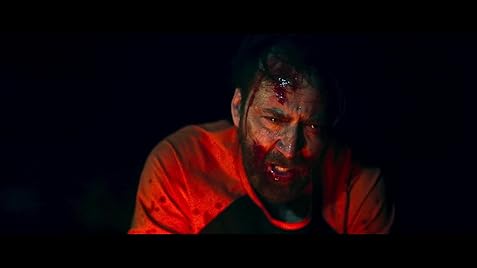
Nicolas Cage appears only after nearly half the movie has transpired.  Once he appears everything picks up.  He is at one point stabbed with a sharp knife through his sides with a crazy woman yelling: “Now you will legalize the the cleansing power of fire.”  Cage is so over the top, he adds the campiness that is seriously needed to life the film’s dreariness.

MANDY is not for everyone and it is also safe it is not for many.

Trailer: https://www.youtube.com/watch?v=rI054ow6KJk

Interview with Festival Director Dr. James Rowlins (Brighton Rocks Film Festival)

Brighton Rocks International Film Festival (BRIFF) was established in 2017 by a group of filmmakers, academics and creatives who love cinema and live in Brighton. The first annual screening event was held in May 2018, followed by an awards ceremony presided over by local actor Patrick Bergin. In addition to screening events throughout the year, we are preparing our second festival in June 2019.

1) What is your Film Festival succeeding at doing for filmmakers?

Connecting fearless, like-minded creatives and giving them a platform to promote and celebrate their work.

2) What would you expect to experience if you attend your upcoming festival?

Buzz. Excitement in the discovery that there people out there, just like you. To kick things off, there will be workshops for filmmakers, followed by screenings of winning films. There will be an awards ceremony with statutory afterparty.

3) What are the qualifications for the selected films?

Our selection embraces films that embody the Brighton ethos – a state of mind, an attitude, a spirit that dares to be itself. Above all the filmmaker should impart a vision and express something personal of him/herself.

4) Do you think that some films really don’t get a fair shake from film festivals? And if so, why?

Sadly yes. Festivals are often afraid of going out on a limb to support films that don’t yet have the big laurels. We pledge to look first and foremost at the film, not a long list of stickers.

5) What motivates you and your team to do this festival?

To do better. Experiencing the festival circuit from the other side, as a filmmaker, we’ve seen flaws aplenty – poor communication, bad organisation, etc., not to mention all those that you can’t be sure if they are bona fide. There are some good ones too, of course, but we want to be smarter than the average bear.

6) How has your FilmFreeway submission process been?

“Gorgeousness and gorgeosity made flesh, wonder of wonders, like silvery wine flowing in a spaceship” (A Clockwork Orange). So pretty good.

7) Where do you see the festival by 2023?

This will be our 5th anniversary. We hope to have made good on our pledge to become one of the UK’s main festivals for indie and underground cinema. We will host big screening events – across the city and beyond. We will be collaborating with likeminded international festivals.

8) What film have you seen the most times in your life?

Godard’s A bout de souffle (Breathless), as I wrote a doctoral thesis on it. Next would be Hitchcock’s Vertigo.

9) In one sentence, what makes a great film?

“In one word, emotion!,” to quote Samuel Fuller in Pierrot le fou.

10) How is the film scene in your city?

Brighton offers an amazing range of settings that have been used to great effect in classic films such as Quadrophenia (1979) and our namesake, Brighton Rocks (1947). Scores of talented writers and actors live in Brighton and there is a frenetic arts scene. The city often appears in television series, but it has to be said that Brighton doesn’t always punch above its weight in terms of being a prime location for feature films. One of Brighton Rocks’ missions is to raise awareness of the merits of Brighton as a place to make movies.

brighton rocks.jpg

*****

James Rowlins left his native England for Paris, France, to study French cinema. His passion for visual culture subsequently took him to Los Angeles, where he earned a doctorate at the University of Southern California while learning the ropes of filmmaking. He has published articles on the French New Wave and film noir. After serving as Head of Film Studies at the Singapore University of Technology and Design, he now dedicates himself to the full-time running of Brighton Rocks Film Festival.

Interview with Festival Director Cato ML Ekrene (The Norwegian International Seagull Short Film Festival)

The Norwegian International Seagull Short Film Festival is a Film Festival with live screening, the festival also have a Live streamed award show. The Main host for 2019 is International Award winner Hector Luis Bustamante from Hollywood. They accept films/animations/documentary under 60 min. We also have a category called Best International Game.

Contact

 
1) What is your Film Festival succeeding at doing for filmmakers?

Our film festival stands out that we are a festival for everyone, and the jury is made up of the best people that have the experience required to evaluate a movie. Not least because at our festival we have trophies that are specially made in pure Alleminum, which has a value of almost 800 Euro as all the winners receive.

What’s great with this festival is that we accept all movies within 60 minutes. We do not want to stop filmmakers to submit movies just because they break the game time because you can watch the festivals that have a limit of 15, 25, 35, 45 min. We also have a masterclass too that is free for the filmmakers under 18.

2) What would you expect to experience if you attend your upcoming festival?

They will experience a completely different festival, but lots of people who come to views, professionals who get to know, annotated personalities from all over the world as well as Oscar winner they can talked with. We have stands, concerts and a film program that is may the best the best in the world. and we must not forget that we have live award show with main host from USA.

3) What are the qualifications for the selected films?

We search for all movies, it is the jury who decides which movie is on the program. We recommend everyone to send, but you should know that it a strong competition and the film must have a high level in production, acting and story. But in the end we want the best films, we don’t care if you have filmed it with a Red or a 8 mm Camera, just make sure you have a strong story. In the 2018 festival we had over 1200 films but only 150 were chosen.

4) Do you think that some films really don’t get a fair shake from film festivals? And if so, why?

Yes, I think there are many in the jury at different film festival that have too little experience and are too noisy. That’s why it was so important to bring a jury and a host who is recognized and can stand for what they have done. That the professionals can actually go in to read about them and what they’ve done. To me as a festival director, it was very important to find out that this is a festival where the jury stands for it and that it is different nationality so those who submit their movie see that we have a strong maneuver.

5) What motivates you and your team to do this festival?

Well plan the festival for 4 years and stated it up in 2017. the planing was all, because i need the right person in the jury as the main host. But it all fall on place that we needed a festival that was for films under 60 min but with a high level of professional in the board, jury and host. So i think the best was when we found out that it was not that much festival for films up to 60 min, but now it is, but it’s a festival of a high level with a low submit cost.

6) How has your FilmFreeway submission process been?

It have been great, we have a great page, a lot of submitter and it comes in film from all over the world. We are very proud and happy for all submitter. For the festival in 2019 we have submissions from over 69 different nations.

7) Where do you see the festival by 2023?

That we have a big festival for films up to 60 min and that we have a program full of stands, films, and professional courses. Like we are today but a bigger program with films, concerts and stand and a lot of master class for the professional and guest.

8) What film have you seen the most times in your life?

Well there are a lot of films I like but I think my top 3 will be Aliens, Predator and The Untouchables

9) In one sentence, what makes a great film?

It`s all about the story, a story that touch my feelings, joy, sad, happy and pain.

10) How is the film scene in your city?

We are very proud of our city, because we do not only have short festival, we also have Norway’s biggest film festival for feature films. Our city has The Norwegian International Film Festival, known worldwide, where they award “Amanda” award. The city is called “The Film City of Norway»


norwiegan.jpg

Interview with Festival Director Aleksander Sakowski (THE VISION FEAST)

The Vision Feast has returned with a vendetta; to showcase the world’s finest visual media. Their third year features all new awards with a lineup of world renowned Judges.

Contact

1) What is your Film Festival succeeding at doing for filmmakers?

Our main objective is to celebrate and promote visually stunning and experimental films, and to acknowledge the hard work and talent behind those projects.

2) What would you expect to experience if you attend your upcoming festival?

We are currently an online based festival, our goal within the next 2 years will be to expand into a physical screening festival that will follow our philosophy of making the experience visually interesting. As for now viewers can visit our website which we have endeavor to make it a visual experience.

3) What are the qualifications for the selected films?

Our qualifications range but in particular we look for films that make your eyes go pop, this does not mean we over look story, quite the opposite, we want the visuals to match the stories and display the film makers understanding of how the 2 complement each other.

4) Do you think that some films really don’t get a fair shake from film festivals? And if so, why?

I my self am a film maker and have gone to the festival market with multiple projects. I founded The Vision Feast out of frustration with other festival not really meeting my expectations, that and at the time, New Zealand did not really have anything like this. As a film maker, I felt that I was entering festivals like I was gambling. I might pay exorbitant amounts to enter a festival only to receive a email saying “thanks but no thanks” and even if I won sometimes in the festivals I entered, I wouldn’t really get anything accept a digital laurel. We are striving to move away from this culture. Having run the festival for 3 years now it is clear that programming is not easy. This year we have made it a priority to give a prize for most award. The prizes vary from Cash Prizes to Rental Prizes and others. Our entry fees are low so when you enter its like buying into a prize pool worth $10’000 nzd.

5) What motivates you and your team to do this festival?

My original goal was to promote New Zealand projects around the world, and that still is one of my priorities but since most of our entries are from over seas Its inspiring to be inspired by the amazing artistry of the Vision Feast Submissions and celebrate the blood sweat and tears that go into each and every project.

6) How has your FilmFreeway submission process been?

Quite smooth, film freeways platform makes it easy to manage entries from all over the planet.

7) Where do you see the festival by 2023?

In the top 50 festivals, screening in LA & NZ, showcasing the best of the best brain melting visuals, I would like to expand into categories that are not usually celebrated like concept art and poster design.

8) What film have you seen the most times in your life?

I’m a animation geek, I also work in animation, so Id say Ghost in the Shell (1995) that movie blew my mind in more ways than one.

9) In one sentence, what makes a great film?

The rubix cube of arts, science, engineering and nature and how the film makers has woven those ingredients together.

10) How is the film scene in your city?

Its great, the Film crews here are world class and the infrastructure gets stronger every year.

vision feast.jpg

Interview with Festival Director Sally Bloom (LONGLEAF FILM FESTIVAL)

A free-to-attend film festival that highlights the best short- and feature-length documentary and narrative films in a place that recognizes that filmmakers and film fans DO make history—this is Longleaf. This weekend festival screens films that demonstrate a Tar Heel State connection, through the people involved in making them or through their subject. Of course, we hold near and dear all (current and former) Longleaf Official Selection filmmakers.

Contact


 What is your Film Festival succeeding at doing for filmmakers?

Longleaf offers filmmakers the opportunity to screen at a free-to-attend festival, which allows them access to audiences who might be new to independent film. We also host panels and workshops for filmmakers that are free to attend. Finally, we work to support filmmakers throughout the year—with events, gatherings, and more, like providing meeting and collaboration space!

What would you expect to experience if you attend your upcoming festival?

Folks attending Longleaf have choices! We screen in three spaces, so folks can review the program and select what films they want to see—for Longleaf 2018, our 73 options included narrative and documentary shorts and features, animated films, music videos, and student-made films. Attendees will also meet friendly staff and volunteers, they’ll have opportunities to talk with filmmakers, and they’ll always enjoy free popcorn.

What are the qualifications for the selected films?

Longleaf has eight categories for entries, including narrative and documentary shorts and features, animated films, music videos, a history-related theme, and middle and high school student-made films. Films must have a North Carolina connection of some sort, through the people who make them, their location, or their subject matter.

Do you think that some films really don’t get a fair shake from film festivals? And if so, why?

Because of scheduling constraints, perhaps it is harder for feature-length films at some festivals? We’re glad we have the space and time to include feature-length works.

What motivates you and your team to do this festival?

Longleaf Film Festival is a program of the North Carolina Museum of History, a free-to-attend public museum. We know that making films is making history; in fact, films have been made here since at least 1912 with The Heart of Esmerelda, and they have been made in all of the state’s 100 counties. The art and craft of filmmaking is part of North Carolina’s past, present, and future.

How has your FilmFreeway submission process been?

Submitting to Longleaf has changed over our five years. We began accepting submissions on WithoutABox and FilmFreeway and have moved to using FilmFreeway exclusively. We have rolling submission deadlines until March 1; we opened for this year’s festival in July 2018. Official Selections will be announced on April 12, 2019, and the 2019 festival will be held at the museum on May 10–11, 2019.

Where do you see the festival by 2023?

Nice question! By 2023, Longleaf will have outgrown the Museum of History (although it will always be our home base) and we’ll have expanded to other venues that are within walking distance. We’re located in the heart of downtown Raleigh and are fortunate to have terrific spaces nearby.

What film have you seen the most times in your life?

Hmmm . . . well, I have four children, so, probably, I’ve watched all the Toy Story films more times than I can count. Otherwise, I watch Harold and Maude (1971) and The Princess Bride (1987) on a regularly rotating basis!

In one sentence, what makes a great film?

A great film has a compelling story—whatever the type of film—and allows us to experience something more than the story, without knowing it until it’s over.

How is the film scene in your city?

Raleigh-—and by extension, the state of North Carolina—has a HAPPENING film scene. From the 1980s through 2014, many commercial films and television shows were made in the area. When the tax incentives changed, however, the state lost much of that industry; but, at the same time, the growth of independent film has been explosive. With film schools at our public universities and community colleges, varied and beautiful settings, and an experienced population of filmmakers and folks with film-related talents, North Carolina is a great place to make movies.

 ****
Sally Bloom bio: Sally is a co-organizer of Longleaf Film Festival and believes in the power of independent film to make connections, to entertain, and to form community. Sally finds many connections between her “other” work for the North Carolina Museum of History and her work with Longleaf because “everything has history!” Her other work includes writing and producing videos for the museum’s website and YouTube channel, reaching students through live-streaming classes, and, oh, you know, making history cool. A native North Carolinian, Sally attended UNC and has an MA in history, along with a husband, four kids, and a lot of laundry.
 

longleaf.jpg

Interview with Festival Director Pierre Cialdella (San Francisco LGBTQ Coming of Age Short Film Festival)

FIRST FESTIVAL EXCLUSIVELY DEDICATED TO MOVIES DEALING WITH THE COMING OF AGE OF THE LESBIAN, GAY, BISEXUAL, TRANSGENDER AND QUEER COMMUNITIES.

3 days short film festival with 100 movies, selected out of 2000, about the COMING OF AGE of the LGBTQ community.

Contact

 
1) What is your Film Festival succeeding at doing for filmmakers?

The purpose of all Film Festival is to offer film-makers a way to show their work to professionals, while it helps the general public to discover great movies to which he would not have had access otherwise. And it often also help professionals discover the talent of new film-makers.

It is indeed the case for the San Francisco LGBTQ Coming of Age Short Film festival. But what differentiates us from other festivals is our will to show the public, no matter their sexual orientation, origin, age or religion, what LGBTQ+ youths go through at the time of their coming of age, because this specific period of life is the most important in everybody’s life all around the world (LGBT or not). It is a subject to which every single person can relate to.

The message is thus as important to us as the festival itself or the films and the film-makers.

One could think that our festival is too specific or rather limited: LGBTQ+ and COMING OF AGE. You’d be surprised to see how many movies we received from all around the world. And none of them are saying the same thing, yet they all speak about LGBTQ+ and COMING OF AGE. And of love of course because in the end it all comes to that. But there are not 2 movies alike in our selection of 100 movies this first edition of our Festival.

That being said, we obviously hope for our film-makers to get the success they deserve (from both the public and the professionals).

2) What would you expect to experience if you attend the festival this year (2018)?

If you attend the festival, you will enjoy 3 days of nonstop screenings of short films (100 movies selected from 50 countries), about the COMING OF AGE of the LGBTQ community.

3) What are the qualifications for the selected films?

We made sure to offer the audience a fair mix of Lesbian, Gay, Bi and Transgender love stories. All films are original and were produced between 2017 and 2018.

We have included a variety of genres such as comedies, dramas, music videos, documentaries, cartoons, etc.

4) Do you think that some films really don’t get a fair shake from film festivals? And if so, why?

I can only speak for my experience with the LGBTQ Coming Of Age Short-Film Festival, for which each entry received a fair judgement…

5) What motivates you and your team to do this festival?

Our intention is to bring light to the discrimination and bullying often directed towards the LGBTQ+ community, but in an entertaining, positive and creative way.

No voyeurism, no exhibitionism, no vindication: just the recognition of love for what it is, because love doesn’t need multiple labels. Everyone should be free to love and to pursue their happiness.

We do not intend to trivialize the issues faced by the fringes of society who, as a result of their culture, religious beliefs, or a lack of education, still judge violently the different ways of loving. However, if we can at least create a space where people are made aware of and can reflect on the mockeries and inequalities that some people must endure because of who they love, then our festival will have fulfilled its purpose.

6) How has your FilmFreeway submission process been?

We were happy to get 280 submissions from FilmFreeway, which is more than we thought we would get from the platform. The submission process was both efficient and fluid, and we received a lot of great movies through them.

But we received 2000 movies altogether. Through many platforms. We have also contacted some production companies and film-makers directly ourselves.

Some films were also sent to us spontaneously by email (mostly from countries where being Gay is a crime, because they couldn’t submit their film online; it would have been too risky for them).

Submissions platforms were a great help to us obviously, but they also have a bad side effect for festivals because film-makers often send their film to as many festivals as they can, most of the time without making sure that their film would be appropriate. We thus received a lot of films {sometime very good} that we had to refuse because they were not even LGBTQ…

7) Where do you see the festival by 2023?

What matters is our 2018 edition. Let’s go one edition at a time. Anything can happen in 5 years…

8) What film have you seen the most times in your life?

Tooooooo many to say which one. Here are a few titles of films (non exhaustive) I’ve seen too many times to count:

– Travels with My Aunt by George Cukor, 1972 | Maggie Smith & Alec McCowen

– Torch Song Trilogy by Paul Bogart, 1988 | Harvey Fierstein & Matthew Broderick

– Roman Holiday by William Wyler, 1953 | Gregory Peck & Audrey Hepburn

– My Own Private Idaho by Gus Van Sant, 1991 | River Phoenix & Keanu Reeves

– ‘night, Mother by Tom Moore, 1986 | Sissy Spacek & Anne Bancroft

– Woman Times Seven by Vittorio De Sica, 1967 | Shirley MacLaine x 7

– Charade by Stanley Donen, 1963 | Cary Grant & Audrey Hepburn

– Maurice by James Ivory, 1987 | James Wilby & Rupert Graves

– Indiscreet by Stanley Donen, 1958 | Cary Grant & Ingrid Bergman

9) In one sentence, what makes a great film?

To make a great film I would say that you need a great story, good actors and a generous film-maker. These are for me the fundamentals. If we want the public to get out of a theater saying “aww, that movie really touched me”, we need to make sure he forgets he is watching a film. Too many young film-makers concentrate on the technical aspect. Those who don’t put as much passion on the direction of actors and story-telling, often end up making a bad film.

10) How is the film scene in your city?

I currently live in San Francisco. Unlike the rest of the USA, a lot is being made in California to help film-makers, and to offer the public (all the publics) a great “cinematic diversity”.
 

coming of age.jpg