Screenplay Festival Deadlines Today -(Feature, Short, TV)

Deadline February 15th: Screenplay Festival – Get FULL FEEDBACK. Get script performed by professional actors
http://www.wildsound.ca/screenplaycontest.html

Watch WINNING Screenplay Readings – Watch videos of past winners performed by professional actors
http://www.wildsoundfestival.com/feature_script_readings.html

READ 100s of testimonials from past submitters –
https://wildsoundfestivalreview.com/feature-screenplay-submission-testimonials-wildsound-screenplay-contest-review

*****

Deadline February 15th:: TV PILOT/SPEC Script Festival – Get FULL FEEDBACK. Get script performed by professional actors
http://www.wildsound.ca/tvscreenplaycontest.html

Watch WINNING TV PILOT Screenplay Readings
http://www.wildsoundfestival.com/tv_pilot_readings.html

Watch WINNING TV SPEC Screenplay Readings
http://www.wildsoundfestival.com/tv_spec_readings.html

READ 100s of testimonials for past submitters –
TV Screenplay Testimonials from the WILDsound Festival

Interview with Eric Simonson, Creative Director DOOR KINETIC ARTS FESTIVAL

Oscar-winning “Lombardi” playwright Eric Simonson is bringing some major creative talent to Björklunden for the inaugural Door Kinetic Arts Festival in June. The week-long festival will provide Door County residents and visitors a peek at the creative process through two staged readings, a dance presentation and the premiere of a commissioned film by Campbell Scott, an award-winning filmmaker and actor, best known for “The Amazing Spiderman,” “Big Night” and “Longtime Companion.”

http://www.doorkinetic.com/

 Matthew Toffolo: What is your Film Festival succeeding at doing for filmmakers?

Eric Simonson: Like all film festivals, the most important thing we do is give a filmmaker a platform. We also invite artists to participate in the festival, which also includes art, dance and theatre. The point of DKAF is to encourage cross-polynization of artistic mediums. As the moving arts become more sophisticated, so does the way in which we express ourselves. DKAF offers 9 days in which which artists from all disciplines come together, see one another’s work, and exchange ideas — all in the inspirational environs of Door County, Wisconsin.

MT: What would you expect to experience if you attend the festival this year (2017)?

ES: Really innovative and rich storytelling experiences from filmmakers, playwrights, directors, actors, artists, choreographers and dancers. We also host several workshops and seminars — all open to the public — headed by internationally renowned artists.

MT: What are the qualifications for the selected films?

ES: Good story-telling, inventiveness in story-telling, economy, a willingness to branch out and express oneself in innovative ways.

MT: Do you think that some films really don’t get a fair shake from film festivals? And if so, why?

ES: Yes. I believe that most festivals have challenging selection processes. There are so many good films out there, but screening committees are often too ad hoc and not fair. We strive for a thorough vetting of quality films at DKAF.

MT: What motivates you and your team to do this festival?

ES: We love a good story. We love creating and presenting things in Door County, which is an artist’s home for many working in different mediums. We want people to experience Door County first hand and to find inspiration to create more and better art.

MT: How has your FilmFreeway submission process been?

ES: Pretty Great. The folks FilmFreeway are always coming up with intriguing ways to make the submissions process easier, and allow the filmmakers to find the festivals that are right for them.

MT: Where do you see the festival by 2020?

ES: We’re new and very young. We don’t want to become an overly big festival, but we want the quality of our work to improve annually. We want to pack as much art and inspiration as we can in 9 days!

MT: What film have you seen the most times in your life?

ES: 8 1/2 by Frederico Fellini. Hands down my favorite film of all time. Though CITIZEN KANE is up there too.

MT: In one sentence, what makes a great film?

ES: GOOD STORY!

MT: How is the film scene in your city?

ES: I live in LA (if that’s what you mean). It’s hopping. In Bailey’s Harbor WI, there’s not much going on, though there is a growing local interest in filmmaking. Why not? The medium is becoming easier and easier every year.

door_kinetic_arts_festival_2

_____

Interviewer Matthew Toffolo is currently the CEO of the WILDsound FEEDBACK Film & Writing Festival. The festival that showcases 20-50 screenplay and story readings performed by professional actors every month. And the FEEDBACK Monthly Festival held in downtown Toronto, and Los Angeles at least 2 times a month. Go to www.wildsound.ca for more information and to submit your work to the festival.

Freedom First – Hungary 1956 Film Festival at TIFF Bell Lightbox

freedomfirst.jpgFreedom First – Hungary 1956 Film Festival

During November 17 – 20, 2016, Hungary cinematically celebrates 60 years of freedom

and honours its Canadian connection at the

Freedom First – Hungary 1956 Film Festival at TIFF Bell Lightbox

Featuring a number of special appearances including internationally acclaimed pianist János Balázs, and Award-Winning Producer Robert Lantos, who will be presented with Hungary’s state honour.

Tickets are FREE

Tickets can be requested in advance by calling

TIFF Box office 416-599-8433, or at the door 350 King St. W.

As part of a cross-Canada program of cultural events marking Hungary’s 1956 revolution, the Hungarian Consulate presents the Freedom First – Hungary 1956 Film Festival featuring films about that historic Revolution. The uprising of October 1956 not only asserted Hungary’s national identity, but represented the first real resistance to the Soviet empire – the 1956 Revolution was the beginning of the end of communism.

The Freedom First – Hungary 1956 Film Festival – from Nov. 17-20 at TIFF Bell Lightbox – is a presentation of films about or themed around the revolution. The selected movies and documentaries show different aspects of how the Freedom Fight directly affected the lives of everyday people, how fear can be part of daily routine, how the desire for freedom can create heroes.

“On behalf of the Consulate General of Hungary in Toronto, we are pleased to be able to give thanks to Canada for accepting the Hungarian refugees after the brutal defeat of the 1956 revolution,” says Stefánia Szabó, Consul General of Hungary. “With our many events over the last few months to honor this anniversary, it is really a rare and special opportunity for us to show these very important, insightful, and emotional films. I hope that many of you will come and take in a film or two, or three, and be inspired by heroes – Freedom First!”

Canada took in 37,565 refugees from the Hungarian uprising, cementing a long-standing relationship between the two countries. Award-winning producer Robert Lantos was one of the refugees who left Hungary as an 8-year old boy, settling first in Uruguay then emigrating to Canada in 1963. He will be on hand at Freedom First – Hungary 1956 for a Q&A following the November 18 screening of his acclaimed film Sunshine (starring Ralph Fiennes and Rachel Weiss) about three generations of a Hungarian Jewish family whose experiences mirror the turmoil around them. Other credits for Mr. Lantos include Oscar and Golden Globe Nominated films, Barney’s Version, Eastern Promises, Being Julia, and The Sweet Hereafter.

On behalf of János Áder, the President of Hungary, Toronto’s Consul General Stefánia Szabó and the Hungarian Ambassador to Canada, H.E. Bálint Ódor will present Mr. Lantos with the Officers Cross of the Hungarian Order of Merit. This award is one of Hungary’s highest state honors.

****

THE FIFTY-SIXERS (Canada 2006) ****

Directed by Jerry and Bette Thompson

This made for TV CBC documentary details emigration to Canada following the Hungarian Revolution in 1956, including forestry faculty and students from Sopron University Language.  The students were Freedom Fighters on the night of 1956 (hence the film title) that took up arms to fight against the Soviets.   The film traces their plight to Canada, largely to British Columbia where a number of forestry students completed their degrees at UBC.  But this is not without difficulty and prejudice.  If there is one film to be seen during the festival, this is the one.  The doc explains clearly, using archive footage and enactments what happened together with the Hungarians’ assimilation into Canadian society.  Watching the film also makes Canadians SUPER-proud in helping the refugees.

****

FREEDOM FLIGHT (Hungary 2013) ***
Directed by Péter Fazakas

FREEDOM FLIGHT is the true story of a domestic flight hijacking by 3 Hungarian friends in order to defect from commits Hungary.   The three manage to sneak in the weapons on to the flight in a ridiculous airport segment that director Fazakas stages with cliched false alarms.  The hijacking is carried out with fair suspense though it looks quite unbelievable.  Even less believable is the romance between two of the hijackers. Which makes the film all the more interesting that all the events are true.  The musical score is just terrible, the music deciding for the audience how to feel at each moment.  There are some good parts, like the spontaneous debate among the other passengers on the evils of communist Hungary and the landing of the plane when suddenly the other passengers are faced with a life decision on whether to return back to Hungary or to defect.  The Hungarian revolution took place 3 months after the hijacking.  If only the hijackers would have waited and saved all the trouble.

Trailer: https://vimeo.com/84118746

****

THE FACE OF THE REVOLUTION – IN SEARCH OF A BUDAPEST GIRL (Hungary 2006) ***

Directed by Attila Kékesi

The November 10th, issue of Paris Match in 1956 featured a report on the Hungarian revolution.  The special coverage opened with a photograph taken on October 30 (see photo inset of this photo), on Budapest Múzeum Boulevard.   Forty-five years later, Hungarian historian Eszter Balázs and French journalist Phil Casoar decided to trace down the young couple seen in the picture.   Who are they?   Have they survived the revolution? If yes, is it possible to find them after all these years?  The film follows their search for answers.  It is a very extensive search as the film follows them around the globe from Budapest to Australia where the girl finally got naturalized and married.  The girl turned out to be q freedom fighter by the name of Yutka.  The boy however, did very soon after the photo was take,  The two were just acquaintances.  The film is a person search and director Attila Kékesi has crafted quite the absorbing documentary on youth and innocence lost.

Interview with Festival Director Carl “CJ” Gilbert, Jr. (Ocktober Film Festival)

The Ocktober Film Festival (OFF) is a New York film festival that serves as a platform for artist to express themselves through film and new media. We are heavily involved with the independent filmmaking community and therefore, this festival has become a trusted resource for emerging and established filmmakers. OFF 2015 showcased some of the best visionaries in music and film. This year, we will be expanding our efforts to include more distribution opportunities for all of our selected films.

Interview with Festival Director Carl “CJ” Gilbert, Jr

 Matthew Toffolo: What is your Film Festival succeeding at doing for filmmakers?

CG: Our Film Festival is succeeding at empowering filmmakers through education and active participation. The Ocktober Film Festival was created to provide a platform for filmmakers to express themselves through film and new media.

MT: What would you expect to experience if you attend the festival this year (2016)?

CG: If you attend the Ocktober Film Festival this year, you can expect to see quality films and educational workshops which are being taught by some of the industries leading professionals.

MT: What are the qualifications for the selected films?

CG: At the Ocktober Film Festival we believe in quality work and understand the struggles of filmmakers and for this reason we have NO minimum qualifications for submission.

MT: Do you think that some films really don’t get a fair shake from film festivals? And if so, why?

CG: I do believe that great films do not always get the credit they deserve while in the film festival circuit. The film festival circuit has long been plagued with unfair practices such as favoritism. This was the main reason Emelyn Stuart created the Ocktober Film Festival, to provide a fair marketplace where quality work is recognized, not friendships!

MT: What motivates you and your team to do this festival?

CG: We are all motivated by the opportunities that we have provide to filmmakers each year to better themselves and take their craft to the next level.

MT: How has the festival changed since its inception?

CG: Since it’s inception in 2013, the Ocktober Film Festival has grown to become one of NYC’s leading film festivals. We have added in a Young Adult Category and College Level category as well as introducing an Actors contest which helps to provide a way to involve the actors.

MT: Where do you see the festival by 2020?

CG: By 2020 I envision the film festival having a larger reach and extending our services to not just filmmakers but also to everyone who takes part in a film production. We aim to empower through education and provide quality films and I’m confident that we are on target.

MT: What film have you seen the most times in your life?

CG: THE WIZ!!!!! Greatest show of all time 🙂

MT: In one sentence, what makes a great film?

CG: I believe a great film has several different components, Story Line, editing, acting color correction, sound to name just a few. If any of these are off, it can destroy my experience.

MT: How is the film scene in your city?

CG: NYC is the mecca of film. There are so many filmmakers and actors that I come across who are all trying “make it”. This is a town of wins and losses but the prize goes to those who endure.

ocktober_film_festival.jpg

Interviewer Matthew Toffolo is currently the CEO of the WILDsound FEEDBACK Film & Writing Festival. The festival that showcases 10-20 screenplay and story readings performed by professional actors every month. And the FEEDBACK Monthly Fesival held in downtown Toronto on the last Thursday of every single month. Go tohttp://www.wildsound.ca for more information and to submit your work to the festival.

Interview with Festival Director Matt Beurois (Paris Music Video Underground)

Paris is a vibrant venue for culture, with lots of venues for shows, and the city itself is a gigantic set to shoot images. The festival selects Music Videos and dance movies from all over the world and they screen it in Paris and give young artists both sides of the camera to be noticed for their talents.

https://filmfreeway.com/festival/ParisMusicVideoUnderground

Interview with Matt Beurois:

Matthew Toffolo: What is your Film Festival succeeding at doing for filmmakers?

Matt Beurois: Paris as a mixed history with Music Video festival. There is a huge one, but it is for well established artists and artists with labels… That doesn’t really need a festival exposure. We want to offer a real opportunity for artists, bands, directors working in music vids to have they work screened, seen, shared.

MT: What would you expect to experience if you attend the festival this year (2016)?

MB: A great atmosphere ! We visited quite a lot of underground venues in Paris. For our first year we choose the Highlander Scottish Pub because they have two screens, and because they really like our idea and our way of doing it. Music Videos will be a full part of this night in the underground cave of the pub.

MT: What are the qualifications for the selected films?

MB: We just are expecting to discover music videos. A music vid can easily be enjoyed : there’s music, images, it is short. But for the same reasons, and long after the MTV generation, a music vid has turned to be just another piece of marketing. What we like are music videos made with serious, sometimes ambition, and we love to watch something fun. We have selected very different music videos, in their music genres, but also in their styles, graphic design, editing… We select music vids that we want people to discover an so we can tell them : “take a look at this one, is comes from that other side of the world, it really has some guts”.

MT: Do you think that some films really don’t get a fair shake from film festivals? And if so, why?

MB: We all know there are different ranges of festivals. The A type festival are like the holy grail most of us will never be able to reach. Under that there are the big festivals, the ones you never get selected to even if your work really would deserve it. Above that, there are hundreds of festivals, and we choose to create festivals that may, can and do accept and select strange, different, bloody, experimental stuff. We want to be one of these festivals the filmmakers are proud to take part of, and we try to do it so it is useful for artists to be part of our selections.

MT: What motivates you and your team to do this festival?

MB: We created a couple of movie festivals before, as the Paris Art and Movie Awards. I personally worked in the music business as a manager for 10 years, and I directed myself several music videos. I love this genre, because first of all I love music, and I love cinema. After the Paris Art and Movie Award had such a success, we created the Paris Music Video Underground, so we can just focus on one category, and create a competition that really emphasis these talents.

MT: How has the festival changed since its inception?

MB: This is our very first edition, and we are really happy about the submissions we had. We hope the festival will grow !

MT: What film have you seen the most times in your life?

MB: “The Frighteners” by Peter Jackson, just before he dived into the LOTR. This movie is an underestimated masterpiece, a perfect balance between entertainment and good script. For his first movie in the US, of this scale, I have much respect for Jackson.

Also, “The Truman Show”. When you watch this movie for the first time, your jaws will drop. Then, the more you watch it, the more it may freaks you out. This is so our world now…

MT: In one sentence, what makes a great film?

MB: The script has to be good.

MT: How is the film scene in your city?

MB: From the watchers point of view, we have many theaters, Original Versions, independent venues and major distributors. Paris is the greatest place in France to watch movies.

If you’re talking about the film business, Paris is hopeless, stuck in the mafia-like family process.

paris_music

Matt Beurois is a multi-award winning director and screenwriter with a background in Modern Letter in French High School, and a degree in Advertisement Communication and Marketing. He directed 25 shorts, and wrote 5 features, one of the screenplays being award nominated in the UK. He also produced and directed several music videos through the years, in Paris and London. He also is the founder of the Paris Art and Movie Awards, the only international festival in Paris intended for indie filmmakers and producers. His last movie to date as director : ‘Man of the Past’ has been selected by 31 festivals worldwide, winning 4 awards in Los Angeles, Paris, Croatia and India, including Best International Film Award in Hollywood, and screened in Cannes Film Festival in may 2014.
_____
Interviewer Matthew Toffolo is currently the CEO of the WILDsound FEEDBACK Film & Writing Festival. The festival that showcases 10-20 screenplay and story readings performed by professional actors every month. And the FEEDBACK Monthly Festival held in downtown Toronto on the last Thursday of every single month. Go towww.wildsound.ca for more information and to submit your work to the festival.

Interview with Festival Director Gisella Calabrese (Visioni Corte Film Festival)

Visioni Corte Film Festival was born in 2012 and realized in the Baronial Castle of Minturno (Lazio, centre of Italy) since its beginning. It has 6 categories: Corto Fiction Italy, Corto Fiction International, CortoDoc (for documentaries), CortoMusic and CortoAnimation. They’ve got also another particular category, SocialVisions, dedicated to short movies realized by therapeutic communities or social cooperatives, to compare with another reality and spread new type of relationships and communication between people with different disabilities.

http://www.visionicorte.it

Interview with Gisella Calabrese:

Matthew Toffolo: What is your Film Festival succeeding at doing for filmmakers? 

Gisella Calabrese: Filmmakers are always welcome in Minturno. It’s a honor for us, especially who comes from abroad, because we’re trying to get tourism close to culture. It’s a heat, but we’re really convinced that it’s possible, if you love your town and, of course, cinema. They’ll find out that in our festival, the short movies and their creators are the real protagonists. Visioni Corte isn’t just a runway for celebrities as others do, we give importance to our films with no reserve.

MT: What would you expect to experience if you attend the festival this year (2016)? 

GS: This year we’ve made some changes, beginning from the period. We used to play in October, while we’ve decided do realize it in summer. We’re sure that filmmakers will appreciate this decision. We’ve got a beautiful sea, why don’t take advantage? We’re going to do this fifth edition outdoor with a big screen. Some guests belonging to the world of cinema, cultural events, music, traditional good food of our region… we’re preparing a lot of surprises.

MT: What are the qualifications for the selected films? 

GS: Well, during selections we’re very strict. Only the best film will pass. They must have a good screenplay, intense performance, great filming, excellent photography and if possible an original story. In the previous editions we had international premiere, and also very particular (and beautiful) movies that you can’t see in Italy so easily. We don’t make obvious choices.

MT: Do you think that some films really don’t get a fair shake from film festivals? And if so, why? 

GS: It depends on festivals. Some of them are just a showcase for famous and sometimes the selections of the movies isn’t so accurate, while other ones focus on the quality and are able to advertise them better than other. Of course, if you have been selected by the TIFF or Cannes, it’s another story, at all. We’re proud to say that many films which have been selected in our festival during these years, afterwards have been selected also in prestigious festivals such as Cannes, Tiff, Venice, Goya, New York, Los Angeles. It shows that we make a really good selection. It’s the better acknowledgment for us.

MT: What motivates you and your team to do this festival? 

GS: We live in a beautiful place, we’ve sea and mountains, romans ruins and a temperate weather but Minturno (Lazio, centre of Italy) hasn’t a cinema, a theatre or an auditorium. You must go to nearby towns for this. Visioni Corte is born to spread the idea that making cultural tourism is possible, if you strongly believe in it. Before us people here had no idea what a short movie was. Instead, now we’ve got regular fans that attend every year, it’s a close audience who follow us with love, and some surrounding cities are trying to make something similar to our festival. We’re on trend, perhaps 😉

MT: How has the festival changed since its inception? 

GS: Our festival has improved a lot. The passion is the same but the screen is bigger and we’ve more volunteers to realize it now. Our Techical Jury has become more prestigious and Visioni Corte is becoming famous in the short film industry. We receive so many films abroad! Also the programm is changed. We make more events, retrospectives, presentation of books regarding cinema and also workshops and cine lab.

MT: Where do you see the festival by 2020? 

GS: I hope that in 2020 we’ll have more support from the local institutions to realize a really big festival of cinema, especially for the economical burden. It’s our dream but also our target. We’ve made everything by ourselves and our sponsors and we’ll go on this way. We’re not tied, we’re free to make our own choices. If this support comes, we’ll be very happy, otherwise we’ll carry on making the festival with the same enthusiasm and passion… searching for other sponsors! We’d like to create a sort of Visioni Corte Village, with many stands, masterclasses, cinema and photo exhibitions, workshops, music… a long party for the short movie and its lovers.

MT: What film have you seen the most times in your life? 

GS: This is a very difficult question. There are so many films I’ve seen so many times! I love Blade Runner, for example, or Point Break, but also Star Wars saga, Gone with the wind, Vittorio Gasmann’s movies… But there’s a movie that moved me and made me cry like anything else: The Wrestler, of Darren Aronofsky. Really, it’s an incredible movie, shooted as an european indipendent film. I can’t see it as often as I would like because it hurts me, but I mean it as the true essence of the cinema, at all.

MT: In one sentence, what makes a great film? 

GS: Well, a great film must hit you, leaving you something you can’t explain but you feel it so strong that it will never leave you.

MT: How is the film scene in your city? 

GS: The film city in Minturno is very low, but we feel that people are hungry of culture, in all its way. That’s why we’re making Visioni Corte. It makes you dream, laugh, cry, think, move but especially, it enriches all of us in spirit. Thank you so much for the interview. I’m honored.
visioni_corte

_____
Interviewer Matthew Toffolo is currently the CEO of the WILDsound FEEDBACK Film & Writing Festival. The festival that showcases 10-20 screenplay and story readings performed by professional actors every month. And the FEEDBACK Monthly Festival held in downtown Toronto on the last Thursday of every single month. Go towww.wildsound.ca for more information and to submit your work to the festival.

Interview with Festival Director Amanda Perry (Cutting Edge Film Festival)

The Cutting Edge Festival is a 501(c)(3) charitable non-profit organization which endeavors to promote the best filmmakers and their films to an ever-growing worldwide audience as a powerful medium that inspires creativity, encourages introspection, and compels the exploration of the senses, and expands the imagination.

The festival uses the monies raised from film submission fees to promote and expand the world of Independent Filmmaking as an ever increasing endeavor.

www.cuttingedgefilmfest.com

Interview with Amanda Perry:

Matthew Toffolo: What is your Film Festival succeeding at doing for filmmakers?

We feel that in the two years since we established our Festival that we have offered hundreds of Filmmakers from around the world a lot of additional exposure for their work to countless lovers of Independent Film the world over. As I’m sure that you know, for an Independent Filmmaker, exposure of their films is everything.

MT: What would you expect to experience if you attend the festival this year (2016)?

First, our festival is produced strictly through a virtual film screening platform, and there really isn’t a physical event to attend. However, what a Filmmaker who is screening at the CEIFF could expect is not only a great deal of exposure for their film, but additionally they should expect the potential for their film to come to the attention of Distributors, and a Filmmaker should most certainly expect that the audiences for their film will be of the warmest kind. What a virtual attendee of our festival should expect should be films of all genres that are among the highest caliber in the world.

MT: What are the qualifications for the selected films?

Like most Festivals in the world, ours makes it’s film selections based on the quality of Directing, cinematography, story line, script plot, writing, acting, production values, and lighting along with many other elements of the film. Most importantly though, we think that a film overall should be entertaining and should capture the viewer’s attention from start to finish.

MT: Do you think that some films really don’t get a fair shake from film festivals? And if so, why?

I think that most Festival, ours included, try their best to offer every Filmmaker who submits their film an equal opportunity to be selected and screened. However, I also think that there are a few Festivals out there that seem to focus more on the big budget films which have celebrities attached to them, and less on the smaller budget films with no celebrity involvement. Though this is not the case with the majority of Festivals, there are a few with this focus, and I feel that it is unfortunate because there are countless films that are produced with little or nearly no budget that would rival those larger budget films.

MT: What motivates you and your team to do this festival?

Very simply, a love of film, a great respect for the Independent Filmmaker, and our passion for the art of Filmmaking.

MT: How has the festival changed since its inception?

The Fest hasn’t really changed, though we have learned quite a bit and have refined many of our systems and processes as to allow for what we feel is a better overall experience for the Filmmaker from the submission process all the way through to the end of the Festival.

MT: Where do you see the festival by 2020?

Hopefully still producing Festivals that are much better, and much more well attended each year.

MT: What film have you seen the most times in your life?

That is really hard to answer because I have seen so very many, both Independent and “Hollywood” films.

MT: In one sentence, what makes a great film?

As I said above, what I think makes a great film is for the film to have the ability to capture the viewer’s attention from start to finish, drawing the viewer into a new reality created by the Filmmaker to the point that the viewer forgets that it’s a movie.

MT: How is the film scene in your city?

As with many cities around this Country, I think the the demand for Independent Film has grown, and will continue to do so over the coming years.

cuttingedge.jpg

_____
Interviewer Matthew Toffolo is currently the CEO of the WILDsound FEEDBACK Film & Writing Festival. The festival that showcases 10-20 screenplay and story readings performed by professional actors every month. And the FEEDBACK Monthly Festival held in downtown Toronto on the last Thursday of every single month. Go towww.wildsound.ca for more information and to submit your work to the festival.

Interview with Festival Director Pavel Pankov (World International Film Festival)

The World International Film Festival is a global industry event held around the year in the world’s biggest cities:  New York City, Los Angeles, Toronto, London, Hong Kong, Singapore, Amsterdam, Reykjavík, and more to come – an around-the-world film festival tour bringing together filmmakers and film fans, auteurs and cineastes, great new independent movies and a global audience.

The around-the-world film festival tour option showcases some of the very best independent films on the scene today, in a truly international event bringing new cinema to audiences on a global scale.  

See more at: http://worldinternationalfilmfestival.com/about

Interview with Pavel Pankov:

MT: What would you expect to experience if you attend the festival this year (2016)?

Pavel Pankov: The very international aspect of WIFF is immediately evident from the great number of “foreign” films we’ve selected — “foreign” if you’re from the U.S.A., not so foreign if you live elsewhere in the world. We’ll be screening exciting work from filmmakers from all over the map.

Of course, we do have a few American movies too, including one picture with real breakout potential, “Near Myth: The Oskar Knight Story,” an award-winning Hollywood biopic about the “legendary” director Oskar Knight, played by Lenny Von Dohlen. It’s a very funny mockumentary, and ultimately, quite touching.

MT: What are the qualifications for the selected films?

PP: Our festival jury is a wide-ranging team of industry veterans from about 20 countries. We have a big internal world forum online where we exchange opinions and make decisions on the films.

MT: Do you think that some films really don’t get a fair shake from film festivals? And if so, why?

PP: I can’t speak for the decision process at other festivals. But I’ll say, in terms of getting a response when your film actually screens at a festival, because 99.9% of filmmakers don’t have any publicity budget and don’t do a Q&A, that really diminishes your chances of drawing a big crowd. But WIFF itself is promoting its events more and more, and we strongly encourage and assist filmmakers in setting up Q&A’s.

MT: What motivates you and your team to do this festival?

PP: I can tell you, it’s actually not money.

In the festival business, unless you are Cannes or Sundance or the like, you are just trying to maintain, so you can achieve your goal: discovering and spotlighting great new works of cinema. And helping them find their audience.

MT: How has the festival changed since its inception?

PP: We are changing every day… A year ago we started with one festival. This year we’ll be hosting as many as 25 festivals in 20 different countries.

MT: Where do you see the festival by 2020?

PP: In most of the biggest cities and cinema capitals on this lovely cinema planet of ours.

MT: What film have you seen the most times in your life?

PP: “Once Upon a Time in America.”

MT: In one sentence, what makes a great film?

PP: Great buzz…? Or so it seems.

But more seriously: There are many “Great things” which it takes to make a great film: Great idea, great script, great shooting, great producer, great director, great actors, great voice, great cutting, great marketing.

All these great things make one big great cake. If any “great” is missing
— that cake isn’t going to rise.

Even when a film has all these ingredients, just like a cake it needs time to rise. Hopefully, the films we’re getting behind will rise to the attention they deserve this year.

MT: How is the film scene in your city?

PP: I’m really never in one city longer then a month, these days, as I need to manage and host up to 25 locations as you know.

But the World International Film Festival has five basic centers now: Los Angeles, Toronto, Brisbane, Singapore, and Hong Kong, and we’ll be showing many films in all of those great cities.

world_international.jpg
_____
Interviewer Matthew Toffolo is currently the CEO of the WILDsound FEEDBACK Film & Writing Festival. The festival that showcases 10-20 screenplay and story readings performed by professional actors every month. And the FEEDBACK Monthly Festival held in downtown Toronto on the last Thursday of every single month. Go towww.wildsound.ca for more information and to submit your work to the festival.

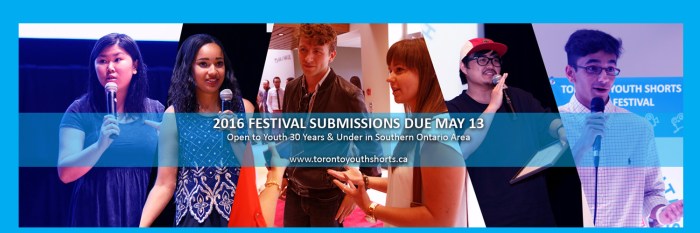
Interview with Festival Director Henry C.M. Wong (Toronto Youth Shorts Festival)

Toronto Youth Shorts is a spotlight showcase of cinematic short form content created by young emerging artists in the Greater Toronto and Southern Ontario Area. Each year, the festival acts as a professional forum for these young artists to engage their peers and the industry whilegrowing their professional profiles through learning and networking opportunities. An industry jury hands out the annual festival awards that come with production prizes. Behind the scenes, Toronto Youth Shorts is run by a volunteer force of savvy young professionals with a combination of training in the arts, event management, marketing, and media.

Go to Website 

Watch Video Testimonials of Festival

Interview with Henry C.M. Wong:

Matthew Toffolo: What is your Film Festival succeeding at doing for filmmakers? 

Henry C.M. Wong: Toronto Youth Shorts primarily serves the young filmmaking crowd of the Greater Toronto and Southern Ontario area. A lot of our participants are either students or young graduates getting their start in the industry and Toronto Youth Shorts act as a platform for them to see what the market is like. We invite established pros each year to give the filmmakers feedback on their work so the festival is also a great learning opportunity for them.

MT: What would you expect to experience if you attend the festival this year (2016)?  

HW: As an emerging filmmaker showing your film at Toronto Youth Shorts, there will be many opportunities for you to engage your peers, the industry, and potentially win cash prizes and production services toward their next project. As an audience, you will see what the future of the industry looks like through the lens of a young person in the city. The content we show tends to be raw, provocative, whimsical, and emotionally engaging and I predict this year’s lineup to be the same.

MT: What are the qualifications for the selected films?  

HW: For Toronto Youth Shorts, you have to be 30 years old or younger and your film must be 20 minutes or under. Any genre is accepted. Other than your typical drama, comedy, animation, and documentary pieces, we’ve screened video art, web series, news type pieces, experimental works, music videos, and PSAs. Content is becoming more and more of a blur that these distinctions don’t really matter anymore in a festival cinematic context.

MT: Do you think that some films really don’t get a fair shake from film festivals? And if so, why?  

HW: I don’t think that’s a fair statement to make. Just looking at Toronto as an example, there are hundreds of submissions-based events with different mandates and programming sensibilities. Even two festivals working within the same genre space will not be identical. Sure, there are some big events like TIFF and Hot Docs that are extremely competitive but overall, with the available platforms there are out there, a good film with audience appeal will likely find a home somewhere.

MT: What motivates you and your team to do this festival?  

HW: I enjoy the engagement with these young artists. It’s great to see content that’s different from your standard wide-release made on almost nonexistent budgets with a local touch.

MT: How has the festival changed since its inception?  

HW: I was a student in my postgraduate program when I started this festival. My personal and professional growth since have certainly influenced the way the event is structured. I look at films from that demographic a lot differently than when I first started and my tastes have certainly evolved. But I have a wonderful dedicated team that ensures there is an array of viewpoints and perspectives involved when choosing the films.
Our program is bigger than before due to the accessibility of the artform. The work we show is more daring and bold than it has ever been. One thing I take pride in though is how we still manage to maintain that intimacy for young emerging filmmakers in such a setting. It can be extremely daunting to try and navigate a beast like Cannes or TIFF when you’re new to this world and I hope Toronto Youth Shorts can provide the adequate baby steps for these young filmmakers to climb towards the diving board, so to speak.

MT: Where do you see the festival by 2020?  

HW: I hope Toronto Youth Shorts will become the official hub for young emerging filmmakers starting out in the industry. In a way, it already is as we have a lot of industry support and what we offer for young filmmakers is very unique even in the festival space. But it would be nice to see the same level of funding support come to us in the way that some of our peer festivals have.

MT: In one sentence, what makes a great film?  

HW: A great short film has a strong but concise story with compelling characters.

MT: How is the film scene in your city?  

HW: As an audience member, Toronto has a very vibrant film scene. Many big titles from all around the world play in Toronto on a regular movie screen. There are also many film festivals taking place in any given month, showcasing all kinds of content that could please any niche audience. Between blockbusters at the multiplex, the indie screening of a local artist at a community cinema, and critically acclaimed work playing at the local arthouse theatre, there is literally something for everyone.

torontoyouthshorts.jpg

__

Festival Director Bio: Henry founded Toronto Youth Shorts in 2009. His industry experience includes event management and marketing for the Banff World Media Festival, the Toronto Reel Asian International Film Festival, the Canadian Film Festival, and the Planet in Focus Environmental Film Festival. Henry was awarded a Legacy Award in 2016 and a Chinese Canadian Youth Achievement Award in 2011 for his contributions to the Toronto arts community.

Interviewer Matthew Toffolo is currently the CEO of the WILDsound FEEDBACK Film & Writing Festival. The festival that showcases 10-20 screenplay and story readings performed by professional actors every month. And the FEEDBACK Monthly Festival held in downtown Toronto on the last Thursday of every single month. Go to www.wildsound.ca for more information and to submit your work to the festival.


Interview with Festival Director Lana Westbrook (Boise Film Festival)

The Boise Film Festival supports and promotes film arts for the local community and for filmmakers and their audiences world-wide. Through the production of an annual film festival and year round events and educational activities, the Boise Film Festival engages the entire community in the appreciation of the film arts. Now in its 2nd year, the Boise Film Festival celebrates innovative and original filmmaking for the Treasure Valley Community.

Interview with Lana Westbrook:

Matthew Toffolo: What is your Film Festival succeeding at doing for filmmakers?

Lana Westbrook: Boise Film Festival strives to not only provide a spotlight for local-to-Idaho films and filmmakers, but to redefine how film festivals interact with filmmakers. Ultimately, we hope to be a monetary resource for any films and filmmakers wanting to film within Idaho and continue to expand from there. Currently in our second year, we’re working towards our big goals by bringing filmmakers to and highlighting their work in an exciting and thriving film community here in Boise. Filmmakers – local, national or international – interacting with each other and discussing how we continue to make films and the film industry great: that’s what we seek to provide for filmmakers.

MT: What would you expect to experience if you attend the festival this year (2016)?

LW: A strong, intimate connection with all other Festival filmmakers, team members, volunteers, and audiences. The Boise community’s affinity for film is incredibly prevalent and exciting right now, but we want to direct that passion in a productive and balanced way. It’s a fascinating time to come and check out the film scene here. For more insight, check out this story from the team behind “How to Be Cute and Break Hearts” after they came to our inaugural Boise Film Festival last September: http://www.boisefilmfestival.org/blog/2016/3/23/htbcabh-filmmaker-perspective.

MT: What are the qualifications for the selected films?

LW: We’re excited by an local-to-Idaho submissions, but are also thrilled when we receive submissions from near and far places. We look for diverse stories filled with real storytelling talent that shines through any kind of technology.

MT: Do you think that some films really don’t get a fair shake from film festivals? And if so, why?

LW: Sometimes. There are a lot of politics involved in creating a public event that is sponsored by various individuals/groups but highlights incredibly detailed, emotional, and/or personal content. BFF works hard to keep an independent and open mentality when watching our submissions.

MT: What motivates you and your team to do this festival?

LW: The love of film and our passion for shining the spotlight on Idaho as a production destination. We’ve all been filmmakers, writers, actors, etc. on a project before and that excitement for telling “Not the Same Old Stories” is what drives us to put on BFF. We want Boise and the rest of Idaho to be known not just for our potatoes, but also for how great those potatoes (and other amazing parts that make up our community) look on camera.

MT: How has the festival changed since its inception?

LW: We’re constantly trying to extend our outreach through community fundraising events and even adding an additional arm to this year’s Festival through the Idaho Comedy Film Festival, scheduled for January 2017. Any collaboration we can do with local productions and performers is what we’re interested in and we tend to follow that wherever it takes us while still focusing on the ultimate goal of BFF.

MT: Where do you see the festival by 2020?

LW: BFF would love to be everyone’s BFF by 2020 – filmmakers, writers, actors, investors for film, etc. from all around the world. BFF2020 will be our fourth year and it would be amazing to see how far we’ve come in terms of size, where our submissions come from, and we hope to have a featured reel of films made through our newly set-up production fund.

MT: What film have you seen the most times in your life?

LW: Lucky Number Slevin… Josh Hartnett and Lucy Liu are a match made in James Bond Heaven and that extra spice is added by a perfect redemption plot twist with the help of Bruce Willis, Sir Ben Kingsley, and Morgan Freeman.

MT: In one sentence, what makes a great film?

LW: A great film is one that makes you forget it’s a film at all.

MT: How is the film scene in your city?

LW: Exponentially growing! There are multiple film festivals the community relishes throughout the year and we’re so excited to be one of them. Production and industry is also growing with the help of a few production companies and film initiatives led by various local groups who know how incredible Idaho is as a landscape and backdrop for our stories.

boisefilmfestival

Interviewer Matthew Toffolo is currently the CEO of the WILDsound FEEDBACK Film & Writing Festival. The festival that showcases 10-20 screenplay and story readings performed by professional actors every month. And the FEEDBACK Monthly Festival held in downtown Toronto on the last Thursday of every single month. Go to www.wildsound.ca for more information and to submit your work to the festival.