Stratagem The Movie, 111min., Directed by Rick E. Cutts Rellik and his girlfriend Nosaer witness a crime and are immediately on the run as they try and elude a killer who seems to always be one step ahead of them. Will they escape can they escape? Follow along as Rellik and Nosaer try and escape a killer and even more important who is behind all the carnage?
I was motivated to make this film after it seemed like all the doors kept closing on me when I tried to get someone to make it for me. John Schramm that I spoke to from Kinolime and he is the one who told me that I should direct the movie and after he put the bug in my ear I went forward with learning how to direct and produce a movie myself.
2. From the idea to the finished product, how long did it take for you to make this film?
I started the idea almost 5 years ago. Then I wrote the book next the screenplay. We finished filming March of 2025 and all the editing was completed by May of 2025
3. How would you describe your film in two words!?
Action / Thriller
4. What was the biggest obstacle you faced in completing this film?
The biggest obstacle I faced in completing the film was probably some of the people not showing up on time and having to navigate around missing actors and filling in with other parts.
5. What were your initial reactions when watching the audience talking about your film in the feedback video?
My initial reaction with the audience feed back was yes yes yes that’s exactly what I wanted them to say. They spoke on the volume to low which is what I wanted because I wanted people to lean in to really listen on purpose. I wanted the movie to mimic real life. We can’t make out all the words sometimes in real life but we know what’s going on.
6. When did you realize that you wanted to make films?
I believe I always wanted to make films. I just didn’t know how to actually start.
7. What film have you seen the most in your life?
I have watched aliens and terminator 2 the most. Probably equally.
8. What other elements of the festival experience can we and other festivals implement to satisfy you and help you further your filmmaking career?
I think the biggest take away from the festival is the feedback. Most artist truly want to hear feedback from the audience to see what they felt watching the movie. That’s what we all generally do it for. To see if we can connect with the audience and will they get what we are trying to do.
9. You submitted to the festival via FilmFreeway. How has your experiences been working on the festival platform site?
I have a small amount of festivals I’ve submitted to. I believe that filmfreeway is truly amazing. It put a lot of different festivals at your finger tip that you can pick the one that best suits your needs.
10. What is your favorite meal?
Steak and potatoes is my favorite meal.
11. What is next for you? A new film?
My next film is already starting. We will start filming it next year January. Another thriller. I’ve also written another book. I’m always keeping busy.
Sauvetage, 5min., Australia Directed by Jackson Bentley, John Stokes When a special forces operative is held captive by a sadistic crime boss is interrogated, the only way to save him is through the element of surprise.
John – We were motivated to make this film as we were given the opportunity to work with the legendary Richard Norton. It was originally supposed to just be a short scene to be used as a pitch but Jackson and I wanted to go all out and produce a short film in a very short amount of time.
Jackson – Originally it was meant as a sizzler reel to show some producers, Richard Damien and I were pushing quite hard to have a feature film made starring Richard, however John is a very quick writer and everything just started aligning for us to turn this into a short.
2. From the idea to the finished product, how long did it take for you to make this film?
John – I believe it was a Thursday where the producer Damien told us that he had somehow convinced Richard Norton to join us for a shoot the following Sunday. I quickly wrote together the script which never went past version 1. We organised the location, crew and cast – all entirely for free as everyone wanted to work with Richard Norton. We filmed in 6 hours on the Sunday and I edited the film within a day after the shoot.
3. How would you describe your film in two words!?
John – Bitter Sweet. Bitter due to the lead actor Richard Norton recently passing away, but sweet since we now have an award to honor his memory. We are forever in debt to Richard for being involved in this film and he has been a great mentor and friend to us.
Jackson – I think John nailed it, it still feels very surreal that Richard has passed, I think we are still in a little bit of shock and grief but I’m so grateful for receiving his knowledge and just being able to call someone I admired so much a friend plus being able to direct him was even cooler.
4. What was the biggest obstacle you faced in completing this film?
John – The only obstacle was time, as we only had 6 hours to film. If we were being honest, there are some things we’d do differently if we had more time but we are proud of what we did with what we had! Other than that I remember Jackson became ill and went to hospital the day before! Luckily he was still able to make the shoot to co-direct with me.
Jackson – Haha yes directing a script you read only 12 hours before and on the back end of strong pain killers was definitely interesting. Having only 6 hours booked to shoot the short was definitely stressful, but I am so proud and honestly cannot believe our whole crew pulled that off.
5. What were your initial reactions when watching the audience talking about your film in the feedback video?
John – I actually didn’t realise that we would get audience reactions so it was a great surprise! It’s such an honour to hear feedback like this from half way across the world!
Jackson – I thought it was really cool! I’m just a guy from a very small town in Australia who 8 years ago was a drug addict with no direction in life, so this was very special to me.
6. When did you realize that you wanted to make films?
John – From a very early age I would think up film ideas and stories in my head. Despite never writing them down, I still remember all those stories very vividly. Maybe one day I should write them down!
Jackson – I’m only very new to the world of film, being a Director or an Actor was never really considered a realistic possibility where I’m from, I sort of fell into all this by accident from directing my old bands music videos, I found a love for it during that.
7. What film have you seen the most in your life?
John – My parents would say The Lion King (because I used to watch on repeat) or the Harry Potter moves from my wife and kids watching on repeat… but for me personally it would have to be the first two Alien movies. I’ve always been obsessed with the Xenomorph
Jackson – I’ve never told anyone this but probably Burlesque with Cher and Christina Aguilera, I love that film and the only other person that likes it is my sister, so I don’t bother watching it with anyone else! And then behind would be the LOTR trilogy.
8. What other elements of the festival experience can we and other festivals implement to satisfy you and help you further your filmmaking career?
John – I have loved everything about the festival, I honestly can’t think of any way to improve upon it. Potentially a certificate sent via email?
9. You submitted to the festival via FilmFreeway. How has your experiences been working on the festival platform site?
John – The experience has been great. FilmFreeway makes submitting so easy but also introduces you to new festivals you haven’t heard of!
10. What is your favorite meal?
John – Anything my mother makes!
Jackson – Italian food – Pizza, Pasta, Arancini, Italian wine
11. What is next for you? A new film?
John – We are looking to try our hand at horror later this year with a short film we are currently in pre-production for!
In his brief career, Adam Stone has already established himself as one of the top DPs in the industry today. It was an honor to sit down with him to talk about his craft.
Matthew Toffolo: You have worked with director Jeff Nichols on many films. Where did you first meet? Why does your working relationship work so well?
Adam Stone: Jeff and I worked on a total of 5 films (Shotgun Stories, Take Shelter, Mud, Midnight Special, and Loving). We met in film school at the UNC School of the Arts in the late nineties. I shot 2nd unit for a few of David Green’s early films (George Washington and All The Real Girls) and I guess Jeff liked what he saw. He asked me to come out to Arkansas to shoot Shotgun Stories in the summer of 2005. The project had absolutely no money but we convinced a core group of friends and family to crew-up and Joe Dunton Camera essentially gave us a Moviecam and some anamorphic lenses for free. We were fortunate to have talented people that believed in us. Without them the film would have never seen the light of day.
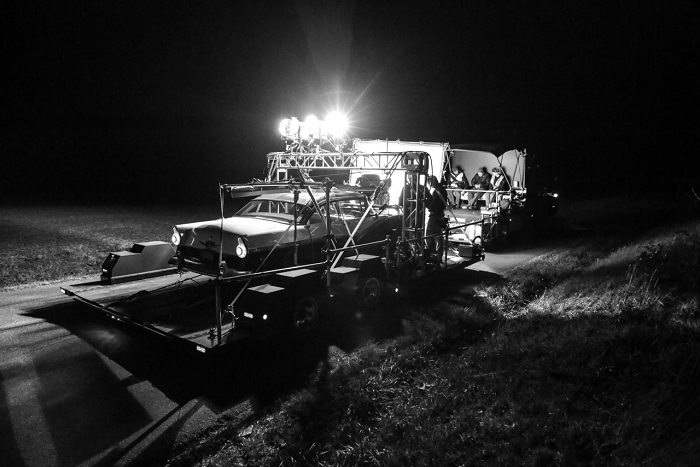
PHOTO: Cinematography for the film “Midnight Special”
While working on Shotgun Stories, Jeff and I found we had quite a bit in common. Aesthetically we liked to shoot in the South against a backdrop of kudzu, rusted out cars and interesting characters. We also shared a love of widescreen cinema with simple, yet stately, camera work. We combined those ingredients into a form of southern cinema people seem to enjoy. We have definitely come along way since the days of Shotgun Stories. It has been a great evolution with a true friend and mentor.
MT: Tell us about working on the landmark film Midnight Special?
AS: Midnight Special is a unique movie that’s kind of hard to categorize. It’s a genre bending mash-up of a road movie and sci-fi flick that pays homage to Perfect World, Starman, and Close Encounters. The movie starts without much explanation or backstory, all we know a man is on the run with his son. As the movie progresses we learn the boy has special powers and is dying. His father must keep him alive while the government and a religious sect are in pursuit. Despite all of the characters, themes, VFX events, and unanswered plot points the film is very simple. At the core, it’s a story about a father’s love for his son and how he will do anything to save his boy.
MT: Another film with Jeff, “Loving”, hit theaters in 2016. It’s set in the 1950s. When DPing period pieces, what type of research do you do? Was there another film(s) that was the inspiration to the cinematic design of the film?
AS: To be honest, Loving is the first period piece I’ve had the pleasure to shoot. Jeff’s script was based on a true story about a Supreme Court case so there was plenty of material to unearth. One of the greatest treasure troves was the work of Grey Villet. He was a super talented photographer that documented the story of Richard and Mildred Loving for Time Magazine in 1965. The pictures he took influenced the script, production design, costumes, and the cinematography.
I really fell in love with the objectiveness of Villet’s work. He always employed a wide lens so he really had to campout and wait for candid shots. Jeff and I adopted this technique and let a number of scenes play out in wide observational shots. We also recreated several of Villet’s photos in the movie. It was really cool to see his black and white work come to life in vibrant moving color. To be honest, Jeff and I had to get acclimated to dailies since we had been referencing Villet’s work for so long.
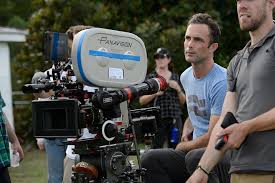
PHOTO: On set for film “Loving”:
MT: Do you have a favorite experience in your work as a Director of Photography? What film are you most proud of?
AS: Most of the projects I shoot, whether features or commercials, don’t ‘really’ contribute to the greater good of society. They might be artful or compelling but they do not teach or enlighten. That’s why I’m proud to have worked on Loving. Loving sheds light on an important part of history while telling a meaningful story.
I’m also proud how Loving looks. The camerawork is very simple and the lighting is very organic. My main goal was to let the cinematography be an afterthought. I wanted the audience to pay full attention to the story, characters, and locations – not the camera.
MT: You have Dp’d a few documentary films. What is the general difference between the working on a documentary in comparison to regular narrative film?
AS: I have always had a deep fascination and love of documentary films. The cinematography of Ron Fricke and the still photography of Dan Eldon compelled me to get behind a camera in film school. At that point in life, I wanted nothing more than to travel the world and shoot amazing people and locations at golden hour (to be honest I still have that desire and wanderlust).
Production-wise documentary work and features are not too different. Both utilize similar equipment, call sheets, tons of planning, long hours, and figuring out a creative way to shoot the story. The biggest difference between the two is the time it takes to complete a documentary. Many docs enlist several shooters because of the length and sporadic nature of the schedule.
Advertisement
MT: What type of film would you love to work on that you haven’t worked on yet?
AS: That’s a great question. I’d love to work on a film where the camera is constantly on the move and has the ability to effortlessly traverse every spatial plane. That approach totally goes against how I usually shoot a film where the camera is moored, grounded, and is always someone’s point of view. Seldom do I move a camera for the sake of moving a camera – I guess that’s why I have a fascination with moving it.
I believe my lust for camera movement is directly attributable to the amount of the Red Bull Channel I consume. I really love to veg-out and watch how they fly the camera. Fortunately, I might shoot a film this summer that begs for some fun full-throttle camera movement and I’d love to incorporate more techno crane and steadicam into the equation.
MT: What does a DP look for in a director?
AS: Before I take on a project I have to be intrigued by the script and most importantly believe in the director. The director is the captain of the ship and must have a clear vision and game plan to lead the film from its inception to the very end. Besides being a strong leader the director should be compassionate, open-minded, and have a sense of humor. If all these qualities align, I’m more than enthusiastic about taking on the project and working with the director.
MT: Do you have a Director of Photography mentor?
AS: I had a dear friend that was my cinematography teacher and mentor in film school. His name was Robert Collins and he really taught me to be a compassionate filmmaker. One of the biggest lessons I learned from him was to surround myself with good people on set. He always said the friends you make in film are more important than anything you shoot. I totally agree with his sage advice. Unfortunately, Robert passed away several years ago and he is deeply missed.
MT: What do you look for when hiring your main team? Gaffer. Key Grip. Camera Operator. Etc…
AS: I’ve been very fortunate in my career to work over and over with same core group of individuals. The crew I work with are my best friends and co-creators. On occasion, when I hire a new member he/she must share the same attributes as the rest of the crew. He/she should be kind, artistic, hard working, honest, and most importantly soulful. It can also be noted, I rather hire someone that is green and enthusiastic over someone more experienced and jaded.
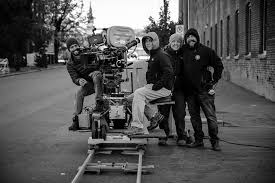
PHOTO: Adam and the camera department from the film “Midnight Special”
MT: Where do you see the future of camera/lighting technology in film?
AS: Though I’m a proponent of celluloid I love where digital filmmaking is headed. Digital filmmaking has come a long way over the past decade. Camera sensors have gotten better and the lenses look more filmmatic and less clinical. I really admire films such as Revenant that use digital cinema in a smart way. Lubezki made a beautiful movie harnessing the best attributes of digital. He used great equipment (Alexa 65 and Panavision Master Primes), shot in amazing light that accentuates a digital sensor, and flew lightweight digital cameras. That coupled with jaw dropping landscapes, a simple story, and seamless VFX work made for a movie that really resonated with me. I truly love when movies use technology to advance a story instead of letting technology overtake the story.
Lighting has also come a long way in the past 10 years. LED, plasma lights, and iPad enabled dimmer boards have evolved and become onset staples. The ability to control all of the lights on set, whether on a stage or location, from a tablet is amazing. With just a few finger swipes you can audition lights (even dim and recalibrate the color temperature). This is a great timesaver when lighting a big exterior night scene.
MT: What film, besides the ones you’ve worked on, have you seen the most times in your life?
AS: I really don’t watch the films I shoot once they are released – since I see them so many times in post. I guess the two films I’ve seen the most is Some Like It Hot and Baraka. I have a weird ‘thing’ for old screwball comedies and I have always been obsessed with Baraka. I guess if I was stuck on a deserted island those would be my go to films.
PHOTO: Adam Stone at work:
_____
Interviewer Matthew Toffolo is currently the CEO of the WILDsound FEEDBACK Film & Writing Festival. The festival that showcases 10-20 screenplay and story readings performed by professional actors every month. And the FEEDBACK DAILY Film Fesival held online and in downtown Toronto on the last Thursday of every single month. Go to www.wildsound.ca for more information and to submit your work to the festival.
1. What motivated you to make this film? It seems that facts don’t count much any longer in this world. People are trending to want to believe whatever feels most comfortable for them and social media makes it incredibly easy for false preachers to “prove them right”. While this music and video crossover art project was not inspired by recent events, but had its origins roughly eight years ago, with folks like Musk and Trump my dystopian fears from back then what might happen were actually exceeded. Which is quite scary.
2. From the idea to the finished product, how long did it take for you to make this film? It all started out as an album project. I wanted to produce one and the same song in different versions by working with different instrumentalists. The version were meant to be symbols for social media bubbles, where the same story is spun in different ways, even though it’s the same story. Production time of the EP was roughly four years. I already had a different script for the video early on which I threw away entirely in the beginning of 2024, as it seemed outdated and not focused enough on what I wanted to convey. So I wrote a new one and fine tuned it with my creative team in spring 2024. Principal shooting took 3 1/2 days. Editing and postproduction was done on and off in a matter of a view weeks.
3. How would you describe your film in two words!? Disturbingly true
4. What was the biggest obstacle you faced in completing this film? Finding enough people to play extras. It’s really funny. One would think people are really interested in being close to movie productions, but we had a hard time finding enough people. It worked out in the end.
5. What were your initial reactions when watching the audience talking about your film in the feedback video? It was surprising to see how different people see or realize different things and perceive/interpret them.
6. When did you realize that you wanted to make films? Well, very early on as a kid. I don’t remember exactly. Cameras always fascinated me. I did not go into it as a career, though, but found my way doing it. I only do projects I really feel an inner urge to do.
7. What film have you seen the most in your life? That’s a hard one. I tend not to watch films all over again. I’m always interested in new stuff I haven’t seen. But if one came to mind I’ve seen plenty of times, it’s probably Life of Brian. Or to name a more odd choice: The Hudsucker Proxy.
8. What other elements of the festival experience can we and other festivals implement to satisfy you and help you further your filmmaking career? The best thing always is: Exposure. I’m doing this in the hope to reach as many people as possible.
9. You submitted to the festival via FilmFreeway. How has your experiences been working on the festival platform site? FilmFreeway is great. It’s easy to use and gives you a lot of choice. Even though there also are a lot of questionable formats on there. One has to be careful which Festival to select that also provides value to you as an artist. To me that’s either festivals that take place in person. Festivals where you can win money prices. And I really love Wildsound because you get audience feedback by random people who probably have never heard from you before.
10. What is your favorite meal? Am I allowed to only name one? Pizza, Chicken Tikka, Burgers, Enchiladas
11. What is next for you? A new film? Looks like I’m in my dystopian phase. The next song and short project will be about AI. Hoping to be ready for release before reality beats my imagination again.
SOLVENT, 94min,. Austria Directed by Johannes Grenzfurthner While searching for Nazi documents in an Austrian farmhouse, a team of experts uncovers a hidden secret buried in its bowels. American expatriate Gunner S. Holbrook becomes obsessed with solving the mystery, and as his sanity wanes, he must confront an insatiable evil. Can he find redemption before it drains the life out of him?
“Solvent” was born out of a need to confront and dissect Austria’s historical baggage, but not in a traditional or sanitized way. The farmhouse setting, tied to my own family history, became a metaphorical stage for exploring guilt, complicity, and the grotesque ways the past seeps into our present. I’ve always been fascinated (and horrified) by how easily we fall into patterns of denial and silence. This film is my attempt to scream into that silence, to mix surreal horror and black humor into a narrative that forces us to face uncomfortable truths. The past isn’t dead. It’s a festering wound we carry, and I wanted to visualize that.
2. From the idea to the finished product, how long did it take for you to make this film?
The production timeline was chaos in the best possible way. We, of course, wanted to shoot in my grandfather’s derelict farmhouse, but the mold situation was far worse than anticipated—it was spreading into neighboring houses. With health department issues looming, we had just two months to shoot on-site before we had to completely empty the place of furniture, old clothes, and papers. Act 1 was filmed while Ben Roberts and I were still figuring out Acts 2 and 3. We had a rough arc in mind, but the details (and even characters) emerged organically. For instance, Bartholdi’s entire plot only materialized after we had already shot chunks of footage. The whole process felt like molding clay while the potter’s wheel tried to electrocute us.
3. How would you describe your film in two words!?
Demon piss.
4. What was the biggest obstacle you faced in completing this film?
You mean besides financing this madness? Balancing historical authenticity with the surreal, comical, absurdist elements was a constant tightrope walk. I wanted to explore Austria’s cultural and historical trauma without reducing it to a simplistic caricature of Nazi horror. And then, of course, there were the technical challenges. The goddamn puke machine we built wouldn’t work, and some of the shots in the wine cellar were ridiculously hard to pull off because of how narrow the space was. My cinematographer, Florian Hofer, was incredible—he carried that heavy camera rig on his head the whole time. One day, he was so exhausted, he literally couldn’t lift his head off the ground anymore. And then there was the editing. Anton Paievski is a wizard at his craft, but we spent long, grueling days together assembling this puzzle of a film, often without a clear picture of how it should look. That’s when the movie truly came to life—through trial, error, and a shared willingness to embrace the chaos.
5. What were your initial reactions when watching the audience talking about your film in the feedback video?
Oh, it was great, really. There were plenty of comments that echoed things I’d heard from other reviewers and journalists, but also some surprising insights that hadn’t come up before. One of the feedback videos focused heavily on body parts (eyes, genitals) and really dug into the body horror aspects of the film. That level of detail was refreshing because, usually, reviewers either gloss over those elements or make a quick side joke. To hear the audience engage so directly with the visceral, grotesque elements of Solvent felt like validation for embracing those uncomfortable, raw aspects of the story.
6. When did you realize that you wanted to make films?
It wasn’t a single “aha” moment, but rather a slow accumulation of tiny rebellions. As a teenager, I was hacking together camcorders and creating absurdist little flicks—short films have been a constant throughout my life. But I came to feature-length films relatively late, making my first feature documentary only about 10 years ago. Before that, my creative energy was spread across a range of mediums: interactive media, theater, performance art, and hacking cultural tropes with my art collective monochrom. Filmmaking became the ultimate synthesis of all these influences, letting me explore narrative, technology, absurdity, and politics on a grand scale. And let’s face it: artists just want a pat on the back—but never know what to do with it when they get one.
7. What film have you seen the most in your life?
That’s hard to say! After making Masking Threshold, I was invited by Letterboxd to create a list of films that influenced me. I welcomed the challenge. I am a nerd for “lists.” But when I sat down, it was pretty overwhelming. Every movie I’ve ever watched has shaped how I view film and the world. Some films are, for various reasons, enormously present in my memory. Poltergeist, for example, because I first saw it when I was 9, alone on late-night television in our dark living room while my parents and friends had a BBQ outside. I felt I was dying of fear throughout the entire experience. Or RoboCop, because as a 12 year old nerd in a shabby theater in my Austrian hometown, it kindled my interest in politics, technology, and toxic waste that melts your face off. I didn’t include those films (and moments) in my compilation because they feel too big and too dominating. I decided instead to choose films that, for whatever biochemical reason, my brain goes back to when it is wandering, digesting, and scheming.
8. What other elements of the festival experience can we and other festivals implement to satisfy you and help you further your filmmaking career?
I’d love to see festivals embrace more unconventional programming—films that blur genres, push boundaries, or make people deeply uncomfortable in the best way. Offering spaces for filmmakers to connect in informal, chaotic ways—like a drunken roundtable or a “roast your film” session—could be fun.
9. You submitted to the festival via FilmFreeway. How has your experience been working on the festival platform site?
Not too shabby! FilmFreeway feels like an online dating site for filmmakers—it’s streamlined, efficient, and takes a lot of the soul-crushing bureaucracy out of the process. That said, it could use a bit more personality. Imagine rejection emails that came with a personalized insult or a cryptic haiku—it would at least make “thanks but no thanks” a little more fun. Maybe they should lean into the drama of the rejection process—filmmakers are used to theatrics, after all.
10. What is your favorite meal?
Wiener Schnitzel with a side of existential crisis. There’s something comforting about the simplicity of a Schnitzel—especially when paired with a debate about whether the universe is inherently meaningless. Comfort food!
11. What is next for you? A new film?
There are ideas, definitely. But if I told you, I’d have to lock you into a cellar—the good old Austrian way. Stay tuned, but keep your cellar door locked, just in case.
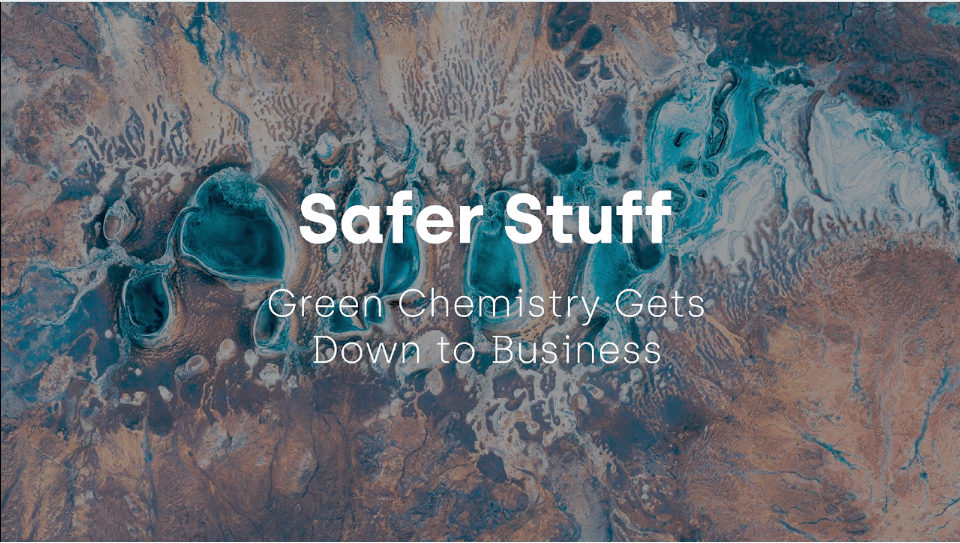
An upbeat exploration of solutions to the problem of toxic chemicals in everyday products and the part green chemistry plays, highlighted by a passionate group of green chemists who, along with young entrepreneurs and popular brands that are adopting green chemistry solutions, intentionally design chemicals and products with safety in mind.
Directed by William Hemminger
Review by Victoria Angelique:
The pilot episode of the documentary series, SAFER STUFF, is engaging and exciting for anyone wanting to learn about green chemistry. It doesn’t linger on the history of climate change. It’s wanting to excite the audience about the innovative technologies that make up the thrilling world of clean solutions that would make our world a better place.
The experts do a fantastic job at explaining the scientific terms so that anyone that might struggle when it comes to understanding climate change, how nature works and how green chemistry will help improve the way we live will become excited over this technology. The importance of mimicking nature is explained through showing how it is explained to children through the example of sharks and how it is mimicked to help hospitals through a technology that won’t harm landfills. The transition to show how green chemistry is improving food through a clean technology by using pheromones instead of pesticides, with the explanation that pesticides might be harming the human body, is a great way to engage the viewer and keep them invested in this film’s call to action.
Learning from nature is what many native cultures from around the world have done for generations, this series shows that there are scientists that have also been stating that and are doing something about it as they implement green chemistry in everyday items. Nature is the best to learn from and they prove it throughout this short film with how a shark or even a spider, can teach scientists on how to improve our world.
SAFER STUFF makes it clear that green chemistry is necessary for the health of people and the environment. It’s a rare film that makes a call to action in a way that makes the viewer actually want to help and learn more about this new technology. The audience will want to get involved and watch future episodes. Anyone who watches SAFER STUFF will be excited about the future.
The purpose of the West Texas Film Festival is to screen diverse films from both directors and producers that would not normally be featured in West Texas as well as regional media makers. We seek short films, documentaries, features, animation and student films as well as screenplays from all over the world that have the pioneer spirit of filmmaking. We are a registered nonprofit organization in the State of Texas.
Matthew Toffolo: What is your Film Festival succeeding at doing for filmmakers?
Harlan Whatley: We bring regional filmmakers together in West Texas so they can share ideas with filmmakers from other areas such as New York City.
2) What would you expect to experience if you attend your upcoming festival?
A good mix of films about Texas, international films, students films and documentaries. We don’t have bands and a lot of parties as we are focused on the films.
3) What are the qualifications for the selected films?
5 minutes minimum in length, English or English subtitles, and all films should be completed after January 1, 2018.
4) Do you think that some films really don’t get a fair shake from film festivals? And if so, why?
Yes, for a number of reasons. Maybe the selection committee was biased in some way, the time slot for a screening. Things like that.
5) What motivates you and your team to do this festival?
The Permian Basin is known for oil and gas production. Other than movie theaters, we are one of the few film outlets in the area.
6) How has your FilmFreeway submission process been?
Excellent. They provide so many tools for our film festival managers and staff that make the process run very smoothly.
7) Where do you see the festival by 2023?
Hopefully, it will be larger and include both Odessa and Midland and have more funding and sponsorship.
8) What film have you seen the most times in your life?
The Discreet Charms of the Bourgeoisie (1972) by Luis Bunuel. I discovered it in college and have seen it a dozen times or so.
9) In one sentence, what makes a great film?
The ability to capture and audience’s attention and keep them entertained all the way to the end.
10) How is the film scene in your city?
Most people here are watching mainstream, family-oriented films at the theatre or on Netflix.
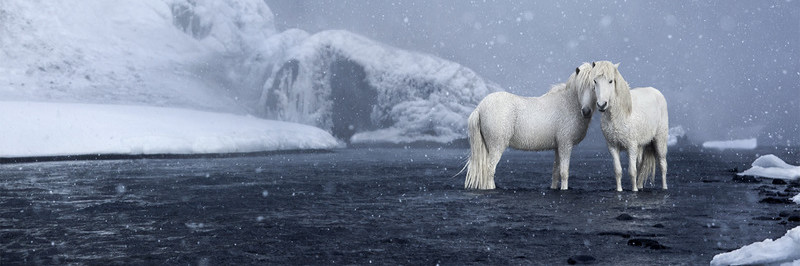
The EQUUS Film Festival is the world’s premier showcase for domestic and international Equestrian Content feature films, documentaries, shorts, music videos, commercials, training and educational materials, art and literature.
Matthew Toffolo: What is your Film Festival succeeding at doing for filmmakers?
Lisa Dierse: The EQUUS Film Festival is the only Equestrian themed film festival that includes equestrian art, literature and music. We also have an On Demand platform for our content that gives filmmakers access to audiences after the festival. We are a touring film festival, after our main fest in December where our WINNIE awards are distributed we spend the following year
2) What would you expect to experience if you attend your upcoming festival?
A wonderful introduction into the world of equestrian films and documentaries.
3) What are the qualifications for the selected films?
Must be horse content.
4) Do you think that some films really don’t get a fair shake from film festivals? And if so, why?
For sure, horse themed film and documentaries get looked over all of the time! That’s why the EQUUS Film Festival was created, to give these filmmakers the respect they deserve.
5) What motivates you and your team to do this festival?
Love of horses and being able to show the world their beauty through film.
6) How has your FilmFreeway submission process been?
Wonderful, it has made my job as festival director a whole lot less stressful!
7) Where do you see the festival by 2023?
We will be expanding our Global reach through more international Tour Stops
8) What film have you seen the most times in your life?
The Black Stallion
9) In one sentence, what makes a great film?
A film that has the ability to bring tears to your eyes one minute and make you laugh out loud the next.
Matthew Toffolo: What is your Film Festival succeeding at doing for filmmakers?
Suzanne Curry: We offer an atmosphere of comraderie and personal service. Our committee members strive to meet with every filmmaker. In many cases, we establish personal relationships with them. Some of them come back year and year, and we really enjoy watching them grow.
2) What would you expect to experience if you attend your upcoming festival?
Whether you are a filmmaker or a patron, you will get the opportunity to meet with the filmmakers. You’ll get to see a lot of great films at the cost of one regular movie ticket. You’ll see films you may not have had the opportunity to see elsewhere. For instance, this year we are showing Oscar-nominated Roma for free. We also have shorts that are premiering. We also have the premiere of a new movie called Hollywould, by Joshua Coates. It stars Academy Award and Golden Globe-nominated actor Eric Roberts, who will be coming to the festival and the After-Party. Every year we attract Hollywould talent.
Oh, and anyone can pose on the Red Carpet!
3) What are the qualifications for the selected films?
We take the time to review every film that is submitted through Film Freeway. We judge each on it’s own merit, using the overall qualities that make a good film. Subjects do not matter, we strive to take a variety of genres and cover different subjects. Some years we wind up with films that have the same message. This year it seems several of our films have messages about the new social aspects of today’s society.
4) Do you think that some films really don’t get a fair shake from film festivals? And if so, why?
We had more submissions than ever before. I think that every film festival looks for certain things. We wish we could have selected more but for a smaller festival like ours – and the big ones have this problem also – there is only so much screen time available! We like to take a variety of genres, and we also like to showcase local talent, especially students. I find it very enjoyable watching all of the films that are submitted. I get to hear new voices, experience new views and see what’s on the cutting edge of videography and cinematography.
5) What motivates you and your team to do this festival?
Our committee members are all volunteers. What we all have in common is that we love film. We love being a part of this world. We love giving new filmmakers a theater to show their work in.
6) How has your FilmFreeway submission process been?
It’s an excellent platform.
7) Where do you see the festival by 2023?
Hmmm… well we are in our 9th year this year, and we are already planning our 10th. Each year we get more and more films and more people. By 2023, I hope we are still doing what we are doing and that more people look forward to the festival each year, without us having to spread the word so much! It would also be great if we went a third day at the theater, as we have more films than screen time. Sponsorships would help that, so by 2023 I hope we have added to our list of continuing sponsors.
8) What film have you seen the most times in your life?
Oh that’s an easy one, Love Actually followed by Home Alone. Actually – I think Home Alone may be the tops just because it is a movie I can watch with my whole family at the holidays. I am currently co-producer of a new film, A Case of Blue, that is being Executive Produced by Scott Rosenfelt, who produced Home Alone. So happy to be able to work with him. That film puts a smile on my face each time I watch it and is synonymous with the holidays with me family.
Rom coms are my favorite genre. I have my summer rom com viewing list and my winter/holiday list. I like to escape with movies and laugh. There’s enough bad news on every other channel these days. days.
9) In one sentence, what makes a great film?
What makes a great film? A film that you are so engrossed in, you don’t want to get up to go to the bathroom or get a snack (or that you put on pause even for a few seconds to get up), one that you can’t figure out the ending, get so emotionally involved in that you forget you’re not in the movie, and then, one that you want to watch again. I remember the first time I saw La La Land. I didn’t want to leave the theater… I couldn’t believe the ending. So I sat there with the girls half my age who were balling their eyes out and not getting up. I recall one Gen Z saying “That is the best movie I have ever seen.” A great film just hits you in your gut.
10) How is the film scene in your city?
We are near NYC, that will always be the the hub but many students at NYC schools live in Ridgewood and the surrounding towns, so there is a lot of talent here.
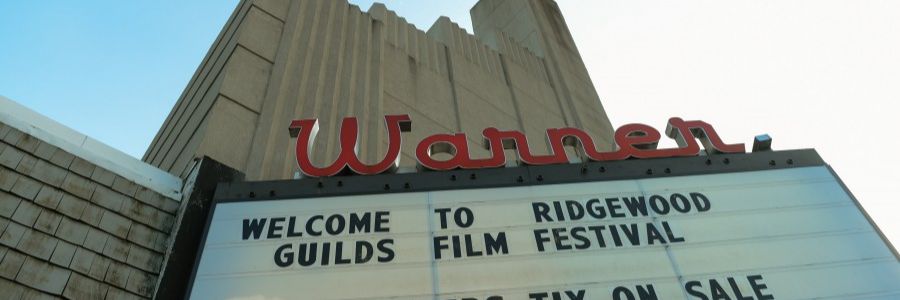
Suzanne Ordas Curry has owned her own PR firm but as of late has been in show biz, producing and marketing independent films and series. Because of her love of film, she volunteers as PR Director and a judge for the Ridgewood Guild International Film Festival. She also owns a site which covers films and young filmmakers, www.BehindtheScenezz.com.
Festival designed to create a powerful cultural – educational platform that aims to unite Ukrainian and foreign film makers and introduce viewers works with professionals and amateurs.
1. What is your Film Festival succeeding at doing for filmmakers?
Kaniv Film Festival succeeds for filmmaker at monetary awards and advertising especially for the Ukrainian State Film Agency and different film production studios.
2. What would you expect to experience if you attend your upcoming festival?
If you attend Kaniv Film Festival you will get:
– a lot of communication with actors, producers, cameramen and other persons, who involved to movie industry;
– different master-classes connecting the filmmaking processes:
– impressed by the beautiful landscapes and friendly treatment;
– a new friends.
3. What are the qualifications for the selected films?
The films of any genre direction and timekeeping are admitted for participation (Short 25 min., a full meter to 90 minutes.), the production not before 2 years of the festival conducting (not before 2016). For films in a foreign language, the subtitles in Ukrainian and English are the requirement.
4. Do you think that some films really don’t get a fair shake from film festivals? And if so, why?
Speaking about our festival, we hope that our jury finds quality films.
5. What motivates you and your team to do this festival?
Firstly we want to give a chance for filmmakers to get their names and their films known in movie industry. And we also want to do the powerful platform for communication between filmmakers.
6. How has your FilmFreeway submission process been?
Everything was ok. Thanks to FilmFreeway we got a lot of international participants.
7. Where do you see the festival by 2023?
We have a lot of plans. We are improving all the time and we are trying our best for the people who works in cinematography world. We want to see a lot of both Ukrainian and international participants present in our festivals. We also want to attract experts who will share their experience. And we also want to give our participants large monetary awards and world recognition. It’s not by chance our mission is- “If you want to get Cannes- let’s start from Kaniv”.
8. What film have you seen the most times in your life?
We can’t choose just one. Many films left a great impession.
9. In one sentence, what makes a great film?
To our mind the combination of idea, extraordinary and aftertaste makes a great film.
10. How is the film scene in your city?
In our city we have Movie Theater and outdoor screening.




 Festival Reviews