Interview with Festival Director Frances Hill (Down Under Berlin Film Festival)

Down Under Berlin was established in 2011 and is a project of the not-for-profit association Down Under Berlin – Australian Film Festival e.V. Since 2011 it has developed into the largest film festival in Europe dedicated to Australian and New Zealand film. As such it provides not only a window to storytelling and cinematography from Down Under but also a platform for filmmakers, who want to present their work to German audiences. The festival showcases a wide range of films including Indigenous cinema, short films, documentaries, experimental and feature films. Down Under Berlin is a member of festiwelt, the Berlin Network of Film Festivals.

http://www.downunderberlin.de

Interview with Festival Director Frances Hill

Matthew Toffolo: What is your Film Festival succeeding at doing for filmmakers?

Frances Hill: Down Under Berlin Film Festival gives Australian and New Zealand filmmakers a new platform for their films in Europe.

MT: What would you expect to experience if you attend the festival this year (2016)?

FH: A range of high quality shorts across all genres, strong independent feature films, entertaining and moving documentaries, and a selection of features from established directors.

MT: What are the qualifications for the selected films?

FH: The films, the directors, or the subject matter must be connected with Australia or New Zealand. We encourage submissions that show off the high standard of filmmaking that can be found Down Under, as well as films that give varied perspectives on these countries and their cultures.

MT: Do you think that some films really don’t get a fair shake from film festivals? And if so, why?

FH: A film festival is always a showcase of many different films, which makes it hard to highlight each and every film that is screened. It’s also a matter of audience and press interest: those films that have bigger names attached to them will be easier to market. But supporting up and coming filmmakers who have produced quality films is just as important, audiences appreciate good films regardless of budget and celebrity.

MT: What motivates you and your team to do this festival?

FH: The Down Under Berlin team is passionate about bringing new and unseen films to Berlin, we want to show our international audience films they cannot see anywhere else. We also see the appreciation from European and German audience members for the cultures of Australia and New Zealand and want to support indigenous filmmaking from Down Under in Europe.

MT: How has the festival changed since its inception?

FH: Our first festival included mostly shorts with a few longer documentary films, which was a result of our reach at the time. We are now part of the Berlin film festival network and are also gaining recognition in Australia and New Zealand for our work. We have increased the number of films and audience members steadily over the years, and are proud to bring great films to Berlin, which otherwise would not be seen in cinemas.

MT: Where do you see the festival by 2020?

FH: We hope to take Down Under Berlin to other cities in Germany, maybe to other countries too. We would like to work more with film schools from Australia and New Zealand whose students are producing amazing films, which we believe should be seen in Europe too.

MT: What film have you seen the most times in your life?

I think The Castle from Australia and Run Lola Run from Germany.

MT: In one sentence, what makes a great film?

A compelling story with captivating visuals.

MT: How is the film scene in your city?

In Berlin the film scene is great, we have studio productions next to independent projects, film school shorts alongside visiting directors from all over the world. Also we have many independent cinemas screening a diverse range of films, including short film nights. Berlin is a fantastic place to make and see films.

down_under_berlin

Interviewer Matthew Toffolo is currently the CEO of the WILDsound FEEDBACK Film & Writing Festival. The festival that showcases 10-20 screenplay and story readings performed by professional actors every month. And the FEEDBACK Monthly Fesival held in downtown Toronto on the last Thursday of every single month. Go tohttp://www.wildsound.ca for more information and to submit your work to the festival.

Interview with Festival Director Matt Beurois (Paris Music Video Underground)

Paris is a vibrant venue for culture, with lots of venues for shows, and the city itself is a gigantic set to shoot images. The festival selects Music Videos and dance movies from all over the world and they screen it in Paris and give young artists both sides of the camera to be noticed for their talents.

https://filmfreeway.com/festival/ParisMusicVideoUnderground

Interview with Matt Beurois:

Matthew Toffolo: What is your Film Festival succeeding at doing for filmmakers?

Matt Beurois: Paris as a mixed history with Music Video festival. There is a huge one, but it is for well established artists and artists with labels… That doesn’t really need a festival exposure. We want to offer a real opportunity for artists, bands, directors working in music vids to have they work screened, seen, shared.

MT: What would you expect to experience if you attend the festival this year (2016)?

MB: A great atmosphere ! We visited quite a lot of underground venues in Paris. For our first year we choose the Highlander Scottish Pub because they have two screens, and because they really like our idea and our way of doing it. Music Videos will be a full part of this night in the underground cave of the pub.

MT: What are the qualifications for the selected films?

MB: We just are expecting to discover music videos. A music vid can easily be enjoyed : there’s music, images, it is short. But for the same reasons, and long after the MTV generation, a music vid has turned to be just another piece of marketing. What we like are music videos made with serious, sometimes ambition, and we love to watch something fun. We have selected very different music videos, in their music genres, but also in their styles, graphic design, editing… We select music vids that we want people to discover an so we can tell them : “take a look at this one, is comes from that other side of the world, it really has some guts”.

MT: Do you think that some films really don’t get a fair shake from film festivals? And if so, why?

MB: We all know there are different ranges of festivals. The A type festival are like the holy grail most of us will never be able to reach. Under that there are the big festivals, the ones you never get selected to even if your work really would deserve it. Above that, there are hundreds of festivals, and we choose to create festivals that may, can and do accept and select strange, different, bloody, experimental stuff. We want to be one of these festivals the filmmakers are proud to take part of, and we try to do it so it is useful for artists to be part of our selections.

MT: What motivates you and your team to do this festival?

MB: We created a couple of movie festivals before, as the Paris Art and Movie Awards. I personally worked in the music business as a manager for 10 years, and I directed myself several music videos. I love this genre, because first of all I love music, and I love cinema. After the Paris Art and Movie Award had such a success, we created the Paris Music Video Underground, so we can just focus on one category, and create a competition that really emphasis these talents.

MT: How has the festival changed since its inception?

MB: This is our very first edition, and we are really happy about the submissions we had. We hope the festival will grow !

MT: What film have you seen the most times in your life?

MB: “The Frighteners” by Peter Jackson, just before he dived into the LOTR. This movie is an underestimated masterpiece, a perfect balance between entertainment and good script. For his first movie in the US, of this scale, I have much respect for Jackson.

Also, “The Truman Show”. When you watch this movie for the first time, your jaws will drop. Then, the more you watch it, the more it may freaks you out. This is so our world now…

MT: In one sentence, what makes a great film?

MB: The script has to be good.

MT: How is the film scene in your city?

MB: From the watchers point of view, we have many theaters, Original Versions, independent venues and major distributors. Paris is the greatest place in France to watch movies.

If you’re talking about the film business, Paris is hopeless, stuck in the mafia-like family process.

paris_music

Matt Beurois is a multi-award winning director and screenwriter with a background in Modern Letter in French High School, and a degree in Advertisement Communication and Marketing. He directed 25 shorts, and wrote 5 features, one of the screenplays being award nominated in the UK. He also produced and directed several music videos through the years, in Paris and London. He also is the founder of the Paris Art and Movie Awards, the only international festival in Paris intended for indie filmmakers and producers. His last movie to date as director : ‘Man of the Past’ has been selected by 31 festivals worldwide, winning 4 awards in Los Angeles, Paris, Croatia and India, including Best International Film Award in Hollywood, and screened in Cannes Film Festival in may 2014.
_____
Interviewer Matthew Toffolo is currently the CEO of the WILDsound FEEDBACK Film & Writing Festival. The festival that showcases 10-20 screenplay and story readings performed by professional actors every month. And the FEEDBACK Monthly Festival held in downtown Toronto on the last Thursday of every single month. Go towww.wildsound.ca for more information and to submit your work to the festival.

Interview with Festival Director Jacob Javor (South Florida Student Film Festival)

The South Florida Student Film Festival (SFSFF), open to middle and high school students world wide and taking place at Movies of Delray/Lake Worth, is an organization founded by students designed to bring about awareness concerning the art of student filmmaking. SFSFF shines a positive light upon Middle & High School students who love the beauty of motion pictures.

http://www.sfsff.org

Interview with Jacob Javor:

Matthew Toffolo: What is your Film Festival succeeding at doing for filmmakers?

Jacob Javor: As we are in our debut year, we only hope to help local young filmmakers get jumpstarts on their careers, by learning, creating, and meeting new people.

MT: What would you expect to experience if you attend the festival this year (2016)?

JJ: At SFSFF, both filmmakers that submitted and attendees alike can expect a valuable experience in which you can learn more about your passion by speaking to industry professionals and conversing with your peers; all while having a great time watching student short films and enjoying the company of our amazing sponsors!

MT: What are the qualifications for the selected films?

JJ: At SFSFF, we are looking for GOOD STORIES. We primarily focus on the story your short film tells, and how it could connect to a potential audience. We also search for films that are well edited, shot and produced. We are not sticklers on visual appeal in the sense of using big-budget cameras and equipment. In fact, we encourage the opposite! Resourcefulness is extremely important in this industry, (and beyond) and we love to see filmmakers make use of what they have. So if all you have is your phone to shoot, worry not and film on!

MT: Do you think that some films really don’t get a fair shake from film festivals? And if so, why?

JJ: Absolutely. Although we have not experienced many film festivals in particular, we think it’s very possible some judges may penalize submissions based only on their visual appeal. We entirely understand the limitations tight or non-existed budgets may set, and feel strongly that films should not be judged on anything but the quality story it tells.

MT: What motivates you and your team to do this festival?

JJ: We, the co-founders of SFSFF, are but high school students ourselves, and have a mutual passion for storytelling. We attempt to help young aspiring filmmakers like ourselves get jumpstarts on our careers, and the excitement of such a passion motivates us to drive on!

MT: How has the festival changed since its inception?

JJ: As we said previously, we are in our first year, and we are constantly developing and preparing for what we hope to be a successful and beneficial experience.

MT: Where do you see the festival by 2020?

JJ: By 2020, or even sooner, we hope to be known and recongnized near and far as a beneficial event that attendees enjoy and look forward to.

MT: What film have you seen the most times in your life?

JJ: Probably Forrest Gump, or The Lion King.

MT: In one sentence, what makes a great film?

JJ: Great films make you feel something.

MT: How is the film scene in your city?

JJ: South Florida is home to a few big independent film festivals: including the Palm Beach & Ft. Lauderdale International Film Festivals (PBIFF and FLIFF). We only dream to be as successful as them, and greatly appreciate all they’ve done to help us in our passionate pursuits!

sfsff.png

_____
Interviewer Matthew Toffolo is currently the CEO of the WILDsound FEEDBACK Film & Writing Festival. The festival that showcases 10-20 screenplay and story readings performed by professional actors every month. And the FEEDBACK Monthly Festival held in downtown Toronto on the last Thursday of every single month. Go towww.wildsound.ca for more information and to submit your work to the festival.

Interview with Festival Director Eric Quander (Joshua Tree International Film Festival)

The 2016 Joshua Tree International Film Festival’s mission is to provide a platform for independent and noteworthy films and filmmakers to connect with industry professionals and the diverse audience that recognizes Joshua Tree as an oasis of creativity, art and culture throughout the international arts community. With special focus and support for projects that encompass the diverse vision of the urban and LBGTQ communities and bring to light the perspectives of indigenous cultures from around the world, we hope to cast the widest possible net to grow future generations of filmmakers and movie goers in Joshua Tree and beyond.

http://www.jtiff.org/

Interview with Eric Quander: 

Matthew Toffolo: What is your Film Festival succeeding at doing for filmmakers?

Eric Quander: The Joshua Tree International Film Festival offers filmmakers the opportunity to exhibit their work before an enthusiastic, curious and intelligent audience, in a community known for its creativity and mystic surroundings.

MT: What would you expect to experience if you attend the festival this year (2016)?

EQ: The theme for this year’s festival in “SACRED SPACE”, and will feature an eclectic mix of features and shorts that exhibit filmmakers and characters exploring their relationship to both their inner and exterior spaces.

MT: What are the qualifications for the selected films?

EQ: Submitted films are screened by a panel of judges, who are committed to the vision of the JTIFF. Films are distributed and are based on a set of criteria which are scored 1 (the lowest) to 10 (the highest). Films with the highest cumulative scores are submitted to the Programming Committee who make final determinations based on the festival’s theme and anticipated level of audience interest.

MT: Do you think that some films really don’t get a fair shake from film festivals? And if so, why?

EQ: I can’t really speak for other festivals, but JTIFF screeners and judges are trusted to view each submission with an open mind. We received over 100 submissions to this year’s festival, and undoubtedly among them, there were more than a few that simply don’t meet the standard of the type of films we want to screen before an audience. We don’t force screeners and judges to endure an obviously amateurish work, or those that lie far beyond the theme.

MT: What motivates you and your team to do this festival?

EQ: Our inaugural event last years was motivated by a challenge as to if a film festival in our community could attract an audience, in that we succeeded; however, admittedly, neither my staff or myself were not prepared for the technical difficulties that we experienced, which really threw the entire schedule off. We learned a lot from that experience, and this year, we are motivated to produce as professional event as possible. We have ½ as many films, a trained volunteer staff and venues that make it easier for attendees to see more films.

MT: How has the festival changed since its inception?

EQ: The JTIFF is much more organized this year. We have taken the time to really coordinate our efforts with venue owners, and we all recognize that he festival is a community effort, that will benefit all. We have been able to educate ourselves on how a festival should go, how to make seeing films easy for attendees and how to prepare technically, to ensure that every film on the schedule is screened. We’re proud of the work we have done, and know that returning attendees will see a big difference, while first time attendees will enjoy the experience.

MT: Where do you see the festival by 2020?

EQ: That will be our 6th festival, and honestly, I have no idea how the JTIFF will change in the intervening years. I do know that we will be around; between now and then, I would mid engaging in building a permanent space for the JTIFF, that shows films monthly. In the meantime, we will aim to exhibit independent films that challenge audiences, encourage introspection, and stimulate audiences to contribute to the positive growth of the local and global community.

MT: What film have you seen the most times in your life?

EQ: Night of the Living Dead (b&w version)

MT: In one sentence, what makes a great film?

EQ: A great film’s main character stimulates its viewer(s) to consider their life and environment.

MT: How is the film scene in your city?

EQ: Although there are a few sporadic screening throughout the year, the JTIFF is our community’s main platform to see independent films in the hi-desert.

joshua_tree.jpg

_____
Interviewer Matthew Toffolo is currently the CEO of the WILDsound FEEDBACK Film & Writing Festival. The festival that showcases 10-20 screenplay and story readings performed by professional actors every month. And the FEEDBACK Monthly Festival held in downtown Toronto on the last Thursday of every single month. Go towww.wildsound.ca for more information and to submit your work to the festival.

Interview with Bill Hass, Programming Director (Fort Worth Indie Film Festival)

The goal of the FWIFS is to promote grassroots collaboration between and among filmmakers. They want to call attention to the quality work produced within the independent film movement. They want to do their part to provide a platform for independent artists to share their work and unique voices; to network and gain encouragement from their peers.

Website: http://fwindiefilm.com/

Interview with the Festival’s Programming Director Bill Hass:

Matthew Toffolo: What is your Film Festival succeeding at doing for filmmakers?

Bill Haas: We are just three years old so we are still growing and discovering our persona. We’re seeing that we are becoming successful at relationship building. We work really hard to create an environment of collaboration versus competition. We are structured so that everything is physically close. This provides opportunity for filmmakers to see each other’s films and network. We are also building strong relationships with other festival directors who attend FWIFS. The filmmakers have opportunity to meet those directors and learn about other festivals to which they can successfully submit. For filmmakers that are actually from the Dallas-Fort Worth Metroplex, we’re providing a platform for them to show their work to family and friends in a festive environment. We’re still growing, but I can see that in the years to come, one of the key things that we will be successful at is building bridges. Establishing relationships with filmmakers, helping them grow their audience in the Fort Worth area and helping new and young filmmakers establish relationships with other filmmakers and festivals so they can continue to grow in their craft.

MT: What would you expect to experience if you attend the festival this year (2016)?

BH: If you attend the festival this year you can expect to have a complete independent film experience. We have quality films from around the world. A lot of the filmmakers will be in attendance, so you will get to meet and talk to the people who are creating the art. As a filmmaker, if you attend, you can expect a highly positive experience. All filmmakers will be celebrated for their work and treated like the professional artists they are.

MT: What are the qualifications for the selected films?

BH: A strong story. Whether it is a documentary or a narrative, the story needs to be interesting. We look for good writing, plausible concepts and a strong production value relative to the budget. Beyond that, we like to see good acting that results in characters that we believe an care about. Basically, we want to see a respect for the craft for filmmaking. If the person that made the film has a love for the craft, that will show; and the film made with respect for the craft is a strong candidate for acceptance to the festival.

MT: Do you think that some films really don’t get a fair shake from film festivals? And if so, why?

BH: I see this topic come up in some form or fashion quite a bit. I honestly believe that all legitimate festivals fully consider every film submitted. Ultimately though, I can only speak for myself. We have a diverse screening committee that watches all of the submitted films. I don’t vote and I don’t speak to the committee about the films so as not to influence them with my biases. When making decisions regarding which films will be accepted, I lean heavily on their assessments. Beyond that, there are films I had a negative opinion of based on the synopsis. But then I watched the film and the story and production value turned me around, and we accepted the film. I honestly thing that all legitimate festivals fully consider every submitted film; I know for a fact that we do.

MT: What motivates you and your team to do this festival?

BH: We’re filmmakers ourselves. We know how difficult it is to get a low budget independent film in front of an audience. We want to do what we can to help other filmmakers connect with an audience and grow in the craft. That being said, this festival is not about us. We hardly ever show our own films, and if we do, we’re not eligible for awards.

MT: How has the festival changed since its inception?

BH: We’ve not really changed a lot since our inception. Our target is the true independent low budget filmmaker. We want to show the films produced by the teams that are telling quality stories with little to no budget. That is where we started and that is where we plan to stay. We have grown. We have two screens this year so we’re showing twice as many films. Aside from that, we’re the same festival that we were in year one. Next year, we’re planning to add a screenplay competition.

MT: Where do you see the festival by 2020?

BH: By 2020 we’ll be seven years old. By then we should be in a position to add at least one more day to the festival, or another screen (or both). We may be in a position to increase the value of our awards and possibly provide some level of assistance or sponsorship to student filmmakers.

MT: What film have you seen the most times in your life?

BH: The Five Heartbeats.

MT: In one sentence, what makes a great film?

BH: A great story makes a great film.

MT: How is the film scene in your city?

BH: The film scene in Fort Worth is getting better. We have a new film commission and the film community is really excited about that. We’re looking forward to more opportunities developing at all levels over the next several years.

forth_worth.jpg

_____
Interviewer Matthew Toffolo is currently the CEO of the WILDsound FEEDBACK Film & Writing Festival. The festival that showcases 10-20 screenplay and story readings performed by professional actors every month. And the FEEDBACK Monthly Festival held in downtown Toronto on the last Thursday of every single month. Go towww.wildsound.ca for more information and to submit your work to the festival.

Interview with Festival Director Todd Looby (BendFilm Festival)

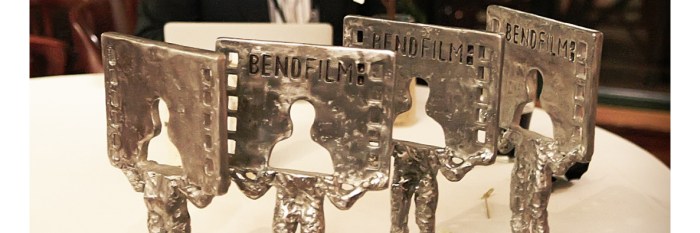
A near-constant fixture of MovieMaker magazine’s 50 Film Festivals Worth the Entry Fee, BendFilm celebrates independent films and the risky, passionate, tough and talented people who make them. This year’s festival runs from Thursday, Oct. 6 – Sunday, Oct. 9, with most venues located in Bend’s historic downtown in Oregon and the nearby Old Mill District.

Website: http://bendfilm.org/

Interview with Festival Director Todd Looby

Matthew Toffolo: What is your Film Festival succeeding at doing for filmmakers?

Todd Looby: BendFilm is committed to considering each film that comes in our door fairly. We want to champion the work of independent filmmakers who deserve more attention – whether we premiere ‘discoveries’ or present the work of established filmmakers whose work is under-appreciated by commercial audiences. We fundraise to pay travel expenses for our feature filmmakers and provide free lodging for all of our filmmakers. Last, but definitely not least, we award up to $8,500 in cash awards including $5,000 for the “Best of Show” as well as a $60,000 camera package from Panavision.

MT: What would you expect to experience if you attend the festival this year (2016)?

TL: We received a great grant from the Roundhouse Foundation to host at least 5 female filmmakers and their films. We want to be a force to overcome the vast gender disparity in filmmaking. A huge part of that is introducing and championing accomplished work to our audience. Though our programming process is still in an early stage, we have an incredibly promising crop of films to present to our audience. We are lining up intriguing panels, one of which will hopefully be our 3rd straight Film Fatales panel. Finally, we have commitments from some of Bend’s best venues to host what we think will be our best parties yet where our filmmakers and audience will continue make lasting bonds.

MT: What are the qualifications for the selected films?

TL: Selected films for the majority of our slots will not already have screened in the region, not yet have wide distribution and must be solidly independent.

MT: Do you think that some films really don’t get a fair shake from film festivals? And if so, why?

TL: I can’t speak for other festivals, but it is something I felt as a filmmaker myself. Our Programmer Erik Jambor and our programming team make an extraordinary effort to give everyone a fair shake by watching each submitted film at least twice. Every film that we accept or have to reject will be fairly vetted and include input from our loyal and talented screening committee.

MT: What motivates you and your team to do this festival?

TL: I fell in love with the film festival experience as an aspiring filmmaker attending the Chicago International Film Festival. That love was solidified when I presented my first film festival at the Iowa Independent Film Festival. Since those early years, I’ve screened at dozens of festivals and they all reinforced the importance of the festival world in building filmmaking careers. We want to make discoveries to champion the work of filmmakers that should be doing this for a living. And, perhaps most importantly, connect those filmmakers with such a generous, critical and appreciative audience that we have here in Bend.

MT: How has the festival changed since its inception?

TL: Our festival was great since its inception in 2004. For many years it was a “best kept secret” festival to the independent filmmaking community. Now we have 3-4 times the amount of submissions than we did just 3 years ago, so it is catching on quickly. With our community’s incredible support and enthusiasm for our programs we’ve added many year-round screenings and education programs that meet our community’s demand for greater access to films while at the same time foster more filmmaking from aspiring filmmakers.

MT: Where do you see the festival by 2020?

TL: That’s hard to quantify, but what the Board, Erik and I really want to do is make BendFilm a “must-stop” on the festival circuit. By 2020, we want to parlay our commitment to discovery to gain filmmakers the distribution and larger audiences that they deserve.

MT: What film have you seen the most times in your life?

TL: It’s probably a tie between “Midnight Run”, “Dances with Wolves” and “Blues Brothers”. The first 2 stem from the late 80s when I was a teen with a lot of time discovering the magic of film at the same time we first got cable at home. Those films still resonate with me, though I haven’t seem them in years. “Blues Brothers” was one of the first films I saw in the theaters at the age of 5. Growing up in Chicago, it was a mainstay on all of our TVs and VCRs. I think each of those films holds up so well and serve as the standard-bearers in their respective genres.

MT: In one sentence, what makes a great film?

TL: To me, as someone who’s made (or attempted to make) 3 narrative films for under $10,000, I love films that overachieve their budgets and transcend what the script may look like on paper. That “litmus test” can be applied to films working on every level – from independent to Hollywood or Academy-nominated films. 3 films that come to mind in recent years are Eric Steele’s “Bob Birdnow’s Remarkable Tale of Human Survival and the Transcendence of Self”, Asghar Farhadi’s “A Separartion” and Ruben Ostlund’s “Force Majeure”.

MT: How is the film scene in your city?

TL: Almost every week I get emails from filmmakers that are new in Bend or are seeking to move here. We already have solid production companies doing great work and a lot of talented filmmakers living here, but mostly working outside of Oregon. With the support of the Oregon Film Office and the newly formed “Central Oregon Film Office”, we hope to see a better utilization of that talent and more narrative and documentary work produced right here.
bendfilm.jpg

_____
Interviewer Matthew Toffolo is currently the CEO of the WILDsound FEEDBACK Film & Writing Festival. The festival that showcases 10-20 screenplay and story readings performed by professional actors every month. And the FEEDBACK Monthly Festival held in downtown Toronto on the last Thursday of every single month. Go towww.wildsound.ca for more information and to submit your work to the festival.

The Italian Contemporary Film Festival 2016 – NOW PLAYING

ICFF 2016 (The Italian Contemporary Film Festival)

The Italian Contemporary Film Festival has become among the most important Italian film festivals in the world.  The ICFF takes place every June during Ontario’s “Italian Heritage Month.” and includes 9 Days and Nights of cutting edge Italian film & culture.

The ICFF named one of the Top 10 Film Festivals in North America Industry Events with internationally acclaimed filmmakers and producers North American premieres and Italian‐Canadian independent films, Q&A sessions with filmmakers, actors and academics and

Glamorous Opening and Closing Galas at Roy Thomson Hall and The Ritz-Carlton Hotel.

Your film reviewer will be present at both opening and closing night parties.  He is also on the jury to pick the BEST FILM of the festival.  This is his 3rd year on the jury.

The festival is presented in a variety of Canadian cities including: Toronto, Vaughan, Niagara, Hamilton, Montreal and Quebec City.

Nine days to celebrate the brilliance of Italian contemporary cinema and filmmakers from all over the world.  Nine days to explore Italian contemporary cinema and discover the cultural richness of Italian heritage.  Nine days to experience the influence of Italian film, culture, fashion and design.

Using the power of the moving image to both entertain and educate, ICFF defies conventional perspectives on complex and challenging issues facing both the Italian and the global communities. All films are in Italian or other foreign languages subtitled in English (and French in the Province of Quebec)

CAPSULE REVIEWS OF SELECTED FILMS:

ALASKA (Italy/France 2014) ***1/2

Directed by Claudio Cupellini

ALASKA begins in the halls of a grand hotel in Paris, where Fausto and Nadine (Elio Germano and Àstrid Bergès-Frisbey) meet for the first time. Fausto , an Italian is a waiter while Nadine is a beautiful young French girl, there to appear in modelling auditions, against her will. When the two meet they fall in love but their love is strung with obstacles.  Basically a romantic comedy/drama with more drama, Fautso is jailed at the start.  When he is let out, two get back together in what could also be called a toxic relationship.  They are also both crazy and very lonely people deep inside.  This is not the first romantic film about a dysfunctional couple.  The recent Hollywood film MR. RIGHT dealt with a similar crazy couple, a girl who falls for a hit-man.  MR. RIGHT was dead awful.  Fortunately ALASKA gets things totally right.  Must be the romantic blood in the Italians.  Director Cupellini creates two characters that audiences care for, crazy though they may be.  It is hard not to root for underdogs whose only dream in life is to find love and to do better. Fausto finally achieves his dream and attains money with the opening of the nightclub called ALASKA.

Trailer: https://www.youtube.com/watch?v=a7bA-KltnBI 

THE COMPLEXITY OF HAPPINESS (La felicità è un sistema complesso) (Italy 2015)  **

Directed by Gianni Zanasi

This is a film about the strangest profession in the business world.  Enrico Giusti (Valerio Mastrandrea) works the task of befriending incompetent individuals who happen to own companies and then convincing them to sell out thus preventing the failure of the businesses and the loss of thousands of jobs.  But his latest venture involving Filippo and Camilla, two siblings aged 18 and 13, who become orphans when their entrepreneur parents lose their lives turns out too much.  Things are made worse with the arrival of his brother’s foreign girlfriend.  The film is too predictable in where it is heading.  Director Zanasi cannot decide whether to go of comedy or drama with the result of a quite boring film with incidents (like Enrico jumping into a pool) making little sense.  Making a film is obviously a complex business for Zanasi.

Trailer: https://vimeo.com/146098448

DON’T BE BAD (Non essere cattivo) (Italy 2015) *****

Directed by Claudio Caligari

The film is set in 1995 in the seaside town of Ostia, where Pasolini gave life to his characters in his movies.  The protagonists in this story are Cesare (Luca Marinelli) and Vittorio (Silvia D’Amico) two small time drug pushers trying to earn some some money for various purposes.  This is the drug scene, prior to crystal meth and GHB, accurately portrayed in the film with the use of music (and songs like Be My Lover) and drugs like coke and ecstasy (so true when the characters scrutinize the different stamps on the pills).  Cesare is completely crazy.  Vittorio falls in love with a girl who convinces him to go straight.  So he gets a job brick laying (what else do Italians do?) and tries to get Cesare to do the same.  Trouble is that it is impossible to break bad habits.  Through all this, director Caligari gets his audience to root for his characters.  Crazy as Cesare is, he has a niece dying of aids that he needs money to pay for her medication.   This film is deeply emotional in the way the characters try their best to escape a drug crazed lifestyle.  Marinelli who is also in MY NAME IS JEEP plays another crazed character, (also in the Oscar Italian winner Best Foreign Film THE GREAT BEAUTY) and is a star to watch!  My pick as the Best Film of the Festival.

Trailer: https://www.youtube.com/watch?v=K1p-ulARNHc

MIA MADRE (MY MOTHER) (Italy/France 2015) ****
Directed by Nanni Moretti

Nanni Moretti is a well-known Italian film director who has won prizes before at Cannes.  Known for his apparently simple looking but nevertheless complex films, Moretti has seldom failed to impress.  His latest film , MY MOTHER inspired  by the recent death of his mother is one of his best works.  He plays Giovanni, the brother of the protagonist, a female film director Margherita (Margherita Buy) whose socially relevant film is as disturbing to her as her personal problems which include her separation, daughter and dying mother in hospital.  Margherita’s problems likely express the director’s own difficulties in life.  If all these sound too serious, humour is provided by the entrance of Margherita’s new actor John Turturro playing a loud obnoxious character whose name, Barry Huggins is as absurd as his behaviour.  But the best parts of the film are the segments where Moretti captures life’s finest moments despite the distractions.  “Why are you being so capricious?” Margherita asks her mother at one point in the hospital.  “Because it is fun,” is the reply.  Margherita Buy, excellent in the lead role delivers a Best Actress performance.   She does not have to resort to shouting or overacting to make a point – her face is good enough to reflect all the despair and worry of her character.  A beautiful film that succeeds in manny levels!  While other films teach one how to enjoy life, MIA MADRE teaches one on life itself.

Trailer: https://www.youtube.com/watch?v=aOa_A48vPLs

QUO VADO? (ITALY 2016) ****

Directed by Gennaro Nunziante

QUO VADO?  begins with the hero of the story, Checco (Checco Valdone) as a child asked what he wants to be when he grows up.  While his classmates mention respectable positions such as a surgeon or scientist, Checco picks ‘permanent position’.  A permanent position or posto fisso is a public servant job, like one in Canada in which pay, benefits, pension and lifetime employment are practically guaranteed.  Checco eventually earns one and is pleased as hell.  But things are too good to be true.  A reformist government changes this and Checco is offered a cheque as severance to be laid off.  As a result of refusing, he is sent off to far off postings so that he will eventually give in.  One of these is in Norway where he falls in love with Valeria.   QUO VADO? works so well because it makes fun of Italian mores while finally respecting them for all it is worth at the end.  Italy is looked upon as a rude and uncultured country compared to Norway.  But Checco like all Italians love their shouting, queues, flight delays and other inconveniences.  Director Nunnziante blends all these into a zany comedy aided by a superb comedic performance by Checco Zaldone.  Zaldone is sort of a clown, but a more level headed sexier Roberto Beligni who gets his girl.   Though QUO VADO? is politically incorrect at times, especially in the scenes with African natives, it is still quite funny.

Trailer: https://www.youtube.com/watch?v=PvzgHb2rrrA (in Italian)

THEY CALL ME JEEG (LO CHIAMAVANO JEEG ROBOT) (ITALY 2015) ***1/2
Directed by Gabriele Mainetti

The film plays like a more realistic Italian version o the action super anti-hero movie DEADPOOL.  The pornography-watching hero is a friendless thug who after falling into the toxic Tiber River develops self-healing and super strength powers.  The only person who believes in him is a young crazy lady who believes his is the video game hero Jeeg.  That video game is very popular in Italy so non-Italians might miss the film’s inside jokes.  The girl wants to be the video game’s princess and Jeeg promises to buy her the princess dress.  All this is made crazier with a not the crazy character by the name of Gypsy played by Luca Marinelli who also appears in DON’T BE BAD, ICFF’s best film of the series.  If all these antics sound crazy, director Mainetti actually pulls all this off in a rather heart-felt entertaining little action drama.

Trailer: https://vimeo.com/153906155

USTICA (THE MISSING PAPER) (Italy 2015) ***

Directed by Renzo Martinelli

“People that don’t mind their own business are looking for trouble.” That is the warning given to private helicopter pilot Valja (Lubna Azabal) when she searches for the truth of the downing of a commercial plane.   On June 27th 1980 a DC9 belonging to the private Italian airline ITAVIA disappears from the radar screens, crashing between the islands of Ponza and Ustica.  81 persons died.  The hypotheses on the disappearance of the DC9 are three: structural failure, a bomb in the rear toilet of the plane, or an air-to-air missile which struck the civil aircraft by mistake during a battle between unidentified military fighters.  Roberta Bellodi, a Sicilian journalist who lost her daughter on that night and Corrado di Acquaformosa, a Deputy in the Italian Parliament, member of the Commission set up to throw light on the crash of DC 9 entangling themselves in a labyrinth of cover-ups, disappearance of proofs and key witnesses. The film has the message that one has to go about doing the right thing, no matter the consequences.  The film uses over-sentiment to get the message through.  Bring Kleenex!  The film is also very, very funny, the best part being the confrontation between the Deputy and his mentor.  Unfortunately, the humour is unintentionally funny.

Trailer: https://www.youtube.com/watch?v=d7J3P_zQezo

by Gilbert Seah

Interview with Festival Director Michel Zgarka (Views of the World Film & Music Festival)

Born in the creative brains of four Film, TV and Production and Marketing professionals, the originally US based Views of the World Film & Music Festival’s primary goal is to present films, scripts & film scores which have the power to raise awareness about vital social issues and inspiring audiences to take positive action. This year (2016), and for at least 2 more years, the beautiful city of Montréal will be the home of the Views of the World Film and Music Festival. This year, it will be from September 22 to 25.

http://www.viewsoftheworldfestival.com/

Interview with Michel Zgarka:

Matthew Toffolo: What is your Film Festival succeeding at doing for filmmakers?

Michel Zgarka: As our name and mission statement indicates clearly, we open the eyes of the attendees, participants and supporters on the rich existence of many cultures around the world, some ignored by the public, some too weak to spread their own message and some having no easy access to the modern Media

MT: What would you expect to experience if you attend the festival this year (2016)?

MZ: Solidity of the script
Quality of production
Being closed to our mission statement
Originality and creativity

MT: What are the qualifications for the selected films?

MZ: As there are thousands of film festivals on our planet, good films can be seen in many places. What is missing is the right context that makes the festival goer better understand and at times discover these new films popping up around the globe. Most festivals are more geared to media attention due to major talent attendance rather than the inherent quality of the properties (film, script and/or music), our main goal is to show talent through a complete work.

MT: What motivates you and your team to do this festival?

MZ: Discovering little “gems” and sharing these discoveries with all of the Festival attendees.

MT: How has the festival changed since its inception?

MZ: Little by little we become more attuned to the needs of producers and filmmakers from outside of the main media centers and our festival develops better tools to serve everyone

MT: Where do you see the festival by 2020?

MZ: Among the 10 best Festivals on Earth

MT: What film have you seen the most times in your life?

MZ: LA Confidential, Night Porter,

MT: In one sentence, what makes a great film?

MZ: The story (its script)

MT: How is the film scene in your city?

MZ: Blooming!

_____
Interviewer Matthew Toffolo is currently the CEO of the WILDsound FEEDBACK Film & Writing Festival. The festival that showcases 10-20 screenplay and story readings performed by professional actors every month. And the FEEDBACK Monthly Festival held in downtown Toronto on the last Thursday of every single month. Go towww.wildsound.ca for more information and to submit your work to the festival.

Interview with Festival Director Lynn M. Holley (Fine Arts Film Festival Santa Barbara)

The Fine Arts Film Festival premiered in Santa Barbara, California in 2010; it then occurred as a film festival in Venice, CA in 2015. In 2016 it will explode as an International Fine Arts Film Festival full of shorts plus a few full length features back in fabulous Santa Barbara, California! It will screen at more than one venue, including an outdoor night-time extravaganza. Originally conceived as a festival of films about the fine arts, it now incorporates dance and experimental art forms and approaches.

Interview with Lynn M. Holley:

Matthew Toffolo: What is your Film Festival succeeding at doing for filmmakers?

Lynn M. Holley: Exposure they might not get in major, all-purpose festivals.

MT: What would you expect to experience if you attend the festival this year (2016)?

LMH: Diversity of place, thought and disciplines. We will screen films from around the world.

MT: What are the qualifications for the selected films?

LMH: Made within the last 3 years; related to the visual arts or dance and have some importance to the field.

MT: Do you think that some films really don’t get a fair shake from film festivals? And if so, why?

LMH: All-purpose film festivals often ignore the disciplines in the arts: visual, dance, music, science and technology collaborations, etc..

MT: What motivates you and your team to do this festival?

LMH: The love film and the love of arts.

MT: How has the festival changed since its inception?

LMH: We now take in entries through http://www.Filmfreeway and focus on more genres in the arts.

MT: Where do you see the festival by 2020?

LMH: A larger, more international scene in Santa Barbara CA, which helps promote other film festivals here including the main one SBFF and the Jewish Film Festival.

MT: What film have you seen the most times in your life?

LMH: Caught-In-Paint by Rita Blitt (6 min); and numerous spy films over decades.

MT: In one sentence, what makes a great film?

LMH: There is an importance, a purpose for viewing it that does not require long narratives or dialogue.

MT: How is the film scene in your city?

LMH: Incredible; we are, after all, Santa Barbara, CA, home to Hollywood and the world.

fine_arts_film_festival.jpg

Lynn M. Holley is an executive consultant to the arts, a resident curator at the new center in Santa Barbara, CA for art, science and technology (SBCAST.org). She was initiated into film as a young film reviewer for a daily newspaper, and then as a journalist and director of galleries and an art center. She is a former journalist, narrative writer and filmmaker for promotions in the arts. She has a B.S. in Communications and an MA in Museum Studies. Ms Holley just returned from giving a presentation to a Global Conference in England on Museums, titled: The Dance of the Muses from Las Vegas to the Louvre.

_____
Interviewer Matthew Toffolo is currently the CEO of the WILDsound FEEDBACK Film & Writing Festival. The festival that showcases 10-20 screenplay and story readings performed by professional actors every month. And the FEEDBACK Monthly Festival held in downtown Toronto on the last Thursday of every single month. Go towww.wildsound.ca for more information and to submit your work to the festival.

Interview with Film Festival Director R. Presley Stephens (Tampa Bay Underground Film Festival)

The Tampa Bay Underground Film Festival was founded in 2014 by award-winning Bay Area filmmakers, actors, critics, artists and cinephiles to catch the independent films that fall through the cracks and end up… underground.  TBUFF celebrates good quality low budget films from Tampa and around the world and provides a professionally presented showcase for them.  The festival is usually held in early December, which is known as “late summer” in central Florida, and features more than a hundred films of all genres and lengths.

http://tbuff.org/

https://www.facebook.com/TampaBayUndergroundFilmFestival/

Interview with R. Presley Stephens:

Matthew Toffolo: What is your Film Festival succeeding at doing for filmmakers?

R. Presley Stephens:: We think film festivals should be about the filmmakers, which really isn’t the case with many other festivals. The original purpose of regional film festivals like ours was to showcase a lot of Sundance-type independent films that many people who lived far from Utah, Los Angeles and New York would have no opportunity to easily see since most such films weren’t going to get wide theatrical distribution.

But this was decades ago, before the proliferation of cable TV in general, before Sundance Channel specifically, before the internet and high quality streaming. What’s the point in every regional festival showing the “best of” Sundance, Cannes and Toronto when those movies are going to be on Sundance TV and Netflix six months later? Meanwhile filmmakers themselves don’t need festivals for distribution quite as much as they used to because there are so many other avenues to get those deals now and if all else fails, put it on YouTube and let the people decide. So the key festival selling points for most filmmakers now are networking, accolades and the relatively rare opportunity to see their work on a TRULY big screen in front of an enthusiastic live audience, all of which TBUFF provides.

And we try to go the extra steps of making that experience as exciting and fulfilling as possible with very thoughtful Q&A sessions for every film, marketing opportunities and meet & greet events. We also strive to excel with professional presentations (several TBUFF founders have worked at movie theaters and know a thing or two about projection), thorough preparation and frequent communication, which we’ve been told by our filmmakers is impressive enough to help set us apart from many other festivals.

MT: What would you expect to experience if you attend the festival this year (2016)?

RPS: TBUFF 2016 will once again be at a real cinema, offering the cast and crew and their friends and family and other festival attendees the opportunity to see the films on the big screen with digital sound. It’s usually a 4 day event (Dec. 1-4 this year), and we have movies all day and night long followed by after-parties with free appetizers at classy area restaurants most nights. We had a film panel on microbudget production and distribution last year and plan to have more this year. We have yet to have a Hollywood celebrity show up but certainly lots of local celebrities. We’ve been told that the crowning jewel of our event is our Oscars-like awards ceremony (“The Buffys!”) featuring clips of each nominated film (giving the always sold-out audience an opportunity to see why the films they probably didn’t get to watch are nominated), teary acceptance speeches, professional photo ops, engraved trophies and other ceremony trappings. For many of the nominated filmmakers, it’s basically another opportunity for a large audience to experience their films.

Undoubtedly one of the biggest selling points for northern filmmakers planning to attend is that TBUFF is held in subtropical Florida during the middle of winter, with highs usually in the 70s and the famous Pinellas County beaches less than 30 minutes away. Our attendance by selected filmmakers from outside the Sunshine State has been phenomenal – our main theme revolves around “native films” standing their ground against “invasive films” (hence the alligator-python tussle in our logo), so we usually have a fairly even split between Florida and non-Florida films, and so far more non-Florida filmmakers have shown up to represent their movies than Florida filmmakers! Last year that included not only several New York, Los Angeles and Canadian filmmakers, but also filmmakers from Ireland, England and Poland! Usually more than 60% of our films have representation at TBUFF, which seems crazy to us considering how young the festival is and its “underground” roots. This was even true the first year, before we had built up any real reputation at all, and we’re not all that sure why, but we’re certainly proud of our status.

MT: What are the qualifications for the selected films?

RPS: If you mean, the technical qualifications, we don’t really have a lot. Thus far we don’t even have a time limit on how long after completion a film can be submitted, but as we get bigger, that could change. As far as what we look for with selections… it’s honestly a mostly Potter Stewart scenario: we know it when we see it. But variety is very important to us – we have at least one short block of almost every genre, and we like conventional movies as much as weird stuff that our “underground” name would suggest. We showcase dramas, comedies, action, adventure, crime, musicals, horror, sci-fi, thrillers, fantasies, mysteries, romances, animation, children’s, religious, lgbt, foreign, documentaries, experimental – basically anything, and it doesn’t have to bizarre or on the fringe, though we definitely delight in those. Thanks to some good relationships with the theaters we’ve worked with, we’ve been able to program a lot of movies – 125 last year, which is on par with a lot of bigger “international” festivals. That included more than 20 features.

MT: Do you think that some films really don’t get a fair shake from film festivals? And if so, why?

RPS: It obviously depends on the festival, but certainly features without known talent have much more uphill battles on the overall circuit than features with stars or most any short, although “long shorts” (like 30-45 minutes) are difficult to program and often glossed over by festivals regardless of quality. TBUFF certainly isn’t going to turn its nose up at a celebrity-filled feature if it fits our program (we showcased a horror film in 2014 that had a bunch of well-known actors in it, including one who grew up in our area), but probably because of the word “underground” in our name, we rarely get such submissions, and we would indeed like to give as many slots as possible to good quality starless features that unknown “starving artist” filmmakers practically sacrificed their livelihoods to make. As far as long shorts, some of the best shorts that have been submitted to us were on the long side, so we found room for them. Again, we’ve been able to program a lot more movies than the typical underground film festival thanks to our good relationship with the movie theaters that we’ve worked with, as our festival has been much more of an asset than a burden to them.

MT: What motivates you and your team to do this festival?

RPS: Most of the TBUFF founders (including co-executive director Jason Beck, co-executive director Kelly Nunez, marketing director Chris Maria Reyes, assistant programming director Jay Franks, social media director Jaden Mikes, photography directors Nicholas Barrera and Lisa Shorts, audio-visual directors Chris Cook and Geoff Langhans, as well as myself) worked on several Liberty Lane Productions films, including the recently released feature “Poltergeist of Borley Forest.” Before its distribution, that movie had a film festival tour that took it from New York to Miami to Louisville to California, which was such a wonderful experience for us that we wanted to share it with other filmmakers, particularly in our home market of Tampa. This area already had a couple of prominent festivals but they were more centered around celebrity-driven independent productions than true “underground” projects in the vein of such indie classics as “Clerks,” “El Mariachi” and “Blair Witch Project,” which were all made on shoestring budgets by then-unknowns without any notable cast members. Their level of success is the exception-to-the-rule but these passion projects embody the spirit of filmmaking that TBUFF seeks. But we did want to give these filmmakers a more “international” festival-type experience than most other “underground” festivals do, so we incorporated what we felt like were the best aspects of all the festivals we’ve attended into our festival – the best aspects that would fit into our “underground” budget, of course.

MT: How has the festival changed since its inception?

RPS: TBUFF is only 3 years old, so not much! We were at a beach theater our first year, but it closed before the second year and we had to move inland into the main city, so that was a bit of a culture shock and led to different kinds of parties and a new technology learning curve. Otherwise our third year is largely looking the same as the first year, except bigger and better, with the same philosophy and a similar number of films. One very positive change is the substantial increase in submissions, with filmmakers seeking us out based on their previous positive experiences and word of mouth from other filmmakers, rather than us having to do a lot of scouting and convincing, as was the case in year 1. We’ve also expanded our staff beyond just the original founders, so hopefully this year will be a little less chaotic for the board members than in the past. But probably not!

MT: Where do you see the festival by 2020?

RPS: Being in a city with two other established, world-renown all-genre festivals, we certainly don’t see ourselves as being the preeminent festival at that or any point, especially considering our “underground” nature, but we do hope by then that we have connected with both the local and international film community in such a significant manner that we’ll be the “Big Three” instead of there just being the “Big Two.” We already get some media exposure, but hopefully in 4 years newspapers and TV stations will seek us out instead of the other way around and far more people in the area will know about us.

MT: What film have you seen the most times in your life?

RPS: Like most people of my era, probably “The Wizard of Oz” because it was on TV at least once a year for most of my childhood. “Pulp Fiction” seems likely the movie I saw most in theaters, because for 6 months it was at a theater I worked at, and I watched it religiously during my breaks and before and after my shifts, leading to it greatly influencing my own screenwriting style. As I’ve worked at several theaters over a two decade period, there are many movies I’ve seen the best parts of dozens of times each.

MT: In one sentence, what makes a great film?

RPS: A great film is one that truly becomes an escape from the real world – not just the first time you watch it, but all the many times you are compelled to watch it.

MT: How is the film scene in your city?

RPS: As is the case with most Florida markets, Hollywood isn’t exactly overrunning Tampa with major productions due to the lack of state tax incentives, but a fair number of true independent features are produced in the area every year, usually by filmmakers putting their own money into the projects and getting as much of their community involved as they can, and we definitely have a very supportive, interconnected film community. More of these are horror than any other genre, sometimes leading to Tampa being called the “Splatter Capital” of the state, but there are also conventional dramas and comedies as well as art films being produced. There are an abundance of young filmmakers in the area who are attending or have recently graduated from area schools with respected film programs such as the University of Tampa’s, University of South Florida’s and the Art Institute of Tampa, along with Central Florida and Full Sail in nearby Orlando and Ringling College in Sarasota, and these artists are cranking out a steady diet of high quality short films. Tampa-St. Pete has about 10 total film festivals of varying stature and many other film-related events, quite a few of which have strong attendance, so the film scene is very lively here indeed, and TBUFF is very excited and proud to be part of it and hopes to continue to be for years to come.
tampa_bay_underground_film_festival

Programming director and co-founder R. Presley Stephens has written and produced several underground films himself, including the starless Tampa supernatural horror flick “The Poltergeist of Borley Forest,” which somehow found its way into Redbox’s Top 20 rentals rankings in October 2015.  He was also a TV station film critic for 7 years and did weekend cinema projection work for half of his life, so he is about as deeply immersed in film culture as a person can get

_____
Interviewer Matthew Toffolo is currently the CEO of the WILDsound FEEDBACK Film & Writing Festival. The festival that showcases 10-20 screenplay and story readings performed by professional actors every month. And the FEEDBACK Monthly Festival held in downtown Toronto on the last Thursday of every single month. Go towww.wildsound.ca for more information and to submit your work to the festival.