Interview with Festival Director Asher Segelken (Teen Faith Film Festival)

Christian filmmakers from high schools across California come together through the celebration of filmmaking in a place of collaboration and exposure!

Go to the website for more information: http://teenfaithfilmfest.weebly.com/

I sat down with the Festival Director to talk about the festival.

Matthew Toffolo: What is your festival succeeding at doing for filmmakers?

Asher Segelken: The Teen Faith Film Festival is succeeding on three major fronts, the first is exposing stories of faith exploration through film. Our first year hosted very powerful narratives, documentaries and Art-House films that conveyed something deeply spiritual.

Secondly we are succeeding in the networking, for a second year event we have been able to network with Biola University, and other Christian Filmmaking Professionals to bring an event that is very active for networking and internships.

Thirdly we are succeeding in the quality of submissions attracting the best of faith based High School films from across the country.

Matthew: What would you expect to experience if you attend the festival?

Asher: If I was at a festival I would expect to see people represented from a lot of places and perspectives I would expect to be blown away by the efforts of the student committee who put on and market the festival as well as expect to know the essential details of each film before I left the Nechita Center.

Matthew:  What are the qualifications for the selected films?

Asher: All films must be under ten minutes and made by a teenager.  That’s it. We assess the spirituality of different submissions looking for profound insights coupled with good filmmaking and then we send the films on to professionals judges that then score the films.

Matthew: Do you think that some films really don’t get a fair shake from film festivals? And if so, why?

Asher: I think festivals want what would sell in that they want the publicity of being the festival where a deal was made because that is what festivals are after. I also think festivals want to see innovation in film and so if either extreme is not met a spiritual margin somehow disqualifies you. At teen faith we look for the best filmmaking and the best story. The only way a film is subjectively disqualified at teen faith after qualifying by being 10  minutes and made by a teen is if that film ignores spirituality which is frankly a difficult thing to ignore in while telling a story.

Matthew:  What motivates you and your team to do this festival?

Asher: What motivates my team and I to do this festival is the idea of celebrating what our peers are doing through an art form we love to express faith of all kinds and to further story in a unique way as students.

Matthew:  How has the festival changed since its inception?

Asher: The Festival was originally supposed to be a closed festival to selected schools but then became a much more open and international event.

Matthew:  Where do you see the festival by 2020?

Asher: By 2020 I see the Teen Faith Film Festival being the place to see up and coming christian filmmakers celebrated and then going on to continue to innovate Christian filmmaking changing it for the better by going away from cheesier films that we are used to cringing at when they are in the box office to making films that create legitimate hype regardless of a person’s religious standings.

Matthew:  What film have you seen the most times in your life?

Asher: For me I can’t stop watching Birdman or the Dark Knight those films are so well done and speak so much to the complexities of societial and individual humanity.

Matthew:  In one sentence, what makes a great film?

Asher: A Great film is made when realism is balanced with reasonable suspense forcing the viewer to be present, while also being provocative in a way that changes ones perspective when they leave the theater.

Matthew:  How is the film scene in your city?

Asher: Orange County is better known for the amazing contract/freelance filmmakers in the area who make a good profit for providing film services. The Art-form itself is very beloved being in the greater Los Angeles area.

asher_segelken

Interviewer Matthew Toffolo is currently the CEO of the WILDsound FEEDBACK Film & Writing Festival. The festival that showcases 10-20 screenplay and story readings performed by professional actors every month. And the FEEDBACK Monthly Festival held in downtown Toronto on the last Thursday of every single month. Go to www.wildsound.ca for more information and to submit your work to the festival.

Interview with Festival Director Charles McNeil (Cape Fear Independent Film Festival)

The Cape Fear Independent Film Network is dedicated to promoting independent film and preserving the Cape Fear region’s rich film history.

Go to the film site for more information: http://www.cfifn.org/

I recently sat down with festival director Charles McNeil to learn more about the festival.

Matthew Toffolo: What is the CFI: Film Festival succeeding at doing for filmmakers?

Charles McNeil: We consider the Cape Fear Independent Film Festival a Filmmaker’s festival. For Filmmakers that attend we ensure that They first off have a good time, but we also like to focus on the networking aspect of a film festival, we encourage all of the filmmakers in attendance to meet the other filmmakers. For those who can’t attend we offer the notoriety of being in the festival, we are a very competitive festival.

Matthew: What would you expect to experience when you attend the festival?

Charles: We are a welcoming festival, those who attend, whether a filmmaker or someone who is just out for some entertainment, should expect to be approached by a member of the festival and engage them in conversation. We also encourage our filmmakers to engage with our audience and our audience to engage with our filmmakers.

Matthew: What are the qualifications for the selected films?

Charles: What is most likely to get a film into our festival is its entertainment and engagement value. Our screeners are looking to be compelled to watch the film they are reviewing, and we want our audiences to be compelled also. Short, feature, documentary, doesn’t matter, tell us a good story that draws our attention.

Matthew: Why would a filmmaker be motivated to submit to your festival?

Charles: The Cape Fear Independent Film Festival offers two monetary prizes, $250 for best short and $500 for best feature, however this isn’t the only reason to submit to our festival. Wilmington NC has always been a film hub, since Frank Capra Jr. brought Firestarter to film here over 30 years ago.

Matthew: What motivates you and your team to do this festival?

Charles: We do the film festival because we are filmmakers. We have attended festivals as filmmakers and audience members and love the sense of community you can get from some of the really great ones, and that’s what we are doing here. Creating a sense of community for our filmmakers and audience members, it’s great to see the same filmmakers submit again, not only because it’s great to have them visit if they make it into the festival, but it’s great to see the evolution of their craft.

Matthew: How has the festival changed since its inception?

Charles: At it’s heart it’s the same, but when we started we did a lot more screenings in local bars, they embraced us and made it easy for us to put films in front of an audience. We have grown over the years and now we use larger venues. But we are still there to make sure the filmmakers have a good time and network.

Matthew: Where do you see the festival by 2020?

Charles: This year we are showing films over 3 days. I would like to expand that in the next few years, our aim is to be a 5 day festival by 2020. More films, more filmmakers, more awesome. But we won’t change the fact that we are a filmmakers festival and want to not only show them a good time, but offer the chance at networking and honing their craft.

Matthew: What film have you seen the most in your life?

Charles: The film I have probably seen more times than any other, and it is my favorite film, is Chitty Chitty Bang Bang with Dick Van Dyke. People don’t realize it’s essentially James Bond for kids with singing and dancing. Written by Ian Fleming, produced by Albert R. Broccoli, with Desmond Llewelyn ( the original Q) and Gert Fröbe (Goldfinger) as the bad guy. It’s gotten under my skin and I watch it at least a couple of times a year.

Matthew: In one sentence, what makes a great film?

Charles: What makes a great film is it’s ability to hold your attention, horrified, laughing, crying, edge of your seat, the emotion doesn’t matter.

Matthew: How is the film scene in your city?

Charles: With the reduction of the film incentive a lot of productions have gone elsewhere, but we are bringing it back, when NC went from a Tax Credit to a Film Grant it was originally $10 million, but now that has been increased to $30 million. Productions are coming back to North Carolina and to Wilmington in particular. Having a professional base of crew makes for a great independent film scene.

Interview with Festival Director Michael Wearing (The Rob Knox Film Festival)

The Rob Knox Film Festival is held annually in Bexley, London. in memory of the actor who played Marcus Belby in Harry Potter and the Half Blood Prince.

Go to the Film Freeway submission page to submit your film: https://filmfreeway.com/festival/RobKnoxFilmFestival

I sat down with the Festival Director to learn more about this unique festival.

rob_knoxMatthew Toffolo: What is the Rob Knox Film Festival succeeding at doing for filmmakers?

Michael Wearing: The Rob Knox Film Festival has been extremely successful at identifying talented individuals at an early stage in their career and given them recognition, and a renewed motivation to move on to better things. Perhaps the best example of this is Stephen Fingleton who won his first ever award at the festival. (Best director for the his film Driver). This year he was nominated for a BAFTA award for outstanding debut feature by a British writer, Director or Producer. Another good example is Gareth Fient who won his first award at the festival aged just 15, and now aged 21 is getting regular work as a director and editor from producers in New York, LA and London.

Matthew: What would you expect to experience if you attend the festival?

Michael: The festival exhibits films from around the world, but is proud to ensure that locally made films are screened as well. There’s a real sense of community. Alongside the main awards night we lay on 8days of film related activity, this will include screenings at community venues and workshops. The festival ends with an awards evening and a free networking event.

Matthew: What are the qualifications for the selected films?

Michael: We are very keen to experience films of all genres and lengths. The festival is named after and held in memory of Rob Knox who played Marcus Belby in Harry Potter and The Half-Blood Prince and was murdered a week after filming his scenes aged just 18. His parents are active in the organisation of the festival, so we are mindful of their sensitivities and wishes.

Matthew: What makes a great independent film?

Michael: It’s a difficult question, I’m often surprised by the decision of the judges…. But from my point of view a great independent film will tell a story in no more time than is required to tell the story. We will allow slight imperfections in the visuals but the sound should be of a high quality.

Matthew: What motivates you and your team to do this festival?

Michael: My principle motivation is to honour the memory of Rob, and I think that is so with the whole team. A side effect of the festival is the increased networking opportunities it has provided to me and the others involved. I’m also keen to raise the positive profile of young people and so we get them involved in all aspects of the festival…

Matthew: How has the festival changed since its inception?

Michael: The main change is that from being a totally free festival. we have introduced a charge to filmmakers for most categories. This was done to reduce the quantity of entries we receive. The festival is run by volunteers and we were aware that the amount of entries we were receiving would eventually overwhelm the judges. Another change was accepting entries via film freeway instead of requiring DVDs…

Matthew: Where do you see the festival by 2020?

Michael: It would be good to get some increased sponsorship, and more volunteers, so that we can increase the offer.. The general format We see as remaining as it is, but we are always open to suggestions on ways to improve.

Matthew: What film have you seen the most in your life?

Michael: I’ve seen many films more than once, a few I would put as having seen 100s of time but there is one film that I have seen thousands of times. And that is Tootsie starring Dustin Hofmann. An incredible piece of writing, I just love the way there are so many sub stories weaved together impeccably.

Matthew: What country (or countries) seem to make the bests short films year after year?

Michael: We get great films from all over the world. I don’t think country comes into it. Our audience is predominately British, but we have had films from Russia, USA, Greece, France, Belguim, Spain, Ireland and Brazil all win awards. We are happy to show films with subtitles..

Matthew: How is the film scene in your city?

Michael: The Rob Knox Film Festival takes place in Bexleyheath in South East London, and part of the reason we started it was because there was nothing going on in this particular area… However across London there is always film related activity going on.

_____

Interviewer Matthew Toffolo is currently the CEO of the WILDsound FEEDBACK Film & Writing Festival. The festival that showcases 10-20 screenplay and story readings performed by professional actors every month. And the FEEDBACK Monthly Fesival held in downtown Toronto on the last Thursday of every single month. Go to www.wildsound.ca for more information and to submit your work to the festival.

Interview with Festival Director Oscar Piloto (Miami Indie Artist Film Festival)

The MIA Film Festival (#MiaFF) is an underground festival based out of Miami, Florida that features films and screenplays of all length and genres worldwide. #MiaFF is unique from the rest because it’s an underground festival that expands the capability of networking with other filmmakers and showcasing films in one location for 9 days in December.

I was fortunate enough to interview Festival Director Oscar Piloto:

oscarMatthew Toffolo: What is the Miami Indie Artist Film Festival succeeding at doing for filmmakers?

Oscar Piloto: What makes us successful is that it’s a new festival and it continues to grow. There are people who believe in the festival and are working with us to achieve our goals. Our goals of giving filmmakers hope for a greater brighter future by helping them create relationships that will last a lifetime. We want to introduce like minded people and guiding them in working together. We want to create a real community that truly allows the growth for individual achievement.

Matthew: What would you expect to experience if you attend the festival?

Oscar: We are big in creating a positive atmosphere with lots of fun in the process but most importantly making sure artists leave the festival with more knowledge of this wonderful industry that we love.

Matthew: What are the qualifications for the selected films?

Oscar: We understand many films are done by striving artists and in many cases even students. However, we would love to see flashes of greatness in all the different facets of filmmaking.

Matthew: As per your festival statement, do you think that some films really don’t get a fair shake from film festivals? And if so, why?

Oscar: I absolutely feel that many films do not get a fair shake. I believe some festivals become too big but aren’t relevant or influential, because they accept quantity instead of quality, like a “first come first serve” basis. I’ve seen films win other festivals that didn’t even get accepted in other big festivals. I’ve also known filmmakers ask for their materials from a festival back and they got their films returned and sealed exactly as they were mailed originally.

Matthew: What motivates you and your team to do this festival?

Oscar: As a filmmaker that had struggled getting a break, I want to help discover new talent and making a difference in the film industry. We want to help create those connections that are desperately needed to succeed.

Matthew: How has the festival changed since its inception?

Oscar: We are only going on our second year but the big changes are having more sponsors. In our first year, the amount of submissions was outstanding. More than I could have hoped for. Now, with the sponsors I hope it will bring opportunity for bigger and better prizes to our filmmakers.

Matthew: Where do you see the festival by 2020?

Oscar: There is a big difference between big festivals and relevant festivals. I see the MIA FILM FESTIVAL as the most relevant film festival in South Florida, where deals get made and talents get discovered!

Matthew: What film have you seen the most in your life?

Oscar: I’ve personally seen “Greese” the most when I was around 12 years old. Not only was I a big fan of John Travolta and Olivia Newton John but I was also a big fan of the music.

Matthew: In one sentence, what makes a great film?

Oscar: A great film occurs when all the little pieces come together, in particular the attention to detail.

Matthew: How is the film scene in your city?

Oscar: I think it is great! There’s great diversity here in Miami from all ethnic backgrounds. In addition, Miami is a beautiful city where everyone wants to come, and the more people the city attracts, the film scene will continue to grow.

_____

Interviewer Matthew Toffolo is currently the CEO of the WILDsound FEEDBACK Film & Writing Festival. The festival that showcases 10-20 screenplay and story readings performed by professional actors every month. And the FEEDBACK Monthly Fesival held in downtown Toronto on the last Thursday of every single month. Go to www.wildsound.ca for more information and to submit your work to the festival.

Interview with Festival Director Roger Sampson (Focus International Film Festival)

Roger’s creative journey started late in life. He didn’t realize his passion for the theater arts until his 30th birthday.  In 2003, Roger moved from Dallas, TX to Los Angeles, CA to pursue his dream. Since then, Roger has enjoyed acting, screenwriting, and directing success through the years.
Roger started the Focus International Film Festival in the fall of 2015.  His mission was to celebrate and honor the best in independent cinema through a festival which lets the working professional community judge the material presented.

Interview with Roger Sampson: 

Matthew Toffolo: What is the Focus International Film Festival succeeding at doing for filmmakers?

Roger Sampson: The Focus International Film Festival provides film makers a platform to showcase their skills and talents using the opinions of the working professionals that film makers hope to work with and impress as the baseline to providing them a level of credibility many festivals lack. Its more meaningful to the films and the film makers.

Matthew: What would you expect to experience when you attend the festival?

Roger: The festival is actually online only at this time. We hope to grow into a live festival with screenings, but we’re just starting out with this format and need time for it to grow legs before we venture into a live event.

Matthew: What are the qualifications for the selected films?

Roger: The grading system used to select the films looks at three primary areas of focus, which are production quality, performance and story. Many films excel in one area or another, but great films excel in 2 or more areas. We seek out the most well rounded material. Story well told with excellent production quality given in excellent performances. As film makers ourselves, we are all students of the craft and all have areas to improve on. But we seek to honor those film makers advanced in their craft enough to produce quality material but have yet to be recognized on a larger scale by the entertainment community.

Matthew: Why would a filmmaker be motivated to submit to your festival?

Roger: Since the event is online only at this time, we are able to keep our submission fees low, which is an aid to all film makers. Add in the credibility of our celebrity jury and if a film maker can spend a small amount and be able to promote their film as having been voted the best by working entertainment industry professionals, that is something as a film maker I would do without hesitation.

Matthew: What motivates you and your team to do this festival?

Roger: Our primary motivation relates to our own festival experiences. Festival choices are always subjective, and determined by the education and experience level of the decision makers. So we figured if those decisions should be made in terms of cinematic excellence at the independent level, who better to judge that than the working professionals the film makers are striving to be and work with.

Matthew: How has the festival changed since its inception?

Roger: We’ve actually had only 1 event so far, in the winter of 2015. The jury voting period expires January 31. The Spring 2016 event is the first with the celebrity jury panel. In the summer we’re planning expansion efforts to include longer trailers, longer shorts and feature films in addition to other changes.

Matthew: Where do you see the festival by 2020?

Roger: Its hard to tell at the moment if this format will find a sustainable market, but we’re confident that the celebrity jury format will take hold and by 2020 we will host a live event once or twice a year and with any luck feature appearances by the jury itself. For this article though, lets call that a wish list.

Matthew: What film have you seen the most times in your life?

Roger: The film I’ve seen the most times would have to be The Lord of the Rings Trilogy.

Matthew: In one sentence, what makes a great film?

Roger: A great film is an amazing story well told with excellent production quality and committed performances which provides the audience a meaningful emotional experience.

Matthew: How is the film scene in your city?

Roger: The film scene in Dallas and North Texas as a whole is vibrant and active. Film makers are hungry for quality story telling and take steps toward mastery of the craft every day.

_____

Interviewer Matthew Toffolo is currently the CEO of the WILDsound FEEDBACK Film & Writing Festival. The festival that showcases 10-20 screenplay and story readings performed by professional actors every month. And the FEEDBACK Monthly Fesival held in downtown Toronto on the last Thursday of every single month. Go to www.wildsound.ca for more information and to submit your work to the festival.

Interview with Kevin McLaughlin, Founder Boardwalk Film Festival

The First Annual Boardwalk Film Festival with be premiering in September
of 2016 in Asbury Park at the beautiful New Jersey Shore. The BFF promises to be one of the key events on the film festival circuit. They will kick off a long weekend of films and events that is sure to become a must-attend festival for filmmakers and film lovers far and wide.

Kevin smallerWriter/Director Kevin McLaughlin founded the Boardwalk Film Festival, an annual 4 day event taking place in Asbury Park, New Jersey.

Go to http://www.boardwalkfilm.com/ and learn more about the festival.

Matthew Toffolo: What is the festival attempting to accomplish for filmmakers and the attendees? 

Kevin McLaughlin: We want to give filmmakers and film fans everything that any good festival does: First, we offer a great screening experience in a quality venue and the opportunity to see new and unknown works and meet the people behind them.  Secondly, we’re making sure that there are numerous opportunities for networking and making connections, both personal and professional. And most importantly, we want the festival to be a fun, welcoming event that people will want to put on their calendars year after year.

Matthew: There are a lot of film festivals out there. How will the Boardwalk Film Festival separate itself from the pack with its first annual festival?

Kevin: The BFF will be different from most festivals in several ways. First, we won’t be showing any films that glorify or

trivialize violence.  There are a lot of great films being made that don’t involve blowing people’s heads off, and we want to insure that they have a venue in which to be celebrated.  We’re also honoring storytelling, and the people who do it well.  Unfortunately, a lot of indie filmmakers will create a beautiful-looking film that just doesn’t make a whole lot of sense.  We’re more interested in a well-told story that entertains and informs.  Finally, we intend to honor the filmmakers above all.  I think it’s important to remember that if it weren’t for the filmmakers, there would be no film festivals.

I also think it’s important for the festival to give a true picture of the community to which it belongs.  There are other festivals in the region that have a festival director and a programming staff, none of whom live in the state. How could they possibly represent the community?  We’ll do that much better because we are truly a part of this community, and most of us have been for all our lives.

Matthew: How did the festival get started? 

Kevin: As a veteran filmmaker, I’ve screened my films at a number of festivals, I’ve attended several major festivals, and I’ve worked at a couple of festivals as well, and I’ve always thought that I could do it better. Too often, festivals are run by bankers and businesspeople who just want to boost the economy of their town. I thought it was important to have a festival run by filmmakers who understand the needs of the indie filmmaker. So I gathered a number of people I’ve done productions with over the years, and started this festival from the ground up.  We’re adding more people to our team all the time, and as we gain sponsors and supporters, the team becomes more rounded and broad-based, but at the core is a group of people who understand and revere filmmaking and that will be reflected in this event.

Matthew: Where do you see the festival in 5 years? 

Kevin: I’d like to see our festival become an important date on the calendar of every filmmaker and film lover. I know we’re not going to be challenging Sundance for the top spot anytime soon, but I think that east-coast filmmakers and film lovers will come to know us as a must-see festival every September.

Matthew: How is the film scene in Asbury Park?

Kevin: The arts scene in general is booming in Asbury Park.  In a city that’s best-known for its music scene, artists of all stripes are a key component.  The city has numerous art galleries and there is a small community of filmmakers as well.  There’s another film festival in town – the Asbury Park Music in Film Festival, which only shows films about music (that’s why we DON’T show music films) and while they just launched last year, they’re off to a great start.  There’s no limit to what can happen here.  Travel & Leisure magazine recently named Asbury Park among the ten best places to travel to in the whole world!

Matthew: How many films do you anticipate showcasing at your 2016 Film Festival?

Kevin: We’re still working out the details of our screening schedule, but we will probably be showing about 30 feature-length films and around 70 to 80 short films.

Matthew: Can you give us a sneak peak of what to expect for the 2016 Festival?

Kevin: FUN!  That will be the most-used word you’ll hear on the boardwalk that weekend.  We’ll have films, parties, the beach, and lots of great people coming together to celebrate their love of film. We have some great sponsors that will be hosting events in some of the city’s famous venues right alongside the Atlantic Ocean, and in mid-September, the crowds are gone but the weather is still beautiful.

Matthew: What do people living at the Jersey Shore think of that infamous reality show based on the area?

Kevin: I’m so glad you asked that. There is no doubt that the LEAST popular TV show in this area is MTV’s Jersey Shore.  A fact most TV fans are not aware of is that NONE of the people on that show were from New Jersey, and the image they present is not remotely what The Shore is about. Visitors to the Boardwalk Film Festival will see an environment that bears no resemblance. You’ll meet people who are educated and articulate, who go TO THE BEACH when they want to get a tan!

Matthew: What’s the best place to eat at the Jersey Shore?  

Kevin: Well, a lot of people don’t realize that the Jersey Shore is an area over 140 miles long, encompassing hundreds of little towns, each with its own personality and hot spots.  In Asbury Park, where the Boardwalk Film Festival takes place, you’ve got a small town with over 60 restaurants, clubs, and brew pubs.  That includes five-star spots like Moonstruck and Porta, along with more casual places like The Wonder Bar or Johnny Macs, where you get free pizza anytime you buy a drink! There’s even a food truck park where, in one spot, you can get Korean Tacos, Peruvian food, and New Jersey’s favorite guilty pleasure, Pork Roll and Cheese!  The festival shuttle bus will stop at a lot of these spots, so you can judge for yourself which one is the best.

Matthew: How are people in New Jersey reacting to your Governor, who is currently running for president?   

Kevin: I myself was never a fan, and I think since he’s been running for president, Chris Christie has lost many of the fans he did have here. His approval rating is down around 33 percent.  Don’t mention his name to any teachers here unless you want to hear a tirade of negative sentiment.  He’s no more popular among filmmakers, since he killed the tax credit program the state had for film production.

Matthew: What film have you seen the most in your life? 

Kevin: That’s a tough one, since there are a number of old favorites that I’ll watch over and over again – The Wizard of OZ, The Graduate, The Jerk, Citizen Kane, The Grapes of Wrath, A Christmas Story, Rocky, Blade Runner… the list goes on and on. Any time Titanic pops up on my TV, I just can’t change the channel!

—–

Interviewer Matthew Toffolo is a multiple award winning short filmmaker. He is currently the CEO of the weekly WILDsound FEEDBACK Film & Writing Festival.

Interviewee Kevin McLaughlin graduated from Seton Hall University, earning a Master’s Degree in Television and Film from the Newhouse School at Syracuse University.

His credits include everything from elementary school science programs to America’s Most Wanted and The Uncle Floyd Show. He most recently served as Head Writer and Supervising Producer on Where Health Works, a 3-part series created for PBS TV.

THEIR MISSION 

The Boardwalk Film Festival was created to bring arts, culture, commerce, notoriety, and good public relations to the New Jersey Shore.  The annual festival will provide a platform for exhibition of a wide variety of films, some of which would not otherwise be available to the local population.  The BFF will have a special emphasis on well-told stories that don’t rely on violence for their dramatic energy.

Interview with Pat Battistini, Festival Director for All Sports Los Angeles Film Festival

The “All Sports Los Angeles Film Festival” was established in 2009 by Pat Battistini. The first year of the festival was held on one day and screened thirteen films. Since then, the festival has blossomed into a three-day event screening an average of seventy films.

To learn more about the festival, go to http://allsportslafilmfest.com/

Matthew Toffolo recently sat down with Festival Founder Pat Battistini:

Matthew Toffolo: What is the festival attempting to accomplish for filmmakers and the attendees?

Pat Battistini: The festival was started because there really wasn’t another outlet for independent sports films and documentaries. As in other niche festivals, we wanted to create an atmosphere for sports enthusiasts. As for the attendees, ultimately, we’d love to have a complete sports festival with everything to clinics to memorabilia. But as of now, our attendees get a lot of sports films to watch in 3 days.

Matthew: Are there a lot of sports genre films being made around the world? Besides the United States, what other countries make great sports films?

Pat: We have screened films from 31 countries. I was surprised at how many filmmakers out there are making the sports genre film. Every year I think that we’ve exhausted the surplus but every year we get more and more films.

I imagine each country has their own great film or films. As to what other countries I feel make great sports films, that answer probably lies within the country itself. I think the difference to why a film in the US might be more well received here than in China is because of the pop-culture. We have our heroes, our folklore, and our favorite sports and they have theirs. I’m partial to our films because I’m usually familiar with the sport or the story. I don’t think Brian’s Song would fare well in India. But on the same note, I don’t think a film about one of their Cricket stars would fare here. That’s not saying their films aren’t great, but if you did a search for the top 25 sports films, probably 90% of them would be from the US because these are the films we see.

Matthew: How did the festival get started?

Pat: I always thought someone should do a sports genre festival so I waited a couple of years to see if anyone was going to do it. When nobody did, I talked with a friend of mine who runs a horror film festival and asked her how I woul dgo about starting a festival. She showed me the ropes that first year. I learned a lot in those first few years but now, it’s kind of a well oiled machine.

Matthew: Where do you see the festival in 5 years?

Pat: I hope we can continue to grow and actually be an outlet for the studios to release their big films during our festival. Also, as I mentioned earlier, the sky is the limit with the festival. Since sports is such a huge part of so many people’s lives, I hope to create something that gets people excited to attend and participate.

Matthew: What obstacles has your festival faced (if any) in the last few years?

Pat: The hardest thing for us has been the lack of sponsors. In any give year in Los Angeles, there are over 80 film festivals. That’s a lot of festivals fighting for sponsorship money, advertising, and media time. Having a festival here in LA is like having a pizzeria in New York; lots of them and everyone says theirs is the best.

Matthew: How many films do you anticipate showcasing at your 2016 Film Festival?

Pat: If I could, I’d screen 100 of them. But with time constraints, I hope to screen about 70. That sounds a lot but that includes everything from spec commercials to shorts to features.

Matthew: Can you give us a sneak peak of what to expect for the 2016 Festival?

Pat: Every year there seems to be a certain sport that takes center stage. One year we had a lot of MMA films. But this year there is a huge variety. I’ve seen films about ceremonial lacrosse sticks to world record skydiving. However, the one common denominator that I can say is that almost all of the films are about the human spirit. Sports are more than competitions. Especially sports films. These films are about people and what they do to achieve their dreams and goals.

Matthew: What do you think the best sports film of all-time is? If you can’t pick one, do you have a top 5?

Pat: I guess I’d have to pick my top 5 because some days I like more than others. Here they are in no particular order:

5.) The Natural
4.) Miracle
3.) Rudy
4.) Field of Dreams
5.) Moneyball

Matthew: What sport generally has the best made sports films? You assume it’s baseball, but is there another sport that also stands out?

Pat: Football, Boxing and Basketball probably have to be close seconds. But when it comes to comedy, I think that doesn’t matter. Caddyshack and Dodgeball are always fun to watch.

Matthew: You you have a favorite sport and sports team?

Pat: I grew up watching and supporting all of the Chicago teams. Si if I had to pick from those, I’d go with the Blackhawks. But now I think I enjoy watching college football more than anything.

Matthew: What film have you seen the most in your life?

Pat: If it’s any film, probably The Godfather. Since it came out around 1972, I’ve had plenty of years to watch. ;o) I don’t know why but I just can’t turn it off if it’s on. As for sports films, I’ve probably The Natural a million times

—–

Interviewer Matthew Toffolo is currently the festival director for the WILDsound Film & Writing Festival.

Interviewee Pat Battistini is a former college wrestler and football player, Pat started his professional career as an Offensive Line Coach at Grand Valley State University.  After several years of coaching, he traded in his whistle for a career in filmmaking.  He has resided in Los Angeles since 1998 where he established the All Sports Film Festival in 2009. Pat has personally represented the festival as an invited guest to Russia, Turkey, India and Italy serving on the jury of their festivals.

Interview with Brandon Ruckdashel (Program Director) NewFilmmakers NY

Brandon Ruckdashel has served as a film programmer for NewFilmmakers, YoungFilmmakers, and as a juror for the Asian American International Film Festival.

NewFilmmakers NY is a weekly screening series based at Anthology Film Archives on the Lower East Side. To learn more about the NewFilmmakers Festival and to submit your film, go to their website at http://www.newfilmmakers.com/

1) What is NewFilmmakers succeeding at doing for filmmakers?

Unlike most festivals we run as a year round series. We program a minimum of 55 events a year and this brings our total films screened to between 750-1000 depending on if we receive extra dates.

With the flexibility our screening schedule gives us we are able to do more diverse and varied programs. We can screen films that many festivals would pass over simply because they do not “fit in.” We also make a special effort to program events that focus on groups traditionally marginalized by the mainstream Hollywood film industry. These groups include women filmmakers, our NewLatino series, and nights specifically for black filmmakers.

2) What are the qualifications for the selected films? Does the film need to be made by a first time filmmaker?

We do not have any specific qualifications. Needing to be a first time filmmaker is actually a very misunderstood representation of our name. We believe that all filmmakers who produce independent non-studio backed films fall into the NewFilmmaker category.

Many NewFilmmakers alumni return each year with their new film or films and we enjoy following their progress.

We are always looking for documentaries to fill into our programs and this coming June we are programming an entire month of LGBT themed films.

3) How many events to do you a year?

55 events per year. We also occasionally add in between 3-7 day festivals as our schedule allows.

4) Where is your cinema located in New York City? How is the area for the arts/film scene?

The Lower East side is the historic New York arts district. No other part of New York city can claim as many artists in residence.

We are located at Anthology Film Archives on 32 Second avenue (corner of 2nd street & 2nd avenue)

5) What motivates you and your team to do this festival for the last 19 years? When did you come aboard?

We originally started NewFilmmakers as an opportunity for NYU film students, who had no access to a theater, for screening their student projects. NewFilmmakers continues to provide opportunities for filmmakers to screen films that might be passed over by traditional film festivals. Screening at Anthology Film Archives amongst the posters for films shot by Jonas Mekas, Jerome Hill, P. Adams Sitney, Peter Kubelka, and Stan Brakhage sharpens this motivation.

I joined as a volunteer six years ago handling technology and marketing. We launched an online distribution platform (NewFilmmakersOnline), a new scheduling interface for the website, and the NewFilmmakers Quarterly Magazine. I took over programming duties about three years ago and have enjoyed using my understanding of the filmmaking process to help promote filmmakers and give them screening opportunities.

6) How has the festival changed since its inception?

NewFilmmakers started out as a “no fees, no forms, no deadlines” event and has evolved into an established and well respected screening series. Although we still receive them on rare occasions we definitely screen a lot less VHS.

7) Where do you see the festival by 2020?

That is a tough question to answer. So much has already changed in the last year with the addition of DCP as a screening format and moving our nightly events to all digital delivery. Four years seems like a short period of time, but their are many technological advances expected within the film industry by then. Not least of these is the advent of HEVC replacing H264 which will see our goal of moving to “all digital” delivery become practical.

On the programming side I see more featurette programs putting two or three 30+ minute films together. Unfortunately filmmakers have decided to increase the length of their shorts instead of taking a risk and shooting a feature. This has begun to cause some real programming problems in the last two years.

8) What film have you seen the most times?

I think that’s a toss up between the original “Star Wars” trilogy and “Hook” with Robin Williams. Star Wars appeals to me the most because the technology to make it barely existed and the innovations they were forced to make come across distinctly and add a rough edge, which makes it feel real.

9) In one sentence, what makes a great short film?

Succinct simple efficient pacing which illustrates a story while not trying to prove the intelligence of the filmmaker who directed it.

10) What would one expect when they attend your festival?

We have a photographer. We have a step-and-repeat. We have a party. We always encourage filmmakers to work with each other to bring beverages and snacks.

Every night is a different night. We program in a way that filmmakers with similar styles, genres, and interests are screening together. This creates an incubator type atmosphere where there are a number of filmmakers who can walk away from the night having made new friends or met people they’d like to work with on future projects.

When a filmmaker gets invited to a festival it is really up to them to take control of the atmosphere for the evening. Print a “step-and-repeat,” a few large format posters, and bring lots of information about your film. People love seeing films when they know it will be turned into an event and I can attest that the energy and money put into promoting is always returned by the energy of the audience that it attracts.

—–

Interviewer Matthew Toffolo is a multiple award winning short filmmaker. He is currently the Festival Director for the WILDsound FEEDBACK Film & Screenplay Festival.

Interviewee Brandon Ruckdashel is a New York based actor and filmmaker who recently finished production on his debut feature “Grinder.” As an actor he starred in HBO/Cinemax’s hit series “Co-ed Confidential” and numerous made-for-TV movies directed by Roger Corman alumnus Fred Olen Ray and Jim Wynorski. Brandon’s production company Ruckus Film Works specializes in post production, extreme dialogue denoising, and other delivery services (including DCP authoring).

He can be contacted through facebook at facebook.com/b.ruckdashel

his website www.BrandonRuckdashel.com

or Brandon@NewFilmmakers.com


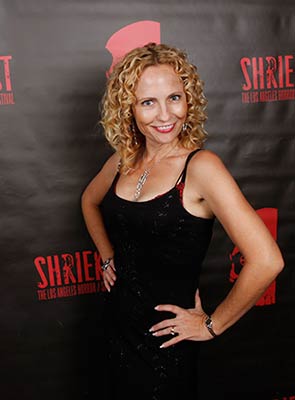
Interview with Denise Gossett, Festival Founder/Director for the Shriekfest Film Festival

Heading into their 16th year, the Shriekfest Film Festival & Screenplay Competition is one of the top Horror Festivals in the world today. Founder Denise Gossett was voted number 5 out of 13 Most Influential Women In Horror History!

Go to the website and find out about the 2016 season.
http://www.shriekfest.com

I recently sat down with Denise Gossett to talk about her festival.

deniseMatthew Toffolo: Bottomline, what are you attempting to accomplish (and obviously succeeding at) with the Shriekfest Festival?

Denise Gossett: Well, my goal has always been to help get exposure for all of these talented filmmakers and writers that people may not know about. We are all about the indie filmmaker.

Matthew: Why do you think there is such large fan base for Horror Films? Why do so many people like being frightened and scared when watching something?

Denise: I think it’s the same reason people look at a car accident, we are curious, however, we like to experience it when it’s not a life or death situation..that’s where horror films come in. Being frightened is fun and exciting, it’s a visceral experience. Same reason people love roller coasters. The thrill of it all.

Matthew: What motivated you to start this festival?

Denise: I had starred in a horror film & realized that there weren’t any horror festivals in the U.S to help promote it, horror seems to be the ignored step child of the industry and I wanted to change that.

Matthew: What have you learned the most running a successful festival for over 16 years?

Denise: You have to be kind, you have to help people and you have to enjoy it and be passionate….these creatives are trusting me with their babies, whether it’s a script or a film, and I should treat that baby with the utmost care and love.

Matthew: How has the festival changed since its inception?

Denise: The main passion and caring has remained the same, of course, but, now we get submissions from every country out there, Shriekfest wins all kinds of awards, and we have regular fans that attend every year. Also, if you have a win at Shriekfest, it does seem to open doors for people.

Matthew: How many films do you anticipate showcasing at your 2016 Film Festival?

Denise: We will screen approximately 45 films!

Matthew: Can you give us a sneak peak of what to expect for the 2016 Festival?

Denise: Hmmm, we are discussing that right now….ways to make our “Sweet 16th” birthday extra special. New trophies, bigger, better parties, some new categories.

Matthew: Where do you see your festival in 5 years?

Denise: Oh goodness….well, I may not be running it by then. I am an actor as well and my career is really taking off and it’s making it very difficult for me to do both. We’ll see. 🙂 As long as Shriekfest is around, I will be involved in some way. It’s my baby and like I said earlier, I want it treated well. So, in 5 years, it will be extremely hard to get tickets to any of the screenings. How’s that? LOL

Matthew: What film have you seen the most in your life?

Denise: Grease 🙂 I was obsessed with it when I was younger.

Matthew: Is there a country that consistently makes great horror films that you show at your festival year after year?

Denise: Spain really produces some amazing films.

Matthew: Has there ever been a case where a film that you watch that gets submitted to your festival is just too violent or just too gory?

Denise: Well, there are some, but I have an audience that loves that stuff, so, it doesn’t affect decisions.

Matthew: In one sentence, what makes a great horror film?

Denise: A great horror film has a great story with some new or unique ideas, great acting, great filming, great sound, great editing, basically, a complete package.

Thank you so much for the interview. I’m honored.

* * * *

Interviewer Matthew Toffolo is currently the festival director for the WILDsound Film & Writing Festival.

Short Film Movie Review: MOUSSE (Sweden, 40min. Comedy/Crime)

  MOVIE POSTERMOUSSE, 38min, Sweden, Comedy/Crime
Directed by John Hellberg

MOUSSE is a medium length droll and blackly comic tale of an honest criminal and police ineptitude.

MOUSSE was the winner of best film at the 2014 FEEDBACK Film Festival. 

Watch the Audience FEEDBACK Video of MOUSSE:

Movie Review by Amanda Lomonaco:

Absolutely brilliant. I’ve seen this movie 3 times already and I can’t get enough of it. After watching it the first time at WILDSound, I could not stop thinking about how great it was, I even hunted parts of the soundtrack down, until finally I had to hunt down the film itself. This is especially surprising considering this film is one of the longer selections I’ve seen at WILDSound, standing at 41 minutes. Even if you’re not a lover of subtitles, I would give this film a try.

To begin with, the acting in this film is exceptional, particularly for a film with such a wide diversity of cast, and an equal diversity of languages. Every character in Mousse is meticulously developed and well rounded, and every performance throughout the film feels nothing but genuine. The casting of the elderly policemen could equally not have been more perfect as it added a surprising element of hilarity to the film.

It’s hard to call John Hellberg’s picture a “short film” given its ambiguous length, standing somewhere between a feature and a short film, but at no point during the film do you find yourself disengaged or uninterested. Hellberg propels the story forward through a series of juxtapositions that intertwine seamlessly into the main story line, and prevent any semblance of boredom. Moreover, the production quality gives no sense of cutting any corners, giving Mousse an almost feature like quality.

Between the odd translations and awkward pauses in communication, the age and attitude of the policemen, & the jokes the actors tell each other, it’s hard to say what part of Mousse isn’t hilarious. It’s almost as if Hellberg is trying to cover all his bases in the humour category, from visual, to verbal, he even throws a couple of fart jokes in there just in case.

If you haven’t caught on by now, I think this film needs more visibility. Heck, if it were a part of a DVD collection I would buy it right away just to show others. It will take a little more of your time than most short films, but you’ll be laughing so hard the whole time you’ll hardly notice it passing. This is the first of Hellberg’s films that I’ve ever encountered, but I hope to come across many more in the future.