Interview with Festival Director Ron Bonk (Scare-A-Con Film Festival)

Scare-A-Con started off as The B-Movie Film Festival back in 1999 and has run nonstop ever since.  It takes place during the convention which attracts 5,000 attendees and 100s of celebrity guests.

Website: http://www.scareacon.com/

Ron Bonk is a producer, director and distributor for SRS Cinema, having produced some 40+ movies and directed 10 himself, most recently a homage to 1970’s Grindhouse films, “She Kills”.

Matthew Toffolo: What is your Film Festival succeeding at doing for filmmakers?

Ron Bonk: I think exposure to distributors, a lot of the motion pictures we screen secure distribution, including the shorts.

MT: What would you expect to experience if you attend the festival this year (2016)?

RB: Some of the most offbeat, obscure indie flicks you will eveer see anywhere.

MT: What are the qualifications for the selected films?

RB: We are open to all motion pictures as long as they are horror, sci-fi or fantasy.

MT: Do you think that some films really don’t get a fair shake from film festivals? And if so, why?

RB: Certainly, and hard to say, it can be different from fest to fest. Some just go thru the motions, only watching a handful and just selecting those. Others it can be who you know.

MT: What motivates you and your team to do this festival?

RB: Just pure love of indie and underground cinema.

MT: How has the festival changed since its inception?

RB: Well it has zeroed in on horror, scifi and fantasy, plus developed from the B-Movie Film Festival to Scare-A-Con as part of the convention.

MT: Where do you see the festival by 2020?

RB: It’s growing rapidly, I see higher profile screenings among the regular festival entries, and more showing slots for the entries, with more and more guest attendance and participation.

MT: What film have you seen the most times in your life?

RB: Star Wars, the original one, A New Hope, tho Jaws is only a screening or two behind.

MT: In one sentence, what makes a great film?

RB: A great film entertains its intended audience.

MT: How is the film scene in your city?

RB: We have quite a few filmmakers, 99% work under the radar but they are making movies!


scare_a_con

_____

Interviewer Matthew Toffolo is currently the CEO of the WILDsound FEEDBACK Film & Writing Festival. The festival that showcases 10-20 screenplay and story readings performed by professional actors every month. And the FEEDBACK Monthly Festival held in downtown Toronto on the last Thursday of every single month. Go to www.wildsound.ca for more information and to submit your work to the festival.

Interview with Festival Director Tim Baldwin (Studio 35 Cinema Film Festival)

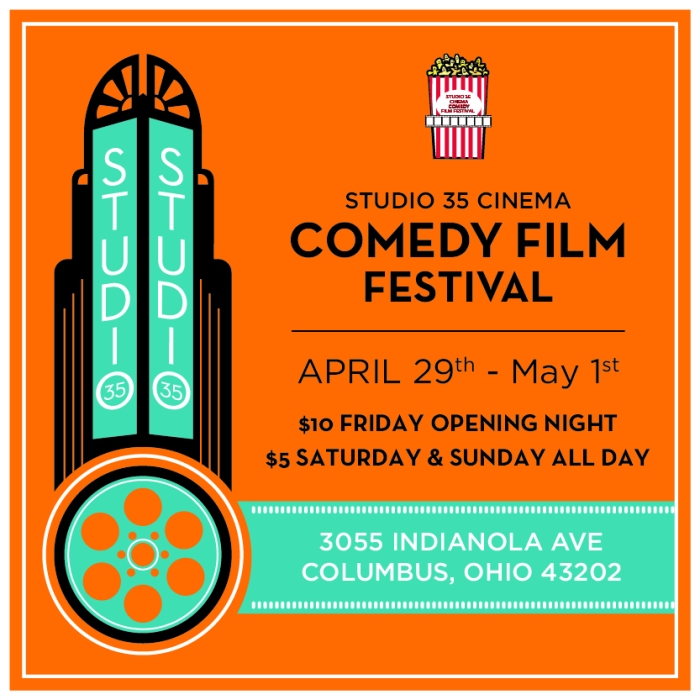
Get ready for the second annual Studio 35 Cinema Comedy Film Festival (S35CCFF) taking place at Columbus’ oldest independent movie theater. Located in the heart of Clintonville, the S35CCFF features the newest and funniest independent film and shorts from around the country. What goes better together than comedy and a beer! A whole weekend is dedicated to showing the best independent comedy features and shorts, while drinking the best draft beers of the Midwest.

Website: http://www.studio35.com/

Interview with Tim Baldwin:

Matthew Toffolo: What is your Film Festival succeeding at doing for filmmakers?

Tim Baldwin: We’re able to show their shorts and features on a big screen in DCP format. Not on a pull up screen in a hotel auditorium, or something like that. We’re an independent theater in Columbus, and we can show what we want. You make a movie to see on the big screen, and we will do that. I wish we had some panels for filmmakers, but we will do a Q&A. And since we’re small, there’s a lot of opportunities to just hang out and discuss films. We love supporting films after they’re been here as well.

MT: What would you expect to experience if you attend the festival this year (2016)?

TB: Some funny international short films. We’ve had a great submission year for international shorts. This sounds ridiculous, but we have a swag bag this year that I think is great for filmmakers. Great draft beer. A Ghostbusters pinball game.

MT: What are the qualifications for the selected films?

TB: Since we’re a comedy film fest, it’s as easy as make us laugh. We’ve received a lot of shorts and features that are good, but not funny. They would play great at a film festival, but not at a COMEDY film festival. And the regular technical aspects like make sure we can hear the film, and see it. The judges and I struggle with shorts that are technically not good, but maybe humorous. It needs to look good, maybe not polished or too polished, but look like it wasn’t shot with a camcorder. And the story has to be great. That’s the least expensive thing about a film you can do. Make a good story that we care about. All the best equipment in the world won’t make an unfunny story funny.

MT: Do you think that some films really don’t get a fair shake from film festivals? And if so, why?

TB: If you mean, why don’t films get selected, it could be a lot of reasons. As a filmmaker who has submitted to over hundreds of festivals, I wonder the same. And I’ve found out that it’s just subjective to some extent. Some movies don’t fit the program, or some are too long to be included, or just not the genre they were looking for. But a lot of it comes down to, someone didn’t like it or get it. Doesn’t mean it wasn’t good or anything, just didn’t fit.

MT: What motivates you and your team to do this festival?

TB: I wanted to create a festival to show shorts and features that our community would not normally see. I wanted to create a fun atmosphere of filmmakers and moviegoers. And I wanted to meet filmmakers. Good film motivates me.

MT: How has the festival changed since its inception?

TB: Well, it’s only our second year, so not a lot. We shortened the festival to three days this year. Since our attendance wasn’t as great as I hoped, we don’t have an awards ceremony or anything. I hope to have something more substantial in future years.

MT: Where do you see the festival by 2020?

TB: If we’re still doing it, lol, I’d like to have more shorts and films from well known artists but below the radar studio pictures. I’d like to have it be a cool location for filmmakers to come see their films. I’d like to have more of the community to attend, and in return give something back to local groups and events. I hope to make it more of an event for our community. We’re finding our footing now, seeing where we fit.

MT: What film have you seen the most times in your life?

TB: Easy. Star Wars. I’m a small filmmaker as well, producing and making short films for twenty years. So Star Wars was a huge inspiration and influence in my life.

MT: In one sentence, what makes a great film?

TB: A great film makes me care about the characters and what will happen to them.

MT: How is the film scene in your city?

TB: We have a nice little film production community here in Columbus. Many people help out with other people’s productions. Columbus is working hard to bring the bigger budgeted movie here. Many of the professional crew work on these, and national spots. Columbus, also, has tons of international companies headquartered here that do production work. For viewing films, we have the Ohio State’s Wexner Center, which is second to none in programming films. The Gateway Film Center is also amazing in programming films and having special events that the people can get involved with. Our little single screen theater is great for community events, and watching movies with a great crowd as well.

Tim Baldwin BIO: Loving movies all his life, Tim entered Bowling Green State University with an emphasis of film production and studies. After taking an internship in Columbus, Ohio, Tim moved there in 1994. Tim worked at a production house for four year, moving from grip/production assistant to online editor. As a second job, he was a projectionist at three movie theaters in town, watching movies all the time. Wanting something more, he moved to Los Angeles in 1998 to expand his career and fulfill a dream of working in movies. After working on six films, including “The Heist”, “Buddy Boy” and “Way of the Gun” as a post production assistant, Tim wanted to try a different avenue to get his films made. So he moved back to Ohio and has worked as an AVID editor and video producer since 2000. He loves watching movies with his young son and spending time with his Key Make-up Artist wife.

Tim has wrote, directed and edited six short films, one feature length film “Garage Sale” and a documentary about Studio35, the longest running single screen movie theater in Ohio. He also is program director for the Studio35 Comedy Film Festival, now in it’s second year.


Studio 35 Film Festival FB_2016-01

Interviewer Matthew Toffolo is currently the CEO of the WILDsound FEEDBACK Film & Writing Festival. The festival that showcases 10-20 screenplay and story readings performed by professional actors every month. And the FEEDBACK Monthly Festival held in downtown Toronto on the last Thursday of every single month. Go to www.wildsound.ca for more information and to submit your work to the festival.
Interview with Festival Director Nathalia Lemos (Flamingo Film Festival)

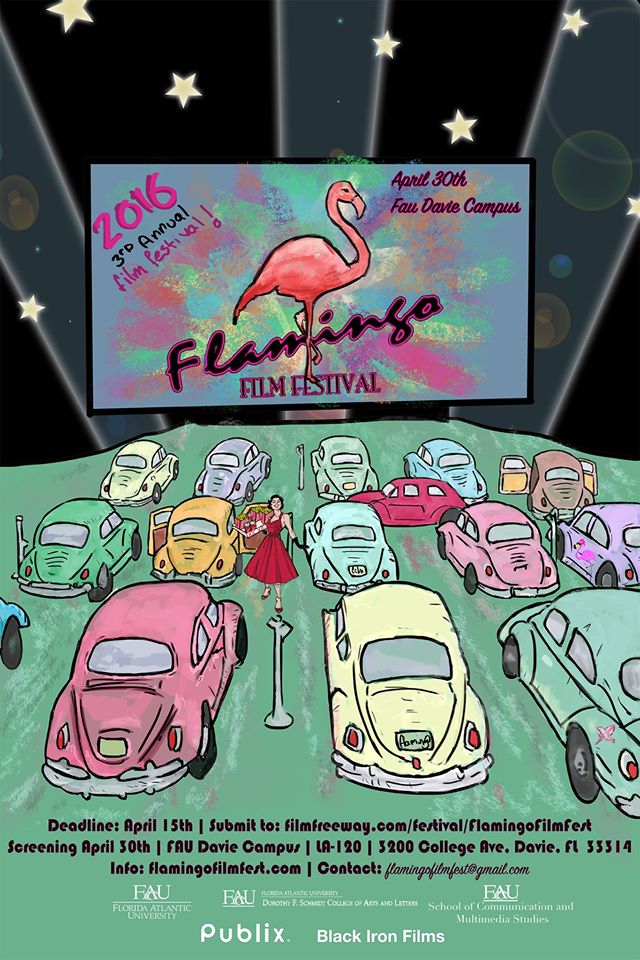
The Flamingo Film Festival is dedicated to exhibiting the international short films and videos produced by student filmmakers. For the past 3 years, this event, held in South Florida, has honored outstanding narrative, documentary, experimental, and animated projects created by students while enrolled in a college, university, or other post-secondary institution.

Website: flamingofilmfest.com

Interview with Nathalia Lemos:

Matthew Toffolo: What is your Film Festival succeeding at doing for filmmakers?

Nathalia Lemos: The festival is giving student filmmakers the opportunity to have their work screened not only for their peers, but also for a diverse audience of festival goers.

MT: What would you expect to experience if you attend the festival this year (2016)?

NL: Anyone attending the festival this year can expect a diverse showcase of student films. Festival goers will have the unique opportunity to see a variety of films not only from local student filmmakers, but also student films from abroad.

MT: What are the qualifications for the selected films?

NL: Well, we are definitely looking for films that are creative and original. We want to offer our audience the opportunity to discover new voices that have fresh and interesting perspectives.

MT: Do you think that some films really don’t get a fair shake from film festivals? And if so, why?

NL: The goal of a festival is to curate a well rounded program. While yes, I am sure that there are films that don’t get a “fair shake,” here at the Flamingo Film Festival we are giving filmmakers from all over the world the opportunity to have their films reach a wider audience.

MT: What motivates you and your team to do this festival?

NL: The Flamingo Film Festival is dedicated to exhibiting the short films from student filmmakers from all over the world. Our goal is to continue to encourage student creativity and to recognize achievement in the film and video medium.

MT: How has the festival changed since its inception?

NL: The festival is now in its 3rd year. And while the mission and goals remain the same, the festival has definitely increased it’s traction with international student filmmakers.

MT: Where do you see the festival by 2020?

NL: By 2020 I definitely see the Flamingo Film Festival as one of the most important international student film festivals in the country.

MT: What film have you seen the most times in your life?

NL: Bram Stoker’s Dracula.

MT: In one sentence, what makes a great film?

NL: In my opinion, a great film is one that remains interesting and engaging no matter how many times you see it. A film that can remain relevant 20 or more years from now.

MT: How is the film scene in your city?

NL: The South Florida film scene is very diverse and vibrant. South Florida is offering filmmakers the opportunity to create fresh and interesting work. I would say that South Florida is currently a terrific haven for independent filmmakers looking for the ease and space to develop their work.

flamingo_film_festival

_____

Interviewer Matthew Toffolo is currently the CEO of the WILDsound FEEDBACK Film & Writing Festival. The festival that showcases 10-20 screenplay and story readings performed by professional actors every month. And the FEEDBACK Monthly Festival held in downtown Toronto on the last Thursday of every single month. Go to www.wildsound.ca for more information and to submit your work to the festival.
Interview with Festival Director Todd Looby (BendFilm Festival)

13th Annual BendFilm Festival : October 6th – 9th, 2016

BendFilm celebrates the brave voice of independent cinema through films, lectures and education. A constant member on Movie Magazine’s 50 Fests worth the entry fee.

http://www.bendfilm.org/

Interview with Todd Looby:

Matthew Toffolo: What is your Film Festival succeeding at doing for filmmakers?

Todd Looby: We provide a platform for underrepresented / under-appreciated filmmakers. We want to help them build their careers. Our feature filmmakers are now receiving travel stipends to encourage attendance. We also provide lodging for all filmmakers. We want our filmmakers to spend their money on their films and not on plane tickets. We also want to provide an atmosphere where our filmmakers can network with each other and the public to encourage future collaborations. We also offer $8,500 in cash awards (including $5,000 for Best in Show) and a $60,000 Panavision Camera Package.

MT: What would you expect to experience if you attend the festival this year (2016)?

TL: If you’ve been to BendFilm before, you’ll expect to see our best addition yet. We just brought on Erik Jambor as programmer. He has 17 years experience Directing some of the best Fests out there: Sidewalk Moving Pictures, IndieMemphis and even a short stint at BendFilm in 2007. Erik is already putting together a program that will give everybody something to see and hold on to. And, of course…since we are serious about “Celebrating” independent Film, our parties and events will not disappoint!

MT: What are the qualifications for the selected films?

TL: We typically prefer Oregon premieres, but we often screen films that will have played at Ashland or Portland. What we really look for are the diamonds in the rough – again, films that have been underappreciated or we predict will be so. We want to see someone do the impossible. An example is a film that just shouldn’t work on paper and when you actually see what the director, actors and crew were able to do with nothing, you walk out amazed.

MT: Do you think that some films really don’t get a fair shake from film festivals? And if so, why?

TL: Yes. I think some festivals rely too much on where the films have played previously. We want to be a discovery fest and that fits well with Erik’s philosophy as well. Of course, we also program more popular films, but we want to give the smaller films the same amount of exposure and better chances to win our cash awards.

MT: What motivates you and your team to do this festival?

TL: We’re motivated by our belief in the power of film to change lives and improve our community. Bend is relatively isolated in the middle of Oregon. Though a popular destination, our community doesn’t get regular access to working artists. We also only have one small arthouse in town. Our fest provides access to films that wouldn’t otherwise screen in Bend and also provides access to the artists that make these films. Independent Films are more conversation starters than the Hollywood fare. Our community and visitors learn more about hot-button issues and the outside world. Independent films also have higher minority and women representation. We are introducing our community and visitors to different points of view they do not see in mainstream films or media.

MT: How has the festival changed since its inception?

TL: We do a lot of things the same as we’ve always done. However, Bend is changing fast and we are keeping up with the changes and expanding exponentially. In 2015, we received 3x the amount of submissions we did in 2014. This year we expect more. We are doing many more screenings and events throughout the year. We are also expanding our education programs.

MT: Where do you see the festival by 2020?

TL: I think BendFilm has the potential to be a leader in the independent film festival industry. This town can’t be beat. I’m relatively new here and still awed by it’s natural beauty and laid-back feel. Though as a filmmaker I never screened here, the minute I came I had an inking of what a filmmaker sees when coming here for the first time. They’re in awe. Our feedback each year gets better and better. As we improve our programming and national exposure, I think even more and more people will come here for the fest. It’s simply the perfect place to host a festival like ours.

MT: What film have you seen the most times in your life?

TL: Probably “Midnight Run”. Our family finally got cable in 1989 and I was introduced to so many films I hadn’t seen before, but “Midnight Run” sticks with me (though it’s been awhile since I’ve seen it). There was a time when I knew it by heart. It’s my perfect kind of film: It’s hilarious, it has incredible heart, it has a great moral compass and it can change tone at the drop of a hat. It’s really one of the more underappreciated films in existence. I also think it was either that or Untouchables that introduced me to DeNiro and, thus, the other movies I’ve watched most are DeNiro films: Goodfellas, Mean Streets, Raging Bull, Deer Hunter, etc, etc.

MT: In one sentence, what makes a great film?

TL: My compass for a great film is simply that elicits a strong emotional response – whether it’s laughter, tears, genuine shock or deep thought (which I consider emotive). I see too many films these days that are languid. I understand that filmmakers want to get away from the action and plot-driven Hollywood fare, but I think they also sacrifice the need to emotionally connect with an audience. Great filmmakers are able to make character-driven films that are artful, heady, yet engaging and accessible.

MT: How is the film scene in your city?

TL: Our community has a deep appreciation of cinema. This fest is really a community-driven event. It’s so well supported locally. And as far as filmmakers, more and more move here each year. They may fly out to shoot, but the more they’re here, the more local filmmaking will increase. At BendFilm, we’re trying to coalesce everyone together at least quarterly to network and develop collaborations. We also have a great relationship with Tim Williams at the Oregon Film Office. A former BendFilm Director, Sandy Henderson, is also opening up a Central Oregon Film Office to increase local filmmaking.

____

Interviewer Matthew Toffolo is currently the CEO of the WILDsound FEEDBACK Film & Writing Festival. The festival that showcases 10-20 screenplay and story readings performed by professional actors every month. And the FEEDBACK Monthly Festival held in downtown Toronto on the last Thursday of every single month. Go tohttp://www.wildsound.ca for more information and to submit your work to the festival.

Interview with Festival Coordinator Emily Smith Beitiks (Superfest: International Disability Film Festival)

Superfest: International Disability Film Festival is a showcase of juried films held in the San Francisco Bay Area. For nearly 30 years, this annual competition has celebrated cutting-edge cinema that portrays disability in all its diverse, complex, and empowering facets. We are proud to be the longest running disability film festival in the world.

http://www.superfestfilm.com/

Interview with Emily Smith Beitiks:

Matthew Toffolo: What is your Film Festival succeeding at doing for filmmakers?

Emily Smith Beitiks: Superfest provides an opportunity for filmmakers to tell stories about disability that are more nuanced and complex than what we typically see in Hollywood, unfortunately. We celebrate the work of filmmakers with disability and explore how the insights of living with a disability enrich their work. In addition, we work closely with our filmmakers to help them get their films audio described and captioned. Even though the films are about disability, many filmmakers have never considered the importance of making films accessible to people with disabilities. We coach them on how they can go about this, as it is a mandatory requirement for all films that screen at our festival.

MT: What would you expect to experience if you attend the festival this year (2016)?

EMB: Our 2016 attendees will experience some exceptional films that will push our audiences to reconsider what they know about disability and disabled people worldwide, but there’s much more to Superfest than just watching the films. We deliberately choose to limit our festival to a weekend so that it can serve as a more unified cultural event. From our hilarious emcee Nina G (the world’s best female, stuttering comedian) to our rich panels with filmmakers to our event party, Superfest allows our attendees to come together as a community to celebrate how disability enriches the arts. This year is the 30th anniversary of our festival, so we’re working even harder to make this our best year yet.

MT: What are the qualifications for the selected films?

EMB: Most importantly, we seek films that avoid the common but problematic tropes of disability. For example, we’re looking for films that neither patronize nor deify people with disabilities, that avoid stereotypes to go beyond disabled people as victims or villains. We get a lot of submissions that the disability community calls “inspiration porn.” These films look at the stories of individual disabled people while they do things like climbing Mt Everest or biking across continents to show what they can do in spite of their disabilities, never addressing the discrimination people with disabilities face nor questioning why a disabled person should have to do such herculean tasks in order to prove their social worth. Those get rejected real fast.

MT: Do you think that some films really don’t get a fair shake from film festivals? And if so, why?

EMB: It depends on the festival of course, but some prioritize high standards for technical quality and production, which hurts some really great (but radical and incredibly low-budget) stories from getting screened. While we of course want films that are executed with high quality, a film with a really great message made on a shoestring budget can make it into Superfest.

MT: What motivates you and your team to do this festival?

EMB: Personally, I’m grew up with a disabled mother so I witnessed how our society treats people with disabilities. I believe that disability need not be seen as tragedy nor pity, and feel that having a disabled mother transformed me for the better. This upbringing motivates my efforts to showcase how disabled people bring creativity and expertise that enriches our world.

The directors of the festival, Catherine Kudlick, Director of the Longmore Institute on Disability, and Bryan Bashin, CEO of the SF LightHouse for the Blind and Visually Impaired, are both disabled people themselves who are motivated to participate in Superfest because of the festival’s rich history among Bay Area disability groups and long-standing record of promoting the rights and interests of disabled people. All of our judges are disabled people, so we proudly support the disability rights slogan “Nothing About Us, Without Us” through out festival’s grassroots approach.

MT: How has the festival changed since its inception?

EMB: After its developmental years in Los Angeles, Superfest was transferred to the Bay Area in 1998. Operated as a project of Culture! Disability! Talent! (CDT), annual film festivals were held in Berkeley 1998-2011. In 2012, CDT began to search for new leaders with the vision, talent and energy to take Superfest to the next level. They found Catherine Kudlick and Bryan Bashin. Because the festival is now connected two organizations, we have a stronger infrastructure to put on a bigger festival and to promote it more widely. In addition, we’re now making Superfest a model of accessibility. All films screen with audio description and captioning, our spaces are wheelchair accessible, and ASL interpreters are always present.

MT: Where do you see the festival by 2020?

EMB: Since the Paul K. Longmore Institute on Disability and the SF LightHouse for the Blind and Visually impaired took over the festival in 2012, we’ve sold out every single one of our screenings. By 2020, we want to maintain the feeling of community that we’ve achieved in our past three festivals but we want to be able to accommodate an even larger audience so that no one will have to miss out. This would also allow us to make new partnerships and broaden the festival’s reach to groups that might not be thinking about disability in the arts (but would benefit from doing so – veterans are a good example of this).

MT: What film have you seen the most times in your life?

EMB: Well my real answer would probably be something that I watched repeatedly as a kid like The Labyrinth. But if you’ll allow me to connect it to Superfest: in 2014, we screened a short film called “The Interviewer” and since, I’ve probably watched it over 20 times. Many colleagues and friends have spread the word about how great it is and keep requesting that I play it for others. And honestly, I still laugh in earnest every time I see it – that’s how good it is.

MT: In one sentence, what makes a great film?

EMB: A great film takes something ordinary but helps me think about it an entirely new way, or it takes something extraordinary and yet allows me to connect with it.

MT: How is the film scene in your city?

EMB: So, so, so good. San Francisco is a hard place to live with the high cost of rent, but man, the support for diverse culture and arts here is pretty phenomenal. That being said, I’m a mom of two young kids, so I don’t take full advantage of it.

____

Growing up with a disabled mother, Emily Smith Beitiks witnessed how our society treats people with disabilities. She believes that disability need not be seen as tragedy or pity, and feels that having a disabled mother transformed her for the better. Beitiks received a PhD in American Studies at the University of Minnesota in April 2012. In her current position as Associate Director of the Paul Longmore Institute on Disability at San Francisco State University, she continues her work as a scholar and advocate of disability to showcase how disabled people bring unique value that can benefit us all. She is the coordinator of Superfest: International Disability Film Festival.

Interviewer Matthew Toffolo is currently the CEO of the WILDsound FEEDBACK Film & Writing Festival. The festival that showcases 10-20 screenplay and story readings performed by professional actors every month. And the FEEDBACK Monthly Festival held in downtown Toronto on the last Thursday of every single month. Go tohttp://www.wildsound.ca for more information and to submit your work to the festival.

Interview with Festival Director Kimberly Bush (DC Shorts Film Festival)

Voted “Coolest Film Festival” by MovieMaker Magazine, DC Shorts Film Festival and Screenplay Competition is one of the largest short film events on the East Coast.  Last year, they screened 135 films from 25 countries in 18 unique showcases over 11 days to audiences of more than 9,000 people.

 Kimberley Bush Photo.jpgInterview with Executive Director Kimberly Bush

Matthew Toffolo: What is your Film Festival succeeding at doing for filmmakers?

Kimberly Bush: DC Shorts Film Festival provides a robust venue for short film filmmakers to present their films. We are successful at being a 11 day full/well rounded experience for filmmakers. Filmmakers are able to not only screen their films but we invite them to the festival to spend authentic time with the audience in Q&A/panel discussions. The filmmakers can enhance their craft in our filmmaker workshops/classes as well as celebrate their presence at the festival at one of our celebrations including our Filmmaker Awards Brunch.

MT: What would you expect to experience if you attend the festival this year (2016)?

KB: As an attendee you can expect to see poignant, riveting, multicultural, diverse and groundbreaking films in every genre from all over the globe. There are many opportunities for attendees to share dialogue with filmmakers in our Q&A/panel discussions/roundtables or at one of our celebrations. We also offer free workshops/classes for attendees interested filmmaking as well as free film showcases for youth and free lunch time film screenings. During the last weekend of our film festival, attendees can experience our Screenplay Competition. During this event, attendees will hear a table reading of approximately 6 different screenplays that have been previously selected by a juried panel. After the table readings they will be able to vote for the best screenplay. That screenwriter will be awarded a cash prize and their completed film will gain entry into the following year’s film festival. The Film Festival is truly 11 days of nonstop engaging fun and film.

MT: What are the qualifications for the selected films?

KB: Our main judging criterion is story. We screen all genres and styles of film. All films are 30 seconds to 20 minutes in length. We look for interesting and original stories with developed and well-written characters.

MT: Do you think that some films really don’t get a fair shake from film festivals? And if so, why?

KB: I do think that there is a film festival/film competition for every kind/genre of film. It’s up the filmmakers to find the best festival for their film. However, we appreciate the difficulty of rejection, and so have created a “second chance opportunity” program within DC Shorts. DC Shorts’ Take 2 screens films that didn’t quite make the cut for the festival selection, allowing the audience to choose 2 films to make it back into the festival. This takes place over two days in May.

MT: What motivates you and your team to do this festival?

KB: Every year we receive feedback during the film festival (as well as months after) stating how much of a life-changing event it was for the filmmakers. They enjoyed all the opportunities to commune with the attendees and other filmmakers as well as the educational programming we provide. They felt well taken care of in regard to the housing/hotel accommodations we organize for them as well as the city tours and our Feed A Filmmaker program. What gives us the energy and motivation to create DC Shorts Film Festival year after year is knowing that our year round efforts make such a huge, positive impact on our filmmakers and the community. We do believe that film changes lives and we are charged with responsibility to provide the space that can bring film to the eyes and ears of the community.

MT: How has the festival changed since its inception?

KB: The Festival has grown exponentially! In 2003 we were a 3 day film festival screening in only one location. We now have a screenplay competition with a cash prize award. We have had screenings in up to 5 different locations. During the film festival, we offer patrons who may not be able to attend the festival in person, our Online Film Festival where they can view 90% of the films that are actually in the festival. We host epic celebrations as well as free children’s film showcases in libraries throughout Washington DC as well as free filmmaker workshops and beginner/master classes.

MT: Where do you see the festival by 2020?

KB: I am relatively new to DC Shorts…I came aboard as the Executive Director in 2015. 2016 has brought more exciting changes to my staff. I have hired an amazing programming team. Joe Bilancio, our Director of Programming and Derek Horne, our Programming Lead, both with extraordinary track records/experience and insatiable passion for film. With this new team we will begin planning for DC Shorts’ future which may include new and exciting partnerships and collaborations that will provide even bigger and better opportunities for filmmakers.

MT: What film have you seen the most times in your life?

KB: That is an impossible question to answer…so suffice it to say that I have watched repeatedly –not in any particular order—any Steven Soderburgh, Lisa Cholodenko, Spike Lee, Stanly Kubrick, Pedro Almodovar, Alfred Hitchcock, Coen Brothers, Wes Anderson, Todd Haynes, or Quentin Tarantino film. #GloriousFilmMakers!

MT: In one sentence, what makes a great film?

KB: If a film has the ability to REALLY make you think, feel, laugh, contemplate your own thoughts/way of being/existence or just create some level of change…however microscopic…I think that is what makes a great film.

MT: How is the film scene in your city?

Washington DC probably hosts the largest variety of film festivals/film screenings in the country….culturally…politically…socially. Old movie house are being salvaged. New movie houses are being constructed. Film Festivals that were defunct are being resurrected. The DC film office has been making strides over the years. The film scene is vibrant, growing and ever present. There are over 100+ film festivals in the Washington DC Metropolitan Area with stellar and diverse film screenings/events year round.

PHOTO: DC Shorts Screening in 2015. Photo courtesy of DC Shorts:

dcshortscrow
____
Interviewer Matthew Toffolo is currently the CEO of the WILDsound FEEDBACK Film & Writing Festival. The festival that showcases 10-20 screenplay and story readings performed by professional actors every month. And the FEEDBACK Monthly Festival held in downtown Toronto on the last Thursday of every single month. Go tohttp://www.wildsound.ca for more information and to submit your work to the festival.

Interview with Festival Director Jeremy Jantz (PDXtreme Film Fest)

The PDXtreme Film Fest is the best damn genre festival Portland Oregon has ever seen! Taking place over 3 days at the historic Academy Theater, we showcase horror, crime, dark comedy, and everything in-between. Tales of the grotesque, the limits of the psychological, and bumps in the night whatever the cause! Does it take place in space? That’s cool too.


Interview with Jeremy Jantz:

Matthew Toffolo: What is your Film Festival succeeding at doing for filmmakers?

Jeremy Jantz: We know where we stand. The odds of an industry professional in the audience just waiting to sign a contract are incredibly slim. We don’t do a script competition because the best I can do is give you a “thumbs up” and that doesn’t seem worth the fee.

But we care about our line-up of films. We want it to mean something that a film is playing at PDXtreme Fest, because that means it’s in good company. We demonstrated our commitment to the significance of our awards with a custom made trophy. You can’t just hand those out. We encourage support among the attending filmmakers. What’s the point of flying across the country to watch only your own film? By last year’s wrap party, there was a whole lot of indie film talent around a set of tables at the nearest bar, and that’s the kind of experience that’s priceless. Or at least pricelessish.

We also pay attention to the small details along the way. We do personalized acceptance letters. Final notification is set in stone, and a month before the fest to make potential travel more convenient. Each film gets two free drink tickets for attendees. People thought the promised free beer was a joke last year. It was all too real.

We want attending PDXtreme Fest to be actual fun.

Matthew: What would you expect to experience if you attend the festival this year (2016)?

Jeremy: Based on last year, you’ll see a fantastic roster of genre films from around the world. PDXtreme Fest is hosted by the Academy Theater, a wonderfully restored vintage theater serving beer,wine and pizza- none of that meeting room screening going on here. There should be plenty of directors, as well as producers, talent, and other people associated with the films. There won’t be panels. I find them dull.

Matthew: What are the qualifications for the selected films?

Jeremy: We have a two person jury. So it’s not a complicated system where the film has to make it through a rank of interns or is scored via some arcane numeric formula. I’d say we have three basic rules that get a film on the short list. The very first criteria is: did we enjoy it? If it’s 30 seconds or 2 hours, it shouldn’t be boring. Second, it shouldn’t be half-assed. And half-assed isn’t about money. No matter what your budget is, passion is free and makes a big difference in the final film. Finally, we want to see something new in the film. There’s nothing wrong with starting with a genre cliche as long as some aspect ends up being original.

As far as moving from the short list to the accepted list, that’s a bit more ephemeral. Last year we ran the gamut from exploitation grind-house to holiday themed slasher to lesbian post-apocalyptic western. Ultimately Dulcie and I curate the fest like it’s a fest we want to attend.

Matthew: Do you think that some films really don’t get a fair shake from film festivals? And if so, why?

Jeremy: I don’t want to speculate about all of the nebulous behind the scenes going-ons at other fests that may or may not be happening. People know. People hear things. I can say that length comes up a lot for some filmmakers. The 25-60 minute film has a tough hill to climb. But if your film really needs to be that long, then so be it. Content is never an issue for us. We went NC-17 last year. Blood, nudity, veganism, we’ve embraced it all. We don’t care about the director’s gender. Last year we had 10 women directors/co-directors. Some of our most over the top films were from women directors. I know the discrimination happens, but that doesn’t mean I understand it.

Matthew: What motivates you and your team to do this festival?

Jeremy: Portland had a void for an all around genre film festival. After Dulcie and I attended a number of fests in other cities, we looked around and said “Why don’t we have something like this here?” Its not about getting the sack with the dollar sign on it. As cheesy as it sounds, it’s about the experience for everybody, whether a filmmaker or a film fan.

Matthew: How has the festival changed since its inception?

Jeremy: Since this will only be our second year, I can’t really point to a long and evolving history. The first year taught us some behind the scenes organizational lessons. This year we do hope to bring some upgrades to the fest experience. I really want to see a tie-in with a local brewer. Since this Portland, I have high hopes.

Matthew: Where do you see the festival by 2020?

Jeremy: There’s a limit to how much we would want to grow. I can’t ever see us in the Portland Convention Center as we collapse under our own financial weight year after in the red year. It’s going to be about striving to constantly improve in the small ways without forgetting that you need filmmakers to have a film festival.

Matthew: What film have you seen the most times in your life?

Jeremy: “True Romance”. It involved no cable, a limited VHS library, and too much vodka from a plastic bottle, but I watched that movie about 20 times in a two week period.

Matthew: In one sentence, what makes a great film?

Jeremy: I want to watch it again.

Matthew: How is the film scene in your city?

Jeremy: Portland is a very artistic city. Not only do we have an indie film scene, we have a tiny bit of Hollywood here. If you want to be an extra on “Grimm” this is the place for you. Seriously though, we’ve definitely developed to the point that all the building blocks are there for people interested in movie making.


—-

Interviewer Matthew Toffolo is currently the CEO of the WILDsound FEEDBACK Film & Writing Festival. The festival that showcases 10-20 screenplay and story readings performed by professional actors every month. And the FEEDBACK Monthly Fesival held in downtown Toronto on the last Thursday of every single month. Go tohttp://www.wildsound.ca for more information and to submit your work to the festival.

Interview with Festival Currator Mike Fallek (THE FESTIVAL OF COLORS)

The Festival of Colors is week long film and arts festival in Art Cafe Bar. Daily screenings, workshops, parties, and performances all to bring together this budding artist hub.

The Festival of Colors is concerned with growing its local community of creators in Prospect Heights, so locals who can show up for the festival will get preferred treatment. BUT THIS YEAR’S THEME IS “CIRCLING THE GLOBE FROM SPACE.”

http://www.festivalofcolors.org/

Currator Mike Fallek is a stop motion animator and is best friends with a ferret.

Interview with Mike Fallek:

Matthew Toffolo: What is your Film Festival succeeding at doing for filmmakers?

Mike Fallek: Our festival is focused on filmmakers meeting potential collaborators and future partners. We accept more films and screen on an ON DEMAND basis throughout the week. We focus on throwing amazing parties for filmmakers to meet new people. We all love watching films but festivals are for filmmakers and it’s hard to meet people when everyone has to be quiet in the dark.

Matthew: What would you expect to experience if you attend the festival this year (2016)?

Mike: I expect that it will be a year that helps filmmakers redefine how they want to use their resources. I hope we can provide the knowledge to show the modern independent filmmaker where to focus energy.

Matthew: What are the qualifications for the selected films?

Mike: Good. A qualified film has to be good. I personally watch all of the hundreds of entries start to finish and talk personally to all accepted entrants. Because I want to be a fan of any work that comes my way.

Matthew: Do you think that some films really don’t get a fair shake from film festivals? And if so, why?

Mike: No films get a fair shake ever. Film is a game of emotions. Emotions aren’t fair. Most people, even despite any of their education, judge films on how they are feeling that day. We try to eliminate that human element from our festival. I’ll like your film even if it bums me out on a good day.

Matthew: What motivates you and your team to do this festival?

Mike: Bringing people together. I got this interview in an email. I haven’t met the question asker, but I feel connected to you. I am honored to get to be even more intimate and see the deepest thoughts of filmmakers from around the world. We milk this feeling of connection until there is nothing left. Meeting people is our passion.

Matthew: How has the festival changed since its inception?

Mike: This is our second year and it has exploded already.

Matthew: Where do you see the festival by 2020?

Mike: By 2020, …Lasers? Lasers sound future-y

Matthew: What film have you seen the most times in your life?

Mike: I’ve probably seen that clip about FBI copyright infringement a billion times. I love DVDs and special features. They don’t show the FBI warning in theaters. Running a festival is like the special features for every movie. I get to hear the backstories behind tons of films.

Matthew: In one sentence, what makes a great film?

Mike: Editing make a film great.

Matthew: How is the film scene in your city?

Mike: The festival in in Brooklyn, I think film is doing ok here ;P


____
Interviewer Matthew Toffolo is currently the CEO of the WILDsound FEEDBACK Film & Writing Festival. The festival that showcases 10-20 screenplay and story readings performed by professional actors every month. And the FEEDBACK Monthly Fesival held in downtown Toronto on the last Thursday of every single month. Go to www.wildsound.ca for more information and to submit your work to the festival.
 

Interview with Festival Director James Harmon (Sanford International Film Festival)

James Harmon is a high school communications teacher, film club advisor, independent filmmaker, and new dad. Three years ago he started The Sanford International Film Festival in response to the breakdown of another Maine festival, and it has grown in popularity and reputation since. This is the third year of Sanford IFF, which runs five days from May 25-29th across Sanford and Springvale Maine.

http://www.sanfordfilmfest.com/

Matthew Toffolo: What is your Film Festival succeeding at doing for filmmakers?

James Harmon: We’re putting together an amazing showcase of some of the best independent films in the world. We’re presenting our city as a great place to make films, and building a community of passionate, creative, fun people. Filmmakers who make it to their screenings can expect great picture and sound, an attentive and appreciative audience, and respect from film festival staff. We appreciate the sacrifices our filmmakers have had to make to get their films to us, and I take our stewardship very seriously. We pay tribute to our city, our filmmakers, and their films.

MT: What would you expect to experience if you attend the festival this year (2016)?

JM: Our five days will be packed with high-quality experiences. We have local restaurants, ice cream makers, and brewers contributing their best work as well, so expect great movies, great people, great food, and great beverages, and don’t expect to pay a lot! I must insist that everyone buy up tickets to our award ceremony as soon as the ticketspice site goes live. Admission will come with lots of food and drink tickets, and it’s going to be MCd by a local comedian with ties to the film scene.

MT: What are the qualifications for the selected films?

JM: We have ten judges who all have been assigned about twenty hours of films to review. That includes overlap, so each film will be reviewed by at least two different judges, but likely three by the time we’ve made our final decisions. The highest rated films will be programmed first, and we’ll fill our schedule up. There aren’t clear and specific criteria, but our judges have diverse and good taste in movies, so expect quality films. Some might not be your cup of tea, but every one will have something to admire.

MT: Do you think that some films really don’t get a fair shake from film festivals? And if so, why?

JM: Last year we were overwhelmed with over a thousand submissions. It was insane getting through all of them, but decided to charge a submission fee, which is a promise to give every film our undivided attention, and we did. Being on the filmmaker side, I knew from the get go that five, ten, or fifteen bucks isn’t chump change on a micro-budget film. When they put that money to SIFF, we have a duty to the filmmaker. I can’t say that I’ve ever been turned off by a genre, but programming feature films is much more difficult than shorts–when you put a 100 minute film in your festival, you’re picking one long film over ten shorts, which means you’re turning more people away. I think that Experimental Feature films don’t always get a fair shake, but that’s a mistake that SIFF doesn’t make. Last year we showed an incredible one called “Encouragement” by Devin Terrence McAdam and it was one of the scariest films in the festival. Experimental filmmakers aren’t bound to narrative to make you feel. I think our festival also does a great job of showcasing the local film scene without oversaturating the program in it. We balance genres, locals, and internationals.

MT: What motivates you and your team to do this festival?

JM: I love film, and I love the experience of watching and thinking about all of these films, and then communicating with the people who made them, and then celebrating the films with some of those people. It’s incredibly hard work keeping a team together that cares about this, but when you have that, it’s so rewarding to make it happen. It also helps that immediately after the festival locals start asking about the next one. It’s a beloved event around here, and it’s hard to imagine my life without it!

MT: How has the festival changed since its inception?

JM: This festival came to be under very strange circumstances! I had worked with about twenty students on a feature film that was supposed to premiere at the Lewiston Auburn Film Festival in April 2013, and two weeks before our screening, that festival fell apart. The director was arrested on some unrelated unsavory charges, and all of a sudden, I had to cancel a field trip that my filmmakers had been looking forward to all year. When I got word that the festival was cancelled, they CCd all of the filmmakers, and I thought it was a great opportunity to screen films in Sanford, so I contacted our newly-elected Mayor, and he got back to me right away in support of the idea, and I invited all of those filmmakers to come screen in Sanford; we scheduled a meeting and then six weeks later we held The Sanford International Film Festival. It was an amazing effort by so many facets of our city, and we knew that given more time, more thought, and more money we could do it even better. Last year we exploded from two days to five days, from forty movies to one-hundred forty movies, and we judged every submission (adding unbiased judging, a unique 3D printed trophy https://youtu.be/BTEb65PpN6w?list=PLYznuvGuYZb6qp_41sHrryXlX37VE7-t- , and cash prizes to the mix). It has always been about paying tribute to our films and filmmakers, but I think we’ve gotten better at making the process fun for staff as well, and we’ve thought long and hard about what our filmmakers want and what they expect from a festival, and we’ve gotten better year after year delivering on those expectations.

MT: Where do you see the festival by 2020?

JM: I hope we’ve become the festival of the northeast. I think we have the infrastructure in place to grow and refine what we do so that we become more and more attractive, so each year we’ll examine our work and our feedback, and we’ll grow and refine until May in New England means SIFF.

MT: What film have you seen the most times in your life?

JM: Probably Aladdin, Jurassic Park or a Nightmare on Elm Street. I try not to rewatch movies since there are so many amazing ones I have yet to see, but we’re in the dozens on those three. I wouldn’t even necessarily call them my faves, but or whatever reason, they made the cut for question 8!

MT: In one sentence, what makes a great film?

JM: There are three things that need to come together. The technical aspects (does it look and sound good), then I think even more importantly for me, it’s the realistic details… Does everything add up the way it should? Do I believe every bit of dialog and more importantly the non-verbal interaction among characters? The last thing is does this movie need to be? Sometimes a movie can have the first two, but it falls flat because it’s just an average day in an average life. I think a good movie needs to command your attention; why it is should be self-evident.

MT: How is the film scene in your city?

JM: Sanford, Maine is a great place for film and filmmaking. I’ve shot two features and dozens of shorts here, and a few years ago I found out about another film production company that was also doing great work in Sanford after a couple of people mistook them for us, and I read about them in the paper. Neo Phoenix studios is cranking away at a dystopian web series (I DPd their first three episodes: http://www.entertainmentexperiment.com/#!dystopia/l6f7p ) and we have restaurants, local businesses, schools, and city departments all willing to lend a hand, as long as you ask them at the right time, in the right way, for the right thing. I think another great part of filming here is the variety of locations. We’ve got all the natural and rural stuff you can imagine. Sanford can’t double for Metropolis, but you can locate urban scenes in some of the more dense neighborhoods or downtown areas, and our police, fire department, and even the hospital are all very film friendly.


____
Interviewer Matthew Toffolo is currently the CEO of the WILDsound FEEDBACK Film & Writing Festival. The festival that showcases 10-20 screenplay and story readings performed by professional actors every month. And the FEEDBACK Monthly Fesival held in downtown Toronto on the last Thursday of every single month. Go to www.wildsound.ca for more information and to submit your work to the festival.

Interview with Festival Director Gabor Pertic (Breakthroughs Film Festival)

Now in its 5th amazing year, the Breakthroughs Film Festival is the only festival in Canada devoted exclusively to short films by New Generation women filmmakers. We show films in any and every genre made by talented young artists from all over the world. 

Breakthroughs Film Festival also features a panel discussion with the participating directors, giving the audience a chance to learn more about what these amazing women can do!

http://www.breakthroughsfilmfestival.com/

Get to know Festival Director Gabor Pertic:

Matthew Toffolo: What is your Film Festival succeeding at doing for filmmakers?

Gabor Pertic: In an industry where women still struggle to get their work seen and heard, Breakthroughs provides an opportunity for new generation female filmmakers to have their films programmed and brought to a big screen. The films and filmmakers we showcase are often times just entering the film industry, which is a crowded, intimidating space to begin with. It can be quite difficult to get your work noticed by a festival or play to an audience, so we’re providing a place where one of our main goals is to give voice to these emerging talents.

Matthew: What would you expect to experience if you attend the festival this year (2016)?

Gabor: Audiences are going to be able to see a curated selection of creative, fresh visions from young female filmmakers. It’s an opportunity to see original content from names you may have not seen on a marquee just yet. It becomes a discovery moment for any audience member, an opportunity to see an incredibly talented group of women at a stage when their art is taking shape and rising.

Matthew: What are the qualifications for the selected films?

Gabor: The basic guidelines for any submitted film to Breakthroughs is that it’s directed by a female between the ages of 18-30 and the film runtime sits under 20 minutes. There is an abundance of filmmakers that fit within these parameters who are looking for places to get their film seen. Be it fictional narratives, documentaries, or anything that falls in more of an experimental group, Breakthroughs aims to highlight local and international short films that offer up a mix of these film forms.

Matthew: Do you think that some films really don’t get a fair shake from film festivals? And if so, why?

Gabor: Film programming is a multilayered process, one that has many factors to consider within any given festival. Like Breakthroughs, there are many festivals that work on highlighting more specific programming, be it with regard to content, region, style, and/or theme. Certain top-tier festivals can be ambitious goals for any filmmaker looking to premiere their film but in an incredibly large and competitive space, it may be hard to get noticed. At the end of the day, film festivals strive to showcase the best group of films in any given year that fit with the festival’s specific mandates and artistic direction. It’s just a matter of finding the right partnership between the film and the festival.

Matthew: What motivates you and your team to do this festival?

Gabor: We all are here because we have a passion for film and we believe that women are making some of the most interesting work out there. We see the daily struggles of female filmmakers not getting the attention or respect they deserve and we hope to be able to provide a change in that narrative, to put the next generation of talented women front and center.

Matthew: How has the festival changed since its inception?

Gabor: One of the biggest changes the festival has undergone was that it opened up to international submissions. Breakthroughs started out only showcasing local Canadian work but we now are actively able to showcase a global perspective and we continue to grow on this worldview, seeking films from every continent.

Matthew: Where do you see the festival by 2020?

Gabor: We are currently right in the middle of a cultural landscape where there are daily discussions being had of women within the film space. Breakthroughs wants to maintain this conversation by working hard to improve upon a consistently unbalanced system. In the next few years, we can only hope that things start to progressive positively and that our festival has contributed in some way to showcasing why it is essential to give a platform for female filmmakers. We aim to be both a voice for these women and a destination for all those who support them.

Matthew: What film have you seen the most times in your life?

Gabor: This would be a great moment to just write The Double Life of Veronique or Meshes of the Afternoon but if we’re talking pure statistical numbers, I should be honest and say there are a few others that outrank them in terms of views. I’ve certainly made my way through a number of formats of When Harry Met Sally… through VHS to DVD to Streaming. Nora Ephron’s script is magical and it’s been a comfort and touchstone at different parts of my life. But, if some biographer where ever to comb through my life in detail, they would uncover that when Space Jam came to video in 1997, there was a six-month window where I easily watched it over a dozen times… This answer went real fast from incredible achievements in the cinematic artform to Michael Jordan playing basketball with Bugs Bunny. Which, I suppose, is a different kind of art all around…

Matthew: In one sentence, what makes a great film?

Gabor: Not sure if I can narrow it down to one sentence, so I’ll just say that a great film is one worth watching.

Matthew: How is the film scene in your city?

Gabor: Toronto is an absolutely incredible city for film. Within any given week, you can go see a film at one of the many festivals the city has to offer, and on your way there, have to walk around a film shoot happening live on one of the streets downtown. People here are filmmakers and film lovers, and more often than not, the answer to the question “hey, do you want to go see a movie?” is “yes”.

_____

GABOR PERTIC BIO

Executive Director: Gabor Pertic
 attended the University of Toronto as a Specialist in Cinema Studies, graduating with an Honours B.A. After working as a film critic in Toronto, he transitioned into the world of film festival programming. For several years, he worked in the programming department of the Toronto International Film Festival, four of those years working as Programming Associate to TIFF Director & CEO Piers Handling. In addition to TIFF, Gabor has been continuously working and programming for North America’s largest documentary-exclusive film festival Hot Docs. Over the last decade, Gabor has had the privilege of curating a diverse, international selection of films for Toronto audiences.


Interviewer Matthew Toffolo is currently the CEO of the WILDsound FEEDBACK Film & Writing Festival. The festival that showcases 10-20 screenplay and story readings performed by professional actors every month. And the FEEDBACK Monthly Festival held in downtown Toronto on the last Thursday of every single month. Go to www.wildsound.ca for more information and to submit your work to the festival.