Interview with Composers The Newton Brothers (DAREDEVIL: BORN AGAIN, X-MEN ’97)

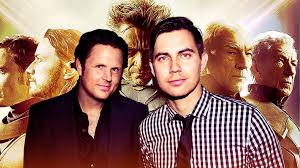
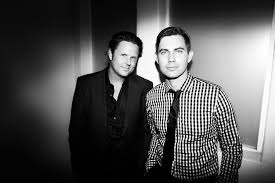
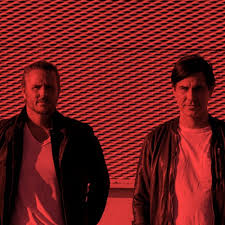
the_newton_brothers.jpgWhat a great time I had chatting with the extremely talented Newton Brothers (Andrew Grush & Taylor Stewart). A composing team that has already “scored” an impressive resume. I talked with them while they were in the midst of promoting their composing work on the horror film “Ouija: Origin of Evil.”

Matthew Toffolo: You guys are called the Newton Brothes but you’re not actually brothers.

Taylor Stewart: Yes, we wanted to write under one entity. Whether that is writing for film, TV, or an Opera. So we named ourselves after the great Isaac Newton.

MT: So not the bank robbers then?

Andrew Grush: We found out about them after we named ourselves..but we just decided to go with it.

Have any of you ever played with a Ouija board?

AG: That scared the crap out of me when I was a kid. I stayed away from all of that stuff. Only since we came aboard this project is when we have played with them. And we’ve now played with a ton of Ouija boards.

Do you believe?

TS: I personally think that people believe what they want to believe and things manifest. I do believe that there are things beyond us – and whether people want to believe that a Ouija board can bring that out is up to them to believe or not believe.

Did you play the board to inspire you to write the score?

AG: The sound designer was playing with the board in the post studio to grab folly off of it and it was laying around. So we did play with it.

We attended a few parties leading up to the premiere of the film and the played on different boards that some of the fans had. Some people had these amazing boards. Very old and artistic. I think I may be done with them. Don’t want to tempt faith.

I heard that you recorded the score of the film in an old church and that it got a bit creepy.

TS: Lucky enough we recorded it in only a day. It had a vintage feel. A traditional sense that others things have gone on there in the past. The owner of the church mentioned that “things” have gone on. So that brought another feeling. The church was beautiful and it definitely helped bring the emotions needed to execute the score.

With this score you went full out with your score – lots of intruments, with lots of layered emotions. Your rough cut. Then you scaled back and removed a lot of stuff. Is this your general process with scoring films?

AG: Yes that’s our usual approach. To take it too far just to see how far we can take it. Then go backwards and ween things out. We found that in the end that it worked out nicely. In the original score we had a lot of brass and ended up removing it entirely to have a more timeless feel. So it’s now more of a woodwind score. It now has the quality of the era of the film.

It’s almost like it was too busy with the brass.

AG: Exactly. To enhance the themes of the film and the amazing cinematography, less was definitely better.

Speaking of that. When I was researching you guys you were talking a lot about silence. To set up your score, you need silence first to enhance things.

TS: That’s true. There are so many movies with wall to wall music and usually when that happens it’s a student film or a young filmmaker’s film. They want to push the emotional buttons and many times they go too far. Silence gives more reality to the film. It’s a mistake that many student films make.

Sometimes the composer just wants their music in the film and they don’t think about the entire scope of the film. And sometimes to get the best overall score, a score isn’t needed in certain moments of the film.

AG: It’s very true. There are so many themes in so many films we do. We write music for all of it. Sometimes we work a week on a cue in a scene that just doesn’t work and no music is needed for that particular scene. But you have to try it. Explore the themes in the film. And doing that makes the rest of your score better.

It’s very important to know what we aren’t making an album. We don’t need to paint our sound all over the place.

What do you look for in your director?

TS: We welcome as much input as possible from the director. Getting to know what they want to relay what they want to give the audience. Whether that’s a two note score, or a very detailed score with many counter points. We want to work on the story with them and interject our talent onto the film.

The more that director gives us, the better it is for us.

How did you guys meet?

AG: We meet through a mutual friend in 2001. We started working together on songs and bank stuff. That turned into working on films. We decided to work on it together and came up with the Newton Brothers. Then we just started jumping into stuff.

It’s really nice to bounce ideas off each other. To work alone and go down out own natural roads. Then collaborate and bring those ideas and feelings together.

So you guys are basically a creative married couple?

AG: Yes we are. Good call.

What movie have to seen the most times in your life?

TS: E.T.. Star Wars. Back to the Future. Predator.

AG: The film I watched the most is Aliens. I recorded it on VHS in 8th grade, and I would watch it over and over again.

What type of movie would you want to score that you haven’t scored yet?

TS: Sometime futuristic and electronic. Or a period epic movie like Braveheart. We write a lot of stuff like that and I guess people will hear it eventually.

AG: Same. That is our goal.
____

Interviewer Matthew Toffolo is currently the CEO of the WILDsound FEEDBACK Film & Writing Festival. The festival that showcases 10-20 screenplay and story readings performed by professional actors every month. And the FEEDBACK DAILY Festival held online, and in downtown Toronto on the last Thursday of every single month. Go to www.wildsound.ca for more information and to submit your work to the festival.
Interview with Production Designer Beth Mickle (Drive, Whiskey Tango Foxtrot)

I was fortunate to get an interview with the very talented and very busy Production Designer Beth Mickle. She is currently in the middle of production on the highly anticipated film “Collateral Beauty”. We talked about that film and much more in our chat together:

Matthew Toffolo: You have been the Production Designer on over 30 films in the last 15 years. Is there a film or two that you’re most proud of?

Beth Mickle: I’m incredibly proud of so many films that I’ve been involved with—fortunate to have had so many great opportunities! One that I’m especially proud of is “Lost River”, Ryan Gosling’s directorial debut. It was such a special project from the very beginning—Ryan wrote such a beautiful script with so much imagination, so many fantastical backdrops to play with. It was a smaller movie, and we all lived and worked together in downtown Detroit, collaborated closely to really shape that film as a team. I remember many adventurous weekends with Ryan and our cinematographer Benoit Debis, exploring the many awesome hidden areas of that great city. With limited resources, everyone jumped and got their hands dirty, and we built so many elements out of cardboard, tape, late-night pizza, and music…so proud of how every one of those sets came together, and the tone we found in that film. It’s one of my favorite films of all time!!!

PHOTO: Ryan Gosling, Eva Mendes & Christina Hendricks on set in “Lost River”:

lost_river.jpg

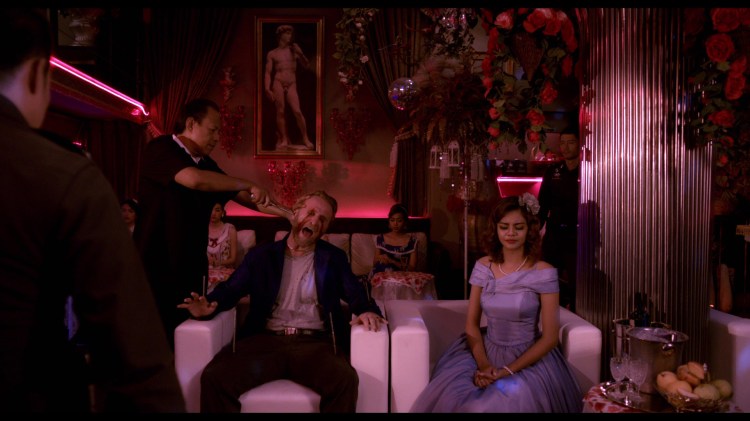
The other film I’m wildly proud of is “Only God Forgives”, which Nic Refn directed and Ryan starred in. This was another lower-budget film, this one in Bangkok, where we all lived and worked together very closely once again. Exploring every neighborhood in Bangkok was a complete joy for a gal who loves to travel as much as I do, and Nic gave me so much creative freedom with that film. My fiance Russell Barnes (an incredibly talented Production Designer) joined me on the project as the art director, and we had the most memorable 7 months together in Thailand. the lower-budget nature of the production meant that we did a lot of the heavy lifting along with our amazing Thai crew—building, painting, and decorating sets with our own hands. And the markets were phenomenal!! We ran around to tons of different vintage markets and flea markets every week, loading the trucks with so many beautiful and unique pieces. Bringing together these rich, vividly stylized sets in this unbelievable country where we were living was such an unforgettable time in our lives.

PHOTO: Set Design on “Only God Forgives”

Only-God-Forgives-141.jpg

MT: You started your career working on lower budget/Indy films as a Production Designer. Would you suggest other people who are striving to become Production Designers in this industry take this route? What are the pros/cons of taking this route in comparison to starting on the low rung and working on Union productions?

BM: I would absolutely recommend this route for aspiring production designers. The lower budget world is where you learn to be resourceful, where you can somewhat safely make mistakes which can be recovered, where you learn the complete fundamentals of how a film is made. I try to approach every production—large or small–with a calm nature, and I think that comes from being in the trenches for so many years and learning how to adapt to in all situations. The biggest con to this route is that formal “union” filmmaking can be a bit jarring when you do finally make the leap to the larger arena—but once you learn those nuances, the process really smooths out. That is definitely one pro if you do start in the larger union world—you learn those protocols right away, so you enter the film world knowing how union positions are categorized and how the different departmental responsibilities are broken down.

In terms of career growth—I also think designers can make that mental shift of thinking on a smaller scale early in their careers on smaller films, to thinking on a larger scale as projects grow in size. But I think it’s much more difficult for designers to start with thinking on a larger scale, then downsizing their approach and expectations on a smaller project. And as we’ve seen so much lately—some of the highest quality films being made right now are the smaller, independent projects (“Ex Machina”, “12 Years a Slave” to name a few), and if a designer catapults you to doing an $80 million film as his or her first film, downshifting to this smaller budget range can prove to be a difficult maneuver.

MT: What is the biggest difference when working on an Independent film in comparison to a Hollywood Union Production?

BM: Union rules and guidelines!!! On an independent film, everyone is moving and touching and painting everything…on a union film, none of that flies. this took me forever to learn!!!! I’m always eager to grab the other side of a couch, to rehang picture frames on my own, always telling the set dressers “this is how i keep my muscles!!”…some laugh and some are not amused at all:)…At first I resisted the union delineations, preferring the all-hands-on-deck team approach, but after doing over 20 union films, and seeing that crews are treated so fairly and safety is so championed, I do see the benefits of having a regulated system. Film productions are such incredible, finely-tuned organisms that function so efficiently….though I’d still paint walls if they’d ask me!..:)

MT: Some will argue that DRIVE is one of the best films in the last 10 years. Do you remember the initial conversations with the director and your team about the overall look, feel, and tone of the film?

BM: “Drive” is a film is very near and dear to me. It made my career the incredible adventure that it is right now. I remember my initial meetings with Nic Refn well. I think he’s one of the most brilliant directors working today, and seeing how he approaches filmmaking is nothing less than inspiring. He’s constantly striving to shoot scenes in ways they’ve never been shot before, to make every frame as great as it can be. And his mandate is always “more is more.” So for a designer, taking this approach is a dream…every set can be as elevated and amplified as you want it to be. Every color can be as rich as possible, the idea of “extreme” is always embraced. so making “Drive”—as well as Nic’s following movie “Only God Forgives”—were a career highlight for me.

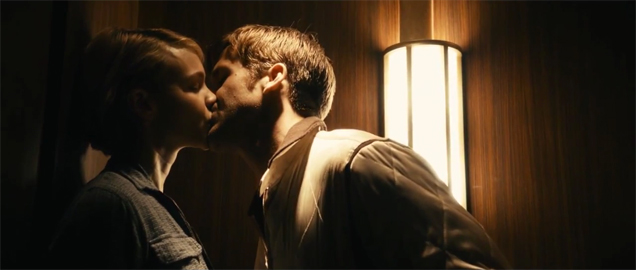
PHOTO: Ryan Gosling and Carey Mulligan in “Drive”:

drive.jpg

MT: Whiskey Tango Foxtrot is out in theaters. What can people expect to see? How were your experiences working on that film? A lot of exterior scenes.

BM: “WTF” was another fascinating project to do. All but 4 minutes of the film takes place in Afghanistan, and we shot the entire film in New Mexico!!! It was by far the most challenging film I’ve ever done, but I was lucky enough to be working alongside the best art department I’ve ever had. We built 2 Kabul city street sets—both nearly a football field in size, and both almost built from scratch. Building so much scenery was such a great challenge on a relatively small studio film—we reused so many facades, repurposed so much architecture, repainted so many pieces….at first it seemed nearly impossible to pull off the tall order, but once we started improvising and playing around, the possibilities really became endless. Anthony Syracuse was our construction coordinator on that film, and I’m certain that he’s one of the best construction coordinators this industry has ever seen.

Interview with the KanivFest Kaniv International Film Festival

Festival  designed to create a powerful cultural – educational platform that aims to unite Ukrainian and foreign film makers and introduce viewers works with professionals and amateurs.

Contact

 
1. What is your Film Festival succeeding at doing for filmmakers?

Kaniv Film Festival succeeds for filmmaker at monetary awards and advertising especially for the Ukrainian State Film Agency and different film production studios.

2. What would you expect to experience if you attend your upcoming festival?

If you attend Kaniv Film Festival you will get:
– a lot of communication with actors, producers, cameramen and other persons, who involved to movie industry;
– different master-classes connecting the filmmaking processes:
– impressed by the beautiful landscapes and friendly treatment;
– a new friends.

3. What are the qualifications for the selected films?

The films of any genre direction and timekeeping are admitted for participation (Short 25 min., a full meter to 90 minutes.), the production not before 2 years of the festival conducting (not before 2016). For films in a foreign language, the subtitles in Ukrainian and English are the requirement.

4. Do you think that some films really don’t get a fair shake from film festivals? And if so, why?

Speaking about our festival, we hope that our jury finds quality films.

5. What motivates you and your team to do this festival?

Firstly we want to give a chance for filmmakers to get their names and their films known in movie industry. And we also want to do the powerful platform for communication between filmmakers.

6. How has your FilmFreeway submission process been?

Everything was ok. Thanks to FilmFreeway we got a lot of international participants.

7. Where do you see the festival by 2023?

We have a lot of plans. We are improving all the time and we are trying our best for the people who works in cinematography world. We want to see a lot of both Ukrainian and international participants present in our festivals. We also want to attract experts who will share their experience. And we also want to give our participants large monetary awards and world recognition. It’s not by chance our mission is- “If you want to get Cannes- let’s start from Kaniv”.

8. What film have you seen the most times in your life?

We can’t choose just one. Many films left a great impession.

9. In one sentence, what makes a great film?

To our mind the combination of idea, extraordinary and aftertaste makes a great film.

10. How is the film scene in your city?

In our city we have Movie Theater and outdoor screening.


kaniv 1

Interview with Festival Director Sasha Santiago (GRID EDGE FILM FESTIVAL)

Grid Edge Fest wants to live screen your short film in Brooklyn, NY. The festival is one part tech conference, two parts community workshops, and a grand finale live screening event as the centerpiece.

Contact

 
Matthew Toffolo: What is your Film Festival succeeding at doing for filmmakers?

Sasha Santiago: People generally want connectivity and to be part of a community that feels creative, fresh and original. Grid Edge Fest wants to make an event out of the films it selects. To spotlight films that take on the complex subject of climate change and create a space that makes it accessible to a new audience.

2) What would you expect to experience if you attend your upcoming festival?

If you’re like me, you sometimes wonder why don’t people go to movies as much anymore? That last few times I’ve been to a theater, I found it odd how I’m one of maybe a dozen attendees present. Maybe it’s because of the content, maybe it’s the $18 matinee ticket price or maybe it’s the lack of a community.

Grid Edge Fest first and foremost is a film festival, with a series of interactive events that lead up to the live screening event. These include tech talks on innovative breakthrough solutions that look at data as the new fuel of the future (see exergy.energy) to fight back at climate change, as well as family-friendly community workshops that find the fun in educating people on what can be done about climate change at the local level.

3) What are the qualifications for the selected films?

Grid Edge Fest wants the best films yet on the topic of climate change or important environmental stories. The films can DIY stories shot on an iPhone or high caliber professionally produced gems, the sincere hope is that people who watch these films would be both united and inspired and that they will leave the festival with a new commitment in their hearts to combat climate change in a manner that truly resonates.

4) Do you think that some films really don’t get a fair shake from film festivals? And if so, why?

Film is an expensive and competitive art form. Organizing a sustainable film festival isn’t cheap nor easy. New film festivals like Grid Edge Fest have a proven failure rate after the first or second year because they don’t successfully find their audience. As far as giving films a fair shake, I can’t speak for other festivals but I’ll presume it has something to do with targeted demographics. Who will make the pilgrimage to the film festival? Usually, the films selected looks like the audience it’s trying to attract.

The film business has been historically ruled by white men from upper-middle-class socioeconomic backgrounds for a very long time, but the good news is that we’re seeing more evidence of that being reconciled as the old guard dies. I think we’re seeing some pretty good strides and small wins (Boomshakalaka!!!) in the last few years but a film festival that stands for just fairness or diversity sake isn’t enough to be sustainable or engaging. The films still need to be good and a festival’s most important job is to offer a well-curated experience.

6) How has your FilmFreeway submission process been?

We’re totally new to FilmFreeway. It’s a cool service, makes it super easy to submit a film. We’re still looking for more short films to be submitted. Each of the short films selected for the Spring 2019 live screening would be considered a winner and be awarded a $250 prize.

7) Where do you see the festival by 2023?

Grid Edge Fest intends to constantly reinvent itself in order to maintain agility and flexibility while it keeps its eyes peeled for the oncoming 3° freight train, that’s threatening our planet.

In 2023, we see GEF being a seasonal roadshow style film festival. It’ll be outstanding if GEF would have a structure or mechanisms in place to increase the liquidity of film investment and distribution for filmmakers around the world that might not have easy access to resources to tell their environmental stories.

8) What film have you seen the most times in your life?

That’s a personal question I’m not ready to answer here but I’ll give you a hint, he may wear a yellow hat and trench coat.

9) In one sentence, what makes a great film?

A great film is one that you can return to time and time again, like when your hanging with a good ole bud who is aging gracefully with you.

10) How is the film scene in your city?

Rent is too damn high and we’ve been losing too many indie theaters because of it. New York City is a constant hustle. When I asked the same question to my GEF film advisor, Joel Fendelman, he told me that this challenge of high rent is what drives half the city to constantly push through anyway. It’s a melting pot of idealists and artists on the cutting edge filled with ambition. Maybe this is why NYC is the perfect place to launch the festival.

To answer your question, I think the film scene in my city is the company you keep and the projects you put your life into and take over the finish line no matter what.

grid edge 1

Interview with Festival Director Iris Gonzalez (THROUGH MY EYES FILM FESTIVAL)

Through My Eyes is an international and Indigenous short film festival that seeks to showcase the stories of Indigenous peoples from all over the world. The festival aims to redefine the word Indigenous, originally meaning “of the land”, and in doing so, create community through the understanding that we are all indigenous to somewhere. It doesn’t matter if you’re native to the United States, the aboriginal lands of Australia, Europe, Asia, or Africa.

Contact

Matthew Toffolo: What is your Film Festival succeeding at doing for filmmakers?

Iris Gonzalez: Providing a platform for underrepresented, Indigenous, and international independent filmmakers. In addition to providing this essential platform for filmmakers, we are providing that same platform for visual artists, live performers, and dancers.

2) What would you expect to experience if you attend your upcoming festival?

A window into the various cultures of the planet that I am not fully aware of or engaging with. To expand my view on ritual and storytelling.

3) What are the qualifications for the selected films?

We accept shorts, 30 mins and under in all genres who identify as Indigenous or stars as an Indigenous person or whose film’s content is based on Indigenous culture.

4) Do you think that some films really don’t get a fair shake from film festivals? And if so, why?

I’m starting to see more platforms for Indigenous stories in the larger festivals like Sundance and such. This is a good thing but I do feel it’s still harder for Indigneous filmmakers to get a fair shake. This is where we come in. We try to reduce the barriers that some other festivals have.

5) What motivates you and your team to do this festival?

Being Indigenous myself as the executive director and an experienced filmmaker, I’ve seen these barriers firsthand. We also know that we greatly learn through the power of story. These filmmakers have extraordinary things to say and the more festivals like us the better.

6) How has your FilmFreeway submission process been?

It’s been an incredible process. Very friendly to a busy team. We are so grateful for the content that has come through it’s portal. Several of our selections have come through FilmFreeway.

7) Where do you see the festival by 2023?

We hope to partner with great like-minded organizations to bring this festival to it’s fullest potential and hope to guide others wishing to do the same.

8) What film have you seen the most times in your life?

Funnily enough, we see such potential in some of our film submission that have many many problems but are fixable. Through working together, we end up watching these films more often than any other films in our lives.

9) In one sentence, what makes a great film?

The power of the story and the ability to transform our reality.

10) How is the film scene in your city?

We live in the mecca of Los Angeles with great great competition. Which makes it an honor when we see our attendants and the desire for people to want to expand their knowledge about the world around them.
 

through my eyes 1.jpg

Interview with Festival Director Paola Melli (SOUTH SOCIAL FILM FESTIVAL)

South Social Film Festival is a trans-geographical, multicultural and multidimensional festival celebrating independent cinema, dance, world music, art and regional cuisine, launched in 2015 in London.

https://www.instagram.com/southsocialfilmfest/

Matthew Toffolo: What is your Film Festival succeeding at doing for filmmakers?

Paola Melli: Creating a platform where they can express and promote themselves.

2) What would you expect to experience if you attend your upcoming festival?

Networking with professionals, a good selection of up and coming filmmakers , discovering talents and culture.

3) What are the qualifications for the selected films?

New and original content, young filmmakers that need to be boosted.

4) Do you think that some films really don’t get a fair shake from film festivals? And if so, why?

Short films unless they go to a short film festival, don’t get enough exposure. A balanced mix of feature films and shorts could be a winning strategy.

5) What motivates you and your team to do this festival?

Passion about diversity, different cultures, innovative kind of filmmaking, discovery of new talents.

6) How has your FilmFreeway submission process been?

It’s been good and helpful, it really put us on the international map.

7) Where do you see the festival by 2023?

Maybe a franchising in different countries.

8) What film have you seen the most times in your life?

Wings of desire by Wim Wenders

9) In one sentence, what makes a great film?

Being symbolic, mesmerising, unique and representing a life changing experience.

10) How is the film scene in your city?

Thriving, lots of diversity and talent that sadly is not widely seen.

south social 1

Interview with Festival Producers Christine Cannavo & Eafat Newton (WOMEN IN COMEDY FESTIVAL)

Women in Comedy Festival is thrilled to partner with HBO, NBC and Showtime’s Frankie Shaw to work towards closing the gender gap in the film and television industry. The festival will feature original comedic content created by filmmakers and screenwriters from all over the world.

October 2018 – Read Interviews with the best of NEW Poetry and Writers

Interviews by Matthew Toffolo

Touch the link and read 9 different interviews with the best of new writers and poets from around the world.

Interview with Poet Lauren White (First Contact)

Interview with Poet Lauren White (First Contact)

Interview with Poet Susan L. Brown (Response To 8 Philosophers)

Interview with Poet Susan L. Brown (Response To 8 Philosophers)

Interview with Poet Sam Allen (Viola’s Rebellion)

Interview with Poet Sam Allen (Viola’s Rebellion)

Interview with Writer Pat Jourdan (DECEMBER)

Interview with Writer Pat Jourdan (DECEMBER)

Interview with Writer Peter Inson (HATS OFF TO THE TEACHERS, SMASHED)

Interview with Writer Peter Inson (HATS OFF TO THE TEACHERS, SMASHED)

Interview with Writer Diane Elliott (Remembering Momma)

Interview with Writer Diane Elliott (Remembering Momma)

Interview with Nia Markos (ELEMENTS: BOOK ONE)

Interview with Nia Markos (ELEMENTS: BOOK ONE)

Interview with Novelist James Charles (Spirit Of The Amaroq)

Interview with Novelist James Charles (Spirit Of The Amaroq)

Interview with Novelist Bogdan Dzakovic (FORTRESS OF DECEIT)

Interview with Novelist Bogdan Dzakovic (FORTRESS OF DECEIT)

October 2018 – Read the best of Screenwriter Interviews

Interviews by Matthew Toffolo

Touch the link and read 35 different interviews with the best of new screenwriters from around the world.

Interview with Screenwriter Sara Landucci (STRONG ENOUGH)

Interview with Screenwriter Sara Landucci (STRONG ENOUGH)

Interview with Screenwriter 42 Tribes (Nyobaywa)

Interview with Screenwriter 42 Tribes (Nyobaywa)

Interview with Screenwriter Rita Martinos (ON THE VERGE)

Interview with Screenwriter Rita Martinos (ON THE VERGE)

Interview with Screenwriter M.V. Montgomery (DON-JOHN’S DISAPPOINTED MAM)

Interview with Screenwriter M.V. Montgomery (DON-JOHN’S DISAPPOINTED MAM)

Interview with Screenwriter Colleen Asbury (The Dance of the Desert Mermaids)

Interview with Screenwriter Colleen Asbury (The Dance of the Desert Mermaids)

Interview with Screenwriter Chloë J. Hightower (Monochrome)

Interview with Screenwriter Chloë J. Hightower (Monochrome)

Interview with Screenwriter Travis Darkow (HOW DID WE GET HERE?)

Interview with Screenwriter Travis Darkow (HOW DID WE GET HERE?)

Interview with Debasree Banerjee (GERALDINE HALL)

Interview with Debasree Banerjee (GERALDINE HALL)

Interview with Screenwriters Jeff & Julia Heinen (COFFEE IN SOUTHTOWN)

Interview with Screenwriters Jeff & Julia Heinen (COFFEE IN SOUTHTOWN)


Very good. Helps us track submission and awards very easily.

Interview with Screenwriter Daniel Cook (HELL ON EARTH)

Interview with Screenwriter Daniel Cook (HELL ON EARTH)

Interview with Screenwriter Sheila Warren (MOVING ON)

Interview with Screenwriter Sheila Warren (MOVING ON)

Interview with Screenwriter Frank Baruch (WHERE KOMAINU CRY)

Interview with Screenwriter Frank Baruch (WHERE KOMAINU CRY)

Interview with Screenwriter Richard Geiwitz (WIGGLE ROOM)

Interview with Screenwriter Richard Geiwitz (WIGGLE ROOM)

Interview with Screenwriter Iannis Aliferis (Samantha Rutledge PI, A Killer Case)

Interview with Screenwriter Iannis Aliferis (Samantha Rutledge PI, A Killer Case)

Interview with Screenwriter Ricardo Fleshman (KILLING MOSES)

Interview with Screenwriter Ricardo Fleshman (KILLING MOSES)

Interview with Screenwriter Hank Biro (SPACE FISH)

Interview with Screenwriter Hank Biro (SPACE FISH)

Interview with Screenwriter Toni Nagy (The Masses)

Interview with Screenwriter Toni Nagy (The Masses)

Interview with Winning Screenwriter Agnese Pagliarani (TO HELL AND BACK)

Interview with Winning Screenwriter Agnese Pagliarani (TO HELL AND BACK)

Interview with Screenplay Writer Adam Lapallo (WOLFPACK FENCERS)

Interview with Screenplay Writer Adam Lapallo (WOLFPACK FENCERS)

Interview with Screenplay Writer Terry Connell (PLANS FOR THE HOLIDAYS)

Interview with Screenplay Writer Terry Connell (PLANS FOR THE HOLIDAYS)

Interview with Screenplay Writer Todd Bird (LITTLE EARTHQUAKES)

Interview with Screenplay Writer Todd Bird (LITTLE EARTHQUAKES)

Interview with Screenplay Writers Charzette Torrence & Danielle Johnson (JILLIAN’S PEAK)

Interview with Screenplay Writers Charzette Torrence & Danielle Johnson (JILLIAN’S PEAK)

Interview with Winning Screenwriter Waide Riddle (Dear Tom Hardy: I love you)

Interview with Winning Screenwriter Waide Riddle (Dear Tom Hardy: I love you)

Interview with Winning Screenwriters Nicholas Downs, Susan Mac Nicol (SIGHT UNSEEN)

Interview with Winning Screenwriters Nicholas Downs, Susan Mac Nicol (SIGHT UNSEEN)

Interview with Winning Screenwriter Dallas Rico (MARRED)

Interview with Winning Screenwriter Dallas Rico (MARRED)

Interview with Winning Screenwriter S.W. Andersen (SOMEWHERE BETWEEN LOVE AND JUSTICE)

Interview with Winning Screenwriter S.W. Andersen (SOMEWHERE BETWEEN LOVE AND JUSTICE)

Interview with Winning Screenwriter Robert David Simpson (THE HUNT FOR CHUCK BERRY)

Interview with Winning Screenwriter Robert David Simpson (THE HUNT FOR CHUCK BERRY)

Interview with Winning Screenwriter Fritz Mueller (ANAHNA)

Interview with Winning Screenwriter Fritz Mueller (ANAHNA)

Interview with Winning Screenwriter Christianne Charles (CAKE)

Interview with Winning Screenwriter Christianne Charles (CAKE)

Interview with Winning Screenwriter Leah Pollack (MARKED)

Interview with Winning Screenwriter Leah Pollack (MARKED)

Interview with Winning Screenwriter Andrew Ward (BROWN DOG)

Interview with Winning Screenwriter Andrew Ward (BROWN DOG)

Interview with Winning Screenwriter Michael Zielinski (CHRISTMAS PAST AND PRESENT)

Interview with Winning Screenwriter Michael Zielinski (CHRISTMAS PAST AND PRESENT)

Interview with Winning Screenwriter Julian Blondell (Xightfall)

Interview with Winning Screenwriter Julian Blondell (Xightfall)

Interview with Winning Screenwriter Nate Yacos (Tugnutt: A Love Supreme)

Interview with Winning Screenwriter Nate Yacos (Tugnutt: A Love Supreme)

Interview with Winning Screenwriter Cicely Wynne (REMEMBER KENT STATE)

Interview with Winning Screenwriter Cicely Wynne (REMEMBER KENT STATE)

Interview with Winning Screenwriter Mirka Kettunen (MAJOR TOM AND THE ALIEN GIRL)

Interview with Winning Screenwriter Mirka Kettunen (MAJOR TOM AND THE ALIEN GIRL)

Interview with Winning Screenwriter Rodrigo Juatco (HERO OF HEROES)

Interview with Winning Screenwriter Rodrigo Juatco (HERO OF HEROES)

October 2018 – Read the best of Filmmaker Interviews

Interviews by Matthew Toffolo

Touch the link and read 28 different interviews with the best of new filmmakers from around the world.


Interview with Filmmaker Deniz Campinar (THE REVELATOR)

Interview with Filmmaker Deniz Campinar (THE REVELATOR)

Interview with Filmmaker Nesli Ozalp Tuncer (THE RETURN)

Interview with Filmmaker Nesli Ozalp Tuncer (THE RETURN)

Interview with Filmmaker Liz Lachman (PIN-UP)

Interview with Filmmaker Liz Lachman (PIN-UP)

Interview with Filmmaker Sean Janisse (LOCOMOTIVE 8 – ENCORE)

Interview with Filmmaker Sean Janisse (LOCOMOTIVE 8 – ENCORE)

Interview with Filmmaker Penny Lee (THROUGH CHINATOWNS’S EYES: APRIL 1968)

Interview with Filmmaker Penny Lee (THROUGH CHINATOWNS’S EYES: APRIL 1968)

Interview with Filmmaker Graeme Bachiu (WHY WE PUSH?)

Interview with Filmmaker Graeme Bachiu (WHY WE PUSH?)

Interview with Filmmaker Jessica Chung (SUSHI MAN)

Interview with Filmmaker Jessica Chung (SUSHI MAN)

Interview with Filmmaker Luma Oquendo (SARAVÁ)

Interview with Filmmaker Luma Oquendo (SARAVÁ)

Interview with Filmmaker Manfred Borsch (MIRRORS)

Interview with Filmmaker Manfred Borsch (MIRRORS)

Interview with Filmmaker Nancy Allison (MARMO)

Interview with Filmmaker Nancy Allison (MARMO)

Interview with Filmmaker Pablo Mengin-Lecreulx (SCANDAL)

Interview with Filmmaker Pablo Mengin-Lecreulx (SCANDAL)

Interview with Filmmakers Hope Carew & Allison O’Conor (MR. NICE GIRLS)

Interview with Filmmakers Hope Carew & Allison O’Conor (MR. NICE GIRLS)

Interview with Award Winning Filmmaker Sreejith Nair (THE COLOR OF ME)

Interview with Award Winning Filmmaker Sreejith Nair (THE COLOR OF ME)

Interview with Filmmaker Ken Clark (SNIP)

Interview with Filmmaker Ken Clark (SNIP)

Interview with Filmmaker Daniel Bergeson (UNEARTHED)

Interview with Filmmaker Daniel Bergeson (UNEARTHED)

Interview with Filmmaker Mischa Livingstone (CUBICLE)

Interview with Filmmaker Mischa Livingstone (CUBICLE)

Interview with Filmmaker Peta Milan (RIGHT TO BE FORGOTTEN)

Interview with Filmmaker Peta Milan (RIGHT TO BE FORGOTTEN)

Interview with Filmmaker Shinya Isobe (FOR REST)

Interview with Filmmaker Shinya Isobe (FOR REST)

Interview with Filmmaker Sam South (EAT JEREMY)

Interview with Filmmaker Sam South (EAT JEREMY)

Interview with Filmmaker Larissa Pruett (GET HOME SAFE)

Interview with Filmmaker Larissa Pruett (GET HOME SAFE)

Interview with Filmmaker Steve Socki (HALLOWSTIDE)

Interview with Filmmaker Steve Socki (HALLOWSTIDE)

Interview with Filmmaker Jessica Champneys (STAR WARS: DRESCA)

Interview with Filmmaker Jessica Champneys (STAR WARS: DRESCA)

Interview with Filmmaker Sean Wehrli (GLENDALE)

Interview with Filmmaker Sean Wehrli (GLENDALE)

Interview with Filmmaker Nora Jaenicke (WHALES)

Interview with Filmmaker Nora Jaenicke (WHALES)

Interview with Filmmaker Zena AbdelBaky (ALL THAT REMAINS)

Interview with Filmmaker Zena AbdelBaky (ALL THAT REMAINS)

Interview with Filmmaker Audrey Arkins (AMERICAN BOY)

Interview with Filmmaker Audrey Arkins (AMERICAN BOY)

Interview with Filmmaker Aaron Rudelson (NORMAN PINSKI COME HOME)

Interview with Filmmaker Aaron Rudelson (NORMAN PINSKI COME HOME)

Interview with Filmmaker Eugene Lehnert (THE OUTER BOROUGHS)

Interview with Filmmaker Eugene Lehnert (THE OUTER BOROUGHS)

Interview with Filmmaker Josiah Cuneo (IN THROUGH THE NIGHT)

Interview with Filmmaker Josiah Cuneo (IN THROUGH THE NIGHT)