1987 Movie Review: BARFLY, 1987

Barfly, 1987
Classic Movie Review
Directed by Barbet Shroeder
Starring Mickey Rourke, Faye Dunaway and Frank Stallone
Review by Carey Lewis

Synopsis:

A slice of life film about an admitted drunk and his adventure.

Review:

There was a time in the 80’s when Mickey Rourke was on his way to becoming the biggest movie star; if he wasn’t already at that status for a brief moment. It was in roles such as Barfly, Diner, The Pope of Greenwich Village, Nine and ½ Weeks, and Angel Heart that was showing his tremendous talent, and solidifying him as a Hollywood heavyweight with a bright future ahead of him. Then it all kind of fell apart.

But this is a review about the movie, not the man, and google will be your friend if you’d like to know the story about Mickey Rourke. Barfly is simply one of the films that you can see how good of an actor Rourke was, and how much talent has been squandered. Sure, he’s back now, mainly smaller roles in Rodriguez films, but who knows what might have been? Another question that arises is, “can he still deliver on the talent he was given if only given the chance of bigger, juicier roles?” Well, I’m personally hoping someone asks that question and puts Mickey to the test.

So enough about Rourke, let’s talk about Rourke in Barfly.

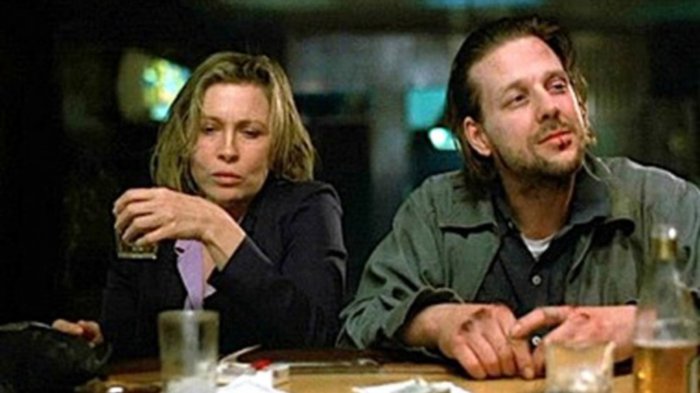
Rourke plays Henry Chinaski, a self acknowledged drunk that repeats the same routine, day in and day out. He gets to his local bar, gets drunk, goes home to write a bit, goes back to the bar, gets drunk(er) and picks a fight with the bartender Eddie (Frank Stallone). Eddie always wins, Henry goes home, and the cycle repeats the next day.

However, one day Henry manages to beat Eddie, and as he tries to get a beer to celebrate his victory, Eddie refuses to let anyone serve him. Rather than mope or cry about it, Henry goes to another watering hole, where he meets Wanda (Faye Dunaway), another drunk, or “barfly.” Both are weird to say the least, so they hit it off immediately.

The next day Henry moves in with Wanda, and their rocky relationship begins. At one point she tells Henry that “she’ll leave with anyone who has a fifth of vodka.” At least she’s straight up and honest. Facing rent payments, and the bill for booze to be had, Henry goes out to get a job. While gone, Eddie happens to be around with a fifth of vodka.

This is the one person that Henry despises the most in the world. Not because Eddie is always handing Henry his ass, but because he sees the polar opposite of himself in Eddie. Eddie is all the things in life and the world which Henry hates. After a brief moment in the film, Wanda returns back to her apartment, and the two reconcile.

Meanwhile, throughout the story, Henry is being followed by Tully (Alice Kruge). It is unknown why, as Henry has blown her off every time she’s contacted him, until the final third of the film. It turns out Henry has submitted some of his writing to her magazine, and they have decided to publish it.

It is in this final bit of the movie that the film took a left turn that didn’t quite work for me. Tully sleeps with Henry the first day they finally meet and is ready for him to move into her guest house and become a writer and be with her. Now, I can understand the drunks getting together quite easily, but a highly established, educated publisher? That’s kind of a stretch for me. It’s alluded to that she fell in love with his writing and his way of life, but I wish a little more time would have been given to her motivation for this action. Yes, I know it fits into the themes of the movie, and definitely works to the favor of Henry’s character, but I wished it would’ve been down without the sacrifice to the Tully character.

Now, you may know that I usually do a shorter synopsis of the movie, stopping before giving away any major plot points of the film. I didn’t do that here. I gave away the whole film because this isn’t a film about a plot, this is a film about characters. It’s a classic character study that feels like a slice of life film. Shroeder plops you down onto a bar stool in a dive and says “hey, check these people out.”

Shroeder also does a great job of letting the actors “act” in their scenes together. He doesn’t force the pace with editing or weird camera angles. In fact, the way this film is directed by Shroeder, and shot by Robby Muller, you’d swear this film is from the 70’s. I was actually surprised to find out it was made in 87, and not in the earlier part of the decade.

The cinematography is definitely something to note here. This is one of the most naturally lit films I’ve seen in awhile. The light seems to always come from natural sources, such as windows, open doors, or lamps. The nighttime scenes are obviously lit, but not in a way that makes you notice that it’s been “lit.” The production design by Bob Ziembicki is also something to note as well, as the whole film looks dirty with stains on the walls, grungy locations, old mismatching furniture, and small apartments looking on the verge of being condemned.

Another ingredient that makes this film feel like the reality obsessed films of the 70’s is the lack of music in the film, other than source music. Source music in a scene, is when the music being heard is coming from somewhere within the movie, such as a character listening to the radio, or passing by an apartment with blaring music. Sydney Lumet also used this technique wonderfully in a couple of his masterpieces “Network” and “Dog Day Afternoon.” It is these key components of cinematography, production design, direction, lack of music, and writing, which sell this as a quality character film that seems very realistic. Because of these elements, it really does feel like you’re dropped on a stool at the Golden Horn.

The writing by Charles Bukowski is seemingly simple, but complex. Rather than take the easier choices out of a situation, Bukowski instead stays true to his characters and never at any point in the film, does it feel like the film’s “written.” The characters never wallow in self-pity, but rather seem to accept who they are, and are happy being who they are. At one point, Henry has the opportunity to make it out, but that’s not what he wants, and Bukowski stays true to that.

Like most films dealing with alcoholics, a voice is heard telling the characters what they are doing, and doing to themselves, is wrong. This is often times a staple in this type of movie, and can easily come across as condescending. This film doesn’t do that. In fact, I would say it romanticizes the inebriated lifestyle. As I understand it, it is somewhat based on Bukowski’s life, which could be a reason for the romantic feel of the drunks. Oddly enough, they make you happy, and that’s a hard thing to do to make drunks make you happy when they have no desire to change at all. With the subject matter, you’d think this film would be either a slap-stick comedy, or a serious drama. Bukowski manages to make it fit comfortably in the middle.

Faye Dunaway is good in this film as Henry’s love interest; a girl who likes to drink and talk. After all, you don’t become “Faye Dunaway” by not being good. Normally, I’d say she was great in this film but truthfully, everyone else pales in comparison to Rourke in this show. In contrast to Rourke, Dunaway looks like she matted her hair after not washing it for a few days, and threw on some clothes that were in the hamper for a week. That’s not to say Dunaway is bad in this film, it’s just that Rourke’s so damn good. Yes, the lovable, charming drunk has been done in movies before, but they’re usually a supporting character. Rourke is the lovable, charming drunk in a lead role that almost begs you not to like him. He walks weird, he talks slow, and he has no ambition to be anymore than what he is. Rourke is also not afraid to look ugly either, which is definitely a necessity for this type of role. He doesn’t do good things, and he certainly doesn’t say good things, but there’s something about him that makes you think you just might want to be his friend. Maybe it’s because he’s more honest and sincere than most sober people, and those traits are rare.

So if you feel like getting to know some entertaining people and having them show you a little slice of their life, I recommend you grab a stool, order a beer, and watch the barflys in The Golden Horn. Or if your only experience to Mickey Rourke is Sin City and Once Upon a Time in Mexico, take a look at what this guy could do more than twenty years ago.

TOP 100 MOVIESTOP 100 MOVIE PAGES
WATCH and SEE the best of film!
SEXY PHOTOSSEXY PHOTOS TOP 100
Sexiest people on the planet!
TOP 100 SEXTOP 100 SEX PAGES
WATCH and SEE the best of sex pages online
NAKED SCENESWATCH the TOP 100 NUDE SCENES of all-time
SEE the best of naked film!


BARFLY.pjg

1987 Movie Review: BAD TASTE, 1987

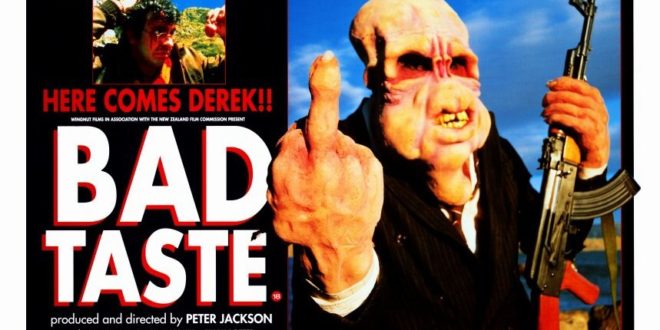
BAD TASTE  MOVIE POSTERBAD TASTE, 1987
Movie Reviews

Directed by Peter Jackson

Cast: Terry Potter, Pete O’Herne, Craig Smith, Mike Minett, Doug Wren
Review by James Mansell

SYNOPSIS:

When an army of aliens arrive on a small New Zealand town and attempt to turn the entire population into the key ingredient for their intergalactic fast-food chain, a small group of men from the Astro-Investigation and Defense Service are sent to investigate. What ensues is a dangerous rescue mission, a full on assault on the alien’s head-quarters and a whole series of precarious situations.

REVIEW:

When you hear the name Peter Jackson, one film, or three perhaps will spring to mind. The highest box-office grossing trilogy in the history of cinema, most number of Academy Awards won, equalled only by Ben-Hur and Titanic, and a faithful and unique adaptation rarely seen on the screen. Peter Jackson propelled himself into legendary director status with his version of J.R.R. Tolkien’s ‘the Lord of the Rings’ trilogy, wowing cinema and fantasy goers alike for three Christmas’s in a row. A feat unimaginable until the New Zealander decided to tackle it.

But aside from his epic fantasy tale, you may also know him from his re-working of his childhood favourite ‘King Kong’, his Kate Winslet period piece ‘Heavenly Creatures’, his gore-drenched masterpiece ‘Braindead’ or even his story of depravity, debauchery and puppets in ‘Meet the Feebles’. But before all this, before any priests kicked ass for the lord, before any puppets played Russian roulette in Vietnam, a group of aliens landed on a small New Zealand town in what can only be described as timeless low-budget horror that Sam Raimi would be proud of.

When a distress call comes through from a small New Zealand town, ‘the boys’ are sent to the location to investigate the disturbance. Enter a gloriously graphic opening scene of an exploding head to the manic laughter of one of Peter Jackson’s two characters, Derek. Within 10 minutes, we’ve had a healthy dose of black humour, pseudo mysterious music and brains sprayed across the ground. The film is set up perfectly, aliens have landed, and Derek and his team are there to save the world from the extra-terrestrials wrong doing.

Things don’t begin to do totally as planned, as Derek, who has captured one of the aliens (interestingly enough, also played by Jackson) begins to torture it for information, the ‘inter-galactic wanker’ as Derek describes it. As its screams of pain emanate across the town, Derek is surrounded by them, resulting in dire consequences. Jackson’s directing comes through in waves in this scene, his timing is impeccable, and the effects (shooting through an alien’s stomach) are so inventive it only but makes you grin with excitement. How they shot a scene teetering on the edge of a cliff is beyond me, and a fight between two Peter Jackson’s is nothing short of breath-taking.

After a local town collector is kidnapped by the aliens, and there heinous scheme is revealed to ‘the boys’, an all out assault on the aliens ensues. Once the headquarters have been located, and a repulsive tasting session of sorts occurs for the one of the boys, Derek returns and an action-packed and blood-soaked gun fight follows that Sam Peckinpah would be proud of. Jackson’s home made prosthetics come to force during the finale of the film, as the aliens break out of their human bodies, and into their own form.

For cult, low-budget horror that has its tongue firmly in its cheek, this is one of the best ever made. And the climax is so hilarious and memorable; it makes you want to watch more of Peter Jackson before the world became aware of him. It is a pure and unadulterated rollercoaster through a young filmmaker’s love of horror, shot over 4 years and totally improvised; it is an achievement in low-budget filmmaking.

Bad Taste is an onslaught of do-it-yourself prosthetics made with enough ingenuity and precision to make it all work. Yes this is low-budget horror, and yes you can see the joins, but this is why we love it. This is low-budget greatness at its most simplistic and basic, but with a balls out attitude and no holds barred what more could you ask for?

SCREENPLAY CONTESTSUBMIT your SCREENPLAY
Voted #1 screenplay contest in the world!
NEW MOVIE REVIEWSNEW MOVIE REVIEWS
Read Today’s POSTED REVIEWS
MOVIE KILLSEE 1000s of PICTURES
Best of photos, images and pics
MOVIE YEARMOVIES YEAR BY YEAR
Pages from 1900 to present


BAD TASTE

1987 Movie Review: BABETTES FEAST, 1987

BABETTES FEAST
Classic Movie Review
Directed by Gabriel Axel
Starring Stéphane Audran, Birgitte Federspiel
Review by Cheryl Farr

SYNOPSIS:

Two spinster sisters who have chosen the austere life of service to others, cautiously take in Babette as a favor to be their servant. She gladly accepts the terms of no pay, only a place to stay and food to sustain her, for the opportunity to stay far from her previous home in Paris. The sisters teach her to prepare cod soaked in milk and stale bread, which Babette finds disgusting, but never complains. Over time, Babette learns the language of her Danish hosts, and learns to bargain with the locals for food. She helps the sisters serve the small sect of elderly worshippers year after year, until one day, she receives news that she has won the lottery in Paris. With a fortune of 10,000 francs, she can leave the cold, desolate village, but Babette is selfless in her love for the religious sect members. Instead of leaving for the comforts of civilization, she chooses to use her money to prepare a feast for her friends

REVIEW:

Babettes Feast has been compared to an early version of Out of Africa, and is noted for it’s Christian themes. Beautifully executed, the storyline and cinematography combine to provide an emotional experience. It begins with Babette’s arrival to the simple home of two devoted sisters who care for their late father’s small flock of rigid worshippers. The colors are dreary, blue, and cold. One can almost feel the desolation of the small fishing village on the coast of Denmark. The wind blows, the windows barely hold back the cold and wind, the dark homes lit by candlelight. The villagers hold their capes and wraps close against the icy weather.

Colors brighten a bit when flashbacks from the sisters’ earlier lives break through. In their earlier days, they were both beautiful and desired by worthy men, however, they choose to stay true to their father’s pastoral work, and never marry. These flashbacks are warm and in stark contrast to the kind of life they now live.

With selfless obedience, Babette faithfully serves the sisters. Behind her eyes, we can see there is an unspoken story, and the mystery of it is intriguing. Some 14 years after arriving at the quaint village, Babette gets a piece of mail from Paris. Each year, her friend has renewed lottery numbers in her behalf, and she has now won 10,000 francs. At this point, we fully expect Babette to take her winnings and leave this forsaken place and go back to warmth and civilization. However, she does something very unexpected. She asks the sisters if she can prepare a meal for them and 10 others. The sisters agree, but soon begin to worry if this will violate their strict code of humble austerity, of complete control over the senses. Now, the audience sees Babette receiving shipments of exotic food, wine, and place settings—and we see the conflict building. How can opulence meet the austere?

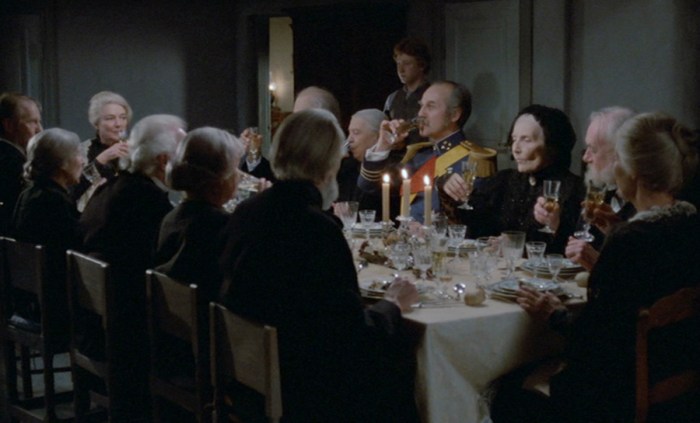
Finally, the night of the feast begins. Babette recruits a young man to help her in the small, inadequate kitchen. The colors are now warm and inviting, the food looks delicious. With tremendous skill, she puts together a fine 6-course feast. The wines and food sit on the table surrounded by shocked, confused guests. They decide to eat it, but not enjoy it. However, as the courses are served, they can’t help but be affected by it. For years, they had begun to settle into pettiness and bickering, not finding joy in life. But as the meal progresses, the stiff layers of bitterness melt away one by one.

One guest remembers that he ate a similar meal in Paris many years before. It doesn’t take long for them to realize Babette owned a restaurant in Paris before escaping the political turmoil. Not only is she a cook, but she has spent every bit of her winnings to treat her friends to the meal of a lifetime. With 12 guests, Babette serves each with love and gives all that she has to them. The guests realize how she has given up her training and hidden her talent all these years to conform to their way of life. The irony cannot be denied.

Last thoughts: This film was awarded Best Foreign Film in 1987. Based on a story in the collection by Isak Dinesen, it was adapted beautifully to capture the deep emotions of a time gone by. I don’t watch many foreign films, but this one is completely memorable. Shot with an artist’s eye, and kept simple, it takes us to a secret world that tickles the senses like the feast itself.

TOP 100 MOVIESTOP 100 MOVIE PAGES
WATCH and SEE the best of film!
SEXY PHOTOSSEXY PHOTOS TOP 100
Sexiest people on the planet!
TOP 100 SEXTOP 100 SEX PAGES
WATCH and SEE the best of sex pages online
NAKED SCENESWATCH the TOP 100 NUDE SCENES of all-time
SEE the best of naked film!


BABETTES FEAST

Film Review: LE RIDE (USA/France/ New Zealand 2016) ***1/2

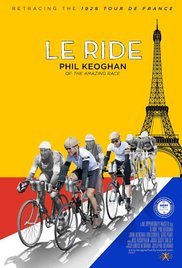
LE RIDE.jpgIn 1928 an under-resourced and untested team from New Zealand and Australia competed in what is considered to be the toughest sporting event in the world.
Director: Phil Keoghan
Writers: Louise Keoghan, Phil Keoghan
Star: Philip Keoghan

Review by Gilbert Seah
 
With the increasing number of cyclists in Toronto and around the world today, this inspirational film about biking should be of immense interest.

LE RIDE is a film, as the voiceover is quick to emphasize, about people with a big heart and determination. As the saying goes, it is not the size of the dog in a fight but the fight in the dog that matters.

The history: In 1928 an under-resourced and untested team from New Zealand (one Harry Watson) and Australia (3 Australians) competed in what is considered to be the toughest sporting event in the world. Many considered the entry of these courageous underdogs, racing as a team of 4 against teams of 10, a joke. One French journalist called their attempt nothing short of murder. 168 riders started the more than 3,500-mile race, only 41 finished. Surprisingly this remarkable story about the achievements of these brave athletes has never been told on film, until now. The present: What has fascinated the filmmaker is the original 1928 Tour de France. Phil Keoghan – television personality, adventurer and cycling enthusiast, with his mate, Ben retraces the 1928 Tour de France route, bringing history to life. Following the original course and schedule, riding a vintage bike, Phil and his team will average 150 miles a day for 22 stages. This is their documentary.
A plus of the documentary are the breathtaking sights observed during the Tour de France. These include the mountains of the Pyrenees, the little villagers and small towns all the way from Paris to Cherbourg to Bordeaux down to the south and back to Paris. The aerial shots ands camera work enhance the scenery to entice the audience to visit France, if they have not already done so.
Phil and Ben, can come across as quite annoying tourists from the film, but their spirit and love for cycling is catching. They must be doing something right, as they manage to convince a lot of French bike enthusiast to help them in their quest.

The quest is no easy task. Phil is not shy to show the grilling and arduous work and pain that goes into completing the race. They ride from nightfall to nightfall with insufficient rest for their bodies to recover. As Ben and Phil race, the film is intercut with archive footage and commentary of the 4 Aussies and Kiwi who themselves suffered great difficulties in 1928. Watson, the New Zealander came down with influenza during the race and still struggled to pull through.

The film also answers the ultimate question of why people go to extreme dangers in sports. Phil jokingly says it is to show off his good looking bike legs. Seriously, he admits that only when one puts himself to the limit does one learn about oneself.

LE RIDE reveals the other side of the glamour of the Tour de France – the gruelling pain and challenging passion that people are unaware of. A film centring on the triumph of the human spirit over great difficulties is always an interesting watch. LE RIDE proves that and much more!

Trailer: https://www.youtube.com/watch?v=dX7Z_ZT_baE
 

Also, Free logline submissions. The Writing Festival network averages over 95,000 unique visitors a day.
Great way to get your story out: http://www.wildsound.ca/logline.html

Deadlines to Submit your Screenplay, Novel, Story, or Poem to the festival:http://www.wildsound.ca

Watch recent Writing Festival Videos. At least 15 winning videos a month:http://www.wildsoundfestival.com

Movie Review: A SPACE GOD APPEARS (USA, Experimental)

Played at the July 2017 Experimental Short Film Festival

A SPACE GOD APPEARS, 10min, USA, Experimental
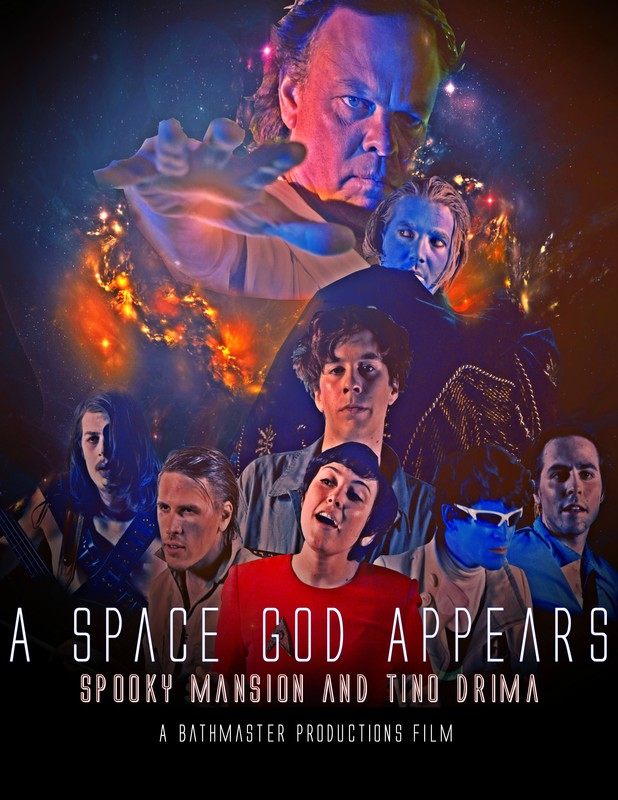
Directed by Grayson ConverseCareening through the universe, pistols blazing, neutron drive pulsing, Spooky Mansion and Tino Drima spread their Space Rock. Follow these bands in this short film about Space, God, Hope and Music. One of the most important stories ever told.

CLICK HERE – and see full info and more pics of the film!

This unique and original work unlike many films- experimental or not- it showcases two different real-life bands facing off musically within the confines of a larger-the-life short film. In the depths of space Spooky Mansion and Tino Drima are on two rival space ships- about to board and fight one another.

Laced with vintage pop-culture references and famous sci-fi callbacks to well loved shows, A SPACE GOD APPEARS lovingly satirized science fiction classics while revitalizing the tropes. Our rival bands compose their film with a colleague of cultural icons including visual references to various 1980’s music and media.

The film may be read as over-the-top by some viewers, but what is admirable about A SPACE GOD APPEARS is its bravery and unflinching choice to own it’s genre. Perhaps most unique, and authentic about this cinematic piece is its originality. The two bands that act as rivals on their space voyage are real life musical bands that have played together in real life.

A fresh twist on media favorites, and revitalizing way to reclaim the classics, A SPACE GOD APPEARS is a adventure for your cinematic sense and a true joy to watch.

Watch the Audience FEEDBACK Video:

a_space_god_appears_movie_poster

Movie Review: GOLDEN LIGHT (Italy, Music Video)

Played at the July 2017 Experimental Short Film Festival

GOLDEN LIGHT, 3min, Italy, Music Video
Directed by Virgilio Villoresi

Music Video for Blonde Redhead’s latest single “Golden Light”

CLICK HERE – and see full info and more pics of the film!

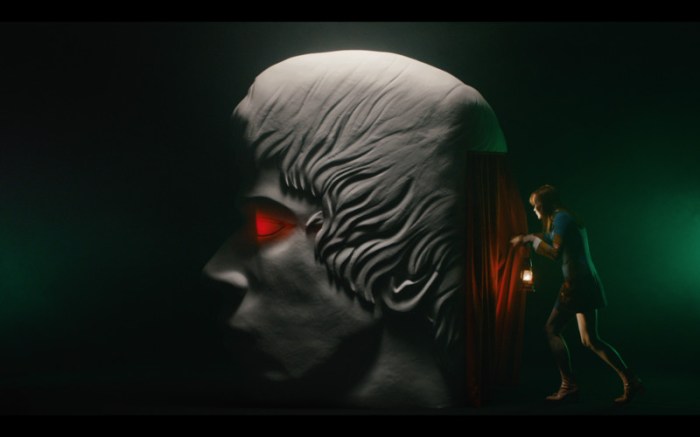
Fantastical and deeply immersive, GOLDEN LIGHT asks you to simply go along with the symbolic wonderland it throws at you. A three minute Italian music video exploring metaphor, symbolism and vivid contrast, GOLDEN LIGHT employs colour and contrast to create dramatic emotional responses. We follow our hero as she explores a mystical Alice-In-Wonderland style universe, encountering her lover along the way.

Under the right light, dramatic patterns appears on the faces of our heroes, adding a literal secondary layer of meaning to our piece. Our lovers dance around each other, one holding a key, one revealing a key hole- but neither ever truly reaching the other.

A notably nod must be given to the stunning and unique art direction and design in this piece- as it has a sensual other-worldliness that is all at once engaging, intriguing and uncanny. This is a difficult but nevertheless effective tone to keep the viewers glued to the piece until the final frame. A lush visual piece with densely layered visuals, GOLDEN LIGHT is a beautiful film to see.

Watch the Audience FEEDBACK Video:

golden_light_1.jpg

Movie Review: DON’T LET THE BASTARDS GRIND YOU DOWN (UK, Experimental)

Played at the July 2017 Experimental Short Film Festival

DON’T LET THE BASTARDS GRIND YOU DOWN, 4min, UK, Experimental
Directed by Michelle Bailey

A young girl girl searches for a safe haven in an urban landscape and finds solace in her own creative expression.

CLICK HERE – and see full info and more pics of the film!

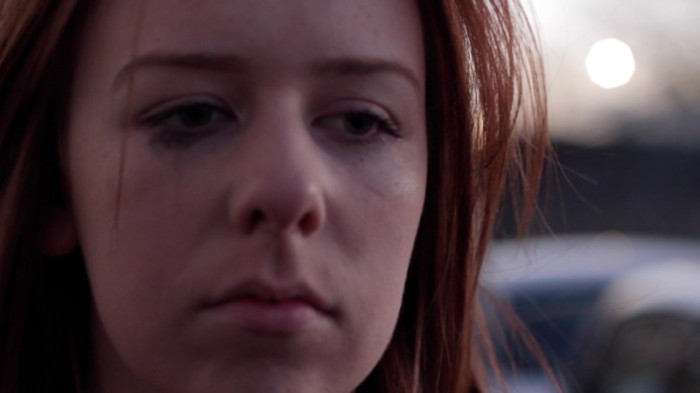
Terrifyingly authentic and yet beautifully abstract, DON’T LET THE BASTARDS GRIND YOU DOWN follows a young woman fleeing the endless cycle of her abusive partnership. She flees down a street while a cycle of his verbal abuse replays over and over in her head.

Once she reaches a rooftop overlooking a deadly drop to the street below, she defies the expectation by bursting into a passionate and emotionally charged dance piece.

Sharp, dramatic, cathartic and intense, DON’T LET THE BASTARDS GRIND YOU DOWN is a piece about finding your own freedom. Our heroine is an exceptional dancer and cinematic performer, and our story, though simply, is nevertheless incredibly emotive and effective.

A piece worth watching if you are a fan of dance cinema, an appreciator of strong dramatic pieces or a lover a fine cinema, you will find something to enjoy in this work. It’s movement will surely move you.

Watch the Audience FEEDBACK Video:

dont_let_the_bastards_grind_you_down

Movie Review: DIE YOUNG (USA, Music Video)

Played at the July 2017 Experimental Short Film Festival

DIE YOUNG, 3min, USA, Music Video
Directed by Mimi Cave

Music Video for Sylvan Esso.

CLICK HERE – and see full info and more pics of the film!

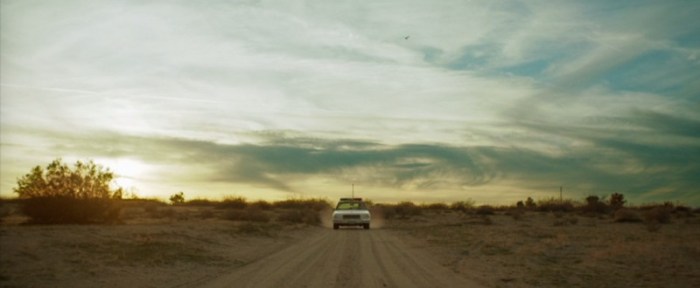
A stunning music video by Sylvan Esso and directed by Mimi Cave, DIE YOUNG is a grippingly and lavishly shot short. A beautiful film with sumptuous and glamorous images, this piece follows a trouble making woman on her quest to escape her circumstances by stealing a cop car to drive into the desert- only to find the backseat is holding an unexpected guest.

Flawless editing and seamlessly smooth cinematic choices make this already strong music video hit new emotional heights. DIE YOUNG is more than just a music video- it is a modern day Thelma and Louise- a story of a women escaping where she was, to figure out who she is, and trying not to get lost in the process.

It may be the musically adventurous song and infectiously catchy beat, or the beautiful visuals, but there is something incredibly emotionally satisfying about this short- something that calls the viewers to get completely immersed in the story arch.

It is the sum of its parts- the music, the story, the cinema- the combination of it all, the begs the viewer to jump into off the cliff with our main character- to fall into the unknown with reckless abandon, and pray the landing never comes.

Watch the Audience FEEDBACK Video

die_young.pg

Movie Review: REQUEMBARREN (Spain, Experimental)

Played at the July 2017 Experimental Short Film Festival

REQUEMBARREN, 16min, Spain, Experimental
Directed by Roman Rubert Bernat 

Beatrice is a young woman who leaves home to look for Requembarren. After listening to the sad man, to the profaner, and to the incestuous man, she reflects on what happens to her on the journey.

CLICK HERE – and see full info and more pics of the film!

This short, highly metaphorical experimental piece, coming to use from Spain and directed by Roman Rubert Bernat, follows the story of a young woman, given a map by her parents and sent out in the world. The world, however, is dangerous, horrifying and wildly unpredictable. Our heroine, much like any on an epic quest, battles feat after feat, meeting stranger after stranger in increasingly periciliary circumstances.

Shot in black and white with keen attention to detail and style, this is a piece with truly admirable cinematic qualities. Thickly laced with fairy tale elements REQUEMBARREN asks its’ audience to examine its meaning from multiple angles; it may be a piece about the passage between life and death, or the link between heaven and hell, or between fairy reality and fantasy.

Regardless of the meaning intended by the creator, there is something lush and gorgeous behind this work of art- with special acknowledgment going to the various rich locations of shooting and the filters used to give brightness to the piece. A worthy watch indeed.

Watch the Audience FEEDBACK Video:

requembarren_2

Movie Review: STRANGE BEASTS (UK, Experimental)

Played at the July 2017 Experimental Short Film Festival

STRANGE BEASTS, 5min, UK, Experimental
Directed by Magali Barbe

‘Strange Beasts’ is an augmented reality game. It allows you to create and grow your own ‘pet’. How far can it go?

CLICK HERE – and see full info and more pics of the film!

A bright, authentic and chillingly vibrant piece of speculative fiction, STRANGE BEASTS follows a software and game developer on his new groundbreaking game. One where you create and care for a digital pet. The catch? The game exists in a device embedded in your eye.

Our hero is loveable, bright, energetic and trusting. The game looks authentic, dazzling and instantly addictive. As a film the colors, graphics and visuals are flawless. The film is a master of attention to detail.

But what sets this film apart is its believability, and its gut wrenching twist. Without spoiling this remarkable ending- this film hits frighteningly close to home.

With this only a five-minutes-in-the-future kind of science fiction, the audience is hit with the sudden realization that this type of technology already exists, and the we are not watching a film about what could be, but what will be.

STRANGE BEASTS will haunt you, with its disarmingly charming approach to the future, and send a chill up your spine when it ends.

Watch the Audience FEEDBACK Video

strange_beasts_1