Film Review: GLASS (USA 2018)

Glass Poster
Trailer

Security guard David Dunn uses his supernatural abilities to track Kevin Wendell Crumb, a disturbed man who has twenty-four personalities.

Writers:

M. Night ShyamalanM. Night Shyamalan (characters)

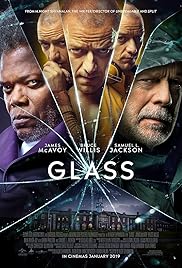
GLASS is a superhero thriller written, produced and directed by M. Night Shyamalan. The film is a sequel to Shyamalan’s previous films UNBREAKABLE (2000) and SPLIT(2016), cumulatively forming the Eastrail 177 Trilogy.  All the main stars are present – Bruce Willis, Samuel L. Jackson, Spencer Treat Clark, and Charlayne Woodard who reprise their Unbreakable roles, while James McAvoy and Anya Taylor-Joy return as their Split characters.

The premise is the fight between good and evil, the good being the super hero David Dunn (Willis) and the bad the McAvoy split characters.

The film opens two years after the events of SPLIT.   David Dunn (Willis) works with his now adult son Joseph (Clark) in using his superhuman abilities to protect people from criminals under a new alias known as “The Overseer”.   This part is incredibly silly and unbelievable.  David learns from Joseph that Kevin Wendell Crumb (McAvoy), who suffers from dissociative identity disorder, has a group of cheerleaders held up in a warehouse.  David goes to free them after discovering the fact out of pure coincidence but encounters one of Kevin’s personalities known as “The Beast,” and the ensuing fight spills out into the streets.  The Philadelphia police department are called leading to the eventual capture of both David and Kevin.  Why David is brought in is never really explained as he has done no harm. The two are sent to a mental institution where Elijah Price (Samuel L. Jackson), David’s sworn enemy, in another wild coincidence, is being held.

Shyamalan introduces a new character into the story.  Dr. Ellie Staple (Sarah Paulson) is the head doctor of the mental institution and works with patients who claim to have special powers. In order to have them suppress those thoughts, she tries to persuade them that there is no such thing as superhuman powers and that they actually have a mental illness. Meanwhile, Elijah (Jackson) is secretly working with Kevin to unleash “The Beast” and expose the world to the existence of superheroes. With the help of “The Beast,” Elijah escapes but he is soon pursued by David, who again battles Kevin on the institution’s grounds.  The Dr. Staple character is the silliest of all the characters – coming off as a  pompous dumb bitch know-it-all who will obviously be roved wrong, cliche-wise at the end of the story.

At this point, the film appears to have gone through full circle with nothing at all accomplished.

GLASS is a trilogy of two UNBREAKABLE, SPLIT and this one.  A word of warning that one must be familiar with the other two films or end up completely lost in following the plot or characters in GLASS.  Director Shyamalan makes no attempt to update his audience to the current proceedings of GLASS.  

One point of observation.  This is the rare film where the actor Samuel L. Jackson’s character does not utter the ‘mf’ word.

Shyamalan make a guest cameo at a store in the film.  He sees David Dunn and mentions that he recognizes the man from the stadium where Dunn used to work security, stating that he used to do shady things when younger.  Those familiar with UNBREAKABLE will recall that Shyamalan gave himself a cameo in UNBREAKABLE selling drugs at the stadium.

There are many reasons that the word ‘split’ would apply to GLASS.  One is the main character from SPLIT portrayed by Jame McAvoy who is also one of the lead characters in GLASS.  Second, the film splits between the thriller and super action hero genres though unfortunately not blending well.  The fight scenes are minimal and the thrills and suspense are also unimpressive.  As GLASS contains two main characters, one from SPLIT and the other, the Bruce Willis superhero from UNBREAKABLE, there was debate regarding the film’s distribution.  Distribution is now split.  Universal now distributes the film in North American while Buena Vista (UNBREAKABLE was from Touchtone Pictures) internationally.  Willis’ performance is stoic while McAvoy’s is downright crazy as he switches from one personality to another instantly.  Director Shyamalan films often splits between the excellent (SIGNS, THE SIXTH SENSE, UNBREAKABLE, SPLIT, THE VISIT) and the duds (LADY IN THE WATER, THE LAST AIRBENDER, AFTER EARTH).  Unfortunately, GLASS belongs to the latter category.  Audiences will undoubtedly be split on whether liking or hating GLASS.  But GLASS is long, boring, too dead serious on its subjects despite the general silliness overall.

At the promo screening, a fair portion of the audience stayed to the end of the closing credits as in SPLI there a was a surprise appearance of Bruce Willis at the ed of that film signalling the sequel GLASS.  No such luck in GLASS.
Trailer: https://www.youtube.com/watch?v=Q7ztHi9ejp4

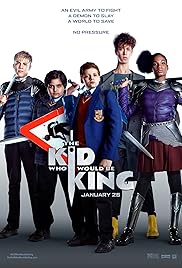
Film Review: THE KID WHO WOULD BE KING (USA/UK 2019) ****

The Kid Who Would Be King Poster
Trailer

A band of kids embark on an epic quest to thwart a medieval menace.

Director:

Joe Cornish

Writer:

Joe Cornish

The film title THE KID WHO WOULD BE KING is likely used due to familiarity with the medieval hit, John Huston’s 1975 Rudyard Kipling adaptation of THE MAN WHO WOULD BE KING.   Don’t let either the title or the fact that this is a family film discourage you from seeing this picture.  Despite the film’s limitations of targeting a family audience, there is plenty to enjoy for adults. Also ignore the silly ad” “Kids Rule” that would turn off adults. 

The story follows Alex Elliot (Louis Ashbourne Serkis, son of Andy) a young boy who is picked on at school and does not appear to be very special at all.  However, that soon changes when he finds and pulls King Arthur’s famous sword Excalibur in the neighbourhood construction site.  He discovers that he is destined to form a new round table for an upcoming battle with the medieval villain Morgana (Rebecca Ferguson), who summons evil forces to rule the world, after being banished by King Arthur.  All this information is revealed at the film’s prologue – animation style.  The wizard Merlin (Angus Imrie) assists Alex in his quest. He is depicted as a young incarnation of Merlin in the film but capable of transforming to his old self (Sir Patrick Stewart).

If Morgana’s evil forces, creatures made up dark black with infra-red eyes look familiar, these creatures bear an uncanny resemblance to the invading aliens in ATTACK ON THE BLOCK, a small first feature that was a hit.  And with solid reason.  KID is directed by that film’s same director Joe Cornish who has the talent of bringing his films filled with spirit, humour and imagination.

Performances are surprisingly spectacular.  Deserving of mention is relative newcomer Angus Imrie who plays the young Merlin, who suddenly appears as a new student to help Alex in his quest to save the world.  Also delivering a heartwarming and sometimes gut-wrenching performance is Denise Gough, an Olivier Award (British Theatre) winner who plays Alex’s mum.

The location where the fights and setting take place is stunningly captured on film by cinematographer Bill Pope.  The film is shot in the Cornwall area, south coast of England.  The film can also be considered to be a super action hero film, with Alex as the young schoolboy King Arthur type hero saving the world.  The film also has plenty of special effects to go with it – so action fans will be delighted.  The special effects is dished out small doses at a time with nothing much at the first half of the film but then coming out strong at the end creating a solid climax for the film.

Cornish’s clever script contains plenty of messages as if to mock films with messages.  These come on strong even at the beginning of the film.   “Telling the truth and doing the right thing.”  “The world doe not change – you do!”  “You do not need what you already have!”  “Use your enemies as your allies.”

THE KID WHO WOULD BE KING is an often imaginative super hero adventure cleverly blending medieval times with the modern with lots of good messages from the director Joe Cornish who the TFCA (Toronto Film Critics Association) awarded the Best First Feature way back when for his equally impressive 2011 ATTACK ON THE BLOCK.  This film rules!

Trailer: https://www.youtube.com/watch?v=cJlxP5P9v9c

Film Review: STAN & OLLIE (USA/UK/Canada 2018) ***1/2

Stan & Ollie Poster
Trailer

Laurel and Hardy, the world’s most famous comedy duo, attempt to reignite their film careers as they embark on what becomes their swan song – a grueling theatre tour of post-war Britain.

Director:

Jon S. Baird

Writer:

Jeff Pope

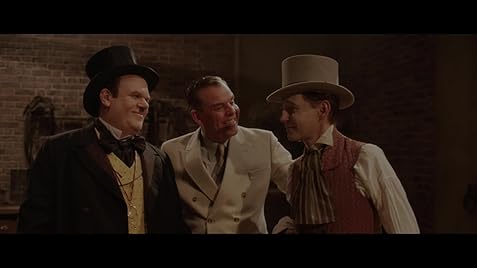
STAN & OLLIE (or perhaps alternatively called LAUREL & HARDY) is a capsule biographical film of the two of the world’s most famous comedians and a tale of undying friendship.

The film is a biographical comedy-drama film directed by Jon S. Baird (from TV films and a few obscure theatrical films) from a screenplay by Jeff Pope.   The comedy is derived mainly from their acts on stage and Laurel’s s often smart mouths remarks while the drama is the story of their friendship and  Oliver’s illness). Based on the lives of the comedy double act Laurel and Hardy, the film stars Steve Coogan and John C. Reilly as Stan Laurel and Oliver Hardy. It already premiered in October 2018 at the BFI London Film Festival.  The film had a limited release in the United States on 28 December 2018 and will be released widely in the United Kingdom, the United States and in Canada in January 2019.

The film is boosted by two outstanding performances.  Besides being impressionists, the actors have to act as well.  Both Coogan and Reilly enable audiences to forget who they really are but for their characters of Stan & Ollie.  It is a tough decision to see who does the better job.  Being American, Reilly earned a Golden Globe nomination for Best Actor (the Golden Globe is more American than foreign press) while Brit Coogan got snubbed.  The other way around for the BFTA (British awards) where Coogan was nominated for the Best Actor award with Reilly up for nothing.

The film is a U.K. co-prodcution as most of the film is set in the U.K.  The film begins with the duo embarking on a gruelling music hall tour of the United Kingdom and Ireland during 1953, and struggle to get another film made – their own (comedy) version of Robin Hood.  There is stop during the tour in Newcastle, though no-one during those segments speak with any Geordie accent.

The film’s narrative is choppy (the script picks up a few incidents in the duo’s lives that mostly affected their bonding) punctuated by the duo’s acts on stage with the dramatic set-pieces.  These acts are at least well performed.  The audience get to see their best acts performed by the impressionists, which shows both how good the acts are and how good the impressionists are as were the original performers.  

The film gets a bit sentimental at times, especially in the last scenes where Ollie is ill from poor health.  But the film’s two best segments are the dramatic confrontation where their friendship is tested and the comedy act where the two are supposed to meet by a change room but fail to see each other.

The shooting of the last performance on stage – the dance number routine by Stan & Ollie must also be commended.  The use of shadows, camera angles and editing to emphasize the talent of the duo is expertly done and watching the sequence is well worth the price of the admission ticket.

The film ends appropriately with the epilogue that Ollie’s health deteriorated after the tour, leading to his death in 1957 and Stan’s eight years later in 1965. Stan continued to write sketches for Laurel and Hardy in the last eight years of his life.

Trailer: https://www.youtube.com/watch?v=rlTTsN4JGnU

Film Reviewer: DESTROYER (USA 2018) ***1/2

Destroyer Poster
Trailer

A police detective reconnects with people from an undercover assignment in her distant past in order to make peace.

Director:

Karyn Kusama

Writers:

Phil Hay (screenplay), Matt Manfredi (screenplay)

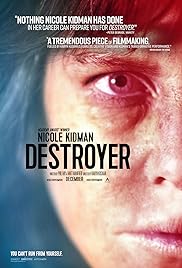
There is a new super hero in town.  But this is a super hero of a different kind – not a Marvel or DC super action figure hero but a female down to earth cop with the super power of survival.  

As the film opens, LAPD detective Erin Bell (Nicole Kidman) arrives on the scene of a John Doe murder and informs the responding officers that she knows the victim’s identity.   The responding officers clearly dislikes her and unafraid to show their feelings.  She gives them the finger when they ask the identity.

At the police station, Erin receives a $100 bill stained from a dye pack in an unmarked envelope. Using a contact at the FBI, she confirms that the bill is from a bank robbery committed by a California gang many years prior that she and her former partner Chris (Sebastian Stan) were embedded in as undercover officers.  She tells her superiors that she believes the bill and the John Doe murder to be proof that the gang’s leader Silas (Toby Kebbell) is once again active.

Erin is forced to work her way through the remaining members of the gang in order to find Silas. She begins with Toby (James Jordan), who was arrested but is now gravely ill and living with his mother on compassionate release. She manually stimulates him in exchange for the location of Arturo (Zach Villa), a member of the gang who attempts to atone for his past crimes by offering pro bono legal services to immigrants.  Arturo provides Erin with the location of DiFranco (Bradley Whitford), a lawyer who launders the money from the original robbery and from whom Erin deduces that Silas is active again because the money from the heist is almost gone. After threatening him, DiFranco gives Erin the location of the next money hand-off, which is performed by Silas’ girlfriend Petra (Tatiana Maslany). Erin tracks Petra, eventually intervening in a bank robbery committed by Silas’ new gang, and kidnaps Petra.

But the beauty of all this is that there is more than meets the eye.

Via flashbacks throughout the film, it transpires that Erin and Chris developed a romantic relationship while undercover, with Erin eventually becoming pregnant with Chris’ child.  Nothing more will be revealed of the story but that it is a bit annoying at the start for the audience has to piece the puzzle of the story together.  But the work pays off.  The fragmented narrative works eventually.  One also needs to take time after the film has ended to piece everything together to see how the time line has worked.

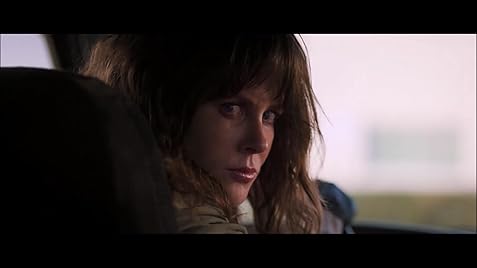
Kidman is marvellous and the almost unrecognizable Erin who strives for redemption for an undercover operation gone all wrong.  She even stole the money.  Kidman was nominated for a Golden Globe for her performance but lost out to Glenn Close.  The young Tatiana Naslany also proves herself a rising star.

The nitty gritty atmosphere of bars and rundown towns is effectively captured.  Director Kusama (GIRLFIGHT) again proves herself as a strong female presence in films.

Trailer: https://www.youtube.com/watch?v=bqHaLUoiWZU

Film Review: THE UPSIDE (USA 2018)

The Upside Poster
Trailer

A comedic look at the relationship between a wealthy man with quadriplegia and an unemployed man with a criminal record who’s hired to help him.

Director:

Neil Burger

Writers:

Jon Hartmere (screenplay by), Éric Toledano (based on the motion picture “Les Intouchables” by) | 1 more credit »

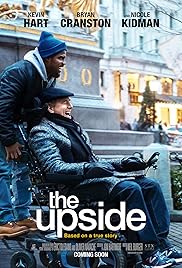
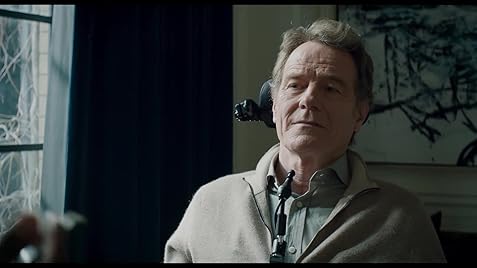
The film begins one night when Dell Scott (Kevin Hart) is driving Phillip’s (Bryan Cranston) flashy sports car at high speed.  They are chased through the streets by the police and eventually cornered.  Dell claims the quadriplegic Phillip must be urgently driven to the emergency room as he is having an epileptic fit;  Philippe pretends to have a seizure and the fooled police officers escort them to the hospital.  All cliched comedy here,  The story of the friendship between the two men is then told as a flashback with this scene retuned at the end.

THE UPSIDE is the remake of France’s second most successful box-office film of all time, the 1999 LES INTOUCHABLES which cost 10 million euros to make but grossed over $360 euros.

The first paragraph describing the story could be applied to both films as THE UPSIDE is quite the similar film but with a few changes.   The American remake changes parts of the original to make the story more believable and dramatic.

Among the changes:

the American version has a a more realistic but less effective ending

the Nicole Kidman character is expanded though not too credible at the end

the comedy is reduced with more drama added

the setting is changed from Paris, France to the U.S.

the character of Phillip’s adopted daughter is omitted completely in the remake

as the film is based on the true story of these two ‘friends’, the original ending showed the two men in real life, Philippe Pozzo di Borgo and his French-Algerian caregiver Abdel Sellou

     It is debatable whether each the changes improves the film, as what is written on paper might not turn out that well or turn out better on film.  Still, the script by Jon Hartmere is a lazy one that follows most of the original scene by scene.

THE UPSIDE benefits from the three lead performances.  Bryan Cranston (TRUMBO) has first billing.  He plays a quadriplegic, which means he can only act using his neck upwards.  Hart gets to clown around for all that is worth.  When the script allow him to do his thing as in the scene where he is supposed to clean up his boss, (What is an American comedy without its shit jokes?) Hart comes across as quite desperate on trying to get a few laughs out of a script that lives him nothing.  I found this segment unfunny and boring though it did get a few laughs from a few of the audience at the promotional screening.  Kidman plays the prissy role of the personal business assistant well giving a needed boost to the under-written role. 

For a  comedy, the running time of over two hours (126 minutes) is lengthy which explains the film crossing the line into feel-good drama.  Bit cliche upon cliche are piled up, if not identical set-ups from the original film.  The end result is a goofy and unrealistic feel-good movie that is as boring as it is original.

Trailer: https://www.youtube.com/watch?v=iaoPOb_fWcw

Film Review: SHIRKERS (USA 2018) ***1/2

Shirkers Poster
Trailer

A woman explores the events surrounding a film she and her friends began making with a mysterious stranger decades ago.

Director:

Sandi Tan

Writer:

Sandi Tan (a film by)

SHIRKERS tells the story of Los Angeles-based, Singapore-born film-maker Sandi Tan, whose first feature, made when she was still a teenager in 1992, was stolen before it could be completed. Twenty years later, when she was miraculously reunited with the unseen footage, Tan decided to return to Singapore and revisit the making – and losing – of the film that haunted her for decades.

SHIRKERS is a documentary that arrives with the caption 25 years in the making.  Another film Orson Welles’ THE OTHER SIDE OF THE WIND also debuted this year with the caption 40 years in the making.  The caption is not really true.  What it means is that the film was never completed till 2018.  Both film share this fact but under different circumstances.  WIND was never completed because Welles ran shot of funds, went party crazy and then passed away.  SHIRKERS never got competed because its original director Georges Cardona stole the cans of film and disappeared.  Only after his death did his wife email Sandi Tan who then completed and made this documentary.  While WIND is artistic crap, SHIRKERS is on the contrary, a low budget well thought of film, well ahead of its time when made back way back when.

SHIRKERS are people that get themselves excused from work for whatever lazy reason.  The ‘shirkers’ in the film are Sandi Tan the film’s writer, director and actress and her friends Georges Cardona, Sophia Siddique Harvey and Jasmine Kin Kia Ng.  The original film is a road movie about a serial killer made in Singapore that showcased houses, street and old buildings.  It was revolutionary filmmaking as the film industry was just budding.  This reviewer is from Singapore, who at the time of leaving the island state in 1982, Singapore had no film industry.  This doc has a special place in this reviewer’s heart as Sandi like himself was a teenage cinephile.  But Woody Allen films were never released in Singapore as there was no market demand for them nor do any foreign films for that matter.  The government is also ultra strict (remember the banning of chewing gum?) that films glorifying violence, drugs or freedom were banned.  Examples of films banned include A CLOCKWORK ORANGE , CHINATOWN and even SKATEBOARD because skateboards were banned.  This fact was mentioned by Sandi in SHIRKERS  She got to watch all these films by getting them recorded overseas.  Myself, I saw these films in the British cinemas in the army camps  while doing National (army) Service and learnt French at the Alliance Francais so I could see French films.

But this re-edited and remade SHIRKERS is a doc on what happened when the film got stolen and the events that got it completed.  It is also story of Sandi and her friends.  SHIRKERS at its best captures the spirit of young cinema lovers who would do anything to propel their love for film.  The film also documents the various stages on how Sandi finally got herself into the picture.  She initially did not want to be in it.

SHIRKERS is the film that Orson Welles should have made.  The film has also won many awards in festivals worldwide including Sundance’s prestigious World Documentary Prize.

Trailer: https://www.youtube.com/watch?v=u3wPWCj2L6I

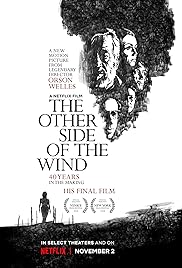
Film Review: THE OTHER SIDE OF THE WIND (USA 2018)

The Other Side of the Wind Poster
Trailer

A Hollywood director emerges from semi-exile with plans to complete work on an innovative motion picture.

Director:

Orson Welles

In the words of Orson Welles himself: THE OTHER SIDE OF THE WIND is a crazy picture.  It is not a documentary.  It is a departure from moviemaking.   Everybody will think the film is autobiographical but it is not.  

THE OTHER SIDE OF THE WIND is a film within a film.  It is supposed to be Welles’ comeback film after being ostracized by Hollywood.  He never completed the film and passed away with the footage locked in  a Paris vault.  Funds were eventually provided by Netflix for its completion.

The film opens by a voiceover describing the final day of Jake Hannaford (John Huston), an aging Hollywood director who was killed in a car crash on his 70th birthday.  The narration is from an elderly Brooks Otterlake (Peter Bogdanovich), who had been a protégé of Hannaford’s. Just before his death, Hannaford was trying to revive his waning career by making a flashy film, laden with gratuitous sex scenes and violence, with mixed results. At the time of Hannaford’s party, this film (titled The Other Side of the Wind) has been left unfinished after its star stormed off the set, for reasons not immediately apparent to the audience.

A screening of some incomprehensible parts of Hannaford’s unfinished experimental film takes place, in order to attract “end money” from studio boss Max David. Hannaford himself is absent, and a loyal member of his entourage, the former child star Billy Boyle, makes an inept attempt to describe what the film is about. Intercut during this, we see various groups setting out for Hannaford’s seventieth birthday party at an Arizona ranch. Hannaford arrives with a young Brooks Otterlake, a commercially successful director with a talent for mimicking celebrities, who credits much of his success to his close study of Hannaford.

The story goes on but the film is all over the place and hardly coherent when one finally figures out what is happening.  The film contains a few stunning segments, the most notable being these two most sexually explicit ones:

 – the beginning graphic lesbian steamroom scene, rapidly intercut, featuring Oja Kodar (the actress at the time was Welles’ lover), which Hannaford is in the process of filming at the start.

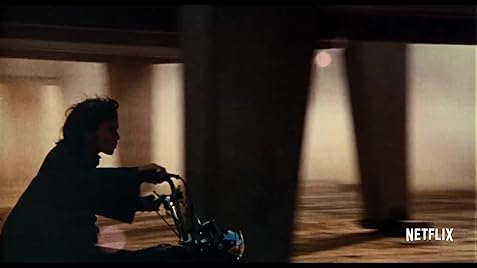
the sex scene in an 1968 Ford Mustang fastback. The car takes off in the rainy night, and as the boyfriend drives, the pair have sex in the passenger seat next to him. After a few minutes the boyfriend stops the car, grabs the girl off of Dale (the actor playing the lading character in WIND), and appears to make an attempt to engage her for himself. She rebukes him and the pair is then tossed out. John Dale, with his pants halfway down, lands in a large puddle.

THE OTHER SIDE OF THE WIND is definitely not a masterpiece as Welles hoped it to be.  It is not even a good film.  It is madness personified into a film, with a few absorbing segments as well as unconnected boring parts in between.

THE OTHER SIDE OF THE WIND will be more interesting to cineastes (for example; what does the title even mean?) but for the rest the film is best avoided.

Trailer: https://www.youtube.com/watch?v=nMWHBUTHmf0

Film Review: THEY’LL LOVE ME WHEN I’M DEAD (USA 2018) ***1/2

They'll Love Me When I'm Dead Poster
Trailer

In the final fifteen years of the life of legendary director Orson Welles he pins his Hollywood comeback hopes on a film, The Other Side of the Wind, in itself a film about an aging film director trying to finish his last great movie.

Director:

Morgan Neville

THEY’LL LOVE ME WHEN I’M DEAD is a 2018 American documentary film, directed by Morgan Neville, revolving around the making and filming of the infamous never completed and now just completed THE OTHER SIDE OF THE WIND, directed by Orson Welles.

A bit of background knowledge is necessary in order to appreciate the Orson Welles/Neville doc, THEY’LL LOVE ME WHEN I’M DEAD.  The doc should be watched together with THE OTHER SIDE OF THE WIND, though best before or after could be argued.  WIND was Welles’ comeback movie that took him umpteen  years tin the making but never competed due to his craziness and lack of funding.  WIND was supposed to be autobiographical though Welles claims it was never so.  He had directed his best friend John Huston play the director and Peter Bogdanovich play another director who was not Peter Bogdanovich.  He has impressionist Rich Little hired to act in his film and then edited him out.  More information and madness are revealed as Neville’s doc unfolds.

The doc is immensely entertaining for several reasons.  Firstly, Welles was a charismatic and intriguing character.  It is also about filmmaking and  filmmakers implying that all cineastes should love the doc.  And Neville has done a wonderful job revealing both sides of Orson Welles.

Neville also includes short clips (wish he had shown more) of Welles’ famous films like CITZEN KANE, THE TRIAL and A TOUCH OF EVIL while mentioning his never completed films like THE DREAMERS (not to be confused with the Bertolucci film of the same name).

The title takes the words from from a prophetic comment Welles made to Peter Bogdanovic that centred on Welles’ return to the U.S. in the early 1970s to shoot his ill-fated Hollywood comeback film.  The documentary concludes with his death in October 1985. “Welles is the protagonist of my documentary,” Neville said. “(The Other Side of the Wind) is so autobiographical, even though he said it was not.

The doc is also a study of the madness that goes with genius.  Welles’ not only drove himself crazy but those around him.  Like his cameraman, Gary Graver.  After working him to death to the point that Graver would strangle him and call Welles a fucking fat idiot, Welles would put his arm around Graver and tell him that he was doing a great job.

The film is all about great directors.  Besides its subject Orson Welles who made arguably the best film (as polled by critics over the years) of all time CITIZEN KANE, the film features Peter Bogdanovich who accomplished three great films during the making of THE OTHER SIDE OF THE WIND, THE LAST PICTURE SHOW, PAPER MOON and WHAT’S UP DOC?. This film is directed by Morgan Neville who directed the Best Documentary Oscar winner, 20 FEET FROM STARDOM as well as the well critical received BEST OE ENEMIES and WON’T YOU BE MY NEIGHBOR?

This film should be seen together with the recently completed THE OTEHR SIDE OF THE WIND, thanks to additional funding provided by Netflix.   THEY’LL LOVE ME WHEN I’M DEAD is also a Netflix original film now playing on Netflix.

Trailer: https://www.youtube.com/watch?v=H_kOsnGzfYY

Film Article: THE GOLDEN GLOBES 2019

The 76th Golden Globe Awards were handed out on Sunday, January 6, 2019.  Killing Eve star Sandra Oh and Brooklyn Nine-Nine star Andy Samberg co-host the 76th annual ceremony, that aired live on NBC at 8 pm Eastern/5 pm Pacific.

Oh is the first Asian to host or co-host the Golden Globes.  Oh, a Canadian is the perfect choice having made her name both in drama and comedy in television and motion picture in both Canada and the United States.

The Golden Globes are organized by the Hollywood Foreign Press Association (HPFA) recognizing achievement in both television and film.  The winners are usually the frontrunners of the upcoming Academy Awards (the Oscars).  

The Golden Globe ceremony is quite different from The Oscar ceremony as the former allows the guests to sit at a table, have dinner and drink alcohol, which makes for a more relaxed and entertaining evening.  Rick Gervais a part host was notorious in keeping the proceedings lively while spurting insults at the presenters. “I don’t care…” was his favourite words.  Gervais is my favourite host of all time as one can always appreciate a good laugh, even at the expense of others.

In one of the best Globes openings, Oh and Samberg roasts the nominees.  The first victim was Spike Lee, called Spice Lee by Oh.  Multiple nominee Amy Adams is called doll s*** and told to reserve awards for the others.  Films get roasted too including the $200 million blockbuster CRAZY RICH ASIANS which impressed Asian mothers everywhere.  Oh was tremendously funny, even choking Lady Gaga laughing.  Jim Carrey was roasted too providing a great come back.  In a more serious note, Oh mentioned the face of change in her being chosen to co-host the Globes.  

Oh herself won a Golden Globe later in the show for KILLING EVE.

Of the winners, Regina King who won the Best Supporting Actress went overtime and got too political in her acceptance speech.

The Life Achievement Award went to Jeff Bridges.

Mistakes at the Globes?  When Cuaron won the second time the night for Best Director, the announcer said Cuaron won the first one for Best Screenplay but he did not but for the Best Foreign Film. 

Best acceptance speech of the evening was delivered by Glenn Close winning for Best Actress in a drama for THE WIFE.  Close got a standing ovation.  Close also acknowledged her mother who gave everything for her husband and mentioned the need to follow ones dreams.

The FILM Winners of the Golden Globes are listed below for each category together with the nominees.  The Winners are indicated with the notation ‘winner’.

Best Picture — Drama`

Black Panther

BlacKkKlansman

Bohemian Rhapsody ***winner

If Beale Street Could Talk

A Star Is Born

Best Picture — Comedy or Musical

Crazy Rich Asians

The Favourite

Green Book ***winner

Mary Poppins Returns

Vice

Best Performance by an Actor in a Motion Picture — Drama

Bradley Cooper, A Star Is Born

Willem Dafoe, At Eternity’s Gate

Lucas Hedges, Boy Erased

Rami Malek, Bohemian Rhapsody ***winner

John David Washington, BlacKkKlansman

Best Performance by an Actress in a Motion Picture — Drama

Glenn Close, The Wife ***winner

Lady Gaga, A Star Is Born

Nicole Kidman, Destroyer

Melissa McCarthy, Can You Ever Forgive Me?

Rosamund Pike, A Private War

Best Performance by an Actor in a Motion Picture — Musical or Comedy

Christian Bale, Vice ***winner

Lin Manuel Miranda, Mary Poppins Returns

Viggo Mortensen, Green Book

Robert Redford, The Old Man & the Gun

John C. Reilly, Stan & Ollie

Best Performance by an Actress in a Motion Picture — Musical or Comedy

Emily Blunt, Mary Poppins Returns

Olivia Colman, The Favourite ***winner

Elsie Fisher, Eighth Grade

Charlize Theron, Tully

Constance Wu, Crazy Rich Asians

Best Performance by an Actor in a Supporting Role in Any Motion Picture

Mahershala Ali, Green Book ***winner

Timothée Chalamet, Beautiful Boy

Adam Driver, BlacKkKlansman

Richard E. Grant, Can You Ever Forgive Me?

Sam Rockwell, Vice

Best Performance by an Actress in a Supporting Role in Any Motion Picture

Amy Adams, Vice

Claire Foy, First Man

Regina King, If Beale Street Could Talk    ***winner

Emma Stone, The Favourite

Rachel Weisz, The Favourite

Best Director — Motion Picture

Bradley Cooper, A Star Is Born

Alfonso Cuarón, Roma ***winner

Peter Farrelly, Green Book

Spike Lee, BlacKkKlansman

Adam McKay, Vice

Best Screenplay — Motion Picture

Alfonso Cuarón, Roma

Deborah Davis and Tony McNamara, The Favourite

Barry Jenkins, If Beale Street Could Talk

Adam McKay, Vice

Peter Farrelly, Nick Vallelonga, Brian Currie, Green Book       ***winner

Best Motion Picture — Animated

Incredibles 2

Isle of Dogs

Mirai

Ralph Breaks the Internet

Spider-Man: Into the Spider-Verse ***winner

Best Picture — Foreign Language

Capernaum

Girl

Never Look Away

Roma ***winner

Shoplifters

Best Original Score — Motion Picture

Marco Beltrami, A Quiet Place

Alexandre Desplat, Isle of Dogs

Ludwig Göransson, Black Panther

Justin Hurwitz, First Man ***winner

Marc Shaiman, Mary Poppins Returns

Best Original Song — Motion Picture

“All the Stars,” Black Panther

“Girl in the Movies,” Dumplin’

“Requiem for a Private War,” A Private War

“Revelation,” Boy Erased

“Shallow,” A Star Is Born *** winner

Film Review: A TWELVE-YEAR NIGHT (Uruguay 2018) ****

A Twelve-Year Night Poster
Trailer

1973. Uruguay is governed by a military dictatorship. One autumn night, three Tupamaro prisoners are taken from their jail cells in a secret military operation. The order is precise: “As we… See full summary »

Director:

Álvaro Brechner

During the dictatorship in Uruguay, there was the 12-year incarceration of members of the Tupamaros, a left-wing urban guerrilla group active in the 1960s and 1970s, 9 of whom were held as “hostages” between 1972 and 1985. 

A TWELVE YEAR NIGHT is the dramatization of the account of 3 (among 9) prisoners who were imprisoned in solitary for a period of these 12 years.  The pure thought of being in 12 years of darkness is unimaginable, less 12 years of imprisonment in solitary, less 12 years in imprisonment.  Thankfully, as if it is not bad enough, the 12 years are not totally spent in total blackness, but it could be described as nights with a little light, but still in solitary.  The question the film asks is how a human being can survive in such conditions to fight and maintain their integrity.  The film is inspired by the book Memorias del Calabozo by Mauricio Rosencof and Eleuterio Fernández Huidobro, who, along with José “Pepe” Múgica, travelled between more than forty jails during the terrible military dictatorship that ruled Uruguay over the course of 12 years, starting in 1973. The film made its world premiere in the Orizzonti section at the 75th Venice Film Festival.  Be prepared!  Needless to say, the film is not an easy watch, but it is a story that needs be told.  The film demonstrates both how cruel human beings can be as well as the resilience of the human spirit in overcoming extreme adversity.

The film begins with quotations from Franz Kafka: “In the Penal Colony”.

The man looked at the guard and asked the officer: “Does the convict know his sentence?”

“No”, said the officer, “but he will experience it in disown body.”

It is difficult to ascertain which is worse – the mental the physical torture.  The former is emphasized by director Brechner  by the titles that come with the unfolding of the film, as if counting the days before the order is over.  The prisoners are often shown huddled in a corner, or almost going mental by not knowing how their families are doing on the outside.  Not knowing is worse than knowing the truth.  The prisoners are also subject to physical torture in segments that are so terrible that they are almost impossible to watch.  Brechner  fortunately only gives the audience short glimpses of these tortures as a series of fast edited images.  And a few are a combination of both mental and physical – torturing by ultrasound or by inserting an antenna into the prisoner’s ear to create sounds and voices.

But the only defeated are the ones who stop fighting. The film is not only gloom and despair as it is occasionally inspirational as during the scene the doctor gives the prisoner, Mujico just a little hope, and that is all he can cling to.  The Simon and Garfunkel song “Sound of Silence” is incredibly moving when used in certain scenes.  Mujico went on, after finally being freed to be elected the President of Uruguay at the age of 76.

The film contains very little humour, which is expected given the sombre subject matter.  director Brechner  resorts to flashbacks where the prisoners imagine their past during their freedom days to give audiences a break from the harsh conditions on display.

How does the Uruguayan Government get away with the atrocities?  The film demonstrates.  Before the prisoners are queries by the International Red Cross, the prisoners are warned: “Say anything stupid and we will rip your head off.”  Not only that, but they are not given a chance to say anything either.

The film contains a few exciting segments like the one where the prisoners are captured in a raid.

The film is Uruguay’s entry for the 2019 91st Academy Awards for Best Foreign Film.  Though, it did not make the December 9-film short list, A TWELVE YEAR NIGHT is more than a deserving effort.  The film is a Netflix original film and it is still playing on Netflix.

Trailer: https://www.youtube.com/watch?v=y97o1phiyRY