Film Reviews: CINEFRANCO 2017 (from October 6th)

Submit your Screenplay to the Festival TODAY

CINEFRANCO 2017 (from October 6th)

Now in its 20th year, Cinefranco is one of the longest running film festivals in Toronto.  One must give praise and credit to the ever cheerful and tireless directrice of the festival, Marcelle Lean who is always present to say ‘bonjour’ to Cinefranco fans.  It is hard to survive in this festival eats festival world, but Cinefranco has got a loyal base of sponsors that come back year after year not to mention a good selection of films from France, Quebec, Belgium and Africa.

Last Year’s Cinefranco was in a bit of trouble because of lack of sponsorship.  Things appear improved and the fete du film has now been pushed to the late part of the year/

The films are screened at the smaller Carlton Cinemas but the good news is that it is in a very central location, right in the City Centre.  The other difference is that ‘comedy’ is the subject for the year, so expect plenty of light entertainment.

For complete program information, ticket pricing and bookings, please check the Cinefranco website at:

http://2017.cinefranco.com/en/

This site is grateful to Cinefranco and Virginia Kelly Publicity for providing screeners for the capsule reviews below:-

And don’t forget to say ‘Bonjour’ to Marcelle.

Bon Cinema!

CAPSULE REVIEWS:

(Trailer links provided at the end of each review)

BIENVENUE AU GONDWANA (WELCOME TO GONDWANA) (France 2016) ***

Directed by Mamane

A comedy of manic proportions set in the fictitious African country of very, very democratic Gondwana.  Manic because it contains too many characters who all are half crazy most of the time.  There is the young French idealist plunged into African reality which are the controversial presidential elections, a dictator determined to remain in power by cheating, two sidekicks adept at geopolitics, a French congressman determined to sell asparagus to Africans and a young and pretty revolutionary.  The purpose of the landing of all these characters in Gondwana is to oversee the elections to make sure that they are unit rigged.  The film works well in the first third with superior laugh-out loud jokes but when it tries to get serious with a few messages and romance, the comedic momentum is lost.  One might quiver at the way black African governments are stereotyped and the way Africans act and dance (as in the Gondwana welcome ceremonies) but these jokes still pack quite the punch.

Trailer: https://www.youtube.com/watch?v=jjSDwiv9JuY

RAID DINGUE (France 2016) ****

Directed by Nicolas Benamou

After the Boston marathon bombing, the U.S. made PATRIOT  DAY about the hunting down of the bombers and STRONGER about the survival of a victim who lost his leg.  It takes the French to make a comedy after their terrorist attacks.  RAID DINGUE is an action comedy featuring two very funny actors. Alice Pol and Dany Boon (WELCOME TO THE STICKS).  The excuse to bring them together?  Johanna Pasquali (Pol) is a female cop unlike any other. Distracted, dreamy, and clumsy, from a purely policewoman point of view she is awfully nice but totally useless.  Although endowed with real skills (shooting, hand-to-hand combat, police intuition, etc.), her clumsiness makes her a danger for criminals, the greater public, and her colleagues.  Her father (Michel Blanc) wants her to be accepted for RAID training but kicked out.  So, she finds herself in the hands of officer Eugène Froissard (Boon), the most misogynist and vulgar of all the RAID officers.  Together they go after the Leopards.   The film is current with the recent terrorist attacks and also deals with issues like women in a male dominated work force.   Director Benamou and his two leads have perfect comedic timing.  Laugh-out loud humour all the way.  The impressive cast includes veteran actors like Michel Blanc, Sabine Azeman and Yvan Attal.

Trailer: https://www.youtube.com/watch?v=05qHBDBuxrY


UN PETIT BOULOT (France/Belgium 2016) ***
Directed by Pascal Chaumeil

Another comedy but a darker (and serious) one at that.  The setting is a small French town where jobs are slowly lost and the inhabitants get poorer.  The protagonist is Jacques (Romain Duris sporting a beard but still recognizable).  Dead broke with gambling debts, he reluctantly takes a job from a local gangster, Gardot (Michel Blanc) to kill his wife.  One killing is easy enough for Jacques and that leads him to do more.  Blanc wrote the dialogue and script for the film.  Gardot arranges for Jacques to do more killings for a 70-30 split.  One of these takes place in Brussels as the film is a Belge French co-production.  The awkward romance pops up with no warning at the 40 minute mark with Jacques suddenly meeting a girl he had not see for a while.  An all right comedy aided by the performances of its to lead veteran an actors Duris and Blanc.

Trailer: https://www.youtube.com/watch?v=Z_W4PPldtkw

cinefranco

1997 Movie Review: SCREAM 2, 1997 (dir. Wes Craven)


AWAY WE GO MOVIE POSTER
SCREAM 2, 1997
Movie Reviews

Directed by Wes Craven
Starring: Neve Campbell, David Arquette, Courteney Cox, Jada Pinkett Smith, Omar Epps, Liev Schreiber, Sarah Michelle Gellar, Jamie Kennedy, Jerry O’Connell, Laurie Metcalf
Review by Matthew Toffolo

SYNOPSIS:

It has been two years since the tragic events at Woodsboro. Sidney Prescott and Randy Meeks are trying to get on with their lives, and are currently both students at Windsor College. Cotton Weary is out of prison, and is trying to cash in on his unfortunate incarceration. Gale Weathers has written a bestseller, “The Woodsboro Murders,” which has been turned into the film, “Stab,” starring Tori Spelling as Sidney. As the film’s play date approaches, the cycle of death begins anew. Dewey Riley immediately flies out of Woodsboro to try to protect Sidney, his “surrogate sister.” But in this sequel to the 1996 horror film, the number of suspects only goes down as the body count slowly goes up!


REVIEW:

TRIVIA: Scream 2 actually beat Titanic at the weekend box office when it opened in December 1997. Titanic then went on to go #1 at the box office everyday for straight 5 months and eventually became the biggest grossing film of all-time. But, Scream 2 can say that it topped it when it went head to head.

Going back and watching this Scream sequel really got me very nostalgic. I remember sitting in the theater with my friends and really giving live play by play commentary of the film while it was happening. This is just one of those films. Of course now I hate it when others do this at it happened to me during a screening of My Bloody Valentine as people were talking so much, I couldn’t pay attention to the movie. But when you’re in your early 20s, you tend to be a little selfish. So I apologize to all the people who were sitting around us during the screening. We were jerks.

Scream 2 is one of those films that is probably more suited for a home viewing than watching it in the theater. It’s a campy film and you really can’t take it all that seriously. That said, the storytelling and characters are done well so you are definitely into the ‘what’s going to happen next’ feeling. You are definitely emotionally involved while you also get many of the wink-wink jokes during the climatic moments. The original Superman films are like this too. One moment of action leads to another moment campy comedy. Someone getting killed leads to people sitting around and chatting about horror films and their cliches. This is a film that is many things to many people. It’s a horror, a thriller, a crime movie, a mystery and most definitely a comedy. A hard thing to pull off but director Wes Craven really found the original tone that was in the script and put it on screen. Him and writer Kevin Williamson created a new movie recipe and they succeeded all the way to the bank.

When watching this film I was also surprised of all the actors who are household names or actors I respect that I completely forgot was in the film. Jada Pinkett Smith and Omar Epps play the two characters that ‘open’ the film like Drew Barrymore did in the first film. They play up how Horror films are a white man’s genre and you never see black people in the movie. As soon as you see then on screen, you know they are doomed. Craven and Williamson were pointing out to the world that they are not prejustice and even blacks can get killed in the movies. And they aren’t the killers.

Heather Graham, Luke Wilson and Tori Spelling play the ‘movie’ versions of the characters in Scream. A great campy plot as we jump into a film within a film. Luke Wilson especially was hilarious to see as at the time he was just an actor starting out and had only one credit on his resume.

Sarah Michelle Gellar, who was just getting going in her Buffy TV show, appears as well in a great ‘stab’ scene. So does pre-Dawson Creek’s Joshua Jackson who was also just starting out in the biz. Portia de Rossi and Rebecca Gayheart play the sexy sorority sisters. Jerry O’Connell plays Sidney’s boyfriend (who has an extremely awkward Top Gunish music scene in the school cafeteria) who could be the killer. And Liev Schreiber, who really only had a cameo role in the first Scream film, plays the obnoxious but charming Cotton Weary. You can tell in this role that Schreiber had something unique as he could change from sexy to scary in one emotional beat. And was an actor who definitely had a big future ahead of him.

And then there’s Timothy Olyphant. An actor I had no idea was in the film. I loved Olyphant in his role in the HBO series Deadwood. When he’s not donning a mustache, he’s a very creepy looking character. And because of that he sort of tips the hat of the film’s conclusion. Or perhaps not because he seems to be the obvious killer.

Of course this again is Sidney’s (Neve Campbell), Dewey’s (David Arquette) and Gale’s (Courteney Cox) film. Sidney is you classic main character. Strong, determined, vulnerable and haunted by past events. Arquette and Cox have fantastic on-screen chemistry (and off-screen too as they are married) and seeing that in the first film, the creators I’m sure made sure they had a lot of screen time together in the 2nd film. They are almost like a comedy team with a little romance mixed in. The geek and the princess.

Courteney Cox’s roles in these films should be pointed out as she is remarkable. If her performance doesn’t work, then the film doesn’t. We have to view Gale as a bitch with an agenda but also like her a great deal too. Her character too in Scream 2 also has the biggest emotional arcs happening. She’s the one who’s changing the most from the beginning to end.

Campbell’s role could be categorized as almost boring as it’s hard to find a storyline for her that wasn’t done in the first film. She delivers an almost thankless performance because she has after all the only ‘non sexy’ role in the film. She’s sexy but the role she plays is the role of the straightman. She must act in a thriller genre to keep the overall tone of the movie intact while all the other roles get to play it up and be campy. Sidney is the straw the stirs the drink of the movie and these type of roles can get forgotten. But if you don’t have it played well, then you don’t have a film.

Scream 2 also plays up on the sequel film. It asks the question of what sequel was better than the original in movie history. And ‘wink-wink’, is Scream 2 better than the original? Not really but it’s not bad.

SCREAM 2, 1997

1997 Movie Review: RETROACTIVE, 1997 (James Belushi)

  MOVIERETROACTIVE 
Movie Reviews

Director: Louis Morneau

Starring: James Belushi, Kylie Travis, Shannon Whirry, Frank Whaley, M. Emmet Walsh, Shermon Howard
SYNOPSIS:

A hostage negotiator makes several jumps back in time to save a woman from her brutal husband.

REVIEW:

‘Retroactive’ is one of those big studio films that went straight to video, but you wouldn’t understand why if I just gave you the plot, because it’s a damn good plot, unfortunately almost everything else lets this one down.

Karen (Kylie Travis) is stranded in the middle of the desert, her car has broken down and she ends up catching a lift with a strange weirdo guy (James Belushi) and his obviously suffering girlfriend. Even though fate gives her several opportunities to get away from this couple, who are obviously involved in some kind of illegal dodgy activities, she sticks with them until the jerk guy, Frank, shoots up a gas station.

Karen escapes and finds herself in a secret lab in the middle of the desert where experiments in time travel are being conducted. She is thrown back in time to when she was stranded. She tries to prevent the murders however each time she travels back she seems to make things worse.

It’s kind of like an action movie style version of ‘Groundhog Day’, just without the humour or good acting. Having said that though there are some good things about this film; as I said above the plot sounds interesting and probably would have been if it wasn’t for the acting. It would be interesting to see someone remake this film to see if they could make it work.

Another plus is that the time travel is pretty well thought out, considering the continuity errors which seem to occur throughout the film, it’s clear that the script writers were more vigilant than the director or continuity person, if there was one. It’s such a simple idea for a plot but it is the kind of plot that can end up being very complex to write, film and edit. So I give the film makers an ‘A’ for effort.

I have nothing against James Belushi or Kylie Travis, but I’m not really fans of either one of them. But both have acted in film and television before and after this film and quite obviously with a bit of success. But in this film it was as if they were just going through the motions.

With minimal effects and not a lot of different scene locations there isn’t that much a part from the plot to keep your attention. Which isn’t a bad thing but there are also too many points where you feel like the plot is being lost by the actors and so we as the audience get lost.

Someone should really remake this film, it needs it more than any other film. Although as I stated above it is such a simple plot and not that original so I look forward to the day when someone remakes this film accidentally. Then I will be able to say; ‘for once, this is better than the original.’

RETROACTIVE, 1997

1997 Movie Review: PRIVATE PARTS, 1997 (Howard Stern)

PRIVATE PARTS,  MOVIE POSTERPRIVATE PARTS, 1997
Movie Reviews

Directed by Betty Thomas

Cast: Howard Stern, Robin Quivers, Mary McCormack, Fred Norris, Paul Giamatti, Jackie Martling, Carol Alt, Allison Janney
Review by Jarred Thomas

SYNOPSIS:

The film tells the story of Howard Stern, the popular radio personality whose candor and crude humor revolutionized radio.

 REVIEW: 

One of the most controversial disc jockeys of all time, Howard Stern revolutionized radio for the masses and created a radio show that all other personalities try to emulate but fail in their attempts. The film is based on the popular book of the same name and chronicles the career of Howard from his childhood to high school and college to his early days in radio eventually leading to his radical career in broadcasting.

Love him or hate, Howard Stern is truly an entertainer and Private Parts shows not only his eccentric persona but also the struggles and challenges he faced from all angles. Whether it was local bullies or vindictive program directors, every obstacle was essential in developing the personality that would later become an iconic radio star.

Howard Stern plays, who else, but Howard Stern and while that may seem like an easy task considering he’s only playing himself, it’s not. He has to be able to convey his emotions and dramatic moment convincingly, no matter if he’s retelling an experience he went through. It still requires that he present a believable moment and this requires good acting, which he does.

Betty Thomas does an excellent job balancing the crude humor with the more heavy scenes. The supporting cast does a fine job as well. Paul Giamatti is great as spiteful program director, Lenny, or “pig vomit” as Howard refers to him. Together their scenes are absolute gold as both Howard and Paul play off each other perfectly.

There’s a memorable scene in which Paul addresses Howard and his gang (Robin and Fred) about the seven dirty words they are not allowed to say. This of course only entices Howard, who later develops a segment in which he says those exact words but in the context of a game show so as to make it seem innocent and appropriate for radio listeners.

Those who are familiar with the Howard Stern show can expect the typical naked sexy women and certain bits that are popular on his radio program. But there is also a heart to the film that provides warm moments between Howard and his wife Alison, played by the talented Mary McCormack. There’s one intense scene in particular that felt completely real as the two argue about a bit Howard did on the radio about a recent miscarriage the two suffered.

Howard has always made it clear that nothing in his life is private and he can at anytime use parts of his life to entertain his audience. The issue of the miscarriage is one of them. It’s interesting to see behind the scenes and the method to his madness.

With a strong supporting cast topped off with standout performances from both Howard Stern and Paul Giamatti, Private Parts is one of the funniest films filled with an abundance of pure entertainment. Even if you’re not a fan of the popular radio personality, I can assure you that this move will have you laughing and sympathizing with the famous disc jockey. By the end, you’ll have a better understanding of who Howard Stern is as a personality, but more importantly as a person.


MCDPRPA EC013
PRIVATE PARTS, Fred Norris, Howard Stern, 1997, (c) Paramount

1997 Movie Review: PRINCESS MONONOKE, 1997 (Directed by Hayao Miyazaki)

PRINCESS MONONOKE MOVIE POSTER
PRINCESS MONONOKE, 1997
Movie Reviews

Directed by Hayao Miyazaki
Voices by: Yôji Matsuda, Yuriko Ishida
Review by Amish Mulmi

SYNOPSIS:

On a journey to find the cure for a Tatarigami’s curse, Ashitaka finds himself in the middle of a war between the forest and Tataraba, a mining colony. In this quest he also meets San, the Mononoke Hime.


REVIEW:

Princess Mononoke (1997) is indeed a very deceptive film. It may be an animation, but that does not mean it’s a children’s film. Its complexities and multiple themes layered within mean that it is very different from the Disney-esque animations that children are rather fonder of. It begins in an idyllic rural setting, but soon jumps into a battle between forest-gods and humans. A decapitation—probably a first for a Hayao Miyazaki film—later, it engulfs the audience into a debate between development and sustainability, greed and satisfaction, and war versus pacifism.

Japan’s highest grossing film until Titanic overtook it, Mononoke, a Studio Ghibli production, is a testament to the power of animated films and their visual capabilities that allow them to capture elements which are impossible to otherwise capture in a live-action film. It seeks to answer the eternal questions pertaining to human greed and relationships, society’s evolution and civilization’s progress. It seeks to leave the audience enraptured in its visual detail, yet lets them question the themes of the film by themselves.

The film begins in a rustic village, where Ashitaka battles a demon that threatens his village. But, it turns out—the demon is actually a forest god, Nago, corrupted into hatred by human intervention. Ashitaka is cursed by the god’s ailment, and he leaves his village to seek a cure before the hatred engulfs him completely. He meets a monk, Jigo, who informs him of a forest deep into the west, where gods and spirits are still alive.

This particular forest borders an upcoming mining town called Irontown, and is ruled by a very ambiguous Lady Iboshi. The town’s economy is based around the extraction of iron ore from the surrounding mountains, and the human’s devastation of the forests causes the direct intervention of the forest gods, and a human girl called San, who has been raised by the Wolf-Goddess Nara.

Ashitaka is drawn into the battle between San and Iboshi—he realizes he is attracted towards San, and is repulsed by Irontown’s wanton destruction of virgin forests. But, the lepers and the prostitutes that Iboshi has taken under her wing assure him the lady isn’t an evil person, and only has the good of the town in her mind.

However, Ashitaka is gravely injured while saving San, who takes him to the Forest Spirit. The spirit, a deer-shaped creature that has the power to give or take life, heals Ashitaka, but does not lift the curse. San cares for her human benefactor, viewing him with both fascination and revulsion, as he represents a race she has come to hate, despite her being a part of it.

Soon after, as Irontown’s exploitation continues, the boar-god Ikkoto arrives with his warrior boars, who have decided to attack Irontown and take back the forest. However, the humans are aware of their plan—made aware by Jigo who seeks the Forest Spirit’s head for the Emperor, as it is believed to bring immortality. Irontown lays a trap for the boars, blasting them with their newly made rifles and grenades, and the boar army is annihilated. However, behind their backs, the Emperor has laid siege to Irontown, where their women defend the town against marauding samurais. Ashitaka is asked to take a message to Iboshi.

Ikkoto, however, survives and is led towards the Forest Spirit’s pool by San. But he has been poisoned by the same hatred that engulfed Nago—and his hatred begins to overcome San, who is saved by Nara. The Forest Spirit grants both Nara and Ikkoto a peaceful death for all their tribulations, and as he is transforming into the Night-Walker, a sort of a mythical kirin beast, Iboshi shoots his head off.

The Forest Spirit now becomes an all-encompassing blackness that brings death and barrenness to anything it touches, and destroys Irontown completely, including the foundry that was the key to its wealth. San and Ashitaka seek out the Spirit’s head, and upon reuniting it with the headless void, all the land which had turned barren burst out in a kaleidoscope of life and beings. Iboshi realizes her mistakes, and though she loses a hand, vows to rebuild Irontown in a much better way. Ashitaka, cured of his curse, pledges that he will never be very far away from San, as he will help in rebuilding the town.

At first glance, Mononoke seems to be a fantasy love story between San and Ashitaka; however, at its core, it includes diverse themes within itself—an anti-war sentiment, development at the cost of environment, sociological statements such as feminism, gender bias and discrimination and the idea of living at peace with nature. Miyazaki is famous for his environmentalism—this movie is a continuation of the themes explored in My Neighbour Totoro and Nausicaa of the Valley of the Winds in this respect, and explored further in his Academy Award-winning Spirited Away. Only, he brings it to the forefront over here, explaining the cause behind the displeasure of the forest spirits—being the reckless and wanton destruction of nature for the pursuit of human development. The eternal debate, prevalent even today among political and social commentators, of development versus sustainability is brought to the pedestal, and Miyazaki, in this film, provides a very different solution that should please conservationists around the world—stop the unjustifiable destruction of virgin forests, probably alluding to the vast deforestations that have been going on across the planet.

Mononoke is also a very anti-war film, in that it tries to seek reason in war through the character of Ashitaka, who questions the motives behind both the boars’ and Iboshi’s decisions to fight. He is indeed a pacifist if there ever was one, and seeks to explain the futility of the fighting, though unsuccessfully. He is not a coward—but wants to impress upon both parties the outcome of all the hatred: a continuous cycle of further hate and war-mongering.

These two major themes aside, Mononoke is also an exploration into sociological relationships, especially into the ideas of gender bias, discrimination and social structures. Irontown’s wealth has been made possible by its women, who were prostitutes earlier until rescued by Lady Iboshi, who herself comes across as a supremely ambiguous character. As the lepers tell Ashitaka, “she’s the only one who saw us as human beings. The world fears us…but she is the only one who took us in and washed our rotting flesh and bandaged us…” Yet, she is a ruthless expansionist, willing to go to any lengths to ensure the survival of Irontown.

Lady Iboshi’s proclaimed nemesis, San, is herself an individual driven by a singular sense of direction—to kill Iboshi and halt the destruction of the forest. And while the other forest gods are all driven by their hatred towards the humans in varying degrees, it is remarkable that the most powerful god, the Forest Spirit himself does not bear any such acrimony and even forgives the humans despite them shooting his head off.

Mononoke, thus, is a tale that speaks of volumes about reconciliation and the power of pacifism. Ashitaka is singled out as a champion, but the Forest Spirit, along with the tree-spirits Kodamas are themselves unmindful of the hatred that fosters around them, and perceive their lives to be an intricate part of the surrounding environment.

Miyazaki once again blurs the line between fantasy and reality in this film, which, despite having overt fantasy elements, never really ventures into becoming a fairy tale. Its protagonists are very real, and the presence of paranormal elements in the chain of events does not amaze the viewer at all; rather the spirits and gods contrast with the human ways, and allow the audience to juxtapose the two races and judge them accordingly.

The English translation does the filmmaker a disfavor by toning down the language and Japanese terms, so as to make the film more accessible to global audiences. However, it could be argued that without the translation, millions of viewers would not have been able to watch this fantastic film. Atleast, the English version has not been mutilated, like Miyazaki’s earlier films. Maybe it was the katana that he sent with the message ‘No cuts’ when Disney, Studio Ghibli’s American partners, suggested a few edits to make the film more child-friendly which did the trick. Or it could be the fact that acclaimed writer Neil Gaiman adapted the story for English audiences. Whatever the reason, Mononoke is truly what landmark cinema stands for—and long after the audience exits the movie theater, they will ponder over the questions that the film raises.


PRINCESS MONONOKE, 1997

1997 Movie Review: METRO, 1997 (Eddie Murphy)


  MOVIE POSTERMETRO, 1997 
Movie Reviews

Directed by: Thomas Carter

Starring: Eddie Murphy, Michael Rapaport, Kim Miyori, James Carpenter, Art Evans, Donal Logue, Jeni Chua, Denis Arndt

Review by Russell Hill

SYNOPSIS:

Roper, a hostage negotiator catches a murderous bank robber after a blown heist. The bank robber escapes and immediately goes after the man who put him behind bars. The ending is played out with Roper and his partner McCall attempting to rescue Roper’s kidnapped girlfriend. A major element in the plot is the relationship between Roper and his girlfriend.

REVIEW:

I am always thankful to the BBC for their late night films. Not only do they show movies which otherwise escape many people’s attention but the movies which they do show star some bone-fide legendary actors and actresses which shout out to you that you should be watching this movie; this can certainly be said about this movie in particular.

A respected yet unorthodox hostage negotiator, Inspector Scott Roper (Murphy) is at the top of his game. Resolving any tricky situation with whatever approach he believes is best, he might not act by the books but Roper gets the job done. To his dismay, a new hostage negotiator arrives in town and it is down to Roper to teach Kevin (Rapaport) how it’s done. Not only does Roper have this to deal with but also a former-bank robber who has been released and has a vendetta against Roper. Who will survive?

Although his career has gone downhill recently, it is only the “Shrek” movies which have saved his career and given it a new lease of life. Eddie Murphy was once the funniest man in Hollywood but has lost that edge thanks to many forgettable roles. This film is not one of them and shows one of his last great films that he has appeared in.

One actor whose career has not dwindled is Rapaport. Regular in work, in the other films and television shows I have seen him appear in he has excelled and after looking on his profile on http://www.imdb.com he has appeared in nearly ninety different projects in just over two decades. This man’s workrate is nothing short of remarkable; maybe Murphy should take a leaf out of his book and not keep his expectations so high?

The director at the helm is Thomas Carter. A respected director who has worked for over thirty years, he directs the high-pace action extraordinarily well. There are multiple scenes where cars come crashing over one and other along with Trams smashing into whatever comes to hand. For action sequences to be shot in this convincing way is remarkable and if there was ever another “Die Hard” film (with one rumoured to be released in 2012) then Carter should be considered to front this.

Not one of Murphy’s most well-known films, this should be corrected as the comedy which he displays is top-notch and with support by the likes of Rapaport and directed by Carter this is a must-see for anyone who prefers their ‘cop’ movies to be fast-paced and full to the brim with action scenes.

METRO, 1997

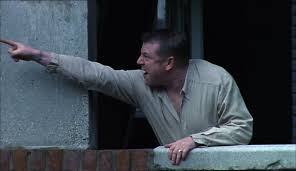
1997 Movie Review: NIL BY MOUTH, 1997 (Directed by Gary Oldman)

NIL BY MOUTH, 1997
Movie Reviews

Directed by Gary Oldman
Starring: Ray Winstone, Kathy Burke, Charlie Creed-Miles, Laila Morse, Edna Doré, Chrissie Cotterill, Jon Morrison
Review by Russell Wray

SYNOPSIS:

The family of Raymond, his wife Val and her brother Billy live in working-class London district. Also in their family is Val and Billy’s mother Janet and grandmother Kath. Billy is a drug addict and Raymond kicks him out of the house, making him live on his own. Raymond is generally a rough and even violent person, and that leads to problems in the life of the family.

CLICK HERE and watch 2009 MOVIES FOR FREE!

What is WILDsound?

REVIEW:

In 1960 Albert Finney starred in Saturday Night Sunday Morning, a film which brought social realism to British Cinema. It stood out as it showed working class characters in extremely realistic scenarios. These characters usually struggled in their down and out positions in society. Saturday night Sunday Morning attempted to break stereotypes of working class people by showing them as intelligent and articulate youngsters. We fast forward almost forty years to see Gary Oldman bringing social realism back to the screen but with a much bleaker view for a modern audience.

The film focuses on the Raymond family in working class London. Raymond (Ray Winston) is the alpha male of the house hold. He is an aggressive alcoholic who is always out for a good time at the expense of someone else. Val (Kathy Burke) is the subservient wife who is victimised by her husband and does not have the strength to leave him. Their son Billy is a drug addict. He is forced to live on the street due to his father finding out about his addiction. Nil by mouth shows these characters struggle but is it their fault or the fault of their hierarchy in society?

Nil by mouth is a film about failures but there are not many to be seen here. The cinematography works brilliantly to provide beauty in the strangest of down and out places, the performances are terrifyingly accurate, and the direction is brilliantly constructed. The only problem is with the script.

The story may be a little bit too observant at times. The constant arguments and scenes of failure make it hard to maintain attention for some parts of the film as it almost slips into an x rated watershed soap opera. The film is relentless as there is not much comic relief provided. This is forgivable by the scenes which really stand out, such as Ray Winston on the lash with his mates.

This scene strangely forces the audience to relate to the characters playing drunken fools around town but also makes them scared of them at the same time. Oldman is not afraid of getting close to these characters. His frequent use of big close ups allows the audience to see every action and reaction from the characters in precise detail. Being an actor himself Oldman understands the importance of performance especially in an intense character which is presented here.

Winston is comfortably at home here playing the working class villain. The intensity of the character is evident but also the humanity is presented brilliantly by Winston who shines in those drunken moments in the film where he is on his own. Here Winston is allowed to bring the character to life as the audience witnesses his self destruction. Burke also offers an effective performance but is not as memorable as other characters because of the shy nature of the character in which she is playing.

Nil by mouth is an unflinchingly hopeless film. The characters are not taunted of a better life in anyway even though that is their desire. The film simply allows the characters to live without any feeling of pre constructed character arcs.


NIL BY MOUTH, 1997

1997 Movie Review: MEN IN BLACK, 1997 (Will Smith, Tommy Lee Jones)


MEN IN BLACK
MEN IN BLACK, 1997
Movie Reviews

Directed by Barry Sonnefeld
Starring: Will Smith, Tommy Lee Jones, Laura Flynn Boyle, Rip Torn, Vincent D’Onfrio
Review by Andrew Kosarko

SYNOPSIS:

In the 1950s a super-secret government agency was formed to monitor and police the activities of extraterrestrial aliens on the planet Earth. Some 40 years later a founding father of the agency, Agent Kay (Tommy Lee Jones), finds himself with a new smart-mouthed partner fresh from the NYPD who is soon dubbed Agent Jay (Will Smith). Their first mission is to save the Earth from destruction by a giant insectlike alien (Vincent D’Onfrio) that, incidentally, drives an exterminator’s truck. Armed with their matching Ray-Bans, skinny ties, and space-age weapons that Jay barely understands–he calls the Neuralyzer the “flashy thing”–the new duo begin another average day of fighting intergalactic terrorists.

OSCAR Winner for Best Makeup

OSCAR Nominee for Best Art Direction and Best Music

REVIEW:

It’s funny. It’s fun. It’s entertaining. It’s engrossing. What else can you ask for? Oh, Will Smith? Yup, this movie hits the mark across the board.

The Story: The story follows the induction of Agent Jay into the MIB agency. Not only does this give us a background of the agency, but it also gives us an “everyman voice” throughout the film that makes for some great comedy. Will Smith is the guy that says what everyone is thinking, and is still able to twist it to make it funny. He’s teamed with the rough seasoned veteran Agent Kay, who’s on his way out. This perspective really opens up the world and gives us two very contrasting takes on this journey while one character struggles to understand it all, the other is trying to forget it. The story is perfectly structured to involve some minor characters but never getting off base of training Jay and uncovering the mystery of an intergalactic terrorist bug who plans on stealing a precious galaxy from earth (condensed into the size of a marble) which, in turn, puts the aliens trying to keep their enemies from controlling that galaxy, in the position to destroy earth to save themselves. Say what you will, it is an original take on the “destroy the world” problem.

Acting: Not a bad hat in the bunch. There’s things in Hollywood called bank-able elements. AKA, something that is guaranteed to make money for the studio. The actor that will define my generation is Will Smith. You put him in a movie, and you have a hit. Smith really doesn’t get the acclaim he deserves. Sure, he’s no Gary Oldman or Johnny Depp where as he doesn’t dissapear into his roles, but Smith can carry a scene like no other. No other actor in recent memory has been as consistently funny as Smith has. He brings his A-game to everything he does and I have never seen a film where he disappointed me. Tommy Lee Jones, while I have a personal disdain for the man, does a solid job as well. The real “chameleon” of the movie is Vincent D’Onfrio. He is almost unrecognizable once he becomes “the bug.” Granted, there’s a heavy makeup job involved, but the walk of an alien uncomfortable in human skim, persona and voice changes, he really does an incredible job.

Directing: Sonnenfeld is known for more kooky, campy humor, and while that is an element in this film, it never overshadows the narrative. Which is important. Substance over style has always been my favorite approach. There are really no “flat” scenes in the film, and everyone of them keeps you hooked and intrigued.

Cinematography: It works just fine, don’t get me wrong, but there’s really nothing amazing to say about it. It’s just….shot like a movie. Can’t really compliment or condemn it.Production Design: Somehow, there’s this weird off-beat characteristic to the production design, and yet you can’t put your finger on it. I mean, it’s realistic, and yet otherworldly. At times it’s a bit too colorful and leans toward this teal blue color, but overall what matters is that it’s effective. Editing: From what I can gather, it’s effective. It’s not special by any means, but the pacing is there and the emotional resonance is intact in every scene, which is an editor’s two main concerns.

Score: Danny Elfman’s last hurrah if you ask me. His scores following this were on a continual down slide and got worse and worse following this. But this score is solid. It captures the tone of the film, gives it some identity and intensifies the emotional underscores.

Special Effects: This is one of those films that really hits that middle mark in terms of it’s visual effects. Which, in my humble opinion, is right where it needs to be. It’s not overly obvious that it’s CGI, and at the same time it’s not so realistic that it’s not realistic (fif that makes any sense?). It just works. Much like Jurassic park, there’s a blend of the digital composition and live action animatronics which really helps make this world believable.

In closing: I suggest this movie for anyone. It walks the line of being a family movie with some choice language and occasional violence, but is still fun none the less. Guaranteed entertainment.This film won Best Director and Best Cinematography, and was nominated for five other categories. The screenwriter was nominated, and rightly so. Taken from a short story that first appeared in the Saturday Evening Post in 1933 by Maurice Walsh, Green Rushes, Frank Nugent was able to weave a story rich in subtext and conflict.

The collector’s edition of the DVD includes an interview with Maureen O’Hara where she reminisces about filming The Quiet Man, and is well worth watching.


MEN IN BLACK, 1997

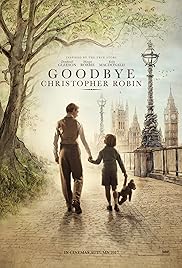
Film Review: GOODBYE CHRISTOPHER ROBIN (UK 2017)


Goodbye Christopher Robin Poster
Trailer

A behind-the-scenes look at the life of author A.A. Milne and the creation of the Winnie the Pooh stories inspired by his son C.R. Milne.

Director:

Simon Curtis


There is one scene that sums up Simon Curtis’ film on the life of author A.A. Milne and the creation of the Winnie the Pooh stories inspired by his son C.R. Milne.  It is the one where father, A.A.  fondly called Blue (Domhnall Gleeson) serves his son fondly called Billie (Will Tilston) porridge he had made as the nanny has the day off.  Billie lifts his spoon to reveal a real lumpy porridge.  That is exactly the way director Simon Curtis (MY WEEK WITH MARILYN) has served his film and it is going to go down lumpy down the audience’s throats.

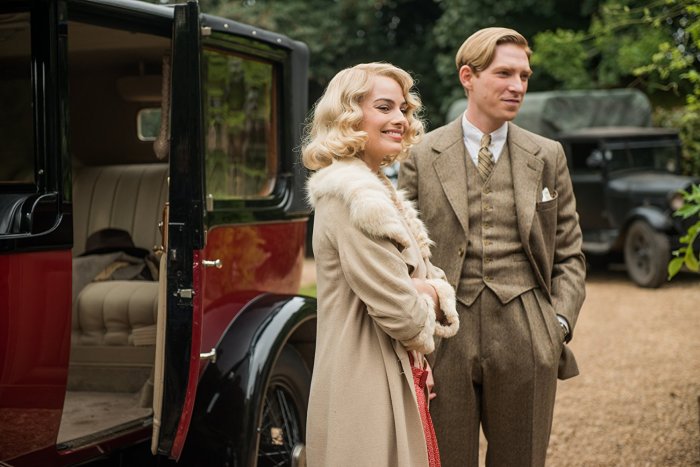
The film, however, does open impressively with shots (cinematography by Ben Smithard) of the beautiful English woods with sunlight beaming down the trees and spreading among the flowers, pretty much like the pictures of a Winnie the Pooh children’s book.  Blue receives a letter from the postman, the wife, Daphne (Margot Robbie) looking on, obvious that the letter brings bad news of the death of their son who has gone off to fight in the War.

The film tells the story of Blue’s creation of Winnie the Pooh and how the fame aversely affected the family especially the impressionable child Billie.  Blue goes to war and comes back with shell shock.  His evil wife Dafne, insists he keeps writing and he eventually lies it and takes the whole family to live in the country.  Evil wife gets upset ,leaves and threatens never to return unless the husband writes again.  Father and son bond in the woods and father creates Winnie the Pooh (the name Winnie coming from the rescued bear from Winnipeg, Canada).   The boy, Billie also appears in the Pooh books and known as Christopher Robin.  Fame and publicity prevents the boy from playing and having a normal childhood.  Confrontation results between husband and son (now played by Alex Lawther).  Amidst all this is the cheerful nanny, Olive (the wonderful Kelly Macdonald) who can never do any wrong.  She gets to tell the parents off and to calls the evil mother a horse in her face.

As the film is not based on a book, one wonders where all the material for the story comes from.  One can surmise that a lot has been imagined by the scriptwriters Frank Cottrell-Boyce Simon Vaughan.  The film turns into sentimental mush at the end with the news of the son’s death.  Dad, mum and Olive are grieving and more lumpy mush again when it turns out when Billie shows up.  The father son reunion is neither credible as well.

Robbie and Gleeson sport silly English accents.  At least Macdonald, the only one worth watching in this silly enterprise gets to keep her Scots accent.

The film has one believe that Winnie the Pooh did wonders for world peace just because one soldier fighting in the trenches hummed a Pooh tune.

The film ends with old photographs of the real characters in the film followed yes, by old photos of the real toys of the bear tiger, piglet and all.  As if the film is not sentimental enough.

Trailer: https://www.youtube.com/watch?v=rX1oe9JmtUw

GOODBYE CHRISTOPHER ROBIN

1997 Movie Review: LIFE IS BEAUTIFUL, 1997


LIFE IS BEAUTIFUL,  MOVIE POSTERLIFE IS BEAUTIFUL, 1997
Movie Reviews

Directed by Roberto Benigni
Starring: Roberto Benigni, Nicoletta Braschi, Giorgio Cantarini, Giustino Durano, Sergio Bini Bustric, Marisa Paredes
Review by Stefan Leverton

SYNOPSIS:

A Jewish man has a wonderful romance with the help of his humour, but must use that same quality to protect his son in a Nazi death camp.

REVIEW:

Before the onset of plot summary, and technical analysis, I just want to try and convey the feeling I have for this film, without neither under or overstatement. On many levels people could acknowledge a certain aspect of the film and its surrounding press and come to unsatisfying conclusions. It may well be a war film, a holocaust film, more accurately. Therefore you may also deduce that it is tragic and dramatic. You may know a little more and understand it to be a comedy. Its an award winning foreign language film. However, the success and power of this film transcends all those things because when you are watching it, you are totally immersed in this wonderful tale. And how many films set amongst the backdrop of one of the most atrocious events the world has ever seen can say that?

Roberto Benigni’s masterpiece follows his charming character Guido, as he waltz’s, chaplinesque, into town to make his way in the world and subsequently try and win over the woman of his desires, Dora. I’m giving nothing away when I say he succeeds and they are happily in matrimony with a young son, Giosue, when the crux of the film really takes hold. That crux is the terrifying emergence of the Nazi Party and a wave of anti-Semitism which, unfortunately for the Jewish Guido and his Son, snares them into a concentration camp.

The film is really split into two, maybe three sections. The first being when guido arrives in the Tuscany town as somewhat of a chancer. The true nature of the film is veiled so heavily in humour, and Begnini’s performance is directly influenced by the silent stars of the early 20th century that all the dialogue could be removed, yet the plot could be easily understood as the whole experience is so animated. At this time Dora is already set to marry a local dignitary and the conclusion of the first part is Guido winning her affections in the most endearing, romantic and funny ways.

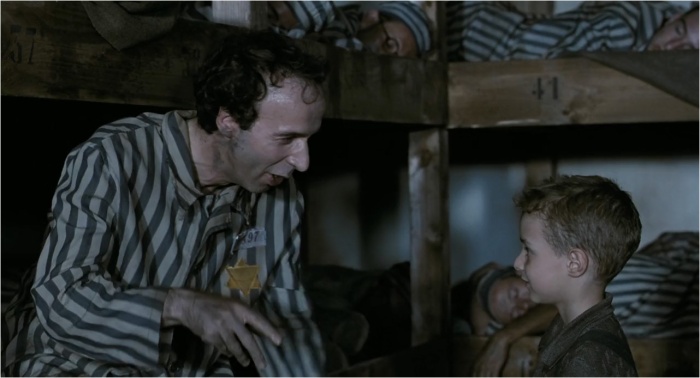
Throughout the first sections there is mention of the unsettled nature of Germany which is clearly starting to infiltrate Italy, its when we pick up the story five years later that we see the full extent of the Nazi’s influence and terror campaign. Guido and his family, now including five year old Giosue, are happily living with his uncle until Guido, of Jewish origin is arrested, along with his son. Guido being the man he is tries to keep the true horror from his young son by making out the trauma they are going through is a game. It is a situation of sweet sorrow and one that you can’t help but smile through the tears.

Benigni’s performance can’t be underestimated. His attempt to remain optimistic and portray their ordeal as some sort of game to his son, is on the one hand playful and full of humour. And on the other it is just heart-breaking. Never has a film made you laugh so hard and want to cry so much. The optimism the film promotes is inspiring. And around the truly great script and the unrivalled performance of Benigni is a consummate piece of filmmaking. No tricks are needed as the most important element is the story and how many films could learn from that, put the characters and the story first and the rest will follow.

LIFE IS BEAUTIFUL, 1997