Interview with Festival Director Matt Croyle (Oil Valley Film Festival)

At the Oil Valley Film Festival, their mission is to bring the voices and films of new and established filmmakers to the heart of Venango County, an area underrepresented in the world of film. Located in Oil City, Pennsylvania, and nestled in the foothills of the Appalachian mountains, attending the Oil Valley Film Festival will grant you the experience of watching engaging cinema within an intimate community with a rich history.

http://oilvalleyfilmfestival.weebly.com/
 
Matthew Toffolo: What is your Film Festival succeeding at doing for filmmakers?

A: Well, we’re only a year in. This year is year two, but I think we’re heading down such a great future track as far as what we’re capable of providing for filmmakers. The “in competition” selections not only get the notoriety of being selected as just that, but each selection is in competition in every award category. Every screenwriting entrant receives an updated copy of the Hollywood Screenwriting Directory, and that’s just for submitting. We’re partnered with the Writers Store for the second year, and the directory is the premiere resource for screenwriters everywhere. It includes industry contacts, writing tips and advice, and is just a priceless addition to a career as a screenwriter.

Outside of those immediate benefits, filmmakers from all over the globe are able to get their films in front of a rural audience. I think it’s imperative that rural audiences get to connect with filmmakers they may not know, filmmakers outside of what flicks are being shown in their local multiplex. We offer that opportunity not only for a rural audience, but the filmmakers too.

MT: What would you expect to experience if you attend the festival this year (2017)?

A: Attending the Oil Valley Film Festival this year will, again, be an intimate gathering of filmmakers, audience members, and the festival staff. We’re in the process of adding panel events this year, which can give audience members an opportunity to learn about the different aspects of creating and marketing movies, but it gives filmmakers and writers the chance to network, and talk about their projects and experiences in doing so. If you want to get away from the city, spend a few days in the beauty of rural Pennsylvania, and enjoy quality cinema from around the globe, then our festival is for you.

MT: What are the qualifications for the selected films?

A: The films selected to screen at our festival go through a vetting process which includes our festival judiciary committee, which consists of filmmakers, producers, and cinema enthusiasts. It’s a select group, and they know their stuff. Each committee member is assigned with specific categories, with the final decision coming down to myself as director of the festival. We’re looking for amazing storytelling and production value, even if you don’t have the budget for the latter. Effort is imperative. Our selected films, while varying in many aspects, all find a distinct way to connect to our audiences on a personal level – as I feel quality cinema should. All selected films must not have been released theatrically or online. Premiere status isn’t a factor.

MT: Do you think that some films really don’t get a fair shake from film festivals? And if so, why?

A: I do think some films don’t get a fair shake. A lot of the established festivals, while they are amazing events and great opportunities for filmmakers, seem extremely selective anymore in order to ensure audiences show up, in order to sell tickets / passes. While some unknown filmmaker – with an amazing first feature – may be on the fence, pitted against a name filmmaker with a so-so flick, an established festival may go the route of the latter for the fact that they know more people will attend the established filmmaker’s screening, even if that film isn’t as good. But, then again, “good” is subjective. We have to remember that movies, like anything else, are a business, and that’s especially true on the festival end of the industry.

MT: What motivates you and your team to do this festival?

A: I think the thing that motivates us more than anything is our love of movies. It’s really that simple. Growing up I always got excited when I saw a new film that spoke to me, and I couldn’t wait to run and tell my friends about it, set them down and watch it with them, watch their reactions. This festival is almost an extension of that same excitement. But now, as an adult, I have a larger venue in which to share that excitement with more people than just my friends. It’s finding a way to connect a lot of people with movies that mean something.

MT: How has your FilmFreeway submission process been?

A: I cannot say enough great things about FilmFreeway. Their service is absolutely integral to our submission process. It’s organizationally comprehensive, yet simple enough for your entire team to use. Their online marketing options are worth the time, and they’re fairly priced. We’ve already received half of our total submissions from last year by this year’s early bird deadline.

MT: Where do you see the festival by 2020?

A: Well, 2020 will be our fifth year. By then I would love for us to be an Academy-Award qualifying event for short films. That seems quite doable at this juncture, by the way we’re steadily growing. It’s not out of reach. And, by our fifth year, I hope that we can establish ourselves as a premiere event in Pennsylvania. There’s a lot of love for the process of filmmaking here, and a great reception for quality cinema from the people in the area.

MT: What film have you seen the most times in your life?

A: Wow. That’s a tough question. I’m not exactly sure which film I’ve seen the most, but I will say that I can probably recite every line from both Peter Jackson’s ‘The Fellowship of the Ring’ and Kevin Smith’s ‘Clerks II.’

MT: In one sentence, what makes a great film?

A: How about one word? “Connection.” Everyone has a favorite film. If you connect to it, it’s “great” to you.

MT: How is the film scene in your city?

A: Oil City, Pennsylvania isn’t the hub of film in the area, but we’re looking to make our mark with what we do at the Oil Valley Film Festival. It’s nice for film lovers here for the fact that we’re about halfway between Pittsburgh and Erie, and we’re looking to bridge that gap not only with the film festival, but by making our own films here – promoting the area for other productions is another thing we’re striving to do. We’re a Rust Belt city, but that doesn’t mean there isn’t a love and need for culture and art here. We’re adding to that need, helping it to grow.

oilvalley1.jpg

_____

Interviewer Matthew Toffolo is currently the CEO of the WILDsound FEEDBACK Film & Writing Festival. The festival that showcases 20-50 screenplay and story readings performed by professional actors every month. And the FEEDBACK Monthly Festival held in downtown Toronto, and Los Angeles at least 2 times a month. Go to www.wildsound.ca for more information and to submit your work to the festival.

Interview with Festival Director Xavi Herrero (IBIZACINEFEST)

IBIZACINEFEST is facing its second edition in 2017 with the organization of UTOPIKFILMS and the collaboration of the Ibiza Town Council, Gobern Balear and the Film Commission of Balearic Islands. Among those selected will be nominated FINALISTS that will participate in the Festival and will be screened in our Auditorium and will opt for the IBIZACINEFEST grand prize.

http://www.ibizacinefest.com/

Matthew Toffolo: What is your Film Festival succeeding at doing for filmmakers?

A: I’m surprised at the success of IBIZACINEFEST in its first year.
This success began when many registrations came to us and above all of great quality.

The name of Ibiza is a good brand and a place known worldwide, this has helped us.

I am also a filmmaker, in 2016 I have directed 2 short films that I personally distribute and I am about to release my first feature film in April.

I believe that being in the two sides I have been able to create a festival to taste mainly of the Director.

Our format is not typical at festivals. We make a first selection of shortfilms and have their space on our website, with their poster and corresponding links. This helps to access the Festival to many works and to promote them. Of these pre-selected, we chose 44 shorts for the projections.

Another novelty is to communicate in less than 30 days if your shortfilm has been selected. This speed is very much liked by the Director of a short film. It has also been definitive the support of the Ibiza Town Hall to cede to IBIZACINEFEST the Auditorium of Can Ventosa. It has capacity for 400 people and a great quality of projection.

We invited the Festival to 5 Directors and a Director of Photography and they loved the Auditorium.

Our budget allowed us to pay for the trip and a 4 star Hotel thanks to the collaboration of the Department of Culture and the Film CommissioN of the Balearic Islands.

We also have a multicultural space, bar and restaurant for the attention to the press, some projections and conferences.

All this and with the full support of the media and press of Ibiza, we have achieved that the Festival is a cultural event of reference in Ibiza.

But most of all, the filmmaker, Lionel Auguste, actor and French director, who won with his short film “El Mecenas”, asked me during the festival to be part of the Jury, is the best prize for me and
the Festival.

MT: What would you expect to experience if you attend the festival this year (2017)?

Our second edition will have much more budget, thanks to the support of the Balearic government. We will have another projection room for parallel activities. We plan to screen 50 shortfilms in competition and the Festival will last 6 days. We will have a section on feautures and shorts or created in Ibiza, activities for children, conferences, etc …

MT: What are the qualifications for the selected films?

We have a jury that covers all the cinematographic aspects.

I come from the direction of photography and I look a lot in this aspect, but in the Jury there are two actors, producers, screenwriters and directors of film and experimental cinema.

We also value the originality of the work and shortfilms made with little budget but high quality.

I believe that the three winners of our first edition represent very clearly the spirit of IBIZACINEFEST.

MT: Do you think that some films really don’t get a fair shake from film festivals? And if so, why?

There are many Festivals in the world. I would recommend to the Directors that they distrust the on-line Festivals without projections and without the assistance of at least the winners to the event.

If the Festival charges fees it is obliged to give cash prizes.
The collaboration of public institutions also gives confidence to the Festival.

Personally I came across a Festival that rewarded a shortfilm of mine …. but you had to buy the trophy that was worth 70 eu ….. I do not think it serious.

MT: What motivates you and your team to do this festival?

The Festival is my initiative. From time to time I was thinking about this possibility.

In 2015 I left my professional activity as director of photography in Barcelona and I settled to live in Ibiza. In Ibiza I produced 2 shortfilms and seeing the good reception of the island, I thought about organizing an International Short Film Festival.

MT: How has your FilmFreeway submission process been?

Filmfreeway is my favorite platform for several reasons, it is very complete at the editing level and offers many possibilities to promote a Festival, in a clear and semzilla way. It was the platform that gave us more inscriptions, I can only be grateful to Filmfreeway, all are facilities and no problem.

I can tell an anecdote with them. We can all make mistakes, we are human, but even one mistake with us was good and fun. They put us as an Oscar-nominated Festival for a week, participants told me if this was true and I telephoned filmfreeway and fixed the misunderstanding.

We laughed a few minutes with this.

MT: Where do you see the festival by 2020?

Simply,celebrating the 4th edition with the same illusion as the first.

MT: What film have you seen the most times in your life?

My first movie, I’m finishing now … jajjja.

Seriously, maybe Mulholland Drive by David Lynch or Europe by Lars V.Trier.

MT: In one sentence, what makes a great film?

A good script well photographed.

MT: How is the film scene in your city?

Ibiza is a small island well known for its party, beaches and discos. It really is a place where tourism affects a lot and alters the lives of its inhabitants.

During the winter months, Ibiza is another island, a quiet place where many artists and culture-related people still live. It is a few months where it is easy to see 2 or 3 sessions of films and independent and interesting short films every week.

There is a lot of activity and many projects are supported by institutions.

I invite you to visit Ibiza in winter.

ibiza1.jpg

_____

Interviewer Matthew Toffolo is currently the CEO of the WILDsound FEEDBACK Film & Writing Festival. The festival that showcases 20-50 screenplay and story readings performed by professional actors every month. And the FEEDBACK Monthly Festival held in downtown Toronto, and Los Angeles at least 2 times a month. Go to www.wildsound.ca for more information and to submit your work to the festival.

Interview with Festival Founder Matt Beurois (Paris Art and Movie Awards Film Festival)

The Paris Art and Movie Awards is the leading independent film festival in Paris. The « PAMA » has been ranked, as soon as its second year, the second festival not to miss in Paris, by The Culture Trip Magazine. Their goal is to help independent filmmakers screening their films, awarding them, show their films to high level industry talents and public figures.

http://parisartandmovieawards.com/

Matthew Toffolo: What is your Film Festival succeeding at doing for filmmakers?

A: The best feedback proof we have is filmmakers coming back to the PAMA and submit again when they have a new film. They tell us our festival is a real opportunity to network. We had directors finding actresses, we had filmmaker matching with a producer, scriptwriters connecting with directors. And of course with the audience. We’re going to try and continue this so the Paris Art and Movie Awards stay human and films connected.

MT: What would you expect to experience if you attend the festival this year (2017)?

A: As we move to a new movie theatre every year, audience and filmmakers will have the films screen in a new location in 2017 again. Every year we get bigger in attendance, so in seats capacity.

Also the Judges : we usually have about 5 international judges. We had Mark Dacascos, and French legendary actor Alain Doutey. This year, we already announced 10 judges, and I can tell you two more are coming, minimum.

MT: What are the qualifications for the selected films?

A: We’re looking for quality of course, but we’re not ashamed to say we’re expecting ambition. The PAMA is the leading independent film festival in Paris, and we want to screen and promote filmmakers who want to reach out, to jump out of the box, to achieve something. Out selection process rewards the ambition you have, and how you manage to make a movie, to fully complete it, which is no easy task.

MT: Do you think that some films really don’t get a fair shake from film festivals? And if so, why?

A: It is less and less true. Because there are more and more film festivals, and that’s, in some ways, good for filmmakers : they can target the events that fit them, where their films will be a match. What I personally think, is that there is a huge gap between the A-Class worldwide film festivals, and the indy festivals. This is why the Paris Art and Movie Award was created ; to stand there, remain accessible, but clearly offering high quality screenings, events, networking.

MT: What motivates you and your team to do this festival?

A: The people. The filmmakers, and the lovers of cinema. During the 2016 opening speech of the festival, I said we care about the people who make the films, and I mean it. When you se all the artists and filmmakers that stayed in touch after the different editions of the festival, that is truly rewarding to us. That feeling makes me want to go on and on for that.

MT: How has your FilmFreeway submission process been?

A: We just opened submissions, and that’s amazing : that’s the biggests start we had since the creation of the festival. It’s like people were somehow expecting us to accept entries and… Here we are !

MT: Where do you see the festival by 2020?

A: I would love the festival to reach a large venue, and even several venue to host the many screenings and events. 2020, I’d also say we’ll have secured partnerships with USA and the festival being included in an international network connecting Paris, Los Angeles, Vancouver and London…

MT: What film have you seen the most times in your life?

A: The Frighteners, by Peter Jackson. The perfect, most ignored and under-estimated feature by Jackson, which is the perfect balance between comedy and genre. And Terminator 2 by James Cameron. One of the film that founded my love for cinema.

MT: In one sentence, what makes a great film?

A: Not a sentence, a word: script.

MT: How is the film scene in your city?

A: The festival scene is booming, but I wonder how many festivals will still be around in two to three years. As for the movie business in Paris, the films in the middle -between 1 and 4M€ budget- are disappearing and that’s a dramatic loss for independent filmmakers. The influence of Luc Besson did some real good, for tax rebate and obviously to give something the new generation of artists can build from. Regarding the independent short films scene, it is hard to tell as it’s mostly in the dark. I will tell you that when we’ll have the 2017 selection at the PAMA.


parisart1.jpg

_____

Interviewer Matthew Toffolo is currently the CEO of the WILDsound FEEDBACK Film & Writing Festival. The festival that showcases 20-50 screenplay and story readings performed by professional actors every month. And the FEEDBACK Monthly Festival held in downtown Toronto, and Los Angeles at least 2 times a month. Go to www.wildsound.ca for more information and to submit your work to the festival.

Interview with Festival Director Janet Rose (EQUUS International Film Festival)

 From the heart of the American West, in the cradle of the Northern Rockies, the EQUUS INTERNATIONAL Film Festival fills a niche in international film and media programming with an exclusive focus on the world of EQUUS, and all things equine. It was the first all-equine film event, launching in 2011 with a global view of the equine arena. An outreach project of an equine rescue and adoption organization, our mission is to enhance the equine/human bond and improve the welfare of the horse and other equines through excellence in film, television and other media.

Matthew Toffolo: What is your Film Festival succeeding at doing for filmmakers?

A: It is our greatest hope that the EQUUS INTERNATIONAL Film Festival is giving a voice and a platform to filmmakers for whom equine issues is their focus. For many years, there have been magnificent and important films made about equine topics and issues but there hasn’t been a platform in which to share these incredible stories. Through EIFF, we now hope there is.

MT: What would you expect to experience if you attend the festival this year (2017)?

A: Attending the festival this year is an opportunity to both tell your story in a receptive environment, in a place where film and horses go hand in hand because Missoula is becoming a very significant place for film, filmmakers and film festivals. It’s also a breathtaking environment. So we expect great networking opportunities, great exposure for the films and a magnificent place to experience.

MT: What are the qualifications for the selected films?

A: As it should be with all films, excellent story-telling, great cinematography, an inspiring, interesting or significant subject. But the centerpiece of selected films is that they tell a great story on an equine issue or subject.

MT: Do you think that some films really don’t get a fair shake from film festivals? And if so, why?

A: Absolutely yes. Sometimes the judging criteria are skewed. Sometimes there are just too many good films entered into a festival for all of them to get the best judgment on their entry into the festival. In, other words, sometimes there is simply so much competition, such as with film festivals that have hundreds or thousands of entries, it’s almost impossible to pick out all of the good ones.

MT: What motivates you and your team to do this festival?

A: That’s a really easy question — a passion for the subject matter (equine) and a realization and knowledge that a film festival and the films are incredible tools for raising awareness and promoting an understanding of issues. This is a venue where we can engage, inspire, educate and at the same time provide a platform for filmmakers to share the essence and the “heart” of what they do. That certainly is our goal.

MT: How has your FilmFreeway submission process been?

A: It’s been great – it’s a very easy, affordable way to both receive and review film entries. I think the more we can promote FilmFreeway as a means for filmmakers to get their films entered, it will be a wonderful outlet for film entries. We also love the simplicity and ease of use.

MT: Where do you see the festival by 2020?

A: We hope that the EQUUS INTERNATIONAL Film Festival will continue to grow and become a louder and a stronger voice for films on equine issues. We hope to elevate and enhance its impact as a place for filmmakers whose genre is pretty subject specific to network with a wide range of others in the equine arena with a shared interest. We expect and hope to see an expansion of its impact and its outreach and certainly to build the audience that becomes a more global, international as well as national one. This is currently the premier venue for equine film but we would still like to expand our awards recognition, the festival’s benefits to filmmakers and the global reach of EIFF for the sake of filmmakers, equine advocates and many others concerned with or passionate about equine welfare.

MT: What film have you seen the most times in your life?

A: Oh, that’s a tough one since I don’t generally like to see a film many times over but because it’s a holiday tradition in our home, probably Gremlins. LOL, no horses in that one but it’s still in my mind, about animal welfare. J

MT: In one sentence, what makes a great film?

A: It’s a film that rocks your world, touches you to the core, moves you, inspires you, makes you come away just saying “wow.”

MT: How is the film scene in your city?

A: The film scene in Missoula, Montana is thriving — part of it is probably the incredible setting of the Northern Rockies, some of it is simply that a number of major film festivals had their birth in Missoula, and it’s a creative environment with great subject matter so Missoula is definitely a film capital of the west – casual sophistication mixed with incredible creative inspiration and a backdrop like few others.

equus1.jpg

_____

Interviewer Matthew Toffolo is currently the CEO of the WILDsound FEEDBACK Film & Writing Festival. The festival that showcases 20-50 screenplay and story readings performed by professional actors every month. And the FEEDBACK Monthly Festival held in downtown Toronto, and Los Angeles at least 2 times a month. Go to www.wildsound.ca for more information and to submit your work to the festival.

Interview with Festival Producer Tiha Modrić (History Film Festival)

History Film Festival is an international festival of historical documentary films. The first edition of the Festival will be held in Rijeka, Croatia from September 6 to 9, 2017. History Film Festival is founded and organized by Istra Film, an art association from Rijeka (Croatia). History Film Festival aims at offering viewers and film experts an insight into contemporary film and TV production of historical documentary films, at the same time providing a place where film professionals can meet and share their creative ideas for future projects.

http://www.historyfilmfestival.com/

 
Matthew Toffolo: What is your Film Festival succeeding at doing for filmmakers?

Tiha Modrić: History Film Festival aims at offering viewers and film experts an insight into contemporary film and TV production of historical documentary films, at the same time providing a place where film professionals can meet and share their creative ideas for future projects. Since our submitters come from either independent production companies or TV companies, History Film Festival grants filmmakers an opportunity to present their work and establish new business relations.

MT: What would you expect to experience if you attend the festival this year (2017)?

TM: I am not a person who likes making plans ahead, but I am definitely planning on attending History Film Festival from September 6 to 9, 2017. I hope to meet filmmakers from all over the world, watch great movies, make new friends and contacts which would be important for some future projects. Also, since we are planning to take our guests on a tour around Kvarner Bay (in the Adriatic Sea), present them with the best of our food, wine and culture, I hope that we shall have fun and enjoy History Film Festival’s first edition as much as possible.

MT: What are the qualifications for the selected films?

TM: We accept historical documentaries regardless of their length and year of production. Films are divided in two categories: films by independent production companies and films produced by TV companies. By historical documentary I don’t mean only typical documantaries on World Wars and famous battles, but also documentaries which deal with events, ideas and people who shaped our world and left an indelible mark in human history.

MT: Do you think that some films really don’t get a fair shake from film festivals? And if so, why?

TM: I think that most filmmakers agree with that thesis. In my opinion, the main problem with festivals is always the problem of taste. Also, I think that some wonderful films are left unattended because of shy promotion, insufficient budget and the endless lobby game.

MT: What motivates you and your team to do this festival?

TM: Well, there are countless film festivals around the globe, but neither one of them deals exclusively with historical documentaries. For that reason our festival is really unique.

Since this is the first edition of History Film Festival, our team is doing a wonderful job trying to organize the best possible Festival with available funds and in the years to come maybe ours will be one of those big name festivals. We believe it will be successful.

MT: How has your FilmFreeway submission process been?

TM: From a perspective of a film producer who submitts films to many different festivals, I think that FilmFreeway is a great tool. It is simple, fun and because of it submitting films has never been easier. Regarding our Festival, filmmakers can still submit their films to History Film Festival through FilmFreeway because the official deadline for submissions to our Festival has just started. We are excited about new submissions.

MT: Where do you see the festival by 2020?

TM: 2020 is an important year for the city of Rijeka where History Film Festival will take place because Rijeka has been declared European Capital of Culture for the year 2020. By that time I hope that our Festival will become acknowledged around the world, that it will establish a strong institutional and financial backup and most importantly that it will attract more and more filmmakers and viewers. If it becomes famous maybe we won’t need to charge submission fees anymore 

MT: What film have you seen the most times in your life?

TM: There are three films which I have seen a zillion times: Godfather, Big Wednesday and The Warriors. And I hope to watch them another zillion times.

MT: In one sentence, what makes a great film?

TM: Good story, unconventional creative solutions and a crew of enthusiasts who love doing what they do.

MT: How is the film scene in your city?

TM: Although Rijeka is a small city it has an interesting film scene. As there are many film enthusiasts in our city, I think there would be more films produced here if they had more funds and most importantly if those funds are fairly and evenly shared.

historyfilmfest1.jpg

_____

Interviewer Matthew Toffolo is currently the CEO of the WILDsound FEEDBACK Film & Writing Festival. The festival that showcases 20-50 screenplay and story readings performed by professional actors every month. And the FEEDBACK Monthly Festival held in downtown Toronto, and Los Angeles at least 2 times a month. Go to www.wildsound.ca for more information and to submit your work to the festival.

Interview with Festival Director Jax Griffin (The Drunken Film Festival)

Drunken Film Fest started after an angry tweet about the discontinuation of the major film festival in Bradford, West Yorkshire. It took off from there and had its first season in July 2016. Aimed at the independent filmmaker, DFF is currently accepting submissions worldwide for its second season, set to take place in Bradford across 10 days in 13 venues.

 Matthew Toffolo: What is your Film Festival succeeding at doing for filmmakers?

Jax Griffin: DFF works really hard to represent filmmakers from around the globe and level the playing field a bit. So low budget, big budget, we are less concerned with that. What we want is to give an audience to films with something interesting to say, and I’m proud to say that we’re definitely succeeding in that goal.

MT: What would you expect to experience if you attend the festival this year (2017)?

JG: Our festival is a little different. Our venues are almost all bars or cafes – non-theatre spaces. So the tone is more conversational and relaxed, but still very respectful to the filmmakers and their work. We incorporate local live music into the events – Bradford has an amazing live music scene – and this year we’re looking at bringing some interactive installation style pieces for some of the bigger parties.

MT: What are the qualifications for the selected films?

JG: As long as a film is engaging and interesting, I’m willing to give it space in our program. I try to remember that one person’s idea of interesting is different from another’s, and I think our programming reflects the diversity of submissions as well as the diverse nature of the city of Bradford.

MT: Do you think that some films really don’t get a fair shake from film festivals? And if so, why?

JG: Definitely and it’s one of the reasons this festival exists. If you scraped your film together on favours and blood, sweat, and tears, you don’t have a ton of money at the end for submission fees, so a lot of the bigger festivals are immediately not available to you. Yes, most festivals depend on submission fees to function and it’s an important part of the process, but it does create a bit of a boundary and that’s something we’re trying to find a balance for.

MT: What motivates you and your team to do this festival?

JG: Is it too cheesy to say passion? I’m a filmmaker myself and I love the idea of finding and promoting new talent from unexpected places. When you see a film from a 10 year old Iranian girl, it kind of changes your view on what’s possible.

MT: How has your FilmFreeway submission process been?

JG: I can not express enough how amazing it is working with Film Freeway. When I began the festival, I hadn’t heard of them and thought I was going to be stuck with Withoutabox, which I’d used extensively as a filmmaker. Luckily I came across Film Freeway first and haven’t looked back. The support team is always gracious, helpful, and expedient and the ease of use makes sorting submissions far less of a task than anticipated.

MT: Where do you see the festival by 2020?

JG: I’m ambitious, so I’d like us to be one of the top festivals for independent filmmakers. By 2020, my dream is that my plans to move the festival into production both locally and abroad will not only be in action, but successful and we’ll be active in promoting the local independent film industry.

MT: What film have you seen the most times in your life?

JG: Dr. Strangelove. I even have a tattoo of Slim Pickins riding a nuke on my forearm.

MT: In one sentence, what makes a great film?

JG: A great film is entertaining, with no dead space, and leaves you with something to think about.

MT: How is the film scene in your city?

JG: Bradford has a very rich film culture. It’s actually the very first UNESCO City of Film and has a fascinating history of local production with films like Meaning of Life, Billy Liar, and Room At The Top. The National Media Museum is here where a few years ago they discovered the first ever colour film that was actually from 1902. Major productions are constantly in and out of the city doing filming and the indie scene is growing, if a bit hidden from view.

drunkenfilmfest1.jpg

Interviewee BIO: Jax Griffin moved to her ancestral homeland of Great Britain from the US nearly five years ago to complete a masters. She’s happily settling into British life, though she refuses to say “aluminium”. Aside from the film festival, Jax co-owns a small media production company in Bradford with fellow University of Bradford alum Rachel Bottomley. She actually hates long walks on the beach because sand is course and rough and irritating and it gets everywhere, but she does enjoy video games, live music, and puzzles.

_____

Interviewer Matthew Toffolo is currently the CEO of the WILDsound FEEDBACK Film & Writing Festival. The festival that showcases 20-50 screenplay and story readings performed by professional actors every month. And the FEEDBACK Monthly Festival held in downtown Toronto, and Los Angeles at least 2 times a month. Go to www.wildsound.ca for more information and to submit your work to the festival.

Interview with Festival Director Travis Legge (Forest City Comic Con Film Festival)

The Third Annual FC3 (Forest City Comic Con) Film Festival takes place in Rockford, Illinois May 26-27, 2017. The festival will be held at the Rockford Public Library Nordlof Center Performing Arts Theatre

Submit via FilmFreeway

 
Matthew Toffolo: What is your Film Festival succeeding at doing for filmmakers?

Travis Legge: The Fc3 Film Festival provides a networking opportunity for filmmakers in the Northern Illinois/Southern Wisconsin area, as well as access to a broad audience of film fans from the greater Rockford area who may not normally be exposed to the work of these filmmakers.

MT: What would you expect to experience if you attend the festival this year (2017)?

TL: We will be holding multiple screening blocks in the beautiful Nordlof center in downtown Rockford. There will also be an opportunity for networking and socializing in the spacious theatre lobby between screening blocks.

MT: What are the qualifications for the selected films?

TL: We have a panel of judges who determine which films will screen based on 10 metrics of storytelling, including pacing, cinematography, sound quality, performances and more.

MT: Do you think that some films really don’t get a fair shake from film festivals? And if so, why?

TL: I do, I believe a lack of diversity in some judging panels can lead to certain films being judged unfairly. As director of Fc3 I am bending every effort to ensure that’s not an issue we have. All genres, subject matters, and levels of content are welcome.

MT: What motivates you and your team to do this festival?

TL: I like watching movies. I like sharing the experience. Also, as a filmmaker in Rockford, it is in my interest to support the film community in any way that I can.

MT: How has your FilmFreeway submission process been?

TL: Excellent. I love working with FilmFreeway. It’s truly made this herculean task of setting up the festival manageable.

MT: Where do you see the festival by 2020?

TL: I’m honestly not sure, but I am excited to find out.

MT: What film have you seen the most times in your life?

TL: That’s an excellent question. If I had to hazard a guess I’d probably say Big Trouble in Little China, but ask me again next week and I might recall differently.

MT: In one sentence, what makes a great film?

TL: Great storytelling makes a great film. Everything else is window dressing.

MT: How is the film scene in your city?

TL: Vibrant. Diverse. Beautiful.
 

forestcity1.jpg

_____

Interviewer Matthew Toffolo is currently the CEO of the WILDsound FEEDBACK Film & Writing Festival. The festival that showcases 20-50 screenplay and story readings performed by professional actors every month. And the FEEDBACK Monthly Festival held in downtown Toronto, and Los Angeles at least 2 times a month. Go to www.wildsound.ca for more information and to submit your work to the festival.

Interview with Kevin Clark (NYC Indie Film Awards, Festival Director)

The NYC Indie Film Awards are a monthly online awards competition based in the center of the most exciting city on this planet, and is a platform for Independent Filmmakers from all over the world to show their talents! For filmmakers by filmmakers.

http://www.nycindiefilmawards.com/

 Matthew Toffolo: What is your Film Festival succeeding at doing for filmmakers?

Kevin Clark: Giving new and established filmmakers from all around the world the opportunity to show off their work, compete with others and celebrate their achievements. We also try to promote their accomplishments as much as we can,

MT: What would you expect to experience if you attend the festival this year (2017)?

KC: Getting your work seen and judged by industry professionals, for all kinds of categories.

MT: What are the qualifications for the selected films?

KC: We really care about quality more than anything else, weather it’s the writing, the cinematography, or the score. Our standard is very high but we get so many great submissions every time, that it’s just a pleasure to watch them all.

MT: Do you think that some films really don’t get a fair shake from film festivals? And if so, why?

KC: Yes and no, there has never been a better and a worse time to be a filmmaker than right now, simply because everything is so affordable, from equipment to software, and because of that there are WAY more filmmakers than ever before. So filmmakers have a lot more competition, which makes it harder to stand out, but we believe that quality will always find it’s way.

MT: What motivates you and your team to do this festival?

KC: A lot of members of our team are filmmakers themselves, or at the very least hardcore film lovers, which makes this so much fun, we get the perspective of people who simply appreciate the art of film as well as a very technical view. Making a film takes up so much time, and it can also be very hard, so we want to give every filmmaker the opportunity to show off what they’ve worked so hard on.

MT: How has your FilmFreeway submission process been?

KC: FilmFreeway is by far the best platform to accept submissions, it is so intuitive, easy and constantly improves, we love it!

MT: Where do you see the festival by 2020? LK

KC: Since right now we’re “only” and online competition, we hope that very soon we’ll have annual or even bi monthly screening, to celebrate with everyone in person, and make them feel even more appreciated.

MT: What film have you seen the most times in your life?

KC: We’ve asked the team, and the top three answers were:

1. Fight Club

2. Star Wars: The Empire Strikes Back

3. Psycho

MT: In one sentence, what makes a great film?

KC: The combination of creativity and emotion.

MT: How is the film scene in your city?

KC: It couldn’t be any better, it’s creative, refreshing, very alive and constantly changing.

nycindiefilm1.jpg

_____

Interviewer Matthew Toffolo is currently the CEO of the WILDsound FEEDBACK Film & Writing Festival. The festival that showcases 20-50 screenplay and story readings performed by professional actors every month. And the FEEDBACK Monthly Festival held in downtown Toronto, and Los Angeles at least 2 times a month. Go to www.wildsound.ca for more information and to submit your work to the festival.
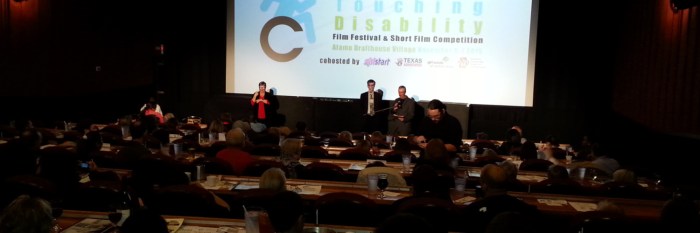
Interview with William Greer (Cinema Touching Disability, Festival Director)

 Now in its fourteenth year, the Cinema Touching Disability Film Festival helps dispel misperceptions about disability by screening films that portray people with disabilities living full lives. Film entries should avoid stereotypical representations. Instead, the festival seeks imaginative, multifaceted portrayals of people with disabilities.

http://www.ctdfilmfest.org/

Matthew Toffolo: What is your Film Festival succeeding at doing for filmmakers?

William Greer: Cinema Touching Disability gives filmmakers a chance to show their films about and starring people who have disabilities. We focus on films that have a positive and accurate representation of disability. cinema Touching Disability puts a central focus on these films, and events surrounding them.

We featured, for instance, an interview with Dr Temple Grandin, the most famous person in the world with Autism the year we featured a dramatic biography about her. We had a guest appearance by Jessica Cox, the only licensed armless pilot in the world when we featured “Right Footed”, the documentary about her. We had a live demonstration of American Sign language (ASL) poetry when we featured “Deaf Jam”, a documentary about ASL poets who compete alongside spoken word poets in 2016.

MT: What would you expect to experience if you attend the festival this year (2017)?

WG: This year we are featuring films that focus on service animals and animals with disabilities. we will have live service dogs at the theater before the festival. People will have an opportunity to see the winners of our short film competition, the feature film and a chance to meet service dogs.

MT: What are the qualifications for the selected films?

WG: The films need to have an accurate, interesting and compelling story about disability. We feature films that dispel common misperceptions about disability, entertain the audience and are informative.

The films must not have stereotypical representations about disability and show honest and accurate portrayals of people who have disabilities.

MT: Do you think that some films really don’t get a fair shake from film festivals? And if so, why?

WG: Some films definitely do not get a fair shake. There would not be film festivals that specialize in certain genres, such as science fiction, horror, asian and disability if all of these films had an equal chance at festivals. There are so many films being made that the sheer number of them makes it impossible for every film to have an equal opportunity.

In the case of disability there is simply a lack of interest in the subject. Many people do not think disability films will be either interesting or entertaining. This, combined with the history of bad representation of disability and people who have disabilities, makes it very hard for disability films to gain an equal opportunity.

MT: What motivates you and your team to do this festival?

WG: We are motivated by the desire to give people with disabilities equal opportunities and to raise awareness about disability. Our organization is a non-profit dedicated to promoting equal civil and social rights of people with disabilities, so the festival is a natural outgrowth of this.

MT: How has your FilmFreeway submission process been?

WG: Outstanding. Tracking and receiving the submissions has been incredibly easy. The submission process is also improving steadily.

MT: Where do you see the festival by 2020?

WG: I hope to see the festival expand to include an additional evening and the audience to grow enough to require a larger theater.

MT: What film have you seen the most times in your life?

WG: That is a difficult question to answer because I have seen so many films. I might have seen “The Empire Strikes Back” the most times because I was so young when I first saw it. This is an excellent film that I have had an opportunity to see for 27 years. I have had many chances to see it, in other words.

MT: In one sentence, what makes a great film?

WG: An interesting, thought provoking and engaging story.

MT: How is the film scene in your city?

WG: Incredible. Experimental, international and mainstream films are regularly featured at many theaters here.

cinematouchingdisability1.jpg

—–

About the interviewee: I became legally blind at the age of 17 as the result of an open skull wound. Since then I graduated from college worked in a variety of political campaigns, gained a job at a non-profit organization and started running marathons.

I created a film festival as one of the fund raising projects for the disability advocacy organization I work for. The festival has grown to take place on multiple evenings, include an international short film competition and have stars of our feature films visit as speakers.

I also oversee various other fund raising events, ranging from hand cycle marathons to participation in annual fun runs.

For recreation I run in marathons. The 15 I have run so far include the 2013 Boston marathon and the Prickly Pear, a 30 mile ultra marathon.
Cinema Touching Disability (www.ctdfilmfest.org)

Cinema Touching Disability is designed to raise awareness of and dispel common misperceptions about disability. This festival, which started in 2004, features films, has guest speakers and often has special events.

The events range from a demonstration of martial arts by a team of people with disabilities. This demonstration included Jessica Cox, the only armless pilot in the world, since she also holds two black belts in Tae Kwan do. Another special event featured a demonstration of people in wheelchairs demonstrating mobility dancing, which happened before a film about wheelchair dancers.
_____

Interviewer Matthew Toffolo is currently the CEO of the WILDsound FEEDBACK Film & Writing Festival. The festival that showcases 20-50 screenplay and story readings performed by professional actors every month. And the FEEDBACK Monthly Festival held in downtown Toronto, and Los Angeles at least 2 times a month. Go to www.wildsound.ca for more information and to submit your work to the festival.
Interview with Nathan Ludwig (GenreBlast Film Festival, Festival Director )

 GenreBlast is an upstart film festival that had a very successful first year at the revitalized state-of-the-art State Theatre in wonderful downtown Culpeper, Virginia. Our second year will emanate from an exciting, soon-to-be announced venue! They celebrate the finest in true genre cinema and are looking for your best features, shorts, music videos and screenplays in the categories of horror, action/adventure, sci-fi, fantasy, martial arts, exploitation, documentaries, animation, grindhouse, suspense/thriller, international, experimental and more!

http://www.genreblast.com/

Matthew Toffolo: What is your Film Festival succeeding at doing for filmmakers?

Nathan Ludwig: We pride ourselves on creating a completely welcoming experience for both filmmakers and movie lovers alike. It’s all about the movies and it’s all about the artists who make them. In our first year, we had about half of our official selections represented by either directors, writers, producers or actors. We had about 19 features and around 80 shorts as well as over a dozen screenplay finalists – so to say we were pleasantly surprised by the response would be an understatement. The bottom line is we take the time to get to know all of our filmmakers and their passions. We are also independent film makers and screenwriters in our other lives and we have been to many festivals as official selections, awards nominees and just as moviegoers and we know what works and what doesn’t work when it comes to putting on a fun weekend of movies, parties and networking.

MT: What would you expect to experience if you attend the festival this year (2017)?

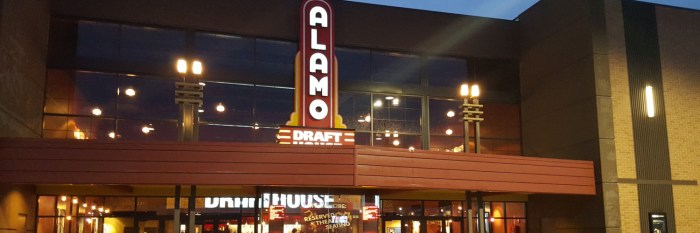
NL: We are moving to a new venue this year – the Alamo Drafthouse Theater in Winchester, VA. Last year, our first year, we emanated from the historic State Theatre in Culpeper, VA. It was a newly restored classical movie theater originally constructed in 1938. We were literally the last event to play there before it closed its doors due to problems with fundraising. It’s currently in turnaround to new owners and the fate of the State Theatre is up in the air so we decided to change locations and get the word out as soon as possible. We were very lucky to secure the weekend of Sept. 8-10 of this year for GenreBlast 2. Andy Gyurisin is the Creative Manager at the Alamo Winchester and he was on board from the beginning for what we are offering to film nerds and film makers with out upstart fest. We really hope to make the Alamo the official home of GenreBlast for the foreseeable future. It’s such an amazing venue and extremely conducive to events like GenreBlast.

This year, there will be plenty of networking parties, discussion panels and Q&A sessions after each and every screening, for both shorts and features. The owners of the Alamo Drafthouse Winchester also own the neighboring Country Inn & Suites and will be providing room discounts for fest attendees. They also own the adjacent Green Turtle bar & restaurant which will also be at our disposal the entire weekend. The Alamo itself has a full bar and a huge food menu. You’ll be able to eat and drink to your heart’s content all weekend! It’s going to be one long, continuous party for artists and lovers of film and screenwriters to come together and celebrate what we all love the most. Movies!

MT: What are the qualifications for the selected films?

NL: I’m not quite sure what you mean by this question. Do you mean what do the selected films all have in common or what do you need in order to be a selected film? Or something else?

MT: Do you think that some films really don’t get a fair shake from film festivals? And if so, why?

NL: I truly believe, at this level of film fests, the cream rises to the top. It just does. If your film is worth a screening, it will find an audience. Not everything gets into every fest, that’s just unrealistic. You just have to know what you have, know your audience and do your homework as to which fests to submit to. Don’t submit your shot-on-VHS zombie ninja movie to an indie film fest that focuses on straight-up dramas and comedies. You’ll end up frustrated and disappointed. Stay informed and keep up with the festival scene on a regular basis.

MT: What motivates you and your team to do this festival?

NL: We are obsessed with movies. It has been a dream of mine to hold an annual film fest curated by myself and my closest friends. For a handful of years, I kept making excuses as to why it wasn’t possible or feasible. One day, I just decided to get up off my butt and actually do it. Lo and behold, it happened and the whole thing went off without a hitch. We had an amazing turnout and many attendees commented it was the best run first year film fest they’ve ever been to. If you check out our reviews on FilmFreeway, you’ll see we’re not lying.

At the end of the day, all I care about is movies – whether it’s watching them, writing them (or about them) or making them. I wanted to channel my unconditional love and idiosyncratic passion for that into one yearly cinematic event. The fact that two of my closest friends agreed to come along on this weird, crazy ride is one of the biggest rewards so far.

MT: How has your FilmFreeway submission process been?

NL: The response on FilmFreeway has been positively insane. We are already outpacing last year’s submissions by a ridiculously wide margin. However, that shouldn’t deter anyone from submitting. We watch EVERYTHING from start to finish, even if you submit it at the very last second of the final deadline. If you care enough to submit, we care enough to watch/read and evaluate your work fairly and accurately. We have a very eclectic taste in movies and there’s nothing that really offends us or turns us off (except for poor filmmaking).

MT: Where do you see the festival by 2020?

NL: By that time, we will be in our fifth (!) year and by then, we want to be one of the premier genre film fests in the country. We want to be a destination fest for audiences and artists alike to converge and mingle amidst a killer lineup of genre films. We want to be like Fantastic Fest when we grow up.

MT: What film have you seen the most times in your life?

NL: The Good, The Bad and the Ugly. Or maybe Scarface. Or was it Casino? Maybe it was one of the Godfather movies. If it’s three hours long and features tough fellas being tough, I’ve probably seen it several dozen times.

MT: In one sentence, what makes a great film?

NL: A great film is one you can’t go without recommending to anyone who will listen.

MT: How is the film scene in your city?

NL: Winchester has a fiercely intelligent as well as warm and inviting film community – from the Winchester Film Society to Andy Gyurisin’s Film Club 3.0, which screens eclectic selections at the Alamo Drafthouse itself on a regular basis. GenreBlast will be right at home in this picturesque Virginia town.

genreblast1.jpg

_____

Interviewer Matthew Toffolo is currently the CEO of the WILDsound FEEDBACK Film & Writing Festival. The festival that showcases 20-50 screenplay and story readings performed by professional actors every month. And the FEEDBACK Monthly Festival held in downtown Toronto, and Los Angeles at least 2 times a month. Go to www.wildsound.ca for more information and to submit your work to the festival.