Interview with Festival Director Richard Hooban (ZERO Film Festival)

Zero Film Festival is an independent film festival exclusive to self-financed filmmakers. Founded by Brad Bores and Richard Hooban in 2007, Zero Film Festival holds annual festival events in Toronto, New York, Los Angeles, London and Miami Beach. The American Buffalo is the symbol for the festival, representing the independent spirit.

http://www.zerofilmfest.com

Interview with Festival Co-Founder Richard Hooban:

Matthew Toffolo: What is your Film Festival succeeding at doing for filmmakers?

Richard Hooban: ZERO is the first and only festival exclusive to self-financed filmmakers. After 8 years, I would say we are succeeding at sharing authentically independent films with cinema lovers.

Matthew: What would you expect to experience if you attend the festival this year (2016)?

Richard: You would expect to see some of the most talented filmmakers in the world sharing their art, you would expect an opportunity to speak with them, and to have a really fun time in the process.

Matthew: What are the qualifications for the selected films?

Richard: Each and every film must be self-financed.

Matthew: Do you think that some films really don’t get a fair shake from film festivals? And if so, why?

Richard: This is a tough question, and for this there are two answers. First, the larger and most prestigious festivals aren’t looking for micro-budget and low budget films, they are looking for films with celebrities, with press agents, films with producers and directors with deep connections. There are the occasional deserving films that slip through, but this is akin to winning the lottery. Second, I’ve seen in the past 8 years a proliferation of new festivals, most of which seem to lack a raison d’etre, and some which don’t physically exist at all, so filmmakers sending them hard earned cash really aren’t getting a fair shake in my opinion. I would encourage all filmmakers to do due diligence on a prospective festival prior to entering.

Matthew: What motivates you and your team to do this festival?

Richard: We were, or are, independent filmmakers. We saw how stacked the deck was against true independent filmmakers so we created a festival exclusive to them, taking everything we learned as filmmakers along the way to create a good experience.

Matthew: How has the festival changed since its inception?

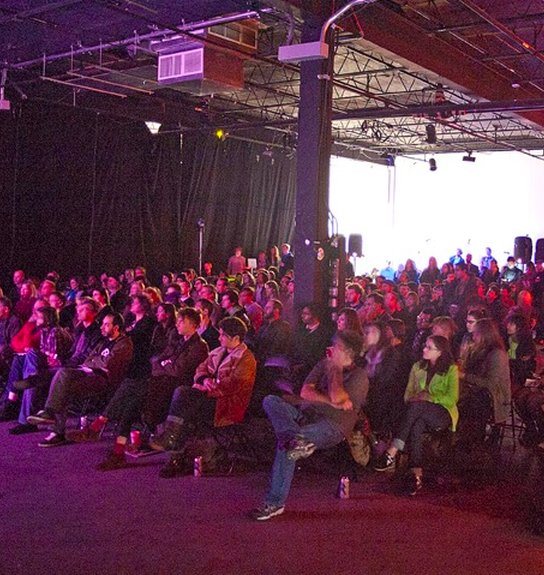
Richard: Wow… in the beginning we were wild and crazy. We held screenings in warehouses in downtown Los Angeles before it was gentrified, we were running on pure passion, we had warehouse parties that went until dawn, we didn’t pay attention to budgets, we used our credit cards to support the festival and filmmakers the same way that indie filmmakers use them to make their films. For the long run though, that type of festival isn’t sustainable, and we believe that ZERO deserves, in fact, should exist, so unfortunately that meant screening less films, thinking about effective budgets, and moving from the wild warehouses into elite and highly respected venue, which in the end, is better for filmmakers in the long run, even if the warehouse days were more fun.

PHOTO: Zero Film Festival’s old warehouse days:
zero_warehouse_days.jpg

Matthew: Where do you see the festival by 2020?

Richard: Doing exactly the same thing. Its an authentic film festival with a purpose.

Matthew: What film have you seen the most times in your life?

Richard: The filmmakers I have watched and studies the most: Richard Linklater, his structuralism is brilliant, and Tarkovsky, he’s brilliant. Guilty pleasure? Zoolander.

Matthew: In one sentence, what makes a great film?

Richard: Thoughtful craft and integrity.

Matthew: How is the film scene in your city?

Richard: I live in New York. Its incredible. Its inspiring. I’m spoiled.


_____

Interviewer Matthew Toffolo is currently the CEO of the WILDsound FEEDBACK Film & Writing Festival. The festival that showcases 10-20 screenplay and story readings performed by professional actors every month. And the FEEDBACK Monthly Festival held in downtown Toronto on the last Thursday of every single month. Go to www.wildsound.ca for more information and to submit your work to the festival.

Interview with Festival Director Marc Bati (Très Court International Film Festival)

Très Court International Film Festival is an event without borders, with screenings during 9 days simultaneously in nearly one hundred cities in France and 28 other countries. The major program of the festival is the international competition. Fifty films of less than 3 minutes (excluding title and credits) representing the best and especially the shorter of the global audiovisual production year are presented each year.

http://www.trescourt.com/

Because this is a festival featuring the best of under 3min. short films, it’s only fitting that this was the shortest interview I ever had. Short but too the point and terrific!

Interview with Charlotte Lasne:

Matthew Toffolo: What is your Film Festival succeeding at doing for filmmakers?

Marc Bati : We offer a screening space for very short films and their filmmakers, to make their work known.

Matthew: What would you expect to experience if you attend the festival this year (2016)?

Marc: One shall be ready to discover original uncommon films!

Matthew: What are the qualifications for the selected films?

Marc: First qualification is runtime: under three minutes (except title and credits), that is the only rule. Then there is no denying that the selected films show talent and originality.

Matthew: Do you think that some films really don’t get a fair shake from film festivals? And if so, why?

Marc: Very short films are often considered too short to be taken into account in most festivals. At Très Court, it is the contrary!

Matthew: What motivates you and your team to do this festival?

Marc: Très Court is often most filmmakers’s first festival. Sometimes it is the first step to make a career! Some of “our” filmmakers moved on to feature films.

Matthew: How has the festival changed since its inception?

Marc: When the festival was created in 2000, Youtube did not exist. A festival for very short videos was an underground project! It originated in Paris and now the same films are presented in almost a hundred cities in twenty-nine countries in the world.

Matthew: Where do you see the festival by 2020?

Marc: This is a hard one. You know, it is hard for us to see ourselves beyond three minutes!

Matthew: What film have you seen the most times in your life?

Marc: It has no point with Très Court but it is 2001: A Space Odyssey.

Matthew: In one sentence, what makes a great film?

Marc: What makes a great film is “grace” (in one word, even shorter!). Because talented people can make bad films. So “grace” and “magic”.

Matthew: How is the film scene in your city?

Marc: Paris is one of the world capital for cinema. You find lots of movie theaters here.


***

Interviewer Matthew Toffolo is currently the CEO of the WILDsound FEEDBACK Film & Writing Festival. The festival that showcases 10-20 screenplay and story readings performed by professional actors every month. And the FEEDBACK Monthly Fesival held in downtown Toronto on the last Thursday of every single month. Go tohttp://www.wildsound.ca for more information and to submit your work to the festival.

Interview with Festival Director Anam Abbas (Face International Film Festival)

The Face Film festival is a not for profit, unticketed event aiming at promoting cinema, screening the best of contemporary world cinema and providing a platform for emerging Pakistani filmmakers to screen their work. Last year  was a one day event where we hosted the Pakistani Premiere of the American /Pakistani Documentary feature “Without Shepards” and the world premiere of the film “K2 and the invisible footmen” which proceeded to screen in multiple festivals across the globe.  In our second year, our program so far includes 6 international features, a program of local and international shorts and 3 panel discussions with the industry’s most respected filmmakers.

Matthew Toffolo: What is your Film Festival succeeding at doing for filmmakers?

Anam Abbas: As the only Film Festival in Pakistan’s capital, our venture seeks to support a fledgling film industry and expose audiences and filmmakers to the best in contemporary world cinema as well as allow emerging young filmmakers in pakistan to showcase their work and mingle with the industry.

Matthew: What would you expect to experience if you attend the festival this year (2016)?

Anam: We are screening contemporary features hot off the festival circuit. We have also added three panel discussions to our program. We expect a lot more media attention and a very exciting opportunity for Islamabad to interact with filmmakers from Lahore and Karachi.

Matthew: What are the qualifications for the selected films?

Anam: Films have to be completed after Jan 2014 and appeal to a Pakistani audience. Our criteria is broad because we want a diversity of expression presented at our festival.

Matthew: Do you think that some films really don’t get a fair shake from film festivals? And if so, why?

Anam: The entries received are staggering and competition is always steep. We judge and select by quality of film alone.

Matthew: What motivates you and your team to do this festival?

Anam: We are artists and film-makers ourselves. The love of cinema and desire to start dialogues is why we make films and create a culture of watching films, and especially film that showcase independant voices.

Matthew: How has the festival changed since its inception?

Anam: We are only in our 2nd year and expanding in our scope and our expected audience and impact.

Matthew: Where do you see the festival by 2020?

Anam: By 2020 we hope to be a truly international film festival with a weeklong program, presemting Pakistani feature film Premieres and guests from around the world.

Matthew: What film have you seen the most times in your life?

Anam: Gone with the Wind and Sholay- A classic Hollywood Melodrama and a classic Bollywood blowout.

Matthew: In one sentence, what makes a great film?

Anam: Great films evoke intense emotions!

Matthew: How is the film scene in your city?

Anam: Islamabad is definitely NOT the industry hub. However this allows for the nurturing of a lot of great independent talent that has already made a mark in the industries in lahore and Karachi.

***

Anam Abbas up in Pakistan and studied Cinema at the University of Toronto and Documentary Production at Sheridan College, Canada. She produced three short live action films and two short documentary films in Canada. I am deeply interested in creating platforms for women’s voices and exploring life at the peripheries in Pakistan.

Her documentary short “Lucky Irani Circus” about the children who work in Pakistan’s longest running circus group travelled to 5 film festivals around the world in 2015 including the Toronto International Reel Asian Film Festival.


Interviewer Matthew Toffolo is currently the CEO of the WILDsound FEEDBACK Film & Writing Festival. The festival that showcases 10-20 screenplay and story readings performed by professional actors every month. And the FEEDBACK Monthly Fesival held in downtown Toronto on the last Thursday of every single month. Go to www.wildsound.ca for more information and to submit your work to the festival.

Interview with Festival Director Brennan Tilley (Calgary Underground Film Festival)

Founded in 2003, the Calgary Underground Film Festival (CUFF) is dedicated to programming films that defy convention. Through the screening of contemporary works in various categories that include: feature, documentary, animation and shorts – CUFF brings Calgarians a unique roster of films rarely seen in North American theatres. CUFF currently has two annual festivals. The main Calgary Underground Film Festival runs for 7-days in mid-April; CUFF.Docs International Documentary Festival is in November. In addition, CUFF showcases special event screenings throughout the year.

Interview with the Festival Director Brennan Tilley:

Matthew Toffolo: What is your Film Festival succeeding at doing for filmmakers?

Brennan Tilley: The Calgary Underground Film Festival has always highlighted underseen films and helped filmmakers get their work in front of an audience. As new distribution models have been introduced it is easier for filmmakers to get their films seen, but we are still providing one of a limited number of ways to properly experience a film with an audience. We maintain a casual environment and are a great opportunity for visiting filmmakers to connect with each other.

Matthew: What would you expect to experience if you attend the festival this year (2016)?

Brennan: An engaged audience that trusts us to bring in the best films. It is an opportunity to watch these films with people that love the films we screen. We enhance the experience through an arcade featuring new games from independent developers, DJs and VJs between films, a themed bar, and plenty of pop-up surprises

Matthew: What are the qualifications for the selected films?

Brennan: The main criterion is that a film defies convention or breaks boundaries. These films in some way depart from what we have seen before.

Matthew: Do you think that some films really don’t get a fair shake from film festivals? And if so, why?

Brennan: By and large, festivals want to screen the best films possible. If a film is good and made available to festivals, a film will likely get a fair shake.

Matthew: What motivates you and your team to do this festival?

Brennan: We strive to connect with the filmmakers whose films we screen. Those connections and the appreciation the filmmakers show for it is a big driver for us. Cultivating the best audience experience and the response we get from that is also a huge motivator.

Matthew: How has the festival changed since its inception?

Brennan: The spirit and the intentions of the festival have remained consistent. The main change is the size. We have moved from a single, small non-theatrical venue over a few days to a full week with two dedicated screens at an arthouse cinema. At times, attendance figures increased at levels that made us certain we were miscalculating and then increased more the following year. Also, CUFF has become a yearround presence with an offshoot documentary festival in November and events year round.

Matthew: Where do you see the festival by 2020?

Brennan: We have several initiatives on deck to be added over the next five years. Nothing we are revealing right now 😉

Matthew: What film have you seen the most times in your life?

Brennan: In my life, probably GHOSTBUSTERS or WIZARD OF OZ, two films I started watching young and continue to watch. In the last 10-15 years, I would like to think it is Noah Baumbach’s KICKING AND SCREAMING. I also lost count of how many times I saw the Mandy Moore vehicle HOW TO DEAL in theatres; the summer of 2003 was a weird time.

Matthew: In one sentence, what makes a great film?

Brennan: A great film is engaging while watching it and sticks with a viewer long after.

Matthew: How is the film scene in your city?

Brennan: Movie watching in Calgary is heavily weighted in multiplexes and home theatres. In recent years, there has been a marked increase in audience attendance and engagement with film festivals and events. Also, cultural groups and arts organizations are highly supportive of related film screenings and events. The film scene is supported by a burgeoning film production community.

***

Interview Subject Brennan Tilley holds a Bachelor of Commerce degree in Business Process Management. He serves as Lead Programmer and Administrative Manager of the Calgary Underground Film Festival, President and Programming Chair of the Calgary Cinematheque and Shorts Programmer for the Calgary International Film Festival. He can count to ten (diez) in Spanish with assistance on only eight (ocho) of the numbers. Contrary to rumours, he has not recently watched his VHS copy of the Chevy Chase classic Funny Farm.

Interviewer Matthew Toffolo is currently the CEO of the WILDsound FEEDBACK Film & Writing Festival. The festival that showcases 10-20 screenplay and story readings performed by professional actors every month. And the FEEDBACK Monthly Fesival held in downtown Toronto on the last Thursday of every single month. Go to http://www.wildsound.ca for more information and to submit your work to the festival.

Interview with Festival Co-Director Maria Nicolacakis (San Francisco Greek Film Festival)

13th Annual San Francisco Greek Film Festival,

October 15-22, 2016

www.grfilm.com

Interview with the Festival Director Maria Nicolacakis:

Matthew Toffolo: What is your Film Festival succeeding at doing for filmmakers? 

Maria Nicolacakis: Our film festival is one way Greek filmmakers can get their work out to the world.  Greece is a small country with a suffering economy right now, and our film festival is a great opportunity to reach new audiences and networks.

Matthew: What would you expect to experience if you attend the festival this year (2016)? 

Maria: 2016 marks our 13th year.  Every year, we strive to present a diverse selection of current feature films, shorts, and documentaries.  This means different genres and themes, as well as different budgets.  Some of the films we show have well known actors, directors and producers, and a bigger budget, while others (most of them) are on a shoestring budget with up and coming names.  It’s amazing to compare the average cost of a Hollywood film to that of an average Greek film; it’s night and day.  The past several years we have brought filmmakers to our festival, which is always a very fun and engaging experience for the audience, and we expect to do that again this year.  Stay tuned!

Matthew: What are the qualifications for the selected films? 

Maria: We showcase contemporary work by filmmakers who are Greek or of Greek descent.  Beyond that, we look at the pool of entries every year, and as mentioned above, we aim to choose a diverse selection of films.  We personally screen all of the hundreds of entries we receive every year.


Matthew:  What motivates you and your team to do this festival? 

Maria: I am a child of Greek immigrants and my team members are Greeks from Greece who moved to the U.S. many years ago.  We all love Greece and we love Greek Film, and we want to provide this wonderful art form to the broader community.  It’s a way to preserve our culture.  Additionally, all proceeds from our film festival benefit the Modern Greek Studies program at San Francisco State University.

Matthew: How has the festival changed since its inception? 

Maria: I would have to say technology.  Not needing to physically receive and ship film reels around the world has been a huge savings in time and cost.  FilmFreeway has been great!  Also, we’ve made changes to our website and now use an online ticketing service.  Our numbers across the board have also steadily increased:  the number of films that are submitted annually, the attendees, and donors.

Matthew:  Where do you see the festival by 2020? 

Maria: That’s only four years away!  We would love to continue to grow our festival and expand it to more locations in the San Francisco Bay Area and the Central Valley.

Matthew:  What film have you seen the most times in your life? 

Maria: Dead Poets Society.  I was obsessed with Thoreau quotes when I was younger.  In terms of Greek films, growing up in the 80s, Greek comedian Stathis Psaltis was my absolute favorite.  My brother and I watched his comedies over and over!

Matthew:  In one sentence, what makes a great film? 

Maria: A great film reflects the human experience, both good and bad, and takes your breath away while leaving you hopeful at the same time.

Matthew:  How is the film scene in your city? 

Maria: San Francisco is a world-class city with a wonderful film scene.  There are numerous film festivals here and in the surrounding Bay Area, as well as a fantastic International Film Festival.


Thank you very much for the interview!

13th Annual San Francisco Greek Film Festival,

October 15-22, 2016

www.grfilm.com


_____

Interviewer Matthew Toffolo is currently the CEO of the WILDsound FEEDBACK Film & Writing Festival. The festival that showcases 10-20 screenplay and story readings performed by professional actors every month. And the FEEDBACK Monthly Fesival held in downtown Toronto on the last Thursday of every single month. Go to www.wildsound.ca for more information and to submit your work to the festival.


Interview with Festival Director Amanda Macchia (Toronto Indie Doc Fest)

Amanda Macchia is an independent director and producer from Toronto, and the founder of Moderna Pictures. She founded the production company upon completing her undergraduate degree in journalism and documentary filmmaking at Ryerson University, where she began collaborating on student film projects and as a production assistant at the CBC. Since then, she has worked for industry leaders at both Rogers Communications and VICE Media, and curates the Toronto Indie Doc Fest film festival, now in its second year of programming.


I recently chatted with Amanda about the Indie Doc Festival:

Matthew Toffolo: What is your Film Festival succeeding at doing for filmmakers?

Amanda Macchia: Toronto Indie Doc Fest is an affordable opportunity for independent filmmakers to have their documentaries screen at a historical cinema in one of the biggest film cities in the world.

Matthew: What would you expect to experience if you attend the festival this year (2016)?

Amanda: You can expect a well-curated showcase of short to mid-length documentaries from all over the world for an affordable entry fee. Because we are a small festival, we take great care in ensuring the limited amount of time we do have to screen films is packed with the best quality subjects and cinematic executions of those subjects.

Matthew: What are the qualifications for the selected films?

Amanda: We currently accept any documentary, or mockumentary, films that have running times of under 50 minutes. Any subject goes, but we are especially interested in films that explore subjects or personalities that you normally would not get a chance to learn about.

Matthew: Do you think that some films really don’t get a fair shake from film festivals? And if so, why?

Amanda: Absolutely. There are so many variables that go into whether festivals – especially the larger and more prestigious festivals – will program your film. Often, as an independent filmmaker, particularly one that is working with little to no budget, you don’t necessarily have a chance of getting programmed. And although TIDF obviously cannot offer the kind of benefits that you would derive from having your film screen at these other festivals, we can and do offer a realistic opportunity to have your film screened in a proper cinema to a diverse audience.

Matthew: What motivates you and your team to do this festival?

Amanda: This festival was born out of my own frustration with getting some of my own independent documentaries to screen in Toronto and other major cities around the world in an affordable manner. Not every film you make is Harlan County, USA, so there should be festival options for filmmakers who are making great films and telling incredible stories, but may not be at the point in their career where they are receiving funding and initiating large-scale productions that would qualify for more competitive festivals.

Matthew: How has the festival changed since its inception?

Amanda: This is the second annual TIDF, so we have not seen much change since last year, although we do hope more filmmakers are aware of our festival this year and will therefore have a bigger and more diverse pool of content to choose from when programming.

Matthew: Where do you see the festival by 2020?

Amanda: I would like to see this festival grow outwards, rather than internally. Our goal is not to have more consecutive days of programming in Toronto necessarily, but rather to have simultaneous one-day festivals in other major cities in North America, such as Montreal and New York.

Matthew: What film have you seen the most times in your life?

Amanda: The Last Waltz

Matthew: In one sentence, what makes a great film?

Amanda: For me, a great film is not so much in the story, but in the themes hovering beneath the surface and how they are delivered visually. White Chimney, for example, a Finnish documentary we programmed last year, outlines the story of the tragic and mysterious death of the actress Sirkka Sari in 1939. You might read that description and wonder why you would care about the death of a Nordic actress that you’ve likely never heard of that took place 77 years ago. But you would care – because the film isn’t really a documentation of her death – it’s a film about youth, nostalgia, and other themes that I find difficult to even formulate words for in my mind, but they are there on the screen.

Sorry, that was not one sentence.

_____

Interviewer Matthew Toffolo is currently the CEO of the WILDsound FEEDBACK Film & Writing Festival. The festival that showcases 10-20 screenplay and story readings performed by professional actors every month. And the FEEDBACK Monthly Festival held in downtown Toronto on the last Thursday of every single month. Go tohttp://www.wildsound.ca for more information and to submit your work to the festival.

Interview with Festival Director Shane Burzynski (Northwest Horror Show)

The Northwest Horror Show is a way for cult and horror fans to experience their favourite genre films on the big screen with special guests, giveaways, trailers and short films before each feature. All films will be screened on 35mm prints and Uncut whenever possible.

http://www.viff.org/theatre/series/northwest-horror-show

Interview with the Festival Director Shane Burzynski:

Matthew Toffolo: What is your Film Festival succeeding at doing for filmmakers?

Shane Burzynski: The Northwest Horror Show is still very new, so at this time its pretty much just having the chance to have their films screened for audiences of like minded genre fans and help promote their work among the festival guests from the audience to our guest speakers. I’m also trying to start issuing awards so that they can also have the laurels for their posters.

Matthew: What would you expect to experience if you attend the festival this year (2016)? 

Shane: Some very enthusiastic film goers, a lot of beer and some of the greatest junk food cinema ever produced! Maybe a little bit of emotional trauma for those heading into our 40th anniversary screening of Salo as well. It’ll be a very positive atmosphere despite the subject matter of a couple of our films.

Matthew: What are the qualifications for the selected films? 

Shane: They just have to be made within the last couple of years, be under 15 minutes and be in the horror/exploitation genre. Seen a lot of great stuff so far!

Matthew: Do you think that some films really don’t get a fair shake from film festivals? And if so, why? 

Shane: It’s hard to say as I haven’t really had the opportunity to experience any others myself. With the sheer volume of films flooding into them I’d imagine its hard to choose between all the submissions. I had to turn down some really terrific films last year and we only had 50 submissions, I can’t even imagine what its like for some of the big festivals. Luckily though there are tons of niche festivals for practically any subject these days and a lot of very supportive festival organizers/audiences. There’s an audience for pretty much anything these days, just gotta get your stuff in front of the right one.

Matthew: What motivates you and your team to do this festival? 

Shane: Mostly just bringing these classic genre films back to Vancouver and introducing some programming to the city that wouldn’t have been shown otherwise. For instance, last year I got to finally bring in these two Duke Mitchell films in which I had wanted to see here for a long time and it was a blast! People seemed to really enjoy themselves so that was really great.

Matthew: How has the festival changed since its inception? 

Shane: As it’s only our second year, not too much. I’ve got some deals I’m making that will make it a bit more interactive and fun and am also adding more awards for the short films, but the atmosphere will pretty much be the same layout as we did last year.

Matthew: Where do you see the festival by 2020? 

Shane: Hopefully still running! We had a great first year and momentum just seems to keep on building. I dont think it will get much different than it is now but maybe a bigger crowd. I’m hoping to have the funds to bring more guests in as well as to start recreating some of the old gimmicks that came with the films I’m screening.

Matthew: What film have you seen the most times in your life? 

Shane: I think its a tie between a few movies. I’ve seen the first two Lone Wolf and Cub movies a ton due to how many people I’ve felt the need to show them to. Brain Damage and Taxi Driver are also playing constantly as well.

Matthew: In one sentence, what makes a great film? 

Shane: To me a great film is a passionate film. If you love what you’re doing and believe in the project you can make a great film, even if its not necessarily  talented. Ed Wood made terrible movies but charming movies that have stood the test of time because they were so hilariously sincere.

Matthew: How is the film scene in your city?

Shane: Its there but a little hard to get people out. Luckily my festival is offering something unique enough to pique peoples interests as no one else seems to wanna show things like Cannibal Holocaust or Salo, especially on 35mm.

It’s definitely a rarity in this city so it really helps to get people motivated to come out. They seem to be really happy to get these movies too which makes me even happier to bring them in.

Hopefully we can reach out to more people and keep it all going for as long as possible.

Interviewer Matthew Toffolo is currently the CEO of the WILDsound FEEDBACK Film & Writing Festival. The festival that showcases 10-20 screenplay and story readings performed by professional actors every month. And the FEEDBACK Monthly Festival held in downtown Toronto on the last Thursday of every single month. Go to http://www.wildsound.ca for more information and to submit your work to the festival.

Interview with Festival President Sergey Mavrody (Blow-Up Film Festival)

The 2016 BLOW-UP ARTHOUSE FILM FESTIVAL brings the most original storytellers together with very adventurous audiences for its annual program of dramatic and documentary films, shorts, animations, experimental films, and student work. The Festival was named after the Michelangelo Antonioni’s iconic film “Blow-Up”.

For more information, to go: http://www.blowupfilmfest.com/

I recently sat down with the Festival President Sergey Mavrody:

  • What is your Film Festival succeeding at doing for filmmakers?

We believe we succeed in promoting authentic voices that can awaken new ideas that have the power to push creative boundaries, spark new levels of compassion and understanding, and even lead to social change.

  • What would you expect to experience if you attend the festival this year (2016)?

I would expect to bring the most original storytellers together with very adventurous audiences. It would be a great range of quality art-house films from all over the world. I would also expect a smart audience, people, who love art-house films.

  • What are the qualifications for the selected films?

The Festival welcomes serious, independent films aimed at a specific audience rather than a mass-market consumer. We would like to see films made primarily for aesthetic and philosophical reasons rather than commercial profit. The festival would like to approach the caliber of films made by such great directors as Eisenstein, Antonioni, Fellini, Tarkovsky, Godard, Truffaut, Kurosawa.

  • Do you think that some films really don’t get a fair shake from film festivals? And if so, why?

Yes and no. On one hand, many films have to try very hard to get seen and recognized. On the other hand it is hard to miss a truly great and talented film.

  • What motivates you and your team to do this festival?

The main motivation would be to discover new talented artists promoting that type of films that fit well into our vision, that push creative limits and educate audiences. On the other hand, if we have passion we don’t really need a motivation.

  • How has the festival changed since its inception?

The festival is always evolving. We have changed names, concepts, and places of screening, websites, staff, jury, method of film submission.  This is a great question and answer could be very long.

  • Where do you see the festival by 2020?

By 2020 the festival will be making an even greater impact on the world cinema by discovering talented filmmakers and setting new standards.

  • What film have you seen the most times in your life?

The most times in my life I have seen the films I made, of course.

  • In one sentence, what makes a great film?

Well, Jean-Luc Godard once said: all you need for a great movie is a gun and a beautiful girl J That was an irony, of course. Truth: that’s what makes a great film in a nutshell. More specifically, this includes an authentic story and a sincere unpretentious artistic expression.

  • How is the film scene in your city?

The MovieMaker Magazine recently unveiled its list of cities with the best film scene. You’re probably wondering who topped the list? Well, it’s my Chicago! According to the magazine – the criteria they used include festivals, film schools, movie-related vendors, local theatres, living standards, unemployment rate, median home price and aggressive tax incentives. Chicago is also rich in filmmaking history and has seen an increase in both independent and Hollywood film productions in the last few years. As we speak, a bunch of film production trucks parked right on my street. They are filming the “Empire” TV series.

BIO: Sergey A. Mavrody

Sergey Mavrody moved to US from Moscow, Russia in 1990. He was granted a green card as an “Alien of Extraordinary Ability”.  Sergey received his first graduate degree in animation from VGIK film school, Moscow, Russia. Sergey earned his second MFA degree in Computer Animation from the School of the Art Institute of Chicago.

Sergey was a Production Designer for the Emmy Award-winning musical film “The Bridge”. Sergey produced and directed several animated films. His films have received numerous international awards.

Sergey is also a professor at the School of the Art Institute of Chicago and DeVry University. Sergey served as a board member and as a head of the jury at several film festivals. He is a founder and a president of the Blow-Up Arthouse International Film Festival.


http://blowupfilmfest.com/


_____

Interviewer Matthew Toffolo is currently the CEO of the WILDsound FEEDBACK Film & Writing Festival. The festival that showcases 10-20 screenplay and story readings performed by professional actors every month. And the FEEDBACK Monthly Festival held in downtown Toronto on the last Thursday of every single month. Go tohttp://www.wildsound.ca for more information and to submit your work to the festival.

Interview with Festival Director Sean Gabriel (Shortfest International)

Shortfest International is aimed to promote as much as possible the productions created by our submitters. All foreign films must have English subtitles. Genres including: Sci Fi, Animated, horror, experimental, drama, comedy, thriller, action, documentary. Live screening will be held during the festival on 3 nights where elite personalities from the local scene will be attending this event. There will be a winner for each category. All those who will make it to the end and are nominated for the final award ‘The Best Overall Film’  will have the opportunity to attend or virtually attend to the final night as All films and any other kind of production which are submitted to this festival will be aired on an IPTV channel and it will be promoted on our websites and Facebook pages. This could be a one time opportunity!! Our aim is to turn this event in an annual event where here filmmakers will be able to meet and share their thoughts and ideas, hopefully from all around the globe.

Interview with Festival Director Sean Gabriel:

Matthew Toffolo: What is your Film Festival ​succeeding at doing for filmmakers?

Sean Gabriel: This is our first edition of The Shortfest International Festival and we are hoping that we can be a good helping hand to those producers who dedicate their time and money in creating short movies. Being ourselves a production house and having produced a couple of short films ourselves, we know the dedication and sometimes even financial sacrifices these producers do to get their film casted and produced. When the production is ready and presented to different festivals around the world, some succeed and others not, and are then put on a disk and archived to be forgotten and never given the opportunity to have the chance to screen them and get promoted properly. So we hope that through our initiative, where we created an IP TV channel dedicated solely for short movies incorporating both short film festivals and also content submission for free, we will be able to give the well deserved attention to all these productions having their films screened on an international platform.

Matthew: What would you expect to experience if you attend the festival this year (2016)?

Sean: It will be a wonderful experience for everyone present at the festival. Being our first edition we are very limited financially but we are still giving it our best both in setup and organisation. Several distinct local producers and filmmakers will be present to this festival, some of which will be giving their contribution as part of the judging panel. This will be a good opportunity for those attending to meet up with some of the best local producers and filmmakers having the opportunity to meet in person and maybe share some ideas for future projects they might collaborate in.

Matthew: What are the qualifications for the selected films?

Sean: There are no specific qualifications for the selected films. All short films are welcome as we believe that every film has its story, then it is up to our judges to determine whether a film should be qualified to the next level or not.

Matthew: Do you think that some films really don’t get a fair shake from film festivals? And if so, why?

Sean: I don’t think that there are any specific reasons the way a film is judged and not given a fair shake but then again that is just my opinion. When we participated with our productions we always had what we thought was fair for us, always depending on which festival we were participating in.

Matthew: What motivates you and your team to do this festival?

Sean: The need for more exposure and promotion for such small productions drove us to come up with the idea of this festival boosting it with the idea of having all movies promoted on our channel to which we asked the permission to have their films aired as part as the festival procedure. Some had other commitments and withdrew their submissions and others greeted this idea with enthusiasm to the extent to give us consent to air their production anytime we want during the year.

Matthew: How has the festival changed since its inception?

Sean: This is the first year of our festival therefore there has not been much time for changes even though i have to admit that from the the day we started this festival project to present day we have changed, added and improved alot the festival in terms of promotion and presentation….. and it keeps getting better.

Matthew: Where do you see the festival by 2020?

Sean: Our aim is to make this festival an annual event. In 5 years time we hope that we manage to make it a calendar event in the media industry in Malta, something that filmmakers, producers etc will be looking forward to. Hopefully with some help we could be getting some international professional people in the field to attend our Festival which will definitely make it an important event for the short film enthusiasts.

Matthew: What film have you seen the most times in your life?

Sean: One of the films i love and am never fed up of watching is Gladiator – watched it last week again in fact ….. probably it was the 300th time i watched it lol!!

Matthew: In one sentence, what makes a great film?

Sean: A great film is made when it has an artistic core and every aspect of filmmaking is well prepared and executed.

Matthew: How is the film scene in your city?

Sean: Malta has d same equivalent value in terms of the city you are referring to. With its 440,000 inhabitants the film industry is still very strong. We had some of the best blockbusters here in Malta, to mention a few Gladiator, Troy, Munich, Assassin’s Creed and recently 13 hrs. The people involved in the film industry are very competent and recently a new fresh overhaul in the Film Commission has given the desired results attracting more and more film producers and directors who chose Malta as part of the filming location for their film. As for the local scene unfortunately things are somehow different with alot of emerging filmmakers not having enough opportunity to express their creativity and passion for this industry. This happens just because in the technical dept of filmmaking locally we ar not given much opportunity as most of the films bring their technical crew with them which makes it even harder to get involved.

_____

Interviewer Matthew Toffolo is currently the CEO of the WILDsound FEEDBACK Film & Writing Festival. The festival that showcases 10-20 screenplay and story readings performed by professional actors every month. And the FEEDBACK Monthly Festival held in downtown Toronto on the last Thursday of every single month. Go tohttp://www.wildsound.ca for more information and to submit your work to the festival.

Interview with Yogesh Baraskar, Founder Goa Short Film Festival

Matthew Toffolo interviews the Founder/Director of the Goa Short Film Festival:

Matthew: What is the goal of your film festival?

Yogesh Baraskar (Founder, Director) – The goal of Goa Short Film Festival is to provide the platform for new taelnt in the field of cinema making. in India ti is really common thing now to become a short film maker but they are not getting good chance to showcase their talent. We want to provide that.

Matthew: How has the festival changed since its inception until your upcoming 2015 festival?

Yogesh Baraskar (Founder, Director) – The festival has change immensely since its inception. thought it is only the second edition of the festival. We are also organizing Pune Short Film Festival for last five years, so the helps us to spread our new Goa Short Film Festival

Matthew: How many films are you showcasing at your Film Festival?

Yogesh Baraskar (Founder, Director) – In its 1st year only we have received more than 400 films across 23 countries. out of the we have selected 87 films in the competition section of the festival and we showcased all the 87 films in the festival.

Matthew: Can you give us a sneak peak of what to except for the 2015 Festival?

Yogesh Baraskar (Founder, Director) – In 2015 we are expecting more than 600 films across 30 countries. our festival jis getting good shape and jit is spreading especially across USA and Europe.

Matthew: Is there going to be an overall theme for the 2015 festival?

Yogesh Baraskar (Founder, Director) – No our festival does not have any particular theme. it is open for all the Genre and all the categories of the films and film makers

Matthew: Where do you see your festival in 5 years?

Yogesh Baraskar (Founder, Director) – In the next five years we are planning to become not only India’s but one of the Asia’s top film festival. we want to grow not only in terms of prize money but in terms of number of quality films.

Matthew: What’s the current status of the Film Scene in your city?

Yogesh Baraskar (Founder, Director) – in Goa We have very good film culture. most of the young filmmaker are coming ahead to showcase their talent through the short films.

Matthew: What film have you seen the most in your life?

Yogesh Baraskar (Founder, Director) – I personally watched and like all the films of Satyajeet Ray, Steven Spielberg, Clint Eastwood, Majidi Majidi

    * * * * *

Matthew Toffolo, Interviewer BIO

Matthew Toffolo is the current CEO of the WILDsound Film and Writing Festival . He had worked for the organization since its inception in 2007 serving as the Short Film Festival’s moderator during the Audience Feedback sessions.

Filmmaker of over 20 short films and TV episodes. Took over full reins of the WILDsound Festival in May 2013. From then to the end of 2014, he’s presented over 90 movies at the monthly FEEDBACK Film Festival in Toronto, plus has had over 60 screenplays and stories performed by professional actors at the bi-monthly Writing Festival.