Interview with Nathan Ludwig (GenreBlast Film Festival, Festival Director )

 GenreBlast is an upstart film festival that had a very successful first year at the revitalized state-of-the-art State Theatre in wonderful downtown Culpeper, Virginia. Our second year will emanate from an exciting, soon-to-be announced venue! They celebrate the finest in true genre cinema and are looking for your best features, shorts, music videos and screenplays in the categories of horror, action/adventure, sci-fi, fantasy, martial arts, exploitation, documentaries, animation, grindhouse, suspense/thriller, international, experimental and more!

http://www.genreblast.com/

Matthew Toffolo: What is your Film Festival succeeding at doing for filmmakers?

Nathan Ludwig: We pride ourselves on creating a completely welcoming experience for both filmmakers and movie lovers alike. It’s all about the movies and it’s all about the artists who make them. In our first year, we had about half of our official selections represented by either directors, writers, producers or actors. We had about 19 features and around 80 shorts as well as over a dozen screenplay finalists – so to say we were pleasantly surprised by the response would be an understatement. The bottom line is we take the time to get to know all of our filmmakers and their passions. We are also independent film makers and screenwriters in our other lives and we have been to many festivals as official selections, awards nominees and just as moviegoers and we know what works and what doesn’t work when it comes to putting on a fun weekend of movies, parties and networking.

MT: What would you expect to experience if you attend the festival this year (2017)?

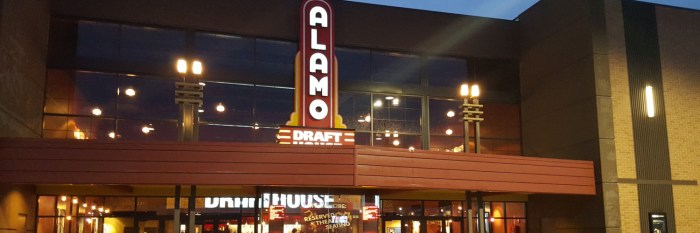
NL: We are moving to a new venue this year – the Alamo Drafthouse Theater in Winchester, VA. Last year, our first year, we emanated from the historic State Theatre in Culpeper, VA. It was a newly restored classical movie theater originally constructed in 1938. We were literally the last event to play there before it closed its doors due to problems with fundraising. It’s currently in turnaround to new owners and the fate of the State Theatre is up in the air so we decided to change locations and get the word out as soon as possible. We were very lucky to secure the weekend of Sept. 8-10 of this year for GenreBlast 2. Andy Gyurisin is the Creative Manager at the Alamo Winchester and he was on board from the beginning for what we are offering to film nerds and film makers with out upstart fest. We really hope to make the Alamo the official home of GenreBlast for the foreseeable future. It’s such an amazing venue and extremely conducive to events like GenreBlast.

This year, there will be plenty of networking parties, discussion panels and Q&A sessions after each and every screening, for both shorts and features. The owners of the Alamo Drafthouse Winchester also own the neighboring Country Inn & Suites and will be providing room discounts for fest attendees. They also own the adjacent Green Turtle bar & restaurant which will also be at our disposal the entire weekend. The Alamo itself has a full bar and a huge food menu. You’ll be able to eat and drink to your heart’s content all weekend! It’s going to be one long, continuous party for artists and lovers of film and screenwriters to come together and celebrate what we all love the most. Movies!

MT: What are the qualifications for the selected films?

NL: I’m not quite sure what you mean by this question. Do you mean what do the selected films all have in common or what do you need in order to be a selected film? Or something else?

MT: Do you think that some films really don’t get a fair shake from film festivals? And if so, why?

NL: I truly believe, at this level of film fests, the cream rises to the top. It just does. If your film is worth a screening, it will find an audience. Not everything gets into every fest, that’s just unrealistic. You just have to know what you have, know your audience and do your homework as to which fests to submit to. Don’t submit your shot-on-VHS zombie ninja movie to an indie film fest that focuses on straight-up dramas and comedies. You’ll end up frustrated and disappointed. Stay informed and keep up with the festival scene on a regular basis.

MT: What motivates you and your team to do this festival?

NL: We are obsessed with movies. It has been a dream of mine to hold an annual film fest curated by myself and my closest friends. For a handful of years, I kept making excuses as to why it wasn’t possible or feasible. One day, I just decided to get up off my butt and actually do it. Lo and behold, it happened and the whole thing went off without a hitch. We had an amazing turnout and many attendees commented it was the best run first year film fest they’ve ever been to. If you check out our reviews on FilmFreeway, you’ll see we’re not lying.

At the end of the day, all I care about is movies – whether it’s watching them, writing them (or about them) or making them. I wanted to channel my unconditional love and idiosyncratic passion for that into one yearly cinematic event. The fact that two of my closest friends agreed to come along on this weird, crazy ride is one of the biggest rewards so far.

MT: How has your FilmFreeway submission process been?

NL: The response on FilmFreeway has been positively insane. We are already outpacing last year’s submissions by a ridiculously wide margin. However, that shouldn’t deter anyone from submitting. We watch EVERYTHING from start to finish, even if you submit it at the very last second of the final deadline. If you care enough to submit, we care enough to watch/read and evaluate your work fairly and accurately. We have a very eclectic taste in movies and there’s nothing that really offends us or turns us off (except for poor filmmaking).

MT: Where do you see the festival by 2020?

NL: By that time, we will be in our fifth (!) year and by then, we want to be one of the premier genre film fests in the country. We want to be a destination fest for audiences and artists alike to converge and mingle amidst a killer lineup of genre films. We want to be like Fantastic Fest when we grow up.

MT: What film have you seen the most times in your life?

NL: The Good, The Bad and the Ugly. Or maybe Scarface. Or was it Casino? Maybe it was one of the Godfather movies. If it’s three hours long and features tough fellas being tough, I’ve probably seen it several dozen times.

MT: In one sentence, what makes a great film?

NL: A great film is one you can’t go without recommending to anyone who will listen.

MT: How is the film scene in your city?

NL: Winchester has a fiercely intelligent as well as warm and inviting film community – from the Winchester Film Society to Andy Gyurisin’s Film Club 3.0, which screens eclectic selections at the Alamo Drafthouse itself on a regular basis. GenreBlast will be right at home in this picturesque Virginia town.
genreblast1.jpg

_____

Interviewer Matthew Toffolo is currently the CEO of the WILDsound FEEDBACK Film & Writing Festival. The festival that showcases 20-50 screenplay and story readings performed by professional actors every month. And the FEEDBACK Monthly Festival held in downtown Toronto, and Los Angeles at least 2 times a month. Go to www.wildsound.ca for more information and to submit your work to the festival.
Interview with Patrice Francois, Festival Director IMAGINE THIS WOMEN’S INTERNATIONAL FILM FESTIVAL

Imagine This Women’s International Film Festival: Imagine This Productions is dedicated to providing aspiring women storytellers and filmmakers a space to encourage and develop creative projects by women. ITP’s goal is to support women by sharing their work to the public, promoting equal opportunities, encouraging professional development, and serving as a resource informative network. 

http://imaginethisprods.com/
 
Matthew Toffolo: What is your Film Festival succeeding at doing for filmmakers?

Patrice Francois: I believe our film festival is succeeding at proving a platform for underrepresent women filmmakers from all over the world. We’ve showcased films from Afghanistan and Palestine. Our 2016 Best Documentary short film, “Shireen of Al-Walaja” by director Daz Chandler, is about an intimate portrait of a dynamic and popular Palestinian resistance leader, who left her full-time job at the UN to return to her home village of al-Walaja and fight for her community. And one of the attendance thanked us for being risky and showing the film. He told us that many other platforms wouldn’t dare screen the film because of the sensitive subject. We feel that We’re not here to play politics, if you do good work and you have a great story to share, your story deserves to be seen no matter what.

MT: What would you expect to experience if you attend the festival this year (2017)?

PF: A very divers selection of films of unique and compelling stories. A number of films will touch on themes related to personal struggles within political and social conflicts across the world. Oh, a great after party with attendees and some of the filmmakers.

MT: What are the qualifications for the selected films?

PF: That’s easy. Must be made by a women filmmaker either directed, produced or written. And of course, a great story.

MT: Do you think that some films really don’t get a fair shake from film festivals? And if so, why?

PF: Definitely. I’ve done the whole submit your film to film festivals and had endless discussions with other women filmmakers, so I know first hand how “un-fair” it can be sometimes. One of the main reason we started Imagine This. I think there’s just a lot of politics involved, I mean there’s politics involved in just about everything, but I’ve been to local film festivals that are supposed to be focused on indie, low budget films and some of the selected films have been made with well known actors and/or their budgets didn’t fit in “low” category.

MT: What motivates you and your team to do this festival?

PF: We understand the obstacles that exist for new and up-and-coming filmmakers. We decided it was important to help cultivate an appreciation for a wide range of unique and compelling stories, especially those from women who have been traditionally underrepresented in film.

MT: How has your FilmFreeway submission process been?

PF: We’ve seen a tremendous response, and are quite frankly blown away by the quality of submissions we’ve seen. We’re trending to doubling the amount submissions from last year.

MT: Where do you see the festival by 2020?

PF: It’s clear that there is tremendous female filmmaking talent out there, but there is still so much work to be done to create an inclusive environment that supports women storytellers, so I guess a bigger and better festival that’s more established in the NY film festival scene.

MT: What film have you seen the most times in your life?

PF: Let see, I would say “Heat”. That scene between Robert De Niro and Al Pacino in the diner scene is one of my all time favorite scenes. Plus I love Val Kilmer, he’ll always have a special place in my heart as well as my mother’s, lol

MT: In one sentence, what makes a great film?

PF: A film should have a great story and it should be compelling, it should be able to capture the mind of the audience, it should strike a chord, actors should run with the story and own it. the actors and the visuals should have a nice balance.

MT: How is the film scene in your city?

PF: Oh gosh, I live in the “country”, so there is no film scene in my town. I have to head down to the city to get my dose of art and culture, lol

imagine_this_2.jpg

_____

Interviewee Patrice Francois is an actor, screenwriter, filmmakers based in the Greater New York area. She is the co-founder of Imagine This Production and the festival director for Imagine This Women’s International Film Festival.

Interviewer Matthew Toffolo is currently the CEO of the WILDsound FEEDBACK Film & Writing Festival. The festival that showcases 20-50 screenplay and story readings performed by professional actors every month. And the FEEDBACK Monthly Festival held in downtown Toronto, and Los Angeles at least 2 times a month. Go to www.wildsound.ca for more information and to submit your work to the festival.

Interview with Eric Simonson, Creative Director DOOR KINETIC ARTS FESTIVAL

Oscar-winning “Lombardi” playwright Eric Simonson is bringing some major creative talent to Björklunden for the inaugural Door Kinetic Arts Festival in June. The week-long festival will provide Door County residents and visitors a peek at the creative process through two staged readings, a dance presentation and the premiere of a commissioned film by Campbell Scott, an award-winning filmmaker and actor, best known for “The Amazing Spiderman,” “Big Night” and “Longtime Companion.”

http://www.doorkinetic.com/

 Matthew Toffolo: What is your Film Festival succeeding at doing for filmmakers?

Eric Simonson: Like all film festivals, the most important thing we do is give a filmmaker a platform. We also invite artists to participate in the festival, which also includes art, dance and theatre. The point of DKAF is to encourage cross-polynization of artistic mediums. As the moving arts become more sophisticated, so does the way in which we express ourselves. DKAF offers 9 days in which which artists from all disciplines come together, see one another’s work, and exchange ideas — all in the inspirational environs of Door County, Wisconsin.

MT: What would you expect to experience if you attend the festival this year (2017)?

ES: Really innovative and rich storytelling experiences from filmmakers, playwrights, directors, actors, artists, choreographers and dancers. We also host several workshops and seminars — all open to the public — headed by internationally renowned artists.

MT: What are the qualifications for the selected films?

ES: Good story-telling, inventiveness in story-telling, economy, a willingness to branch out and express oneself in innovative ways.

MT: Do you think that some films really don’t get a fair shake from film festivals? And if so, why?

ES: Yes. I believe that most festivals have challenging selection processes. There are so many good films out there, but screening committees are often too ad hoc and not fair. We strive for a thorough vetting of quality films at DKAF.

MT: What motivates you and your team to do this festival?

ES: We love a good story. We love creating and presenting things in Door County, which is an artist’s home for many working in different mediums. We want people to experience Door County first hand and to find inspiration to create more and better art.

MT: How has your FilmFreeway submission process been?

ES: Pretty Great. The folks FilmFreeway are always coming up with intriguing ways to make the submissions process easier, and allow the filmmakers to find the festivals that are right for them.

MT: Where do you see the festival by 2020?

ES: We’re new and very young. We don’t want to become an overly big festival, but we want the quality of our work to improve annually. We want to pack as much art and inspiration as we can in 9 days!

MT: What film have you seen the most times in your life?

ES: 8 1/2 by Frederico Fellini. Hands down my favorite film of all time. Though CITIZEN KANE is up there too.

MT: In one sentence, what makes a great film?

ES: GOOD STORY!

MT: How is the film scene in your city?

ES: I live in LA (if that’s what you mean). It’s hopping. In Bailey’s Harbor WI, there’s not much going on, though there is a growing local interest in filmmaking. Why not? The medium is becoming easier and easier every year.

door_kinetic_arts_festival_2

_____

Interviewer Matthew Toffolo is currently the CEO of the WILDsound FEEDBACK Film & Writing Festival. The festival that showcases 20-50 screenplay and story readings performed by professional actors every month. And the FEEDBACK Monthly Festival held in downtown Toronto, and Los Angeles at least 2 times a month. Go to www.wildsound.ca for more information and to submit your work to the festival.

Interview with Festival Director Kanithea Powell (Queer Hippo International LGBT Film Festival)

Queer Hippo is a celebration of queer cinema that brings together authentic stories and audacious audiences for its annual program of original documentaries, dramatic films, original teleplays, music videos and shorts. With filmmaker forums and panels, live music performances, distributors, engaging community and student programs, Queer Hippo brings together today’s most original storytellers to a place where they can collaborate and connect.

http://www.queerhippo.com/

 Matthew Toffolo: What is your Film Festival succeeding at doing for filmmakers?

Kanithea Powell: Queer Hippo provides an amazing platform for queer independent filmmakers. We have had films premier at our festival and go on to win major festivals as a result of winning in Queer Hippo. That says a lot about our ability to choose quality films that tell compelling stories.

MT: What would you expect to experience if you attend the
festival this year (2017)?

KP: Another great year of queer films. Last year Queer Hippo represented over 19 different countries. That’s huge. Expect 2017 to give you nothing less than diverse authentic stories, amazing shorts, moving features and documentaries.

MT: What are the qualifications for the selected films?

KP: The subject matter must be queer.

MT: Do you think that some films really don’t get a fair shake from film festivals? And if so, why?

KP: There are so many great films out there looking for a platform.

If you are a small indie film with a great story, you may not get the attention you deserve when you are up against a larger film with major cast. You can get lost in the shuffle, and that’s unfortunate.

MT: What motivates you and your team to do this festival?

KP: We love cinema. Being able to provide a safe space for our audience to come and enjoy our selection of films means everything. We are in an environment where it is important to tell those stories and continue to show people we are more alike than we are different.

MT: How has your FilmFreeway submission process been?

KP: FilmFreeway has made this process simple and affordable. The platform works flawlessly for the festival programmer and the filmmaker. The site was easy to navigate and gave me exactly what I needed. This allowed us to get about the business of finding great films for our audience.

MT: Where do you see the festival by 2020?

KP: Queer Hippo will be the best place to experience queer cinema.

We will be leaders in providing educational and distribution opportunities for filmmakers.

MT: What film have you seen the most times in your life?

KP: Shine & The Color Purple

MT: In one sentence, what makes a great film?

KP: Storytelling is the beginning and end to a great film.

MT: How is the film scene in your city?

KP: Houston has a small, intimate film scene. Austin gets a lot of the work but I think that will change over the next few years.

queerhippo2.jpg

_____

Interviewer Matthew Toffolo is currently the CEO of the WILDsound FEEDBACK Film & Writing Festival. The festival that showcases 20-50 screenplay and story readings performed by professional actors every month. And the FEEDBACK Monthly Festival held in downtown Toronto, and Los Angeles at least 2 times a month. Go to www.wildsound.ca for more information and to submit your work to the festival.
Interview with Festival Director Jonatan Petré Brixel (Berlin Experimental Film Festival)

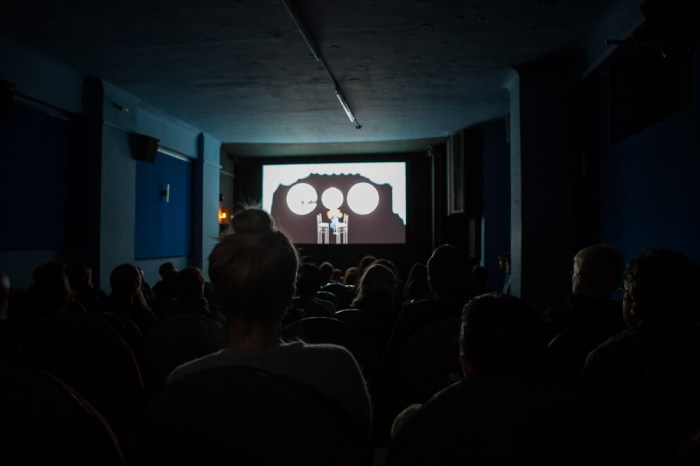
Berlin Experimental Film Festival focuses solely on Experimental films of all kind from all around the world. The Festival takes place at Kino Moviemento, the oldest Cinema in Germany, founded in 1907 located in Kreuzberg in the middle of Berlin. Regardless if its a quiet sensitive film about personal pain, an angry roar against society, a light hearted documentary about a grandmother, a visual portrayal of sound itself or an insecure attempt to wander into an unknown sexuality – the Experimental Film making as such is what the curated program is be built upon.

Visit the website for more information.

Matthew Toffolo: What is your Film Festival succeeding at doing for filmmakers?

Jonatan Petré Brixel: We’ve had it once and we aimed at having quality fundamentals – paid accomodation for filmmakers, properly present and advertise the films and film screenings and to invite Film organizations that work with distribution, screening and promotion of experimental films. We succeeded which was real nice, we had full house on the Festival.

MT: What would you expect to experience if you attend the festival this year (2017)?

JPB: A festival much like the first but with more films, more attending film makers and more attending film organizations. We’re looking at screening around 70-80 films in our 2nd edition, while still having a proper presentation and promotion for the films.

MT: What are the qualifications for teh selected films?

JPB: The foundation for the Festival and the guideline for film makers submitting and for us who curate the program is the experimental method as such and the personal approach of the filmmaker, regardless of who made it or what it is about. We then have different sections for Narratives, Non narratives, Documentaries and Berlin Originals but all of them builds on the same core principle – a lust to experiment using film and the personal approach of the film maker.

MT: Do you think that some films really don’t get a fair shake from film festivals? And if so, why?

JPB: I think many established festivals tend to push their own ideological agenda and then choose films that fit and that irritates me but hey, it’s not like they owe me to promote my film.

All these festivals and other forms of film promotion places popping up – ours included – basically fill a need that has been growing and I think as a film maker it is more important to seek out the people you think promote your sort of film instead of complaining that the ones you know doesn’t. And if you cannot find any – do it yourself. That’s what we did, and funnily enough we discovered we were far from alone there were lots of people and organizations out there doing amazing things. Ever since we started working with the festival we’ve come in contact with alot of
people doing some really great things.

MT: What motivates you and your team to do this festival?

JPB: It is really great promoting other people’s work and making things happen. Organizing an event seeing all the impulses you sent out coming together is real fun even though it’s is a enormous amount of work and involves both monotomous grinding as well as stressfull sudden changes.

MT: How has your FilmFreeway submission process been?

JPB: Excellent, they have a superb platform they keep improving all the time. Easy to work with too.

MT: Where do you see the festival by 2020?

JPB: We’re working on several things, hopefully some of them will see reality even at the next edition 2017.

MT: What film have you seen the most times in your life?

JPB: Escape from New York followed by Big Troubble in Little China, I had them on a 4 hour VHS tape that i kept watching over and over.

MT: In one sentence, what makes a great film?

JPB: If I feel that they went for it may it be in the script writing, acting, directing or post production or of course at best all of them – it’s a great film. Sometimes it’s young kids unknowingly reinacting all hollywood movies they ever seen, sometimes it’s the life work of someone with a long career behind them, sometimes a manic up and comer, and sometimes it’s a failure and others a success for whatever reason but to go for it is the absolute essence of any great film in my opinion.

MT: How is the film scene in your city?

JPB: All over the place. Berlin has both the established Institutions as well as a gigantic amount of people doing their own thing with or without money. And of course all sorts of scenarios and collaborations in between.
berlin_experimental_2.jpg

*******

Organizers:
Festival Director, Jonatan Petre Brixel (b. 1984 Sweden) has a background in Philosophy and started making films 2007, first Film titled “Pig Man gets a Visit”. He has since made several short films and is currently filming his first Feature Film “Sven Harald’s Adventures”.

Festival Manager, Andrija Jovanovic (b. 1982 Serbia) made his first film the moment he laid his hands on a digital photo camera. His first stop motion project “The big bad bag” was broadcasted on a Swiss SRF2 in 2012. Since then he made several short films and is currently working on his first feature project “Ana”. He has a background in literature and painting.

Interviewer Matthew Toffolo is currently the CEO of the WILDsound FEEDBACK Film & Writing Festival. The festival that showcases 10-20 screenplay and story readings performed by professional actors every month. And the FEEDBACK Monthly Festival held at least twice a month in Toronto & Los Angeles. Go to http://www.wildsoundfestival.com for more information and to submit your work to the festival.
Interview with Festival Director Joseph Kephart (Wait A Minute Film Festival)

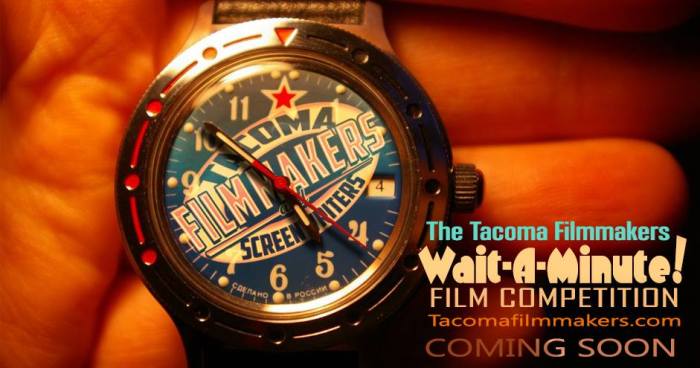
wait_a_minute_2.jpgThe WAM (Wait-a-Minute) Film Competition and Festival started in 2013. It is part of the Tacoma Filmmakers group. You can find them at http://www.Tacomafilmmakers.com as well as Facebook.  They are here to help the community as well as facilitate contacts to help filmmakers. They look forward to partnering with companies to assist the needs of filmmakers.
Matthew Toffolo: What is your Film Festival succeeding at doing
for filmmakers?

Joseph Kephart: We’ve just started a few years ago, so as far as succeeding I’m not sure yet, but the intent is to give filmmakers an opportunity and a venue to display their craft.

MT: What would you expect to experience if you attend the festival this year (2016)?

JK: A great time, recognition, some nifty prizes and if needed the push for filmmakers to continue on their path.

MT: What are the qualifications for the selected films?

JK: Films must be 1 minute in length and contain the mystery element required for the current competition. Filmmakers have 1 week to film their masterpiece. We are unique in the fact that among other competitions where filmmakers are given 24 to 72 hours to complete a film, we believe in giving them a week to polish their films. Also, we require a mystery element to be included in the film, but unlike other festivals we offer a concept that must be used. Example, our most recent requirement was the concept of “Transformation.”

MT: Do you think that some films really don’t get a fair shake from film festivals? And if so, why?

JK: As I understand it, the trend is to cram as many films into a festival as possible. Which I can understand from a marketing standpoint. So… speaking from experience if your film doesn’t fit into the box so easy, you may not have a chance.

MT: What motivates you and your team to do this festival?

JK: We like to help filmmakers and believe in promoting this type of “art medium” in our community. It’s also a great way for everyone to network.

MT: How has the festival changed since its inception?

JK: The prizes have gotten bigger and we’ve changed venues. We’ve gone from showing in a historical building to showing films at a lovely historical theater.

MT: Where do you see the festival by 2020?

JK: I’d like it to be an institution, a fun one, eventually passed onto others to run.

MT: What film have you seen the most times in your life?

JK: Probably Delicatessen by Jean-Pierre Jeunet and Marc Caro.

MT: In one sentence, what makes a great film?

JK: For me it’s always been creativity.

MT: How is the film scene in your city?

JK: As far as indie film making goes, it seems to be blossoming. Tacoma and the Pacific Northwest is a great place and most people that I’ve met are cool and laid back. This film festival is all about helping and promoting filmmakers. I think Tacoma shares that same sentiment.

wait_a_minute_1.jpg

_____
Joseph Kephart is a filmmaker who lives in Tacoma WA and serves on the executive committee of Tacoma Filmmakers. His production company Hooligan Street Pictures, has made short films in the past and is now venturing into the world of feature film making. Visit www.hooliganstreet.com for more information.
_____

Interviewer Matthew Toffolo is currently the CEO of the WILDsound FEEDBACK Film & Writing Festival. The festival that showcases 10-20 screenplay and story readings performed by professional actors every month. And the FEEDBACK Monthly Festival held in downtown Toronto on the last Thursday of every single month. Go tohttp://www.wildsound.ca for more information and to submit your work to the festival.

Interview with Festival Director Danny MAlin (YES! Let’s make a Movie Film Festival)

yes_logoThis festival aims to bring together all corners of the globe to share passion of filmmakers.
Interview with Festival Director Danny MAlin 

Matthew Toffolo: What is your Film Festival succeeding at doing for filmmakers?

-We are a platform geared towards our local community getting an opportunity to share their work infront of their peers. We are also an international festival offering the chance for international works to get recognized in a market with diverse talents.

MT: What would you expect to experience if you attend the festival this year (2016)?

-The Festival this year will have tones of glamor and exposure and a chance for many to get connected and network heavily within our Montreal market.

MT: What are the qualifications for the selected films?

A wide variety of categories are allowing films to be selected, including best actors, directors, quality cinematography, humor and above all great work.

MT: Do you think that some films really don’t get a fair shake from film festivals? And if so, why?

-Some films do not stand a chance, and as a filmmaker myself, we understand it can be disappointing to not receive recognition, however, rejection is a good way for a filmmaker to take a good look at their work and ask themselves how they can step it up.

MT: What motivates you and your team to do this festival?

-Pro activity. Monkey See-Monkey Do. When people such as myself (Danny MAlin-Festival Director) lead by example of doing and creating works, others get fired up and inspired to make their own works.

MT: How has the festival changed since its inception?

-The Festival started out as a film race, and turned into an international festival. Branching worldwide and seeing what the rest of the world is doing allows artists to broaden their subject matter.

MT: Where do you see the festival by 2020?

-5 times greater than the awesome it is already.

MT: What film have you seen the most times in your life?

– Myself(Danny MAlin), I watched Beetlejuice more than 60 times when I was a child, one of my latest films SWEET AS was heavily influenced by that film.

MT: In one sentence, what makes a great film?

-Good sound quality, unique storyline and tolerable actors.

MT: How is the film scene in your city?

-We are a passionate film city with immense potential of superstar actors, waiting for a break.

yes.jpg

***
Danny MAlin, a studied actor at various institutions in Montreal, LA, and NYC, grew up playing and winning many championships in baseball and hockey. He took his leadership skills and eased his way into Directing, having created more than 200 original works since 2010.

Interviewer Matthew Toffolo is currently the CEO of the WILDsound FEEDBACK Film & Writing Festival. The festival that showcases 10-20 screenplay and story readings performed by professional actors every month. And the FEEDBACK Monthly Fesival held in downtown Toronto on the last Thursday of every single month. Go to http://www.wildsound.ca for more information and to submit your work to the festival.

Interview with Festival Director Jon Mercurio Knight (Wasteland Film Festival)

wasteland_logo.jpgThe Wasteland Film Festival is entering its fifth year and only growing bigger. The highlight short films with especially post-apocalyptic subject matter and, in addition, alternative films displaying a certain character right at home in the post nuke society. Films meeting certain criteria will be screened as part of the competition, others will simply be for exhibition.
http://wastelandweekend.com/wasteland-film-festival

Interview with Festival Director Jon Mercurio Knight

Matthew Toffolo: What is your Film Festival succeeding at doing for filmmakers?

Jon Mercurio Knight: We’re building exposure and bringing films from across the world into the hands of those who wouldn’t normally have access to many of these films. Also, many regular attendees to Wasteland Weekend, the event the Wasteland Film Festival takes place at, come from the LA area as well as from across the United States (and some from overseas). All tickets to Wasteland Weekend have already sold out, so we’re talking thousands of people.

MT: What would you expect to experience if you attend the festival this year (2016)?

JMK: A 4 day, post apocalyptic party in the desert with mandatory costume. The main area is built like something out of Mad Max.

MT: What are the qualifications for the selected films?

JMK: To fit in any of our categories. Post Apocalyptic. Sci-fi. Horror. Atmospheric/Weird. Music Videos. Animated.

MT: Do you think that some films really don’t get a fair shake from film festivals? And if so, why?

JMK: I think Post Apocalyptic is an often overlooked genre, that our festival showcases in addition to our other categories. There are a lot of fans of post apocalyptic films, but until the new Mad Max came out, the bigger studios had little to no interest in such films. Here and there, we’d see something, but I think it was adopted far more by independent cinema than maintream cinema.

MT: What motivates you and your team to do this festival?

JMK: The love of films and showcasing really solid work that meet our standards of excellence.

MT: How has the festival changed since its inception?

JMK: Our first year started with two queen bed sheets tied to the back of a trailer. Our next year, Wasteland Weekend built us a theater space and a nice sized post apocalyptic screen. Each year has seen some kind of new progression. Last year was our first having dedicated prize support money and we upped the money we’re awarding this year.

MT: Where do you see the festival by 2020?

JMK: We will have a fully enclosed, air conditioned daytime theater (actually, we’re planning on that for next year), which will allow us to show films during the day rather than wait for the night. We’ll also have encore based shows in LA with Wasteland Weekend support and possibly Sacramento. We’ll just keep getting bigger and better!

MT: What film have you seen the most times in your life?

JMK: So many, hard to count them all. But the fundamental core films would have to be the original Star Wars trilogy.

MT: In one sentence, what makes a great film?

JMK: A film that takes you along a journey without anything to pull you out, that moves you, that thrills you, that gets you involved in its characters, that makes you invest in it until the credits roll.

MT: How is the film scene in your city?

My city is Sacramento, which is not where the film festival takes place at. LA, the nearest big city to the festival speaks for itself.

Picture: https://www.facebook.com/202104576555906/photos/a.202121123220918.31863.202104576555906/449138335185861/?type=1&theater

Our Facebook: https://www.facebook.com/Wasteland-Film-Festival-202104576555906/

Our Filmfreeway link: https://filmfreeway.com/festival/WastelandFilmFestival

About Jon Mercurio Knight: A filmmaker, writer, and graphic designer. I have always had a passion for films and have always wanted to present and showcase films to others. That’s why I started up the Wasteland Film Festival, earned the respect of the WW staff by creating a professional end result, with quality films submitted from around the world. Each year presents new challenges, technical challenges, and stresses, and each year, the festival happens thanks to my unyielding determination to create the best possible film festival.

wasteland.jpg

****

Interviewer Matthew Toffolo is currently the CEO of the WILDsound FEEDBACK Film & Writing Festival. The festival that showcases 10-20 screenplay and story readings performed by professional actors every month. And the FEEDBACK Monthly Fesival held in downtown Toronto on the last Thursday of every single month. Go to http://www.wildsound.ca for more information and to submit your work to the festival.

Interview with Festival Director Moosa Saleem (Access Code Short Film Festival)

access-code.jpgAfter amazing 8 editions, we are here again. It’s a festival where 200 movies are played, more than any of the festival in the world. Almost every film that enters the festival will be screened at the festival, no matter how many days the festival runs.

Interview with Festival Director Moosa Saleem:

Matthew Toffolo: What is your Film Festival succeeding at doing for filmmakers?

Moosa Saleem: Access Code Short Film Festival has been very supportive to student and young filmmakers across the world.

MT: What would you expect to experience if you attend the festival this year (2016)?

MS: Very high quality shorts and indies. We also selected a lot of music videos by unknown bands.

MT: What are the qualifications for the selected films?

MS: We always prefer sound over images. An indie filmmaker spends a lot on camera, costumes and other props and hardly gives sound any importance. They forget that a film is 50% sound. A bad quality sound can ruin the whole film even if the visuals are amazing, but even if the video is bad or shaky, a good quality sound can cover up for it.

MT: Do you think that some films really don’t get a fair shake from film festivals? And if so, why?

MS: I explained it in the above question. A lot of indie filmmakers neglect a good quality sound setup. It’s not that expensive, to be honest. Most films get rejected by a lot of film festivals because of bad sound. Also, it’s impossible to screen every film out of the amount of entries we get after each passing edition.

MT: What motivates you and your team to do this festival?

MS: We love films, be it narrative, documentary, animation. It saddens me to see some amazing filmmakers going unnoticed in this competitive world. We are creating a platform for filmmakers who stayed restricted to YouTube and Vimeo to showcase their talent to the world. We even try to get them a TV distribution deal

MT: How has the festival changed since its inception?

MS: We started as a film festival for animation shorts and music videos. Now, we have amazing submissions from documentaries to webisodes.

MT: Where do you see the festival by 2020?

MS: We are planning to take this festival to other parts of the country by 2020.

MT: What film have you seen the most times in your life?

MS: The Intouchables from France and 3 Idiots from India.

MT: In one sentence, what makes a great film?

MS: A good screenplay, with some good acting talent.

MT: How is the film scene in your city?

MS: I am originally from Jammu and Kashmir and it’s a conflict zone and there is no such thing as film scene here but a lot of Bollywood films are shot here every year, including some of the Hollywood movies like The Fall and Hector And The Search Of Happiness, to name among the few. Three amazing movies came out of Kashmir few years back, Valley of Saints (it won the Sundance in 2012), Haider and Harud. ;

****

Interviewer Matthew Toffolo is currently the CEO of the WILDsound FEEDBACK Film & Writing Festival. The festival that showcases 10-20 screenplay and story readings performed by professional actors every month. And the FEEDBACK Monthly Fesival held in downtown Toronto on the last Thursday of every single month. Go to http://www.wildsound.ca for more information and to submit your work to the festival.

Interview with Festival Director Michael Harrington (Wandering Reel Traveling Film Festival)

Wandering Reel is a traveling short film festival with a focus on bringing meaningful films to communities with limited or no access to compassionate, thought-provoking cinema. We strive to engage our audiences in deeper conversation about the role of cinema, and how films can relate to community, conscious living, and contribute to making the world a stronger and more unified place.

http://www.wanderingreel.org/

Interview with Festival Director Michael Harrington

Matthew Toffolo: What is your Film Festival succeeding at doing for filmmakers?

Michael Harrington: Wandering Reel exposes films to a larger theater audience as well as a more rural, small town audience. We visit communities that don’t already have a film festival and/or do not have easy access to art films, independent films, international films and especially short films. We also facilitate conversation around the films to deepen the experience of a community coming together to watch films. Hopefully, some of the stories go home with some of the audience members and they care a little bit more about what the films were trying to say.

MT: What would you expect to experience if you attend the festival this year (2016)?

MH: Great movies. Great conversation. Theaters are the perfect meeting place of people and yet people tend to gather, watch and leave without actually interacting about this shared, cultural experience. Wandering Reel engages the audience a little deeper, first by allowing them to ask questions about how and why the films were made but also encouraging conversation with each other about how the films relate to their own lives and own community.

MT: What are the qualifications for the selected films?

MH: We only ask the films relate in some small way to the greater mission of Wandering Reel, which is to demonstrate how cinema can be a powerful tool in inspiring conversation around important topics and creating meaningful change in the world. We show narrative, animated and documentary films. We show students films and professional films. We show local films and films from the other side of the world. We show films fresh off the press and films from a decade or more ago. The point is to extend the life of short films so we offer very few hurdles for filmmaker to cross once they’ve made an outstanding short.

MT: Do you think that some films really don’t get a fair shake from film festivals? And if so, why?

MH: Nowadays anyone can make a film. Our phones capture pretty good images and our laptops come with editing software. And it’s easier than ever to submit to film festivals because it’s all done digitally with a few clicks of a mouse. So, there are hundreds if not thousands of films vying for festival slots each year. The good news is there are more festivals than ever, but it’s really easy for the best, trendiest films to play 100 festivals while some smaller films only find a few niche markets. The biggest name festivals are hit with thousands of submissions for only a small amount of slots. Emerging festivals have to work much harder to garner lots of submissions and need the best of the best films in order to succeed and grow. It is my wish that more film festivals will program based on heart, ingenuity and merit, rather than politics or celebrity.

MT: What motivates you and your team to do this festival?

MH: We think it’s extremely important to support meaningful filmmaking. We think it’s important for films to be viewed in an audience with other people and to allow for a forum to talk about that experience. We think there’s a hole missing in the distribution of short films and that we can help fill it in our own small way. When an audience member shakes your hand after a screening and thanks you for bringing a film to their community, that’s motivation like no other, if only because they wouldn’t have likely seen that film that inspired them otherwise.

MT: How has the festival changed since its inception?

MH: Wandering Reel evolves each year based on the films we receive, audience reaction and the communities we visit. We are a young festival entering our second year and we are still learning how to motivate people to pause Netflix for an evening and come out for a fun and engaging event. We are working hard this year to connect deeper with each community we visit. This means visiting schools, retirement communities, prisons, hospitals and any other members of the community that may not be able to come to our festival. It also means collaborating with local artists, activists and thinkers to connect the work we curate with the great work being done in the local community.

MT: Where do you see the festival by 2020?

MH: At the moment, funds limit our reach to a couple small tours per year and just one curator. Our goal is to have curators all around the world traveling with our films simultaneously. In five years or so, we should be able to reach all regions of the United States with a few international curators as well, likely in Europe and Australia to start. We also want to grow the outreach wing of our festival so that free screenings are offered whenever possible. No one should ever be turned away because they can’t afford the ticket cost. We also want to reach more people that can’t come to community screenings: the elderly, prisoners, students, and people in our poorer urban communities to just name a few.

MT: What film have you seen the most times in your life?

MH: Probably The Princess Bride, if only because I watched it on loop as a child and to be honest quite a bit as an adult. But since we are a short film festival, I’d also like to make a nod to our grand prize winning film from last year, “Stop” by Reinaldo Marcus Green, because that’s probably the short I’ve likely seen the most, and a short everyone in the U.S. should see right now.

MT: In one sentence, what makes a great film?

MH: How about one word: passion.

MT: How is the film scene in your city?

MH: I live in Portland, Oregon a city known for its indie theaters and growing film market. We have lots of film festivals and a very attentive indie film audience. The film production scene here is beginning to really blossom. This is the perfect alternative city to Los Angeles and New York for emerging filmmakers: beautiful urban landscape, incredible access to nature, amazing food and drink and a thriving art scene.

wandering_reel_banner

****

Interviewer Matthew Toffolo is currently the CEO of the WILDsound FEEDBACK Film & Writing Festival. The festival that showcases 10-20 screenplay and story readings performed by professional actors every month. And the FEEDBACK Monthly Fesival held in downtown Toronto on the last Thursday of every single month. Go to http://www.wildsound.ca for more information and to submit your work to the festival.