Interview with Festival Director Anthony Michael Hobbs (Imagination Lunchbox International Children’s Film Festival)

 Imagination Lunchbox is a film production company based in Baltimore, Maryland. After screening films at numerous festivals across the country, they realized that there was a need for kid focused films in the Baltimore, Maryland and general area. It seemed only appropriate that a company well-known for kid centered films would be the perfect organization to help fill this need.

Matthew Toffolo: What is your Film Festival succeeding at doing for filmmakers?

Anthony Michael Hobbs: The Imagination Lunchbox International Children’s Film Festival is succeeding at giving a special opportunity for kid filmmakers who don’t get the chance to show their films, by having three categories: FOR kids, BY kids, and STARRING Kids; everything is about the kids!

What would you expect to experience if you attend the festival this year (2017)?

When people come to the film festival this year, they will experience a lot of effort and excitement as we show films by kid filmmakers, but also for ways to make the film festival better. I want everyone to come out and see what we have to offer, and then tell us what they like and what they would want to see next year. I hope that other kid filmmakers hear about us so they know they now have a place that will focus on their films.

What are the qualifications for the selected films?

We are actually still screening, but our selection qualifications are how much we think other kids will enjoy them, and which films will bring a variety to the festival. We want a variety of people, experiences, and even cultures. I’m looking forward to kids in Baltimore enjoying films by kids in Europe, Australia, Brazil, or where ever they come from!

Do you think that some films really don’t get a fair shake from film festivals? And if so, why?

Yes, I think some films don’t get a fair shake at film festivals because films that are by kids are not really taken seriously, and people think they are a joke or that the kids did not put a lot of effort into it, so it doesn’t get into the film festivals. Even some film festivals called children’s film festivals don’t really show films by kids.

What motivates you and your team to do this festival?

I am motivated to do this festival because I have gone to many film festivals before, and I have noticed that there are really no many festivals for kids; and the festivals that do exist don’t really do much for kids. When festivals do have kids categories they don’t show many films and don’t do much for the films because the focus is adults and their films. I have been to a few festivals that do better with this, but the kid films still only get a day or a small block of time. I am having this festival where the focus is the kids to give kid filmmakers a place and a festival where they will be the focus. I am starting small with a one day festival, but hopefully it will grow into more.

How has your FilmFreeway submission process been?

My FilmFreeway experience has been great! There are some days where we won’t get submissions and that gives us a chance to review films and catch up on the many that we have received. As soon as we catch up we get more submissions, but that is great. We always think we’ve been the best films, and then other people submit and you think that THOSE films are awesome too. Sometimes one person will submit multiple films, so that is interesting to see all the different ideas that one person has.

Where do you see the festival by 2020?

By the year 2020, I see the festival being a successful festival with over 300 submissions a year, and having so many people attend the festival we need a huge venue!

What film have you seen the most times in your life?

The film that I have seen the most times in my life is Pokémon movies. I actually watch a lot of movies a lot of times. I’ve watch Disney’s Aladdin a few times, as well as Disney’s The Lion King. When I really think about, I remember watching The SpongeBob Movie a lot of times. I also really like the old Teenage Mutant Ninja Turtles movie. That’s a favorite of mines too.

In one sentence, what makes a great film?

A great film has action, comedy, adventure, good script, good actors, and good music.

How is the film scene in your city?

In Baltimore, it seems like the film scene is off and on. Baltimore was really popular years ago, and then the film scene kind of went away. I think there is only two film festivals here, and neither have a youth or kid category. Sometimes Baltimore is the location for a few scenes of a film or television show, but not a lot happens anymore. I think that is because we don’t have tax credits like other cities.
imaginationlightbox2.jpg

Interviewer Matthew Toffolo is currently the CEO of the WILDsound FEEDBACK Film & Writing Festival. The festival that showcases 20-50 screenplay and story readings performed by professional actors every month. And the FEEDBACK Monthly Festival held in downtown Toronto, and Los Angeles at least 2 times a month. Go to www.wildsound.ca for more information and to submit your work to the festival.

SUBMIT your TV PILOT Screenplay or TV SPEC Script
Voted #1 TV Contest in North America.
Screenplay CONTESTSUBMIT your Short Screenplay or FEATURE Script
FULL FEEDBACK on all entries. Get your script performed
Screenplay CONTESTFIRST SCENE (first 10pgs) Screenplay CONTEST
Submit the first stages of your film an

Interview with Festival Director Joel Knain (Azalea Film Festival)

 The Azalea Film Festival’s first goal is to acknowledge and award the many talented independent filmmakers, writers and performers who may not get the recognition they deserve through many commercial film festivals. The AFF recognizes filmmakers who demonstrate exceptional achievement in craft and creativity. All genre of films and music videos are accepted by AFF. Awards will be distributed, giving filmmakers, writers and actors the opportunity to be noticed. First place films of each category will receive an award trophy plus special recognition for the overall all Best Film.

http://www.azaleafilmfestival.com/

Matthew Tofolo: What is your Film Festival succeeding at doing for filmmakers?

Joel Knain: One the biggest problems that filmmakers encounter is not realizing their dream of seeing their work on the big screen. Seeing it on the big screen is really a learning experience that we give to every film we select. There is a huge difference from watching it on your 24 inch computer monitor when you are editing it to seeing it projected on a 40 ft tall screen. It’s what every filmmaker wants for their film.

What would you expect to experience if you attend the festival this year (2017)?

A wide variety.. Love stories, horror, comedy… Our selections come from all over the world including Australia, China, Mexico, Canada and France, to name a few. Plus, our films come from a diverse level of experience too. Some are in film school, and some have a fantastic resume in the industry already. It’s really awesome to see how each interpret the world.

What are the qualifications for the selected films?

First, they have all been completed after 1/1/2016. They have to be technically good. Poor sound, terrible lighting or framing, or bad editing will get you cut almost immediately, without question. Then the story comes into play. We want to be engaged when we watch a film.

Do you think that some films really don’t get a fair shake from film festivals? And if so, why?

I think most get fair deal in the smaller festivals. I don’t know about some of the larger festivals. Maybe they cater a little more to the marketing side of the business.

What motivates you and your team to do this festival?

Two things. First, we are filmmakers too. We went to a festival nearby and the format was a little different and we thought, well, maybe we can do it better. We wanted to have a fair, equal playing field for all films. Secondly, we are a non-profit and we utilize the net proceeds to help children and their families who are affected by autism. Autism affects 1 in 68 children born every day with no cure… Children can only adapt to life. So we give back to help those children.

How has your FilmFreeway submission process been?

FilmFreeway has been awesome for us. It’s fast, simple and we wouldn’t do it any other way. I’m glad we went exclusively with them.

Where do you see the festival by 2020?

Wow… that seems so far away. I hope that by 2020 we expand from a 2 day in one theater event to 5 or 7 days and multiple theaters. We are also looking into ways to showcase our films via other avenues of delivery.

What film have you seen the most times in your life?

If I had to guess, it would be Star Wars IV, A New Hope. I saw it in the theater when it was originally released and it was fantastic. Personally, I try to watch as many films as possible, and more than one time. Good and bad. You can learn so much from them. What works and more importantly, what doesn’t.

In one sentence, what makes a great film?

A great film is one that transports me inside the film, allowing me to escape for 90 minutes.

How is the film scene in your city?

Mobile has been growing in the film industry. Some or all of older films such as Close Encounters of a Third Kind and Under Siege were filmed here. More recently, a string of Nicholas Cage and Bruce Willis films came through in 2014-2016 and Jean Claude Van Damme just wrapped up filming last week. Our city offers a variety of landscapes for filmmakers to choose from. The Gulf of Mexico is right at our doorstep. And more importantly, the people love to see these filmmakers come in to town and welcome them like family.
 

azalea.jpg

____

Interviewer Matthew Toffolo is currently the CEO of the WILDsound FEEDBACK Film & Writing Festival. The festival that showcases 20-50 screenplay and story readings performed by professional actors every month. And the FEEDBACK Monthly Festival held in downtown Toronto, and Los Angeles at least 2 times a month. Go to www.wildsound.ca for more information and to submit your work to the festival.

SUBMIT your TV PILOT Screenplay or TV SPEC Script
Voted #1 TV Contest in North America.
Screenplay CONTESTSUBMIT your Short Screenplay or FEATURE Script
FULL FEEDBACK on all entries. Get your script performed
Screenplay CONTESTFIRST SCENE (first 10pgs) Screenplay CONTEST
Submit the first stages of your film and get full feedback!

Interview with Kevin Clark (NYC Indie Film Awards, Festival Director)

The NYC Indie Film Awards are a monthly online awards competition based in the center of the most exciting city on this planet, and is a platform for Independent Filmmakers from all over the world to show their talents! For filmmakers by filmmakers.

http://www.nycindiefilmawards.com/

 Matthew Toffolo: What is your Film Festival succeeding at doing for filmmakers?

Kevin Clark: Giving new and established filmmakers from all around the world the opportunity to show off their work, compete with others and celebrate their achievements. We also try to promote their accomplishments as much as we can,

MT: What would you expect to experience if you attend the festival this year (2017)?

KC: Getting your work seen and judged by industry professionals, for all kinds of categories.

MT: What are the qualifications for the selected films?

KC: We really care about quality more than anything else, weather it’s the writing, the cinematography, or the score. Our standard is very high but we get so many great submissions every time, that it’s just a pleasure to watch them all.

MT: Do you think that some films really don’t get a fair shake from film festivals? And if so, why?

KC: Yes and no, there has never been a better and a worse time to be a filmmaker than right now, simply because everything is so affordable, from equipment to software, and because of that there are WAY more filmmakers than ever before. So filmmakers have a lot more competition, which makes it harder to stand out, but we believe that quality will always find it’s way.

MT: What motivates you and your team to do this festival?

KC: A lot of members of our team are filmmakers themselves, or at the very least hardcore film lovers, which makes this so much fun, we get the perspective of people who simply appreciate the art of film as well as a very technical view. Making a film takes up so much time, and it can also be very hard, so we want to give every filmmaker the opportunity to show off what they’ve worked so hard on.

MT: How has your FilmFreeway submission process been?

KC: FilmFreeway is by far the best platform to accept submissions, it is so intuitive, easy and constantly improves, we love it!

MT: Where do you see the festival by 2020? LK

KC: Since right now we’re “only” and online competition, we hope that very soon we’ll have annual or even bi monthly screening, to celebrate with everyone in person, and make them feel even more appreciated.

MT: What film have you seen the most times in your life?

KC: We’ve asked the team, and the top three answers were:

1. Fight Club

2. Star Wars: The Empire Strikes Back

3. Psycho

MT: In one sentence, what makes a great film?

KC: The combination of creativity and emotion.

MT: How is the film scene in your city?

KC: It couldn’t be any better, it’s creative, refreshing, very alive and constantly changing.

nycindiefilm1.jpg

_____

Interviewer Matthew Toffolo is currently the CEO of the WILDsound FEEDBACK Film & Writing Festival. The festival that showcases 20-50 screenplay and story readings performed by professional actors every month. And the FEEDBACK Monthly Festival held in downtown Toronto, and Los Angeles at least 2 times a month. Go to www.wildsound.ca for more information and to submit your work to the festival.

Interview with Doug Whipple, Executive Director NEW HOPE FILM FESTIVAL

The New Hope Film Festival is sponsored by Comcast Corporation, Times Publishing Newspapers, Inc., Greater Philadelphia Media, and the Greater New Hope Chamber of Commerce. The 8th annual festival will take place from July 21 – 30, 2017. Decisions will be emailed by May 1, 2017.

Touted as the “emerging ‘Sundance East'” in a Huffington Post article, this internationally respected indie fest was founded by D. F. Whipple, an author screenwriter and long-time resident of the New Hope, Bucks County area. Whipple formed New Hope Film Festival with a group of artists who shared his passion for discovering and nurturing independent artists, especially those who’ve been overlooked by established festivals. This includes international films, which the Festival is eager to attract.

http://www.newhopefilmfestival.com/

Matthew Toffolo: What is your Film Festival succeeding at doing for filmmakers?

A number of our films have landed distribution deals, for example Freestyle Digital Media picked up The Syndrome, but we’re doing a lot more than moving films through distribution channels. We’re changing lives. Formerly obscure filmmakers are gaining mainstream recognition. Two of my favorite examples screened at NHFF in 2010: Andreas Arnstedt, whose film The Dispensables (Die Entbehrlichen) earned a Best Debut Film nomination from German Film Critics Association and Sisir Sahana in India, who is now a respected educated and filmmaker.

MT: What would you expect to experience if you attend the festival this year (2017)?

Network with other, like-minded film industry professionals, gain inspiration from watching amazing films, gain worldwide exposure and potentially get mainstream press.

MT: What are the qualifications for the selected films?

Artistic merit, period.

MT: Do you think that some films really don’t get a fair shake from film festivals? And if so, why?

Yes, absolutely! Politics. Too often, festivals invite films into their festival through the back door due to personal connections or affinity with the subject matter without seriously considering films that we submitted through publicly-available channels. This is something we never do. Everyone gets a fair chance here. We never invite films into the festival. In fact, this is why Director of Submissions Thom Mulligan and I started the New Hope Film Festival. He had experienced some frustrating experiences on the festival circuit after submitting his own film, Callous.

MT: What motivates you and your team to do this festival?

Fairness was our initial motivation, but as time went on we found that personal words of appreciation from filmmakers, and the differences we’re making in lives, motivate us to keep doing all of this incredibly hard, year-round. We love doing this!

MT: How has your FilmFreeway submission process been?

The platform is becoming important to us. It’s an easy platform to use and we’re getting some awesome films this way.

MT: Where do you see the festival by 2020?

We’ll be a 10-year-old film festival in 2020, so we should see even more mainstream submissions. We’re already receiving submissions from production companies with serious Hollywood credentials.

MT: What film have you seen the most times in your life?

A reporter asked me this question last year and I discovered that it’s Blade Runner. But I’ve only watched it 3 times. I watch many NHFF films, at least in part, over and over, in the course of my duties as Executive Director.

MT: In one sentence, what makes a great film?

A deep, sincere and organic connection to the material and the project. If you have this, the budget isn’t so important. We do care about production values, but I’ve seen no budget films leave audiences speechless during the final credits.

MT: How is the film scene in your city?

It’s ok. We’re seeing more local production and we definitely have some passionate fans, but we’ve built a festival in an art town that doesn’t even have a movie theater. Filmmakers who come to New Hope fall in love with the town and have a blast, but this is not a zany atmosphere of red carpets and searchlights. New Hope is a charming, intimate place for a film festival.

 
_____

Interviewer Matthew Toffolo is currently the CEO of the WILDsound FEEDBACK Film & Writing Festival. The festival that showcases 20-50 screenplay and story readings performed by professional actors every month. And the FEEDBACK Monthly Festival held in downtown Toronto, and Los Angeles at least 2 times a month. Go to www.wildsound.ca for more information and to submit your work to the festival.

Interview with Festival Director Moosa Saleem (Access Code Short Film Festival)

access-code.jpgAfter amazing 8 editions, we are here again. It’s a festival where 200 movies are played, more than any of the festival in the world. Almost every film that enters the festival will be screened at the festival, no matter how many days the festival runs.

Interview with Festival Director Moosa Saleem:

Matthew Toffolo: What is your Film Festival succeeding at doing for filmmakers?

Moosa Saleem: Access Code Short Film Festival has been very supportive to student and young filmmakers across the world.

MT: What would you expect to experience if you attend the festival this year (2016)?

MS: Very high quality shorts and indies. We also selected a lot of music videos by unknown bands.

MT: What are the qualifications for the selected films?

MS: We always prefer sound over images. An indie filmmaker spends a lot on camera, costumes and other props and hardly gives sound any importance. They forget that a film is 50% sound. A bad quality sound can ruin the whole film even if the visuals are amazing, but even if the video is bad or shaky, a good quality sound can cover up for it.

MT: Do you think that some films really don’t get a fair shake from film festivals? And if so, why?

MS: I explained it in the above question. A lot of indie filmmakers neglect a good quality sound setup. It’s not that expensive, to be honest. Most films get rejected by a lot of film festivals because of bad sound. Also, it’s impossible to screen every film out of the amount of entries we get after each passing edition.

MT: What motivates you and your team to do this festival?

MS: We love films, be it narrative, documentary, animation. It saddens me to see some amazing filmmakers going unnoticed in this competitive world. We are creating a platform for filmmakers who stayed restricted to YouTube and Vimeo to showcase their talent to the world. We even try to get them a TV distribution deal

MT: How has the festival changed since its inception?

MS: We started as a film festival for animation shorts and music videos. Now, we have amazing submissions from documentaries to webisodes.

MT: Where do you see the festival by 2020?

MS: We are planning to take this festival to other parts of the country by 2020.

MT: What film have you seen the most times in your life?

MS: The Intouchables from France and 3 Idiots from India.

MT: In one sentence, what makes a great film?

MS: A good screenplay, with some good acting talent.

MT: How is the film scene in your city?

MS: I am originally from Jammu and Kashmir and it’s a conflict zone and there is no such thing as film scene here but a lot of Bollywood films are shot here every year, including some of the Hollywood movies like The Fall and Hector And The Search Of Happiness, to name among the few. Three amazing movies came out of Kashmir few years back, Valley of Saints (it won the Sundance in 2012), Haider and Harud. ;

****

Interviewer Matthew Toffolo is currently the CEO of the WILDsound FEEDBACK Film & Writing Festival. The festival that showcases 10-20 screenplay and story readings performed by professional actors every month. And the FEEDBACK Monthly Fesival held in downtown Toronto on the last Thursday of every single month. Go to http://www.wildsound.ca for more information and to submit your work to the festival.

Interview with Festival Director Craig Higgins (Norwich Film Festival)

norwich_1.jpgThe Norwich Film Festival is now preparing for it’s sixth year (2016). They have an amazing array of celebrity patrons and judges (including Bernard Hill, Tim McInnerny, Olivia Colman and Martin Walsh) who are all eager to watch your films and read your screenplays. The people of Norwich are also committed to supporting artists of all media and have been wonderful throughout our four previous years, turning up in their droves to see the best the festival has to offer.
www.norwichfilmfestival.co.uk

Interview with Festival Director Craig Higgins:

Matthew Toffolo: What is your Film Festival succeeding at doing for filmmakers?

Craig Higgins: The Norwich Film Festival is passionate about screening filmmaker’s work from not just Norwich but from all over the world. We love that we get the opportunity to help the audience see something they generally wouldn’t see, and I feel this helps to give filmmaker’s a voice and the recognition they deserve. We have also just started to screen local feature films made in Norfolk throughout the year which we screen free of charge to help raise the profile of filmmakers. There really is an incredible amount of talent out there and we are just doing our little bit to help the world see it.

MT: What would you expect to experience if you attend the festival this year (2016)?

CH: Fantastic short films made by the some of the most talented filmmakers you will ever see.

We have not yet released the programme, so here is a little bit of a spoiler. The festival will be looking to screen 50 short films, 2 feature films (both are premiers for Norwich), an industry panel of getting your film made, a talk from one of the best Editor’s in the world, BAFTA regional shorts tour, along with lots of a Q&A’s from filmmakers. We are also going to ensure that we offer lots of networking too!

MT: What are the qualifications for the selected films?

CH: We have 5 competitive prizes this year including best short, best animation, best student, best documentary and best script. The standard of submissions this year as been incredibly high, so short listing is going to be tricky! Luckily enough we have a fantastic team who have helped to judge and score your film. What is also exciting, the best of the best films are sent to industry judges who will watch them and decide who should win our competition. Some of our judges this year include Damian Jones (Producer – The Iron Lady, Lady in the Van, Dad’s Army), Nick Moore (Editor – Love Actually, Notting Hill), William Osborne (Scriptwriter – Twins, Scorpian King), Julian Jarrold (Director – Kinky Boots, A Royal Night Out), Steven Hall (DOP & Camera Operative), Jane Gull (Director – Sunny Boy, My Feral Heart) & Hugh Fraser (Actor)

MT: Do you think that some films really don’t get a fair shake from film festivals? And if so, why?

CH: That’s a good question. It’s difficult, because festival’s only have so much allocated time to screen films and usually the best of the bunch are the one’s which are screened. However, you sometimes have that middle pile of films which are good, but don’t always make it through due to another film being submitted with maybe a similar theme but can be slightly stronger in terms of its narrative. What, I would say is even if your film doesn’t get through to one festival don’t stop trying! If you believe in your work, get it out there to festivals, screen it in local bars etc….

MT: What motivates you and your team to do this festival?

CH: Easy – we love films! We also enjoy that we are the first people who get the opportunity to watch some of the most exciting, engaging and inspiring films out there and we get to screen them! How brilliant is that? We also love meeting and hearing from filmmakers and anything which can help showcase and bring people together is fabulous.

MT: How has the festival changed since its inception?

CH: Well this year as been a huge development shift in the festival, keeping in mind that everyone involved with the Norwich Film Festival are volunteers. We are now running as a small charity (but are due to apply shortly to become a Charitable Incorporated Organisation in the next few weeks), we have increased our web content for filmmakers, increased our social media fan base, built up an impressive list of judges & patrons (Brian Cox, Olivia Colman, John Collee & Tim McInnerny), offered monthly screenings and an increased networking opportunities for filmmakers. We have worked really hard this year and we are planning bigger and better things for 2017 already!

MT: Where do you see the festival by 2020?

CH: I would love to see the festival become BAFTA accredited. That is my dream! It would be great if we could also continue to build the level of submissions we receive each year and offer the audience even more than we are providing now.

MT: What film have you seen the most times in your life?

CH: Jaws….. I love this film!

MT: In one sentence, what makes a great film?

CH: Great story, originality, creativity & something that stay’s with you even when the film ends.

MT: How is the film scene in your city?

CH: Norwich is such a creative city, we have a host of incredibly talented filmmakers, a brilliant picturehouse cinema, 2 Universities which offer film related courses and a lot of love from the people of the city who welcome all creative types. Norwich as also played host as a location setting for big budget films such as Averngers: age of ultron, Tulip Fever, Stardust, James the Giant Killer and so on. I would love filmmakers to come to Norwich to continue filming as it offers so much diversity.

Don’t forget the Norwich Film Festival will holding it’s annual festival from the 10 – 13th November. It’s gonna be fun! Come along and enjoy something different.

norwich_2.jpg

Interviewer Matthew Toffolo is currently the CEO of the WILDsound FEEDBACK Film & Writing Festival. The festival that showcases 10-20 screenplay and story readings performed by professional actors every month. And the FEEDBACK Monthly Fesival held in downtown Toronto on the last Thursday of every single month. Go to http://www.wildsound.ca for more information and to submit your work to the festival.

Interview with Christopher J. Gervais, Founder & CEO (Wildlife Conservation Film Festival)

The Wildlife Conservation Film Festival (WCFF) is an academic organization. The WCFF MISSION is to inform, engage and inspire audiences about the need for and importance of the protection of global biodiversity. The WCFF does this through the annual film festival in New York and Beijing, the annual biodiversity conference in New York. WCFF also engages in monthly programs in New York and other cites that include film screenings, business & social networking events, and presentations.

www.WCFF.org

Matthew Toffolo: What is your Film Festival succeeding at doing for filmmakers?

Christopher J. Gervais: The WCFF helps filmmakers to build relationships for existing and future projects. We also make connections between talented filmmakers that have exceptional content to networks for broadcasting and distribution.

MT: What would you expect to experience if you attend the festival this year (2016)?

CJG: An attendee will experience over 90 exceptional and award winning films, over 65 are World Premieres at the WCFF and another 26 will be north America premieres. In addition to the film screenings, there are panel discussion, Q&A with the film producers, receptions, and a biodiversity conference. Attendees get to meet international filmmakers that attend the WCFF from across the globe.

MT: What are the qualifications for the selected films?

CJG: Film are reviewed by a jury selection committee. We look for exceptional content. A film that has a message about a specific species or ecosystem. The films we select are not just meant to entertain the audience but to inform, engage and inspire.

MT: Do you think that some films really don’t get a fair shake from film festivals? And if so, why?

CJG: Some films are not selected for political reasons. An example, this past spring a film festival held event related to one specific species. The announced award winners were from film producers or productions companies that were board members to the film festival. This is a conflict of interest and in our opinion was not ethical.

MT: What motivates you and your team to do this festival?

CJG: What motivates myself and my team is commitment to protect global biodiversity. We do this through the power of film.

MT: How has the festival changed since its inception?

CJG: The festival was a 2 day event in a small town on Long Island the first year. Within two years we moved to New York city and within the 5th year the festival has grown to 10 day event that included a biodiversity conference and filed trips. visiting scientists, film producers and members of the press have identified the WCFF as one of the most important film festival on the planet for wildlife conservation.

MT: Where do you see the festival by 2020?

CJG: Our goal by 2020 is to have the film festival remain in New York and ad another key America city as a venue. We are also looking to bring the WCFF to one if not several countries is Asia.

MT: What film have you seen the most times in your life?

CJG: There is not one but several mainstream films; Dancing with Wolves and JAWS.

MT: In one sentence, what makes a great film?

CJG: A great documentary film has exceptional cinematography, narration and a unique story.

MT: How is the film scene in your city?

CJG: New York city is a great film town. There is exceptional mainstream and documentary films screened all the time. Something for everyone as there is such a variety in the subject matter.

wcff.png

Interviewer Matthew Toffolo is currently the CEO of the WILDsound FEEDBACK Film & Writing Festival. The festival that showcases 10-20 screenplay and story readings performed by professional actors every month. And the FEEDBACK Monthly Fesival held in downtown Toronto on the last Thursday of every single month. Go tohttp://www.wildsound.ca for more information and to submit your work to the festival.

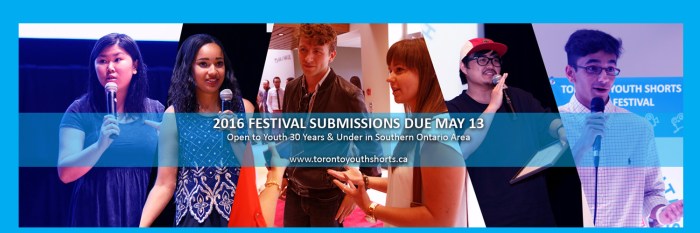
Interview with Festival Director Henry C.M. Wong (Toronto Youth Shorts Festival)

Toronto Youth Shorts is a spotlight showcase of cinematic short form content created by young emerging artists in the Greater Toronto and Southern Ontario Area. Each year, the festival acts as a professional forum for these young artists to engage their peers and the industry whilegrowing their professional profiles through learning and networking opportunities. An industry jury hands out the annual festival awards that come with production prizes. Behind the scenes, Toronto Youth Shorts is run by a volunteer force of savvy young professionals with a combination of training in the arts, event management, marketing, and media.

Go to Website 

Watch Video Testimonials of Festival

Interview with Henry C.M. Wong:

Matthew Toffolo: What is your Film Festival succeeding at doing for filmmakers? 

Henry C.M. Wong: Toronto Youth Shorts primarily serves the young filmmaking crowd of the Greater Toronto and Southern Ontario area. A lot of our participants are either students or young graduates getting their start in the industry and Toronto Youth Shorts act as a platform for them to see what the market is like. We invite established pros each year to give the filmmakers feedback on their work so the festival is also a great learning opportunity for them.

MT: What would you expect to experience if you attend the festival this year (2016)?  

HW: As an emerging filmmaker showing your film at Toronto Youth Shorts, there will be many opportunities for you to engage your peers, the industry, and potentially win cash prizes and production services toward their next project. As an audience, you will see what the future of the industry looks like through the lens of a young person in the city. The content we show tends to be raw, provocative, whimsical, and emotionally engaging and I predict this year’s lineup to be the same.

MT: What are the qualifications for the selected films?  

HW: For Toronto Youth Shorts, you have to be 30 years old or younger and your film must be 20 minutes or under. Any genre is accepted. Other than your typical drama, comedy, animation, and documentary pieces, we’ve screened video art, web series, news type pieces, experimental works, music videos, and PSAs. Content is becoming more and more of a blur that these distinctions don’t really matter anymore in a festival cinematic context.

MT: Do you think that some films really don’t get a fair shake from film festivals? And if so, why?  

HW: I don’t think that’s a fair statement to make. Just looking at Toronto as an example, there are hundreds of submissions-based events with different mandates and programming sensibilities. Even two festivals working within the same genre space will not be identical. Sure, there are some big events like TIFF and Hot Docs that are extremely competitive but overall, with the available platforms there are out there, a good film with audience appeal will likely find a home somewhere.

MT: What motivates you and your team to do this festival?  

HW: I enjoy the engagement with these young artists. It’s great to see content that’s different from your standard wide-release made on almost nonexistent budgets with a local touch.

MT: How has the festival changed since its inception?  

HW: I was a student in my postgraduate program when I started this festival. My personal and professional growth since have certainly influenced the way the event is structured. I look at films from that demographic a lot differently than when I first started and my tastes have certainly evolved. But I have a wonderful dedicated team that ensures there is an array of viewpoints and perspectives involved when choosing the films.
Our program is bigger than before due to the accessibility of the artform. The work we show is more daring and bold than it has ever been. One thing I take pride in though is how we still manage to maintain that intimacy for young emerging filmmakers in such a setting. It can be extremely daunting to try and navigate a beast like Cannes or TIFF when you’re new to this world and I hope Toronto Youth Shorts can provide the adequate baby steps for these young filmmakers to climb towards the diving board, so to speak.

MT: Where do you see the festival by 2020?  

HW: I hope Toronto Youth Shorts will become the official hub for young emerging filmmakers starting out in the industry. In a way, it already is as we have a lot of industry support and what we offer for young filmmakers is very unique even in the festival space. But it would be nice to see the same level of funding support come to us in the way that some of our peer festivals have.

MT: In one sentence, what makes a great film?  

HW: A great short film has a strong but concise story with compelling characters.

MT: How is the film scene in your city?  

HW: As an audience member, Toronto has a very vibrant film scene. Many big titles from all around the world play in Toronto on a regular movie screen. There are also many film festivals taking place in any given month, showcasing all kinds of content that could please any niche audience. Between blockbusters at the multiplex, the indie screening of a local artist at a community cinema, and critically acclaimed work playing at the local arthouse theatre, there is literally something for everyone.

torontoyouthshorts.jpg

__

Festival Director Bio: Henry founded Toronto Youth Shorts in 2009. His industry experience includes event management and marketing for the Banff World Media Festival, the Toronto Reel Asian International Film Festival, the Canadian Film Festival, and the Planet in Focus Environmental Film Festival. Henry was awarded a Legacy Award in 2016 and a Chinese Canadian Youth Achievement Award in 2011 for his contributions to the Toronto arts community.

Interviewer Matthew Toffolo is currently the CEO of the WILDsound FEEDBACK Film & Writing Festival. The festival that showcases 10-20 screenplay and story readings performed by professional actors every month. And the FEEDBACK Monthly Festival held in downtown Toronto on the last Thursday of every single month. Go to www.wildsound.ca for more information and to submit your work to the festival.


Interview with Artistic Director Kate Kaminski (Bluestocking Film Series)

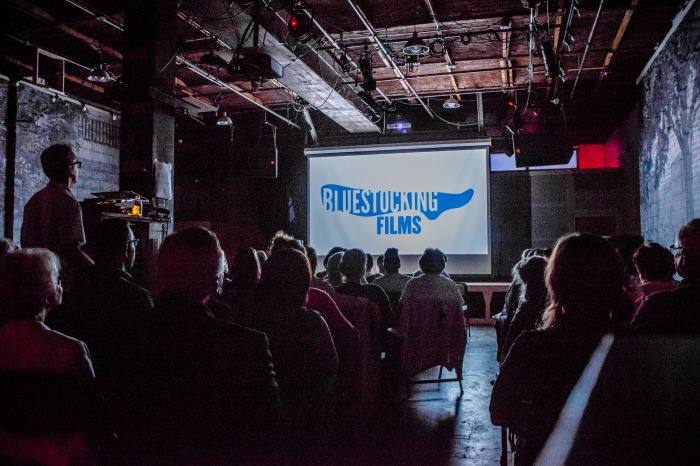
Bluestocking Film Series celebrates and amplifies women’s voices and stories on-screen and promotes talented, emerging and established filmmakers who take the creative risk of placing female characters front and center. Founded in 2010, Bluestocking focuses exclusively on female-driven films that pass the Bechdel-Wallace Test (a film with at least two female characters speaking to each other about something other than men). The only women in film event in Maine, Bluestocking was also the first U.S. film event to receive Sweden’s A-Rating (informing consumers that the festival passes the Bechdel-Wallace Test).

Interview with Kate Kaminski

Matthew Toffolo: What is your Film Festival succeeding at doing for filmmakers? 

Bluestocking Film Series is a dedicated space for celebrating films that center female characters. We have a vested interest in finding, promoting and nurturing those filmmakers we believe have the chops to succeed in the commercial marketplace, and to influence the future of female representation on-screen. Our relationships with filmmakers extend beyond the annual screenings and, after six years, we’ve connected to an incredibly diverse, global network of people committed to changing the ratio and making great movies.

MT: What would you expect to experience if you attend the festival this year (2016)?  

This year is a total immersive experience of female-driven cinema in every genre. We’ve got wacko comedies, moving dramas, sharp satirical scifi and horror films, and road movies that radically reinterpret a narrative often exclusively male. And we’re also dubbing our 6th annual fest as The Year of The Bad Girls, so people can expect women behaving badly too.

MT: What are the qualifications for the selected films?  

We specifically seek out well-produced films that offer an alternative, more complicated view of what women and girls are capable of. We’re always interested in seeing stories that offer insight into the complex relationships we have with each other. With our focus exclusively on fiction films, good acting is probably the most important qualification for any selected film.

MT: Do you think that some films really don’t get a fair shake from film festivals? And if so, why?  

Considering that people pay for that consideration, film festivals, by definition, should be giving every filmmaker a fair shake. Does every programmer to an extent have their own taste that drives selection curation? Speaking for myself, yes. There are certain types of characters and situations that especially excite my interest, but I’m open to an extremely wide range of cinematic expression.

MT: What motivates you and your team to do this festival?  

We’re driven by a desire to see (and nurture) films that provoke new thinking about the possibilities for female-driven stories. Bluestocking screenings are an exciting experience for the audience. We also feel like we’re part of the greater movement toward gender equality in the world of cinema and in general. Of course, we’re motivated by love of the art. Movies have the ability to transport audiences, move them emotionally, and even change them — which is the point of it all.

MT: How has the festival changed since its inception?  

We started as a biannual showcase and have evolved into an annual celebration of female protagonists. We’re also expanding to 3 days of programming in 2016, opening the festival with an all-star panel of women in film talking about the state of female representation on- and off-screen. We remain committed to the art of the short film, but we are also open to the possibilities of eventually screening features and running a screenwriting competition.

MT: Where do you see the festival by 2020?  

That will be Bluestocking’s 10th anniversary! Hopefully, by then, Bluestocking is a destination for film lovers who are as fascinated by complex female protagonists as we are, and they’re making an annual trek to see what cinematic riches we have in store for them.

MT: What film have you seen the most times in your life?  

This is probably the hardest question of all! I’ve seen so many movies multiple times. If I’m pressed, I admit that I re-watch “Jaws” every year so it probably wins for most times. Plus, shark-driven films are perhaps my second favorite genre. But I’ve also watched (and taught) Barbara Loden’s film “Wanda” enough times that it’s a close second.

MT: In one sentence, what makes a great film?  

My notion of a great film might be somebody else’s trash, but I know it when I see it.

MT: How is the film scene in your city?  

I’ve been making films in Portland since the early 1990s when there were only a few of us, so I’ve seen the scene grow exponentially in the last 15-20 years. Now there’s a very active indie scene for sure. The beauty of being a low-budget, indie filmmaker in Portland (and Maine, in general) is that you really have your pick of locations. You can shoot urban or rural scenes, seaside or mountain, and do so with very little travel time. So that’s pretty sweet.

Aud watch_Blue logo-156_lg.jpg


Kate Kaminski is an independent filmmaker whose films have screened all over the world. As Gitgo Productions, she and partner Betsy Carson have produced more than 30 films, including 4 feature films and numerous short fiction and non-fiction films. Gitgo’s 53-episode improvised Willard Beach was the first web series produced in Maine. In 2010, Kaminski founded the Bluestocking Film Series.

Interviewer Matthew Toffolo is currently the CEO of the WILDsound FEEDBACK Film & Writing Festival. The festival that showcases 10-20 screenplay and story readings performed by professional actors every month. And the FEEDBACK Monthly Festival held in downtown Toronto on the last Thursday of every single month. Go to www.wildsound.ca for more information and to submit your work to the festival.

Interview with Festival Director Freda Sideroff (Garifuna International Indigenous Film Festival)

garifunaThe GIIFF was founded in 2012 with a mission to preserve the values and aspirations of all indigenous people and Garifuna cultures. Founded by Freda Sideroff an indigene of the Garifuna, the GIFF’s mission is to specifically support the preservation of all indigenous cultures in the world through art and film.

Official Website: http://www.garifunafilmfestival.com/filmfestival

Interview with Freda Sideroff

Matthew Toffolo: What is your Film Festival succeeding at doing for filmmakers?

Freda Sideroff: GIIFF is succeeding at creating a platform uniting filmmakers from around the globe with common causes to share the stories

MT: What would you expect to experience if you attend the festival this year (2016)?

FS: 41 films with 18 films/docs making Worldwide premieres Screening at 5th Annual GIIFF with a global impact , indigenous art installation International Symposium and cultural performances.

MT: What are the qualifications for the selected films?

FS: Supporting the preservation of indigenous cultures. Our filmmakers and films must consist of characters that offers cultural diversity.

MT: Do you think that some films really don’t get a fair shake from film festivals?

FS: I suspect that some films don’t get a fair shake from certain film festival if they don’t serve the best interest of the film festival .

And if so, why?

FS: If you choose to accept a certain film subject it means that in some way you become responsible or forced to become aware with what it means to deal with the issues.

MT: What motivates you and your team to do this festival?

FS: What motivates me and my team is knowing that the contribution that GIIFF is making brings together leaders from communities from around the globe creating a platform for their voices and the voices of their communities to be heard.

MT: How has the festival changed since its inception?

FS: The first year GIIFF screened only Garifuna related films and now it includes films and documentaries about the indigenous from around the globe including our international symposium which will include leaders from indigenous communities from Fiji , West Papua ,Guatemala , Honduras, Belize , Hawaii, Tribal Leaders from North America to name a few .

MT: Where do you see the festival by 2020?

FS: By 2020 my hope is that GIIFF will attract sponsors and it will no longer be costing us out of personal pocket .

MT: What film have you seen the most times in your life?

FS: Sarafina by director Stephen Spielberg starring Whoopi Goldberg

MT: In one sentence, what makes a great film?

FS: What makes a great film is when you find yourself impacted by the story.

MT: How is the film scene in your city?

FS: Hollywood is here we are in the land of where films are made need I say more.

___

Interviewer Matthew Toffolo is currently the CEO of the WILDsound FEEDBACK Film & Writing Festival. The festival that showcases 10-20 screenplay and story readings performed by professional actors every month. And the FEEDBACK Monthly Festival held in downtown Toronto on the last Thursday of every single month. Go to www.wildsound.ca for more information and to submit your work to the festival.