Interview with Festival Director Chris Grigsby (Cinevision Film Festival)

Cinevision Film Festival is an international competition for short filmmakers located in Santa Fe, NM at the heart of the city.  We aim to help amateur filmmakers make the professional leap.  This year’s competition is a little bit different than in the past.  We’re focusing more on shorter films to allow more directors the opportunity to be seen.  This year’s festival is directed by Chris Grigsby who is partnering with film4change and this is our film to help create the best program we’ve had yet.

http://cinevisionsfuad.com/

Interview with Chris Grigsby:

Matthew Toffolo: What is your Film Festival succeeding at doing for filmmakers?

Chris Grigsby: Cinevision Film Festival is located in Santa Fe, New Mexico. For those who don’t know, Santa Fe, Nm is indeed a real place and it happens to be a film and artist hub. Independence Day 2, Seth Rogan’s new project, “Preacher” and the ever popular Netflix show, “Longmire,” are just some of the recent project that are taking place here. With the film Festival, we like to give the opportunity for Filmmakers to showcase their work to an audience that is very involved in the business, and hopefully be a bridge between the amateur and professional realm.

MT: What would you expect to experience if you attend the festival this year (2016)?

CG: Laughing. Crying. Puking. Walk-outs and the occasional standing ovation is what I’m praying for. This year we had over 700 submissions from around the world and the program is shaping into one of the best showcases I’ve seen, but then again I’m biased.

MT: What are the qualifications for the selected films?

CG: Cinevision is an International Short Film Festival, so fifteen minutes or less is kind of our style. If you think punk-rock teen angst meets ballroom reception with a splash of comedy, this would be our qualifications. You won’t see to many heart felt documentaries this year.

MT: Do you think that some films really don’t get a fair shake from film festivals? And if so, why?

CG: I can’t say with any certainty but I’m sure you could make a case for it. The beautiful thing about today, is that there are film festivals springing up all around the world that gives filmmakers an even greater chance to be seen and heard. So I would say try your chance and if it doesn’t work out, try again.

MT: What motivates you and your team to do this festival?

CG: Cinevision is part of a weekend art festival held at Santa Fe University of Art and Design. Were right in between Outdoor Vision Festival, which is an art instillation and projection exhibit, and Quadstock Music Festival. Their always seems to be a friendly rivalry between the events, and we want to win that rivalry. There is always a large crowd that comes out every year and we want them to come for the art, stay for the film and relax on the music.

MT: How has the festival changed since its inception?

CG: We’ve shifted the program to focus on shorter works and opened up the competition more internationally, just to give the opportunity for more filmmakers to show their work. The competition abroad was really strong this season and I know the audience will appreciate that. If you’ve ever been to Santa Fe, then you’ll understand just how worldly the community is.

MT: Where do you see the festival by 2020?

CG: I’d like for the festival to keep its small town feel, and still support major competition. The great thing about being in Santa Fe, is that the filmmaker never gets lost in the shuffle and has the opportunities that any major film market could provide.

MT: What film have you seen the most times in your life?

CG: Probably John Carpenters, Halloween. I started watching that around the age when I wasn’t supposed to and feel in love with it. And because of that, I’ll never get the soundtrack outta my head.

MT: In one sentence, what makes a great film?

CG: A great film breaths life from pictures.
cinevision_film_festival

___
Interviewer Matthew Toffolo is currently the CEO of the WILDsound FEEDBACK Film & Writing Festival. The festival that showcases 10-20 screenplay and story readings performed by professional actors every month. And the FEEDBACK Monthly Festival held in downtown Toronto on the last Thursday of every single month. Go tohttp://www.wildsound.ca for more information and to submit your work to the festival.
Interview with Executive Director Joseph Shahadi (The Art of Brooklyn Film Festival)

The Art of Brooklyn is a nonprofit, founded in 2011 that celebrates, nurtures and supports Brooklyn’s independent film scene– a local scene with global influence. We produce an annual film festival, curate our own VOD streaming channel and create original, branded media about Brooklyn art and culture.

The 6th Annual AoBFF runs June 8-12, 2016 at multiple venues across the Borough.

www.aobff.org
www.brooklynondemand.com

Interview with Joseph Shahadi:Matthew Toffolo: What is your Film Festival succeeding at doing for filmmakers?

Joseph Shahadi: The Art of Brooklyn Film Festival (http://www.theartofbrooklyn.org/art-of-brooklyn-film-festival.html) is the only international independent film festival in the world dedicated to the vibrant Brooklyn indie film scene. We screen films and entertain audiences across the entire borough, including neighborhoods traditionally underserved by cultural events. And we are committed to inclusion among filmmakers, film genres, and audiences. The Brooklyn scene is overflowing with talent, in every neighborhood and community. But since Manhattan-adjacent north Brooklyn neighborhoods are often seen as the focus for art and culture, the bulk of Kings County is excluded. AoBFF has successfully expanded the notion of “Brooklyn” to include the entire borough again.

We’ve also developed our own streaming channel, called Brooklyn On Demand (http://www.brooklynondemand.com/) — the only video-on-demand platform for Brooklyn-centric titles. By creating our own channel we’re making Brooklyn’s indie film scene accessible to audiences internationally, and affirming the borough’s importance as a center for independent film and media. Technical.ly recognized us with a 2016 Brooklyn Innovation Award for Brooklyn On Demand.

We are a 21st century film festival; we’ve maximized our value to filmmakers and audiences by expanding the idea of what a film festival can — and should— do.

MT: What would you expect to experience if you attend the festival this year (2016)? 

JS: Well I can’t tell you about the films yet because our submissions are still open and we watch everything that comes in until midnight of the last day, which is April 22nd this year. (Yes, we’ve programmed films that were submitted to us at the last minute. More than once.) But one thing we do know is that the films will reflect the diversity of Brooklyn’s independent film scene, both in the borough and around the world. In addition to our “main campus” in Downtown Brooklyn, which is easily accessible from all over the borough and Manhattan, we have screenings set for neighborhoods throughout Brooklyn— Sunset Park, Fort Greene, and Bay Ridge.

This year we’ll have more panel discussions than ever, drawn from current events. One of these is about women in film in front of and behind the camera, co-produced with New York Women in Film and Television. And our Guest Festival Director for 2016, award-winning film maker Eric Trenkamp will host an intensive mini-seminar on micro-budget filmmaking alongside representatives of the city and state film offices.

We also throw a pretty great party to kick off the festival every year with amazing food and an open bar.

artofbrooklyn
MT: What are the qualifications for the selected films? 

JS: We are the only festival in the world that exclusively features films created and catalyzed within Brooklyn’s independent film scene, which has members living and working independently in multiple countries. So in order to qualify for the Art of Brooklyn Film Festival filmmakers have to make a case for how they participate in Brooklyn’s indie film scene either in the borough itself or around the world.

MT: Do you think that some films really don’t get a fair shake from film festivals? And if so, why? 

JS: Festivals often overlook films that don’t fit neatly into genre categories because they aren’t sure how to program them. That can have a chilling effect on experimentation in independent filmmaking as that kind of limitation is internalized. We want to support the next generation of filmmakers in pushing the boundaries of visual storytelling so we introduced a category for experimental films called Film As Art, and we give our Vanguard Award for excellence in this category. Frankly, we’ve been surprised at how popular those screenings are. I once sat next to a pair of very old ladies and I gently inquired if they were at the right screening. They informed me that they’d made certain to attend Film As Art, then they watched intently, asked great questions at the talk back and gave me a piece of hard candy on their way out, like a boss. It goes to show that you can’t make assumptions based on an idea of the popular taste: audiences are smarter and cooler than that. At least in Brooklyn.

MT: What motivates you and your team to do this festival? 

JS: We were inspired to found the Art of Brooklyn Film Festival in 2011 when we realized that— even though Brooklyn is the site of the first great cultural renaissance of the 21st century— the borough didn’t have a large scale, international, film festival devoted to it’s own scene. We have worked to establish ourselves as a real resource for filmmakers and audiences throughout the borough. We were (and are) motivated to produce an inclusive, international independent film event where everyone feels welcome. As far as we’re concerned there are no “wrong” neighborhoods. In 2012 (the last year see were able to keep careful track) we had guests from every single zip code in Brooklyn.

MT: How has the festival changed since its inception? 

JS: We are bigger. Since our start in 2011 we’ve grown every year— with new screening locations, more entries, and a growing network of filmmakers and audience who follow us on social media and look forward to our next festival. We’re now a part of Brooklyn’s cultural landscape.

And of course creating and launching Brooklyn On Demand has been a huge part of our growth as we head into our sixth year. Now we are able to participate in the evolving distribution model that streaming media provides. In October 2015 we launched BKOD as a Roku channel alongside Netflix, Hulu Plus and Amazon Prime and it has over 100K views and 7000+ subscribers to date. We recently expanded our slate of offerings to include original series as well as films. Soon we’ll start producing our own original content.

MT: Where do you see the festival by 2020? 

JS: The director Eliot Lester (Nightingale, Blitz), who has been a judge with us for years, called us “Brooklyn’s Tribeca.” That’s as good a description of our goals as any: We want to be Brooklyn’s flagship indie film event and continue to create platforms for the best of the borough’s independent media makers.

MT: What film have you seen the most times in your life? 

JS: I watch a lot of films for work and pleasure but I always return to movies I loved as a kid. I’ve probably seen David Lynch’s Dune (1984) 75 times. The sleeper must awaken.

MT: In one sentence, what makes a great film?

JS: I think what writer Terence Des Pres says about fiction works for all kinds of films too: 1) Vigorous engagement with life, 2) imaginative force to subvert and remake the world, and 3) the sense to keep them “locked in stubborn love with each other.”

MT: How is the film scene in your city?

JS: It’s amazing. Brooklyn has become an international center for independent film and media makers. We are proud to be their film festival.

;

brooklyn.jpg

____

Interviewer Matthew Toffolo is currently the CEO of the WILDsound FEEDBACK Film & Writing Festival. The festival that showcases 10-20 screenplay and story readings performed by professional actors every month. And the FEEDBACK Monthly Festival held in downtown Toronto on the last Thursday of every single month. Go tohttp://www.wildsound.ca for more information and to submit your work to the festival.
Interview with Executive Director Mingu Kim (Toronto Smartphone Film Festival)

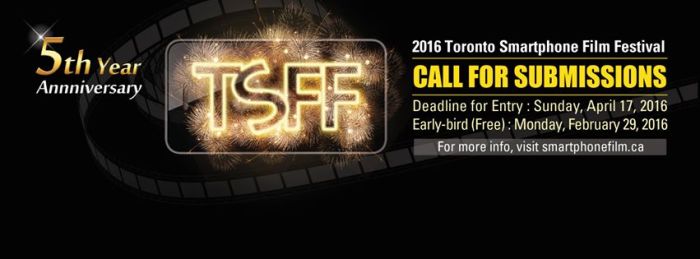
The Toronto Smartphone Film Festival was created with the goal to encourage aspiring filmmakers to share their stories through film, without having to equip themselves with expensive video equipment, training or field experience. As the largest smartphone film festival in Canada, TSFF provides aspiring filmmakers, from all backgrounds, with an international platform to showcase their work and talent.

Interview with Mingu Kim

Matthew Toffolo: What is your Film Festival succeeding at doing for filmmakers?

Mingu Kim: TSFF provides a unique platform for new, emerging and established filmmakers to showcase their films, not just locally but internationally. It’s another way for filmmakers to express their thoughts and ideas without spending thousands of dollars.

MT: What would you expect to experience if you attend the festival this year (2016)?

MK: This year we are celebrating our 5th anniversary and after several trial and errors, we have stronger award categories for filmmakers and more quality films for people to enjoy than ever. We are also partnered with 2 other organizations, Raindance Canada and Autism in Mind. Raindance Canada is working with us to educate people on smartphone filmmaking and as well as getting local filmmakers to try something different from the norm. Then we have Autism in Mind (AIM) this year to help promote the awareness of autism through film with a separate award category.

MT: What are the qualifications for the selected films?

MK: Our regulations are very simple. All films must be 10 mins or less where all scenes must be shot on either smartphones or tablets. We also receive a lot of international submissions so English subtitles are required if the main language used are not in English.

MT: Do you think that some films really don’t get a fair shake from film festivals? And if so, why?

MK: I think every film festival has its own colour and designated audience members to a certain degree, which can affect film selections. Therefore, filmmakers should also do a thorough research on various film festivals around the world to find a festival that best targets the type of films they produce. But then, it doesn’t hurt providing more room and leniency for new and emerging filmmakers, which would bring a broader spectrum of creativity and messages shared.

MT: What motivates you and your team to do this festival?

MK: I believe our motivation comes from doing what we enjoy. Many of us are independent filmmakers and we are constantly thinking from the filmmakers’ point-of-view to make TSFF a more inclusive festival. Every year has been a challenge but we feel rewarded knowing that filmmakers enjoy watching their films on big screen and viewers enjoy the difference of our festival compared to others.

MT: How has the festival changed since its inception?

MK: Well, to make the long story short, we began the festival within the Korean-Canadian community in Toronto 5 years ago under a different name. It started as a marketing strategy for my TV program on OMNI (Korean language programming). However, I saw the potential growth of the festival which needed to include anyone and everyone, so we changed our name into TSFF the 3rd year and became more global than what I had expected.

MT: Where do you see the festival by 2020?

MK: I am hoping for TSFF to become one of representing smartphone festivals in the world. We want to grow with the development of new technology so that our films are not only creative but also innovative.

MT: What film have you seen the most times in your life?

MK: It’s a touch question to answer because there are so many films. I love watching films in general, but I always tend to come back to Terminator 2.

MT: In one sentence, what makes a great film?

MK: A great film comes from one’s perseverance, dedication and believing in oneself.

MT: How is the film scene in your city?

MK: I think Toronto is one of the best cities representing the film scene. We are so spoiled with hundreds of film festivals that can be enjoyed throughout the year. There’s a film festival for everyone in Toronto!
torontosmartphone

____
Interviewer Matthew Toffolo is currently the CEO of the WILDsound FEEDBACK Film & Writing Festival. The festival that showcases 10-20 screenplay and story readings performed by professional actors every month. And the FEEDBACK Monthly Festival held in downtown Toronto on the last Thursday of every single month. Go tohttp://www.wildsound.ca for more information and to submit your work to the festival.

Interview with Festival Director Patrick Vella (Malta Horror Film Festival)

The Malta Horror Film Festival is somehow different from many other festivals, because it is always moving from one spooky venue to another every year! The festival attracts about 3000 horror adrenaline enthusiasts who also come to experience our yearly 30 minute Horror House Experience! The films are constantly running from 7pm till 2am for 3 days! The feeling is spectacular and the atmosphere is somehow atmospheric! This year 2016 we are including the Feature film sections and including new genres, such as Horror Comedy and Horror Cartoons!

Website: http://www.maltahorrorfest.com/ 

Interview with Patrick Vella:

Matthew Toffolo: What is your Film Festival succeeding at doing for filmmakers?

Patrick Vella: Well, besides more exposures in other countries, we do offer the best filmmakers an opportunity to film with us in Malta. Malta has been quite a target to many film Makers and Producers including Spielberg, Pitt, and lately Bay. Malta has lots to offer and is a great location for many various genres of films!

MT: What would you expect to experience if you attend the festival this year (2016)?

PV: As in the Past, our festival is a moving festival from one site to the other, We have to admit that our ScareThrough is much more famous than the film festival however thanks to the Horror House, the Festival is gaining every year more success!!! The festival is pretty vivid, and live, as you can experience (before or after) the Scarethrough! This is our 6th extended Edition!

MT: What are the qualifications for the selected films?

PV: Shorts, Feature, Animation, and Comedy Horror.
Shorts not longer than 20 minutes, Feature we leave it open . Any language is considered as long as it is english subtitled.

MT: Do you think that some films really don’t get a fair shake from film festivals? And if so, why?

PV: It is a tricky question! We always receive tons of films! Hundreds of Films! Some are great, some are mediocre, some are “WTF”…. however we have always issues with judges who have always different opinions!!! 🙂 The problem lies in different opinions, rarely you find unison in understanding!

MT: What motivates you and your team to do this festival?

PV: The love and passion in arts combined with media and filming making. We are artists, we wanted to create something for Malta. This is not our only project, but surely it is one that we keep it on top!

MT: How has the festival changed since its inception?

PV: To be honest, not much, as we love the formula! What we are working on, is better promotion for the film festival per se… as we believe it could do better! We are not ashamed to say that the festival needs more visitors as much as it gets the live scare through and the parties! However we are working on it by really choosing carefully our selections.

MT: Where do you see the festival by 2020?

PV: A fixed Place perhaps, however as I said previously we do love the change of sites, as it helps the audience to come the year after, as they love the idea of having a themed festival, in various places, being a dungeon, an abandoned Mansion or a Haunted Cinema!!!! Yet, there will have to come a day where the festival has a fixed Place ( of course it will be used for various projects)

MT: What film have you seen the most times in your life?

PV: I must admit, without sounding Cliche … I keep watching The Exorcist ( original movie) and though the effects are not relevant for todays technology, few films, beat that story! Story is essential, plot and the sense of point of no return are essential in such genres!

MT: In one sentence, what makes a great film?

PV: STORY – PLOT – SCRIPT – GOOD ACTORS – GOOD FILMING – GOOD PRODUCTION – GOOD POST ( as in order)

MT: How is the film scene in your city?

PV: Film scene in Malta, internationally speaking is superb. Indigenous Film making still needs a lot of advancement…

Interview with Festival Director Nathan Fleet (Hamilton Film Festival)

The 11th Annual Hamilton Film Festival (HFF XI) is one of Canada’s most important up-and-coming film festivals. This year’s festival will feature over $15,000 in prize value, plus the opportunity to network with, and pitch your projects to, film buyers, agents, distributors and other film-makers.

www.hamiltonfilmfestival.com

Interview with Festival Director Nathan Fleet

Matthew Toffolo: What is your Film Festival succeeding at doing for filmmakers?

Nathan Fleet: Quality networking and in the past 2 years, getting distributors interested in our content, which is why we are bringing the Canadian Film Market this year.

So many filmmakers have met and made films because of their meeting at HFF

MT: What would you expect to experience if you attend the festival this year (2016)?

NF: The biggest change is the Canadian Film Market. The focus will be on film sales, film pitches and coproductions with Canada. This will be an affordable opportunity for people to participate in a Market setting along side our film festival. As far as the festival goes, our programming team is exceptional so you will see some of the world’s best films, including Canada. Our policy is to not pre select a theme or genre. We let the submissions dictate the way our festival looks.

MT: What are the qualifications for the selected films?

NF: Honestly, if it is good, we want to see in on our screens. Again, our programming team have keen eyes for great material. It blows me away sometimes that some of the top tier don’t accept some of these. We also have room for First Time Filmmakers and Student films and we don’t scale them as harshly as we might for an established production company.

MT: Do you think that some films really don’t get a fair shake from film festivals? And if so, why?

NF: I do and while I am sure each has their own reason, it is nearly impossible for a festival to program everything they receive.

MT: What motivates you and your team to do this festival?

NF: Initially it was a cool thing to do to gather some films and screen them one evening. What better way to network with a hundred filmmakers in one week!

I’m a filmmaker as well so this is definitely the type of event I want to attend.

MT: How has the festival changed since its inception?

NF: We grew and grew but maintained our local connection. Our tag is Locally Focused, Internationally Recognized. We always want to make sure that we have room for local filmmakers to grow and exhibit. We earn the “Hamilton” in our title.

MT: Where do you see the festival by 2020?

NF: Unless there is a drastic change in formats and viewing habits, I love the road we are on. I would love for the Festival and the Market to become a destination and I think that is where we are already headed.

MT: What film have you seen the most times in your life?

NF: Star Wars: Episode IV

MT: In one sentence, what makes a great film?

NF: There is no one thing as it is a combination of all craftspeople presenting their best within the project.

MT: How is the film scene in your city?

NF: It’s growing everyday. We have a new film district with Digital Canaries, we have more and more talent from Toronto moving into the city, we have an 11 year old Festival and now a Film Market. You will be able to take your film from Concept to Acquisition in Hamilton.

—-

Nathan Fleet is a professional musician, filmmaker and educator from Hamilton Ontario Canada.
​He runs the Hamilton Film Festival, the Hamilton Film Expo,  the Canadian Film Market and Blue Pick Media.

In 2015, Nathan travelled to Comic-Con International in San Diego to support the screening of his short comedy Air Knob, which has screened around the world in theatres, broadcast and in the air!

​He is currently working to complete his rock album Talk To The Machine, which is expected in 2016.

Interviewer Matthew Toffolo is currently the CEO of the WILDsound FEEDBACK Film & Writing Festival. The festival that showcases 10-20 screenplay and story readings performed by professional actors every month. And the FEEDBACK Monthly Fesival held in downtown Toronto on the last Thursday of every single month. Go to www.wildsound.ca for more information and to submit your work to the festival.

Interview with J. Michael Seyfert (Cine Pobre)

Cine Pobre is a self-funded filmmaking genre without a set of stylistic criteria nor format boundaries, involving many geographically separated creators with at least two things in common: a strong desire to tell our story and to do so with our own resources.

You can also find more info at
www.facebook.com/cinepobre/

I recently sat down with J. Michael Seyfert to talk more about the festival:

Matthew Toffolo: What is your festival succeeding at doing for filmmakers? 

JMS: So far Cine Pobre has co-produced 8 films, and we provide post production talent and technical skills through camera stabilization workshops, and help with branding and niche market exposure. Cine Pobre Film Festival is like filmmaking itself, a collaborative and not a competitive concept.

Matthew: What would you expect to experience if you attend the festival? 

JMS: Personally , unless you’re talking about Orson Welles or Werner Herzog for example I am not keen on listening to a lot of self-congratulating trivia and gossip staged by most film festivals who appear more like cocktail parties. I appreciate excellent programming that has attitude and teeth, to be intriguing,  that’s what Cine Pobre delivers: New Eyes.

Matthew: What are the qualifications for the selected films? 

JMS: Anything goes, but must be self-funded and under $25,000 usd crowd-funding is also accepted, but productions financed by grants and film fund supported budgets are not accepted.

Matthew: Do you think that some films really don’t get a fair shake from film festivals? And if so, why? 

JMS: The business model of conventional festivals, of which there are literally thousands, is strictly a numbers game no matter how idealistic they may cloak themselves. As soon as an event gains some prestige it becomes elitist and exclusionary, rich in overhead and filmmaker exploitative.

Matthew: What motivates you and your team to do this festival? 

JMS: Curating the best self funded films to the widest audience is gratifying, as only the works of story tellers unbeholden to sponsors are censorship-free.

Matthew: How has the festival changed since its inception? 

JMS: Started with small screenings in rural areas to become the largest resource of self-funded film with over 10,000 shorts, features, documentaries, animation, experimental and music videos.

Matthew: Where do you see the festival by 2020?

JMS: We receive entries from about 100 countries and would love to curate films from all 190 states and territories on the planet.

Matthew: What film have you seen the most times in your life?

JMS: Bye Bye Havana

Matthew: In one sentence, what makes a great film? 

JMS: A story so well told that it holds the attention of a 7 year old.

Matthew: How is the film scene in your city? 

JMS: Still emerging from provincialism…. However Cine Pobre is neither stagnant nor static. Over the past 13 years we have taken our screenings to rural areas in Mexico and different countries in Latin America. We hope to also develop events in Africa where many exciting self-funded filmmakers are emerging.

_____

Interviewer Matthew Toffolo is currently the CEO of the WILDsound FEEDBACK Film & Writing Festival. The festival that showcases 10-20 screenplay and story readings performed by professional actors every month. And the FEEDBACK Monthly Festival held in downtown Toronto on the last Thursday of every single month. Go to http://www.wildsound.ca for more information and to submit your work to the festival.

Interview with Kristine Renee Farley (MayDay Film Festival)

The MayDay Film Festival originated in May 2009 at the University of Southern Indiana. It was created by a group of student filmmakers.. Year one was about showing off student films at their event to the student body. Since then, it has evolved into a full fledged festival showcasing films from all over the world.

Website: www.maydayfilmfestival.com

Twitter @MayDayFilmFest

I recently sat down with the Festival Director of the Festival:

Matthew Toffolo: What is the MayDay Film Festival succeeding at doing for filmmakers?

Kristine Renee Farley: I consider MayDay Film Festival’s biggest achievement our audience members. Last year we had 500 people in attendance across our 2-day event. Sometimes it can be difficult for independent film to find an audience, but we don’t have that problem at MayDay. We’re also currently in negotiations with international distribution companies. We want to partner with one to get MayDay Film Festival official selections in front of their eyes, and hopefully the rest of the world.

Matthew: What would you expect to experience if you attend the festival this year (2016)?

Kristine: MayDay is alway a fun experience for attendees. We pride ourselves on not being a pretentious film festival. We have vendor booths similar to what you see at conventions. This gives filmmakers a chance to sell their movies as well as other merchandise like tshirts. But we also invite local businesses and artists to rent booth space as well. We want to be interactive with the whole community, and invite anyone who thinks indie film fans would like to buy their product a chance to get it out there. All the info to get a booth is on our website. We also always have a guest artist or two to do a Q&A panel. We’ve had cosplayer Collin Royster, Emmy-award winning writer of Friday the 13th Victor Miller, Jake Lloyd of Star Wars & Jingle all the Way, and the Star Wars 501st Legion in past years.

Matthew: What are the qualifications for the selected films?

Kristine: Our submission guidelines are pretty loose. We like to have a wide variety of films screen at MayDay. During the selection process, we try to keep a good balance of looking at the quality of everything from camera work, image, audio, acting, and story. A filmmaker may not have had the best camera when they made their film, but if the story is amazing, we’ll still take it. Likewise, if a film looks too beautiful to pass up, we sure won’t.

Matthew: Do you think that some films really don’t get a fair shake from film festivals? And if so, why?

Kristine: I agree to a certain extent, yes. I think the bigger film festivals only take “independent” films that are only so just because a studio wasn’t involved. Yes, TECHNICALLY they’re “independent,” but they have huge stars and the best equipment. It makes sense for a festival to accept such movies because it will help their festival be more successful, so I can’t really discredit them for that at all. But I do believe that a lot of really amazing films that didn’t have the budget and didn’t have the stars do get ignored sometimes. Just because they don’t have that selling power. Which kind of leads into your next question…

Matthew: What motivates you and your team to do this festival?

Kristine: We want to give people a chance to get their films seen. That’s the whole point of making a movie! For people to see it! In addition to our fantastic & growing attendance numbers, filmmakers have the opportunity to secure booth space to sell their DVDs to the right audience – people interested in watching indie film.

For me personally, I’m also an actress working in TV & indie film. It’s a wonderful opportunity to see who’s making amazing films & to check out other actors & actresses who are getting work. We have films that come to us from all over the country & the world. It’s a wonderful networking opportunity for anyone in the indie film scene.

Matthew: How has the festival changed since its inception?

Kristine: This festival has changed SO much! It first started as a few students at the University of Southern Indiana showing off short films that they had made that school year. Then the Filmmakers’ Club was created to give students a more organized foundation to create their films since the school doesn’t have a film program. Each year it’s gotten bigger & bigger, incorporating local filmmakers and businesses. Now we’re in an actual movie theatre (Shout out to Showplace Cinemas in Evansville, IN! They’re the best!), showing films on 3 screens, and have international selections each year. I started helping with the fest in year 3. We had 38 submissions total. This year we had 40 our first day. We’re up to 470 currently, and we don’t close submissions until May 1st! We’ve had to bring on more people to get through the first round of watching films.

Matthew: Where do you see the festival by 2020?

Kristine: I certainly hope we continue to grow as much as we have already. At this time, we’re a not for profit event in the sense that we make absolutely no profit, haha. All fees & admissions go straight back into the festival costs. A lot of the time myself and the other coordinators will spend money out of pocket to make sure everything goes off without a hitch. I’d certainly like to see it begin to turn a profit because we have some amazing ideas to expand the MayDay brand into other film related events. If I had my way, we’d have a different themed event each month!

Matthew: What film have you seen the most times in your life?

Kristine: The absolute most times is probably Harry Potter and the Sorcerer’s Stone. I may have been a teenager when it came out, but I geeked hard core over it. My sister and I were probably watching it 3 times a day that summer we were off from school. I started developing a bit of a British accent. It was pretty crazy, haha. As an adult, it’s probably either Kill Bill or Kiss Kiss Bang Bang. Those films just never get old for me. I notice something new each time I watch them. If you’re talking indie film, you should totally check out Bounty Killer. God, I love that movie.

Matthew: In one sentence, what makes a great film?

Kristine: Oy. ONE sentence? And “great” is so subjective… I’d have to say, “A great film understands it’s audience.” Understanding your audience and how your film is perceived really helps tell a great story. That sentence also allows for films that may not be technically sound, but are still entertaining. &#X1f60a AND it transcends genres. Someone who loves horror may not like romantic comedy, but that doesn’t mean either genre isn’t great.

Matthew: How is the film scene in your city?

Kristine: Well, I’m living in New York City now, so pretty awesome, haha. Back in Evansville, things are pretty hopping, too. The work I got there and the experience I gained have been invaluable to me in pursuing my career. Last year at MayDay Film Fest in particular, the quality of local films skyrocketed. Evansville, IN is definitely holding their own against some of the best films from around the country. Some even won awards against them too! I continue to be impressed year after year at how much my friends & associates in indie film have grown.
_____

Interviewer Matthew Toffolo is currently the CEO of the WILDsound FEEDBACK Film & Writing Festival. The festival that showcases 10-20 screenplay and story readings performed by professional actors every month. And the FEEDBACK Monthly Festival held in downtown Toronto on the last Thursday of every single month. Go to http://www.wildsound.ca for more information and to submit your work to the festival.

Interview with Festival Director Michael Wearing (The Rob Knox Film Festival)

The Rob Knox Film Festival is held annually in Bexley, London. in memory of the actor who played Marcus Belby in Harry Potter and the Half Blood Prince.

Go to the Film Freeway submission page to submit your film: https://filmfreeway.com/festival/RobKnoxFilmFestival

I sat down with the Festival Director to learn more about this unique festival.

rob_knoxMatthew Toffolo: What is the Rob Knox Film Festival succeeding at doing for filmmakers?

Michael Wearing: The Rob Knox Film Festival has been extremely successful at identifying talented individuals at an early stage in their career and given them recognition, and a renewed motivation to move on to better things. Perhaps the best example of this is Stephen Fingleton who won his first ever award at the festival. (Best director for the his film Driver). This year he was nominated for a BAFTA award for outstanding debut feature by a British writer, Director or Producer. Another good example is Gareth Fient who won his first award at the festival aged just 15, and now aged 21 is getting regular work as a director and editor from producers in New York, LA and London.

Matthew: What would you expect to experience if you attend the festival?

Michael: The festival exhibits films from around the world, but is proud to ensure that locally made films are screened as well. There’s a real sense of community. Alongside the main awards night we lay on 8days of film related activity, this will include screenings at community venues and workshops. The festival ends with an awards evening and a free networking event.

Matthew: What are the qualifications for the selected films?

Michael: We are very keen to experience films of all genres and lengths. The festival is named after and held in memory of Rob Knox who played Marcus Belby in Harry Potter and The Half-Blood Prince and was murdered a week after filming his scenes aged just 18. His parents are active in the organisation of the festival, so we are mindful of their sensitivities and wishes.

Matthew: What makes a great independent film?

Michael: It’s a difficult question, I’m often surprised by the decision of the judges…. But from my point of view a great independent film will tell a story in no more time than is required to tell the story. We will allow slight imperfections in the visuals but the sound should be of a high quality.

Matthew: What motivates you and your team to do this festival?

Michael: My principle motivation is to honour the memory of Rob, and I think that is so with the whole team. A side effect of the festival is the increased networking opportunities it has provided to me and the others involved. I’m also keen to raise the positive profile of young people and so we get them involved in all aspects of the festival…

Matthew: How has the festival changed since its inception?

Michael: The main change is that from being a totally free festival. we have introduced a charge to filmmakers for most categories. This was done to reduce the quantity of entries we receive. The festival is run by volunteers and we were aware that the amount of entries we were receiving would eventually overwhelm the judges. Another change was accepting entries via film freeway instead of requiring DVDs…

Matthew: Where do you see the festival by 2020?

Michael: It would be good to get some increased sponsorship, and more volunteers, so that we can increase the offer.. The general format We see as remaining as it is, but we are always open to suggestions on ways to improve.

Matthew: What film have you seen the most in your life?

Michael: I’ve seen many films more than once, a few I would put as having seen 100s of time but there is one film that I have seen thousands of times. And that is Tootsie starring Dustin Hofmann. An incredible piece of writing, I just love the way there are so many sub stories weaved together impeccably.

Matthew: What country (or countries) seem to make the bests short films year after year?

Michael: We get great films from all over the world. I don’t think country comes into it. Our audience is predominately British, but we have had films from Russia, USA, Greece, France, Belguim, Spain, Ireland and Brazil all win awards. We are happy to show films with subtitles..

Matthew: How is the film scene in your city?

Michael: The Rob Knox Film Festival takes place in Bexleyheath in South East London, and part of the reason we started it was because there was nothing going on in this particular area… However across London there is always film related activity going on.

_____

Interviewer Matthew Toffolo is currently the CEO of the WILDsound FEEDBACK Film & Writing Festival. The festival that showcases 10-20 screenplay and story readings performed by professional actors every month. And the FEEDBACK Monthly Fesival held in downtown Toronto on the last Thursday of every single month. Go to www.wildsound.ca for more information and to submit your work to the festival.

Interview with Festival Director Oscar Piloto (Miami Indie Artist Film Festival)

The MIA Film Festival (#MiaFF) is an underground festival based out of Miami, Florida that features films and screenplays of all length and genres worldwide. #MiaFF is unique from the rest because it’s an underground festival that expands the capability of networking with other filmmakers and showcasing films in one location for 9 days in December.

I was fortunate enough to interview Festival Director Oscar Piloto:

oscarMatthew Toffolo: What is the Miami Indie Artist Film Festival succeeding at doing for filmmakers?

Oscar Piloto: What makes us successful is that it’s a new festival and it continues to grow. There are people who believe in the festival and are working with us to achieve our goals. Our goals of giving filmmakers hope for a greater brighter future by helping them create relationships that will last a lifetime. We want to introduce like minded people and guiding them in working together. We want to create a real community that truly allows the growth for individual achievement.

Matthew: What would you expect to experience if you attend the festival?

Oscar: We are big in creating a positive atmosphere with lots of fun in the process but most importantly making sure artists leave the festival with more knowledge of this wonderful industry that we love.

Matthew: What are the qualifications for the selected films?

Oscar: We understand many films are done by striving artists and in many cases even students. However, we would love to see flashes of greatness in all the different facets of filmmaking.

Matthew: As per your festival statement, do you think that some films really don’t get a fair shake from film festivals? And if so, why?

Oscar: I absolutely feel that many films do not get a fair shake. I believe some festivals become too big but aren’t relevant or influential, because they accept quantity instead of quality, like a “first come first serve” basis. I’ve seen films win other festivals that didn’t even get accepted in other big festivals. I’ve also known filmmakers ask for their materials from a festival back and they got their films returned and sealed exactly as they were mailed originally.

Matthew: What motivates you and your team to do this festival?

Oscar: As a filmmaker that had struggled getting a break, I want to help discover new talent and making a difference in the film industry. We want to help create those connections that are desperately needed to succeed.

Matthew: How has the festival changed since its inception?

Oscar: We are only going on our second year but the big changes are having more sponsors. In our first year, the amount of submissions was outstanding. More than I could have hoped for. Now, with the sponsors I hope it will bring opportunity for bigger and better prizes to our filmmakers.

Matthew: Where do you see the festival by 2020?

Oscar: There is a big difference between big festivals and relevant festivals. I see the MIA FILM FESTIVAL as the most relevant film festival in South Florida, where deals get made and talents get discovered!

Matthew: What film have you seen the most in your life?

Oscar: I’ve personally seen “Greese” the most when I was around 12 years old. Not only was I a big fan of John Travolta and Olivia Newton John but I was also a big fan of the music.

Matthew: In one sentence, what makes a great film?

Oscar: A great film occurs when all the little pieces come together, in particular the attention to detail.

Matthew: How is the film scene in your city?

Oscar: I think it is great! There’s great diversity here in Miami from all ethnic backgrounds. In addition, Miami is a beautiful city where everyone wants to come, and the more people the city attracts, the film scene will continue to grow.

_____

Interviewer Matthew Toffolo is currently the CEO of the WILDsound FEEDBACK Film & Writing Festival. The festival that showcases 10-20 screenplay and story readings performed by professional actors every month. And the FEEDBACK Monthly Fesival held in downtown Toronto on the last Thursday of every single month. Go to www.wildsound.ca for more information and to submit your work to the festival.

Interview with Pat Battistini, Festival Director for All Sports Los Angeles Film Festival

The “All Sports Los Angeles Film Festival” was established in 2009 by Pat Battistini. The first year of the festival was held on one day and screened thirteen films. Since then, the festival has blossomed into a three-day event screening an average of seventy films.

To learn more about the festival, go to http://allsportslafilmfest.com/

Matthew Toffolo recently sat down with Festival Founder Pat Battistini:

Matthew Toffolo: What is the festival attempting to accomplish for filmmakers and the attendees?

Pat Battistini: The festival was started because there really wasn’t another outlet for independent sports films and documentaries. As in other niche festivals, we wanted to create an atmosphere for sports enthusiasts. As for the attendees, ultimately, we’d love to have a complete sports festival with everything to clinics to memorabilia. But as of now, our attendees get a lot of sports films to watch in 3 days.

Matthew: Are there a lot of sports genre films being made around the world? Besides the United States, what other countries make great sports films?

Pat: We have screened films from 31 countries. I was surprised at how many filmmakers out there are making the sports genre film. Every year I think that we’ve exhausted the surplus but every year we get more and more films.

I imagine each country has their own great film or films. As to what other countries I feel make great sports films, that answer probably lies within the country itself. I think the difference to why a film in the US might be more well received here than in China is because of the pop-culture. We have our heroes, our folklore, and our favorite sports and they have theirs. I’m partial to our films because I’m usually familiar with the sport or the story. I don’t think Brian’s Song would fare well in India. But on the same note, I don’t think a film about one of their Cricket stars would fare here. That’s not saying their films aren’t great, but if you did a search for the top 25 sports films, probably 90% of them would be from the US because these are the films we see.

Matthew: How did the festival get started?

Pat: I always thought someone should do a sports genre festival so I waited a couple of years to see if anyone was going to do it. When nobody did, I talked with a friend of mine who runs a horror film festival and asked her how I woul dgo about starting a festival. She showed me the ropes that first year. I learned a lot in those first few years but now, it’s kind of a well oiled machine.

Matthew: Where do you see the festival in 5 years?

Pat: I hope we can continue to grow and actually be an outlet for the studios to release their big films during our festival. Also, as I mentioned earlier, the sky is the limit with the festival. Since sports is such a huge part of so many people’s lives, I hope to create something that gets people excited to attend and participate.

Matthew: What obstacles has your festival faced (if any) in the last few years?

Pat: The hardest thing for us has been the lack of sponsors. In any give year in Los Angeles, there are over 80 film festivals. That’s a lot of festivals fighting for sponsorship money, advertising, and media time. Having a festival here in LA is like having a pizzeria in New York; lots of them and everyone says theirs is the best.

Matthew: How many films do you anticipate showcasing at your 2016 Film Festival?

Pat: If I could, I’d screen 100 of them. But with time constraints, I hope to screen about 70. That sounds a lot but that includes everything from spec commercials to shorts to features.

Matthew: Can you give us a sneak peak of what to expect for the 2016 Festival?

Pat: Every year there seems to be a certain sport that takes center stage. One year we had a lot of MMA films. But this year there is a huge variety. I’ve seen films about ceremonial lacrosse sticks to world record skydiving. However, the one common denominator that I can say is that almost all of the films are about the human spirit. Sports are more than competitions. Especially sports films. These films are about people and what they do to achieve their dreams and goals.

Matthew: What do you think the best sports film of all-time is? If you can’t pick one, do you have a top 5?

Pat: I guess I’d have to pick my top 5 because some days I like more than others. Here they are in no particular order:

5.) The Natural
4.) Miracle
3.) Rudy
4.) Field of Dreams
5.) Moneyball

Matthew: What sport generally has the best made sports films? You assume it’s baseball, but is there another sport that also stands out?

Pat: Football, Boxing and Basketball probably have to be close seconds. But when it comes to comedy, I think that doesn’t matter. Caddyshack and Dodgeball are always fun to watch.

Matthew: You you have a favorite sport and sports team?

Pat: I grew up watching and supporting all of the Chicago teams. Si if I had to pick from those, I’d go with the Blackhawks. But now I think I enjoy watching college football more than anything.

Matthew: What film have you seen the most in your life?

Pat: If it’s any film, probably The Godfather. Since it came out around 1972, I’ve had plenty of years to watch. ;o) I don’t know why but I just can’t turn it off if it’s on. As for sports films, I’ve probably The Natural a million times

—–

Interviewer Matthew Toffolo is currently the festival director for the WILDsound Film & Writing Festival.

Interviewee Pat Battistini is a former college wrestler and football player, Pat started his professional career as an Offensive Line Coach at Grand Valley State University.  After several years of coaching, he traded in his whistle for a career in filmmaking.  He has resided in Los Angeles since 1998 where he established the All Sports Film Festival in 2009. Pat has personally represented the festival as an invited guest to Russia, Turkey, India and Italy serving on the jury of their festivals.