Film Review: MONOLITH (Italy 2016) ***1/2

Submit your Screenplay to the Festival TODAY

Monolith Poster
A mother and her son plan a surprise visit to Los Angeles to see her husband/his father. Halfway there they get into a terrible accident in the middle of nowhere and now must fight to survive.

Director:

Ivan Silvestrini

Writers:

Elena Bucaccio (screenplay), Roberto Recchioni (story) |3 more credits »

MONOLITH is an effective thrilling Italian entertainer made for Sky Pictures.  Director Ivan Silverstrini loves and as well as knows how to tease his audience.

This, Silverstrini does at the start of the film.  The MONOLITH car is explained, a 4 by 4 all terrain vehicle that can self-drive and enter into armour mode.  The car is absolutely modern and protective but these features eventually cause deadly problems to Sandra. The car is so well explained that the film could pass off as a real documentary.  (The narration at the start:  With the MONOLITH, we introduce a car in the safest possible environment…). The film shifts gradually to horror mode.

The plot involves the safest car in the world turning into a death trap when Sandra (Katrina Bowden) and her son get into a car accident in the middle of  a scorching desert. With her son gets trapped inside a car known for being bullet-proof, Sandra must fight to save him.

Silverstrini plays with the background in many instances.  The first is observed when Sandra is video calling her husband and there is a knock on the door of the husband’s room.  The audience never sees who is at the husband’s door and the audience hopes of course he is not cheating on Sandra.  The person is never revealed.  Another has her toddler son suddenly gone missing after a stop at a convenience store.  She finds her son with three teens and pulls him apart from them scolding them.  In reality the teens picked the kid up from wandering outside the store.  “You are a bad mother,” quips one of them.  As it turns out, Sandra is quite the bad mother.  She also buys David a bag of marbles, and it is shown through the car’s rearview mirror that he is about to put one in his mouth.  Sandra also smokes causing David to cough and keep letting him play ‘turtle’ on her cell phone to keep him quite, though resulting in a disaster.  Yet she tries her best to be  good mother and husband.

It is also good to see a male director deal so well with a female protagonist, giving Sandra a strong character though not without weaknesses.  Bowden does a good job portraying the mother, down to a scantily  lad outfit because of the desert heat.  Silverstrini elicits a  fantastic performance from the young child actor playing the son.

For this modern vehicle, the special effects provided are quite cheesy yet enhance the film’s entertainment value.  The glowing ring, the tooting noises and the voice of ‘Lillith’ are hilarious.

The film’s genuinely scariest parts involve the car sliding backwards (the child locked inside) towards a cliff and the other with Sandra hiding underneath the vehicle with a hungry coyote looking for prey.

MONOLITH emerges as a very effective and satisfying low-budget film with a completely identifiable character with weaknesses that audiences can still root for.  The film proves that a little imagination can go a long way in making an entertaining thriller.

Trailer: https://www.youtube.com/watch?v=2-Wd8HCX08k


Submit your Screenplay to the Festival TODAY

Film Review: BIRDLAND (Canada 2017)

Submit your Screenplay to the Festival TODAY

Birdland Poster
An ex-cop whose marriage is on the rocks hides surveillance cameras in her home and watches her husbands transgressions, becoming a voyeur of her own life.

Director:

Peter Lynch


BIRDLAND is a heralded DGC (Directors Guild of Canada) film from DRG veteran Peter Lynch who made the successful ARROWHEAD and PROJECT GRIZZLY.  The special screening I attended was followed by an extensive Q and A session with director Lynch, his wife, the film’s editor, Caroline Christie and its production designer and Patricia Christie moderated by Canadian director Atom Egoyan.

Described by Lynch himself as a 60’s style European art movie, the film follows an ex-cop, Sheila Hood (Kathleen Munroe) whose marriage is on the rocks.  Sheila hides surveillance cameras in her home and watches her husband’s (David Alpay) transgressions, becoming a voyeur of her own life.  When the husband, Tom Kale is suspect for two murders, she is forced to question her motives.  The script by Lynch and Lee Gowan bring in current events of oil and fracking into the story.  If all this sound straight forward, the film isn’t.  Lynch’s film is very difficult to follow.  When asked about this, the reason given is to keep the audience on their toes.  But it seems more an excuse than anything else.

The film was shot in 6 weeks on a minuscule budget with $6,000 devoted to the production. It is therefore not surprising that the film looks so badly edited and confused.  To the production designer Patricia Christie’s credit and the Director of Photography, the film looks stylish and expensive.  Lynch apparently borrowed artwork from friends and filmed in a friend’s very expensive and plush apartment as well as at the Art Gallery of Ontario.

Surveillance is the common thread in the story.  Human beings are seen as if living in a birdcage with all their actions observed.  The song BIRDCAGE is also performed a few times in the film.

BIRDLAND is too stylish and artsy for audiences to feel for the characters.  Besides the story being difficult to follow, the film requires full concentration.  Lynch in the film’s defence, said that it is necessary for the audience to get lost in the film.  The result is quite a few of the audience ‘politely’ leaving the theatre (including my guest) midway during the film.  Lynch says that the film should be watched at one go, maybe on a computer, something that very few directors ever say about their movie.

The plot leads nowhere.  Despite having the topic of surveillance on display, Lynch never leads the topic anywhere either, nor does the film contain any clear message on surveillance in the 21st century.  Lynch is also fond of repetitive scenes.  The one with Sheila looking up at he closed circuit cameras and tapping on the lens is one example.  Another is the one with a subway rider listening to her headphones before pressing the emergency stop break as a result of an accident (a victim thrown from the bridge on to the train.)

To the film’s credit, Lynch has made a film that looks expensive despite its low budget.  This is not enough a good reason for this terrible film.

Trailer: https://www.youtube.com/watch?v=j_PTtuOCeko


Submit your Screenplay to the Festival TODAY

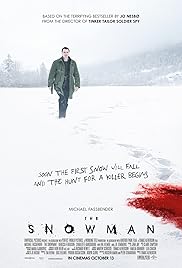
Film Review: THE SNOWMAN (USA 2017) **

Submit your Screenplay to the Festival TODAY

The Snowman Poster
Trailer

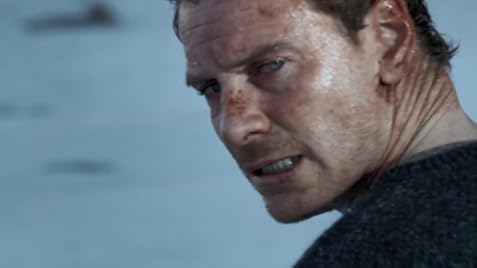
Detective Harry Hole investigates the disappearance of a woman whose pink scarf is found wrapped around an ominous-looking snowman.

Director:

Tomas Alfredson

Writers:

Peter Straughan (screenplay by), Hossein Amini (screenplay by)


Submit your Screenplay to the Festival TODAY

1997 Movie Review: FACE/OFF, 1997

FACE/OFF, 1997
Movie Reviews

Director: John Woo

Stars: John Travolta, Nicolas Cage, Joan Allen, Alessandro Nivola, Gina Gershon, Dominique Swain, Nick Cassavetes, Colm Feore, Colm Feore, John Carroll Lynch

Review by Matthew Toffolo

SYNOPSIS:

A revolutionary medical technique allows an undercover agent to take the physical appearance of a major criminal and infiltrate his organization.

REVIEW:

There is a creepy feeling when watching Face/Off. The main theme of this action packed drama is about dealing with loss and death as Travolta’s character is having an extremely difficult time getting over the murder of his son. Of course fiction became truth later on as Travolta lost a son in real life. So when you’re watching these scenes you can’t help but feel for the real life actor who is crying on screen for his son’s loss, even though it hadn’t happened yet.

I remember when this film came out in 1997 and how much I enjoyed it as a 20 year old kid. My friend Wes Berger and I were what you call teenage idealistic film buffs as we used to go to the movies weekly and see as many foreign and independent movies as we could living in the Niagara Region. To some we were also film snobs, looking down on all of the shoot em up blockbusters that were beginning to hit its peak. But we weren’t ashamed to admit that we both liked Face/Off enormously because it seemed to have a nice psychological edge to it while filled with incredibly unrealistic but exciting action moments.

This was also the time when both Travolta and Cage were at their peaks professionally. Cage in particular was coming off his Oscar win for Leaving Las Vegas as was considered one of the best actors on the planet. That comment seems kind of silly in present day, as Cage is considered kind of a hack, as he continues to do about 3-4 poor films a year. In 1997 Cage had his whole career ahead of him and was in considerable demand in Hollywood. So having Travolta and Cage in this action romp in 1997 caused a lot of attention for me and my friendly film snobs. Perhaps John Woo’s film was more than just blow em up!

There are some interesting moments in Face/Off as Woo sure is a fine director who makes a lot of unique choices to heighten the excitement and emotions in the film. The only thing I remember talking about with people afterwards was the key question – Was Cage better at playing Travolta? Or was Travolta better at playing Cage?

Questions like this is what 20 year olds growing up in the Tarantino generation discuss. Even though in hindsight these are wasted conversations, at the time I do remember having fun with it. My friend Wes was on team Cage as I was on team Travolta. And the circle talk of meaninglessness began for hours on end. Both actors really chew up the scene as they seem to be acting in a strange land of over-the-top-ness while the other actors around them are grounded in reality. The performance of Travolta’s wife (who became Cage’s wife but was actually Travolta – it was confusing!) in particular stands out. Joan Allen pulls off a fantastic performance in the film without anyone really realising it. I remember even at age 20 how pulled in I was by her character. Perhaps today that role would of went to some 30s supermodel who would only be capable of just playing the beats in the script and nothing more.

Face/Off is a fun film even today as I really was impressed how much it stands up. That same year Cage acted in another action film, Con Air, that really doesn’t stand up at all and is almost laughable in its action executions to today’s 21st century world.That says a lot about John Woo. In Face/Off, Woo directs all of the action sequences with the emotions of the character’s angst and inner conflicts. So when Travolta for example is involved in a boat chase with Cage, we as the audience are hooked in because we just previously saw a scene of his struggles to survive the pains of his son’s death. So there is context in the action without just having the action. So his films hold up generation after generation because we feel while the guns are a blazing across the screen.
face off

Interview with Festival Director Matthew Rooney (VideoDrunk Film Festival)

Ranking as one of Toronto’s Top Alternative Film Festivals, Videodrunk is a small indie/experimental/underground/genre film festival that will be taking place in Toronto this November and December at Farside. The festival is run by filmmakers and video artists and aims to present an eclectic collection of films in an almost mixtape sort of way to audiences in a non-formal easy going non-cinema environment. We’re basically a party film festival. Amateurs, students, DIYers and pros all are treated as equals.

Contact


Matthew Toffolo: What is your Film Festival succeeding at doing for filmmakers?

Matthew Rooney: We’re providing a fun event for filmmakers to show their films in a different atmosphere than other festivals around Toronto. We’ve given filmmakers that might not get a chance because of their genre or style get a chance to show where they might not have.

What would you expect to experience if you attend the festival this year (2017)?

A little more party-like than last year I’d say thanks to the venue we’re using being less gallery/theatre like. We’re also trying to build a line up that’s a little more off the wall than past years but also more accessible at the same time. We like having active and energetic crowds but film loving crowds that are respectful of what’s going on.

What are the qualifications for the selected films?

Be enjoyable or interesting. Pretty simple.

Do you think that some films really don’t get a fair shake from film festivals? And if so, why?

I do even with smaller festivals. I feel a lot of them have rules that are too strict and sometimes genre festivals have a narrow scope of what fits their festivals.

What motivates you and your team to do this festival?

Love of film, the fun of the final festival and the satisfaction of a job well done.

How has your FilmFreeway submission process been?

Simply amazing.

Where do you see the festival by 2020?

This one is a little tricky because there are so many factors at play with it. For example, I might be moving out of the country in the next 2 years and maybe Videodrunk retires or goes on hiatus or moves with me and brings its style to Luxemburgish or goes digital or my friend Emil takes it over and turns it into his Uncanny Beauty Film Festival. I don’t know, we’ll see.

What film have you seen the most times in your life?

Not sure, maybe “Duck Soup”

In one sentence, what makes a great film?

Can’t answer that because any answer I give will be wrong.

How is the film scene in your city?

We have 100 some odd festivals and dozens of productions (both big and small and domestic and international) going on at any given time plus some amazing video stores. It’s very strong. Strong enough that TIFF makes traveling around downtown nearly impossible.

videodrunk.jpg

*****

Interviewer Matthew Toffolo is currently the CEO of the WILDsound FEEDBACK Film & Writing Festival. The festival that showcases 20-50 screenplay and story readings performed by professional actors every month. And the FEEDBACK Monthly Festival held in downtown Toronto, and Los Angeles at least 2 times a month. Go to www.wildsound.ca for more information and to submit your work to the festival.

SUBMIT your TV PILOT Screenplay or TV SPEC Script
Voted #1 TV Contest in North America.
Screenplay CONTESTSUBMIT your Short Screenplay or FEATURE Script
FULL FEEDBACK on all entries. Get your script performed

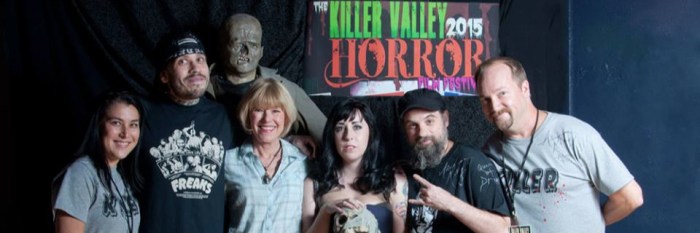
Interview with Festival Programmer Ross Williams (KILLER VALLEY HORROR FILM FESTIVAL)

The Killer Valley Horror Film Festival was founded in 2007 by filmmaker Randy Granstrom. For 10 years we’ve been showcasing the best in indie horror and sci-fi.

1987 Movie Review: THE UNTOUCHABLES, 1987


THE UNTOUCHABLES MOVIE POSTER
THE UNTOUCHABLES, 1987
Movie Reviews

Directed by Brian De Palma
Starring: Kevin Costner, Sean Connery, Robert De Niro
Review by Mike Peters

SYNOPSIS:

Chicago-1930-Eliot Ness is an idealistic and ambitious Treasury officer new to the ranks of the corrupt Chicago Police Force. His goal of cleaning up the streets is thwarted by the presence of the larger than life gangster, Al Capone. Overcoming hardships and threats against his family, Eliot Ness rounds up a group of “Untouchables” (men who are unable to be corrupted) and decides to challenge the Mega Empire of Capone.

Review:

To some, The Untouchables may not be considered a “classic film”. I would disagree. Growing up, I became enamored by the visual sight of gangsters in film. They appealed to me for many reasons. The freedom and the power they achieved through their modes of conduct was always a road I wanted to travel on. Then I grew up. I realized that this would not be the life for me. The danger and violent nature needed to be a part of this sort of “group” was not who I was. I could never kill a man, nor beat a man to a bloody pulp for minimal reasons. No, the life of the gangster was not for me. But, it is still an entertaining world in which to inhabit for two hours.

The Untouchables arrived in 1987 and was directed by Brian De Palma. A director, well known for his controversial films, had been deemed violent, misogynistic and anti-social by many of his critics. Known for such films as Carrie (1976), Scarface (1983) and Body Double (1984), De Palma has never shied away from controversy. Arriving at a time when Hollywood was undergoing great change, De Palma rose through the ranks with other directors such as Martin Scorsese, Steven Spielberg and Francis Ford Coppola. Studios had lost control of their films for a brief period of time and it was the director who was allowed to have full control of his film. It was his vision, not a producers or studios, which gave the director an unbelievable sense of importance and power. This was good and bad in a sense. Some directors blew it through their egotistical ways while others managed to make a name for themselves and remain an important part of the industry. De Palma was the latter.

De Palma began making films that strived to push the limits of acceptable behavior deemed appropriate by society. Growing up the son of a surgeon, De Palma never shied away from the images of violence and blood. It was a natural part of life in his eyes and he strived to depict it in, as some would say, voyeuristic ways. However, many could not see that he was critiquing the images that he presented on screen. He understood that he had become a controversial figure and regularly poked fun at this classification.

Studios were afraid to work him. However, in 1986, he directed a film called Wise Guys. This film was not well received and quickly vanished from people’s minds. The film however proved that De Palma could be uncontroversial and as a result, he scored The Untouchables.

The Untouchables is an interesting film. It is largely a Hollywood manufactured production but it embodies so much more. Themes such as loyalty, corruption and perseverance are readily presented in a beautifully crafted film. The production design is immaculate in its recreation of 1930’s Chicago. The buildings and the streets are simplistic and very formal in their design which helps to create a sense of nostalgia of what it might have been like to live during this time.

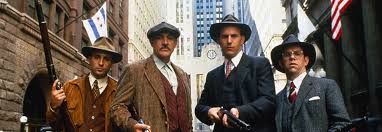
The clothes, designed by Giorgio Armani, are perfect and help to define the characters in truly distinctive ways. Al Capone and his cronies all live an upper class life. Through their suits to Al Capone’s silk pajamas, these men are deemed with high regard because of their social and financial standings. In many De Palma films, he has been known to upend the iconographic modes of good and evil. For instance, Frank Nitti is always represented by his white suit. Typically white has been linked to wholesomeness and purity but here, it is defined as corrupt and a color to be avoided. The police force on the other hand is visualized through their extremely dark police uniforms. By wearing these, the corrupt officials blacken the very meaning of what these uniforms are supposed to represent. The fact that every color is deemed corrupt only helps the audience to understand that Chicago has very few straight arrow citizens. The fact that the four “untouchables”, Ness (Kevin Costner), Malone (Sean Connery), Stone (Andy Garcia) and Oscar Wallace (Charles Martin Smith) are all represented through individualistic clothing attire helps to represent their non-conformist (corrupt) ways. They do not wear a uniform but rather wear their street clothes which allow them to be characterized as a group that cannot be swayed by the corruptive nature of the city.

The story is very linear in its approach. The film moves along at a decent pace which helps to settle the audience into sort of a lull but then immediately, and out of the blue, explodes into extreme violence. Just because De Palma was deemed uncontroversial at this point did not mean that he would totally shed his old ways. When the violence strikes, it has an impact that is harsh and unrelenting. When a particular star of the film is murdered, the film is merciless in its depiction of brutality and anguish. De Palma sets the tone very early in the film through the use of violence. At the beginning of the film, one of Capone’s men attempts to force a bar/diner owner to buy alcohol from them. He refuses. The man leaves. Another man, dressed in white, leaves the bar as well but leaves his briefcase sitting on a stool. A little girl, who is in the diner, attempts to track down the man but as she reaches the door, the briefcase explodes, killing everyone in the diner. This scene emphasizes that during this time everyone was fair game to be killed, even children (this scene is also important to imply that everyone is capable of being murdered within this film). It attempts to identify the fact that this was a very dangerous time period in American society. If you didn’t comply, then you would have to face the penalties. This scene also helps to foreshadow a scene later on in the film involving a child.

There are some memorable scenes in this film. The first is a P.O.V. perspective shot through the eyes of a gangster breaking into Malone’s apartment. This P.O.V. shot also works as a long tracking shot which creates a sense of suspense and fear because the viewer has now taken on the identity of the assassin. As we track Malone through his apartment, tension increases causing a fear that this man, whom we have come to admire throughout the course of the film, is about to be killed. It is a brilliant use of camera work displayed by De Palma in this scene.

Perhaps the most famous part of the picture is the train station scene. Inspired by Sergei Eisenstein’s Soviet silent film classic, Battleship Potemkin (1925), this scene is long and dragged out but manages to create an unbelievable sense of unease within the audience. While Ness and Stone are awaiting the arrival of the bookkeeper (who they need to apprehend), whom is being escorted out of town, the pacing slows to a crawl. We wait as Ness and Stone wait. There is no immediate rush into the action. We know that there will most likely be a violent confrontation but we must wait and thus the tension rises to an all new high. To make matters worse, a woman struggles to drag her baby carriage (with baby inside) up the stairs where this confrontation is likely to take place. I will not ruin it for those who have not seen it but this is a scene that is perhaps one of the greatest suspense sequences in film history.

The script by David Mamet is filled with suspense and tension and the actors help to bring his story to life. Sean Connery, in an Oscar winning performance, is magnificent as the over the hill Malone who still has a hunger within him to fight the fight. As well, Andy Garcia and Charles Martin Smith are well cast as new recruits to the “untouchables” team. Robert De Niro provides an interesting performance as well. He provides little nuances to his portrayal of Al Capone, like a smile or nod, which adds flavor to the character but in some instances he glides, knowingly and flamboyantly, over the top. The one problem with the casting is in Kevin Costner. When he is surrounded by the likes of Connery and De Niro, it is hard to accept him for who he is trying to be. I understand that his character wants to embody a sense of innocence and that he must learn how to achieve victory, but I felt he was weak for the role. He didn’t instill a fear within me throughout the course of the film. I enjoy him as an actor, just not in this film.

The Untouchables is a well made and crafted film. There are some slight problems with the film however. For instance, the editing is abrupt and distracting at times. Some scenes that should have had a few seconds of pause prior to edit are cut prematurely. But, these are small problems. This film attempts to encapsulate a time period while placing its’ own spin on the genre. The gangster film had all but disappeared from cinemas but, in my mind, this film helped to reestablish its’ roots (and as well make it a commercially viable genre once again). The film was one of my favorites as a child and still holds a special place within my heart. If one wants to witness the blending of a controversial figure like De Palma with the mainstream ideas of Hollywood, watch this film. You won’t be disappointed.

 the untouchables.jpg

Also, Free logline submissions. The Writing Festival network averages over 95,000 unique visitors a day.
Great way to get your story out: http://www.wildsound.ca/logline.html

Deadlines to Submit your Screenplay, Novel, Story, or Poem to the festival:http://www.wildsound.ca

Watch recent Writing Festival Videos. At least 15 winning videos a month:http://www.wildsoundfestival.com

1987 Movie Review: SPACEBALLS, 1987


SPACEBALLS MOVIE POSTER
SPACEBALLS, 1987
Movie Reviews

Directed by Mel Brooks
Starring: Mel Brooks, John Candy, Rick Moranis, Bill Pullman, Daphne Zuniga
Review by Mark Engberg

SYNOPSIS:

Having squandered their own air supply, the inhabitants of Planet Spaceball kidnap a wealthy princess to rob her planet of its precious resources.

CLICK HERE and watch 2009 MOVIES FOR FREE!

REVIEW:

“Everybody got that?” Dark Helmet asks the audience after his chief-in-command Colonel Sandurz delivers the plot exposition to his fellow villains.

This late 80’s parody of science-fiction fanfare may have been tardy in satirizing the “Star Wars” empire that George Lucas built a decade earlier. In describing his prime target in making “Spaceballs”, Mel Brooks calls the sci-fi epic “the final frontier. It is the last genre I can destroy. So I am destroying it.”

Additionally, he has categorized this entry as “half wit, half physical, half disgusting, and sometimes beautiful. It’s my appreciation of the human event.”

While some critics have challenged Mr. Brooks’ timeliness in the sci-fi parody, this film has enjoyed a cult appreciation in terms of its clever writing and enjoyable characters. Another factor to appreciate: Apogee, Inc accomplished the special effects in this comedy in the dwindling days of pre-digital CGI. Like the original “Star Wars” trilogy, Agogee’s special effects team had to construct models with computerized motion control systems to give the flying Winnebago and endless Spaceball One the illusions of movement.

During these contemporary days of special effects design where anything and everything can be done with digital enhancement, it is refreshing to watch a master like Mel Brooks carve genuine comedy out of handcrafted science fiction.

Even though “Spaceballs” features lasers, spaceships, and alien make-up galore, Brooks never steps too far away from his fan base in delivering the pratfalls and one-liners that made the man a comic icon. He even gets a guy in a bear suit to get a cheap laugh in the third act.

The movie begins with a “Star Wars” scroll giving the audience a brief history of the Spaceballs universe. Under the hilarious leadership of President Skroob (Mel Brooks, hmm, I just realized the name is an anagram) the citizens of Planet Spaceball are forced to invade new worlds in order to steal their air supply.

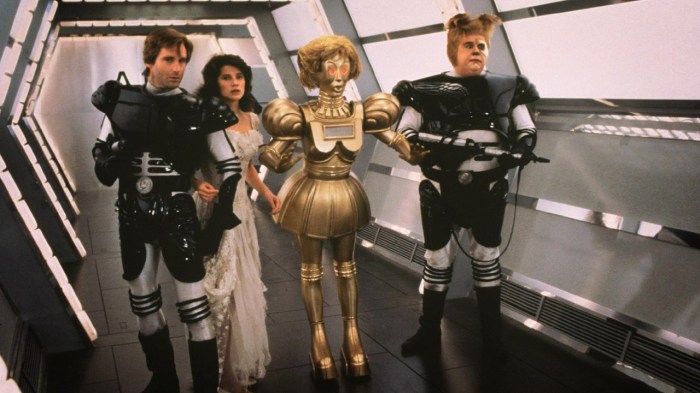
Mimicking “Star Wars” to the last detail, Dark Helmet (Rick Moranis) and Colonel Sandurz (George Wyner) kidnap Princess Vespa (Daphne Zuniga) in an effort to blackmail her father, King Roland (Brooks all-star for father figures, Dick Van Patten).

This is where Bill Pullman and John Candy come in, as Captain Lone Starr and his sidekick Barf, an allusion to Chewbacca in that he is half-man, half-dog. Candy is hysterical in his performance of the mawg, but the real winners of this role are the operators of Barf’s mechanical canine-like ears. Every time Barf appears to listen, his auto-receptive ears perk up like antennae. The effect is comic gold.

Like Han Solo, the character of Lone Starr is motivated by money. With perfect deadpan, Pullman says, “Barf, we’re not doing this for the spacebucks. We’re doing it for a shitload of spacebucks!”

The reason for the greed is that Lone Starr has a heavy debt to pay Pizza the Hut (voiced by the recently departed Dom DeLuise). And Pullman plays the character of Lone Starr with a humorous yet touching sentiment that would have made Harrison Ford proud. With a note of sadness, Lone Starr tells Vespa he hails from the Ford Galaxy. Those who do not remember the Ford Galxie 500 have come to assume that this joke is a reference to the actor who played Han Solo.

But there is more than enough of “Star Wars” reference to go around. Brooks even uses the famous Wilhelm scream as one of his Spaceball troops is shot in the ass by incoming laser fire.As a matter of fact, keep an eagle eye out for the Millennium Falcon parked next to Lone Starr’s Winnebago at the interstellar gas station.

This is not to say that George Lucas’ beloved saga of “Star Wars” is the sole target of Mr. Brooks’ parodying lightsabre. In “Spaceballs”, he references “The Wizard of Oz”, “Star Trek”, “Alien”, and even “Planet of the Apes”. Keep a sharp ear ready for that last one. That is the voice of Michael York playing the second ape on horseback.

Brooks definitely goes above and beyond his traditional self-reflective voice in this film. In ways like never before, the writer/director/producer/star lists his former Hollywood achievements as videotapes stored upon a futuristic spaceship.

“Instant cassettes,” says Col. Sandurz. “They’re out in stores before the movie is finished.”

In one of my favorite comedic sequences of all time, the villainous Spaceballs fast-forward through their own movie in order to discover the location of the good guys. After which, Dark Helmet and Sandurz engage in an Abbott and Costello routine of existential misunderstanding.

And the self-reflective filmmaking joke continues throughout the movie. Before teaching Lone Starr about the powers of the Schwartz, Yogurt (also played by Mr. Brooks) explains his profession upon his lonely planet.

“Merchandising,” says Yogurt. “Where the real money from the movie is made.” Yogurt then goes on to sell the audience item after item of Spaceballs merchandise, all of which is a joke. In fact, Mr. Lucas allowed Brooks to make “Spaceballs” on the condition that there would be no merchandising for this movie. This would, of course, account for the spotty nature of the “merchandise”. Notice that “Spaceballs: The Coloring Book” is nothing more than a Transformers illustration book (Twenty years before Michael Bay began ruining my beloved robotic heroes himself!)

There are many other individual items of “Spaceballs” to enjoy for the pure sake of silliness. John Candy wins the award for the best use of the middle finger (beating out Keanu Reeves in “The Matrix” and Jennifer Aniston in “Office Space”) after Lone Starr and Barf park the Winnebago in the Spaceball penal territory.

I am also a big fan of the great Stephen Tobolowsky’s short yet pleasing scene as an effeminate Captain of the Guards. He only has a couple of lines, but there is just something about his delivery that makes his character as memorable as Barf.

“Spectacular stunt, my friends, but all for not . . .” he lectures to his captives before realizing they are nothing more than stunt doubles.

The scene when Dark Helmet is caught playing with the Spaceballs action figures is also one of my favorite reactions in filmed comedy. According to cinema trivia, Moranis performed this scene impromptu after Brooks suddenly conjured up the premise on set. How they got the action figure so quickly is anyone’s guess.

And let’s not forget Joan Rivers as the voice of Dot Matrix, Princess Vespa’s personal assistant droid. Ironic, though, that the Joan Rivers of today currently resembles the physical appearance of the golden android.

A subtle shout is also made to fans of literary essays. When Spaceball One is revealed to be a gigantic transformer about to engage in “metamorphosis”, Dark Helmet prompts his officer: “Ready, Kafka?” Think about that one.

Final thought: Does the alien that bursts out of John Hurt’s stomach play a song that seems familiar to all who watched those classic Looney Tunes cartoons? It should. The song and top hat dance number is homage to “One Froggy Evening”. You know, the one where the frog grabs a cane and dances to “The Michigan Rag.”
SPACEBALLS, 1987.jpg

Also, Free logline submissions. The Writing Festival network averages over 95,000 unique visitors a day.
Great way to get your story out: http://www.wildsound.ca/logline.html

Deadlines to Submit your Screenplay, Novel, Story, or Poem to the festival:http://www.wildsound.ca

Watch recent Writing Festival Videos. At least 15 winning videos a month:http://www.wildsoundfestival.com

Film Review: L’ECONOMIE DU COUPLE (AFTER LOVE) (France 2016) ***1/2

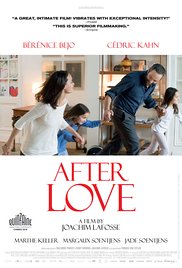
after love.jpgAfter 15 years of marriage, a couple with two kids is about to divorce. Until the husband find a new place to live, they have to cohabit, and figure out how to share their belongings.

Director: Joachim Lafosse
Writers: Fanny Burdino
Stars: Bérénice Bejo, Cédric Kahn, Marthe Keller

Review by Gilbert Seah

Those that know Cédric Kahn will definitely remember his excellent 2004 directed suspense drama FEUX ROUGE (RED LIGHTS) which he also co-wrote. The story concerns the marriage breakdown of a mediocre salesman Antoine (Jean-Pierre Darroussin) and his attractive, successful and increasingly aloof wife, Hélène (Carole Bouquet), as they are en route to pick up their daughter from camp, bickering as usual. The broken relationship is seen from the backdrop of her sudden disappearance when she decides to take the train.

Kahn leaves the director’s chair to play the husband in this equally absorbing broken marriage story of Boris (Cédric Kahn) and Marie (Bérénice Bejo). Though the background is different, both films have similarities and are both equally a difficult watch. The couples have seen their love gone sour and both try to give it a second chance. In this film, the couple have decided to separate after 15 years together. They have two girls that they adore, but tensions rise as cash-strapped Boris continues to live in the family home. Neither of the two is willing to compromise, making their apartment a war zone.

Sexual and emotional tensions remain high. An example is when the Boris accidentally enters the bathroom while Marie is having a bath. He claims that he did not see her inside and just getting his toothbrush. When she is angry he replies that he has seen her naked before. These are words and incidents that will eventually happen, regardless whether by a accident or not and will always lead to confrontation and uneasiness. The scene is done from the point of view of Marie, the camera focused on her expressions while she lies in the bath when the dialogue goes on between the couple.

Lafosse takes no sides. The audience sees the irrationality of both the husband and wife and how emotions blur their better judgement. At one point, they scream uncontrollably in front of their two daughters. The scene in which they both eventually sit down as a family and the parents promise their daughters never to shout at each other is a touching one.

One would imagine that watching a film on this topic be a brutal one. Surprisingly it is not, because Lafosse makes what appears on screen incredibly real than theatrically brutal. The sensitive and humanistic sides are also shown.

Kahn and Bejo, especially are excellent in their roles.

But all is not hate. In one sensitive and brilliant moment, Lafosse demonstrates that the love the couple once felt for each other was present in the past and not forgotten. “I did really love him” says Marie to her friends one evening party before Boris shows up and creates emotional havoc. The one unexpected visit by Marie turns out to be an evening of family warmth with the father and two daughters dancing together, edged on by the mother.

Lafosse leads his remarkable AFTER LOVE to its obvious ending as Boris and Marie eventually separate but for the better.

Trailer: https://www.youtube.com/watch?v=I-zxQXzSpbM

Also, Free logline submissions. The Writing Festival network averages over 95,000 unique visitors a day.
Great way to get your story out: http://www.wildsound.ca/logline.html

Deadlines to Submit your Screenplay, Novel, Story, or Poem to the festival:http://www.wildsound.ca

Watch recent Writing Festival Videos. At least 15 winning videos a month:http://www.wildsoundfestival.com
Interview with Mariah Mathew (Little Wing Film Festival)

Little Wing grew out of passion, persistence, and frustration at the difficulty of finding paid work for young professionals in creative industries. We’re about providing first-time film makers with the tools and opportunities they need to foster career growth, from entertainment and education, to networking and support.

Contact

 
Matthew Toffolo:What is your Film Festival succeeding at doing for filmmakers?

Mariah Mathew: I created Little Wing as a platform for first-time filmmakers to have their work seen, and to be rewarded for it in more ways than ‘exposure’. We’re doing everything within our means to reward them with prizes that facilitate their next project and foster career growth. Working unpaid is such a difficult and unsustainable expectation of young creatives trying to break into their industry, and as Little Wing continues to grow alongside its filmmakers, I hope to make it something of a pebble in the pond towards changing attitudes around unpaid work.

What would you expect to experience if you attend the festival this year (2017)?

Expect a lovably small, grungy theatre above a pub with a long history of launching careers in theatre and comedy. Over the weekend we’re hosting a filmmaking workshop amidst screenings, and want to foster an atmosphere of support, collaboration and development. For the public, it’s a space to see some incredible films from the next generation of filmmakers, and for filmmakers, it’s a space to see what is being produced by their peers and meet like-minded creatives over a pint in the bar downstairs. Oh, and free popcorn.

What are the qualifications for the selected films?

The festival is open exclusively to first-time filmmakers within two years of their first film, recent graduates within 2 years of their graduation date, and current students.

Do you think that some films really don’t get a fair shake from film festivals? And if so, why?

Having access to the best equipment doesn’t guarantee a great film – but it doesn’t hurt. First-time filmmakers aren’t necessarily the most affluent or opportunity-rich of people, and despite being talented, lack of accessibility to equipment and costly software can be a disadvantage that makes it harder for new starters to have their work considered in many festivals. We want to provide a step-up in getting these films to a professional standard that you’d see in festivals, rather than accept only those that have the means to already at that level already.

What motivates you and your team to do this festival?

When I was trying to break into the creative industry, my unpaid internships, volunteering and ‘work experience’ made living in London unsustainable, when also working for minimum wage to pay rent. When the expectation is that young creatives have to work unpaid to begin their careers, it disadvantages those who don’t have financial support, and those who aren’t living at home. I got so fed up with working hard, and knowing I have the creativity and drive that could generate great things, but people weren’t willing to pay for it when the demand was such that they could fill the position for free. I decided to create a space where I could hire myself, and try and alleviate the struggles of young creatives that were in similar positions.

How has your FilmFreeway submission process been?

FilmFreeway has been the most user-friendly submissions platform I’ve used so far. I look forward to seeing their filmmaker network continue to grow, and having them branch out into different accepted currencies (come on, GBP!).

Where do you see the festival by 2020?

The path of Little Wing will be very much directed by the demand from young creatives and what changes they want to see in their industries. Starting in film and growing each year, we would soon like to integrate a design competition element into the festival, and over the next few years branch out into music. We have a Community Forum online where young creatives are encouraged to share their experiences in their industries and give suggestions for what changes they would like to see and where Little Wing might be able to assist.

What film have you seen the most times in your life?

Possibly Howl’s Moving Castle. Or Pan’s Labyrinth. I tried learning Spanish from watching it and realized I was probably developing an accent from the 1940s. Also Edward Scissorhands, American History X, and The Life of Brian.

In one sentence, what makes a great film?

Something that shakes me with empathy for the human experience.

How is the film scene in your city?

London’ is the film hub of the United Kingdom. One of my concerns when first imagining the possibility of a festival was that perhaps the festival scene was saturated with this kind of thing already, but there’s been a clear call out for support of new filmmakers and as we grow we’ll continue to set ourselves apart. It will be interesting to see how the city contributes to Little Wing’s growth and direction.

Interviewer Matthew Toffolo is currently the CEO of the WILDsound FEEDBACK Film & Writing Festival. The festival that showcases 20-50 screenplay and story readings performed by professional actors every month. And the FEEDBACK Monthly Festival held in downtown Toronto, and Los Angeles at least 2 times a month. Go to www.wildsound.ca for more information and to submit your work to the festival.

SUBMIT your TV PILOT Screenplay or TV SPEC Script
Voted #1 TV Contest in North America.
Screenplay CONTESTSUBMIT your Short Screenplay or FEATURE Script
FULL FEEDBACK on all entries. Get your script performed