Film Review: SADIE’S LAST DAYS ON EARTH

sadies_last_day_on_earth_movie_poster.jpgDirector: Michael Seater
Writer: Michael Seater
Stars: Helene Joy, Munro Chambers, Ricardo Hoyos

Review by Gilbert Seah

SADIE’S LAST DAYS ON EARTH is advertised as a teen comedy – a genre of film many moviegoers tend to avoid. To be fair to this genre of films, there have been many classics like FERRY BUELLER’S DAY OFF, SIXTEEN CANDLES or even exceptionally funny ones like LICENCE TO DRIVE and WEIRD SCIENCE. The key to teen comedies is to have a very identifiable teen like a loser trying to break out of his or her mould in a very identifiable situation that every adult has been in.

In SADIE’S LAST DAYS ON EARTH, modern teenage anxiety and the universal desire for acceptance from others and ourselves are explored through the protagonist Sadie. The teen in this story appears to be driving herself into a secluded mould of loneliness.

Sixteen-year-old Sadie Mitchell (Morgan Taylor Campbell, SPOOKSVILLE, THE KILLING) is convinced the world is about end. The script does not go into detail where she gets her source or the reason she is so convinced. This is obviously a big flaw as the whole film’s credibility hinges on this fact. Undeterred by the naysayers, Sadie has two weeks to ready herself for the coming apocalypse. The film goes with the titles counting down the last days of earth – as if it was going to happen. Sadie has a list of things she needs to master (a sort of bucket list); survivalist cuisine, knitting, but there are other things…personal things; go to a high school party, kiss a boy, and most importantly, get her best friend Brennan (Clark Backo, SHOOT THE MESSENGER) back. These are silly items, unfortunately only important to Sadie, and not to the audience or anyone else in the film for that matter. Within the first few minutes of the film, the audience is quickly detached from the heroine as well as the film. Armed with survival supplies, blueprints and escape routes, Sadie finds an unlikely ally in Jack (Ricardo Hoyos, DEGRASSI: THE NEXT GENERATION) who shows her that her last days on Earth might not be so bad after all.

Just one day before Sadie’s predicted last day, the town suffers a minor earthquake. Suddenly, the entire town believes Sadie’s prediction of Earth’s Last Days. There is of course, such a thing as a minor earthquake happening, so it is ridiculous to see the entire town turning into Chicken Littles.

The film’s corny message is that one should live life fully – as if the end of the world is near. Sadie also suffers from insecurity. Too many of the film’s character have to remind her that she is smart, funny and bold – which in my opinion, she is not.

Enough is enough. The film is so unwatchable and the characters so annoying (example: Sadie’s mother with an Australian accent; Sadie’s dj classmate with a fake British accent), that one soon begins counting down the minutes this film will end.

From the same director and writers of PEOPLE HOLD ON, SADIE’S LAST DAYS ON EARTH will likely be as forgettable as their first movie, which thankfully (about group of friends gathering together before a wedding ), I did not see.

Trailer: https://www.youtube.com/watch?v=LLvcFfEMGRM

Free logline submissions. The Writing Festival network averages over 95,000 unique visitors a day.

Great way to get your story out: http://www.wildsound.ca/logline.html

Deadlines to Submit your Screenplay, Novel, Story, or Poem to the festival:http://www.wildsound.ca

Watch recent Writing Festival Videos. At least 15 winning videos a month: http://www.wildsoundfestival.com

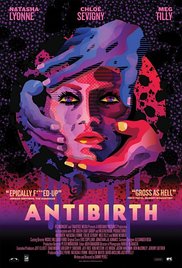
Film Review: ANTIBIRTH (USA/Canada 2016) ***1/2

antibirth_movie_posterDirected by Danny Perez

Starring: Natasha Lyonne, Chloë Sevigny, Meg Tilly

Review by Gilbert Seah

As nasty pictures go, ANTIBIRTH is one hell of a nasty piece. Halfway throughout the film, the lead character, Lou (Natasha Lyonne) remarks: “I am not pregnant. I am infected!” But writer/director Danny Perez infuses an accurate stoner humour into the proceedings. Unlike films like SAW and HOSTEL, which are nasty beyond watchable, ANTIBIRTH is very watchable and entertaining in a nasty way. In the words of director Perez, “I wanted to show the other side of pregnancy besides the feel-good and the glow; i.e. the more gruesome aspects of pregnancy and what it does to the body.” He ties the film with UFO Youtube conspiracy theories, which does not always work. Needless to say, the film should be avoided by any woman in the expectancy period.

In a small Michigan town, hard-partying stoner Lou (Lyonne) awakens one morning and finds herself experiencing bizarre symptoms. Her friend, Sadie (Oscar nominee Chloë Sevigny from BOYS DON’T CRY) believes she is pregnant and not telling her about it, despite Lou’s claims that she has not had sex with anyone in nearly a year. A mysterious stranger, Lorna (Meg Tilly), however, believes Lou. As conspiracies and stories of bizarre kidnappings around town begin to spread, Lou’s visions and grip on reality become more distorted.

Perez wrote his film with lead actress Lyonne in mind. It shows! Lyonne is perfect for the part as the stoner do-not-want-to-be-mother. “I cannot be pregnant. It is not my style.” She says. Her character, Lou smokes from a bong with the mouthpiece so large that it fits her entire mouth. She survives on donuts and cigarettes. Meg Tilly, not seen for a while on screen returns in a role as a frumpy weirdo who sees flashes of light and visions, like someone switching on and off a TV channel.

Be warned that Perez is fond of including very gross scenes. One has Lou peeling off a scar tissue at the back of her neck before extracting one of her molars with her fingers, blood and all. But the best (grossest) scene has her using a knife to break open a huge blister on the sole of one foot, followed by all the blood and pus running out. She then wobbles around with a cane, limping around until she delivers. One can appreciate if not feel her pain during the pregnancy – or infection, if one wants to call it that.

The winter setting with the ice and snow as well as the dirty mud aids in the film’s gloomy atmosphere. Her trailer home looks even more dismal in the wintry setting.
The best scene? Meg Tilly’s face covered in blood smiling after delivery of the monster baby remarking: “Oh my goodness!”

ANTIBIRTH works as a horror film with major stoner attitude. One of the best horror films of the year! See it with caution!

Trailer: https://www.youtube.com/watch?v=Gx1K4yZW5Ds

TV CONTESTSUBMIT your TV PILOT or TV SPEC Script
Voted #1 TV Contest in North America.
FILM CONTESTSUBMIT your SHORT Film
Get it showcased at the FEEDBACK Festival
writing CONTEST1st CHAPTER or FULL NOVEL CONTEST
Get full feedback! Winners get their novel made into a video!
SCREENPLAY CONTESTSUBMIT your FEATURE Script
FULL FEEDBACK on all entries. Get your script performed

Film Review: CAMERAPERSON (USA 2016)

cameraperson_movie_poster.jpgDirected by Kirsten Johnson

Writers: Doris Baizley (consulting writer), Lisa Freedman (consulting writer)

Star: Kirsten Johnson

The director’s vision is seen through the lens of the cinematographer’s camera. Oscar winning cinematographers? Who can forget Freddie Young’s sandstorm in LAWRENCE OF ARABIA, Haskell Wexler’s locust invasion in BOUND FOR GLORY or Gordon Willis’ city silhouette in Woody Alllen’s MANHATTAN? In the new documentary CAMERAPERSON that premiered at Sundance this year, female cinematographer Kirsten Johnson delivers a uniquely insightful memoir-cum-critical-treatise on the nature and ethics of her craft.

At the film’s start, Johnson declares that she is a documentary cinematographer who for the past 25 years has shot footage for other films. She declares that this film is her memoir – images that have marked for life and many that have still kept her wondering. These are strong words – and sets up the audience for a documentary that will hopefully astound and mesmerize.

As for Johnson’s credit, she has worked behind the camera for well-known films like FAHRENHEIT 9/11- there is one shot of Michael Moore making a comment, DARFUR NOW and CITIZENFOUR among others. She has travelled around the globe in different continents uncovering hidden truths.

A boxing match in Brooklyn; life in postwar Bosnia and Herzegovina; the daily routine of a Nigerian midwife; an intimate family moment at home: these scenes and others are woven into the film, a tapestry of footage captured over the twenty-five-year career of documentary cinematographer Kirsten Johnson. Through a series of episodic juxtapositions, Johnson explores the relationships between image makers and their subjects, the tension between the objectivity and intervention of the camera, and the complex interaction of unfiltered reality and crafted narrative.

Her documentary uses images to tell the story. There is little voiceover to put the audience into any perspective of the images or places or people on display. By looking at her images on screen, the audience is to make up their own minds on what is perceived. But each snippet is preceded with a title, mostly the name of the place where the images to be seen are taken – from as diverse locations as Foca, Bosnia, to Westport, New York. Certain placers are re-visited again in the film. Some snippets last no more than a minute while others longer.

There are plusses and negatives for this approach. The plusses include the audiences having a less biased opinion of the activities that take place – and some of these are political. A few teases the audience’s curiosity. One snippet for example traces a boxer’s activities just before he enters the ring and then ends. Other images are plain stunning and need no commentary. On the negative side, some feel out of place and difficult to follow – especially the reason for Johnson’s inclusion into her film. The short snippet of the outside of an airline as shot from inside that lasts about minute is a puzzling one. One would also like to know more about Johnson’s background, her influences and who she respects working for in the past or who she would like to wok with in the future. Her take on cinematography for fiction films would also be an insightful inclusion for this film. The closing credits list the details of all the films Kirsten has used in this doc.

Regardless, CAMERAPERSON is still a fascinating film for all those who love cinema. It is these pioneers that capture the stuff of dreams and translate it into celluloid for everyone’s benefit and pleasure.

CAMERAPERSON will have a limited run at Toronto’s Hot Docs Ted Rogers Cinema.

Trailer: https://vimeo.com/179496166

TV CONTESTSUBMIT your TV PILOT or TV SPEC Script
Voted #1 TV Contest in North America.
FILM CONTESTSUBMIT your SHORT Film
Get it showcased at the FEEDBACK Festival
writing CONTEST1st CHAPTER or FULL NOVEL CONTEST
Get full feedback! Winners get their novel made into a video!
SCREENPLAY CONTESTSUBMIT your FEATURE Script
FULL FEEDBACK on all entries. Get your script performed

Film Review: ARRIVAL (USA 2016) ****

arrival_poster.jpgARRIVAL (USA 2016) ****
Directed by Denis Villeneuve

Starring: Amy Adams, Jeremy Renner, Forest Whitaker

Review by Gilbert Seah

The Quebecois director Denis Villeneuve has never failed to impress. From his early French Canadian films UN 32 AOUT SUR TERRE and MAELSTROM to his English Hollywood films SICARIO, PRISONERS and ENEMY, Villenueve has transcended different genres though his films share one common trait. There is the human angst mixed into a thriller/mystery story. The same can be said in his latest, most ambitious and biggest production to date – ARRIVAL. The ARRIVAL here could refer ever to the first contact of the aliens or the birth of the baby girl to the film’s protagonist, Dr. Louise Banks (Amy Adams).

As in any good mystery thriller, Villenueve whets the audience’s appetite at the film’s start by teasing them with the voiceover by Dr. Banks. “I used to think this was the beginning of your story that we are bound by time and by its order.” And then as she holds up her baby daughter, saying: “Come back to me.” Why is she saying this to her baby and why is the order of time being questioned. The question is answered as the film unfolds. The pleasure of this film lies not in an action packed climax but the revelation of the mystery of the reason the aliens arrive, in 12 simultaneous locations around the world. ARRIVAL is a thinking man’s sci-fi and also a very satisfying one.

When the film opens, 12 alien spacecraft land around the world. Linguistics expert Dr. Louise Banks and theoretical physicist Ian Donnelly (Jeremy Renner) are recruited by the US military to obtain the answer to one question: “What do they want?” Arriving in Montana, working under the leadership of Colonel Weber (Forest Whitaker), Louise and Ian are only remotely aware that their lives and the future of humanity are about to become inextricably linked. As the unlikely pair collaborate to solve this extraterrestrial translation puzzle, 11 other teams around the world are attempting to do the same.

Unlike other films like GRAVITY, ARRIVAL begins with the intimate personal story of Dr. Banks and ties the worldly events to her. In contrast to GRAVITY, for example, where the personal life of Sandra Bullock’s character is only tied in (her miscarriage) half way through the film or in THE MARTIAN where Matt Damon’s personal life is next to non-existent, the only mention being his tenure at a university. ARRIVAL has the audience connected with the protagonist well way before the alien arrival and the arrival totally affects her life.

The film also cleverly teases with questions like: Why do the doors of the spaceship open every 18 hours? Or “Why are there spaceships in 12 simultaneous locations?

The film also celebrates the human being’s ability to communicate by focusing on the fundamentals. The spill by Dr. Banks on how for example, a language like chess could affect mis-communication is excellent thinking fodder.

Bradford Young’s arresting cinematography, Johanna Jóhannsson’s haunting score (especially during the beginning and ending credits), and long-time collaborator Patrice Vermette’s minimalist production design (the monolithic look of the spaceship) all aid in creating the mystery atmosphere surrounding the alien arrival.

ARRIVAL also challenges the audience’s logic in appreciating the science of time. Though the notion is rather incredible, the film succeeds in making the audience think that all is possible. A true test of a good film is whether the film survives a repeat screening. After first seeing ARRIVAL first at TIFF and now again, ARRIVAL still amazes.

Trailer: https://www.youtube.com/watch?v=tFMo3UJ4B4g


SUBMIT your TV PILOT or TV SPEC Script
Voted #1 TV Contest in North America.
FILM CONTESTSUBMIT your SHORT Film
Get it showcased at the FEEDBACK Festival
writing CONTEST1st CHAPTER or FULL NOVEL CONTEST
Get full feedback! Winners get their novel made into a video!
SCREENPLAY CONTESTSUBMIT your FEATURE Script
FULL FEEDBACK on all entries. Get your script performed

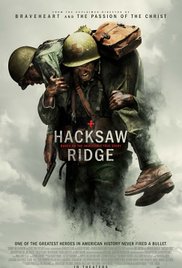
HACKSAW RIDGE (USA/Australia 2016) ***** Top 10

hacksaw_ridge_poster.jpgDirector: Mel Gibson

Writers: Andrew Knight (screenplay), Robert Schenkkan (screenplay)

Stars: Andrew Garfield, Sam Worthington, Luke Bracey, Teresa Palmer, Vince Vaughn, Hugo Weaving.

Review by Gilbert Seah

After about a decade absence from the director’s chair (his last film was the misunderstood APOCALYPTO in 2006), the director of BRAVEHEART and THE PASSION OF THE CHRIST returns in top form as if redeem in himself of all the bad press he had garnered since he said and did some foolish things. It’s another situation in this 21st century social media era where the outside events of the director “tarnish” the actual film itself. Think “Birth of the Nation”. Two films that should potentially receive multiple Oscar nominations. But will they? And should they?

The film is a true story, bravely told, inspiring as well, set in World War II featuring the most unlikely of heroes – a pacifist who refuses to carry a rifle. Not only does the film boast inspired direction by Gibson, but it also contains perhaps the best performance of the year by a young actor, the most recent SPIDER-MAN, Andrew Garfield – if not the best performance of his career. It should be a crime against someone like Garfield for being so good-looking and talented at the same time.
The true story of medic, Private Desmond T. Doss (Andrew Garfield), who won the Congressional Medal of Honor despite refusing to bear arms during WWII on religious grounds. Doss was drafted and ostracized by fellow soldiers for his pacifist stance but went on to earn respect and adoration for his bravery, selflessness and compassion after he risked his life — without firing a shot — to save 75 men in the Battle of Okinawa.

The script by Andrew Knight and Robert Schenkkan can hardly go wrong. What the story needs, the script does. Firstly, it strongly establishes the reason for Desmond’s behaviour and beliefs. The contradiction of the father’s character is also smoothly tied in with conviction. The film is basically divided into two parts. The first is Desmond’s basic training (boot camp) where he is mocked by both his superiors and his fellow soldiers. He is also given the dreaded blanket party at night. The second part of the film and the most brutal is his service in the battlefield. At times, the film feels like Stanley Kubrick’s FULL MEATL JACKET which contains two similar segment but Gibson’s second section, unlike Kubrick’s is the more exciting one.

Besides Garfield’s outstanding performance, Vince Vaughan delivers an equally impressive one, the role of a stern sergeant, much uncharacteristic of what audiences expect from him. Aussie Hugo Weaving (THE MATRIX movies; PRISCILLA, QUEEN OF THE DESERT) is also perfect as the hard drinking father who when finally does good and justice for his son, whose performance will break the hardest of hearts.

Those who are able to remember THE PASSION OF THE CHRIST will see more tortured scenes in the film. The battle scenes – with heads exploding; guts pouring out; dismembered bodies and wounds infested with maggots and rats are not easy ones to watch. The scenes rival Spielberg’s unforgettable beginning sequence in SAVING PRIVATE RYAN and one can only guess what is yet to come with Christophe Nolan’s upcoming DUNKIRK.

The closing credits serve to prove to the audience that as wild as this story might be, the truth exists. Archive footage of the real heroes as depicted in the film speak out, often saying the identical words in the film’s script.

America needs her heroes in these difficult times of terrorism and racism. AMERICAN SNIPER and SCULLY are heroes depicted in films that have done extremely well at the box-office. Opening close to Remembrance Day, this film deserves to do well and might be the hit the flailing studio Lionsgate needs. Forget DOCTOR STRANGE! This film hits the mark!

Trailer: https://www.youtube.com/watch?v=s2-1hz1juBI


SUBMIT your TV PILOT or TV SPEC Script
Voted #1 TV Contest in North America.
FILM CONTESTSUBMIT your SHORT Film
Get it showcased at the FEEDBACK Festival
writing CONTEST1st CHAPTER or FULL NOVEL CONTEST
Get full feedback! Winners get their novel made into a video!
SCREENPLAY CONTESTSUBMIT your FEATURE Script
FULL FEEDBACK on all entries. Get your script performed

Film Review: AMERICAN PASTORAL (USA 2016) ***

american_pastoral_poster.jpgAMERICAN PASTORAL (USA 2016) ***
Directed by Ewan McGregor

Starring: Ewan McGregor, Jennifer Connelly, Dakota Fanning

Review by Gilbert Seah

As Seymour’s story is told from the points of view of Zuckerman’s recollections and his brother Jerry’s disclosure, two sides of the life story of a hero is portrayed. Seymour (Ewan McGregor) is the all-American hero but something went terribly wrong in his daily life. The trouble with the film is that it does not pin down exactly when this happens or the real deep reason why.

Ewan McGregor makes his directing debut and stars alongside Oscar winner Jennifer Connelly and Dakota Fanning in this ambitious adaptation of Philip Roth’s Pulitzer Prize–winning novel, about a “perfect” American family that is torn apart by the social and political upheavals of the 1960s. One must give the actor credit for choosing such a dauntless task as a adapting a Roth novel for his directorial debut.

The film is framed by a high school reunion in which 60-year olds Zuckerman (David Strathairn) and the brother (Rupert Evans) meet. They discuss the life of Seymour (the Swede) as the film unfolds with the details. The reason for this form of storytelling becomes clear at the end of the film and serves as Roth’s message, which will not be revealed in this review.

The Swede, as he is referred to in many parts of the film is a businessman with a happy family Seymour’s life begins to slide off the rails when his teenaged daughter, Merry becomes radicalized in reaction to the war in Vietnam. Soon she rejects her family’s comfortable existence for a secret life of violent protest. She is involved with the bombing of a gas station in which an innocent man, Mr. Hanson is killed. As Merry goes into hiding, the father slowly seeks her out. His wife (Jennifer Connelly) however, goes into mental breakdown mode, resulting in an affair after getting a sought after facelift. There are subplots involving Seymour’s stern father (Peter Riegert) and Merry’s somewhat kooky therapist (Molly Parker).

McGregor’s direction and John Romano’s (INTOLERABLE CRUELTY and THE LINCOLN LAWYER) script lack the sardonic wit, punch and edginess of a Roth novel. The film, consisting of a series of dramatic set-ups also lacks any humour. Certain segments like the encounters with the therapist are primed for humour but sadly they are just set up form plot motion.

To the film’s credit, the lush 60’s atmosphere with the vintage cars, props and wardrobe work well. The then President’s (LBJ) face can be seen on the old television set as well.

As far as McGregor playing the all-American football star, it takes a lot of credibility. There is a shot of him in a sports singlet, looking more cutesy than athletic. The only casualty in the story appears to be McGregor’s character. He gets both his wife’s and daughter’s rejections and to make it all worse, is diagnosed with prostrate cancer.

At one point in the film, the father questions how the daughter suddenly came to be such a rebel. The audience would no doubt feel the same with respect to answers. The book delves int Merry’s rejection from her stuttering to her obesity, but these factors are ignored in the film.
AMERICAN PASTORAL is an interesting enough satisfactory film and a worthy directorial debut. One can only wish a better adaptation of Roth’s Pulitzer Prize novel from a veteran director.

american_pastoral_poster.jpg

SUBMIT your TV PILOT or TV SPEC Script
Voted #1 TV Contest in North America.
FILM CONTESTSUBMIT your SHORT Film
Get it showcased at the FEEDBACK Festival
writing CONTEST1st CHAPTER or FULL NOVEL CONTEST
Get full feedback! Winners get their novel made into a video!
SCREENPLAY CONTESTSUBMIT your FEATURE Script
FULL FEEDBACK on all entries. Get your script performed

Interview with Festival Directors Nicolas Iordanou & Sylvia Nicolaides (Paphos International Film Festival)

The Paphos International Film Festival (PIFF) is an annual festival held every June in Paphos in the Mediterranean island of Cyprus. PIFF is an independent not-for-profit organization committed to supporting authentically independent films and it aims to research, promote and develop the art of independent filmmaking. We support low (or no) budget films because we strongly believe that they are worth a chance. PIFF is a platform giving a voice to directors and filmmakers who work with very little, but have a lot to give.

Facebook | Website  (Open for submissions until April 21st, 2017)

Matthew Toffolo: What is your Film Festival succeeding at doing for filmmakers? 

Nicolas Iordanou & Sylvia Nicolaides: Paphos International Film Festival is the only film festival of the city of Paphos, which is also the European Capital of Culture in 2017. Our aim is to support, promote and develop the art of independent cinema. We want to support films that were produced with a low (or sometimes zero) budget, because we believe that they are worth a chance. PIFF is a platform giving a voice to directors and filmmakers who work with very little, but have a lot to give. We, the directors of the festival, understand this because we are also independent filmmakers and we recognize the difficulties.

Each year, in each category, there is an Audience Award, where the audience gets to vote for the films that were the most inspiring to them. We believe that it is a great honor to receive an award given by the audience.

We also arrange a ‘meet and greet’ get-together with the directors and producers/distributors that attend the festival, and encourage them to exchange ideas, interests and create possible new collaborations.

MT: What would you expect to experience if you attend the festival this year (2017)? 

NI & SN: Three days of open-air cinema, with ice cold drinks with friends and of course a great selection of independent films from all over the world.

MT: What are the qualifications for the selected films? 

NI & SN: We appreciate and value independent films that were made from directors and filmmakers who have something to say that is essential and genuine. We look for filmmakers that manage to connect themselves in a personal way with their film and at the same time reflect the issues that concern today’s society.

MT: Do you think that some films really don’t get a fair shake from film festivals? And if so, why? 

NI & SN: Some films get lost due to the large number of submissions that the festival receives and that’s where we come in: because we want to take on the films that did not make it in other film festivals, just because they have not been filmed with the best cameras, the best lighting, etc. We support these productions that despite the difficulties, they have strong and essential ideas, they have quality, and we can see their potential.

MT: What motivates you and your team to do this festival? 

NI & SN: Our own personal experiences as independent filmmakers. We also have to work sometimes with very little, and we would like to show our support and give a voice to all the filmmakers out there who have a vision, a passion, and want to tell compelling and inspirational stories.

MT: How has the festival changed since its inception? 

NI & SN: It is only our second year, but we are determined to keep improving and keep this festival growing and becoming part of the city. PIFF has four categories: International short films, Cypriot short films, Student short films and a Special Category. The Special Category’s thematic is changing every year: last year we dedicated this category to films about refugees and immigrants and we had many powerful films and documentaries on that subject. The most moving part was that because of this, we had many Syrian refugees in our audience who came especially to watch them and this brought them closer to the locals who were attending the festival. This year, we dedicate the festival to our dear friend and a great Cypriot artist Costas Economou (1925 – 2016), so our Special Category is devoted to films about art, artists and art forms.

MT: Where do you see the festival by 2020? 

NI & SN: We hope to start a tradition of cinema in our city, a film festival that will inspire people and that will bring people together. Our aim is to make this festival part of the city. We are working on growing and evolving our network, bringing together different elements of the industry, like filmmakers, distributors, producers, actors, artists, and start a constructive dialogue about social, environmental, political and personal issues that are essential to us, through new collaborations between us.

MT: What film have you seen the most times in your life? 

NI & SN: Darren Aronofsky’s Pi (Π). We love its thematic and the fact that he produced it with such a low budget by asking friends and relatives to support him with small amounts of money. We appreciate the spirit of making a film possible without having a budget. What is admirable, and that is what we would like to pass to the emerging filmmakers, that no matter the difficulties, there are always ways to make a film and share it with the world.

MT: In one sentence, what makes a great film? 

NI & SN: A great script and the desire to translate it in the best possible visual way.

MT: How is the film scene in your city? 

NI & SN: Unfortunately it is very limited and almost nonexistent. That is why both of us, as filmmakers and as the directors of this festival, we are now creating the environment through filmmaking courses, workshops, lectures and through the festival itself and everything is encompasses. Our mission statement is that instead of complaining of all the things that do not exist in our city, we ourselves with our community, are trying to cultivate the film culture here with our vision and actions.

THE DIRECTORS:

Sylvia Nicolaides studied Fine Arts in Chelsea College of Art and Design (University of the Arts) London and received a Master’s Degree in Audio-Visual Studies in the Academy of Performing Arts, in the Film and Television department (FAMU) in Prague, Czech Republic. She participated in several group art exhibitions and her films were awarded and screened at several film festivals both in Cyprus and internationally. In 2013 she participated in the exhibition ‘Catharsis/Rebirth’ in Paphos, Cyprus and co-directed a short film presentation from it, which was selected and presented in the Louvre Museum in Paris as part of the Michelangelo Pistoletto’s exhibition ‘Annee Un – Le Paradis Sur Terre’. She is the co-founder of Kimonos Art Center in Paphos, and the co-founder and co-director of the Paphos International Film Festival (PIFF).

Nicolas Iordanou studied Photography at Columbia College Chicago. From 2001 until 2006 he worked as a photojournalist, dealing with conflict and postwar photography in Afghanistan, Pakistan, Iran, Palestine/Israel, Uganda, Lebanon and also covered the September 11 attacks in New York City. He also collaborates pro bono with the United Nations (UNHCR). In 2005 he was invited by the Goethe Institut as a reviewer in the 1st Photography Festival of Berlin. In 2007, he was assigned to photograph an international project called ‘Challenging Walls’ in collaboration with Akademie der Künste – Berlin and Sibylle Bergmann, whose goal was to bring conflicted communities closer, having a common vision of peace and coexistence. In 2013 he participates in the exhibition ‘Catharsis/Rebirth’ in Paphos, Cyprus and co-directs a short film presentation from it, which was selected and presented in the Louvre Museum in Paris as part of the Michelangelo Pistoletto’s exhibition ‘Annee Un – Le Paradis Sur Terre’. He directed documentaries and short films that were awarded and screened around the world. He is the co-founder of Kimonos Art Center in Paphos and co-director of Paphos International Film Festival in

logolaurels

***

Interviewer Matthew Toffolo is currently the CEO of the WILDsound FEEDBACK Film & Writing Festival. The festival that showcases 10-20 screenplay and story readings performed by professional actors every month. And the FEEDBACK Monthly Fesival held in downtown Toronto on the last Thursday of every single month. Go to http://www.wildsound.ca for more information and to submit your work to the festival.

Movie Review: UNCANNY VALLEY (2016)

  MOVIE POSTERUNCANNY VALLEY, 9min, Argentina, Sci-Fi/Experimental
Directed by Federico Heller

In the slums of the future, VR junkies satisfy their violent impulses in online entertainment. An expert player discovers that the line between games and reality is starting to fade away.

Shown at the September 2016 Sci-Fi/Fantasy FEEDBACK Film Festival

Movie Review by Kierston Drier

 Uncanny Valley an Argentinian film directed by Federico Heller is utterly exceptional. Very few films hit so many themes, keep such intensive pace, tell such compelling story, create such engaging characters, all while spinning a well balanced allegory.

Uncanny Valley has beautiful and stunning production quality, rivalling any feature film.

The story, a documentary-style account of aggressive virtual-reality addicts, living in the slum-like conditions. The film follows the details the daily life of a VR addict while under the influence of hyper-realistic gaming.

Put into a hypnotic state and kept alive by government funded assistance, these gamers waste their lives away shooting and destroying enemies in a virtual war. The enemy, like the tip of any science-fiction iceberg, is always bigger than at thought at first sight.

Grippingly real from the very first frame and air-tight in regards to plot and story, what makes this cinematic piece so overwhelming is its chilling plausibility. The audience reels from the idea that this seemingly fantastical world may only exist five minutes into the future of the present day.

There are themes in this piece of human consumerism, government conspiracy, the value of human life and a very real Orson Wells “Big Brother” vibe. The jaw-drawing twist at the end of the film will leave the audiences’ spine tingling, even those who do not claim to adore the science-fiction genre.

Bravo, Federico Heller. You have ensnared us.

Watch the Audience FEEDBACK Video of the short film:

Film Review: DENIAL (UK/USA 2016) ***

denial_poster.jpgDENIAL (UK/USA 2016) ***
Directed by Mick Jackson

Starring: Rachel Weisz, Tom Wilkinson, Timothy Spall

Review by Gilbert Seah

DENIAL refers to the denial of the existence of the holocaust. The film is a courtroom drama that contests the case.

After historian Deborah Lipstadt (Oscar Winner Rachel Weisz, THE DEEP BLUE SEA) publishes her book on the Holocaust, she is challenged by David Irving (Timothy Spall), a once well-regarded historian. Irving began citing the pseudoscientific Leuchter report as proof that the Holocaust was a hoax. Lipstadt explicitly labelled him a denier in her 1993 book Denying the Holocaust, and he sued her for libel. But since the burden of proof in English libel law lies with the accused (a point very clearly stated in the film as a difference between American and British law), it bizarrely fell to Lipstadt and her legal team to demonstrate that one of the defining events of the century did indeed transpire.

There are a few reasons to see this film. Besides extraordinary performances from the top three in the cast (See photo inset), the script is written by director and famous British playwright David Hare (THE READER and THE HOURS) which he adapted from the book by Deborah E. Lipstadt “History on Trial: My Day in Court with a Holocaust Denier”.

The villain of the piece is Irving played with evil relish by Spall epitomizing the banality of evil while gloating in all the publicity he receives. The film also shows the amount of preparation that goes into a case, and even more for an important a case as this one. An important fact too is the fact that a client’s trust in her solicitor is key to the winning of the case. DENIAL is one of the rare courtroom film that shows more of the goings-on behind the scenes.

DENIAL besides being a film about the truth triumphing over lies, is also one that reveals a lot about the individuals involved in a fight. DENIAL is all an entertaining well-shot period drama.

Trailer: https://www.youtube.com/watch?v=yH7ktvUWaYo


TV CONTESTSUBMIT your TV PILOT or TV SPEC Script
Voted #1 TV Contest in North America.
FILM CONTESTSUBMIT your SHORT Film
Get it showcased at the FEEDBACK Festival
writing CONTEST1st CHAPTER or FULL NOVEL CONTEST
Get full feedback! Winners get their novel made into a video!
SCREENPLAY CONTESTSUBMIT your FEATURE Script
FULL FEEDBACK on all entries. Get your script performed


Interview with Creative Director Sami Kriegstein (Los Angeles Music Video Festival)

The Los Angeles Music Video Festival (LAMVF) exists to celebrate the art of the music video and to bring together the independent music and independent film communities of Los Angeles and beyond. We hope to encourage and promote the development of independent music video producers and their audience.

Interview with Sami Kriegstein
Founder, Creative Director | Los Angeles Music Video Festival
Producer | Figures of Speech

Matthew Toffolo: What is your Film Festival succeeding at doing for filmmakers?

Sami Kriegstein: I’m extremely proud of the safe space we’ve created for music video makers and the unique flavor of experimentation and poetic storytelling you only really find in this genre. So much of the glory of music videos goes to the artist or band; we celebrate the filmmakers and their team members and really bring them out of the shadows for the fest. We also create very real opportunities for attendees by introducing them to directors’ reps, music video commissioners, commercial production companies and more. It is the coolest thing in the world to know that we directly impacted someone’s career with our festival, and we hear those stories all the time.

MT: What would you expect to experience if you attend the festival this year (2016)?

SK: 2016 is going to have a focus on dance in videos as an underlying theme. If you attend the festival this fall, you can expect some mind-bending screenings, eye-opening panel discussions with directors, choreographers, commissioners and artists, great food and drinks, unique performances, and maybe a workshop or two. We’re thrilled to be partnering with Cinefamily again this year and hosting the fest at the beautiful Silent Movie Theater on Fairfax.

MT: What are the qualifications for the selected films?

SK: Selected submissions must all reasonably represent the music video genre (emphasis on a song paired inextricably from some kind of visual storytelling), and must have been completed in the past 12 months. Obviously the work needs to be original; but for our STUDENT and UNOFFICIAL categories the song used in the video does not need to be authorized or licensed. Beyond that, there are very few restrictions or qualifications. We instruct our screeners to look for emotional connection and creativity…there are so many great music videos that get the job done but when you watch something that really makes you stop in your tracks, that makes you smile in spite of yourself, or cry, or laugh, or dance, or want to share it with all your friends; that’s the magic we look for.

MT: Do you think that some films really don’t get a fair shake from film festivals? And if so, why?

SK: I can’t speak to other festivals but I can say that we always have entries we wish we could screen and honor that we just can’t find space for. As a grassroots fest we are restricted in the number of music videos we can program over a few days in a single location. I hope that as we get bigger we can increase the number of screenings and share the spotlight. Last year we started to post honorable mentions online leading up to the fest, which felt good. This is an issue we constantly grapple with. We want to make sure as many filmmakers and artists as possible get that extra visibility in such an oversaturated content environment.

MT: What motivates you and your team to do this festival?

SK: Our team is really motivated by love for creativity, and of course, love for music videos. We are all connected to the indie film and indie music communities and see so much great work go up on various internet sites and get sort of lost in the shuffle…the festival is our way of collectively celebrating the amazing work being done. It’s cool shit. It deserves a moment of recognition.

MT: How has the festival changed since its inception?

SK: Every year the festival changes cosmetically, meaning the venue changes or the number and types of events change; but honestly things haven’t changed much at all, which is a point of pride. The spirit has stayed 100% the same: we want to put on a kickass event, we want to show you some badass videos you’ve never seen before, we want to show you some familiar videos in ways you never expected, we want everyone to have a blast and leave inspired and be so glad they came.

MT: Where do you see the festival by 2020?

SK: I would love to see the fest in multiple cities and hosting events all year round. I think there’s so much potential for this kind of programming…the sky is the limit.

MT: What film have you seen the most times in your life?

SK: I’m gonna guess the music video I’ve seen the most times in my life might be Thriller…

MT: In one sentence, what makes a great music video?

SK: A great music video* is one that surprises and affects you on an emotional level; the visuals should feel intimately tied to the music; you should be left full, like you ate a rich and satisfying meal…whether it was a hearty steak dinner, a somber and painstakingly crafted omakase or a fizzy boozy brunch shared with all your craziest friends.

MT: How is the film scene in your city?

SK: I split my time between LA and NYC and obviously both places are Mecca’s for film (and music). The only downside there is, festivals and screening events often get overlooked because there’s just so much going on all the time. It can be harder to get people to come out and play.

los_angeles_music_video_festival
_____
Interviewer Matthew Toffolo is currently the CEO of the WILDsound FEEDBACK Film & Writing Festival. The festival that showcases 10-20 screenplay and story readings performed by professional actors every month. And the FEEDBACK Monthly Festival held in downtown Toronto on the last Thursday of every single month. Go towww.wildsound.ca for more information and to submit your work to the festival.