Interview with Festival Director Freda Sideroff (Garifuna International Indigenous Film Festival)

garifunaThe GIIFF was founded in 2012 with a mission to preserve the values and aspirations of all indigenous people and Garifuna cultures. Founded by Freda Sideroff an indigene of the Garifuna, the GIFF’s mission is to specifically support the preservation of all indigenous cultures in the world through art and film.

Official Website: http://www.garifunafilmfestival.com/filmfestival

Interview with Freda Sideroff

Matthew Toffolo: What is your Film Festival succeeding at doing for filmmakers?

Freda Sideroff: GIIFF is succeeding at creating a platform uniting filmmakers from around the globe with common causes to share the stories

MT: What would you expect to experience if you attend the festival this year (2016)?

FS: 41 films with 18 films/docs making Worldwide premieres Screening at 5th Annual GIIFF with a global impact , indigenous art installation International Symposium and cultural performances.

MT: What are the qualifications for the selected films?

FS: Supporting the preservation of indigenous cultures. Our filmmakers and films must consist of characters that offers cultural diversity.

MT: Do you think that some films really don’t get a fair shake from film festivals?

FS: I suspect that some films don’t get a fair shake from certain film festival if they don’t serve the best interest of the film festival .

And if so, why?

FS: If you choose to accept a certain film subject it means that in some way you become responsible or forced to become aware with what it means to deal with the issues.

MT: What motivates you and your team to do this festival?

FS: What motivates me and my team is knowing that the contribution that GIIFF is making brings together leaders from communities from around the globe creating a platform for their voices and the voices of their communities to be heard.

MT: How has the festival changed since its inception?

FS: The first year GIIFF screened only Garifuna related films and now it includes films and documentaries about the indigenous from around the globe including our international symposium which will include leaders from indigenous communities from Fiji , West Papua ,Guatemala , Honduras, Belize , Hawaii, Tribal Leaders from North America to name a few .

MT: Where do you see the festival by 2020?

FS: By 2020 my hope is that GIIFF will attract sponsors and it will no longer be costing us out of personal pocket .

MT: What film have you seen the most times in your life?

FS: Sarafina by director Stephen Spielberg starring Whoopi Goldberg

MT: In one sentence, what makes a great film?

FS: What makes a great film is when you find yourself impacted by the story.

MT: How is the film scene in your city?

FS: Hollywood is here we are in the land of where films are made need I say more.

___

Interviewer Matthew Toffolo is currently the CEO of the WILDsound FEEDBACK Film & Writing Festival. The festival that showcases 10-20 screenplay and story readings performed by professional actors every month. And the FEEDBACK Monthly Festival held in downtown Toronto on the last Thursday of every single month. Go to www.wildsound.ca for more information and to submit your work to the festival.

Movie Review: THE CLUB (EL CLUB) (Chile) ***1/2

Deadlines to Submit your Screenplay, Novel, Story, or Poem to the festival: http://www.wildsound.ca

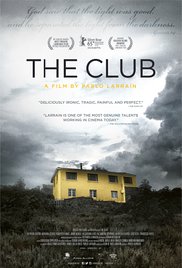
the_club.jpgEL CLUB (Chile 2015) ***1/2
Directed by Pablo Larrain

Review by Gilbert Seah

Pablo Larrain’s (NO, TONY MANERO) latest film is a very different drama that is as absorbing as it is deadly slow-moving. The title of THE CLUB (EL CLUB) refers to an open prison for disgraced priests. The 4 priests and nun confined there in the seaside town of La Boca in Chile by the church are about to have their idyllic sojourn shaken to the ground.
EL CLUB is a very complex film, in a way similar to last year’s CALVARY starring Brendan Gleeson, a black comedy about a priest taking on the sins of a murderer. Both films coincidentally take place in a seaside setting.

The film begins innocently with a greyhound race that takes place in La Boca. The grey greyhound wins the race. It is slowly revealed that the animal is trained by a father who resides in the roomed building. There are three other priests who all place bets. It turns out that Father Vidal (Alfredo Castro), Father Ortega (Alejandro Goic), former army chaplain Father Silva (Jaime Vadell), and senile Father Ramirez (Alejandro Sieveking), disgraced priests are all dutifully tended to by a similarly “retired” nun, Sister Monica (Antonia Zegers), who is apparently not that innocent. She is called a bitch by one of the fathers later on in the film.

Trouble brews when another disgraced priest, Father Lazcano (Jose Soza) is delivered to the house. He shoots himself after a young local fisherman, Sandokan (Roberto Farias), recognizes him. Sandokan, kind of a crazed bum, remembers the abuses he suffered as an altar boy at Lazcano’s hands and starts screaming the abuses outside the doorstep. Then the church dispatches Father Garcia (Marcelo Alonso), a crisis counsellor, to settle things. The priests come to believe, that Father Garcia’s intention is to close the house down.

The story turns into a horrid tale of survival. It is each man for himself, even for Sandokan and Father Garcia who is disliked and looked upon with suspicion by all.

Director Larrain is a great story teller always keeping the audience in anticipation with always a twist in the story around very corner. His camera work is meticulous, capturing the tranquility and imprisonment of the subjects despite the beautiful seaside setting. Violence is kept at a minimum, and mostly left to the imagination. He also keeps each priest as interesting as the other – each having their own individuality despite being there for the identical purpose.
One of the greatest pleasures of the film is the director’s use of Arvo Part’s music. I first heard the Estonian composer’s music, ‘Spiegel I’m Speigel’ when I first saw Gus Van Sant’s 2002 film, GERRY years back. Part known for his classical and religious music, he delivers a beautiful score that adds to both the serenity and eeriness of the film’s proceedings.

Whether the film ending is a happy one is arguable – best left to the audience to decide. But EL CLUB is a story that concerns many key issues – identity, beliefs, redemption, fulfilment but mostly forgiveness and how one can live with oneself after any terrible deed.

Also, Free logline submissions. The Writing Festival network averages over 95,000 unique visitors a day.
Great way to get your story out: http://www.wildsound.ca/logline.html

Deadlines to Submit your Screenplay, Novel, Story, or Poem to the festival:http://www.wildsound.ca

Watch recent Writing Festival Videos. At least 15 winning videos a month:http://www.wildsoundfestival.com

Movie Review: THE WITCH (USA 2015) ****

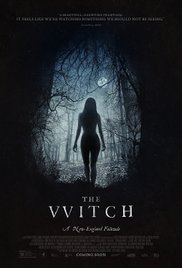
the_witchTHE WITCH (USA 2015) ****
Directed by Roger Eggers

Starring: Anya Taylor-Joy, Ralph Ineson, Kate Dickie

Review by Gilbert Seah

Set in 17th Century New England, writer/director Roger Eggers (whose background is in production design and theatre) has mounted more than a handsome production in his chilling horror debut. Looking like THE BLAIR WITCH PROJECT from the frequent flickering lighting (though the comparison does not do THE WITCH, the better film justice) and Shyamalan’s THE VILLAGE from the period setting, the story follows a newly settled New England family from England.

When the film opens, we hear dialogue which informs the audience that the family has just been banished from the village due to witchcraft, details unspecified. They settle on their own on the forest outskirts. The religious family is comprised of William (Ralph Ineson), his wife Katherine (Kate Dickie) and their five children. The film centres on the daughter Thomasin (Anya Taylor-Joy), who is made to look after her infant sibling while the parents toil the land. But the baby suddenly goes missing (never explained how in the film, but assumed to be taken by a wolf), and Thomasin has no explanation either.

William and Kate descend into hysteria. Did the evil in the woods take their unbaptized child? Their twin children, Mercy (Ellie Grainger) and Jonas (Lucas Dawson), blame Thomasin but their own behaviour has become disturbingly suspect. Middle child Caleb (Harvey Scrimshaw) takes it upon himself to search for the answer with dire consequences. Thomasin admits to being a witch to scare the twins into silence but it backfires on her.

The film has certain unexplained scenes like an actual witch that appears and kisses Caleb. The other is the possession of the twins.

The film succeeds for two reasons. One is its ambiguity which makes everything all the more mysterious and scary. Is the family descending into religious madness or are there supernatural forces afoot? But the film falls apart when director Eggers shows actual demonic forces in motion. Second is the scary effects created by the light, setting and soundtrack. The characters speak with an old Northern England accent and old English which takes a while to get used to. Sample dialogue: “What’s the matter with thee? Come hither!” The story is supposed to be based on folklore and the dialogue adapted directly from old literature.

But THE WITCH is a very scary film- not scary in the form of the typical B-horror flick but in genuine fear of the unknown. Religion and superstition drive the family part. Trust in God appears to be the answer for the family, but faith is obviously not enough. The desperation of the family is on clear display and examination here. Eggers shows differing points of view, from the daughter to the father, mother and even the brother., while always centring on Thomasin. Eggers knows how to create a sense of evil from almost any prop, from the goat, to the evil stare of the rabbit, to the woods to the omnipresent darkness. THE WITCH also contains very disturbing images, made even scarier because often, it is hard to make out exactly what is depicted, and much is left to the imagination. The scariest image is the crow picking at the mother’s breast. Evil, indeed takes many forms.

Altogether a very impressive film debut by Eggers and definitely a most chilling one.

Interview with J. Michael Seyfert (Cine Pobre)

Cine Pobre is a self-funded filmmaking genre without a set of stylistic criteria nor format boundaries, involving many geographically separated creators with at least two things in common: a strong desire to tell our story and to do so with our own resources.

You can also find more info at
www.facebook.com/cinepobre/

I recently sat down with J. Michael Seyfert to talk more about the festival:

Matthew Toffolo: What is your festival succeeding at doing for filmmakers? 

JMS: So far Cine Pobre has co-produced 8 films, and we provide post production talent and technical skills through camera stabilization workshops, and help with branding and niche market exposure. Cine Pobre Film Festival is like filmmaking itself, a collaborative and not a competitive concept.

Matthew: What would you expect to experience if you attend the festival? 

JMS: Personally , unless you’re talking about Orson Welles or Werner Herzog for example I am not keen on listening to a lot of self-congratulating trivia and gossip staged by most film festivals who appear more like cocktail parties. I appreciate excellent programming that has attitude and teeth, to be intriguing,  that’s what Cine Pobre delivers: New Eyes.

Matthew: What are the qualifications for the selected films? 

JMS: Anything goes, but must be self-funded and under $25,000 usd crowd-funding is also accepted, but productions financed by grants and film fund supported budgets are not accepted.

Matthew: Do you think that some films really don’t get a fair shake from film festivals? And if so, why? 

JMS: The business model of conventional festivals, of which there are literally thousands, is strictly a numbers game no matter how idealistic they may cloak themselves. As soon as an event gains some prestige it becomes elitist and exclusionary, rich in overhead and filmmaker exploitative.

Matthew: What motivates you and your team to do this festival? 

JMS: Curating the best self funded films to the widest audience is gratifying, as only the works of story tellers unbeholden to sponsors are censorship-free.

Matthew: How has the festival changed since its inception? 

JMS: Started with small screenings in rural areas to become the largest resource of self-funded film with over 10,000 shorts, features, documentaries, animation, experimental and music videos.

Matthew: Where do you see the festival by 2020?

JMS: We receive entries from about 100 countries and would love to curate films from all 190 states and territories on the planet.

Matthew: What film have you seen the most times in your life?

JMS: Bye Bye Havana

Matthew: In one sentence, what makes a great film? 

JMS: A story so well told that it holds the attention of a 7 year old.

Matthew: How is the film scene in your city? 

JMS: Still emerging from provincialism…. However Cine Pobre is neither stagnant nor static. Over the past 13 years we have taken our screenings to rural areas in Mexico and different countries in Latin America. We hope to also develop events in Africa where many exciting self-funded filmmakers are emerging.

_____

Interviewer Matthew Toffolo is currently the CEO of the WILDsound FEEDBACK Film & Writing Festival. The festival that showcases 10-20 screenplay and story readings performed by professional actors every month. And the FEEDBACK Monthly Festival held in downtown Toronto on the last Thursday of every single month. Go to http://www.wildsound.ca for more information and to submit your work to the festival.

Interview with Kristine Renee Farley (MayDay Film Festival)

The MayDay Film Festival originated in May 2009 at the University of Southern Indiana. It was created by a group of student filmmakers.. Year one was about showing off student films at their event to the student body. Since then, it has evolved into a full fledged festival showcasing films from all over the world.

Website: www.maydayfilmfestival.com

Twitter @MayDayFilmFest

I recently sat down with the Festival Director of the Festival:

Matthew Toffolo: What is the MayDay Film Festival succeeding at doing for filmmakers?

Kristine Renee Farley: I consider MayDay Film Festival’s biggest achievement our audience members. Last year we had 500 people in attendance across our 2-day event. Sometimes it can be difficult for independent film to find an audience, but we don’t have that problem at MayDay. We’re also currently in negotiations with international distribution companies. We want to partner with one to get MayDay Film Festival official selections in front of their eyes, and hopefully the rest of the world.

Matthew: What would you expect to experience if you attend the festival this year (2016)?

Kristine: MayDay is alway a fun experience for attendees. We pride ourselves on not being a pretentious film festival. We have vendor booths similar to what you see at conventions. This gives filmmakers a chance to sell their movies as well as other merchandise like tshirts. But we also invite local businesses and artists to rent booth space as well. We want to be interactive with the whole community, and invite anyone who thinks indie film fans would like to buy their product a chance to get it out there. All the info to get a booth is on our website. We also always have a guest artist or two to do a Q&A panel. We’ve had cosplayer Collin Royster, Emmy-award winning writer of Friday the 13th Victor Miller, Jake Lloyd of Star Wars & Jingle all the Way, and the Star Wars 501st Legion in past years.

Matthew: What are the qualifications for the selected films?

Kristine: Our submission guidelines are pretty loose. We like to have a wide variety of films screen at MayDay. During the selection process, we try to keep a good balance of looking at the quality of everything from camera work, image, audio, acting, and story. A filmmaker may not have had the best camera when they made their film, but if the story is amazing, we’ll still take it. Likewise, if a film looks too beautiful to pass up, we sure won’t.

Matthew: Do you think that some films really don’t get a fair shake from film festivals? And if so, why?

Kristine: I agree to a certain extent, yes. I think the bigger film festivals only take “independent” films that are only so just because a studio wasn’t involved. Yes, TECHNICALLY they’re “independent,” but they have huge stars and the best equipment. It makes sense for a festival to accept such movies because it will help their festival be more successful, so I can’t really discredit them for that at all. But I do believe that a lot of really amazing films that didn’t have the budget and didn’t have the stars do get ignored sometimes. Just because they don’t have that selling power. Which kind of leads into your next question…

Matthew: What motivates you and your team to do this festival?

Kristine: We want to give people a chance to get their films seen. That’s the whole point of making a movie! For people to see it! In addition to our fantastic & growing attendance numbers, filmmakers have the opportunity to secure booth space to sell their DVDs to the right audience – people interested in watching indie film.

For me personally, I’m also an actress working in TV & indie film. It’s a wonderful opportunity to see who’s making amazing films & to check out other actors & actresses who are getting work. We have films that come to us from all over the country & the world. It’s a wonderful networking opportunity for anyone in the indie film scene.

Matthew: How has the festival changed since its inception?

Kristine: This festival has changed SO much! It first started as a few students at the University of Southern Indiana showing off short films that they had made that school year. Then the Filmmakers’ Club was created to give students a more organized foundation to create their films since the school doesn’t have a film program. Each year it’s gotten bigger & bigger, incorporating local filmmakers and businesses. Now we’re in an actual movie theatre (Shout out to Showplace Cinemas in Evansville, IN! They’re the best!), showing films on 3 screens, and have international selections each year. I started helping with the fest in year 3. We had 38 submissions total. This year we had 40 our first day. We’re up to 470 currently, and we don’t close submissions until May 1st! We’ve had to bring on more people to get through the first round of watching films.

Matthew: Where do you see the festival by 2020?

Kristine: I certainly hope we continue to grow as much as we have already. At this time, we’re a not for profit event in the sense that we make absolutely no profit, haha. All fees & admissions go straight back into the festival costs. A lot of the time myself and the other coordinators will spend money out of pocket to make sure everything goes off without a hitch. I’d certainly like to see it begin to turn a profit because we have some amazing ideas to expand the MayDay brand into other film related events. If I had my way, we’d have a different themed event each month!

Matthew: What film have you seen the most times in your life?

Kristine: The absolute most times is probably Harry Potter and the Sorcerer’s Stone. I may have been a teenager when it came out, but I geeked hard core over it. My sister and I were probably watching it 3 times a day that summer we were off from school. I started developing a bit of a British accent. It was pretty crazy, haha. As an adult, it’s probably either Kill Bill or Kiss Kiss Bang Bang. Those films just never get old for me. I notice something new each time I watch them. If you’re talking indie film, you should totally check out Bounty Killer. God, I love that movie.

Matthew: In one sentence, what makes a great film?

Kristine: Oy. ONE sentence? And “great” is so subjective… I’d have to say, “A great film understands it’s audience.” Understanding your audience and how your film is perceived really helps tell a great story. That sentence also allows for films that may not be technically sound, but are still entertaining. &#X1f60a AND it transcends genres. Someone who loves horror may not like romantic comedy, but that doesn’t mean either genre isn’t great.

Matthew: How is the film scene in your city?

Kristine: Well, I’m living in New York City now, so pretty awesome, haha. Back in Evansville, things are pretty hopping, too. The work I got there and the experience I gained have been invaluable to me in pursuing my career. Last year at MayDay Film Fest in particular, the quality of local films skyrocketed. Evansville, IN is definitely holding their own against some of the best films from around the country. Some even won awards against them too! I continue to be impressed year after year at how much my friends & associates in indie film have grown.
_____

Interviewer Matthew Toffolo is currently the CEO of the WILDsound FEEDBACK Film & Writing Festival. The festival that showcases 10-20 screenplay and story readings performed by professional actors every month. And the FEEDBACK Monthly Festival held in downtown Toronto on the last Thursday of every single month. Go to http://www.wildsound.ca for more information and to submit your work to the festival.

Interview with Festival Director Oscar Piloto (Miami Indie Artist Film Festival)

The MIA Film Festival (#MiaFF) is an underground festival based out of Miami, Florida that features films and screenplays of all length and genres worldwide. #MiaFF is unique from the rest because it’s an underground festival that expands the capability of networking with other filmmakers and showcasing films in one location for 9 days in December.

I was fortunate enough to interview Festival Director Oscar Piloto:

oscarMatthew Toffolo: What is the Miami Indie Artist Film Festival succeeding at doing for filmmakers?

Oscar Piloto: What makes us successful is that it’s a new festival and it continues to grow. There are people who believe in the festival and are working with us to achieve our goals. Our goals of giving filmmakers hope for a greater brighter future by helping them create relationships that will last a lifetime. We want to introduce like minded people and guiding them in working together. We want to create a real community that truly allows the growth for individual achievement.

Matthew: What would you expect to experience if you attend the festival?

Oscar: We are big in creating a positive atmosphere with lots of fun in the process but most importantly making sure artists leave the festival with more knowledge of this wonderful industry that we love.

Matthew: What are the qualifications for the selected films?

Oscar: We understand many films are done by striving artists and in many cases even students. However, we would love to see flashes of greatness in all the different facets of filmmaking.

Matthew: As per your festival statement, do you think that some films really don’t get a fair shake from film festivals? And if so, why?

Oscar: I absolutely feel that many films do not get a fair shake. I believe some festivals become too big but aren’t relevant or influential, because they accept quantity instead of quality, like a “first come first serve” basis. I’ve seen films win other festivals that didn’t even get accepted in other big festivals. I’ve also known filmmakers ask for their materials from a festival back and they got their films returned and sealed exactly as they were mailed originally.

Matthew: What motivates you and your team to do this festival?

Oscar: As a filmmaker that had struggled getting a break, I want to help discover new talent and making a difference in the film industry. We want to help create those connections that are desperately needed to succeed.

Matthew: How has the festival changed since its inception?

Oscar: We are only going on our second year but the big changes are having more sponsors. In our first year, the amount of submissions was outstanding. More than I could have hoped for. Now, with the sponsors I hope it will bring opportunity for bigger and better prizes to our filmmakers.

Matthew: Where do you see the festival by 2020?

Oscar: There is a big difference between big festivals and relevant festivals. I see the MIA FILM FESTIVAL as the most relevant film festival in South Florida, where deals get made and talents get discovered!

Matthew: What film have you seen the most in your life?

Oscar: I’ve personally seen “Greese” the most when I was around 12 years old. Not only was I a big fan of John Travolta and Olivia Newton John but I was also a big fan of the music.

Matthew: In one sentence, what makes a great film?

Oscar: A great film occurs when all the little pieces come together, in particular the attention to detail.

Matthew: How is the film scene in your city?

Oscar: I think it is great! There’s great diversity here in Miami from all ethnic backgrounds. In addition, Miami is a beautiful city where everyone wants to come, and the more people the city attracts, the film scene will continue to grow.

_____

Interviewer Matthew Toffolo is currently the CEO of the WILDsound FEEDBACK Film & Writing Festival. The festival that showcases 10-20 screenplay and story readings performed by professional actors every month. And the FEEDBACK Monthly Fesival held in downtown Toronto on the last Thursday of every single month. Go to www.wildsound.ca for more information and to submit your work to the festival.

Interview with Pat Battistini, Festival Director for All Sports Los Angeles Film Festival

The “All Sports Los Angeles Film Festival” was established in 2009 by Pat Battistini. The first year of the festival was held on one day and screened thirteen films. Since then, the festival has blossomed into a three-day event screening an average of seventy films.

To learn more about the festival, go to http://allsportslafilmfest.com/

Matthew Toffolo recently sat down with Festival Founder Pat Battistini:

Matthew Toffolo: What is the festival attempting to accomplish for filmmakers and the attendees?

Pat Battistini: The festival was started because there really wasn’t another outlet for independent sports films and documentaries. As in other niche festivals, we wanted to create an atmosphere for sports enthusiasts. As for the attendees, ultimately, we’d love to have a complete sports festival with everything to clinics to memorabilia. But as of now, our attendees get a lot of sports films to watch in 3 days.

Matthew: Are there a lot of sports genre films being made around the world? Besides the United States, what other countries make great sports films?

Pat: We have screened films from 31 countries. I was surprised at how many filmmakers out there are making the sports genre film. Every year I think that we’ve exhausted the surplus but every year we get more and more films.

I imagine each country has their own great film or films. As to what other countries I feel make great sports films, that answer probably lies within the country itself. I think the difference to why a film in the US might be more well received here than in China is because of the pop-culture. We have our heroes, our folklore, and our favorite sports and they have theirs. I’m partial to our films because I’m usually familiar with the sport or the story. I don’t think Brian’s Song would fare well in India. But on the same note, I don’t think a film about one of their Cricket stars would fare here. That’s not saying their films aren’t great, but if you did a search for the top 25 sports films, probably 90% of them would be from the US because these are the films we see.

Matthew: How did the festival get started?

Pat: I always thought someone should do a sports genre festival so I waited a couple of years to see if anyone was going to do it. When nobody did, I talked with a friend of mine who runs a horror film festival and asked her how I woul dgo about starting a festival. She showed me the ropes that first year. I learned a lot in those first few years but now, it’s kind of a well oiled machine.

Matthew: Where do you see the festival in 5 years?

Pat: I hope we can continue to grow and actually be an outlet for the studios to release their big films during our festival. Also, as I mentioned earlier, the sky is the limit with the festival. Since sports is such a huge part of so many people’s lives, I hope to create something that gets people excited to attend and participate.

Matthew: What obstacles has your festival faced (if any) in the last few years?

Pat: The hardest thing for us has been the lack of sponsors. In any give year in Los Angeles, there are over 80 film festivals. That’s a lot of festivals fighting for sponsorship money, advertising, and media time. Having a festival here in LA is like having a pizzeria in New York; lots of them and everyone says theirs is the best.

Matthew: How many films do you anticipate showcasing at your 2016 Film Festival?

Pat: If I could, I’d screen 100 of them. But with time constraints, I hope to screen about 70. That sounds a lot but that includes everything from spec commercials to shorts to features.

Matthew: Can you give us a sneak peak of what to expect for the 2016 Festival?

Pat: Every year there seems to be a certain sport that takes center stage. One year we had a lot of MMA films. But this year there is a huge variety. I’ve seen films about ceremonial lacrosse sticks to world record skydiving. However, the one common denominator that I can say is that almost all of the films are about the human spirit. Sports are more than competitions. Especially sports films. These films are about people and what they do to achieve their dreams and goals.

Matthew: What do you think the best sports film of all-time is? If you can’t pick one, do you have a top 5?

Pat: I guess I’d have to pick my top 5 because some days I like more than others. Here they are in no particular order:

5.) The Natural
4.) Miracle
3.) Rudy
4.) Field of Dreams
5.) Moneyball

Matthew: What sport generally has the best made sports films? You assume it’s baseball, but is there another sport that also stands out?

Pat: Football, Boxing and Basketball probably have to be close seconds. But when it comes to comedy, I think that doesn’t matter. Caddyshack and Dodgeball are always fun to watch.

Matthew: You you have a favorite sport and sports team?

Pat: I grew up watching and supporting all of the Chicago teams. Si if I had to pick from those, I’d go with the Blackhawks. But now I think I enjoy watching college football more than anything.

Matthew: What film have you seen the most in your life?

Pat: If it’s any film, probably The Godfather. Since it came out around 1972, I’ve had plenty of years to watch. ;o) I don’t know why but I just can’t turn it off if it’s on. As for sports films, I’ve probably The Natural a million times

—–

Interviewer Matthew Toffolo is currently the festival director for the WILDsound Film & Writing Festival.

Interviewee Pat Battistini is a former college wrestler and football player, Pat started his professional career as an Offensive Line Coach at Grand Valley State University.  After several years of coaching, he traded in his whistle for a career in filmmaking.  He has resided in Los Angeles since 1998 where he established the All Sports Film Festival in 2009. Pat has personally represented the festival as an invited guest to Russia, Turkey, India and Italy serving on the jury of their festivals.

Interview with Brandon Ruckdashel (Program Director) NewFilmmakers NY

Brandon Ruckdashel has served as a film programmer for NewFilmmakers, YoungFilmmakers, and as a juror for the Asian American International Film Festival.

NewFilmmakers NY is a weekly screening series based at Anthology Film Archives on the Lower East Side. To learn more about the NewFilmmakers Festival and to submit your film, go to their website at http://www.newfilmmakers.com/

1) What is NewFilmmakers succeeding at doing for filmmakers?

Unlike most festivals we run as a year round series. We program a minimum of 55 events a year and this brings our total films screened to between 750-1000 depending on if we receive extra dates.

With the flexibility our screening schedule gives us we are able to do more diverse and varied programs. We can screen films that many festivals would pass over simply because they do not “fit in.” We also make a special effort to program events that focus on groups traditionally marginalized by the mainstream Hollywood film industry. These groups include women filmmakers, our NewLatino series, and nights specifically for black filmmakers.

2) What are the qualifications for the selected films? Does the film need to be made by a first time filmmaker?

We do not have any specific qualifications. Needing to be a first time filmmaker is actually a very misunderstood representation of our name. We believe that all filmmakers who produce independent non-studio backed films fall into the NewFilmmaker category.

Many NewFilmmakers alumni return each year with their new film or films and we enjoy following their progress.

We are always looking for documentaries to fill into our programs and this coming June we are programming an entire month of LGBT themed films.

3) How many events to do you a year?

55 events per year. We also occasionally add in between 3-7 day festivals as our schedule allows.

4) Where is your cinema located in New York City? How is the area for the arts/film scene?

The Lower East side is the historic New York arts district. No other part of New York city can claim as many artists in residence.

We are located at Anthology Film Archives on 32 Second avenue (corner of 2nd street & 2nd avenue)

5) What motivates you and your team to do this festival for the last 19 years? When did you come aboard?

We originally started NewFilmmakers as an opportunity for NYU film students, who had no access to a theater, for screening their student projects. NewFilmmakers continues to provide opportunities for filmmakers to screen films that might be passed over by traditional film festivals. Screening at Anthology Film Archives amongst the posters for films shot by Jonas Mekas, Jerome Hill, P. Adams Sitney, Peter Kubelka, and Stan Brakhage sharpens this motivation.

I joined as a volunteer six years ago handling technology and marketing. We launched an online distribution platform (NewFilmmakersOnline), a new scheduling interface for the website, and the NewFilmmakers Quarterly Magazine. I took over programming duties about three years ago and have enjoyed using my understanding of the filmmaking process to help promote filmmakers and give them screening opportunities.

6) How has the festival changed since its inception?

NewFilmmakers started out as a “no fees, no forms, no deadlines” event and has evolved into an established and well respected screening series. Although we still receive them on rare occasions we definitely screen a lot less VHS.

7) Where do you see the festival by 2020?

That is a tough question to answer. So much has already changed in the last year with the addition of DCP as a screening format and moving our nightly events to all digital delivery. Four years seems like a short period of time, but their are many technological advances expected within the film industry by then. Not least of these is the advent of HEVC replacing H264 which will see our goal of moving to “all digital” delivery become practical.

On the programming side I see more featurette programs putting two or three 30+ minute films together. Unfortunately filmmakers have decided to increase the length of their shorts instead of taking a risk and shooting a feature. This has begun to cause some real programming problems in the last two years.

8) What film have you seen the most times?

I think that’s a toss up between the original “Star Wars” trilogy and “Hook” with Robin Williams. Star Wars appeals to me the most because the technology to make it barely existed and the innovations they were forced to make come across distinctly and add a rough edge, which makes it feel real.

9) In one sentence, what makes a great short film?

Succinct simple efficient pacing which illustrates a story while not trying to prove the intelligence of the filmmaker who directed it.

10) What would one expect when they attend your festival?

We have a photographer. We have a step-and-repeat. We have a party. We always encourage filmmakers to work with each other to bring beverages and snacks.

Every night is a different night. We program in a way that filmmakers with similar styles, genres, and interests are screening together. This creates an incubator type atmosphere where there are a number of filmmakers who can walk away from the night having made new friends or met people they’d like to work with on future projects.

When a filmmaker gets invited to a festival it is really up to them to take control of the atmosphere for the evening. Print a “step-and-repeat,” a few large format posters, and bring lots of information about your film. People love seeing films when they know it will be turned into an event and I can attest that the energy and money put into promoting is always returned by the energy of the audience that it attracts.

—–

Interviewer Matthew Toffolo is a multiple award winning short filmmaker. He is currently the Festival Director for the WILDsound FEEDBACK Film & Screenplay Festival.

Interviewee Brandon Ruckdashel is a New York based actor and filmmaker who recently finished production on his debut feature “Grinder.” As an actor he starred in HBO/Cinemax’s hit series “Co-ed Confidential” and numerous made-for-TV movies directed by Roger Corman alumnus Fred Olen Ray and Jim Wynorski. Brandon’s production company Ruckus Film Works specializes in post production, extreme dialogue denoising, and other delivery services (including DCP authoring).

He can be contacted through facebook at facebook.com/b.ruckdashel

his website www.BrandonRuckdashel.com

or Brandon@NewFilmmakers.com


Movie Review: POINT BREAK (2015)

Deadlines to Submit your Screenplay, Novel, Story, or Poem to the festival: http://www.wildsound.ca

point_break_posterPOINT BREAK (USA/China/Germany 2015) *1/2
Directed by Ericson Core

Review by Gilbert Seah

POINT BREAK is a remake of the Kathryn Bigelow 1991 hit film starring Patrick Swayze and Keanu Reeves. Bigelow is a female director able to create big hits with strong male content action films like THE HURT LOCKER, ZERO DARK THIRTY, STRANGE DAYS and my favourite and her first film, NEAR DARK. Director Ericson Core has tough shoes to fill.

The surfing definition of POINT BREAK refers to the type of long-lasting wave found off a coast with a headland or point. A point break is formed when a swell moves around the land almost at a right angle to the beach and a break which begins near the point gradually progresses along the wave. Bigelow’s film involves a FBI agent going undercover to infiltrate a gang of bank robbers disguising themselves as surfers.

The difference in the new POINT BREAK is a series of robberies done by not surfers but extreme sport specialists. They do the big surf in the last climatic scene but engage too, in other sports such as snowboarding, rock climbing and wingsuit flying.

The story of the new POINT BREAK involves a young FBI agent, Utah (Luke Bracey) infiltrating a team of extreme sports athletes he suspects of masterminding a string of unprecedented, sophisticated corporate heists. He engages in this quest as redemption after losing his brother in an extreme sport accident. Deep undercover, and with his life in danger, he strives to prove these athletes are the architects of the mind-boggling crimes that are devastating the world’s financial markets.

Newcomer Luke Bracey delivers a weak performance. With his blond hair and chiseled body, he looks like a model in many scenes with his perfect blond hair flung across his face. Delroy Lindo playing Utah’s boss fairs worse. All he does is bitch about Utah’s job. Utah takes the risks and fights the bad guys but his boss keeps complaining and giving Utah a hard time. Edgar Ramirez (an up and coming star, his last film JOY), who plays bad guy Bodhi, cannot help much either.
The film contains some good scenes involving extreme sports. The rock climbing, surfing and motorbike segments are well shot. But the action and fight sequences lack any excitement.

The plot lacks credibility. The eight ordeals that Bodhi seeks make little sense. He ends up completing seven with the last one left in limbo. Utah somehow manages to figure out all the ordeals Bodhi has completed, something hardly believable.

POINT BREAK which costs close to $100 million only made $10 million domestic the first weekend. However, being a Chinese and German co-production, it opened elsewhere a week before North America grossing a remarkable $50 million, which helps the poor domestic numbers. Still, POINT BREAK is far from being a satisfying action flick. The film sags after the first 15 minutes and picks up just a little towards the end. The open ending does not help either. Action fans prefer closure. Open endings are more suited to artsy films which POINT BREAK definitely isn’t.

POINT BREAK ends up the most boring action film of 2015.

Also, Free logline submissions. The Writing Festival network averages over 95,000 unique visitors a day.
Great way to get your story out: http://www.wildsound.ca/logline.html

Deadlines to Submit your Screenplay, Novel, Story, or Poem to the festival:www.wildsound.ca

Watch recent Writing Festival Videos. At least 15 winning videos a month:http://www.wildsoundfestival.com

Movie Review: 3 1/2 MINUTES, 10 BULLETS (USA 2015) ***1/2

Deadlines to Submit your Screenplay, Novel, Story, or Poem to the festival: http://www.wildsound.ca

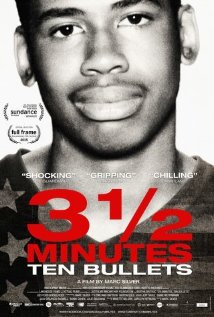
3_minutes_ten_bullets_poster3 1/2 MINUTES, 10 BULLETS (USA 2015) ***1/2
Directed by Marc Silver

Review by Gilbert Seah

An altercation begins over loud rap music at a gas station parking lot. 3 1/2 minutes and 10 bullets later, a black teen, Jordan Davis is shot dead by a white man in a car. The totally absorbing documentary is a courtroom drama, made even more real because what transpired is not only true but relevant in the perception of homicide and race in America.

The facts of the case: In 2012, a middle-aged white man, Michael Dunn, was arrested after fatally shooting a young black man, Jordan Davis, outside a gas station in Jacksonsville, Florida with his gun in the glove compartment of his car. It was a case of loud music. While Dunn’s fiancé went into the station for wine, loud music from a car with 4 black youths caused Dunn to ask them to turn the ‘rap crap’ down. The altercation escalated to the shooting of Jordan while the youths’ car pulled away.

The jury of 12 is to determine the verdict of the 5 counts of murder. What is so different about this doc is that director Silver puts the audience in the position of the jury. All the facts are presented in disturbing detail. The audience hears both sides of arguments of the two attorneys, examines the faces of both Dunn, the accused and the parents of the victim, and each the enactments. As the jury enters closed doors to make the decision, the audience is also forced to come up with his or her decision on the case. It is a very good tactic that works well to keep the audience focused on the facts and absorbed in the film at the same time.

The interviewees include Lucia McBath and Ron Davis, Jordan’s parents. The court proceedings focus often on the reactions of accused Michael Dunn, often in closeups, as if the man can be in scrutiny by the audience. The mother is often shown in tears while the father peaks fondly of his son, like his last time holding the boy in his arms in the hospital. As for Dunn, the camera allow him to tell his side of the story, how he loves his fiancé and how he feels he is the victim who should not deserve life imprisonment. In his own words, he just wants to go home to make love to his wife and then sleep. Director Silver makes his story a very personal and emotional one. On the other side, the audience also sees how good each lawyer is, each able to manipulate the evidence and testimonies to the side’s favour.

The attorneys make it clear that the case be treated as a nonracial crime, and one that resulted in antisocial behaviour and loud music. But this turns out to be another very high profile trial, very similar to the Trayvon Martin killing, in which a young black man in Florida was killed by a white community-watch volunteer. The demonstrations outside the court indicate the people want to know if the shooting young black men is something white people can get away with. It is clear thy do not want the truth, they want a guilty verdict regardless. But for Canadians and other non residents in the States, the case is more about guns – whether the right to bear arms in the States is still worth the mindless deaths of so many.

From the testimonies, it is clear that someone is lying. Dunn could be lying that he saw a weapon and acted in self define. or the youth could have discarded the weapon before the cops arrived. But self defense or not, Jordan did not deserve to die.

Silver’s documentary is both timely in its subject matter and absorbing in its execution. These are two good reason to put this doc on your must-see 2016 list.

Also, Free logline submissions. The Writing Festival network averages over 95,000 unique visitors a day.
Great way to get your story out: http://www.wildsound.ca/logline.html

Deadlines to Submit your Screenplay, Novel, Story, or Poem to the festival: http://www.wildsound.ca

Watch recent Writing Festival Videos. At least 15 winning videos a month: http://www.wildsoundfestival.com