Movie Review: BARBERSHOP – THE NEXT CUT

Deadlines to Submit your Screenplay, Novel, Story, or Poem to the festival: http://www.wildsound.ca

barbershop_the_next_cut.jpgBARBERSHOP – THE NEXT CUT (USA 2016) **
Directed by Malcolm D. Lee

Starring: Ice Cube, Regina Hall, Anthony Anderson, Cedric the Entertainer, JB Smoove, Common, Nicki Minaj, Sean Patrick Thomas

Review by Gilbert Seah

The fourth instalment of the BARBERSHOP films (counting the spin-off BEAUTY SHOP) has Calvin’s Barbershop in South side Chicago doing their usual shenanigans. Calvin’s Barbershop is owned by Calvin (Ice Cube), of course with his partner Angie (Regina Hall).

This time around, the all male barbershop has incorporated female hairdressers as well. This gives the script an excess to lots of verbal battle of the sexes – all mediated of course by Calvin. The ensemble cast has lots of comedic material here to show their stuff.

As there are many characters in the film, the film includes several parallel stories in the plot, all of seemingly equal importance.
The main one involves Calvin relationship with his coming-of-age son.

Calvin’s son is about to join a gang, obviously not realizing how fortunate he is tom have his parent’s love and care. Another tied-on plot addresses the violence of Chicago. Too many kids are killed everyday due to gang related crimes. The barbershop decides to do something about it by offering free weekend haircuts to create a ceasefire. Other subplots involve Rashad (Common) fooling around with Draya (Nicki Minaj) under the eyes of his suspicious wife. Calvin is also in the process of buying property north and to move his barbershop to a safer place. All these plots are loosely tied together and are intercut as if the director is a traffic cop.

The blend of drama and comedy does not mix well. Ice Cube appears to be in Tyler Perry mode, being too preachy and trying to be goody-two-shoes in the African American community.

It takes a full third of the film to get its footing. The first third clumsily re-introduces all the characters of the barbershop, most of whom the audience have forgotten as the last barbershop film was made about 10 years back. The last part gets too sentimental and preachy and all the good intentions appear a bit too much.

But the film contains a few good comedic set ups. When the film just lets the actors loose and do their thing, it generates the most laughs. One is Nicki Minaj shaking and showing off her booty. The bit where all the employees in the barbershop break out into an impromptu dance is extremely well done with Common stealing the show with his break-dancing. Cedric the Entertainer is always very funny and is the funniest barber in the shop. Ice Cube proves again he can do both serious and comedy.

But the film should cater more to African Americans. For others, the accent is a bit difficult to follow and a few jokes will go above the heads on non-black audiences. But BARBERSHOP fans should not be disappointed with this entry. The film is tagged to be number two this weekend following THE JUNGLE BOOK.


Also, Free logline submissions. The Writing Festival network averages over 95,000 unique visitors a day.
Great way to get your story out: http://www.wildsound.ca/logline.html

Deadlines to Submit your Screenplay, Novel, Story, or Poem to the festival:www.wildsound.ca

Watch recent Writing Festival Videos. At least 15 winning videos a month:http://www.wildsoundfestival.com

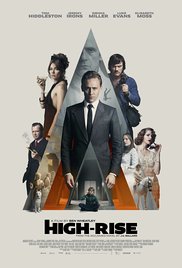
Movie Review: HIGH-RISE, Starring Tom Hiddleston, Jeremy Irons, Sienna Miller

Deadlines to Submit your Screenplay, Novel, Story, or Poem to the festival: http://www.wildsound.ca

high-rise.jpgHIGH-RISE (UK 2015) ***
Directed by Ben Wheatley

Starring: Tom Hiddleston, Jeremy Irons, Sienna Miller, Luke Evans, Elizabeth Moss, James Purefoy, Sienna Guillory

Review by Gilbert Seah

HIGH-RISE is a much anticipated film among cineastes. The rights for J.G. Ballard’s (best known for his novel CRASH directed by David Cronenberg) book had been snapped up by producer Jeremy Thomas for decades and a number of directors were slated to make the film, among them Nicholas Roeg. But director Ben Wheatley, British new film enfant terrible snatched the prize after directing two art-house low budget hits A FIELD IN ENGLAND and THE SIGHT-SEERS. Ballard’s book on a dystopian society set up in a 1970’s tower block (film shot in Northern Ireland) where the higher classes occupy the higher floors with better privileges such as parking spots and facilities usage like the summing pool, is a difficult one. The social strata eventually breaks down following a string of building malfunctions.

HIGH-RISE opens with a Dr. Robert Laing (Tom Hiddleston) at his high rise building flat apparently roasting and eating a dog’s leg on the balcony. The film flashes back three months earlier to the events that led to this odd state.

Dr. Lang arrives and occupies in the centre section of the building – reason not given. He meets the building’s architect, Anthony Royal (Jeremy Irons) who lives in the penthouse and various other occupants including Charlotte, Royal’s aide (Sienna Miller) and a nasty documentary-maker (Luke Evans) who ends up creating a lot of trouble including wanting to take down Royal. Wheatley’s film charts the downfall of order and the rise of anarchy in the building. Finally, the residents stay in and do not venture out to work, waging wars with each other. Wheatley has directed films with similar themes. THE SIGHTSEERS sees the volatile and violent breakdown of the relationship of a new couple while A FIELD IN ENGLAND featured a battlefield among warring factions.

The Korean film SNOWPIERCER two years back featured a similar premise. The last inhabitants on Earth are stuck on a train travelling around the Earth forever with the lower working classes at the back of the train and the richest at the front. The workers revoke and move up the front of the train.

But HIGH-RISE fails to engage the audience despite the Ballard’s difficult novel. It should be noted that Ballard used to hang around with William Burroughs whose NAKED LUNCH with Ballard’s own CRASH ended up as one of the most unlikeable/difficult films ever made. Given that Amy Jump’s script and Wheatley’s direction make little attempt in tying to make their film more coherent or engaging. When Dr. Laing first meets Chartlotte, her comment is on Laing’s body being almost a perfect specimen implying a detachment of human nature.

The rise of the building’s anarchy is also not well orchestrated. Wheatley appears more interested in the film’s sets and images than anything else. To the film’s credit, the production values look great with the film having a past future feel and a look like the old 70’s futuristic films like Joseph Losey’s MODESTY BLAISE. Whereas films like SNOWPIERCER relied on action to grab the audience’s attention, HIGH-RISE consists of a whole lot of cinematic/dramatic set-ups with too much left to the audience to decipher as to what is happening.

Hiddleston delivers a good nuanced performance appearing out of place and finally connecting with the anarchy just as his confident behaviour at the start of the film breaks down to insecurity. Still Wheatley’s film is an intriguing one and one that shows his ability to set his imprint on a story, whether it be successful or not.


Also, Free logline submissions. The Writing Festival network averages over 95,000 unique visitors a day.
Great way to get your story out: http://www.wildsound.ca/logline.html

Deadlines to Submit your Screenplay, Novel, Story, or Poem to the festival:www.wildsound.ca

Watch recent Writing Festival Videos. At least 15 winning videos a month:http://www.wildsoundfestival.com

Interview with Executive Director Nina Streich (Global Peace Film Festival)

Since its inception in 2003, the GPFF has shown over 500 films from around the world. The critically acclaimed programming has included Academy Award winning, nominated and short-listed films. In his blog, former Orlando Sentinel film critic Roger Moore called the GPFF “…one of the best festivals in this part of the country” and said, “Global Peace has the best documentaries of any festival.” GPFF’s leadership believes that to further its mission, success should not simply be measured by attendance numbers but by the engagement the films inspire from the audience – at the festival and beyond.

Interview with Nina Streich

Matthew Toffolo: What is your Film Festival succeeding at doing for filmmakers?

Nina Streich: The Global Peace Film Festival (GPFF) is about actively engaging audiences to do something about the issues in the films they see. Watch Films, Get Involved, Change Things is our tagline and we seek films, mainly documentary but narratives too, that have been produced to have an impact on the issues they address. Filmmakers find enthusiastic audiences and meet leaders of organizations that are working on the issues the their films address. In the past few years, we have begun to offer other services for filmmakers beyond the festival including impact consulting and fiscal sponsorship.

MT: What would you expect to experience if you attend the festival this year (2016)?

NS: Most films are followed by discussions with filmmakers and also representatives from local organizations that work on the issue(s) raised in the films. The Q&As are often longer than those at most film festivals. Filmmakers find the audiences engaged and interested in their films as well as the issues they raise. Festival staff and volunteers work to make the GPFF a warm and welcoming experience for filmmakers and audiences alike.

MT: What are the qualifications for the selected films?

NS: We program features and shorts – documentary, narrative and animation. The majority of the program is non-fiction but we always want to include fiction work. We have always programmed films that are “mediums” – between 40 and 65 minutes. Our approach to the definition of “peace” is very broad and includes everything from conflict resolution, social inequality (class, race, gender, age, mobility, etc.), environment/environmental justice, LGBT rights, fair trade and new business models, human trafficking, sports and recreation, comedy/satire. We look for films that inspire and educate. We also include an online selection of films, mainly shorts, in addition to the main program, during the week of the festival.

MT: What motivates you and your team to do this festival?

NS: We are motivated to present a great program that addresses the many aspects of peace and produce an event that is a catalyst for community engagement.

MT: How has the festival changed since its inception?

NS: The festival has grown in both size and impact. 2016 will be our 14th festival. We recognized the changing model of film festivals and decided early on to steer the festival in a direction that served the community in a deeper way, beyond bringing a crowd to a downtown venue for a passive viewing experience. We sought to develop relationships with the filmmaking community that focused on the “why” motivating filmmakers. This involved moving to pull other partners into the festival to build a new structure that would serve as a networking hub. This includes schools, libraries and universities to add depth, variety and timeliness to their community offerings. We reached out to community groups to bring the same benefits of our programming to help educate, energize and increase their member base. Our programming has always been centered on active engagement with our audience.

MT: Where do you see the festival by 2020?

NS: As the festival has evolved, we have begun to offer services to filmmakers (whether their work has been in the festival or not) including impact consulting and fiscal sponsorship.

MT: What film have you seen the most times in your life?

NS: I’m always looking for and want to see new films so I can’t think of what I’ve seen the most times! Rather than the films that I’ve seen the most times, I think more about the films that have influenced me the most. It’s a long list…

MT: In one sentence, what makes a great film?

NS: A great story.

MT: How is the film scene in your city?

NS: I live in New York and the festival is in Central Florida. New York, of course has an incredible film scene. Central Florida doesn’t have anywhere near the size of the film scene as New York, but it is just as engaged, passionate and exciting.

****
Nina Streich has an extensive background in both the film/TV/media industries and in the political arena. She held senior management positions in other film festivals prior to creating the Global Peace Film Festival in 2003 including Festival Manager of the Newport International Film Festival and Development Director of the Nantucket Film Festival. She began her career as a film editor, cutting trailers and marketing material for over 50 major studio and independent features, including The Elephant Man, Raiders of the Lost Ark and Scandal. In politics, she has worked for many candidates, from local to presidential campaigns. She was a coordinator of the Inauguration of Mayor David N. Dinkins in New York City in 1990 and was appointed Deputy Film Commissioner for the NYC Mayor’s Office of Film, Theatre & Broadcasting. After leaving the Mayor’s Office, she was the Deputy Executive Director of the NYC Host Committee for the 1994 Grammy Host Committee. An accomplished events producer, she has organized film premiers, music festivals, conferences, parades, street fairs and press conferences. She has produced several documentaries on subjects she is passionate about.

_____

Interviewer Matthew Toffolo is currently the CEO of the WILDsound FEEDBACK Film & Writing Festival. The festival that showcases 10-20 screenplay and story readings performed by professional actors every month. And the FEEDBACK Monthly Festival held in downtown Toronto on the last Thursday of every single month. Go to www.wildsound.ca for more information and to submit your work to the festival.

Interview with Festival Director Michael Helman (WILLiFest)

http://www.willifest.com

facebook | twitter | youtube

Interview with Festival Director Michael Helman:

Matthew Toffolo: What is your Film Festival succeeding at doing for filmmakers?

Michael Helman: Our festival gives independent filmmakers an opportunity to have their film screened professionally in New York City. There are not many opportunities for that in NYC. The few opportunities that do exist like Tribeca and NY Film Festival are incredibly difficult or impossible for the small filmmaker to get into. There are many other film festivals in NYC but screenings at many of them are not quite professional.

We also offer additional events like networking events and panels. Many festivals skip or skimp on these important events. When filmmakers are traveling from another city, it is the festival’s responsibility to play host and at a minimum, entertain and educate those filmmakers who have spent the money to travel to NYC and support the festival.

MT: What would you expect to experience if you attend the festival this year (2016)?

MH: Our festival is continuing to narrowly focus on the emerging filmmaker. We have offered many other events at our festival, street fairs, concerts but we have found that filmmakers find these to be a distraction for what they are really interested in, which is watch film, talk film and learn about film. We have heard them and are focusing on doing just that as well as we can.

MT: What are the qualifications for the selected films?

MH: Nothing specific. We offer many categories of films and are simply looking for the best in those categories. We have reduced the number of films this year that we plan on exhibiting in order to make entry into the festival more competitive and feature the best of independent film at the festival for the audience.

MT: Do you think that some films really don’t get a fair shake from film festivals? And if so, why?

MH: Of course. Top tier festivals are very political and are somewhat slaves to their sponsors and partners so they have only so many slots available to discover new filmmakers and small films. Very small festivals are not receiving enough submissions and variety to find the next major filmmaker. Mid-tier festivals are the sweet spot because they receive enough varied submissions to discover new talent each year. One year we showed a short film from an NYU filmmaker and saw something in the film. That film went on to win the Academy Award that year for Best Short. This film was passed over by the larger festivals.

MT: What motivates you and your team to do this festival?

MH: We are filmmakers ourselves with a long history in film production. We produced a short film several years ago. The film was accepted to a bunch of festivals so we decided to travel the country with it and see what festivals we like. We were quite unimpressed and decided we could do a better job. Producing a good festival is an incredibly difficult process. We have found it to be as complex as producing a feature film… perhaps more difficult. Pulling off a well run event with limited staff and financial resources is no easy feat. We enjoy the challenge and the opportunities it brings to struggling filmmakers to find an audience and have their work be seen.

MT: How has the festival changed since its inception?

MH: We started as a LARGE, multi-disciplined arts festival. Our first year included an arts exhibit, storytelling competition, 47 indoor/outdoor concerts, street fair, half a dozen parties, opening night gala, closing day awards ceremony and almost 200 screenings. It was a monster spread out over 12 venues throughout Brooklyn. We have learned from the first year successes and stumbling blocks and have adjusted the festival each year. The rest of the answer was addressed in question 2.

MT: Where do you see the festival by 2020?

MH: No clue. We see our focus continuing to narrow. Depending on how this upcoming festival goes, we will probably continue to narrow the focus of the festival and numbers of screenings. We are continuing to grow our screenplay competition. We are trying to offer our filmmakers more benefits that they don’t always receive at other festivals like full festival passes for them and their co-producers so anyone coming out to support the festival can enjoy the entire event at no cost. We have always had an issue that most festivals charge visiting filmmakers to attend any events as well as screenings. The festival only exists and excites audiences because these talented filmmakers are attending these out-of-town festivals so they can address the audience who has chosen to view their film and answer any questions they might have. Q&A is pretty much the only thing that separates the festival experience from the movie-going experience.

MT: What film have you seen the most times in your life?

MH: The Graduate or Back To The Future.

MT: In one sentence, what makes a great film?

MH: Story. We look for a professionally produced film with good lighting, camera work, acting and especially sound. However, we have accepted less technically proficient films because the story was so compelling. Entertainment these days are driven by content. Youtube videos can be most poorly produced disaster you have ever seen but still achieve over a million views because the content is compelling to a large, general audience. If you start with a good idea, take your time and turn this compelling story into a well-written screenplay, you are already ahead of most films out there, including Hollywood films. It starts with the story and the script and everything else just enhances it and hurts it. Bad acting is a killer, so there is no easy path to making a great film. But it all starts with an interesting story. It is a lot more difficult to achieve then it sounds.

MT: How is the film scene in your city?

MH: What is there to say, New York City is arguably the center of the entertainment world. You feel it as you walk these storied streets through Manhattan and Brooklyn. If your film is going to show anywhere in this world, most filmmakers dream of a New York City screening and we aim to offer just that.

_____

Interviewer Matthew Toffolo is currently the CEO of the WILDsound FEEDBACK Film & Writing Festival. The festival that showcases 10-20 screenplay and story readings performed by professional actors every month. And the FEEDBACK Monthly Festival held in downtown Toronto on the last Thursday of every single month. Go to www.wildsound.ca for more information and to submit your work to the festival.

Interview with Festival Director Jonáš Vacek (The WE Festival)

The WE Festival
April 24th — May 1st 2016
The aim of The WE Festival is to stimulate local culture by connecting all groups present in the city, and use that collective empowerment to achieve together what would be impossible on our own. This can be hosting a workshop promoting sustainability, presenting at one of our Pecha Kuchas, performing at one of our music events or parties or organising something outside of the box. We’ve now had 6 years of experience and each year only gets bigger and better!
Interview with Jonáš Vacek
 

1) What is your Film Festival succeeding at doing for filmmakers?

We are giving a voice to the unheard. Since we have blocks that aren’t seen at many other film festivals, focussed on diversity with multicultural and lgbtq community content. We even have blocks that are focussed on coexistance and sustainability. We love new talent and different forms of audiovisual expressions which is why we welcome new talent and experimental films.

2) What would you expect to experience if you attend the festival this year (2016)?

The finest selection of films from all over the world. World-renowned artists but also new talent. There are Q&A’s happening after different films to get even more closer into the experience you just had. We have an event called One Night stand, where you make and finish a whole short film in the same time it would take you to have a one night stand. The participants films are screened during the festival and can win awards for their accomplishments. We have lectures from teachers, filmmakers from the field. We have awards given by our jury as well as our audience has a voice to award films with prizes. The WE Film festival is part of the WE Festival so there is music, amazing food and other artistic expressions.

3) What are the qualifications for the selected films?

We focus in on films that were made in the last 48 months. And the films have to be in english one way or another.

4) Do you think that some films really don’t get a fair shake from film festivals? And if so, why?

Jonas: Yes, it is a bit sad to cinsider how many films we had to reject only becasue we only have so much time to project. A lot of good talent is rejected this way, pretty uch against our will, but there’s only so much we can do…

Aiman: I agree with this. The difficult thing is that every festival has an identity. And as Festival Director you have to honor that identity which means that some movies, however great they are don’t match with the identity of certain film festivals and that is why they aren’t chosen. I wish there would be clearer communication towards why each film is not selected, but with thousands and thousands of submissions it’s humanly impossible to explain that to every filmmaker.

5) What motivates you and your team to do this festival?

Jonas: I love the ambience and vibes of a film festival, binge-watching films that you would never have the chance to see otherwise, and the discussions that come afterwards. I’ve always admired the work of the organisers and I feel that my current city really deserves a thematically wide festival.

Aiman: From when I can remember I have always been fascinated by film. It was also a thing I did with my dad growing up, watching films that challenged our life views and have discussions about them. Also as a filmmaker it’s challenging to get your work be viewed. I know so many talented filmmakers and felt we could add something awesome to this beautiful city!

6) How has the festival changed since its inception?

The WE Festival itself has never included a film festival up until this year. Since 2010, WE have transformed ourselves from a three day festival with a few workshops and some DJ performances into full-blown, city-wide 8-day cultural feast with Art Exhibitions, Pecha Kuchas, Workshops ranging from cooking, pole dancing, DJing, ceramics, street photography; as well as an insanely varied list of musical performances throughout the week, or the addition of the film festival in this year’s edition.

7) Where do you see the festival by 2020?

At the current rate, probably a two week long festival taking over pretty much most of the city… More screening blocks, more venues, and more Q&As!

8) What film have you seen the most times in your life?

Jonas: Probably Pelíšky (Cozy Dens, 1999), a film about a few neighbouring families during the Communist regime, and how they interact within and between each other. It’s a got-it-all film with great drama, love, humor, dilemma, pretty shots and conflict. I haven’t been born until more than a decade after the fall of the regime, but I feel it is one of the best portrayals of the complicated stories due to the country’s politics of those times.

Aiman: The Matrix, even though not the Best film ever made. Was for me growing up the film that made the most impact for the time it came out. Even when I watch it now, I still feel the magic that I felt when I watched it as a 12 year old teen.

9) In one sentence, what makes a great film?

Jonas: I don’t think there’s a single recipe to make a “great” film, but for me it is the way the creators handle balancing aesthetics against a story that should truly mak your consider what are the reasons why characters behave the way they do, and how well-thought out these “forces” are.

Aiman: For me it’s very clear what makes a great film. Every film is made out of ingredients necessary to make it great. You can see pretty clearly when they lack or when every ingredient simmers beautifully together.

10) How is the film scene in your city?

Jonas: Maastricht is a small city with around 100k inhabitants, but considering its small size, there is a very large group of people who truly want to push what we would consider as “worthwhile” cinema, demonstrated by the many initiatives from the international students as well as the proud locals, with a nie selection of art-house cinemas, other film festivals and organisations helping people create their projects

Aiman: I am from Utrecht myself. The National film festival is held there every year as well as many other festivals. I am pretty happy with the scene. I just wish that there would be more visitors of film in our city. Everybody turns up for the big ones, but the smaller important ones don’t get viewed by as many people as I would like to. Also film funding in Utrecht could be structured in a clearer way.


****

Interviewer Matthew Toffolo is currently the CEO of the WILDsound FEEDBACK Film & Writing Festival. The festival that showcases 10-20 screenplay and story readings performed by professional actors every month. And the FEEDBACK Monthly Fesival held in downtown Toronto on the last Thursday of every single month. Go tohttp://www.wildsound.ca for more information and to submit your work to the festival.

Interview with Festival Director Berwyn Rowlands (Iris Prize Festival)

The Iris Prize Festival is a five day public event which includes screenings of the 35 short films competing for the Iris Prize, 15 competing for the Best British Iris Prize, premiere screenings of new feature films, retrospectives, panel sessions, networking opportunities, parties and a glittering awards show. All events are open to the public and take place at Cineworld, Chapter, and Park Inn Hotel in Cardiff.

Past winners, include Dee Rees (US) – 2007, Till Kleinert (Germany) – 2008, Eldar Rapaport (Israel/US) – 2009, Magnus Mork (Norway) – 2010, Daniel Ribeiro (Brazil) – 2011, Grant Scicluna (Australia) – 2012, Tim Marshall (Australia) – 2013, Brendon McDonall (Australia) – 2014 and Arkasha Stevenson (US) – 2015.
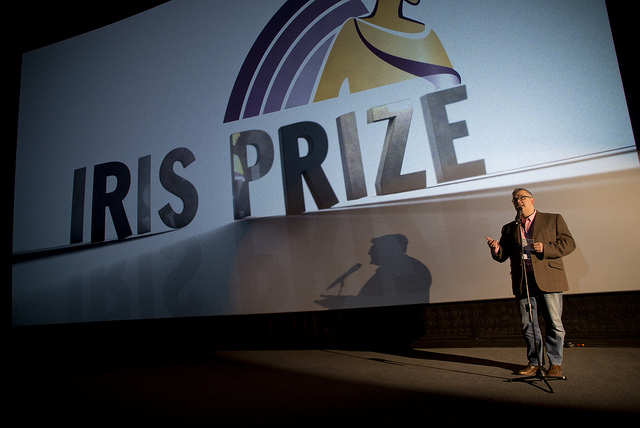
Berwyn Rowlands(4)Interview with Berwyn Rowlands:

Matthew Toffolo: Why is Iris special?

Berwyn Rowlands: The Iris Prize – Cardiff’s International LGBT Short Film Prize is supported by The Michael Bishop Foundation and continues to be the only LGBT short film prize in the world which allows the winner to make a new film. Iris is what film makers need – funding, support and guidance. The winner receives £30,000 to make their next short film in the UK. 7 short films have been produced to date in collaboration with the winning filmmakers of the Iris Prize. The 8th short is in pre-production.

MT: How big is the Iris family?

BR: The Iris family is international and brings together a global network of 25 partner film festivals in 19 countries. Film makers, journalists, distributors and members of the public who are interested in film making – gay or straight are members of the Iris family. Actor Simon Russell Beale (Spooks), authors Alan Hollinghurst (The Line of Beauty) Sarah Waters (Tipping the Velvet), and journalist Johann Hari (Independent) have all been members of the prestigious International Jury. 24% of the Iris audience are straight!

The Chair of the Iris Prize is much respected journalist Andrew Pierce. He is supported by five patrons who offer the festival invaluable support: Lord Glendonbrook (Michael Bishop), Matthew Rhys (Actor), Sara Sugarman (Director), Christopher Racster (LA based Producer) and Carol Coombes (Miami based Festival Producer).

MT: What is your Film Festival succeeding at doing for filmmakers? 

BR: We try our best to find a new audience for filmmakers work and each year our audience numbers increase. I guess we are also unique in that we invest in film production. Each year at least one short film is funded by the festival through the Iris Prize. The £30,000 cash prize is the world’s largest LGBT short film prize and is supported by the Michael Bishop Foundation. To date we have produced 7 short films with the winning film makers and we are currently in pre-production with the 8th.

MT: What would you expect to experience if you attend the festival this year (2016)? 

BR: 2016 is our 10th anniversary so you will experience some reflection looking back but mostly, we will be looking forward. We’ve increased the number of films competing for the two main short film prizes. Five new partner festivals have also joined the family bringing the total number to 25. This network of festivals in 19 countries makes us confident that what you see at Iris is truly the best of the best. Our new motto last year was “Watch Films. Party Nightly. Repeat” I expect more of the same in 2016 with the added bonus of a 5 day long 10th birthday party!

MT: What are the qualifications for the selected films?

BR: We delegate the responsibility for selecting most of the short films at Iris to our 25 partner festivals. Each partner is asked simply to select the best short film from their country or region. We talk about excellence in storytelling, which involves many people across many disciplines. Film is a collaboration! But at the heart is the ability to tell a story and captivate an audience.

MT: Do you think that some films really don’t get a fair shake from film festivals? And if so, why? 

BR: I don’t know is the answer! We are quite unique at Iris in that we can appreciate and understand both sides of the debate as we are both film producers and festival organisers. To get the most out of a festival experience, the film maker needs to do quite a lot of research. Just appearing without any prep work at a festival, could end up a costly and worthless exercise. Similarly I think festivals must be honest about what they can offer the film maker. Don’t exaggerate the number of press attending for example. Try and be as generous as you possibly can with visiting film makers – if they leave happy they will be the best ambassadors for your festival.

MT: What motivates you and your team to do this festival? 

BR: We basically want more people to see LGBT stories. The festival has been a great way to start the process. However at Iris we have adopted a holistic approach to reaching our audience, working in partnership with broadcasters, digital platforms, traditional exhibitors (dvd’s) as well as the more traditional festival / cinema experience.

MT: How has the festival changed since its inception? 

BR: It has changed in a couple of key areas. Firstly, it is bigger. 1500 admissions were recorded in our inaugural year. In 2015, we reached 7000 and fingers crossed we will get closer to 10,000 this year. Secondly digital technology is changing the way we produce films, and is having a huge impact on distribution and exhibition. Sharing films digitally (for selection and exhibition) and screening them at non cinema venues has offered us the chance to reach even more people.

MT: Where do you see the festival by 2020? 

BR: 5 years is a long time in this sector. If we continue to be relevant to film makers and our audience we should still be sharing LGBT stories during the annual film festival, and supporting the production of new films via the Iris Prize. I imagine we will also be reaching new audiences in ways we would not have expected, which might not involve the festival! The opportunities are endless and in a way I’m glad I don’t know about the future – but at the same time I’m excited about what we might achieve.

MT: What film have you seen the most times in your life?

BR: Love Actually followed by Jaws. 

MT: In one sentence, what makes a great film? 

BR: The ability to take you to another place and make you laugh or cry and if you are lucky both!

MT: How is the film scene in your city? 

BR: Cardiff is vibrant and busy. The TV sector is impressive with a lot of UK network television produced by the BBC coming from Cardiff e.g. Casualty and Doctor Who! We also have a strong education sector supporting the next generation of directors and producers.

****

Berwyn Rowlands

Berwyn is a Welsh Internationalist who has 30 years’ experience in film and events with a significant track record of turning artistic and strategic vision into reality.

In 2006 he established the Iris Prize – presented annually during the Iris Film Festival in Cardiff, Wales (UK). 7 short films have been produced to date with the Iris Prize. Burger and Followers were selected out of 8200 entries for the 2014 and 2015 Sundance Film Festival.

In 1997 Berwyn was appointed the Chief Executive of Sgrîn Cymru Wales in which capacity he established Ffresh, the Student Moving Image Festival of Wales, the Wales Screen Commission, and the National Screen and Sound Archive of Wales (in partnership with the National Library of Wales).

Berwyn has produced content which has been broadcast on BBC, ITV and S4C including Llety Piod (UK) starring Bill Nighy.  Among projects for radio, he produced Wales: Land of Film for BBC Radio 2.

_____

Interviewer Matthew Toffolo is currently the CEO of the WILDsound FEEDBACK Film & Writing Festival. The festival that showcases 10-20 screenplay and story readings performed by professional actors every month. And the FEEDBACK Monthly Festival held in downtown Toronto on the last Thursday of every single month. Go to www.wildsound.ca for more information and to submit your work to the festival.

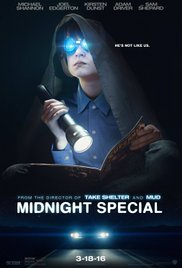
Midnight Special, Movie Review

Deadlines to Submit your Screenplay, Novel, Story, or Poem to the festival:http://www.wildsound.ca

midnightspecial.jpgMIDNIGHT SPECIAL (USA 2015) **
Directed by Jeff Nichols

Starring: Michael Shannon, Joel Edgerton, Kirsten Dunst, Adam Driver

Review by Gilbert Seah

MIDNIGHT SPECIAL reunites director Jeff Nichols and actor Michael Shannon once again in a film dealing with an apocalyptic world. There is much to like and dislike about MIDNIGHT SPECIAL compared to TAKE SHELTER, but unfortunately, the former throws logic and reality to the wind. The plot and ending of MIDNIGHT SPECIAL is important to the enjoyment of the film and should not be revealed in my or any review, but it is sufficient to say that the ending should at least be a bit believable and not be totally absurd as in this case in terms of logic and possibility and also in terms of special effects. The ending is as if the special effects department was given an unlimited budge and the department spent the entire budget and more.

The film starts with a suspenseful abduction in which a man is wanted for the kidnapping of a child. It is all over the radio and the state in terms of an amber alert. Roy (Shannon) has fled a religious cult in rural Texas with his eight-year-old son Alton (Jaeden Lieberher), who possesses otherworldly powers. Roy’s accomplice and childhood friend, Lucas (Joel Edgerton sporting a very convincing Texan accent), a state trooper, helps to bring the boy to an undisclosed location on a specific date, during which a celestial and possibly world-changing event may occur.

There are a lot of points in the script (written by Nichols) that do not make sense. But of course, one can argue that a good thriller need not require good explanations as the Master of Suspense Alfred Hitchcock has proven many times in his Masterpieces. For example Richard Thornhill (Cary Grant) was hunted down by the organization in NORTH BY NORTHWEST though no reason was ever given. But MIDNIGHT SPECIAL thunders towards a needed explanation that when revealed, makes no sense whatsoever. The supporting character of Lucas could also be done way with, though character development-wise, it does bring a good perspective to the character of the lead, Roy.

But for me whose first profession is engineering, I can really annoyed when a story leaves too many unexplained loose ends. Among these are: “Why does the kid and absolutely no one else land on this planet with the same situation? How does the kid comes to obtain all the information and for what purpose? Why the purpose of ‘the rapture’ at the film’s climax as it really serves no purpose? And why does the cult get so involved with the boy?

Shannon has always been an excellent brooding actor, accomplishing a range of widely ranging characters. Here Shannon is able to conniving the audience of a troubled yet caring father. He is willing to kill anyone to save his son.

The first half of the film works better than the second half. When more is left to the audience’s imagination, the more mysterious and suspenseful the film becomes.

The performances of the actors almost save the movie. Two of supporting cast deserve mention. One is Sam Shepard playing the cult leader, Calvin Meyer and the other Adam Driver as the FBI agent Paul Sevier who ends up helping Roy and Alton. One suspects that Nichols demanded solid no-nonsense performances from his actors.

But love it or hate MIDNIGHT SPECIAL will definitely affect audiences on way or other, in an extreme just as the film is (extreme).

Also, Free logline submissions. The Writing Festival network averages over 95,000 unique visitors a day.
Great way to get your story out: http://www.wildsound.ca/logline.html

Deadlines to Submit your Screenplay, Novel, Story, or Poem to the festival:http://www.wildsound.ca

Watch recent Writing Festival Videos. At least 15 winning videos a month:http://www.wildsoundfestival.com


I SAW THE LIGHT, Movie Review

Deadlines to Submit your Screenplay, Novel, Story, or Poem to the festival: http://www.wildsound.ca

isawthelightI SAW THE LIGHT (USA 2015) **
Directed by Marc Abraham

Starring: Tom Hiddleston, Elizabeth Olsen, Maddie Hasson

Review by Gilbert Seah

The biopic of hank Williams I SAW THE LIGHT begins with Williams saying that he is impervious of what people think and that he does what he likes. The first scene then shows Williams sucking up to his marriage judge on how he loves his newly bride when the judge tells Williams how he gets up early and la-de-da-de-dah. The conflict of what is perceived and what is revealed on screen is the start of the problem of the film. The script says one thing and the film says another.

Running at over two hours, the film shows more of the bad and uncontrollable character of Hank Williams than his genius. His hard drinking, his disregard for tolerance of his loving wife overshadows his genius and talent. And it is this genius ad talent that is what audiences who come to see this film want to see.

Hank Williams had a short life. He died at the young age of 29 of heart failure due as the film informs to his hard drinking. The film shows and emphasizes much of the drinking with Williams always holding a bottle of beer, particularly in the early hours of the morning. He does not say much, but downs his beer.
Though his life was short, the film dos not reveal much of the singer’s musical background or work. The film appears more determined to show his personal life. His song writing, rehearsing and performances take second fiddle to his problems with his marriage and drinking. The film traces the difficulty of Williams getting into the grand old Opry, which is an important part in the singer’s life.

The film spend some time with interviews of Williams’ publisher Fred Rose (played by Bradley Whitford) though not much information is disseminated during these segments, that are shot in black and white.

Director Marc Abraham has made better films like the unforgettable CHILDREN OF Men and the remake DAWN OF THE DEAD. He is clearly good at demonstrating drama and this is evident in I SAW THE LIGHT.

It is an odd choice to pick British actor Tim Hiddleston to play an American country singer. One can only imagine the hard work Hiddelston and to undergo to speak with a southern western accent less to imitate Williams’ mannerisms and behaviour.

It is rare that the film shows Williams and his wife, Audrey (Elizabeth Olsen) performing. The segment (at the film’ s start) shows the reason both are an item together and how they bond despite marital problems. Again, the fight that ensues is paid more importance than the band’s performance.

The western atmosphere of the film is effectively created as are the sets and performances. But the film is a tad boring and no one really wants to spend two hours learning of Williams faults.

The title ironically called I SAY THE LIGHT fails to reveal Williams’ work and genius. The film only takes off when his songs are played, particularly during the end credits.

Also, Free logline submissions. The Writing Festival network averages over 95,000 unique visitors a day.
Great way to get your story out: http://www.wildsound.ca/logline.html

Deadlines to Submit your Screenplay, Novel, Story, or Poem to the festival:http://www.wildsound.ca

Watch recent Writing Festival Videos. At least 15 winning videos a month:http://www.wildsoundfestival.com

Interview with Executive Director Joseph Shahadi (The Art of Brooklyn Film Festival)

The Art of Brooklyn is a nonprofit, founded in 2011 that celebrates, nurtures and supports Brooklyn’s independent film scene– a local scene with global influence. We produce an annual film festival, curate our own VOD streaming channel and create original, branded media about Brooklyn art and culture.

The 6th Annual AoBFF runs June 8-12, 2016 at multiple venues across the Borough.

www.aobff.org
www.brooklynondemand.com

Interview with Joseph Shahadi:Matthew Toffolo: What is your Film Festival succeeding at doing for filmmakers?

Joseph Shahadi: The Art of Brooklyn Film Festival (http://www.theartofbrooklyn.org/art-of-brooklyn-film-festival.html) is the only international independent film festival in the world dedicated to the vibrant Brooklyn indie film scene. We screen films and entertain audiences across the entire borough, including neighborhoods traditionally underserved by cultural events. And we are committed to inclusion among filmmakers, film genres, and audiences. The Brooklyn scene is overflowing with talent, in every neighborhood and community. But since Manhattan-adjacent north Brooklyn neighborhoods are often seen as the focus for art and culture, the bulk of Kings County is excluded. AoBFF has successfully expanded the notion of “Brooklyn” to include the entire borough again.

We’ve also developed our own streaming channel, called Brooklyn On Demand (http://www.brooklynondemand.com/) — the only video-on-demand platform for Brooklyn-centric titles. By creating our own channel we’re making Brooklyn’s indie film scene accessible to audiences internationally, and affirming the borough’s importance as a center for independent film and media. Technical.ly recognized us with a 2016 Brooklyn Innovation Award for Brooklyn On Demand.

We are a 21st century film festival; we’ve maximized our value to filmmakers and audiences by expanding the idea of what a film festival can — and should— do.

MT: What would you expect to experience if you attend the festival this year (2016)? 

JS: Well I can’t tell you about the films yet because our submissions are still open and we watch everything that comes in until midnight of the last day, which is April 22nd this year. (Yes, we’ve programmed films that were submitted to us at the last minute. More than once.) But one thing we do know is that the films will reflect the diversity of Brooklyn’s independent film scene, both in the borough and around the world. In addition to our “main campus” in Downtown Brooklyn, which is easily accessible from all over the borough and Manhattan, we have screenings set for neighborhoods throughout Brooklyn— Sunset Park, Fort Greene, and Bay Ridge.

This year we’ll have more panel discussions than ever, drawn from current events. One of these is about women in film in front of and behind the camera, co-produced with New York Women in Film and Television. And our Guest Festival Director for 2016, award-winning film maker Eric Trenkamp will host an intensive mini-seminar on micro-budget filmmaking alongside representatives of the city and state film offices.

We also throw a pretty great party to kick off the festival every year with amazing food and an open bar.

artofbrooklyn
MT: What are the qualifications for the selected films? 

JS: We are the only festival in the world that exclusively features films created and catalyzed within Brooklyn’s independent film scene, which has members living and working independently in multiple countries. So in order to qualify for the Art of Brooklyn Film Festival filmmakers have to make a case for how they participate in Brooklyn’s indie film scene either in the borough itself or around the world.

MT: Do you think that some films really don’t get a fair shake from film festivals? And if so, why? 

JS: Festivals often overlook films that don’t fit neatly into genre categories because they aren’t sure how to program them. That can have a chilling effect on experimentation in independent filmmaking as that kind of limitation is internalized. We want to support the next generation of filmmakers in pushing the boundaries of visual storytelling so we introduced a category for experimental films called Film As Art, and we give our Vanguard Award for excellence in this category. Frankly, we’ve been surprised at how popular those screenings are. I once sat next to a pair of very old ladies and I gently inquired if they were at the right screening. They informed me that they’d made certain to attend Film As Art, then they watched intently, asked great questions at the talk back and gave me a piece of hard candy on their way out, like a boss. It goes to show that you can’t make assumptions based on an idea of the popular taste: audiences are smarter and cooler than that. At least in Brooklyn.

MT: What motivates you and your team to do this festival? 

JS: We were inspired to found the Art of Brooklyn Film Festival in 2011 when we realized that— even though Brooklyn is the site of the first great cultural renaissance of the 21st century— the borough didn’t have a large scale, international, film festival devoted to it’s own scene. We have worked to establish ourselves as a real resource for filmmakers and audiences throughout the borough. We were (and are) motivated to produce an inclusive, international independent film event where everyone feels welcome. As far as we’re concerned there are no “wrong” neighborhoods. In 2012 (the last year see were able to keep careful track) we had guests from every single zip code in Brooklyn.

MT: How has the festival changed since its inception? 

JS: We are bigger. Since our start in 2011 we’ve grown every year— with new screening locations, more entries, and a growing network of filmmakers and audience who follow us on social media and look forward to our next festival. We’re now a part of Brooklyn’s cultural landscape.

And of course creating and launching Brooklyn On Demand has been a huge part of our growth as we head into our sixth year. Now we are able to participate in the evolving distribution model that streaming media provides. In October 2015 we launched BKOD as a Roku channel alongside Netflix, Hulu Plus and Amazon Prime and it has over 100K views and 7000+ subscribers to date. We recently expanded our slate of offerings to include original series as well as films. Soon we’ll start producing our own original content.

MT: Where do you see the festival by 2020? 

JS: The director Eliot Lester (Nightingale, Blitz), who has been a judge with us for years, called us “Brooklyn’s Tribeca.” That’s as good a description of our goals as any: We want to be Brooklyn’s flagship indie film event and continue to create platforms for the best of the borough’s independent media makers.

MT: What film have you seen the most times in your life? 

JS: I watch a lot of films for work and pleasure but I always return to movies I loved as a kid. I’ve probably seen David Lynch’s Dune (1984) 75 times. The sleeper must awaken.

MT: In one sentence, what makes a great film?

JS: I think what writer Terence Des Pres says about fiction works for all kinds of films too: 1) Vigorous engagement with life, 2) imaginative force to subvert and remake the world, and 3) the sense to keep them “locked in stubborn love with each other.”

MT: How is the film scene in your city?

JS: It’s amazing. Brooklyn has become an international center for independent film and media makers. We are proud to be their film festival.

;

brooklyn.jpg

____

Interviewer Matthew Toffolo is currently the CEO of the WILDsound FEEDBACK Film & Writing Festival. The festival that showcases 10-20 screenplay and story readings performed by professional actors every month. And the FEEDBACK Monthly Festival held in downtown Toronto on the last Thursday of every single month. Go tohttp://www.wildsound.ca for more information and to submit your work to the festival.

Movie Review: BATMAN V SUPERMAN (2016) #BatmanvSuperman

Deadlines to Submit your Screenplay, Novel, Story, or Poem to the festival: http://www.wildsound.ca

batmansupermanBATMAN V SUPERMAN: DAWN OF JUSTICE (USA 2016)

Directed by Zack Snyder

Starring: Ben Affleck, Henry Cavill, Amy Adams, Jesse Eisenberg, Diane Lane, Laurence Fishburne, Holly Hunter, Jeremy Irons, Gal Gadot

Review by Gilbert Seah

Before the film starts at the press/promo screening of BATMAN V Superman, director Zack Snyder appears on screen practically begging the audience not to give away plot points and spoilers to the rest of the world in order for them to enjoy the film. True to word, there are a lot of spoilers that could be revealed but this latest multi-million dollar effort is so bad that no spoiler could have made the film any worse.

Snyder makes no qualms at reminding the audience that he directed the Spartan film 300. At the film start, after Bruce Wayne rushes into the dust from the rumble of a fallen skyscraper, a lone horse is seen on the screen. 3/4 through of the movie, a cop and a horse is again shown on the screen. Of course lots of muscled bodies like the Spartans in 300 are on display throughout the film.

One can tell that a movie is bad from its continuity. The car chase segment makes no sense whatsoever. The reason for the chase is zero. When it takes place, there are lots of overturned other vehicles, lots of explosions but the scenes could have be taken out of 4 different streets for all that matters. The editing is awful and continuity is non-existent.

At the promo/press screening the executive introducing the film touted the imax technology involved in the making of the film. 40% more images can be seen in the imax version. But in the in the imax version that I saw, only the last sequence and the Batman Superman fight was in full imax top to bottom presentation.

There is little to enjoy in this film – the main problem being that the film is all over the place and all the filmmakers seem more content with the special effects. Comic book fans will be flabbergasted at the way the filmmakers have taken liberties to change what fans deem unchangeable and a staple to the comic book fan base. The main premise for example, would be that if ever anyone would want to see Superman fight Batman? And who would care which one would win? A true comic book fan would cringe every time anyone of the heroes, Superman or Batman was hurt.

The plot of the film involves Superman and Batman questioning each others tactics in order to save the world. The reasons are superfluous and unconvincing. All this leads to a confrontation and fight at the film’s climax.

BATMAN V SUPERMAN is a very dark film no doubt. So was the recent DEADPOOL. But DEADPOOL was smart enough to be funny and tongue-in-cheek while the latter took itself far too seriously.

And there is the question of the villain and a few other loose ends. Jesse Eisenberg’s Lex Luthor is an odd one. Eisenberg seems to have sculptured his role from Heath Ledger’s edgy Joker before his death. Esisenberg does what he does best – speaking his lines at a thousand words per minute but in this film, with creepy twitchings. It is not what is expected from classic Lex Luthor. Eisenberg dons his long hair till shaved off bald when in prison. Aquaman and Wonder Woman make their appearances but for no real reason. It seem a total farce and they should have been better totally omitted from the script.

In one segment of the film, a character says that people hate what they do not understand, referring to the suspicion they have of Superman being an alien doing good but causing destruction of the planet. Audiences might hate this film for it is impossible to understand for its purpose or plot.

*****

Also, Free logline submissions. The Writing Festival network averages over 95,000 unique visitors a day.
Great way to get your story out: http://www.wildsound.ca/logline.html

Deadlines to Submit your Screenplay, Novel, Story, or Poem to the festival:http://www.wildsound.ca

Watch recent Writing Festival Videos. At least 15 winning videos a month: http://www.wildsoundfestival.com