Interview with Festival Director Nathan Fleet (Hamilton Film Festival)

The 11th Annual Hamilton Film Festival (HFF XI) is one of Canada’s most important up-and-coming film festivals. This year’s festival will feature over $15,000 in prize value, plus the opportunity to network with, and pitch your projects to, film buyers, agents, distributors and other film-makers.

www.hamiltonfilmfestival.com

Interview with Festival Director Nathan Fleet

Matthew Toffolo: What is your Film Festival succeeding at doing for filmmakers?

Nathan Fleet: Quality networking and in the past 2 years, getting distributors interested in our content, which is why we are bringing the Canadian Film Market this year.

So many filmmakers have met and made films because of their meeting at HFF

MT: What would you expect to experience if you attend the festival this year (2016)?

NF: The biggest change is the Canadian Film Market. The focus will be on film sales, film pitches and coproductions with Canada. This will be an affordable opportunity for people to participate in a Market setting along side our film festival. As far as the festival goes, our programming team is exceptional so you will see some of the world’s best films, including Canada. Our policy is to not pre select a theme or genre. We let the submissions dictate the way our festival looks.

MT: What are the qualifications for the selected films?

NF: Honestly, if it is good, we want to see in on our screens. Again, our programming team have keen eyes for great material. It blows me away sometimes that some of the top tier don’t accept some of these. We also have room for First Time Filmmakers and Student films and we don’t scale them as harshly as we might for an established production company.

MT: Do you think that some films really don’t get a fair shake from film festivals? And if so, why?

NF: I do and while I am sure each has their own reason, it is nearly impossible for a festival to program everything they receive.

MT: What motivates you and your team to do this festival?

NF: Initially it was a cool thing to do to gather some films and screen them one evening. What better way to network with a hundred filmmakers in one week!

I’m a filmmaker as well so this is definitely the type of event I want to attend.

MT: How has the festival changed since its inception?

NF: We grew and grew but maintained our local connection. Our tag is Locally Focused, Internationally Recognized. We always want to make sure that we have room for local filmmakers to grow and exhibit. We earn the “Hamilton” in our title.

MT: Where do you see the festival by 2020?

NF: Unless there is a drastic change in formats and viewing habits, I love the road we are on. I would love for the Festival and the Market to become a destination and I think that is where we are already headed.

MT: What film have you seen the most times in your life?

NF: Star Wars: Episode IV

MT: In one sentence, what makes a great film?

NF: There is no one thing as it is a combination of all craftspeople presenting their best within the project.

MT: How is the film scene in your city?

NF: It’s growing everyday. We have a new film district with Digital Canaries, we have more and more talent from Toronto moving into the city, we have an 11 year old Festival and now a Film Market. You will be able to take your film from Concept to Acquisition in Hamilton.

—-

Nathan Fleet is a professional musician, filmmaker and educator from Hamilton Ontario Canada.
​He runs the Hamilton Film Festival, the Hamilton Film Expo,  the Canadian Film Market and Blue Pick Media.

In 2015, Nathan travelled to Comic-Con International in San Diego to support the screening of his short comedy Air Knob, which has screened around the world in theatres, broadcast and in the air!

​He is currently working to complete his rock album Talk To The Machine, which is expected in 2016.

Interviewer Matthew Toffolo is currently the CEO of the WILDsound FEEDBACK Film & Writing Festival. The festival that showcases 10-20 screenplay and story readings performed by professional actors every month. And the FEEDBACK Monthly Fesival held in downtown Toronto on the last Thursday of every single month. Go to www.wildsound.ca for more information and to submit your work to the festival.

Interview with Executive Director Lisa Veliz (Environmental Film Festival at Yale)

Brazilian trash workers, killer whales, and food waste all share one thing in common–they’ve been featured in the largest student-run environmental film festival in the world. Mark your calendars—the 8th annual Environmental Film Festival at Yale (EFFY) is taking place from April 1-9, 2016 in New Haven, Connecticut. This festival draws audiences of over 1,700 each year and several films that have been screened at EFFY in years past have since won Oscars, Emmys, and are now shown on Netflix. This festival was founded by a group of graduate students at the Yale School of Forestry and Environmental Studies, and it has grown to include the greater Yale and New Haven communities while maintaining inclusivity through FREE admission for all.

Interview with Lisa Veliz: 

Matthew Toffolo: What is the festival attempting to accomplish for filmmakers and the attendees? 

Lisa Veliz: The goal of EFFY is to shed light on environmental issues through the medium of film. We work diligently to make this festival inclusive for all through free admission and diverse in terms of content throughout the festival.

MT: How many countries represented the festival last year and in 2016? 

LV: This year we have received submissions from over 26 countries, and we are currently in the process of reviewing films for final selection. Last year, we had films from more than 30 countries.

MT: How did the festival get started? 

LV: The festival was founded 8 years ago, by a small group of graduate students at the Yale School of Forestry and Environmental Studies. It started with a few films over 2 days and it has grown to encompass close to 20 total student, feature, and short films over 9 days.

MT: Where do you see the festival in 5 years? 

LV: My 5-year vision for EFFY is to take a front seat at the table with the premier environmental film festivals worldwide, and to leverage the network of both student-run festivals as well as environmental initiatives to ultimately reach larger audiences than ever before.

MT: How is the film scene at Yale University?

LV: I’m very new to the film scene, so I’m not sure I can speak to the film scene on campus at-large.

MT: How many films do you anticipate showcasing at your 2016 Film Festival?

LV: We’ll be showcasing 22 films (features, shorts, and student films)

MT: Can you give us a sneak peak of what to expect for the 2016 Festival?

LV: We’ll be integrating virtual reality experiences, a special Youth Film Summit, and a few Sundance films!

MT: What are your feelings on certain high ranking US politicians who feel that there isn’t any environmental issues happening around the world?

LV: I don’t understand why we’re still debating the severity and legitimacy of the environmental crisis we face today. We don’t need more proof of extreme weather conditions and mass species extinction to understand that we are at a turning point in the history of this planet. These issues affect business, the economy, public health, and–most of all–our children. I think climate-denying politicians will surely be in for a rude awakening.

MT: When did you join the festival? Is it always a student run affair and handed off to a new group every 3-5 years? 

LV: I stepped up as ED in June 2015, and it’s been an interesting process to think about the succession plan, because our Master’s programs are typically only two years long–it makes succession planning very challenging. We’re working on making EFFY more integrated into the fabric of the university and particularly at the School of Forestry and Environmental Studies.

MT: If I am attending the festival in New Haven, what else should I see? Landmarks etc..? And what restaurant(s) do I need to go to?    

LV: I’d recommend hiking up to East Rock, dining at Caseus or Da Legna, and going for drinks/pool at Bar. These are my New Haven favorites!

___

Interviewer Matthew Toffolo is currently the CEO of the WILDsound FEEDBACK Film & Writing Festival. The festival that showcases 10-20 screenplay and story readings performed by professional actors every month. And the FEEDBACK Monthly Festival held in downtown Toronto on the last Thursday of every single month. Go to www.wildsound.ca for more information and to submit your work to the festival.
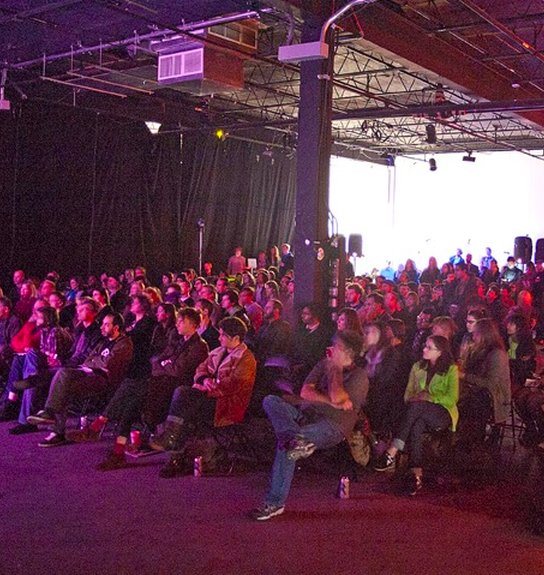
Interview with Festival Director Gabor Pertic (Breakthroughs Film Festival)

Now in its 5th amazing year, the Breakthroughs Film Festival is the only festival in Canada devoted exclusively to short films by New Generation women filmmakers. We show films in any and every genre made by talented young artists from all over the world. 

Breakthroughs Film Festival also features a panel discussion with the participating directors, giving the audience a chance to learn more about what these amazing women can do!

http://www.breakthroughsfilmfestival.com/

Get to know Festival Director Gabor Pertic:

Matthew Toffolo: What is your Film Festival succeeding at doing for filmmakers?

Gabor Pertic: In an industry where women still struggle to get their work seen and heard, Breakthroughs provides an opportunity for new generation female filmmakers to have their films programmed and brought to a big screen. The films and filmmakers we showcase are often times just entering the film industry, which is a crowded, intimidating space to begin with. It can be quite difficult to get your work noticed by a festival or play to an audience, so we’re providing a place where one of our main goals is to give voice to these emerging talents.

Matthew: What would you expect to experience if you attend the festival this year (2016)?

Gabor: Audiences are going to be able to see a curated selection of creative, fresh visions from young female filmmakers. It’s an opportunity to see original content from names you may have not seen on a marquee just yet. It becomes a discovery moment for any audience member, an opportunity to see an incredibly talented group of women at a stage when their art is taking shape and rising.

Matthew: What are the qualifications for the selected films?

Gabor: The basic guidelines for any submitted film to Breakthroughs is that it’s directed by a female between the ages of 18-30 and the film runtime sits under 20 minutes. There is an abundance of filmmakers that fit within these parameters who are looking for places to get their film seen. Be it fictional narratives, documentaries, or anything that falls in more of an experimental group, Breakthroughs aims to highlight local and international short films that offer up a mix of these film forms.

Matthew: Do you think that some films really don’t get a fair shake from film festivals? And if so, why?

Gabor: Film programming is a multilayered process, one that has many factors to consider within any given festival. Like Breakthroughs, there are many festivals that work on highlighting more specific programming, be it with regard to content, region, style, and/or theme. Certain top-tier festivals can be ambitious goals for any filmmaker looking to premiere their film but in an incredibly large and competitive space, it may be hard to get noticed. At the end of the day, film festivals strive to showcase the best group of films in any given year that fit with the festival’s specific mandates and artistic direction. It’s just a matter of finding the right partnership between the film and the festival.

Matthew: What motivates you and your team to do this festival?

Gabor: We all are here because we have a passion for film and we believe that women are making some of the most interesting work out there. We see the daily struggles of female filmmakers not getting the attention or respect they deserve and we hope to be able to provide a change in that narrative, to put the next generation of talented women front and center.

Matthew: How has the festival changed since its inception?

Gabor: One of the biggest changes the festival has undergone was that it opened up to international submissions. Breakthroughs started out only showcasing local Canadian work but we now are actively able to showcase a global perspective and we continue to grow on this worldview, seeking films from every continent.

Matthew: Where do you see the festival by 2020?

Gabor: We are currently right in the middle of a cultural landscape where there are daily discussions being had of women within the film space. Breakthroughs wants to maintain this conversation by working hard to improve upon a consistently unbalanced system. In the next few years, we can only hope that things start to progressive positively and that our festival has contributed in some way to showcasing why it is essential to give a platform for female filmmakers. We aim to be both a voice for these women and a destination for all those who support them.

Matthew: What film have you seen the most times in your life?

Gabor: This would be a great moment to just write The Double Life of Veronique or Meshes of the Afternoon but if we’re talking pure statistical numbers, I should be honest and say there are a few others that outrank them in terms of views. I’ve certainly made my way through a number of formats of When Harry Met Sally… through VHS to DVD to Streaming. Nora Ephron’s script is magical and it’s been a comfort and touchstone at different parts of my life. But, if some biographer where ever to comb through my life in detail, they would uncover that when Space Jam came to video in 1997, there was a six-month window where I easily watched it over a dozen times… This answer went real fast from incredible achievements in the cinematic artform to Michael Jordan playing basketball with Bugs Bunny. Which, I suppose, is a different kind of art all around…

Matthew: In one sentence, what makes a great film?

Gabor: Not sure if I can narrow it down to one sentence, so I’ll just say that a great film is one worth watching.

Matthew: How is the film scene in your city?

Gabor: Toronto is an absolutely incredible city for film. Within any given week, you can go see a film at one of the many festivals the city has to offer, and on your way there, have to walk around a film shoot happening live on one of the streets downtown. People here are filmmakers and film lovers, and more often than not, the answer to the question “hey, do you want to go see a movie?” is “yes”.

_____

GABOR PERTIC BIO

Executive Director: Gabor Pertic
 attended the University of Toronto as a Specialist in Cinema Studies, graduating with an Honours B.A. After working as a film critic in Toronto, he transitioned into the world of film festival programming. For several years, he worked in the programming department of the Toronto International Film Festival, four of those years working as Programming Associate to TIFF Director & CEO Piers Handling. In addition to TIFF, Gabor has been continuously working and programming for North America’s largest documentary-exclusive film festival Hot Docs. Over the last decade, Gabor has had the privilege of curating a diverse, international selection of films for Toronto audiences.


Interviewer Matthew Toffolo is currently the CEO of the WILDsound FEEDBACK Film & Writing Festival. The festival that showcases 10-20 screenplay and story readings performed by professional actors every month. And the FEEDBACK Monthly Festival held in downtown Toronto on the last Thursday of every single month. Go to www.wildsound.ca for more information and to submit your work to the festival.

Interview with Festival Director Tina Borek (Comics in Film Festival)

A film Festival for Comic and Super hero fans at Santa Fe Comic Con AND Albuquerque Comic Con Providing a weekend of Film, Celebrity guests, panels, workshops and more!

Interview with Tina Borek:

Matthew Toffolo:What is your Film Festival succeeding at doing for filmmakers?

Tina Borek: We offer expoosure in a unique environment. A film Festival for Comic and Super hero fans at Santa Fe Comic Con AND Albuquerque Comic Con

Judged by a panel of industry luminaries, the Comics In Film Festival accepts genre-related films in the following categories: Action/Adventure, Animation, Comics-Oriented, Documentary (Pop Culture–Related), Horror/Suspense, Humor, and Science Fiction/Fantasy. Awards and prizes will be given out at Comic-Con, with film screenings all three days of the event.

Matthew: What would you expect to experience if you attend the festival this year (2016)?

Tina: Providing a weekend of Film, Celebrity guests, panels, workshops and more!
http://www.santafecomiccon.com
http://www.albuquerquecomiccon.com

Matthew: What are the qualifications for the selected films?

Tina: CONTENT

To qualify as a “genre film” your movie must have at least one (or a combination) of the following themes: horror, fantasy, science-fiction, comic-book, superhero, fan-fiction, animation and parody.

Matthew: Do you think that some films really don’t get a fair shake from film festivals?

Tina: And if so, why? What I hear my friends say is film festivals are turning into beauty contests and we aim to change that. We dont choose films based on the Actors, or IMDB credits, we choose films we think are entertaining to our attendees and sometimes they may not have the best sound or lighting but there are many different criteria that go into what we choose to screen.

Matthew: What motivates you and your team to do this festival?

Tina: Our team is comprised of Actors, Directors, Producers, and Film Makers….. we get it, we know what Film Makers want and it isnt a certificate. We provide a networking opportunity like no other in a really fun environment by combining a pop culture convention and film we have created an amazing opportunity.

Matthew: How has the festival changed since its inception?

Tina: We have expanded our attendance every year which means film makers have a larger audience to screen too, at a really great venue. We also have added some fun perks for the film makers to get to know our fan base and inivited guests.

Matthew: Where do you see the festival by 2020?

Tina: We are hoping to grow with the convention and expand to screenings at the local Theatres as well as have larger sponsors to provide great awards.

Matthew: What film have you seen the most times in your life?

Tina: This is a great question, I come from the era of THE MOVIE CHANNEL, which had only a few movies a month and we watched them over and over, so I may have been skewed as to what was popular based on what was popular in my living room. I would have to say Valley Girl with Nicholas Cage, and Wedding Singer as a close runner up.

Matthew: In one sentence, what makes a great film?

Tina: I personally like a movie I can’t figure out, my favorite film is The Game, for that reason.

Matthew: How is the film scene in your city?

Tina: Amazing, we film in all budget ranges from studio productions including Breaking Bad, Longmire, Better Call Saul, Preacher, The Night shift and countless others to webseries like Enter The Dojo. Our Festival is held in NM, an emerging Film location. We have an amazing crew base, talent pool and Indie scene here that has become like family.

_____

Interviewer Matthew Toffolo is currently the CEO of the WILDsound FEEDBACK Film & Writing Festival. The festival that showcases 10-20 screenplay and story readings performed by professional actors every month. And the FEEDBACK Monthly Festival held in downtown Toronto on the last Thursday of every single month. Go to www.wildsound.ca for more information and to submit your work to the festival.

Interview with Festival Director Robert David Duncan (Miniature Film Festival)

The Miniature Film Festival is exactly what it sounds like – a small celebration of small films. We want to acknowledge and promote filmmakers from around the world who make one-minute micro short films. Our inaugural event in 2015 was held at the beautiful Barclay Manor heritage venue in Vancouver. Now in our second year, we are remaining true to our roots as a small scale festival that helps create a community for tiny films and the ingenious filmmakers who make them – a miniature festival for miniature films!

Check out our festival listing here: https://filmfreeway.com/festival/MiniatureFilmFestival

Matthew Toffolo: What is your Film Festival succeeding at doing for filmmakers?

Robert David Duncan: We are succeeding at creating a worldwide community for makers of one-minute micro short films, and the people who love those films. I also suspect that we are the first set of Official Selection laurels for many of our participants, because we seek to include films as much as possible, since there is no right or wrong way to tackle a one-minute film. Filmmakers also have a chance to meet one another at our screening event, but perhaps even more importantly, we provide a hub on Facebook (https://www.facebook.com/MiniatureFilmFestival/) and Twitter (@miniatureFF) where they can connect up around the world and form a network.

Matthew: What would you expect to experience if you attend the festival this year (2016)?

Robert: If you can make it to Vancouver, you will experience an intimate gathering by filmmakers for filmmakers with the public welcome too. The films will be screened in our attractive heritage venue, and there is an opportunity for attending filmmakers to introduce their films and do Q&A. Our screenings are in a great location in downtown Vancouver, and the discussions and friendships can flow out into neighboring attractions such as the Seawall, English Bay and Stanley Park. We also award prize laurels for the films we consider to have been the best of the festival.

Matthew:  What are the qualifications for the selected films?

Robert: All films have to be one-minute or less in length, with 60 seconds being a bullseye. I personally watch each film and do the programming myself. Although I am always open to new approaches, I do have a preference for films that have a strong story or message, and get that message across effectively. If the film affects me, makes me laugh, smile, cry or think, then that is a good sign! A minute isn’t a lot of time to work with, so any special effects or music really should support the story and not detract from it. One of my mottoes is that “constraint breeds ingenuity,” and I am always impressed by the ingenuity of filmmakers out there.

Matthew: Do you think that some films really don’t get a fair shake from film festivals? And if so, why?

Robert: I’m a filmmaker myself, and have had really good experiences with festivals. I think filmmakers taking the time to target the right festivals with the right offerings helps minimize disappointments all around. On the festival side, I think it is a good practice for a festival programmer or festival director to see each film, and not “job out” the selection process so much that new and innovative approaches get weeded out by an inexperienced set of eyes. This is why I see each film myself, and filmmakers can know that their work was seen by me. Finally, I think every festival can be courteous to its entrants by honoring deadlines, and communicating the results in a friendly and supportive manner. Tools like FilmFreeway make this very easy.

Matthew:  What motivates you and your team to do this festival? 

Robert: Being a filmmaker, I remember how thrilled I was when my first micro short film got accepted into a festival and I received my first ever set of Official Selection laurels. I wanted to spread that happiness and encouragement around, and decided to create a “miniature festival for miniature films.” I operate very much from a punk/DIY ethos, and believe that everybody has a story to share, and that they should just pick up their phone or whatever gear they have lying around and bash out a film, like the early punk rockers bashed out songs. It’s a labor of love for me, and has become a fun part of my busy annual calendar. I also wrote a book called “Micro Short Filmmaking: A guided learning journey” and I teach classes in order to help spread the message that anyone can and should make a film.

Matthew:  How has the festival changed since its inception?

Robert: Interestingly, my challenge is to keep the Miniature Film Festival miniature! Everything seems to have a natural tendency toward getting bigger, which is not what I want. I want the festival to always be financially self-sustaining, so that I can self-manage it and not need to rely on grants or other sources of funding. We operate with a small, no-frills budget that comes from our entry fees, and that pays for the venue rental and miniature cupcakes, which have become our signature event snack. We offer a no-fee window at the beginning of the season that helps make the festival accessible to a lot of people, and we publish deadlines before we stage in our fee increases, which I feel are are very modest and reasonable.

Matthew: Where do you see the festival by 2020?

Robert: Still miniature! Seriously, I see us building out a longer day of events that could include a teaching and filmmaking component. We are also collaborative colleagues with other festivals, and we help each other out with guest speaking and additional screening opportunities for some of our winning films. I could also see our festival traveling, and popping up in different locations over the years. But mostly, I want to be consistent in creating a fun little festival that celebrates filmmakers and builds community.

Matthew:  What film have you seen the most times in your life?

Robert: Hmmm… tough call! I’d have to say between “When Harry Met Sally,” “Moonstruck” and “The Godfather: Part II” that “The Godfather: Part II” would have to win. I can watch movies like these endlessly.

Matthew: In one sentence, what makes a great film?

Robert: A story that moves you, makes you laugh, cry or think, and that keeps returning to your mind after seeing it.

Matthew:  How is the film scene in your city?

Robert: Vancouver is an amazing and beautiful place to make films. There is a great indie/DIY spirit here, and plenty of talent and gear floating around. I have been very fortunate to work with a wonderful collection of talented people over and over again, to the point where I can often write scripts with specific actors in mind. The only real challenge is our legendary rainfall, which makes it a headache to film outside, so you may want to write a lot of interior scenes! That said, I shot a completely exterior feature this summer and we had great weather every single filming day, so you never know.

_____

Robert David Duncan is an actor, filmmaker and founder of Fat Punk Productions and the Miniature Film Festival. With over 30 titles in production ranging from micro shorts to feature length films, Robert has over 100 official selections in festivals around the world, and also serves as a judge and panel speaker at festivals. He teaches acting and filmmaking and is the author of the books “Acting: A guided learning journey” and “Micro Short Filmmaking: A guided learning journey.” You can check out his IMDb page here: http://www.imdb.com/name/nm5399017

Interviewer Matthew Toffolo is currently the CEO of the WILDsound FEEDBACK Film & Writing Festival. The festival that showcases 10-20 screenplay and story readings performed by professional actors every month. And the FEEDBACK Monthly Festival held in downtown Toronto on the last Thursday of every single month. Go to www.wildsound.ca for more information and to submit your work to the festival.

Interview with the Brooklyn Short Film Festival

Brooklyn Short Film Festival brings together the world’s best short films in an engaging atmosphere for the purpose of developing connections and building new relationships in the film industry.

brooklynshorts.com/

Matthew: What is your Film Festival succeeding at doing for filmmakers? 

Showcasing the world’s best short films.  We consider ourselves New York’s premiere short film festival.

Matthew: What would you expect to experience if you attend the festival this year (2016)? 

A high profile short film festival in some of Brooklyn’s premiere cinema venues.  We break our festival up into short film programs, each very unique and diverse with a wide breadth of short films.  We try to pair more local and independent short films together with high budget fare to make for a diverse experience.

Matthew:  What are the qualifications for the selected films? 

The films must be short.  Nothing longer than 45 minutes.  We tend to program mostly in the 8-12 minute range.

Matthew: Do you think that some films really don’t get a fair shake from film festivals? And if so, why?

I would say there are at least 400+ legitimate festivals in the world.  The onus lies on the filmmakers for selecting which festival is best suited to the strengths of their films.  The only festival I am able to speak for is the Brooklyn Short Film Festival, and we give films of all stripes and persuasions “a fair shake”.  We watch each film entry multiple times.  We attempt to program at least 60% from direct submissions to the festival.  The other 40% is alumni and invitations. Once a film has been accepted into a festival, most filmmakers believe their work is finished, but this is far from the case.  Again, the onus lies on the filmmakers to fully utilize what a festival provides, and they should be prepared with a press agent, a marketing campaign, social media, etc. to create their own “shake” and momentum from the festival.

Matthew:  What motivates you and your team to do this festival? 

We like short films.  We enjoy watching filmmakers develop in their trade, going onto creating features or film/television work.  Short films are a great way to connect and the format is very broad in terms of what can be done.  Features are much more limited by the very nature of the scope.  A concept can be very funny at 5 minutes, or very engaging.

Matthew: How has the festival changed since its inception? 

We have had a very focused mission and our festival has stayed on point from inception to current versions.

Matthew:  Where do you see the festival by 2020? 

We hope to be Academy Award eligible for our filmmakers.

Matthew:  What film have you seen the most times in your life? 

Casablanca or Don Hertzfeld

Matthew:  In one sentence, what makes a great film? 

An appropriate length to concept ratio.

Matthew: How is the film scene in your city? 

New York is world class.  Brooklyn is a powerhouse and has a brilliant scene.  I would like to give a shout out to the Brooklyn Academy of Music and Videology for maintaining a high calibre program of diverse films.  Many of the world’s foremost directors, actors, producers, crew, editors and fans live in New York and Brooklyn.


_____

Interviewer Matthew Toffolo is currently the CEO of the WILDsound FEEDBACK Film & Writing Festival. The festival that showcases 10-20 screenplay and story readings performed by professional actors every month. And the FEEDBACK Monthly Festival held in downtown Toronto on the last Thursday of every single month. Go to www.wildsound.ca for more information and to submit your work to the festival.

Interview with Festival Director Crystal Pelkey (Short Shorts Film Festival)

The Short Shorts Film Festival in Duluth, MN is celebrating its 11th year in 2016. 
It is the only festival of its kind in Northern Minnesota. The festival brings 
together amateur and professional filmmakers from all across the globe to 
compete for cash prizes. Each film must be under five minutes. The audience 
scores each film and ultimately, the top three winners. The festival features many 
genres including, but not limited to: animation, comedy, drama, documentary, 
experimental, and music videos.

Interview with Festival Director Crystal Pelkey:

Matthew Toffolo: What is your Film Festival succeeding at doing for filmmakers?

Crystal Pelkey: ​Our film festival provides an opportunity for amateur filmmakers to be on the same stage as professional filmmakers. It’s a place for creative storytelling to take center stage and telling that story in less than five minutes is a unique challenge that many filmmakers embrace and succeed at.

Matthew: What would you expect to experience if you attend the festival this year (2016)?

Crystal: Our audiences can expect to play an active role in our festival, in that that ​​they score each film and ultimately pick the top three cash prize winners!​​ Audiences can also expect to see many genres of film: animation, comedy, drama, documentary, experimental, and music video. to name a few.

Matthew: What are the qualifications for the selected films?​

Crystal: The finalists are selected by a panel of judges–the film must be under five minutes, be appropriate for all audiences (rated G).

Since the audience chooses the winners, the primary qualification, other than it being five minutes or less, is really overall impact–audiences are encouraged to consider things like, creativity, quality, cinematography, etc. while scoring each film.

Matthew: Do you think that some films really don’t get a fair shake from film festivals? And if so, why?.

Crystal: There are so many wonderful films and filmmakers out there, and many festivals are limited by time, schedule and resources, so it’s often impossible to screen all the entries and give every film a fair shot. I know it’s very difficult for us to select our finalists, and some great films often get left out.​ ​In terms of programming, producers have to consider things like variety of genres presented, duration of films in conjunction with the festival time frame, content, overall impact of the work presented, etc.​

Matthew: What motivates you and your team to do this festival?

Crystal: ​We are the only short film festival of our kind in our region (Northern, Minnesota) and our audiences have supported our festival over the past ten years (sold-out houses) so that momentum helps keep our team motivated to produce the best festival possible and continue to improve it from year to year.

Matthew: How has the festival changed since its inception?

Crystal: ​Our format has stayed the same– in that films have always needed to be five minutes or less, and that the audience chooses the winners. Over the years, we’ve added local celebrity emcees and this year we are honoring a local filmmaker that has made great films and helped put our community on the map.

Matthew: Where do you see the festival by 2020?

Crystal: ​Maybe by 2020 we will be accepting 20 minute short films? :)​

Matthew: What film have you seen the most times in your life?
Crystal: ​Friends would tease me and say “The Notebook” (that may be true), but I have a very happy family memory of seeing The Fugitive in the theater when it first came out, and I’ve probably seen it 100 times. Similar story for Shawshank Redemption.

Matthew: In one sentence, what makes a great film?

Crystal: ​A great film is one of the greatest gifts–it can transport you out of a moment in time, and allow you to momentarily forget all of your troubles, and at the end, it may even allow you to understand yourself better, and this wild ride called the human experience.

Matthew: How is the film scene in your city?

Crystal: ​We have a great film scene in Duluth, MN. We have a local art house cinema that continues to bring films to our city that we may not get otherwise. We have an exciting film festival that takes place in a barn every summer (Free Range Film Festival) and ​we have an annual Duluth/Superior Film Festival each Spring that often brings Hollywood starts to our beautiful city on the shores of Lake Superior.

_____

Crystal Pelkey is the producer of the Short Shorts Film Festival and one of the 
festivals co-founders. Her day job is the Director of Patron Services & Special 
Events at the Duluth Playhouse, Minnesota’s oldest community theater. She is an 
active community member, local playwright, and freelance jewelry designer.  
Crystal loves film and is often known to watch Lifetime on Saturday afternoons. 
She once punked George Clooney, by asking him for a photo, then handing him 
her camera to take a picture of her and her friend.  
PHOTO of Crystal Pelkey:
CrystalPelkey1

Interviewer Matthew Toffolo is currently the CEO of the WILDsound FEEDBACK Film & Writing Festival. The festival that showcases 10-20 screenplay and story readings performed by professional actors every month. And the FEEDBACK Monthly Festival held in downtown Toronto on the last Thursday of every single month. Go to www.wildsound.ca for more information and to submit your work to the festival.

Interview with Festival Director Richard Hooban (ZERO Film Festival)

Zero Film Festival is an independent film festival exclusive to self-financed filmmakers. Founded by Brad Bores and Richard Hooban in 2007, Zero Film Festival holds annual festival events in Toronto, New York, Los Angeles, London and Miami Beach. The American Buffalo is the symbol for the festival, representing the independent spirit.

http://www.zerofilmfest.com

Interview with Festival Co-Founder Richard Hooban:

Matthew Toffolo: What is your Film Festival succeeding at doing for filmmakers?

Richard Hooban: ZERO is the first and only festival exclusive to self-financed filmmakers. After 8 years, I would say we are succeeding at sharing authentically independent films with cinema lovers.

Matthew: What would you expect to experience if you attend the festival this year (2016)?

Richard: You would expect to see some of the most talented filmmakers in the world sharing their art, you would expect an opportunity to speak with them, and to have a really fun time in the process.

Matthew: What are the qualifications for the selected films?

Richard: Each and every film must be self-financed.

Matthew: Do you think that some films really don’t get a fair shake from film festivals? And if so, why?

Richard: This is a tough question, and for this there are two answers. First, the larger and most prestigious festivals aren’t looking for micro-budget and low budget films, they are looking for films with celebrities, with press agents, films with producers and directors with deep connections. There are the occasional deserving films that slip through, but this is akin to winning the lottery. Second, I’ve seen in the past 8 years a proliferation of new festivals, most of which seem to lack a raison d’etre, and some which don’t physically exist at all, so filmmakers sending them hard earned cash really aren’t getting a fair shake in my opinion. I would encourage all filmmakers to do due diligence on a prospective festival prior to entering.

Matthew: What motivates you and your team to do this festival?

Richard: We were, or are, independent filmmakers. We saw how stacked the deck was against true independent filmmakers so we created a festival exclusive to them, taking everything we learned as filmmakers along the way to create a good experience.

Matthew: How has the festival changed since its inception?

Richard: Wow… in the beginning we were wild and crazy. We held screenings in warehouses in downtown Los Angeles before it was gentrified, we were running on pure passion, we had warehouse parties that went until dawn, we didn’t pay attention to budgets, we used our credit cards to support the festival and filmmakers the same way that indie filmmakers use them to make their films. For the long run though, that type of festival isn’t sustainable, and we believe that ZERO deserves, in fact, should exist, so unfortunately that meant screening less films, thinking about effective budgets, and moving from the wild warehouses into elite and highly respected venue, which in the end, is better for filmmakers in the long run, even if the warehouse days were more fun.

PHOTO: Zero Film Festival’s old warehouse days:

zero_warehouse_days.jpg

Matthew: Where do you see the festival by 2020?

Richard: Doing exactly the same thing. Its an authentic film festival with a purpose.

Matthew: What film have you seen the most times in your life?

Richard: The filmmakers I have watched and studies the most: Richard Linklater, his structuralism is brilliant, and Tarkovsky, he’s brilliant. Guilty pleasure? Zoolander.

Matthew: In one sentence, what makes a great film?

Richard: Thoughtful craft and integrity.

Matthew: How is the film scene in your city?

Richard: I live in New York. Its incredible. Its inspiring. I’m spoiled.


_____

Interviewer Matthew Toffolo is currently the CEO of the WILDsound FEEDBACK Film & Writing Festival. The festival that showcases 10-20 screenplay and story readings performed by professional actors every month. And the FEEDBACK Monthly Festival held in downtown Toronto on the last Thursday of every single month. Go to www.wildsound.ca for more information and to submit your work to the festival.

Interview with Festival Director Marc Bati (Très Court International Film Festival)

Très Court International Film Festival is an event without borders, with screenings during 9 days simultaneously in nearly one hundred cities in France and 28 other countries. The major program of the festival is the international competition. Fifty films of less than 3 minutes (excluding title and credits) representing the best and especially the shorter of the global audiovisual production year are presented each year.

http://www.trescourt.com/

Because this is a festival featuring the best of under 3min. short films, it’s only fitting that this was the shortest interview I ever had. Short but too the point and terrific!

Interview with Charlotte Lasne:

Matthew Toffolo: What is your Film Festival succeeding at doing for filmmakers?

Marc Bati : We offer a screening space for very short films and their filmmakers, to make their work known.

Matthew: What would you expect to experience if you attend the festival this year (2016)?

Marc: One shall be ready to discover original uncommon films!

Matthew: What are the qualifications for the selected films?

Marc: First qualification is runtime: under three minutes (except title and credits), that is the only rule. Then there is no denying that the selected films show talent and originality.

Matthew: Do you think that some films really don’t get a fair shake from film festivals? And if so, why?

Marc: Very short films are often considered too short to be taken into account in most festivals. At Très Court, it is the contrary!

Matthew: What motivates you and your team to do this festival?

Marc: Très Court is often most filmmakers’s first festival. Sometimes it is the first step to make a career! Some of “our” filmmakers moved on to feature films.

Matthew: How has the festival changed since its inception?

Marc: When the festival was created in 2000, Youtube did not exist. A festival for very short videos was an underground project! It originated in Paris and now the same films are presented in almost a hundred cities in twenty-nine countries in the world.

Matthew: Where do you see the festival by 2020?

Marc: This is a hard one. You know, it is hard for us to see ourselves beyond three minutes!

Matthew: What film have you seen the most times in your life?

Marc: It has no point with Très Court but it is 2001: A Space Odyssey.

Matthew: In one sentence, what makes a great film?

Marc: What makes a great film is “grace” (in one word, even shorter!). Because talented people can make bad films. So “grace” and “magic”.

Matthew: How is the film scene in your city?

Marc: Paris is one of the world capital for cinema. You find lots of movie theaters here.


***

Interviewer Matthew Toffolo is currently the CEO of the WILDsound FEEDBACK Film & Writing Festival. The festival that showcases 10-20 screenplay and story readings performed by professional actors every month. And the FEEDBACK Monthly Fesival held in downtown Toronto on the last Thursday of every single month. Go tohttp://www.wildsound.ca for more information and to submit your work to the festival.

Interview with Festival Director Anam Abbas (Face International Film Festival)

The Face Film festival is a not for profit, unticketed event aiming at promoting cinema, screening the best of contemporary world cinema and providing a platform for emerging Pakistani filmmakers to screen their work. Last year  was a one day event where we hosted the Pakistani Premiere of the American /Pakistani Documentary feature “Without Shepards” and the world premiere of the film “K2 and the invisible footmen” which proceeded to screen in multiple festivals across the globe.  In our second year, our program so far includes 6 international features, a program of local and international shorts and 3 panel discussions with the industry’s most respected filmmakers.

Matthew Toffolo: What is your Film Festival succeeding at doing for filmmakers?

Anam Abbas: As the only Film Festival in Pakistan’s capital, our venture seeks to support a fledgling film industry and expose audiences and filmmakers to the best in contemporary world cinema as well as allow emerging young filmmakers in pakistan to showcase their work and mingle with the industry.

Matthew: What would you expect to experience if you attend the festival this year (2016)?

Anam: We are screening contemporary features hot off the festival circuit. We have also added three panel discussions to our program. We expect a lot more media attention and a very exciting opportunity for Islamabad to interact with filmmakers from Lahore and Karachi.

Matthew: What are the qualifications for the selected films?

Anam: Films have to be completed after Jan 2014 and appeal to a Pakistani audience. Our criteria is broad because we want a diversity of expression presented at our festival.

Matthew: Do you think that some films really don’t get a fair shake from film festivals? And if so, why?

Anam: The entries received are staggering and competition is always steep. We judge and select by quality of film alone.

Matthew: What motivates you and your team to do this festival?

Anam: We are artists and film-makers ourselves. The love of cinema and desire to start dialogues is why we make films and create a culture of watching films, and especially film that showcase independant voices.

Matthew: How has the festival changed since its inception?

Anam: We are only in our 2nd year and expanding in our scope and our expected audience and impact.

Matthew: Where do you see the festival by 2020?

Anam: By 2020 we hope to be a truly international film festival with a weeklong program, presemting Pakistani feature film Premieres and guests from around the world.

Matthew: What film have you seen the most times in your life?

Anam: Gone with the Wind and Sholay- A classic Hollywood Melodrama and a classic Bollywood blowout.

Matthew: In one sentence, what makes a great film?

Anam: Great films evoke intense emotions!

Matthew: How is the film scene in your city?

Anam: Islamabad is definitely NOT the industry hub. However this allows for the nurturing of a lot of great independent talent that has already made a mark in the industries in lahore and Karachi.

***

Anam Abbas up in Pakistan and studied Cinema at the University of Toronto and Documentary Production at Sheridan College, Canada. She produced three short live action films and two short documentary films in Canada. I am deeply interested in creating platforms for women’s voices and exploring life at the peripheries in Pakistan.

Her documentary short “Lucky Irani Circus” about the children who work in Pakistan’s longest running circus group travelled to 5 film festivals around the world in 2015 including the Toronto International Reel Asian Film Festival.


Interviewer Matthew Toffolo is currently the CEO of the WILDsound FEEDBACK Film & Writing Festival. The festival that showcases 10-20 screenplay and story readings performed by professional actors every month. And the FEEDBACK Monthly Fesival held in downtown Toronto on the last Thursday of every single month. Go to www.wildsound.ca for more information and to submit your work to the festival.