Film Review: THE COMMUNE (Denmark/Sweden/Netherlands 2016) ****

Deadlines to Submit your Screenplay, Novel, Story, or Poem to the festival: http://www.wildsound.ca

the_communeA story about the clash between personal desires, solidarity and tolerance in a Danish commune in the 1970s.

Director: Thomas Vinterberg
Writers: Tobias Lindholm, Thomas Vinterberg
Stars: Ulrich Thomsen, Fares Fares, Trine Dyrholm

Review by Gilbert Seah
 

The latest from Thomas Vinterberg (CELEBRATION, THE HUNT) details what happens in a commune. Communes were popular in the 70’s in Denmark, also the time when the film is set. Vintergberg does not judge the workability of a commune environment but shows both sides of its workings – both good and bad.

Vinterberg’s film is a detailed study of the start (and end?) of a commune. He begins with a couple’s rationale on starting their commune. It all happens when Erik’s father passes away. The couple must decide what to do with the huge house that Erik grew up in, as it’s too expensive for them to occupy on their own. So, they decide to form a commune. They believe a commune will solve the problem of money and being able to live at a large residence close to sailing and the sea while living with friends. Anna, the wife also desires change. The question then is whether the couple is ready with problems that may arise. This is what the film examines. It is a good observation, too, that people seldom look at the possible problems when they get too excited on a new venture.

The first 30 minute of the film is up-lifting. The couple decide on the commune, interview the other co-communers. They sign the papers, move in, and frolic naked, drink beer, drink and be merry. All this is demonstrated through the downward spiral of a couple Anna (Trine Dyrholm, who won Best Actress at this year’s Berlinale for her performance and is the best thing about the movie) and her husband, Erik (Ulrich Thomsen). Though the problems that ensure are predictable – jealousies; some that do less work than others; untidy habits – the events that occur are still well conceived and well executed.

The film also works on different levels. It is also a family drama that concentrates on the couple as well as a psychological study on human behaviour. The film gets interesting when members of the commune sit down for their annual meeting. Each member is asked “How are you?” Mona is accused of too much traffic in and out of the house (she is seeing too many men) while Allon is crying after being accused of not paying his deposit.

Every scene in the film is also ripe for analysis on behaviour. One scene in which Erik interviews Allon as a possible candidate for living in the house illustrates the interaction of two different characters with intriguing results. Another is Erik’s humiliation of Jesper, one of his students. The reason of his doing so forms a good topic for discussion. Yet another is when Erik’s daughter catches her father cheating on the mother.

Compared to other Vinterberg films like CELEBRATION, the images are crystal clear and there is much less hand held camera used. When the actors are seated, the camera is mounted and when the actors are walking or on the move, it is hand held camera (fortunately held quite steady without noticeable jittery movements). THE COMMUNE is Vinterberg’s most emotional film.

The main message of commune living would be that it works if one works at making it work. An insightful and absorbing film!

Trailer: https://www.youtube.com/watch?v=KsEXwrgKjQ0
_________

Also, Free logline submissions. The Writing Festival network averages over 95,000 unique visitors a day.
Great way to get your story out: http://www.wildsound.ca/logline.html

Deadlines to Submit your Screenplay, Novel, Story, or Poem to the festival:http://www.wildsound.ca

Watch recent Writing Festival Videos. At least 15 winning videos a month:http://www.wildsoundfestival.com
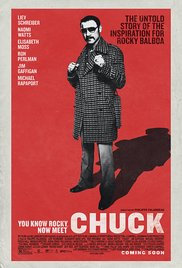
THE BLEEDER (former title: CHUCK) (USA 2016) ***

Deadlines to Submit your Screenplay, Novel, Story, or Poem to the festival: http://www.wildsound.ca

chuckA drama inspired by the life of heavyweight boxer Chuck Wepner.
Director: Philippe Falardeau
Writers: Jeff Feuerzeig, Jerry Stahl
Stars: Elisabeth Moss, Naomi Watts, Ron Perlman, Liev Schreiber

Review by Gilbert Seah

 Quebec director Falardeau has made some excellent Quebec films like CONGORAMA, MONSIEUR LAZHAR (his most famous and critical acclaimed film) and MY INTERNSHIP IN CANADA. THE BLEEDER with all its good points, however, is unable to reach the director’s high point, probably due to its depressing subject matter, though based on a true story.

The film is based on the life of Chuck Wepner (Liev Schreiber). It traces the rise to fall to redemption of Chuck, the man concentrating on his personal life rather than his boxing. It is tough to see a man from the Bronx, go down after gaining fame. The life of fame and riches seduced the man, resulting in him leaving his wife, doing drugs like cocaine and flirting around.

The atmosphere of the 70’s where the story takes place is authentically created. There are 70’s period films that do not look as if they were made in the 70’s, The BLEEDER looks as if it was made in the 70’s. Everything from props, dialogue, hair, music and sets is perfect.

This is the life of Chuck Wepner, best known for his 1975 fight with the heavyweight champion, Muhammad Ali. The film is called THE BLEEDER because Chuck is able to take punishment, which allowed him to stay that many rounds in the ring with Muhammad Ali.

Live Schreiber plays Chuck the loser that he is. He is not too bright either. When he learns that Stallone stole his life story, he calls United Artists and asks to speak to directly to Stallone. When Chuck finally meets Stallone, he does not even ask him for royalties. One problem with the film is that Chuck is not a likeable human being. Worse, is that he is a loser with few redeeming qualities. It is hard to feel sorry for a man who was married three times who keeps cheating on his wives. His daughter is understandably upset with him. Everyone would be, including the teacher at a PTA meeting who walks away disgusted. Unlike the film ROCKY, which is based on Chuck’s life a film that became so popular because ROCKY was about a winner, THE BLEEDER is about a loser.

The boxing scenes are violent and necessarily so, as the film has to show the character living up to the name of Bleeder. The main match, the one between Muhammad Ali and Chuck is convincing enough to look like the real thing.
Schreiber is excellent in his role as Elizabeth Moss is as his second wife. The film does not really explain how Sylvester Stallone learned about Chuck’s life to portray him so accurately in his Oscar Winning film. The actor, Morgan Spector playing Stallone is totally laughable in his look – looking like a skinny though toned version of the Stallion.

THE BLEEDER is not a bad film. But a depressing film about a loser is going to be a tough sell to attract audiences.

Trailer: https://www.youtube.com/watch?v=0AQXwOOqNNw

_________

Also, Free logline submissions. The Writing Festival network averages over 95,000 unique visitors a day.
Great way to get your story out: http://www.wildsound.ca/logline.html

Deadlines to Submit your Screenplay, Novel, Story, or Poem to the festival:http://www.wildsound.ca

Watch recent Writing Festival Videos. At least 15 winning videos a month:http://www.wildsoundfestival.com

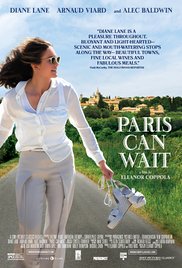
Film Review: PARIS CAN WAIT (USA 2017) Directed by Eleanor Coppola

Deadlines to Submit your Screenplay, Novel, Story, or Poem to the festival: http://www.wildsound.ca

paris_can_waitAnne is at a crossroads in her life. Long married to a successful, driven but inattentive movie producer, she unexpectedly finds herself taking a car trip from Cannes to Paris with a business associate of her husband. What should be a seven-hour drive turns into a carefree two-day adventure replete with diversions involving picturesque sights, fine food and wine, humor, wisdom and romance, reawakening Anne’s senses and giving her a new lust for life.

Director: Eleanor Coppola
Writer: Eleanor Coppola
Stars: Diane Lane, Alec Baldwin, Arnaud Viard

Review by Gilbert Seah

 PARIS CAN WAIT opens at the Cannes Film Festival (where the film was shot). (Nothing is seen of the Cannes film festival or of any stars though, so one assumes that it was not shot during that time.) Anne (Diane Lane) is here with her producer husband Michael (Alec Baldwin) who can be observed as loving his wife yet too busy to pay her much attention. When she thinks he is answering her questions, he is actually speaking to the person on the other side of his phone. When an earache prevents Anne from flying to Budapest with Michael, Michael’s film associate Jacques (Arnaud Viard) offers to drive her to Paris, while Michael heads to Budapest for a film.

But Jacques diverts on the trip, and hence the title PARIS CAN WAIT. Anne filly arrives in Paris at the end of the film, delayed while her husband grows suspicious. In the mean time, Jacques plays on his charm to woo Anne – and finally makes his move.

PARIS CAN WAIT is a light comedy that is neither very funny nor amusing. The characters are superficially pleasant, but only to each other. If one looks deeper, each one is selfish to each one end.

Coppola’s film is full of little observations. She uses her characters nuances to point out flaws and strengths in their personalities. But the three characters are the idle rich who probably have lived all their lives in luxurious decadence. As a result, the audience can hardly feel for any of the three – whether they cheat or remain faithful. They just come across as three annoying people unconnected to the real world.

In the film, Coppola takes her audience to see the France only the fortunate see. Thee are no scene of poverty or minorities or any of the hardship that is taking place in the E.U. The characters wine and dine in luxury, always complaining about the ridiculous. Anne complains a great deal about how she cannot get cheese at room service that she had to order a cheeseburger to get some. It is a haughty and selfish behaviour with that spirit prevailing throughout the film. The two principal characters are travelling around in a gorgeous Peugeot convertible.

It is surprising the this is the same director that made the insightful documentary HEART OF DARKNESS that revealed the insides of her husband’s APOCALYPSE NOW. Where did all the talent and insight disappear to?
The film is shot in English and French without any subtitles for the French portion. The dialogue is mostly inconsequential which means that is no need for any translation.

The climax of the film is the scene where Anne ends up putting a clip to tidy up her hair behind her head, as if tidying up all the ends that have taken place, a clever subtle metaphor in the film. It is an odd way to end the film, as it is an odd film – indulgent, insufferable and impossible.

Trailer: https://www.youtube.com/watch?v=HTrT6QSqnGs

_________

Also, Free logline submissions. The Writing Festival network averages over 95,000 unique visitors a day.
Great way to get your story out: http://www.wildsound.ca/logline.html

Deadlines to Submit your Screenplay, Novel, Story, or Poem to the festival:http://www.wildsound.ca

Watch recent Writing Festival Videos. At least 15 winning videos a month:http://www.wildsoundfestival.com

Film Review: THE GARDENER (Canada 2016) ***

Deadlines to Submit your Screenplay, Novel, Story, or Poem to the festival: http://www.wildsound.ca

the_gardener.jpgThe Gardener is a documentary directed by Sebastien Chabot about Frank Cabot’s Les Quatre Vents, aka Cabot Garden, a magnificent private garden in the Charlevoix region near Quebec City.
Director: Sébastien Chabot
Writer: Sébastien Chabot
Stars: Francis Cabot, Anne Cabot, Adrienne Clarkson

Review by Gilbert Seah
 
Veteran of Canada’s TV industry, director Sébastien Chabot first feature documentary THE GARDENER offers audiences a rare opportunity to experience arguably the most beautiful garden in the world. This garden is designed and cultivated by Frank Cabot (recently deceased in 2011), THE GARDENER of the title who is also a philanthropist and horticulturalist.

The garden’s beauty, as well as Cabot’s boundless passion and his commitment to refining their every last detail are captured in the pensive and stunningly photographed film.

The garden is called Les Quatre Vents (The Four Winds) at Malbaie, Quebec. It is only near the end of the film that Chabot reveals that this Garden of Eden is now open to the public. It is open only for 4 Saturdays of the year at a price of $30 per person and sold only in November. Needless to say, the tickets are always sold out and each person is allowed a maximum purchase of 4 tickets. (this year’s tickets are sold out and the 2018 tickets go on sale in December). It is practically a sure thing that anyone watching Chabot’s film will mark this calendar date to book the tickets.

The film contains two days of interviews of Cabot. It is fortunate as audiences get to hear Cabot’s perspective on life and on the design of his garden. Cabot was ill at that time but agreed to be interviewed. His wife and close friends also tie in their points of view on the garden.

The best segments of the film are the shots of the garden. From the tiered waterfalls, sculptured hedges, flowers and stone sculptures to the garden paths, the tour of the 20-acres of Cabot’s land is nothing short of magnificent.

Cabot talks about his garden being like a symphony. It is a bit tacky that Chabot immediately follows this comment with symphony music. It is also quite obviously artificial that he adds in the sound of bird chirping during the tracking shots. These are a few forgivable complaints on the film. Original music of the film is provided by Luc St-Pierre.

Chabot spends a fair amount of time, necessarily on the background of the man. It is insightful to see where his ideas originated. Cabot was a rich and wealthy man and a genius in his own right. One can see that a man full of riches and owner of such a magnificent garden would eventually want to share the beauty with the rest of the world. He thus opened the garden to the public for the first time in 1987.

“It was a true pleasure to document the beauty of Les Quatre Vents, and the bold vision of Frank Cabot,” said director Sébastien Chabot. “I’ve been elated to see festival audiences respond so enthusiastically to the film, it’s a privilege to offer people the opportunity to experience a stunning place that only a lucky few have had a chance to see.” These are the same thought echoed in the words of Chabot when interviewed in the film.

The film offers a rare opportunity to see true beauty. Don’t miss it! From May 19, THE GARDEN opens theatrically at the Hot Docs Ted Rogers Cinema for a week-long run.

Trailer:​ https://vimeo.com/213602278

_________

Also, Free logline submissions. The Writing Festival network averages over 95,000 unique visitors a day.
Great way to get your story out: http://www.wildsound.ca/logline.html

Deadlines to Submit your Screenplay, Novel, Story, or Poem to the festival:http://www.wildsound.ca

Watch recent Writing Festival Videos. At least 15 winning videos a month:http://www.wildsoundfestival.com

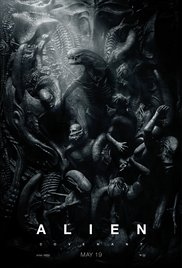
Film Review: ALIEN: COVENANT (USA 2017) ***1/2

Deadlines to Submit your Screenplay, Novel, Story, or Poem to the festival: http://www.wildsound.ca

alien_coventent.jpgThe crew of a colony ship, bound for a remote planet, discover an uncharted paradise with a threat beyond their imagination, and must attempt a harrowing escape.

Director: Ridley Scott

Stars: Michael Fassbender, Katherine Waterston, Billy Crudup, Danny McBride

Review by Gilbert Seah

 
ALIEN helmer Ridley Scott (he directed two of the series) proves that at the age of 80, he still has it. The latest ALIEN called ALIEN: COVENANT the second of the prequel before the first ALIEN movie and the sequel to the last PROMETHEUS shows Scott in top form. ALIEN COVENANT is far superior to copycat space horror films like the recent LIFE and PASSENGER. ALIEN: COVENANT is the real thing – with real horrors in the abyss of space that will keep one at the edge of the seat watching face clingers and torso busters (called more mildly face huggers and chest bursters in the film).

The film begins with a short flashback showing Peter Weyland (Guy Pearce) while he is still alive; he addresses a synthetic android (Michael Fassbender) who would become part of the Prometheus expedition. Weyland asks the android to select a name for himself and the android selects ‘David’ as his preferred name.

The film moves to the present which is 2104. The crew of the colony ship Covenant is bound for a remote planet with two thousand colonists and a thousand embryos aboard. While en route to their destination, an energy surge damages the ship, killing its captain and waking the crew. As they repair the ship, the crew intercept a radio transmission from a nearby planet and decide to investigate as the transmission is human in origin but the planet is supposedly lifeless. This is when the horror begins.

The first ALIEN film was panned by the critics with the critic at Time Magazine calling it a bastard movie, a cross between STAR WARS and JAWS. One can see why. Like JAWS, the first sight of the alien occurs almost a third into the movie just as the first sight of the shark was never seen till half of the film elapsed – a Hitchcock trait (best example: THE BIRDS). But once the monsters starts bursting out of the victim’s bodies – watch out ! Sound effects, special effects and all the horror instruments filmmakers use are perfectly combined to scare the hell out of audiences and for a fairly lengthy interval of time at that. PASSENGER never achieved that level of effect while LIFE imitated a few of the scares. The alien clinging on the outside of the spaceship as it strives to enter the ship, is seen in both LIFE and COVENANT. There are more characters in COVENANT than in any of the past ALIEN Films or in LIFE and PASSENGER resulting in more grisly deaths as well.

COVENANT is neatly tied in to PROMETHEUS though the audience need not know much about the original film. The film also contains an intricate enough plot, with a sufficient twist at the end, brilliant for the fact that the audience is supposed to guess it.

The only complaint is of the film being a bit confusing, though the confusion can be sorted out with a bit of reflection. One is the use of actor Fassbender to play the two androids David and Walter. The other is the flashback at the start of the film, which is not clearly conveyed to the audience as a flashback. When Fassbender appears on the ship, one assumes he is David, but he is actually Walter. Another disarray arises with the large number of crew suddenly descending on the planet as the film only showed a handful of humans awakened from their slumber.

Scott still uses the gimmicks of the past ALIEN films to ensure the film’s success. Katherine Waterston as Daniels, a terraforming expert looks like a younger Sigourney Weaver, especially in her sweat-soaked undergarments. The sight of the alien eggs before hatching still looks as eerie as before. A few new additions are added like the bath scene (looking almost pornographic) which is comical in a way as the alien strikes like a snake-like creature.

ALIEN: COVENANT returns the franchise to its roots and to what works. Fans and audiences would shriek in delight!

Trailer: https://www.youtube.com/watch?v=H0VW6sg50Pk
 

_________

Also, Free logline submissions. The Writing Festival network averages over 95,000 unique visitors a day.
Great way to get your story out: http://www.wildsound.ca/logline.html

Deadlines to Submit your Screenplay, Novel, Story, or Poem to the festival:http://www.wildsound.ca

Watch recent Writing Festival Videos. At least 15 winning videos a month:http://www.wildsoundfestival.com

Film Review: BON COP BAD COP 2 (Canada 2017)

Deadlines to Submit your Screenplay, Novel, Story, or Poem to the festival: http://www.wildsound.ca

boncopbadcop2.jpgA francophone cop and an anglophone RCMP officer reunite to investigate a large car theft ring led by an Italian mobster.
Director: Alain Desrochers
Writer: Patrick Huard
Stars: Colm Feore, Lucie Laurier, Sarah-Jeanne Labrosse

Review by Gilbert Seah 

 It is a wonder the reason it took a full 10 years before the highly box-office successful ($12 million) and quite funny sequel to the 2006 BON COP BAD COP to emerge.

The title, a French take on the GOOD COP BAD COP cop genre mentality, again features David Bouchard (Patrick Huard), the rule-bending, francophone detective for the Sûreté du Québec and Martin Ward (Colm Feore), the by-the-book anglophone Ontario Provincial Police detective. The bilingual detectives must once again resolve their professional and cultural differences as well as their bigotry and prejudices to solve a case. When the film opens, Dave is undercover on a car heist job when Martin and his men break into the garage. Following the events of the first film, Martin Ward (Feore) and David Bouchard (Huard) have remained friends but have gradually grown apart as their lives and careers have taken them in different directions; Ward is now a senior officer with the Royal Canadian Mounted Police. In the present day, they are reunited to investigate a car theft ring which turns out to be a front for a much bigger terrorist plot.

Quebecois actor Patric Huard seems to have taken more than he can chew. In the sequel he is producer, writer and main actor. The first was written by Huard and 3 other writers, and this one he tackles the whole task alone. While the script contains a few genuine brilliant bits, especially concerning Canada’s American neighbours, but the script is far from funny and dips into too much sentiment. If Martin is not working hard enough and suffering from a degenerative motor-malfunctioning disease (the Lou Gehrig disease), Dave is faced with a neglected wife. And if that is not enough, Dave’s son has gone bad and almost gets himself killed. The script also contains a few discontinuity problems. At the start, during the illegal vehicle takedown, Martin is heard telling his men over the wire that Dave, while taking him hostage is undercover. Why then in the next scene, does Martin insist on Dave beating him up to convince his men of his escape? The car chase at the film’s start also has continuity problems. (The same background of the Toronto highway and viaduct is shown twice at different parts of the chase.)

BON COP BAD COP 2 is the kind of film that will make the big bucks in French Canada. Huard also brings in the national game of hockey for additional boost. But English Canada will likely stay away from this film, and even more so for the southern neighbours, the Americans, especially when they are insulted this much in the film.

The film is shot in both French and English. Feore proves himself to be quite the bi-lingual actor, cursing all the time in French like a true natural. Feore and Huard make a good team in the film.

Number 2 is not as funny as the first (which I recall was very entertaining), and not even as exciting.

Trailer: https://www.youtube.com/watch?v=Un2iSp0VEMY 

_________

Also, Free logline submissions. The Writing Festival network averages over 95,000 unique visitors a day.
Great way to get your story out: http://www.wildsound.ca/logline.html

Deadlines to Submit your Screenplay, Novel, Story, or Poem to the festival:http://www.wildsound.ca

Watch recent Writing Festival Videos. At least 15 winning videos a month:http://www.wildsoundfestival.com

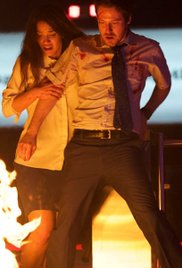
Full Review: THE BELKO EXPERIMENT (USA 2016) ****

Deadlines to Submit your Screenplay, Novel, Story, or Poem to the festival: http://www.wildsound.ca

the_belko_experiment_poster.jpgIn a twisted social experiment, 80 Americans are locked in their high-rise corporate office in Bogotá, Colombia and ordered by an unknown voice coming from the company’s intercom system to participate in a deadly game of kill or be killed.
.
Director: Greg McLean
Writer: James Gunn
Stars: John Gallagher Jr., Tony Goldwyn, Adria Arjona

Review by Gilbert Seah
 
Aussie director Greg McLean (Australians always have their special edgy sense of humour) and scriptwriter James Gunn (remember his super-gross SLITHER?) join forces to deliver the perfect horror thriller on office culture. Originally premiered in the Midnight Madness section at last year’s Toronto International Film Festival, the film still proves a fascinating watch the second time around.

Office politics turns into a real-life survival of the fittest when workers at Belko Company are forced into a sick game of kill or be killed by unknown sinister forces (revealed at the end of the film) that lock down their building, in this gruesomely funny horror thriller. It at first seems to be an ordinary morning on the job for a group of Americans working for a not-for-profit company in a modern office building in Colombia. After noticing that their Colombian colleagues have not arrived for work, office worker Mike (John Gallagher, Jr.) spots some unfamiliar security guards entering a large hangar nearby. Moments later, an icy voice comes over the building’s PA system and calmly explains that the employees must kill 2 other employers of their choice within 30 minutes — if not, they will be killed themselves. While the boss (Tony Goldwyn) tries to calm the troops, Mike belatedly realizes that something truly sinister is going on — and when metal doors come sliding down on all the building’s exits and windows, it becomes clear that friends and colleagues are now suddenly enemies in a bloody and brutal battle to the death.

Even before the action begins, McLean delivers lots of inside office jokes like the isolation of working in a cubicle, sexual harassment and the introduction of new employees. The film contains a good cross-section of workers like the maintenance men, the security, the bitchy lady manager et al. The film is a mix between disaster, sci-fi, horror and comedy which means that the filmmakers have plenty to play around with. In the kill to survive scenario, there is the good guy with all the right motives, the bad boss (handsome Goldwyn doing the villain as he did in GHOST), the unstable psycho, the asshole, the plump good meaning lady and so on.

The music, by Tyler Bates (GUARDIANS OF THE GALAXY VOL.2), is an assembly of musical numbers from classical Tchaikovsky to a Latino version of “I Will Survive” effectively used at appropriate intervals. The sounds effects are superb especially the metal closing of the windows and doors.

Besides being a well-made horror thriller, McLean also squeezes in office satire and a fews good metaphors like the segment of the dos shitting and covering up its shit outside the Belko compound. There are a few predictable parts – like the one involving the office pervert/asshole sexually harassing the pretty employee. His comeuppance, with his life at her mercy comes as no surprise but provides the biggest cheer of the movie.

Best of all, the ending is unexpected, also providing a good twist to the story. THE BELKO EXPERIMENT proves to be very violent and satisfactory fun, if one can stomach the graphic violence.

Trailer: https://www.youtube.com/watch?v=9W46xo3AvBA
_________

Also, Free logline submissions. The Writing Festival network averages over 95,000 unique visitors a day.
Great way to get your story out: http://www.wildsound.ca/logline.html

Deadlines to Submit your Screenplay, Novel, Story, or Poem to the festival:http://www.wildsound.ca

Watch recent Writing Festival Videos. At least 15 winning videos a month:http://www.wildsoundfestival.com

Film Review: JEREMIAH TOWER: THE LAST MAGNIFICENT (USA 2015) ***

Deadlines to Submit your Screenplay, Novel, Story, or Poem to the festival: http://www.wildsound.ca

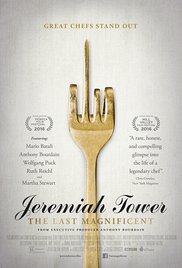
jeremiah_tower.jpgBoth a biopic of a complicated man and an exploration of the gathering forces that converged to shape a new American cuisine and create the cult of “celebrity chef”.
Director: Lydia Tenaglia
Stars: Mario Batali, Anthony Bourdain, Francesca De Luca

Review by Gilbert Seah

 What’s so special and who is this Jeremiah Tower that the man deserves a full length documentary dedicated to his honour?

Tower is a Master Chef and restaurateur who change the look of restauranting. As chef, he would mingle among the customers, something never done before and he created the importance of a chef’s name in a city. Tower was also a very intriguing person, a visionary and someone, everyone admires.

“I have known Jeremiah for 14 years and yet I can say that I do not know him.” So says one of Jeremiah’s friends. The documentary takes considerable amount of time to introduce this Master Chef and restaurateur to the audience. It is only after 15 minutes that the doc links food to the man, in a cruise ship where Jeremiah, as a boy tastes his first cream cake dessert.

JEREMIAH TOWER: THE LAST MAGNIFICENT is the new food documentary tat explores the remarkable life of Jeremiah Tower, one of the most controversial and influential figures in the history of American gastronomy. Tower began his career at the renowned Chez Panisse in Berkeley in 1972, becoming a pioneering figure in the emerging California cuisine movement. After leaving Chez Panisse, due in part to a famously contentious relationship with founder Alice Waters, Tower went on to launch his own legendary Stars Restaurant in San Francisco. Stars was an overnight sensation and soon became one of America’s top-grossing U.S. restaurants.

After several years, Tower mysteriously walked away from Stars and then disappeared from the scene for nearly two decades, only to resurface (as when the film opens) in the most unlikely of places: New York City’s fabled but troubled Tavern on the Green. There, he launched a journey of self-discovery (offering loss of voiceover for the film on this matter) familiar to anyone who has ever imagined themselves to be an artist. Featuring interviews by Mario Batali, Anthony Bourdain, Ruth Reichl and Martha Stewart, this delicious documentary tells the story of the rise and fall of America’s first celebrity chef.

The film traces using a combination or home movie footage and re-enactments how Jeremiah grew into cooking. He was always living in posh hotels whee he discovered the kitchen, dazzled by the cooking aromas. The hotel kitchen staff adopted him as their own. The audience is told Jeremiah read menus more than story books and concocted meals form the menus as well as collected menus. All this explains Jeremiah’s chef roots in a fascinating manner.

Besides haute cuisine, director Tenaglai also reveals the personal and difficult life of the man. Tower was a homosexual, coming out during taboo times. His restaurant, Stars was singled out by the AIDs activists, despite him paying the hospital ills for two of his employees who came down with the disease. Everyone wanted to sleep with him – and he did with both sexes. His relationship with Alice Waters, an important part of his life is also given due screen time.

JEREMIAH TOWER: THE LAST MAGNIFICENT is an interesting account of an interesting man. The doc will not disappoint.

Trailer: https://www.youtube.com/watch?v=8lSwXSPigOk

_________

Also, Free logline submissions. The Writing Festival network averages over 95,000 unique visitors a day.
Great way to get your story out: http://www.wildsound.ca/logline.html

Deadlines to Submit your Screenplay, Novel, Story, or Poem to the festival:http://www.wildsound.ca

Watch recent Writing Festival Videos. At least 15 winning videos a month:http://www.wildsoundfestival.com


Film Review: HOUNDS OF LOVE (Australia 2016) ****

Deadlines to Submit your Screenplay, Novel, Story, or Poem to the festival: http://www.wildsound.ca

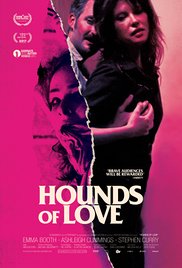
houndsoflove.jpgVicki Maloney is randomly abducted from a suburban street by a disturbed couple.

Director: Ben Young
Writer: Ben Young
Stars: Emma Booth, Ashleigh Cummings, Stephen Curry

Review by Gilbert Seah 

 Not wholly original, but still absorbing, HOUNDS OF LOVE, writer/director Ben Young’s story of an abducted teenager by a disturbed couple pays homage to David Lynch’s BLUE VELVET. The slow motion beginning of HOUNDS OF LOVE and the common theme of kidnapping reminds cineastes immediately of BLUE VELVET.

HOUNDS OF LOVE is supposed to be based on true events – macabre as they may be. The setting is 1987, Perth, Australia whee a seemingly typical Australian suburban couple have a secret hobby – kidnapping schoolgirls and murdering them. But their latest desperate victim finds ways inside their heads.

The slow motioned tracking shot of schoolgirls playing netball after school is stunning as it is eerie. One can tell something is going to happen – the abduction of the first victim of the kidnapping couple. For those unfamiliar with the game (played in places like Britain, Australia and Singapore where this reviewer was born), the scene is even more fascinating with the girls in netball outfits tossing a ball into a net.

The film then settles on the next victim. Vicki (Ashley Cummings), a rebellious teen, is first seen in the film after having ‘it’ with her boyfriend Jason (Harrison Gilbertson). Vicki is staying with her mother, Maggie (Susie Porter) who she cannot get along with. After being grounded, Vicki sneaks off to a party at night when she is abducted by Evelyn and John White (Emma Booth and Stephen Curry). The audience would likely think that this is what Vicki deserves, after misbehaving and disobedience. But then, no human being should go through what she does in the next few days.
The one thing that stands out in this film (and differentiates from Lynch’s BLUE VELVET) is director Young’s ability to connect his audience with his characters.

Director Young devotes a lot of time towards his female characters. Evelyn is shown to be the most sympathetic of the film’s characters. She loves her dog, her partner-in-crime, John (a real nasty piece of work) and is just caught with all the bad luck. The audience ends up sympathizing with both her as well as Vicki. Vicki’s mother, Maggie is also portrayed as a strong mother, who despite having to take s*** from her daughter, loves her to no end and will not give up in the search for her. The father, Trevor (Damian de Montemas) and Jason are hilariously given token roles.

What is impressive too are the top notch performances all around. Emma Booth carries the lead role confidently as well as the two other women Cummings and Porter. Stephen Curry who plays the nastiest villain seen in a while, looks completely different (most remembered from the Aussie film THE CASTLE) with his tacky moustache. Young spends some time with him grooming his moustache in the mirror before strutting out of the bathroom like a stud.

The film is expectedly violent and the ending matches the violence of BLUE VELVET without resorting to tricks like the cutting off of an ear. The climax of the film is a real nail-biter.

HOUNDS OF LOVE unsettled festival audiences in Venice and at SXSW and will definitely do the same with audiences everywhere. Young is clearly a talent to watch. Universal Pictures has already signed him on to direct the new 2018 sci-fi thriller EXTINCTION.

Trailer: https://www.youtube.com/watch?v=UNEurXzvHqE

_________

Also, Free logline submissions. The Writing Festival network averages over 95,000 unique visitors a day.
Great way to get your story out: http://www.wildsound.ca/logline.html

Deadlines to Submit your Screenplay, Novel, Story, or Poem to the festival:http://www.wildsound.ca

Watch recent Writing Festival Videos. At least 15 winning videos a month:http://www.wildsoundfestival.com


FILM REVIEW: THE DINNER (USA 2016) ***1/2

Deadlines to Submit your Screenplay, Novel, Story, or Poem to the festival: http://www.wildsound.ca

the_dinner.jpgA look at how far parents will go to protect their children. Feature film based on a novel by Herman Koch.

Director: Oren Moverman
Writers: Oren Moverman (screenplay), Herman Koch (novel)
Stars: Richard Gere, Laura Linney, Steve Coogan

Review by Gilbert Seah

 THE DINNER is basically a four handler psychological drama which shows how far parents will (or will not go) to protect their children. In THE DINNER, two family of parents sit down to a dinner at a posh restaurant to discuss the implications of their children who have killed a homeless woman by setting her on fire.

As appropriate for a film entitled THE DINNER, the film is told in four parts – aperitif, main course, dessert and digestif. The film also contains acute and often hilarious observations, lightening the film’s serious theme, of the posh restaurant. It is clear that director Oren is not fond of these hip establishments. Paul Lohman (Steve Coogan) constantly hurls insults at the waiters and servers to the point of vulgarity. It is of great relief that at one point the maitre’d finally tells him off.

Director Moverman (THE MESSENGER, LOVE AND MERCY) is expert at getting the audience’s attention and creating drama at the dinner table. This is evident at the one hour mark of the film when all the hidden facts of the incident are slowly revealed. The key confrontation scene takes place in the Library section of the restaurant. It is really odd that the music is played quite obtrusively during the conversation. I am not sure whether this is done on purpose to up the ante during the segment because the music is really loud and annoying. It is certain that this kind of music is never played at any restaurant’s waiting area.

Steve Coogan ditches his British accent to play a sarcastic American teacher. The reason he was chosen for this film THE DINNER has likely something to do, though it does out really matter, being in the food/restaurant critic films THE TRIP and THE TRIP TO ITALY. Coogan, known to be sarcastic in real life, steals the show, managing to elicit a few laughs from his sarcastic remarks at the awkward dinner situation. It is surprising that he gets second billing to Richard Gere, likely because this is an American film and Americans might not know who Coogan is. Gere is quiet in the first half of the film, showing his true acting colours only after the second half. Laura Linney is as usual, very good as the mentally disturbed wife.

The film accurately touches the right chord on when human beings cannot come to an agreement and cannot no longer live with each other. This comes about, as the film demonstrates, when ones basic principles go against another’s. Stan wants his son to pay for his crime, his wife does not and neither does Paul’s wife Claire. It is clear that mothers will normally go all out to protect their children, particularly sons, while fathers are more inclined to teach their sons to do what is right.

Moverman manœuvres his film towards an exciting climax where no one can foresee who will do what at the end. The ending turns up quite a brilliant touch too (not to be revealed in the review).

Trailer: https://www.youtube.com/watch?v=zP26KWVw5jE

_________

Also, Free logline submissions. The Writing Festival network averages over 95,000 unique visitors a day.
Great way to get your story out: http://www.wildsound.ca/logline.html

Deadlines to Submit your Screenplay, Novel, Story, or Poem to the festival:http://www.wildsound.ca

Watch recent Writing Festival Videos. At least 15 winning videos a month:http://www.wildsoundfestival.com