Movie Review: WHISKEY TANGO FOXTROT (USA 2016) ***

Deadlines to Submit your Screenplay, Novel, Story, or Poem to the festival:http://www.wildsound.ca

whiskeytangofoxtrotbaWHISKEY TANGO FOXTROT (USA 2016) ***
Directed by Glenn Ficarra and John Requa

Starring: Tina Fey, Margot Robbie, Martin Freeman, Billy Bob Thornton, Alfred Molina

Review by Gilber Seah

WHISKEY TANGO FOXTROT is the military communications term for WTF which stands for….what everyone is familiar with. The title sounds more appropriate than the lengthy title of the memoir called The Taliban Shuffle: Strange Days in Afghanistan and Pakistan written by Kim Baker about her own experiences as an overseas reporter.

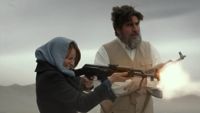
The film charts Baker’s life story while reporting in various cities in Afghanistan. She leaves boyfriend Chris (Josh Charles) to fend for himself as she leaves for an initial 3 months. She befriend the only other female journalist on arrival, Tanya (Margot Robbie). As Baker learns the ropes and gets her reporting done, she learns much about the state of Afghanistan, though these tend to be feminine biased. She falls for a fellow reporter, Scotsman Iain (Martin Freeman). She learns a few painful life lessons as well. All this seriousness is however, conveyed through in a humorous manner.

The film is directed by Glenn Ficarra and John Requa who did an ok job also with I LOVE YOU, PHILLIP MORRIS.

An outright flaw is the film’s preachiness on women’s issues. One can understand where this is coming from as the film is produced and performed by Tina Fey based on a female’s novel. But one would have expected the all male scriptwriter and directing trio to at least moderate some of the material. The romance overshadows what is going on to the point that the film almost turns out into another annoying Hollywood romantic comedy. The lady saves her lover at all costs with her ingenuity? It is really hard to take in as fact what she did in the film to save Iain. Also, the film praises many feminist issues like the right of afghan women to gossip and socialize at the well, their right to ensure foreigners cover their heads and not hold hands (two scenes has the Fey character admonished for those two ‘sins’) and the women’s roles are much strongly written than the males. The men exist to service the purpose of the female characters. There is the alpha male security of Baker, a hunky no-brain ready to have sex with her at her command. Her main love interest Iain is always there to beckon her ever wish and woos her to no end. And at the social gatherings, the men never have anything important to say. The chief male, General Hollanek is depicted as an egoistic goat who succumbs to Baker’s plans while the Afghan chief of the Interior Ali Massoud Sadiq (Alfred Molina) does more of the same.

The female audience may be delighted however at the Afghan war being looked at from a different perspective. Also, the war with all its horrors is depicted as just that, though doused with quite the bit of humour. One can always be reminded that this is an SNL film – if such a thing exists – produced by Lorne Michaels (SNL) and Fey.

In one segment of the film, Baker is asked the reason she went to Afghanistan. Her answer that she realized that day in and day out she has moved backwards in life as metaphorically observed in her stationary bike that moved backwards after constant use and that she should move forward, one can only wish that the directors’ reason for making this movie also could have achieved this same goal. WHISKEY TANGO FOXTROT could have been better, but as the title implies WTF, it leads nowhere. WTF?

Also, Free logline submissions. The Writing Festival network averages over 95,000 unique visitors a day.
Great way to get your story out: http://www.wildsound.ca/logline.html

Deadlines to Submit your Screenplay, Novel, Story, or Poem to the festival:http://www.wildsound.ca

Watch recent Writing Festival Videos. At least 15 winning videos a month: http://www.wildsoundfestival.com

Interview with Festival Director Sam Berliner (Translations: Seattle Transgender Film Festival)

Translations: Seattle Transgender Film Festival is not only a groundbreaking film festival that provides the Pacific Northwest with a venue for films by, for, and about transgender people and the issues facing the transgender community, but one of only a few transgender film festivals in the world. The goal of the event is to place emphasis on visibility and positive representations.

https://filmfreeway.com/festival/translations

Interview with Sam Berliner:

Matthew Toffolo: What is your Film Festival succeeding at doing for filmmakers?

Sam Berliner: Translations creates an opportunity for transgender and gender-non-conforming stories to be embraced and shared with the Seattle community. It is one of only a handful of transgender film festivals in the world and I am honored to have this platform to honor and celebrate our filmmakers and their work.

Matthew: What would you expect to experience if you attend the festival this year (2016)?

Sam: The 2016 edition of Translations: Seattle Transgender Film Festival is all about connecting audiences with stars and stories. This year we are excited to celebrate some of the champions who have led the way for transgender communities and highlight connections through an array of voices and perspectives. Here’s three early announcements:

BEING TRANSPARENT — Live event! Get the inside scoop with some of the remarkable talent from the hit series TRANSPARENT including pioneering star Alexandra Billings. Don’t miss this lively discussion on being transgender both in front of and behind the camera.

MAJOR! — Northwest Premiere! Miss Major Griffin-Gracy is a 73-year-old Black transgender woman who has fought for the rights of transwomen of color since Stonewall. MAJOR! shows one woman’s journey, a community’s history, and how caring for each other can be a revolutionary act.

SUITED — Northwest Premiere! A hit at Sundance, SUITED tells the story of Bindle & Keep, a Brooklyn tailoring company that makes custom suits for gender-nonconforming and transgender clients. An intimate documentary of living bravely in one’s own skin.

As always, there will be a number of free screenings, discussions, parties, community and fun!

Matthew: What are the qualifications for the selected films?

Sam: Translations is a film festival by, for and about the transgender communities and our allies so the films must have trans content or be created by a trans filmmaker. Beyond that, it really depends on the films! Of course with our festival only lasting four days (only two of which are full days) it means that we only have so much space and that makes it quite competitive, especially because we want to share the widest variety possible—narratives, documentaries, shorts, features, all genders, a wide range of ages, from as many countries and cultures as possible etc. Above all, we want to show films that will inspire, educate, and uplift our audiences.

Matthew: Do you think that some films really don’t get a fair shake from film festivals? And if so, why?

Sam: As a filmmaker and festival programmer, I really understand how complicated film festival programming can be. There are only so many films that can be screened and the competition really depends on what else is coming out that year. (For example, if two films are similar in length and about the same subject it is likely that only one will be chosen and those are things that neither filmmakers nor festivals can really control.) Another issue is length. A short film is most programmable if it is 8-10 minutes or less. It can fit into a shorts program, it can screen before a feature, there are options. When shorts get long, into 20-30 minutes, is when they are much harder to program. So that is another aspect. As a filmmaker myself who has had plenty of festival rejections in addition to great festival success, I’ve learned that it doesn’t always have to do with the film itself and whether the screening committees like it or not. There are always many many factors in play.

Matthew: What motivates you and your team to do this festival?

Sam: There are only a handful of transgender film festivals in the entire world and Translations is one of the oldest! It is a very unique experience for transgender and gender-variant folks to be able to come together and celebrate our community through the power of cinema. Film is such a powerful medium. As gender-variant people, recognizing ourselves on-screen and being able to relate to the characters is unbelievably affirming. Translations offers a space to celebrate, honor, mourn, learn, grow, relate, cry, empathize, accept, laugh… It is a space that we can excitedly return to each year to keep tabs on this ever shifting and beautifully evolving community. It offers visibility, community building, and education, and it’s an opportunity to strengthen alliances among people of all genders. What’s more, it’s a very exciting time for transgender film as more and more films are being made, more stories are being told, and transgender stories are reaching even larger audiences.

Film is a powerful medium. Being immersed in trans stories strongly promotes empathy and film can act as a bridge of understanding between communities. When you strip it all down, we are all simply people who want to love and be loved. I really believe that film helps audiences remember that.

Matthew: How has the festival changed since its inception?

Sam: I have only been involved in Translations as Festival Director for the past three years. This year will be the 11th festival! The first two festivals were held as part of the Gender Odyssey Conference. Since the third year, Translations has been a stand-alone event run by Three Dollar Bill Cinema and it has continued to grow and evolve into the fabulous four day event it is today.

Matthew: Where do you see the festival by 2020?

Sam: Oh wow, what an exciting question! In four years (omigoodness, 2020 is only four years away?!?!?) I would love to see Translations expanded to a longer festival, perhaps 5-6 days, and at multiple venues. I would also love to have a Master Class offered during the festival each year where an established transgender filmmaker can come teach others how to use the tools of cinema to tell their stories and explore the world. There is so much fantastic transgender content being made in 2016 that I can’t even imagine how amazing things will be then! I would hope that films will be firmly established in the Trans New Wave, where the filmmakers can assume that the audience has a basic Trans 101 in their back pockets already so that characters are free to embody their sexual orientations and gender identities without calling attention to it— therefore giving the film the freedom to focus on the story. It is revolutionary! Now THAT’s the future!

Matthew: What film have you seen the most times in your life?

Sam: Hm, that’s a hard question! I love movies and am quite the creature of habit so I’ve seen MANY way more times than I could count… I’d have to say THE BIRDCAGE with Robin Williams and Nathan Lane. It is one of my family’s favorites and I know every single word, tone and gesture by heart.

Matthew: In one sentence, what makes a great film?

Sam: A great film for me has a strong story that motivates a stylized aesthetic with relatable characters and humor.

Matthew: How is the film scene in your city?

Sam: I actually don’t live in Seattle! I work remotely from Berkeley, CA and come up to town three times a year. But I will say that Three Dollar Bill Cinema, that runs Translations, also runs Twist: Seattle Queer Film Festival in October which is a huge event! Three Dollar Bill also does Outdoor Cinema: a campy outdoor film series in the park proudly presenting fun and free movies under the stars, every summer. There are some really great theaters in Seattle including the Northwest Film Forum that does a lot of independent exhibition and support for filmmakers, plus it’s where we hold Translations! There’s also the Cinerama where you can get delicious chocolate popcorn and watch a 3D movie on their gigantic screen and the historic SIFF Cinema Egyptian that frequently has midnight screenings of cult classics.

Sam Berliner is a Bay Area-based filmmaker and animator best known for his engaging and accessible films about gender non-conformity. His award-winning short films, DATING SUCKS: A GENDERQUEER MISADVENTURE, GENDERBUSTERS, PERCEPTION and FLOAT have screened at over 200 film festivals around the world. When not actively making films, Sam is the festival director of Translations: the Seattle Transgender Film Festival, run by Three Dollar Bill Cinema. He also leads workshops and gives presentations about gender at various organizations and schools. Sam graduated in 2005 from Smith College with a BA in Film & Theatre and earned an MFA in Cinema from San Francisco State University in 2013.

Interviewer Matthew Toffolo is currently the CEO of the WILDsound FEEDBACK Film & Writing Festival. The festival that showcases 10-20 screenplay and story readings performed by professional actors every month. And the FEEDBACK Monthly Fesival held in downtown Toronto on the last Thursday of every single month. Go to http://www.wildsound.ca for more information and to submit your work to the festival.
Interview with Festival Director Matt Aucott (Cancer Sucks Film Festival)

The International Cancer Sucks Film Festival. A festival that showcases your films and also raises vital funds for cancer research. By submitting your film you have the chance to be screened to a panel of film industry judges. 90% of the submission fee will be donated to Cancer Research UK. The festival is open to films of any genre and from anywhere in the world. As long as your film is under 15 minutes and English is the main language (or has English subtitles) we welcome your submission.

Festival web page: http://greengirlprod.wix.com/cancersucksfilmfest

FilmFreeway listing: https://filmfreeway.com/festival/TheInternationalCancerSucksFilmFest

 Interview with Matt Aucott:

1) What is your Film Festival succeeding at doing for filmmakers?

The main purpose for the festival is to be a platform for independent film, where filmmakers from around the globe are able to reach a London audience and also raise much needed funds & awareness for cancer research.

2) What would you expect to experience if you attend the festival this year (2016)?

The ICSFF is a one day event and a showcase for short films. Attendees will get the chance to view the official selection, also a chance to network with other likeminded filmmakers and film industry experts. We want the festival to be a open platform for filmmakers to discuss and share their experiences as filmmakers. There maybe a glass of wine or two involved as well!

3) What are the qualifications for the selected films?

We have given our selection committee no fixed qualifiers for the selections process. The festival is open to films of any genre. Regardless of the filmmakers experience or budget we’re looking for innovative and captivating storytelling. We especially welcome films from female and ethnically diverse filmmakers.

4) Do you think that some films really don’t get a fair shake from film festivals? And if so, why?

I completely agree with this. With so many more filmmakers entering into festivals now days, It’s increasingly difficult to get past the selection process. I was informed by another film director that the rejection rate for festivals is now around the 90% mark. I believe because of this many great films, especially in the low to no budget end of the spectrum, are just not getting the exposure they deserve.

5) What motivates you and your team to do this festival?

I think the answer to this is in the name of our festival. Last year a very good friend of mine lost someone close to them through cancer. Another friend was also diagnosed with cancer at the end of 2015. These two events reminded me that when I was much younger I lost my Grandfather to cancer on Christmas day of all days. Even if you’re lucky enough never to be diagnosed with cancer yourself, in your life you will know a friend, work colleague or family member who will. Cancer in one form or another will touch your life. As filmmakers we are not going to find the cure for cancer ourselves, but next best thing is to use our skills to raise vital funds for cancer research. By holding this festival we hope to both celebrate independent film and raise funds for a very good cause.

6) Where do you see the festival by 2020?

This is the first year of the festival, going forward we plan to be an annul forum in London for filmmakers and continue to support cancer research.

7) What film have you seen the most times in your life?

Not any easy question to answer, many to chose from. I guess the one film that I’ve watched the most is Blade Runner. I’m very intrigued to see what Scott has planned for the sequel, It’s just a shame that Jordan Cronenweth is no longer with us to shoot the next instalment.

8) In one sentence, what makes a great film?

No matter your experience or budget. As long as your film has a captivating story that compels your audience to watch, you have a great film.

9) How is the film scene in your city?

London is a world hub for independent film. We’re experiencing a small renascence in it’s film industry at the moment with many great filmmakers entering onto the world circuit. With a large filmmaking community, London is a great place to be a filmmaker.

The ICSFF will take place on the 1st of May. The final deadline will be on the 20th of April. If you have anymore questions or you need any more info on the festival, Let me know

Interviewer Matthew Toffolo is currently the CEO of the WILDsound FEEDBACK Film & Writing Festival. The festival that showcases 10-20 screenplay and story readings performed by professional actors every month. And the FEEDBACK Monthly Fesival held in downtown Toronto on the last Thursday of every single month. Go to http://www.wildsound.ca for more information and to submit your work to the festival.

Interview with Festival Director Teresa Hollingsworth (Southern Circuit Tour of Independent Filmmakers)

Selected as one of MovieMaker Magazine’s ’50 Film Festivals worth the Entry Fee, 2015,’ the Southern Circuit Tour of Independent Filmmakers brings the best of independent film to communities across the South. Audiences have seen over 300 films and have engaged filmmakers in post-screening discussions in more than 100 Southern communities. The tour takes the audience away from their televisions, computers, tablets and phones to connect them with independent filmmakers – live, in-person! Southern Circuit transforms watching independent films from a solitary experience into a communal one.

Interview with Teresa Hollingsworth:

Matthew Toffolo:What is your Film Festival succeeding at doing for filmmakers? 

Teresa Hollingsworth:To quote one of our Southern Circuit alums, “I got to screen my film for real people,” meaning non-film festival audiences. Filmmakers have the opportunity to screen for a variety of audiences – high school and college students, inner city and rural community folks, and, yes, indie film buffs.

We actually pay filmmakers. Filmmakers receive screening honoraria!!! We pre-pay plane tickets, provide per diem for lodging and meals, and reimbursement for rental cars, gas and airline baggage fees. Yes, you have read all of this correctly! We are also building independent film audiences. Audience development is vital to independent film. Filmmakers need more people to see their amazing work.

Matthew: What would you expect to experience if you attend the festival this year (2016)? 

Teresa: Incredible Southern hospitality! You are our invited guest artist. (We firmly believe that filmmakers are artists.) We want you to enjoy your Southern Circuit Tour by seeing our beautiful landscapes, sampling our legendary cuisine and meeting our enthusiastic Screening Partners and audiences.

Our season runs 2016-2017 (the traditional academic calendar). Our filmmakers tour 7-12 days for an average of six screenings.

Matthew: What are the qualifications for the selected films? 

Teresa: Filmmakers must retain festival and educational rights (we don’t pay distribution fees). Films must be completed after January 2014 and between 40-120 minutes running time. There are some other details on the South Arts website.

Matthew: Do you think that some films really don’t get a fair shake from film festivals? And if so, why? 

Teresa: There are so many variables in programming festivals. Despite numerous festivals, a lot of little gems are missed. All filmmakers seem to want to screen at Sundance, SXSW or Tribeca, but it’s not going to happen for everyone. I’m all for dreaming ‘big,’ but don’t miss the chance to screen at a smaller festival.

Matthew: What motivates you and your team to do this festival? 

Teresa: We literally connect films/filmmakers to communities and organizations. We do the ground work in finding great films/filmmakers and pairing them with opportunities to screen in great Southern communities. We really like filmmakers. And we really like our Screening Partners. It’s rewarding to know that a film has had an impact on an audience.

Matthew: How has the festival changed since its inception? 

Teresa: Southern Circuit was born in South Carolina and screened exclusively there for years. Gradually screenings were offered in surrounding states. In 2006 the Circuit moved to South Arts (a Regional Arts Organization). We expanded the program, and currently screen in nine Southern states (Alabama, Florida, Georgia, Kentucky, Louisiana, Mississippi, North Carolina, South Carolina and Tennessee). Other changes include increased filmmaker honorarium, transitioning screeners from discs to streaming, providing marketing assistance to Screening Partners, lots of social media, etc. We try to improve the Circuit every season.

Matthew: Where do you see the festival by 2020? 

Teresa: Growing! Last season we presented 108 individual screenings. We are striving to send more filmmakers to more Southern communities for more screenings!!

Matthew: What film have you seen the most times in your life? 

Teresa: No judgement. It’s gotta be White Christmas. I think the first time I saw it I was five. I loved Rosemary Clooney and Vera Ellen’s red velvet dresses. And there was singing. And dancing. And snow. I see it a ridiculous number of times during the holidays every year. It reminds me of home.

Matthew: In one sentence, what makes a great film? 

Teresa: A great film is the perfect fusion of strong storytelling, dedicated direction and extraordinary editing. (I really need a paragraph…)

Matthew: How is the film scene in your city? 

Teresa: Our home office is in Atlanta, although Southern Circuit screenings are held throughout the South. Atlanta has three vibrant indie film theatres that screen classics, indies and retrospectives. A number of universities have film courses/programs. There are several annual film festivals in town. The Atlanta Film Society is doing amazing things! Plus, Georgia has become a hub for film and television production because of our attractive tax incentives. Good stuff down here.

____

As Senior Program Director for South Arts in Atlanta, Georgia, Teresa Hollingsworth oversees the Traditional Arts and Film Programs, and provides support for international exchange activities. Teresa directs the Southern Circuit Tour of Independent Filmmakers working closely with filmmakers and partner communities to present new documentaries, narrative, animated and experimental films throughout the South. She served as the film programmer for Caravanserai, A Place Where Cultures Meet, a national project funded by the Doris Duke Foundation for Islamic Arts that presented contemporary Muslim films and
filmmakers to midsize communities. Teresa is a seasoned film festival veteran who annually attends national and regional film festivals to identify filmmakers for Southern Circuit. She has contributed to a number of media projects, educational publications and scholarly journals, curated museum exhibits, and served as a project consultant, lecturer, festival stage manager and grant panelist.

Interviewer Matthew Toffolo is currently the CEO of the WILDsound FEEDBACK Film & Writing Festival. The festival that showcases 10-20 screenplay and story readings performed by professional actors every month. And the FEEDBACK Monthly Fesival held in downtown Toronto on the last Thursday of every single month. Go to www.wildsound.ca for more information and to submit your work to the festival.