Interview with Festival Director Tina Borek (Comics in Film Festival)

A film Festival for Comic and Super hero fans at Santa Fe Comic Con AND Albuquerque Comic Con Providing a weekend of Film, Celebrity guests, panels, workshops and more!

Interview with Tina Borek:

Matthew Toffolo:What is your Film Festival succeeding at doing for filmmakers?

Tina Borek: We offer expoosure in a unique environment. A film Festival for Comic and Super hero fans at Santa Fe Comic Con AND Albuquerque Comic Con

Judged by a panel of industry luminaries, the Comics In Film Festival accepts genre-related films in the following categories: Action/Adventure, Animation, Comics-Oriented, Documentary (Pop Culture–Related), Horror/Suspense, Humor, and Science Fiction/Fantasy. Awards and prizes will be given out at Comic-Con, with film screenings all three days of the event.

Matthew: What would you expect to experience if you attend the festival this year (2016)?

Tina: Providing a weekend of Film, Celebrity guests, panels, workshops and more!
http://www.santafecomiccon.com
http://www.albuquerquecomiccon.com

Matthew: What are the qualifications for the selected films?

Tina: CONTENT

To qualify as a “genre film” your movie must have at least one (or a combination) of the following themes: horror, fantasy, science-fiction, comic-book, superhero, fan-fiction, animation and parody.

Matthew: Do you think that some films really don’t get a fair shake from film festivals?

Tina: And if so, why? What I hear my friends say is film festivals are turning into beauty contests and we aim to change that. We dont choose films based on the Actors, or IMDB credits, we choose films we think are entertaining to our attendees and sometimes they may not have the best sound or lighting but there are many different criteria that go into what we choose to screen.

Matthew: What motivates you and your team to do this festival?

Tina: Our team is comprised of Actors, Directors, Producers, and Film Makers….. we get it, we know what Film Makers want and it isnt a certificate. We provide a networking opportunity like no other in a really fun environment by combining a pop culture convention and film we have created an amazing opportunity.

Matthew: How has the festival changed since its inception?

Tina: We have expanded our attendance every year which means film makers have a larger audience to screen too, at a really great venue. We also have added some fun perks for the film makers to get to know our fan base and inivited guests.

Matthew: Where do you see the festival by 2020?

Tina: We are hoping to grow with the convention and expand to screenings at the local Theatres as well as have larger sponsors to provide great awards.

Matthew: What film have you seen the most times in your life?

Tina: This is a great question, I come from the era of THE MOVIE CHANNEL, which had only a few movies a month and we watched them over and over, so I may have been skewed as to what was popular based on what was popular in my living room. I would have to say Valley Girl with Nicholas Cage, and Wedding Singer as a close runner up.

Matthew: In one sentence, what makes a great film?

Tina: I personally like a movie I can’t figure out, my favorite film is The Game, for that reason.

Matthew: How is the film scene in your city?

Tina: Amazing, we film in all budget ranges from studio productions including Breaking Bad, Longmire, Better Call Saul, Preacher, The Night shift and countless others to webseries like Enter The Dojo. Our Festival is held in NM, an emerging Film location. We have an amazing crew base, talent pool and Indie scene here that has become like family.

_____

Interviewer Matthew Toffolo is currently the CEO of the WILDsound FEEDBACK Film & Writing Festival. The festival that showcases 10-20 screenplay and story readings performed by professional actors every month. And the FEEDBACK Monthly Festival held in downtown Toronto on the last Thursday of every single month. Go to www.wildsound.ca for more information and to submit your work to the festival.

Interview with the Brooklyn Short Film Festival

Brooklyn Short Film Festival brings together the world’s best short films in an engaging atmosphere for the purpose of developing connections and building new relationships in the film industry.

brooklynshorts.com/

Matthew: What is your Film Festival succeeding at doing for filmmakers? 

Showcasing the world’s best short films.  We consider ourselves New York’s premiere short film festival.

Matthew: What would you expect to experience if you attend the festival this year (2016)? 

A high profile short film festival in some of Brooklyn’s premiere cinema venues.  We break our festival up into short film programs, each very unique and diverse with a wide breadth of short films.  We try to pair more local and independent short films together with high budget fare to make for a diverse experience.

Matthew:  What are the qualifications for the selected films? 

The films must be short.  Nothing longer than 45 minutes.  We tend to program mostly in the 8-12 minute range.

Matthew: Do you think that some films really don’t get a fair shake from film festivals? And if so, why?

I would say there are at least 400+ legitimate festivals in the world.  The onus lies on the filmmakers for selecting which festival is best suited to the strengths of their films.  The only festival I am able to speak for is the Brooklyn Short Film Festival, and we give films of all stripes and persuasions “a fair shake”.  We watch each film entry multiple times.  We attempt to program at least 60% from direct submissions to the festival.  The other 40% is alumni and invitations. Once a film has been accepted into a festival, most filmmakers believe their work is finished, but this is far from the case.  Again, the onus lies on the filmmakers to fully utilize what a festival provides, and they should be prepared with a press agent, a marketing campaign, social media, etc. to create their own “shake” and momentum from the festival.

Matthew:  What motivates you and your team to do this festival? 

We like short films.  We enjoy watching filmmakers develop in their trade, going onto creating features or film/television work.  Short films are a great way to connect and the format is very broad in terms of what can be done.  Features are much more limited by the very nature of the scope.  A concept can be very funny at 5 minutes, or very engaging.

Matthew: How has the festival changed since its inception? 

We have had a very focused mission and our festival has stayed on point from inception to current versions.

Matthew:  Where do you see the festival by 2020? 

We hope to be Academy Award eligible for our filmmakers.

Matthew:  What film have you seen the most times in your life? 

Casablanca or Don Hertzfeld

Matthew:  In one sentence, what makes a great film? 

An appropriate length to concept ratio.

Matthew: How is the film scene in your city? 

New York is world class.  Brooklyn is a powerhouse and has a brilliant scene.  I would like to give a shout out to the Brooklyn Academy of Music and Videology for maintaining a high calibre program of diverse films.  Many of the world’s foremost directors, actors, producers, crew, editors and fans live in New York and Brooklyn.


_____

Interviewer Matthew Toffolo is currently the CEO of the WILDsound FEEDBACK Film & Writing Festival. The festival that showcases 10-20 screenplay and story readings performed by professional actors every month. And the FEEDBACK Monthly Festival held in downtown Toronto on the last Thursday of every single month. Go to www.wildsound.ca for more information and to submit your work to the festival.

Interview with Festival Director Richard Hooban (ZERO Film Festival)

Zero Film Festival is an independent film festival exclusive to self-financed filmmakers. Founded by Brad Bores and Richard Hooban in 2007, Zero Film Festival holds annual festival events in Toronto, New York, Los Angeles, London and Miami Beach. The American Buffalo is the symbol for the festival, representing the independent spirit.

http://www.zerofilmfest.com

Interview with Festival Co-Founder Richard Hooban:

Matthew Toffolo: What is your Film Festival succeeding at doing for filmmakers?

Richard Hooban: ZERO is the first and only festival exclusive to self-financed filmmakers. After 8 years, I would say we are succeeding at sharing authentically independent films with cinema lovers.

Matthew: What would you expect to experience if you attend the festival this year (2016)?

Richard: You would expect to see some of the most talented filmmakers in the world sharing their art, you would expect an opportunity to speak with them, and to have a really fun time in the process.

Matthew: What are the qualifications for the selected films?

Richard: Each and every film must be self-financed.

Matthew: Do you think that some films really don’t get a fair shake from film festivals? And if so, why?

Richard: This is a tough question, and for this there are two answers. First, the larger and most prestigious festivals aren’t looking for micro-budget and low budget films, they are looking for films with celebrities, with press agents, films with producers and directors with deep connections. There are the occasional deserving films that slip through, but this is akin to winning the lottery. Second, I’ve seen in the past 8 years a proliferation of new festivals, most of which seem to lack a raison d’etre, and some which don’t physically exist at all, so filmmakers sending them hard earned cash really aren’t getting a fair shake in my opinion. I would encourage all filmmakers to do due diligence on a prospective festival prior to entering.

Matthew: What motivates you and your team to do this festival?

Richard: We were, or are, independent filmmakers. We saw how stacked the deck was against true independent filmmakers so we created a festival exclusive to them, taking everything we learned as filmmakers along the way to create a good experience.

Matthew: How has the festival changed since its inception?

Richard: Wow… in the beginning we were wild and crazy. We held screenings in warehouses in downtown Los Angeles before it was gentrified, we were running on pure passion, we had warehouse parties that went until dawn, we didn’t pay attention to budgets, we used our credit cards to support the festival and filmmakers the same way that indie filmmakers use them to make their films. For the long run though, that type of festival isn’t sustainable, and we believe that ZERO deserves, in fact, should exist, so unfortunately that meant screening less films, thinking about effective budgets, and moving from the wild warehouses into elite and highly respected venue, which in the end, is better for filmmakers in the long run, even if the warehouse days were more fun.

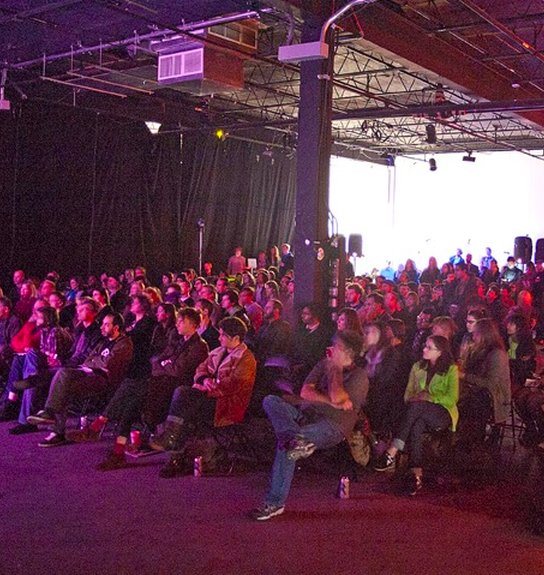
PHOTO: Zero Film Festival’s old warehouse days:

zero_warehouse_days.jpg

Matthew: Where do you see the festival by 2020?

Richard: Doing exactly the same thing. Its an authentic film festival with a purpose.

Matthew: What film have you seen the most times in your life?

Richard: The filmmakers I have watched and studies the most: Richard Linklater, his structuralism is brilliant, and Tarkovsky, he’s brilliant. Guilty pleasure? Zoolander.

Matthew: In one sentence, what makes a great film?

Richard: Thoughtful craft and integrity.

Matthew: How is the film scene in your city?

Richard: I live in New York. Its incredible. Its inspiring. I’m spoiled.


_____

Interviewer Matthew Toffolo is currently the CEO of the WILDsound FEEDBACK Film & Writing Festival. The festival that showcases 10-20 screenplay and story readings performed by professional actors every month. And the FEEDBACK Monthly Festival held in downtown Toronto on the last Thursday of every single month. Go to www.wildsound.ca for more information and to submit your work to the festival.

Interview with Festival Director Marc Bati (Très Court International Film Festival)

Très Court International Film Festival is an event without borders, with screenings during 9 days simultaneously in nearly one hundred cities in France and 28 other countries. The major program of the festival is the international competition. Fifty films of less than 3 minutes (excluding title and credits) representing the best and especially the shorter of the global audiovisual production year are presented each year.

http://www.trescourt.com/

Because this is a festival featuring the best of under 3min. short films, it’s only fitting that this was the shortest interview I ever had. Short but too the point and terrific!

Interview with Charlotte Lasne:

Matthew Toffolo: What is your Film Festival succeeding at doing for filmmakers?

Marc Bati : We offer a screening space for very short films and their filmmakers, to make their work known.

Matthew: What would you expect to experience if you attend the festival this year (2016)?

Marc: One shall be ready to discover original uncommon films!

Matthew: What are the qualifications for the selected films?

Marc: First qualification is runtime: under three minutes (except title and credits), that is the only rule. Then there is no denying that the selected films show talent and originality.

Matthew: Do you think that some films really don’t get a fair shake from film festivals? And if so, why?

Marc: Very short films are often considered too short to be taken into account in most festivals. At Très Court, it is the contrary!

Matthew: What motivates you and your team to do this festival?

Marc: Très Court is often most filmmakers’s first festival. Sometimes it is the first step to make a career! Some of “our” filmmakers moved on to feature films.

Matthew: How has the festival changed since its inception?

Marc: When the festival was created in 2000, Youtube did not exist. A festival for very short videos was an underground project! It originated in Paris and now the same films are presented in almost a hundred cities in twenty-nine countries in the world.

Matthew: Where do you see the festival by 2020?

Marc: This is a hard one. You know, it is hard for us to see ourselves beyond three minutes!

Matthew: What film have you seen the most times in your life?

Marc: It has no point with Très Court but it is 2001: A Space Odyssey.

Matthew: In one sentence, what makes a great film?

Marc: What makes a great film is “grace” (in one word, even shorter!). Because talented people can make bad films. So “grace” and “magic”.

Matthew: How is the film scene in your city?

Marc: Paris is one of the world capital for cinema. You find lots of movie theaters here.


***

Interviewer Matthew Toffolo is currently the CEO of the WILDsound FEEDBACK Film & Writing Festival. The festival that showcases 10-20 screenplay and story readings performed by professional actors every month. And the FEEDBACK Monthly Fesival held in downtown Toronto on the last Thursday of every single month. Go tohttp://www.wildsound.ca for more information and to submit your work to the festival.

Interview with Festival Director Christina Wilkinson (ITSA Film Festival)

The 7th Annual ITSA Film Festival takes place in Sonora, California in the heart of Gold Country the second Friday, Saturday and Sunday of November 2016. Run entirely by volunteers, ITSA Film Festival is dedicated to creating a wider audience and a greater awareness for all filmmakers, especially up-and-coming and students.

I recently chatted with the Festival Founder Christina Wilkinson:

Matthew Toffolo: What is yourFilm Festival ​succeeding at doing for filmmakers?

Christina Wilkinson: We strive to connect filmmakers of all ages at all levels of experience with each other. By screening films from filmmakers as young as 10 years old, we are able to be unique in that we know where our next generation of filmmakers come from; so we go out of our way to feature them at a very young age.

Matthew: What would you expect to experience if you attend the festival this year (2016)?

Christina: We feature one or two (sometimes three) workshops that are included to attend all for free at our festival. One of our favorite genres of films is music videos, so we are also bringing in live music performances for the entire weekend. The average amount of short films we screen is around 60 total over the course of the three days. After each film, we set aside time for Q&A with individual filmmakers and casts. One of our biggest highlights is our main guest speakers panel where we have up to 5 invited industry guests from Los Angeles and San Francisco. We are also planning another private filmmaker reception where they can network with each other.

Matthew: What are the qualifications for the selected films?

Christina: Under 30 minutes in any genre. We normally do not have a strict timeframe a film should have been made, but within the last 5 years is great.

Matthew: Do you think that some films really don’t get a fair shake from film festivals? And if so, why?

Christina: Yes. Sometimes we receive an abundance of films that contain the same subject matter. When this happens, we go back through and select the best of that specific topic. So sometimes a film may be very good, but if too many films about “Alzheimers” get submitted, we have to determine which ones go through and which ones do not. Successful programming is all about screening 60+ films for an audience and the audience feels as though they have not seen the same type of story over and over again. That is the key.

Also, we do program for timing. For instance, if we have already selected numerous films and our extended deadline is coming up, at this time we only set a small amount of time aside to fill. So this is where programming gets complicated. It’s like building a puzzle from scratch. We take the best of what has not been selected and give it the first amount of time. After we have gotten down to maybe seven minutes remaining, even possibly up to two minutes, we are left to determine what film can take that final spot. This could mean a fun film that is only three minutes may be selected to screen over a good 30 minute film because the longer film did not compete well with the other “good” films, and since it is too long to fit the spot, it won’t be selected.

Another reason some films may not get a “fair shake” is due to location. While we have screened many diverse films, there are those that are too strong-handed or political in many directions, and that is not what we are after. Messages can be sent subtlety, yet successfully. A few years ago we had a film submitted about homosexuality. It was star-filled and beautifully made (in the first 20 minutes). But in the last part of it, pre screeners and program directors felt as though it took a negative turn by bashing a segment of our local population. Therefore we made the decision not to accept it. This film probably lost out on winning many awards in other festivals by not being accepted for this very reason.

Our festival’s goal is to get audiences in the seats and get exposure for our filmmakers. If the majority of our audience is upset by too many of our selections, they might not attend again, and this hurts our filmmakers. Therefore we try very hard to be diverse in our official selections.

Matthew: What motivates you and your team to do this festival?

Christina: Our entire ITSA Film Festival family is made up of film fans. We are all volunteers and put any money from the festival back into the festival to make it better. As a founder, ideas on how to spend any proceeds is discussed by the team during regular meetings. So they get input too; and this doesn’t happen in a lot of film festivals. When someone attends the ITSA Film Festival, they know that the faces of Team ITSA have largely remained the same year-after-year. We are about keeping our guests, attending filmmakers and audiences happy. When we hear what a great time everyone has had and the amazing contacts they have made, that is what motivates us and drives us all to continue what we are doing each year.

Matthew: How has the festival changed since its inception?

Christina: This one is difficult to answer because the ITSA Film Festival changes every year. We are constantly trying new things, new presentations, new locations, and whatever else we can to make it fun.

Our first three years we were screening the Emerging Cinematography Award (ECA) films as something different, but these films took up a huge chunk of programming time. So we decided to showcase more submissions and cut the ECA films. We had a formal gala for several years at a substantial cost to ourselves – we actually lost money because of it. Now we have a less formal filmmakers reception for two included in each film official acceptance. This allows better one-on-one time for our guests and filmmakers at no additional cost to them.

We had multiple locations, but felt it became too spread out to handle. So we try to have our entire festival in just one location.

We’ve had live music in the past and are bringing this back.

One of our biggest changes is support from our community. And since our biggest goal is to have audiences as large as possible, our festival is free to the public. We are more about the filmmakers and less about the money – although the money is great to continue doing what we have done. Last year was the first time we did not spend our own personal money out-of-pocket, but every penny we have spent has been worth it.

We also have more sponsors than we did when we started. These relationships are important in our growth.

Matthew: Where do you see the festival by 2020?

Christina: One of our goals is to build up to the attendance numbers that the old Wild West Film Fest had before shutting down in 2000 here in Tuolumne County. We also foresee filmmakers coming back to California’s Gold Country to start making films here again. We feel that our festival is about so much more than screening films and folks will see this by 2020.

Matthew: What film have you seen the most times in your life?

Christina: There are a few; Gladiator, Bridget Jones’ Diary and Groundhog Day

Matthew: In one sentence, what makes a great film?

Christina: One that connects with an audience, because a connection pulls someone into a film and they forget they’re even watching.

Matthew: How is the film scene in your city?

Christina: As far as film festivals, ITSA is the only one based here. We hold two festivals a year; ITSA and our environmental festival called Back to Nature Film Festival. There is also a magnet high school that has an annual film festival for its film students, as well as another (traveling) environmental film festival.

Where movies and commercials are concerned, lots of indie films come through the area and one of the films starred Raj Patel. Numerous commercials are filmed in our county. Overall, there have been over 300 films and television series filmed here which include Back to the Future 3, Hidalgo, High Noon, Little House on the Prairie, among others.


***

Interviewer Matthew Toffolo is currently the CEO of the WILDsound FEEDBACK Film & Writing Festival. The festival that showcases 10-20 screenplay and story readings performed by professional actors every month. And the FEEDBACK Monthly Fesival held in downtown Toronto on the last Thursday of every single month. Go to http://www.wildsound.ca for more information and to submit your work to the festival.

Interview with Festival Director Brennan Tilley (Calgary Underground Film Festival)

Founded in 2003, the Calgary Underground Film Festival (CUFF) is dedicated to programming films that defy convention. Through the screening of contemporary works in various categories that include: feature, documentary, animation and shorts – CUFF brings Calgarians a unique roster of films rarely seen in North American theatres. CUFF currently has two annual festivals. The main Calgary Underground Film Festival runs for 7-days in mid-April; CUFF.Docs International Documentary Festival is in November. In addition, CUFF showcases special event screenings throughout the year.

Interview with the Festival Director Brennan Tilley:

Matthew Toffolo: What is your Film Festival succeeding at doing for filmmakers?

Brennan Tilley: The Calgary Underground Film Festival has always highlighted underseen films and helped filmmakers get their work in front of an audience. As new distribution models have been introduced it is easier for filmmakers to get their films seen, but we are still providing one of a limited number of ways to properly experience a film with an audience. We maintain a casual environment and are a great opportunity for visiting filmmakers to connect with each other.

Matthew: What would you expect to experience if you attend the festival this year (2016)?

Brennan: An engaged audience that trusts us to bring in the best films. It is an opportunity to watch these films with people that love the films we screen. We enhance the experience through an arcade featuring new games from independent developers, DJs and VJs between films, a themed bar, and plenty of pop-up surprises

Matthew: What are the qualifications for the selected films?

Brennan: The main criterion is that a film defies convention or breaks boundaries. These films in some way depart from what we have seen before.

Matthew: Do you think that some films really don’t get a fair shake from film festivals? And if so, why?

Brennan: By and large, festivals want to screen the best films possible. If a film is good and made available to festivals, a film will likely get a fair shake.

Matthew: What motivates you and your team to do this festival?

Brennan: We strive to connect with the filmmakers whose films we screen. Those connections and the appreciation the filmmakers show for it is a big driver for us. Cultivating the best audience experience and the response we get from that is also a huge motivator.

Matthew: How has the festival changed since its inception?

Brennan: The spirit and the intentions of the festival have remained consistent. The main change is the size. We have moved from a single, small non-theatrical venue over a few days to a full week with two dedicated screens at an arthouse cinema. At times, attendance figures increased at levels that made us certain we were miscalculating and then increased more the following year. Also, CUFF has become a yearround presence with an offshoot documentary festival in November and events year round.

Matthew: Where do you see the festival by 2020?

Brennan: We have several initiatives on deck to be added over the next five years. Nothing we are revealing right now 😉

Matthew: What film have you seen the most times in your life?

Brennan: In my life, probably GHOSTBUSTERS or WIZARD OF OZ, two films I started watching young and continue to watch. In the last 10-15 years, I would like to think it is Noah Baumbach’s KICKING AND SCREAMING. I also lost count of how many times I saw the Mandy Moore vehicle HOW TO DEAL in theatres; the summer of 2003 was a weird time.

Matthew: In one sentence, what makes a great film?

Brennan: A great film is engaging while watching it and sticks with a viewer long after.

Matthew: How is the film scene in your city?

Brennan: Movie watching in Calgary is heavily weighted in multiplexes and home theatres. In recent years, there has been a marked increase in audience attendance and engagement with film festivals and events. Also, cultural groups and arts organizations are highly supportive of related film screenings and events. The film scene is supported by a burgeoning film production community.

***

Interview Subject Brennan Tilley holds a Bachelor of Commerce degree in Business Process Management. He serves as Lead Programmer and Administrative Manager of the Calgary Underground Film Festival, President and Programming Chair of the Calgary Cinematheque and Shorts Programmer for the Calgary International Film Festival. He can count to ten (diez) in Spanish with assistance on only eight (ocho) of the numbers. Contrary to rumours, he has not recently watched his VHS copy of the Chevy Chase classic Funny Farm.

Interviewer Matthew Toffolo is currently the CEO of the WILDsound FEEDBACK Film & Writing Festival. The festival that showcases 10-20 screenplay and story readings performed by professional actors every month. And the FEEDBACK Monthly Fesival held in downtown Toronto on the last Thursday of every single month. Go to http://www.wildsound.ca for more information and to submit your work to the festival.
Interview with Aviel Silook, Founder & Creative Director (BERLIN MUSIC VIDEO AWARDS)

Berlin Music Video Awards
Follow us: Facebook | G+ | Twitter | VK | Instagram

Matthew Toffolo: What is your Film Festival succeeding at doing for filmmakers?

Aviel Silook: Our event is not a film festival, we really try to step out of this definition. The next teaser will explain: http://dai.ly/x3hcbkz

Our event is the biggest music video networking event in Europe, we already know about many nominees and winners who visited and found great job opportunities. Besides, some of the winners who traveled between Music Video’s events grasped that it is very unique, personal and fun compares to others.

We believe that getting selected by us means something special.. different than other events that their winners are always high budget productions. 2 of our final winners were winning with their first ever music video and since then they were invited to make many more videos. I believe that the fact that we nominate music videos in all languages is really appreciated as well.

We managed to get over 700 mentionings in a bit more than 3 years and we always ask to include videos from our nominees

Matthew: What would you expect to experience if you attend the festival this year (2016)?

Aviel: I am originally a nightlife events producer and my main goal is that the guests of the event will have fun! so besides the great video selection we pay a close attention to other elements like good food, after parties, live shows, fun guests and a lot of press presence.

Matthew: What are the qualifications for the selected films?

Aviel: Originality and good execution

Matthew: Do you think that some films really don’t get a fair shake from film festivals? And if so, why?

Aviel: I think that many film festivals care about big names.. that’s a pity really.

We do our best not to discriminate unknown artists and also on the other side to give a fair chance to filmmakers who did a video for famous musicians. In Berlin we have a lot of social pressure not to let those in but we always remember that behind the music video could be a young filmmaker that had his first chance to make a video for a big musician. So if the video is good we won’t exclude him but at the same time we rejected many big names before.. the fame plays no role for us. If you take a look at our previous selections.. we have Bob Dylan, Katy Perry, Cold Play and other big artists who were nominated but in the end most of them lost. Popularity plays no role for us.

Matthew: What motivates you and your team to do this festival?

Aviel: To do something unique

Matthew: How has the festival changed since its inception?

Aviel: We really grew fast.

In the first year we had 1000 guests and this year we expect 8000 (4th edition). We have better prizes and a bigger press exposure for the winners. The venues are bigger and we work with more professionals.

Matthew: Where do you see the festival by 2020?

Aviel: The real question for us is where do we see our nominees in 2020. We really hope that what we do will push them to go far, we want them all to get good job offers and keep making music videos.

Matthew: What film have you seen the most times in your life?

Aviel: I will refer this quetsion to music videos.

I think that the music videos that i watched really many times are the ones that we are getting as submissions and specifically the winners. I view them over and over again before they get nominated and then maybe 50 more times afterwards (and try to compare them to the others, which is very difficult) just to make sure that we don’t do any mistakes with the selection.

Matthew: In one sentence, what makes a great film?

Aviel: A great music video is a music video where the crew went with it all the way without a safe play (but that’s just my personal opinion).

Matthew: How is the film scene in your city?

Aviel: The independent scene in Berlin is pretty good but not really many big productions, especially not around music videos.

Originally our festival was supposed to be a local festival and our goal was to develop the local scene but in the end we received so many international good videos and changed our mind very quick.

***

Interviewer Matthew Toffolo is currently the CEO of the WILDsound FEEDBACK Film & Writing Festival. The festival that showcases 10-20 screenplay and story readings performed by professional actors every month. And the FEEDBACK Monthly Fesival held in downtown Toronto on the last Thursday of every single month. Go to www.wildsound.ca for more information and to submit your work to the festival.

Interview with Festival Co-Director Maria Nicolacakis (San Francisco Greek Film Festival)

13th Annual San Francisco Greek Film Festival,

October 15-22, 2016

www.grfilm.com

Interview with the Festival Director Maria Nicolacakis:

Matthew Toffolo: What is your Film Festival succeeding at doing for filmmakers? 

Maria Nicolacakis: Our film festival is one way Greek filmmakers can get their work out to the world.  Greece is a small country with a suffering economy right now, and our film festival is a great opportunity to reach new audiences and networks.

Matthew: What would you expect to experience if you attend the festival this year (2016)? 

Maria: 2016 marks our 13th year.  Every year, we strive to present a diverse selection of current feature films, shorts, and documentaries.  This means different genres and themes, as well as different budgets.  Some of the films we show have well known actors, directors and producers, and a bigger budget, while others (most of them) are on a shoestring budget with up and coming names.  It’s amazing to compare the average cost of a Hollywood film to that of an average Greek film; it’s night and day.  The past several years we have brought filmmakers to our festival, which is always a very fun and engaging experience for the audience, and we expect to do that again this year.  Stay tuned!

Matthew: What are the qualifications for the selected films? 

Maria: We showcase contemporary work by filmmakers who are Greek or of Greek descent.  Beyond that, we look at the pool of entries every year, and as mentioned above, we aim to choose a diverse selection of films.  We personally screen all of the hundreds of entries we receive every year.


Matthew:  What motivates you and your team to do this festival? 

Maria: I am a child of Greek immigrants and my team members are Greeks from Greece who moved to the U.S. many years ago.  We all love Greece and we love Greek Film, and we want to provide this wonderful art form to the broader community.  It’s a way to preserve our culture.  Additionally, all proceeds from our film festival benefit the Modern Greek Studies program at San Francisco State University.

Matthew: How has the festival changed since its inception? 

Maria: I would have to say technology.  Not needing to physically receive and ship film reels around the world has been a huge savings in time and cost.  FilmFreeway has been great!  Also, we’ve made changes to our website and now use an online ticketing service.  Our numbers across the board have also steadily increased:  the number of films that are submitted annually, the attendees, and donors.

Matthew:  Where do you see the festival by 2020? 

Maria: That’s only four years away!  We would love to continue to grow our festival and expand it to more locations in the San Francisco Bay Area and the Central Valley.

Matthew:  What film have you seen the most times in your life? 

Maria: Dead Poets Society.  I was obsessed with Thoreau quotes when I was younger.  In terms of Greek films, growing up in the 80s, Greek comedian Stathis Psaltis was my absolute favorite.  My brother and I watched his comedies over and over!

Matthew:  In one sentence, what makes a great film? 

Maria: A great film reflects the human experience, both good and bad, and takes your breath away while leaving you hopeful at the same time.

Matthew:  How is the film scene in your city? 

Maria: San Francisco is a world-class city with a wonderful film scene.  There are numerous film festivals here and in the surrounding Bay Area, as well as a fantastic International Film Festival.


Thank you very much for the interview!

13th Annual San Francisco Greek Film Festival,

October 15-22, 2016

www.grfilm.com


_____

Interviewer Matthew Toffolo is currently the CEO of the WILDsound FEEDBACK Film & Writing Festival. The festival that showcases 10-20 screenplay and story readings performed by professional actors every month. And the FEEDBACK Monthly Fesival held in downtown Toronto on the last Thursday of every single month. Go to www.wildsound.ca for more information and to submit your work to the festival.


Interview with Festival Director Amanda Macchia (Toronto Indie Doc Fest)

Amanda Macchia is an independent director and producer from Toronto, and the founder of Moderna Pictures. She founded the production company upon completing her undergraduate degree in journalism and documentary filmmaking at Ryerson University, where she began collaborating on student film projects and as a production assistant at the CBC. Since then, she has worked for industry leaders at both Rogers Communications and VICE Media, and curates the Toronto Indie Doc Fest film festival, now in its second year of programming.


I recently chatted with Amanda about the Indie Doc Festival:

Matthew Toffolo: What is your Film Festival succeeding at doing for filmmakers?

Amanda Macchia: Toronto Indie Doc Fest is an affordable opportunity for independent filmmakers to have their documentaries screen at a historical cinema in one of the biggest film cities in the world.

Matthew: What would you expect to experience if you attend the festival this year (2016)?

Amanda: You can expect a well-curated showcase of short to mid-length documentaries from all over the world for an affordable entry fee. Because we are a small festival, we take great care in ensuring the limited amount of time we do have to screen films is packed with the best quality subjects and cinematic executions of those subjects.

Matthew: What are the qualifications for the selected films?

Amanda: We currently accept any documentary, or mockumentary, films that have running times of under 50 minutes. Any subject goes, but we are especially interested in films that explore subjects or personalities that you normally would not get a chance to learn about.

Matthew: Do you think that some films really don’t get a fair shake from film festivals? And if so, why?

Amanda: Absolutely. There are so many variables that go into whether festivals – especially the larger and more prestigious festivals – will program your film. Often, as an independent filmmaker, particularly one that is working with little to no budget, you don’t necessarily have a chance of getting programmed. And although TIDF obviously cannot offer the kind of benefits that you would derive from having your film screen at these other festivals, we can and do offer a realistic opportunity to have your film screened in a proper cinema to a diverse audience.

Matthew: What motivates you and your team to do this festival?

Amanda: This festival was born out of my own frustration with getting some of my own independent documentaries to screen in Toronto and other major cities around the world in an affordable manner. Not every film you make is Harlan County, USA, so there should be festival options for filmmakers who are making great films and telling incredible stories, but may not be at the point in their career where they are receiving funding and initiating large-scale productions that would qualify for more competitive festivals.

Matthew: How has the festival changed since its inception?

Amanda: This is the second annual TIDF, so we have not seen much change since last year, although we do hope more filmmakers are aware of our festival this year and will therefore have a bigger and more diverse pool of content to choose from when programming.

Matthew: Where do you see the festival by 2020?

Amanda: I would like to see this festival grow outwards, rather than internally. Our goal is not to have more consecutive days of programming in Toronto necessarily, but rather to have simultaneous one-day festivals in other major cities in North America, such as Montreal and New York.

Matthew: What film have you seen the most times in your life?

Amanda: The Last Waltz

Matthew: In one sentence, what makes a great film?

Amanda: For me, a great film is not so much in the story, but in the themes hovering beneath the surface and how they are delivered visually. White Chimney, for example, a Finnish documentary we programmed last year, outlines the story of the tragic and mysterious death of the actress Sirkka Sari in 1939. You might read that description and wonder why you would care about the death of a Nordic actress that you’ve likely never heard of that took place 77 years ago. But you would care – because the film isn’t really a documentation of her death – it’s a film about youth, nostalgia, and other themes that I find difficult to even formulate words for in my mind, but they are there on the screen.

Sorry, that was not one sentence.

_____

Interviewer Matthew Toffolo is currently the CEO of the WILDsound FEEDBACK Film & Writing Festival. The festival that showcases 10-20 screenplay and story readings performed by professional actors every month. And the FEEDBACK Monthly Festival held in downtown Toronto on the last Thursday of every single month. Go tohttp://www.wildsound.ca for more information and to submit your work to the festival.

Interview with Festival Director Shane Burzynski (Northwest Horror Show)

The Northwest Horror Show is a way for cult and horror fans to experience their favourite genre films on the big screen with special guests, giveaways, trailers and short films before each feature. All films will be screened on 35mm prints and Uncut whenever possible.

http://www.viff.org/theatre/series/northwest-horror-show

Interview with the Festival Director Shane Burzynski:

Matthew Toffolo: What is your Film Festival succeeding at doing for filmmakers?

Shane Burzynski: The Northwest Horror Show is still very new, so at this time its pretty much just having the chance to have their films screened for audiences of like minded genre fans and help promote their work among the festival guests from the audience to our guest speakers. I’m also trying to start issuing awards so that they can also have the laurels for their posters.

Matthew: What would you expect to experience if you attend the festival this year (2016)? 

Shane: Some very enthusiastic film goers, a lot of beer and some of the greatest junk food cinema ever produced! Maybe a little bit of emotional trauma for those heading into our 40th anniversary screening of Salo as well. It’ll be a very positive atmosphere despite the subject matter of a couple of our films.

Matthew: What are the qualifications for the selected films? 

Shane: They just have to be made within the last couple of years, be under 15 minutes and be in the horror/exploitation genre. Seen a lot of great stuff so far!

Matthew: Do you think that some films really don’t get a fair shake from film festivals? And if so, why? 

Shane: It’s hard to say as I haven’t really had the opportunity to experience any others myself. With the sheer volume of films flooding into them I’d imagine its hard to choose between all the submissions. I had to turn down some really terrific films last year and we only had 50 submissions, I can’t even imagine what its like for some of the big festivals. Luckily though there are tons of niche festivals for practically any subject these days and a lot of very supportive festival organizers/audiences. There’s an audience for pretty much anything these days, just gotta get your stuff in front of the right one.

Matthew: What motivates you and your team to do this festival? 

Shane: Mostly just bringing these classic genre films back to Vancouver and introducing some programming to the city that wouldn’t have been shown otherwise. For instance, last year I got to finally bring in these two Duke Mitchell films in which I had wanted to see here for a long time and it was a blast! People seemed to really enjoy themselves so that was really great.

Matthew: How has the festival changed since its inception? 

Shane: As it’s only our second year, not too much. I’ve got some deals I’m making that will make it a bit more interactive and fun and am also adding more awards for the short films, but the atmosphere will pretty much be the same layout as we did last year.

Matthew: Where do you see the festival by 2020? 

Shane: Hopefully still running! We had a great first year and momentum just seems to keep on building. I dont think it will get much different than it is now but maybe a bigger crowd. I’m hoping to have the funds to bring more guests in as well as to start recreating some of the old gimmicks that came with the films I’m screening.

Matthew: What film have you seen the most times in your life? 

Shane: I think its a tie between a few movies. I’ve seen the first two Lone Wolf and Cub movies a ton due to how many people I’ve felt the need to show them to. Brain Damage and Taxi Driver are also playing constantly as well.

Matthew: In one sentence, what makes a great film? 

Shane: To me a great film is a passionate film. If you love what you’re doing and believe in the project you can make a great film, even if its not necessarily  talented. Ed Wood made terrible movies but charming movies that have stood the test of time because they were so hilariously sincere.

Matthew: How is the film scene in your city?

Shane: Its there but a little hard to get people out. Luckily my festival is offering something unique enough to pique peoples interests as no one else seems to wanna show things like Cannibal Holocaust or Salo, especially on 35mm.

It’s definitely a rarity in this city so it really helps to get people motivated to come out. They seem to be really happy to get these movies too which makes me even happier to bring them in.

Hopefully we can reach out to more people and keep it all going for as long as possible.

Interviewer Matthew Toffolo is currently the CEO of the WILDsound FEEDBACK Film & Writing Festival. The festival that showcases 10-20 screenplay and story readings performed by professional actors every month. And the FEEDBACK Monthly Festival held in downtown Toronto on the last Thursday of every single month. Go to http://www.wildsound.ca for more information and to submit your work to the festival.