Interview with Festival Director Joseph Hardin (HorrorQuest Film Festival)

HorrorQuest Film Festival is the worlds only 100% free Horror film festival. Held each year at Cinefest Film Theatre, located on the Georgia State University campus, HorrorQuest has no set submission fee. All HorrorQuest screenings and events are free and open to the public on a first come, first served, basis.

Named one of the “Top 10 Film Festivals Every Filmmaker Should Know About” by Movie Maker Magazine, HorrorQuest has been praised by Filmmakers such as Kevin Smith (Clerks) and Lloyd Kaufman (The Toxic Avenger) for it’s business model and ethics.

http://www.thehorrorquest.com/

Interview with Festival Director Joseph Hardin 

Matthew Toffolo: What is your Film Festival succeeding at doing for filmmakers?

Joseph Hardin: I think HorrorQuest provides an alternative to filmmakers who might not have extra money to spend on festival submission fees. While we do charge a small fee for online submissions, filmmakers can still submit for free by mail. While this makes it harder to keep the festival running, it also is what makes HorrorQuest stand out.

MT: What would you expect to experience if you attend the festival this year (2016)?

JH: First, all screenings are 100% free to the public. HorrorQuest has always tried to put the films first. We do not have Q&As, red carpets or press junkets. Instead we try to cram in as many films as possible. We try to create a good mix of content, we do not have themed blocks of content, instead we try to give you a bit of everything in each block of films.

MT: What are the qualifications for the selected films?

JH: It can vary from film to film, but mostly we look for something interesting. When you watch hundreds of films years after year, it is easy to become bored when you see another slasher or zombie film. While we enjoy a good slasher or zombie film, it can be hard to bring something new to those sub-genres. That is what we really look for, films that try something new. If a film plays with an interesting idea or subject matter, HorrorQuest will often overlook the films technical shortcomings.

MT: Do you think that some films really don’t get a fair shake from film festivals? And if so, why?

JH: I think that is absolutely true, even more so when you talk about larger festivals. If you do a simple Google search, you will find story after story about film festival corruption. Larger festivals are a business and they operate as such. They want to sell tickets and ad space, so it befits them to program differently than a festival like HorrorQuest. We can take a risk and program something experimental or extreme and not have to worry about what the sponsor is going to think about it. Not to mention bribes, HorrorQuest is a very small festival, yet well still get bribes from movie studios or indie distributors asking us to program their films. I would assume they offer more to larger festivals, on that scale, I am sure it becomes a strong temptation.

MT: What motivates you and your team to do this festival?

JH: Every one who is or has been involved with HorrorQuest, does it for free, no one gets paid. We all do it because we enjoy watching movies. We get to get together and watch films many people will never see. Everyday fells a bit like Christmas, when you check the mailbox, you never know what your are going to find. We get submissions from all over the world and it is still amazing to see what people can create. When it stops feeling like Christmas, it will be time to stop.

MT: How has the festival changed since its inception?

JH: Not much has changed. It costs more to keep the festival going. The price to rent a theater never goes down. We still average the same about of guests, some years are better than others. We now accept online submission, which was something we put off for as long as possible. While it has made somethings easier, it has created more work over all. If anything, we have more name recognition. We are still the same hole-in-the-wall festival we were when we started.

MT: Where do you see the festival by 2020?

JH: Hopefully the festival will still be going. It is getting harder and harder each year to keep the festival as free as possible and not be out of pocket. Thankfully, we get by and have a theater that works with us as much as they can. There are a lot of things HorrorQuest wants to do. Right now, we are just glad to still be here.

MT: What film have you seen the most times in your life?

JH: I have no idea, it is probably something like Back to the Future or Flight of the Navigator. One of those movies I watched as a kid. I still watch Back to the Future, Navigator, Monster Squad and The Goonies (among others) at least once a year.

MT: In one sentence, what makes a great film?

JH: If I knew that, I probably wouldn’t tell you. I don’t think anyone knows. I think you can know what works, but even then, great filmmakers still make stinkers. Just make something you would want to see, odds are there is someone out there who will agree with you.

MT: How is the film scene in your city?

JH: Atlanta is crazy, everything seems to be filming here, Ant-man, Captain America, Hunger Games. I think it was just voted the number one place to live as an indie filmmakers. There seems to be a lot of opportunities here. Georgia is a great place for film, hopefully the state won’t screw it up.

horrorquest

Interviewer Matthew Toffolo is currently the CEO of the WILDsound FEEDBACK Film & Writing Festival. The festival that showcases 10-20 screenplay and story readings performed by professional actors every month. And the FEEDBACK Monthly Fesival held in downtown Toronto on the last Thursday of every single month. Go tohttp://www.wildsound.ca for more information and to submit your work to the festival.


Interview with Festival Director Frances Hill (Down Under Berlin Film Festival)

Down Under Berlin was established in 2011 and is a project of the not-for-profit association Down Under Berlin – Australian Film Festival e.V. Since 2011 it has developed into the largest film festival in Europe dedicated to Australian and New Zealand film. As such it provides not only a window to storytelling and cinematography from Down Under but also a platform for filmmakers, who want to present their work to German audiences. The festival showcases a wide range of films including Indigenous cinema, short films, documentaries, experimental and feature films. Down Under Berlin is a member of festiwelt, the Berlin Network of Film Festivals.

http://www.downunderberlin.de

Interview with Festival Director Frances Hill

Matthew Toffolo: What is your Film Festival succeeding at doing for filmmakers?

Frances Hill: Down Under Berlin Film Festival gives Australian and New Zealand filmmakers a new platform for their films in Europe.

MT: What would you expect to experience if you attend the festival this year (2016)?

FH: A range of high quality shorts across all genres, strong independent feature films, entertaining and moving documentaries, and a selection of features from established directors.

MT: What are the qualifications for the selected films?

FH: The films, the directors, or the subject matter must be connected with Australia or New Zealand. We encourage submissions that show off the high standard of filmmaking that can be found Down Under, as well as films that give varied perspectives on these countries and their cultures.

MT: Do you think that some films really don’t get a fair shake from film festivals? And if so, why?

FH: A film festival is always a showcase of many different films, which makes it hard to highlight each and every film that is screened. It’s also a matter of audience and press interest: those films that have bigger names attached to them will be easier to market. But supporting up and coming filmmakers who have produced quality films is just as important, audiences appreciate good films regardless of budget and celebrity.

MT: What motivates you and your team to do this festival?

FH: The Down Under Berlin team is passionate about bringing new and unseen films to Berlin, we want to show our international audience films they cannot see anywhere else. We also see the appreciation from European and German audience members for the cultures of Australia and New Zealand and want to support indigenous filmmaking from Down Under in Europe.

MT: How has the festival changed since its inception?

FH: Our first festival included mostly shorts with a few longer documentary films, which was a result of our reach at the time. We are now part of the Berlin film festival network and are also gaining recognition in Australia and New Zealand for our work. We have increased the number of films and audience members steadily over the years, and are proud to bring great films to Berlin, which otherwise would not be seen in cinemas.

MT: Where do you see the festival by 2020?

FH: We hope to take Down Under Berlin to other cities in Germany, maybe to other countries too. We would like to work more with film schools from Australia and New Zealand whose students are producing amazing films, which we believe should be seen in Europe too.

MT: What film have you seen the most times in your life?

I think The Castle from Australia and Run Lola Run from Germany.

MT: In one sentence, what makes a great film?

A compelling story with captivating visuals.

MT: How is the film scene in your city?

In Berlin the film scene is great, we have studio productions next to independent projects, film school shorts alongside visiting directors from all over the world. Also we have many independent cinemas screening a diverse range of films, including short film nights. Berlin is a fantastic place to make and see films.

down_under_berlin

Interviewer Matthew Toffolo is currently the CEO of the WILDsound FEEDBACK Film & Writing Festival. The festival that showcases 10-20 screenplay and story readings performed by professional actors every month. And the FEEDBACK Monthly Fesival held in downtown Toronto on the last Thursday of every single month. Go tohttp://www.wildsound.ca for more information and to submit your work to the festival.

Interview with Festival Director Jacob Javor (South Florida Student Film Festival)

The South Florida Student Film Festival (SFSFF), open to middle and high school students world wide and taking place at Movies of Delray/Lake Worth, is an organization founded by students designed to bring about awareness concerning the art of student filmmaking. SFSFF shines a positive light upon Middle & High School students who love the beauty of motion pictures.

http://www.sfsff.org

Interview with Jacob Javor:

Matthew Toffolo: What is your Film Festival succeeding at doing for filmmakers?

Jacob Javor: As we are in our debut year, we only hope to help local young filmmakers get jumpstarts on their careers, by learning, creating, and meeting new people.

MT: What would you expect to experience if you attend the festival this year (2016)?

JJ: At SFSFF, both filmmakers that submitted and attendees alike can expect a valuable experience in which you can learn more about your passion by speaking to industry professionals and conversing with your peers; all while having a great time watching student short films and enjoying the company of our amazing sponsors!

MT: What are the qualifications for the selected films?

JJ: At SFSFF, we are looking for GOOD STORIES. We primarily focus on the story your short film tells, and how it could connect to a potential audience. We also search for films that are well edited, shot and produced. We are not sticklers on visual appeal in the sense of using big-budget cameras and equipment. In fact, we encourage the opposite! Resourcefulness is extremely important in this industry, (and beyond) and we love to see filmmakers make use of what they have. So if all you have is your phone to shoot, worry not and film on!

MT: Do you think that some films really don’t get a fair shake from film festivals? And if so, why?

JJ: Absolutely. Although we have not experienced many film festivals in particular, we think it’s very possible some judges may penalize submissions based only on their visual appeal. We entirely understand the limitations tight or non-existed budgets may set, and feel strongly that films should not be judged on anything but the quality story it tells.

MT: What motivates you and your team to do this festival?

JJ: We, the co-founders of SFSFF, are but high school students ourselves, and have a mutual passion for storytelling. We attempt to help young aspiring filmmakers like ourselves get jumpstarts on our careers, and the excitement of such a passion motivates us to drive on!

MT: How has the festival changed since its inception?

JJ: As we said previously, we are in our first year, and we are constantly developing and preparing for what we hope to be a successful and beneficial experience.

MT: Where do you see the festival by 2020?

JJ: By 2020, or even sooner, we hope to be known and recongnized near and far as a beneficial event that attendees enjoy and look forward to.

MT: What film have you seen the most times in your life?

JJ: Probably Forrest Gump, or The Lion King.

MT: In one sentence, what makes a great film?

JJ: Great films make you feel something.

MT: How is the film scene in your city?

JJ: South Florida is home to a few big independent film festivals: including the Palm Beach & Ft. Lauderdale International Film Festivals (PBIFF and FLIFF). We only dream to be as successful as them, and greatly appreciate all they’ve done to help us in our passionate pursuits!

sfsff.png

_____
Interviewer Matthew Toffolo is currently the CEO of the WILDsound FEEDBACK Film & Writing Festival. The festival that showcases 10-20 screenplay and story readings performed by professional actors every month. And the FEEDBACK Monthly Festival held in downtown Toronto on the last Thursday of every single month. Go towww.wildsound.ca for more information and to submit your work to the festival.

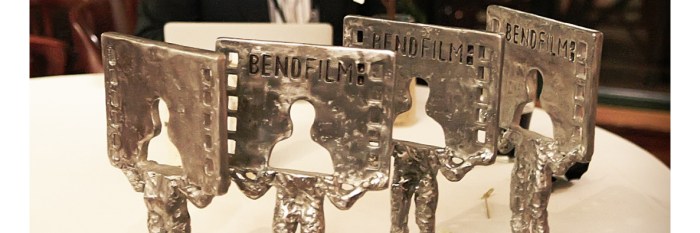
Interview with Festival Director Todd Looby (BendFilm Festival)

A near-constant fixture of MovieMaker magazine’s 50 Film Festivals Worth the Entry Fee, BendFilm celebrates independent films and the risky, passionate, tough and talented people who make them. This year’s festival runs from Thursday, Oct. 6 – Sunday, Oct. 9, with most venues located in Bend’s historic downtown in Oregon and the nearby Old Mill District.

Website: http://bendfilm.org/

Interview with Festival Director Todd Looby

Matthew Toffolo: What is your Film Festival succeeding at doing for filmmakers?

Todd Looby: BendFilm is committed to considering each film that comes in our door fairly. We want to champion the work of independent filmmakers who deserve more attention – whether we premiere ‘discoveries’ or present the work of established filmmakers whose work is under-appreciated by commercial audiences. We fundraise to pay travel expenses for our feature filmmakers and provide free lodging for all of our filmmakers. Last, but definitely not least, we award up to $8,500 in cash awards including $5,000 for the “Best of Show” as well as a $60,000 camera package from Panavision.

MT: What would you expect to experience if you attend the festival this year (2016)?

TL: We received a great grant from the Roundhouse Foundation to host at least 5 female filmmakers and their films. We want to be a force to overcome the vast gender disparity in filmmaking. A huge part of that is introducing and championing accomplished work to our audience. Though our programming process is still in an early stage, we have an incredibly promising crop of films to present to our audience. We are lining up intriguing panels, one of which will hopefully be our 3rd straight Film Fatales panel. Finally, we have commitments from some of Bend’s best venues to host what we think will be our best parties yet where our filmmakers and audience will continue make lasting bonds.

MT: What are the qualifications for the selected films?

TL: Selected films for the majority of our slots will not already have screened in the region, not yet have wide distribution and must be solidly independent.

MT: Do you think that some films really don’t get a fair shake from film festivals? And if so, why?

TL: I can’t speak for other festivals, but it is something I felt as a filmmaker myself. Our Programmer Erik Jambor and our programming team make an extraordinary effort to give everyone a fair shake by watching each submitted film at least twice. Every film that we accept or have to reject will be fairly vetted and include input from our loyal and talented screening committee.

MT: What motivates you and your team to do this festival?

TL: I fell in love with the film festival experience as an aspiring filmmaker attending the Chicago International Film Festival. That love was solidified when I presented my first film festival at the Iowa Independent Film Festival. Since those early years, I’ve screened at dozens of festivals and they all reinforced the importance of the festival world in building filmmaking careers. We want to make discoveries to champion the work of filmmakers that should be doing this for a living. And, perhaps most importantly, connect those filmmakers with such a generous, critical and appreciative audience that we have here in Bend.

MT: How has the festival changed since its inception?

TL: Our festival was great since its inception in 2004. For many years it was a “best kept secret” festival to the independent filmmaking community. Now we have 3-4 times the amount of submissions than we did just 3 years ago, so it is catching on quickly. With our community’s incredible support and enthusiasm for our programs we’ve added many year-round screenings and education programs that meet our community’s demand for greater access to films while at the same time foster more filmmaking from aspiring filmmakers.

MT: Where do you see the festival by 2020?

TL: That’s hard to quantify, but what the Board, Erik and I really want to do is make BendFilm a “must-stop” on the festival circuit. By 2020, we want to parlay our commitment to discovery to gain filmmakers the distribution and larger audiences that they deserve.

MT: What film have you seen the most times in your life?

TL: It’s probably a tie between “Midnight Run”, “Dances with Wolves” and “Blues Brothers”. The first 2 stem from the late 80s when I was a teen with a lot of time discovering the magic of film at the same time we first got cable at home. Those films still resonate with me, though I haven’t seem them in years. “Blues Brothers” was one of the first films I saw in the theaters at the age of 5. Growing up in Chicago, it was a mainstay on all of our TVs and VCRs. I think each of those films holds up so well and serve as the standard-bearers in their respective genres.

MT: In one sentence, what makes a great film?

TL: To me, as someone who’s made (or attempted to make) 3 narrative films for under $10,000, I love films that overachieve their budgets and transcend what the script may look like on paper. That “litmus test” can be applied to films working on every level – from independent to Hollywood or Academy-nominated films. 3 films that come to mind in recent years are Eric Steele’s “Bob Birdnow’s Remarkable Tale of Human Survival and the Transcendence of Self”, Asghar Farhadi’s “A Separartion” and Ruben Ostlund’s “Force Majeure”.

MT: How is the film scene in your city?

TL: Almost every week I get emails from filmmakers that are new in Bend or are seeking to move here. We already have solid production companies doing great work and a lot of talented filmmakers living here, but mostly working outside of Oregon. With the support of the Oregon Film Office and the newly formed “Central Oregon Film Office”, we hope to see a better utilization of that talent and more narrative and documentary work produced right here.
bendfilm.jpg

_____
Interviewer Matthew Toffolo is currently the CEO of the WILDsound FEEDBACK Film & Writing Festival. The festival that showcases 10-20 screenplay and story readings performed by professional actors every month. And the FEEDBACK Monthly Festival held in downtown Toronto on the last Thursday of every single month. Go towww.wildsound.ca for more information and to submit your work to the festival.

Interview with Festival Director Michel Zgarka (Views of the World Film & Music Festival)

Born in the creative brains of four Film, TV and Production and Marketing professionals, the originally US based Views of the World Film & Music Festival’s primary goal is to present films, scripts & film scores which have the power to raise awareness about vital social issues and inspiring audiences to take positive action. This year (2016), and for at least 2 more years, the beautiful city of Montréal will be the home of the Views of the World Film and Music Festival. This year, it will be from September 22 to 25.

http://www.viewsoftheworldfestival.com/

Interview with Michel Zgarka:

Matthew Toffolo: What is your Film Festival succeeding at doing for filmmakers?

Michel Zgarka: As our name and mission statement indicates clearly, we open the eyes of the attendees, participants and supporters on the rich existence of many cultures around the world, some ignored by the public, some too weak to spread their own message and some having no easy access to the modern Media

MT: What would you expect to experience if you attend the festival this year (2016)?

MZ: Solidity of the script
Quality of production
Being closed to our mission statement
Originality and creativity

MT: What are the qualifications for the selected films?

MZ: As there are thousands of film festivals on our planet, good films can be seen in many places. What is missing is the right context that makes the festival goer better understand and at times discover these new films popping up around the globe. Most festivals are more geared to media attention due to major talent attendance rather than the inherent quality of the properties (film, script and/or music), our main goal is to show talent through a complete work.

MT: What motivates you and your team to do this festival?

MZ: Discovering little “gems” and sharing these discoveries with all of the Festival attendees.

MT: How has the festival changed since its inception?

MZ: Little by little we become more attuned to the needs of producers and filmmakers from outside of the main media centers and our festival develops better tools to serve everyone

MT: Where do you see the festival by 2020?

MZ: Among the 10 best Festivals on Earth

MT: What film have you seen the most times in your life?

MZ: LA Confidential, Night Porter,

MT: In one sentence, what makes a great film?

MZ: The story (its script)

MT: How is the film scene in your city?

MZ: Blooming!

_____
Interviewer Matthew Toffolo is currently the CEO of the WILDsound FEEDBACK Film & Writing Festival. The festival that showcases 10-20 screenplay and story readings performed by professional actors every month. And the FEEDBACK Monthly Festival held in downtown Toronto on the last Thursday of every single month. Go towww.wildsound.ca for more information and to submit your work to the festival.

Interview with Festival Director Lynn M. Holley (Fine Arts Film Festival Santa Barbara)

The Fine Arts Film Festival premiered in Santa Barbara, California in 2010; it then occurred as a film festival in Venice, CA in 2015. In 2016 it will explode as an International Fine Arts Film Festival full of shorts plus a few full length features back in fabulous Santa Barbara, California! It will screen at more than one venue, including an outdoor night-time extravaganza. Originally conceived as a festival of films about the fine arts, it now incorporates dance and experimental art forms and approaches.

Interview with Lynn M. Holley:

Matthew Toffolo: What is your Film Festival succeeding at doing for filmmakers?

Lynn M. Holley: Exposure they might not get in major, all-purpose festivals.

MT: What would you expect to experience if you attend the festival this year (2016)?

LMH: Diversity of place, thought and disciplines. We will screen films from around the world.

MT: What are the qualifications for the selected films?

LMH: Made within the last 3 years; related to the visual arts or dance and have some importance to the field.

MT: Do you think that some films really don’t get a fair shake from film festivals? And if so, why?

LMH: All-purpose film festivals often ignore the disciplines in the arts: visual, dance, music, science and technology collaborations, etc..

MT: What motivates you and your team to do this festival?

LMH: The love film and the love of arts.

MT: How has the festival changed since its inception?

LMH: We now take in entries through http://www.Filmfreeway and focus on more genres in the arts.

MT: Where do you see the festival by 2020?

LMH: A larger, more international scene in Santa Barbara CA, which helps promote other film festivals here including the main one SBFF and the Jewish Film Festival.

MT: What film have you seen the most times in your life?

LMH: Caught-In-Paint by Rita Blitt (6 min); and numerous spy films over decades.

MT: In one sentence, what makes a great film?

LMH: There is an importance, a purpose for viewing it that does not require long narratives or dialogue.

MT: How is the film scene in your city?

LMH: Incredible; we are, after all, Santa Barbara, CA, home to Hollywood and the world.

fine_arts_film_festival.jpg

Lynn M. Holley is an executive consultant to the arts, a resident curator at the new center in Santa Barbara, CA for art, science and technology (SBCAST.org). She was initiated into film as a young film reviewer for a daily newspaper, and then as a journalist and director of galleries and an art center. She is a former journalist, narrative writer and filmmaker for promotions in the arts. She has a B.S. in Communications and an MA in Museum Studies. Ms Holley just returned from giving a presentation to a Global Conference in England on Museums, titled: The Dance of the Muses from Las Vegas to the Louvre.

_____
Interviewer Matthew Toffolo is currently the CEO of the WILDsound FEEDBACK Film & Writing Festival. The festival that showcases 10-20 screenplay and story readings performed by professional actors every month. And the FEEDBACK Monthly Festival held in downtown Toronto on the last Thursday of every single month. Go towww.wildsound.ca for more information and to submit your work to the festival.

Interview with Film Festival Director R. Presley Stephens (Tampa Bay Underground Film Festival)

The Tampa Bay Underground Film Festival was founded in 2014 by award-winning Bay Area filmmakers, actors, critics, artists and cinephiles to catch the independent films that fall through the cracks and end up… underground.  TBUFF celebrates good quality low budget films from Tampa and around the world and provides a professionally presented showcase for them.  The festival is usually held in early December, which is known as “late summer” in central Florida, and features more than a hundred films of all genres and lengths.

http://tbuff.org/

https://www.facebook.com/TampaBayUndergroundFilmFestival/

Interview with R. Presley Stephens:

Matthew Toffolo: What is your Film Festival succeeding at doing for filmmakers?

R. Presley Stephens:: We think film festivals should be about the filmmakers, which really isn’t the case with many other festivals. The original purpose of regional film festivals like ours was to showcase a lot of Sundance-type independent films that many people who lived far from Utah, Los Angeles and New York would have no opportunity to easily see since most such films weren’t going to get wide theatrical distribution.

But this was decades ago, before the proliferation of cable TV in general, before Sundance Channel specifically, before the internet and high quality streaming. What’s the point in every regional festival showing the “best of” Sundance, Cannes and Toronto when those movies are going to be on Sundance TV and Netflix six months later? Meanwhile filmmakers themselves don’t need festivals for distribution quite as much as they used to because there are so many other avenues to get those deals now and if all else fails, put it on YouTube and let the people decide. So the key festival selling points for most filmmakers now are networking, accolades and the relatively rare opportunity to see their work on a TRULY big screen in front of an enthusiastic live audience, all of which TBUFF provides.

And we try to go the extra steps of making that experience as exciting and fulfilling as possible with very thoughtful Q&A sessions for every film, marketing opportunities and meet & greet events. We also strive to excel with professional presentations (several TBUFF founders have worked at movie theaters and know a thing or two about projection), thorough preparation and frequent communication, which we’ve been told by our filmmakers is impressive enough to help set us apart from many other festivals.

MT: What would you expect to experience if you attend the festival this year (2016)?

RPS: TBUFF 2016 will once again be at a real cinema, offering the cast and crew and their friends and family and other festival attendees the opportunity to see the films on the big screen with digital sound. It’s usually a 4 day event (Dec. 1-4 this year), and we have movies all day and night long followed by after-parties with free appetizers at classy area restaurants most nights. We had a film panel on microbudget production and distribution last year and plan to have more this year. We have yet to have a Hollywood celebrity show up but certainly lots of local celebrities. We’ve been told that the crowning jewel of our event is our Oscars-like awards ceremony (“The Buffys!”) featuring clips of each nominated film (giving the always sold-out audience an opportunity to see why the films they probably didn’t get to watch are nominated), teary acceptance speeches, professional photo ops, engraved trophies and other ceremony trappings. For many of the nominated filmmakers, it’s basically another opportunity for a large audience to experience their films.

Undoubtedly one of the biggest selling points for northern filmmakers planning to attend is that TBUFF is held in subtropical Florida during the middle of winter, with highs usually in the 70s and the famous Pinellas County beaches less than 30 minutes away. Our attendance by selected filmmakers from outside the Sunshine State has been phenomenal – our main theme revolves around “native films” standing their ground against “invasive films” (hence the alligator-python tussle in our logo), so we usually have a fairly even split between Florida and non-Florida films, and so far more non-Florida filmmakers have shown up to represent their movies than Florida filmmakers! Last year that included not only several New York, Los Angeles and Canadian filmmakers, but also filmmakers from Ireland, England and Poland! Usually more than 60% of our films have representation at TBUFF, which seems crazy to us considering how young the festival is and its “underground” roots. This was even true the first year, before we had built up any real reputation at all, and we’re not all that sure why, but we’re certainly proud of our status.

MT: What are the qualifications for the selected films?

RPS: If you mean, the technical qualifications, we don’t really have a lot. Thus far we don’t even have a time limit on how long after completion a film can be submitted, but as we get bigger, that could change. As far as what we look for with selections… it’s honestly a mostly Potter Stewart scenario: we know it when we see it. But variety is very important to us – we have at least one short block of almost every genre, and we like conventional movies as much as weird stuff that our “underground” name would suggest. We showcase dramas, comedies, action, adventure, crime, musicals, horror, sci-fi, thrillers, fantasies, mysteries, romances, animation, children’s, religious, lgbt, foreign, documentaries, experimental – basically anything, and it doesn’t have to bizarre or on the fringe, though we definitely delight in those. Thanks to some good relationships with the theaters we’ve worked with, we’ve been able to program a lot of movies – 125 last year, which is on par with a lot of bigger “international” festivals. That included more than 20 features.

MT: Do you think that some films really don’t get a fair shake from film festivals? And if so, why?

RPS: It obviously depends on the festival, but certainly features without known talent have much more uphill battles on the overall circuit than features with stars or most any short, although “long shorts” (like 30-45 minutes) are difficult to program and often glossed over by festivals regardless of quality. TBUFF certainly isn’t going to turn its nose up at a celebrity-filled feature if it fits our program (we showcased a horror film in 2014 that had a bunch of well-known actors in it, including one who grew up in our area), but probably because of the word “underground” in our name, we rarely get such submissions, and we would indeed like to give as many slots as possible to good quality starless features that unknown “starving artist” filmmakers practically sacrificed their livelihoods to make. As far as long shorts, some of the best shorts that have been submitted to us were on the long side, so we found room for them. Again, we’ve been able to program a lot more movies than the typical underground film festival thanks to our good relationship with the movie theaters that we’ve worked with, as our festival has been much more of an asset than a burden to them.

MT: What motivates you and your team to do this festival?

RPS: Most of the TBUFF founders (including co-executive director Jason Beck, co-executive director Kelly Nunez, marketing director Chris Maria Reyes, assistant programming director Jay Franks, social media director Jaden Mikes, photography directors Nicholas Barrera and Lisa Shorts, audio-visual directors Chris Cook and Geoff Langhans, as well as myself) worked on several Liberty Lane Productions films, including the recently released feature “Poltergeist of Borley Forest.” Before its distribution, that movie had a film festival tour that took it from New York to Miami to Louisville to California, which was such a wonderful experience for us that we wanted to share it with other filmmakers, particularly in our home market of Tampa. This area already had a couple of prominent festivals but they were more centered around celebrity-driven independent productions than true “underground” projects in the vein of such indie classics as “Clerks,” “El Mariachi” and “Blair Witch Project,” which were all made on shoestring budgets by then-unknowns without any notable cast members. Their level of success is the exception-to-the-rule but these passion projects embody the spirit of filmmaking that TBUFF seeks. But we did want to give these filmmakers a more “international” festival-type experience than most other “underground” festivals do, so we incorporated what we felt like were the best aspects of all the festivals we’ve attended into our festival – the best aspects that would fit into our “underground” budget, of course.

MT: How has the festival changed since its inception?

RPS: TBUFF is only 3 years old, so not much! We were at a beach theater our first year, but it closed before the second year and we had to move inland into the main city, so that was a bit of a culture shock and led to different kinds of parties and a new technology learning curve. Otherwise our third year is largely looking the same as the first year, except bigger and better, with the same philosophy and a similar number of films. One very positive change is the substantial increase in submissions, with filmmakers seeking us out based on their previous positive experiences and word of mouth from other filmmakers, rather than us having to do a lot of scouting and convincing, as was the case in year 1. We’ve also expanded our staff beyond just the original founders, so hopefully this year will be a little less chaotic for the board members than in the past. But probably not!

MT: Where do you see the festival by 2020?

RPS: Being in a city with two other established, world-renown all-genre festivals, we certainly don’t see ourselves as being the preeminent festival at that or any point, especially considering our “underground” nature, but we do hope by then that we have connected with both the local and international film community in such a significant manner that we’ll be the “Big Three” instead of there just being the “Big Two.” We already get some media exposure, but hopefully in 4 years newspapers and TV stations will seek us out instead of the other way around and far more people in the area will know about us.

MT: What film have you seen the most times in your life?

RPS: Like most people of my era, probably “The Wizard of Oz” because it was on TV at least once a year for most of my childhood. “Pulp Fiction” seems likely the movie I saw most in theaters, because for 6 months it was at a theater I worked at, and I watched it religiously during my breaks and before and after my shifts, leading to it greatly influencing my own screenwriting style. As I’ve worked at several theaters over a two decade period, there are many movies I’ve seen the best parts of dozens of times each.

MT: In one sentence, what makes a great film?

RPS: A great film is one that truly becomes an escape from the real world – not just the first time you watch it, but all the many times you are compelled to watch it.

MT: How is the film scene in your city?

RPS: As is the case with most Florida markets, Hollywood isn’t exactly overrunning Tampa with major productions due to the lack of state tax incentives, but a fair number of true independent features are produced in the area every year, usually by filmmakers putting their own money into the projects and getting as much of their community involved as they can, and we definitely have a very supportive, interconnected film community. More of these are horror than any other genre, sometimes leading to Tampa being called the “Splatter Capital” of the state, but there are also conventional dramas and comedies as well as art films being produced. There are an abundance of young filmmakers in the area who are attending or have recently graduated from area schools with respected film programs such as the University of Tampa’s, University of South Florida’s and the Art Institute of Tampa, along with Central Florida and Full Sail in nearby Orlando and Ringling College in Sarasota, and these artists are cranking out a steady diet of high quality short films. Tampa-St. Pete has about 10 total film festivals of varying stature and many other film-related events, quite a few of which have strong attendance, so the film scene is very lively here indeed, and TBUFF is very excited and proud to be part of it and hopes to continue to be for years to come.
tampa_bay_underground_film_festival

Programming director and co-founder R. Presley Stephens has written and produced several underground films himself, including the starless Tampa supernatural horror flick “The Poltergeist of Borley Forest,” which somehow found its way into Redbox’s Top 20 rentals rankings in October 2015.  He was also a TV station film critic for 7 years and did weekend cinema projection work for half of his life, so he is about as deeply immersed in film culture as a person can get

_____
Interviewer Matthew Toffolo is currently the CEO of the WILDsound FEEDBACK Film & Writing Festival. The festival that showcases 10-20 screenplay and story readings performed by professional actors every month. And the FEEDBACK Monthly Festival held in downtown Toronto on the last Thursday of every single month. Go towww.wildsound.ca for more information and to submit your work to the festival.

Interview with Creative Director Sami Kriegstein (Los Angeles Music Video Festival)

The Los Angeles Music Video Festival (LAMVF) exists to celebrate the art of the music video and to bring together the independent music and independent film communities of Los Angeles and beyond. We hope to encourage and promote the development of independent music video producers and their audience.

Interview with Sami Kriegstein
Founder, Creative Director | Los Angeles Music Video Festival
Producer | Figures of Speech

Matthew Toffolo: What is your Film Festival succeeding at doing for filmmakers?

Sami Kriegstein: I’m extremely proud of the safe space we’ve created for music video makers and the unique flavor of experimentation and poetic storytelling you only really find in this genre. So much of the glory of music videos goes to the artist or band; we celebrate the filmmakers and their team members and really bring them out of the shadows for the fest. We also create very real opportunities for attendees by introducing them to directors’ reps, music video commissioners, commercial production companies and more. It is the coolest thing in the world to know that we directly impacted someone’s career with our festival, and we hear those stories all the time.

MT: What would you expect to experience if you attend the festival this year (2016)?

SK: 2016 is going to have a focus on dance in videos as an underlying theme. If you attend the festival this fall, you can expect some mind-bending screenings, eye-opening panel discussions with directors, choreographers, commissioners and artists, great food and drinks, unique performances, and maybe a workshop or two. We’re thrilled to be partnering with Cinefamily again this year and hosting the fest at the beautiful Silent Movie Theater on Fairfax.

MT: What are the qualifications for the selected films?

SK: Selected submissions must all reasonably represent the music video genre (emphasis on a song paired inextricably from some kind of visual storytelling), and must have been completed in the past 12 months. Obviously the work needs to be original; but for our STUDENT and UNOFFICIAL categories the song used in the video does not need to be authorized or licensed. Beyond that, there are very few restrictions or qualifications. We instruct our screeners to look for emotional connection and creativity…there are so many great music videos that get the job done but when you watch something that really makes you stop in your tracks, that makes you smile in spite of yourself, or cry, or laugh, or dance, or want to share it with all your friends; that’s the magic we look for.

MT: Do you think that some films really don’t get a fair shake from film festivals? And if so, why?

SK: I can’t speak to other festivals but I can say that we always have entries we wish we could screen and honor that we just can’t find space for. As a grassroots fest we are restricted in the number of music videos we can program over a few days in a single location. I hope that as we get bigger we can increase the number of screenings and share the spotlight. Last year we started to post honorable mentions online leading up to the fest, which felt good. This is an issue we constantly grapple with. We want to make sure as many filmmakers and artists as possible get that extra visibility in such an oversaturated content environment.

MT: What motivates you and your team to do this festival?

SK: Our team is really motivated by love for creativity, and of course, love for music videos. We are all connected to the indie film and indie music communities and see so much great work go up on various internet sites and get sort of lost in the shuffle…the festival is our way of collectively celebrating the amazing work being done. It’s cool shit. It deserves a moment of recognition.

MT: How has the festival changed since its inception?

SK: Every year the festival changes cosmetically, meaning the venue changes or the number and types of events change; but honestly things haven’t changed much at all, which is a point of pride. The spirit has stayed 100% the same: we want to put on a kickass event, we want to show you some badass videos you’ve never seen before, we want to show you some familiar videos in ways you never expected, we want everyone to have a blast and leave inspired and be so glad they came.

MT: Where do you see the festival by 2020?

SK: I would love to see the fest in multiple cities and hosting events all year round. I think there’s so much potential for this kind of programming…the sky is the limit.

MT: What film have you seen the most times in your life?

SK: I’m gonna guess the music video I’ve seen the most times in my life might be Thriller…

MT: In one sentence, what makes a great music video?

SK: A great music video* is one that surprises and affects you on an emotional level; the visuals should feel intimately tied to the music; you should be left full, like you ate a rich and satisfying meal…whether it was a hearty steak dinner, a somber and painstakingly crafted omakase or a fizzy boozy brunch shared with all your craziest friends.

MT: How is the film scene in your city?

SK: I split my time between LA and NYC and obviously both places are Mecca’s for film (and music). The only downside there is, festivals and screening events often get overlooked because there’s just so much going on all the time. It can be harder to get people to come out and play.

los_angeles_music_video_festival
_____
Interviewer Matthew Toffolo is currently the CEO of the WILDsound FEEDBACK Film & Writing Festival. The festival that showcases 10-20 screenplay and story readings performed by professional actors every month. And the FEEDBACK Monthly Festival held in downtown Toronto on the last Thursday of every single month. Go towww.wildsound.ca for more information and to submit your work to the festival.

Interview with Festival Director Jes Reyes (Altered Esthetics Film Festival)

Over the past ten years Altered Esthetics has hosted over 100 group exhibitions, launched a solo exhibitions program for emerging artists, and have brought the work of more than 500 artists to public view – many of whom were sharing their artwork with the public for the very first time. Altered Esthetics largest program is the the Ae Film Festival (formerly the Ae Art House Film Festival), an annual event dedicated to the organization’s mission to foster an inclusive and sustainable arts community through exhibitions, education, and outreach.

Going on its 3rd season, the Ae Film Fest will present July 27-31, 2016.

Altered Esthetics is a nonprofit 501(c)3 organization /  www.alteredesthetics.org

Interview with Festival Director Jes Reyes:

Matthew Toffolo: What is your Film Festival succeeding at doing for filmmakers?

Jes Reyes: We offer exhibition opportunities for artists who create experimental short films. We aim primarily at exhibiting Minnesota-based works – all to demonstrate the active presence of moving image artists in our home state. 81% of artists exhibited at the 2014 Ae Film Festival were practicing Minnesota-based film/video artists. In 2015, we exhibited 30% Minnesota-made projects. For our 2016 season, exhibiting this July, we will showcase 55% local artists.

In addition to showing local artists, the film festival also works to represent gender equality within Ae’s film/video lineup. Both in 2014 and 2015, male and female identified artists exhibited at 50% each. Representing cultural and racial diversity is also an aim and success of this festival.

MT: What would you expect to experience if you attend the festival this year (2016)?

JR: Community and conversation – we do a lot of outreach to partner with filmmakers, artists, and local groups to show off the amazing talents that live and create in the Twin Cities. This festival is about coming together once a year to celebrate those local artists. We want our programming to spark conversations, especially around the artwork and what the moving image is and can be. We will also offer the experience to see short films from international and national-based artists, too.

MT: What are the qualifications for the selected films?

JR: Films generally have to be 12 minutes or shorter. We have a preference for experimental works and moving image that explores contemporary art practices.

MT: Do you think that some films really don’t get a fair shake from film festivals? And if so, why?

JR: It is hard to get selected for a film festival, especially if you are emerging or not apart of the larger network or local film communities. I know this first hand as an artist. It is one of the very reasons I started the Ae Film Festival.

Declining a film for exhibition – it’s probably one of the hardest parts of my job. You can’t show everything. What generally happens on our end is that programming gets organized based upon themes that arise from submissions. We then select films by what works best together when it comes to planning screenings.

MT: What motivates you and your team to do this festival?

JR: What motivates us is our appreciation and admiration towards the medium, as it is a diverse and progressive art form. We find value in representing artists and aim to share their work.

MT: How has the festival changed since its inception?

JR: The amount of programming has definitely changed. We started off as a one-night event and now – three years in – we have stretched out to four to five days of screenings.

MT: Where do you see the festival by 2020?

JR: In my eyes, the festival is a living and breathing organism. It will continue to grow into whatever it wants to be – whatever the community wants it to be.

MT: What film have you seen the most times in your life?

JR: I have probably seen Maya Deren’s Meshes of the Afternoon the most. I return to it often.

MT: In one sentence, what makes a great film?

JR: I am always looking for honesty in a film, so a great film is one that explores reality rather than constructs reality.

MT: How is the film scene in your city?

JR: We have a diverse film community in the Twin Cities that includes a variety of opportunities and festivals, which I adore. We are also supportive of each other. I do feel that this is all because of the excellent resources in the area and how our community appreciates and advocates for the arts.
About the Festival Director:

Jes Reyes is a multidisciplinary artist, curator, and arts administrator. Recent photography and video art of hers has exhibited with Artists in Storefronts, Altered Esthetics and the Walker Art Center. Components (2015), a short silent video poem in collaboration with Katie Rensch, premiered recently with with Made Here, a public art project of Hennepin Theatre Trust. Jes is the founder of the Ae Film Festival, Altered Esthetics largest group exhibition program.

altered_esthetics

_____
Interviewer Matthew Toffolo is currently the CEO of the WILDsound FEEDBACK Film & Writing Festival. The festival that showcases 10-20 screenplay and story readings performed by professional actors every month. And the FEEDBACK Monthly Festival held in downtown Toronto on the last Thursday of every single month. Go towww.wildsound.ca for more information and to submit your work to the festival.
Interview with Festival Director Amanda Perry (Cutting Edge Film Festival)

The Cutting Edge Festival is a 501(c)(3) charitable non-profit organization which endeavors to promote the best filmmakers and their films to an ever-growing worldwide audience as a powerful medium that inspires creativity, encourages introspection, and compels the exploration of the senses, and expands the imagination.

The festival uses the monies raised from film submission fees to promote and expand the world of Independent Filmmaking as an ever increasing endeavor.

www.cuttingedgefilmfest.com

Interview with Amanda Perry:

Matthew Toffolo: What is your Film Festival succeeding at doing for filmmakers?

We feel that in the two years since we established our Festival that we have offered hundreds of Filmmakers from around the world a lot of additional exposure for their work to countless lovers of Independent Film the world over. As I’m sure that you know, for an Independent Filmmaker, exposure of their films is everything.

MT: What would you expect to experience if you attend the festival this year (2016)?

First, our festival is produced strictly through a virtual film screening platform, and there really isn’t a physical event to attend. However, what a Filmmaker who is screening at the CEIFF could expect is not only a great deal of exposure for their film, but additionally they should expect the potential for their film to come to the attention of Distributors, and a Filmmaker should most certainly expect that the audiences for their film will be of the warmest kind. What a virtual attendee of our festival should expect should be films of all genres that are among the highest caliber in the world.

MT: What are the qualifications for the selected films?

Like most Festivals in the world, ours makes it’s film selections based on the quality of Directing, cinematography, story line, script plot, writing, acting, production values, and lighting along with many other elements of the film. Most importantly though, we think that a film overall should be entertaining and should capture the viewer’s attention from start to finish.

MT: Do you think that some films really don’t get a fair shake from film festivals? And if so, why?

I think that most Festival, ours included, try their best to offer every Filmmaker who submits their film an equal opportunity to be selected and screened. However, I also think that there are a few Festivals out there that seem to focus more on the big budget films which have celebrities attached to them, and less on the smaller budget films with no celebrity involvement. Though this is not the case with the majority of Festivals, there are a few with this focus, and I feel that it is unfortunate because there are countless films that are produced with little or nearly no budget that would rival those larger budget films.

MT: What motivates you and your team to do this festival?

Very simply, a love of film, a great respect for the Independent Filmmaker, and our passion for the art of Filmmaking.

MT: How has the festival changed since its inception?

The Fest hasn’t really changed, though we have learned quite a bit and have refined many of our systems and processes as to allow for what we feel is a better overall experience for the Filmmaker from the submission process all the way through to the end of the Festival.

MT: Where do you see the festival by 2020?

Hopefully still producing Festivals that are much better, and much more well attended each year.

MT: What film have you seen the most times in your life?

That is really hard to answer because I have seen so very many, both Independent and “Hollywood” films.

MT: In one sentence, what makes a great film?

As I said above, what I think makes a great film is for the film to have the ability to capture the viewer’s attention from start to finish, drawing the viewer into a new reality created by the Filmmaker to the point that the viewer forgets that it’s a movie.

MT: How is the film scene in your city?

As with many cities around this Country, I think the the demand for Independent Film has grown, and will continue to do so over the coming years.

cuttingedge.jpg

_____
Interviewer Matthew Toffolo is currently the CEO of the WILDsound FEEDBACK Film & Writing Festival. The festival that showcases 10-20 screenplay and story readings performed by professional actors every month. And the FEEDBACK Monthly Festival held in downtown Toronto on the last Thursday of every single month. Go towww.wildsound.ca for more information and to submit your work to the festival.