Movie Review: PORTRAIT OF A SERIAL MONOGAMIST (Canada 2016) **

Deadlines to Submit your Screenplay, Novel, Story, or Poem to the festival: http://www.wildsound.ca

portrait_of_a_serial_monogamistPORTRAIT OF A SERIAL MONOGAMIST (Canada 2014) **
Directed by Christina Zeidler and John Michell

Starring: Robin Duke, Masa Lizdek, Grace Lynn Kung

Review by Gilbert Seah

This spritely romantic relationship comedy is exactly what the title promises. It is the story of monogamist, Elsie (Diane Flacks), in her thirties who cannot, no matter how much she tries change her ways. A slight twist to the story is that Elsie is a lesbian.

When the film begins, Elsie has just broken up with her girlfriend, Robyn (Carolyn Taylor). Robyn has not taken the breakup too easily. It is tough for them to remain friends without fighting.

Meanwhile, Elsie has a fling or two while trying to survive her job was aTV producer after a corporate takeover. She is offered advice from friends and family. As the saying goes: “Everyone has a advice and everyone is full of sh**”

That is basically what the entire film is about. It is pretty boring for those who cannot connect with the main character. Whether one does depends, but to Flacks, credit, she is not a bad actress.

The film is shot in Toronto and the directors are proud of the fact. Torontonians will recognize familiar sights like the local streets, streetcars and buildings. The film also showcases local musical and art talent.

Diane Flacks inhabits her role comfortably, passing off as a desperate lesion trying not to be desperate. She creates a likeable character and a very human one. She is pretty though not overtly pretty and smart, though human enough to make mistakes and smart enough to recognize them. She takes a little time to figure out what she wants. In other words, she is a normal person, a nice Jewish girl from Toronto (as she describes herself) in the ordinary sense. Of the supporting cast, Robin Duke stands out as Elsie’s mother, a nice Jewish woman from Montreal.

The film ends up an ok watch, but there is nothing exceptional about the film, which is a shame. Everyone tries very hard, as is evident in the last scene of the cat funeral. During the cat funeral, Elsie and Robyn have it out amidst the ceremony. It is definitely a far-fetched scene that is funny at parts, but feels too artificial.

There are no sex scenes, thanks goodness for that! The actresses are pretty but not sexy enough that the audience would like to watch them doing it in the nude. The kissing scenes are sufficient and short.

PORTRAIT OF A SERIAL MONOGAMIST, made in 2014 finally reaches the big screen after making its round across the country’s LGBT festival circuit. The film is unlikely to become a big hit, but its target audience is clearly the LGBT festival audience and maybe the local Toronto art scene.

Also, Free logline submissions. The Writing Festival network averages over 95,000 unique visitors a day.
Great way to get your story out: http://www.wildsound.ca/logline.html

Deadlines to Submit your Screenplay, Novel, Story, or Poem to the festival:http://www.wildsound.ca

Watch recent Writing Festival Videos. At least 15 winning videos a month:http://www.wildsoundfestival.com


Interview with Festival Director Reham Alsamerai (Green Caravan Film Festival)

The Green Caravan Film Festival (GCFF) is a traveling festival of environmental and socially conscious films that was founded by the environmental company Equilibrium in 2009. It has toured Kuwait and Dubai and London. In 2016 it returns to the Gulf for an expanded tour of several Gulf cities. The festival hopes to bring together a variety of audiences, filmmakers, NGOs and supporters that can discover, share and cooperate on the vital issues presented by the films in an atmosphere of inspired camaraderie and passion.

I recently sat down with the Co-Festival Director  Reham Alsamerai:

Matthew Toffolo: What is your Film Festival succeeding at doing for filmmakers?

Reham Alsamerai: As of 2015 Green Caravan, which up until that point was focused mainly on environmental films, launched a new section for Middle Eastern shorts. This is was during our London edition and we felt it was a good opportunity to give exposure to up and coming filmmakers from the Middle East, and to give the London audience access to these stories that might otherwise not get told to them. Filmmakers from the Middle East region suffer from a lack of support and weak infrastructure, not that this deters their creativity, but what it does is make everything much harder than it should be. Taking their films with us to multiple platforms where the reception is overwhelmingly positive means that we are helping in our own little way in ensuring that there is a future for filmmaking in the region.

Matthew: What would you expect to experience if you attend the festival this year (2016)?

Reham: This year we are taking a batch of films on a Gulf Tour, multiple cities and multiple venues. In each place we’re screening a programme of Middle Eastern shorts as well as a feature film or documentary. Later in the year we go back to London for another run- 3 to 4 days of social and environmental films including a selection of Middle Eastern shorts.

Matthew: What are the qualifications for the selected films?

Reham: When it comes to shorts, they have to be succinct, impactful, and stylistically impressive. With environmental features and documentaries, we look for films that don’t come across as sensationalist, that tell stories seldom heard before, and of course that are well crafted and can hold an audience’s gaze.

Matthew: What motivates you and your team to do this festival?

Reham: Happy faces, angry faces, shocked faces, teary-eyed faces.
When someone comes up to me after a screening and says something that starts with “I never knew…” or “thank you” or “what can I do about…”

When we know that we have changed someone’s perception of or perspective on something, that makes it all worthwhile.

Matthew: How has the festival changed since its inception?

Reham: The festival began as a local event meant to raise local levels of awareness about environmental topics. It is now a traveling festival showcasing films of environmental as well as social relevance, and includes a section dedicated to short films from the Middle East.

Matthew: In one sentence, what makes a great film?

Reham: Within the themes we cover: balance, honesty and creativity.

Matthew: How is the film scene in your city?

Reham: In Kuwait city where I’m from and where the festival is headquartered, there isn’t a film ‘scene’ per se. There is a handful of filmmakers all working tirelessly to get their work produced. Most of the time they have to self-fund. There is excellent work being made with extremely low budgets. In neighbouring countries there are multi-million funds available to filmmakers every year, but this is a concept still absent in Kuwait, although I am told there are plans in the pipeline for a local film fund, and I do hope it gets realised in the near future.

—-
Reham Alsamerai is co-founder and co-director of the Green Caravan Film Festival, a traveling festival for social and environmental films, established in 2009.She holds an MA in Arts Administration and Cultural Policy from Goldsmiths College, University of London, and has been managing cultural events and happenings since 2008. Responsible for multiple start-ups, mainly in the fields of social and cultural entrepreneurship, Reham also currently holds the title Entrepreneur in Residence at Goldsmiths College.

Interviewer Matthew Toffolo is currently the CEO of the WILDsound FEEDBACK Film & Writing Festival. The festival that showcases 10-20 screenplay and story readings performed by professional actors every month. And the FEEDBACK Monthly Festival held in downtown Toronto on the last Thursday of every single month. Go to http://www.wildsound.ca for more information and to submit your work to the festival.

Interview with Festival President Sergey Mavrody (Blow-Up Film Festival)

The 2016 BLOW-UP ARTHOUSE FILM FESTIVAL brings the most original storytellers together with very adventurous audiences for its annual program of dramatic and documentary films, shorts, animations, experimental films, and student work. The Festival was named after the Michelangelo Antonioni’s iconic film “Blow-Up”.

For more information, to go: http://www.blowupfilmfest.com/

I recently sat down with the Festival President Sergey Mavrody:

  • What is your Film Festival succeeding at doing for filmmakers?

We believe we succeed in promoting authentic voices that can awaken new ideas that have the power to push creative boundaries, spark new levels of compassion and understanding, and even lead to social change.

  • What would you expect to experience if you attend the festival this year (2016)?

I would expect to bring the most original storytellers together with very adventurous audiences. It would be a great range of quality art-house films from all over the world. I would also expect a smart audience, people, who love art-house films.

  • What are the qualifications for the selected films?

The Festival welcomes serious, independent films aimed at a specific audience rather than a mass-market consumer. We would like to see films made primarily for aesthetic and philosophical reasons rather than commercial profit. The festival would like to approach the caliber of films made by such great directors as Eisenstein, Antonioni, Fellini, Tarkovsky, Godard, Truffaut, Kurosawa.

  • Do you think that some films really don’t get a fair shake from film festivals? And if so, why?

Yes and no. On one hand, many films have to try very hard to get seen and recognized. On the other hand it is hard to miss a truly great and talented film.

  • What motivates you and your team to do this festival?

The main motivation would be to discover new talented artists promoting that type of films that fit well into our vision, that push creative limits and educate audiences. On the other hand, if we have passion we don’t really need a motivation.

  • How has the festival changed since its inception?

The festival is always evolving. We have changed names, concepts, and places of screening, websites, staff, jury, method of film submission.  This is a great question and answer could be very long.

  • Where do you see the festival by 2020?

By 2020 the festival will be making an even greater impact on the world cinema by discovering talented filmmakers and setting new standards.

  • What film have you seen the most times in your life?

The most times in my life I have seen the films I made, of course.

  • In one sentence, what makes a great film?

Well, Jean-Luc Godard once said: all you need for a great movie is a gun and a beautiful girl J That was an irony, of course. Truth: that’s what makes a great film in a nutshell. More specifically, this includes an authentic story and a sincere unpretentious artistic expression.

  • How is the film scene in your city?

The MovieMaker Magazine recently unveiled its list of cities with the best film scene. You’re probably wondering who topped the list? Well, it’s my Chicago! According to the magazine – the criteria they used include festivals, film schools, movie-related vendors, local theatres, living standards, unemployment rate, median home price and aggressive tax incentives. Chicago is also rich in filmmaking history and has seen an increase in both independent and Hollywood film productions in the last few years. As we speak, a bunch of film production trucks parked right on my street. They are filming the “Empire” TV series.

BIO: Sergey A. Mavrody

Sergey Mavrody moved to US from Moscow, Russia in 1990. He was granted a green card as an “Alien of Extraordinary Ability”.  Sergey received his first graduate degree in animation from VGIK film school, Moscow, Russia. Sergey earned his second MFA degree in Computer Animation from the School of the Art Institute of Chicago.

Sergey was a Production Designer for the Emmy Award-winning musical film “The Bridge”. Sergey produced and directed several animated films. His films have received numerous international awards.

Sergey is also a professor at the School of the Art Institute of Chicago and DeVry University. Sergey served as a board member and as a head of the jury at several film festivals. He is a founder and a president of the Blow-Up Arthouse International Film Festival.


http://blowupfilmfest.com/


_____

Interviewer Matthew Toffolo is currently the CEO of the WILDsound FEEDBACK Film & Writing Festival. The festival that showcases 10-20 screenplay and story readings performed by professional actors every month. And the FEEDBACK Monthly Festival held in downtown Toronto on the last Thursday of every single month. Go tohttp://www.wildsound.ca for more information and to submit your work to the festival.

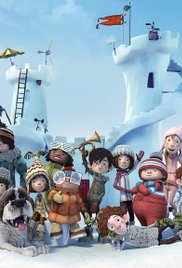
Movie Review: SNOWTIME! (Canada 2015) *** Directed by Jean-François Pouliot

Deadlines to Submit your Screenplay, Novel, Story, or Poem to the festival:http://www.wildsound.ca

showtimeSNOWTIME! (Canada 2015) ***
Directed by Jean-François Pouliot

Starring: Angela Galuppo, Mariloup Wolfe, Lucinda Davis

Review: Gilbert Seah

LA GUERRE DES TUQUES (3D) is the highest grossing Canadian film of 2015. But almost no one in English Canada has heard of it. As the saying goes in the film industry, French Canadians see French Canadian films but English speaking Canadians do not see Canadian films at all – French or Canadian. So, it would be appropriate then to dub the French animated feature into English complete with an English title SNOWTIME! as if the original never existed.

But when the film, a delightful kids fantasy set in real life progresses, it becomes apparent that the film is very Quebecois despite the fact that all the character are speaking English. Even the names of the leads Luke and Sophie sound French (Luc et Sofie). The setting is a little village, snow covered, the typical seen in pictures of Quebec, which one kid calls the best village in the world. And he and the other kids believe it too.

The animated feature is based on and is an animated version of the 1984 family film THE DOG WHO STOPPED THE WAR (French title LA GUEREE DES TUQUES, no change here).
This review is based on the 3D English version.

The film centres on a group of children, led by Luke (Nicholas Savard-L’Herbier in the French version, Angela Galuppo in English) and Sophie (Mariloup Wolfe in French, Lucinda Davis in English), who plan and stage a giant snowball fight during the Christmas holidays. The story is unimportant. The fact that all the children appear to be having a fine time at war is all that matters. Until someone loses an eye – or a dog is hurt, as in the case of this film. As in most children’s films, SNOWTIME! is one centred around the children. There are no adults around. The kids behave like adults mostly, dealing with issues such as acceptance, loyalty, friendship and chivalry, elements that make a good family or children’s tale. This is a delightful Canadian film, quite unlike Disney expensive blockbuster animated features like FROZEN. Still, there are a few catchy tunes like “You are My Sweater” (whatever that means, I have no clue) performed at the end credits.

The 3D effects are well done with lots of snowy stuff tossed out of the screen at the audience. The village looks very Christmassy and the film has an overall warm and fuzzy atmosphere despite the ‘war’ setting.

The humour is mild at best. It is not overtly hilarious or extremely goofy, characteristics of most animated features these days. Getting brain freeze from drinking milkshakes or changing the odds of winning during an arm wrestling match are examples of the kind of humour found in the film.

The result is a rather mediocre entertaining film. The plusses of the film include the gorgeous animation on the screen, better bang for the buck that the multi million dollar products churned out by the Hollywood studios. At least Canadians can say this is our animated feature. It is up against strong competition like NORM OF THE NORTH and KUNG FU PANDA 3.

Also, Free logline submissions. The Writing Festival network averages over 95,000 unique visitors a day.
Great way to get your story out: http://www.wildsound.ca/logline.html

Deadlines to Submit your Screenplay, Novel, Story, or Poem to the festival:http://www.wildsound.ca

Watch recent Writing Festival Videos. At least 15 winning videos a month:http://www.wildsoundfestival.com

Movie Review: HAIL CAESAR! (2016)

Deadlines to Submit your Screenplay, Novel, Story, or Poem to the festival: http://www.wildsound.ca

hail_caesar_poster.jpgHAIL, CAESAR! (USA 2016) ****
Directed by Joel and Ethan Coen

Starring: George Clooney, Josh Brolin, Scarlett Johansson, Alden Ehrenrich, Ralph Fiennes, Tilda Swinton, Frances McDormand, Channing Tatum, Jonah Hill

Review by Gilbert Seah

The Coen Brothers remain in top form.  They etch out a film almost annually, with almost each one a critical hit.  Their films are an annual event many moviegoers now look forward to.  Their best films include TRUE GRIT, FARGO, NO COUNTRY FOR OLD MEN and BURN AFTER READING, and all their films share the Brother’s keen sense of humour.  HAIL, CAESAR! like BURN AFTER READING is pure comedy and this one is a worthy tribute to the Hollywood dream-making machine.  It has the feel of a farce yet, it total respects the Hollywood studio system, for all its faults and errors.

The lead character is a Hollywood studio fixer by the name of Mannix, subtly portrayed by Josh Brolin, in the kind of role he has mastered.  He is a dead serious character you do not want to mess around with.  Or you will get slapped around like his main star, Baird Whitlock (George Clooney) did, before being told to then go out and act like a star.  The film begins with Mannix in a confessional box, pouring his heart out to the priest.  Mannix is shown to be a decent man, one that respects other human beings, despite their faults and one who loves his wife and kids.  He is the backbone of America and the one that make sense in the Coen film.  Which is required – or all else will go to nought and the film degenerates into nonsense.  Of all the sins confessed, the one that affects him the most is his cigarette smoking.  He has promised his wife (Alison Pill) to cut down and is unable to do so.  The plot generally follows Mannix around while things in the Studio fall apart, while being offered a smoke most of the time.  Mannix fixes things, hilariously yet credibly, and that is the basic premise of HAIL, CAESAR!  While all these are going on, he is wooed for a better paying, better hours job at Lockheed Incorporated.

The things that can go wrong provide most of the satire and entertainment.  A famous actress, DeeAnna Moran (Scarlett Johansson) is pregnant and her image is about to be ruined.  A famous cowboy actor, Hobie Doyle (Alden Ehrenreich) is unable to utter his lines to the satisfaction of his director Laurentz (Ralph Fiennes).  Tabloid columnist sisters (both played by Tilda Swinton wearing different hats) want a scoop trying to dig in dirt about star Whitlock.  The most jarring problem is Whitlock being kidnapped by a groups of disgruntled scriptwriters who want their far share of the dough.  Mannix has to sort them all out.

All these problems provide ample opportunity for hilarity – Coen Brothers style.  And they keep the laughs coming with twists in the story as they know best.  The brains behind kidnapping turns out to be communist Burt Gurney (Channing Tatum).

The Brothers play plenty of homage to old classics.  There is a spectacular swimming Busby Berkley swimming number, Esther Williams style as in MILLION DOLLAR MERMAID, a one-take musical gay-type musical number with no dames to the tune of “No Dames”with nods to ANCHORS AWEIGH and Rogers and Hammerstein’s song “There is Nothing like a Dame” from SOUTH PACIFIC and scenes that could be taken right out of William Wyler’s BEN-HUR, just to name a few.

The Brothers have also assembled quite the impressive all-star cast, though some on the list only appear for a few minutes in a scene or two.  The Jonah Hill character seems present just to utter the line  “It’s all part of the job, Miss.”  Fiennes and Johansson are only present for two scenes while Frances McDormand has only one as a chain-smoking editor who gets chokes by the film reel in the editing room.  For whatever they do, they leave the audience wanting for more.  Relative newcomer Ehrenreich steals the show as the cute cowboy who eventually helps Mannix instead of the other way around.

Great directors have made films about the passion in the making of movies.  Fellini had 81/2, Truffaut LA NUIT AMERICAINE, Almodovar BAD EDUCATION and the Coen Brothers HAIL, CASEAR!.  Everything comes clear as to what the Coens are up to by the end reel.  There are elements that don’t work that well or are overdone, but or the most part HAIL, CAESAR! is quite the movie, especially for the moviebuff.  HAIL, CAESAR is a minor classic but a major delight!  I would see it again.


Also, Free logline submissions. The Writing Festival network averages over 95,000 unique visitors a day.
Great way to get your story out: http://www.wildsound.ca/logline.html

Deadlines to Submit your Screenplay, Novel, Story, or Poem to the festival:http://www.wildsound.ca

Watch recent Writing Festival Videos. At least 15 winning videos a month:http://www.wildsoundfestival.com


Interview with Festival Director Jeff Ross (SF IndieFest // SF DocFest // Another Hole in the Head)

Jeff Ross was the Operations Manager at San Francisco International Film Festival in the mid 90s and realized American indies had no venue in San Francisco at the time. He started the SF Independent Film Festival in 1998, which expanded to include the SF Documentary Festival in 2001 and the Another Hole in the Head horror/sci fi festival in 2003.

sfindie.com

Get to know Jeff Ross:

Matthew Toffolo: What is your Film Festival succeeding at doing for filmmakers?

Jeff Ross: We provide great audiences, great press coverage and a fun time in San Francisco.

Matthew: What would you expect to experience if you attend the festival this year (2016)?

Jeff: A full show at the historic Roxie Theater (the old movie house west of the Mississippi). Insightful QA interactions. Fun parties.

Matthew: What are the qualifications for the selected films?

Jeff: We look for uniqueness and competent filmmaking.

Matthew: Do you think that some films really don’t get a fair shake from film festivals? And if so, why?

Jeff: No, I think each festival knows its audience and curates accordingly.

Matthew: What motivates you and your team to do this festival?

Jeff: I love getting people together for shared experiences and the opportunity to introduce people to films they would not have found on their own.

Matthew: How has the festival changed since its inception?

Jeff: We’ve grown from a 4 day event with 3000 attendees to three two-week festivals and a year round attendance of about 21,000.

Matthew: Where do you see the festival by 2020?

Jeff: Not much different than today, or 18 years ago. We are motivated to find good films and bring out good audiences to view them, that wont change.

Matthew: What film have you seen the most times in your life?

Jeff: Blade Runner, Casablanca, Fury Road.

Matthew: In one sentence, what makes a great film?

Jeff: Uniqueness either in story or execution.

Matthew: How is the film scene in your city?

Jeff: The audience for arts and culture in San Francisco is stronger than ever.

Interview with Founder/Director, Susan Johnston (New Media Film Festival)

7th Annual New Media Film Festival. Honors Stories Worth Telling in all media that are innovative, imaginative & inspirational. Submit Now Attend June 7-9, 2016

They accept submissions through April 25th and notify by May 5th.  You can use promo code twitter10 good in any category at www.NewMediaFilmFestival.com

Susan Johnston founded the critically acclaimed New Media Film Festival ® in 2009 to honor stories worth telling in the ever changing landscape of media, New Media. Legendary judges cull over the content for the annual festival in Los Angeles that offers screening, competition ($45k in awards) and distribution opportunities. Currently there are over 600 titles in their library.

Interview with Susan Johnston:

Matthew Toffolo: What is your Film Festival succeeding at doing for filmmakers?

Susan Johnston: We are proud to say, we advance stories and the people that make them. We have category winners and a Grand Prize winner. For some of our category winners, here is what we have learned:

Snipler®-30 second pitch category, the filmmaker received full funding for his feature while his Snipler®-30 second pitch

3D category winner filmmaker told us Discovery made him an offer after he notified them of his win at our festival

Our recent Grand Prize Winner, What Lives Inside said: “Thanks so much for this prize. ‘What Lives Inside’ made its debut at New Media Film Festival and, after winning the Grand Prize(!!), it went on to win 6 Lions at the Cannes Lions Festival of Creativity the following week. We’re honored with all this recognition.”
– Molly Parsley – What Lives Inside

The Grand Prize Winner before that, Curio Shop, also a world premiere, had an amazing festival winner streak that included airing on a network!

In addition, we archive all of the submissions, so, if someone reaches out for something specific, we can search and connect. That has resulted in content being interviewed in Press, screening participation at expos and conventions when we speak (NATPE, AFM, NAB and more) and many other opportunities which are at no cost or obligation to the content creator.

Matthew: What would you expect to experience if you attend the festival this year (2016)?

Susan: In January, we do early selections to start press and newsletter and website for a select few submissions. We are excited to announce that we have Artificial Intelligence (yes, AI), Virtual Reality and Drone as new screenings this year, most of them premieres.

Matthew: What are the qualifications for the selected films?

Susan: Our Mandate is Honoring Stories Worth Telling, our categories cover the tech aspect (even a New Media category for when you create something that you do not know where it fits, it fits here)

Matthew: What motivates you and your team to do this festival?

Susan: Making a difference. Knowing that stories have the power to change our now and our future and remind us of our past so we can keep learning. For me, I often say, What would you like your future to be? Make, write, create, be that story now. You are part of the collective, share wisely.

Matthew: How has the festival changed since its inception?

Susan: Constant change, we are tech and media, always news, always challenging, always exciting.

Matthew: Where do you see the festival by 2020?

Susan: Beaming content to Humans in Space whether on a planet or the very least the International Space Station.

Matthew: What film have you seen the most times in your life?

Susan: Willy Wonka and The Chocolate Factory, Gene Wilder Version Only – So shine a good deed in a weary world (I have an everlasting gobstopper)

Matthew: In one sentence, what makes a great film?

Susan: Story, implementation.

Matthew: How is the film scene in your city?

Susan: Global
_____

Interviewer Matthew Toffolo is currently the CEO of the WILDsound FEEDBACK Film & Writing Festival. The festival that showcases 10-20 screenplay and story readings performed by professional actors every month. And the FEEDBACK Monthly Festival held in downtown Toronto on the last Thursday of every single month. Go to http://www.wildsound.ca for more information and to submit your work to the festival.

Interview with J. Michael Seyfert (Cine Pobre)

Cine Pobre is a self-funded filmmaking genre without a set of stylistic criteria nor format boundaries, involving many geographically separated creators with at least two things in common: a strong desire to tell our story and to do so with our own resources.

You can also find more info at
www.facebook.com/cinepobre/

I recently sat down with J. Michael Seyfert to talk more about the festival:

Matthew Toffolo: What is your festival succeeding at doing for filmmakers? 

JMS: So far Cine Pobre has co-produced 8 films, and we provide post production talent and technical skills through camera stabilization workshops, and help with branding and niche market exposure. Cine Pobre Film Festival is like filmmaking itself, a collaborative and not a competitive concept.

Matthew: What would you expect to experience if you attend the festival? 

JMS: Personally , unless you’re talking about Orson Welles or Werner Herzog for example I am not keen on listening to a lot of self-congratulating trivia and gossip staged by most film festivals who appear more like cocktail parties. I appreciate excellent programming that has attitude and teeth, to be intriguing,  that’s what Cine Pobre delivers: New Eyes.

Matthew: What are the qualifications for the selected films? 

JMS: Anything goes, but must be self-funded and under $25,000 usd crowd-funding is also accepted, but productions financed by grants and film fund supported budgets are not accepted.

Matthew: Do you think that some films really don’t get a fair shake from film festivals? And if so, why? 

JMS: The business model of conventional festivals, of which there are literally thousands, is strictly a numbers game no matter how idealistic they may cloak themselves. As soon as an event gains some prestige it becomes elitist and exclusionary, rich in overhead and filmmaker exploitative.

Matthew: What motivates you and your team to do this festival? 

JMS: Curating the best self funded films to the widest audience is gratifying, as only the works of story tellers unbeholden to sponsors are censorship-free.

Matthew: How has the festival changed since its inception? 

JMS: Started with small screenings in rural areas to become the largest resource of self-funded film with over 10,000 shorts, features, documentaries, animation, experimental and music videos.

Matthew: Where do you see the festival by 2020?

JMS: We receive entries from about 100 countries and would love to curate films from all 190 states and territories on the planet.

Matthew: What film have you seen the most times in your life?

JMS: Bye Bye Havana

Matthew: In one sentence, what makes a great film? 

JMS: A story so well told that it holds the attention of a 7 year old.

Matthew: How is the film scene in your city? 

JMS: Still emerging from provincialism…. However Cine Pobre is neither stagnant nor static. Over the past 13 years we have taken our screenings to rural areas in Mexico and different countries in Latin America. We hope to also develop events in Africa where many exciting self-funded filmmakers are emerging.

_____

Interviewer Matthew Toffolo is currently the CEO of the WILDsound FEEDBACK Film & Writing Festival. The festival that showcases 10-20 screenplay and story readings performed by professional actors every month. And the FEEDBACK Monthly Festival held in downtown Toronto on the last Thursday of every single month. Go to http://www.wildsound.ca for more information and to submit your work to the festival.

Interview with Kristine Renee Farley (MayDay Film Festival)

The MayDay Film Festival originated in May 2009 at the University of Southern Indiana. It was created by a group of student filmmakers.. Year one was about showing off student films at their event to the student body. Since then, it has evolved into a full fledged festival showcasing films from all over the world.

Website: www.maydayfilmfestival.com

Twitter @MayDayFilmFest

I recently sat down with the Festival Director of the Festival:

Matthew Toffolo: What is the MayDay Film Festival succeeding at doing for filmmakers?

Kristine Renee Farley: I consider MayDay Film Festival’s biggest achievement our audience members. Last year we had 500 people in attendance across our 2-day event. Sometimes it can be difficult for independent film to find an audience, but we don’t have that problem at MayDay. We’re also currently in negotiations with international distribution companies. We want to partner with one to get MayDay Film Festival official selections in front of their eyes, and hopefully the rest of the world.

Matthew: What would you expect to experience if you attend the festival this year (2016)?

Kristine: MayDay is alway a fun experience for attendees. We pride ourselves on not being a pretentious film festival. We have vendor booths similar to what you see at conventions. This gives filmmakers a chance to sell their movies as well as other merchandise like tshirts. But we also invite local businesses and artists to rent booth space as well. We want to be interactive with the whole community, and invite anyone who thinks indie film fans would like to buy their product a chance to get it out there. All the info to get a booth is on our website. We also always have a guest artist or two to do a Q&A panel. We’ve had cosplayer Collin Royster, Emmy-award winning writer of Friday the 13th Victor Miller, Jake Lloyd of Star Wars & Jingle all the Way, and the Star Wars 501st Legion in past years.

Matthew: What are the qualifications for the selected films?

Kristine: Our submission guidelines are pretty loose. We like to have a wide variety of films screen at MayDay. During the selection process, we try to keep a good balance of looking at the quality of everything from camera work, image, audio, acting, and story. A filmmaker may not have had the best camera when they made their film, but if the story is amazing, we’ll still take it. Likewise, if a film looks too beautiful to pass up, we sure won’t.

Matthew: Do you think that some films really don’t get a fair shake from film festivals? And if so, why?

Kristine: I agree to a certain extent, yes. I think the bigger film festivals only take “independent” films that are only so just because a studio wasn’t involved. Yes, TECHNICALLY they’re “independent,” but they have huge stars and the best equipment. It makes sense for a festival to accept such movies because it will help their festival be more successful, so I can’t really discredit them for that at all. But I do believe that a lot of really amazing films that didn’t have the budget and didn’t have the stars do get ignored sometimes. Just because they don’t have that selling power. Which kind of leads into your next question…

Matthew: What motivates you and your team to do this festival?

Kristine: We want to give people a chance to get their films seen. That’s the whole point of making a movie! For people to see it! In addition to our fantastic & growing attendance numbers, filmmakers have the opportunity to secure booth space to sell their DVDs to the right audience – people interested in watching indie film.

For me personally, I’m also an actress working in TV & indie film. It’s a wonderful opportunity to see who’s making amazing films & to check out other actors & actresses who are getting work. We have films that come to us from all over the country & the world. It’s a wonderful networking opportunity for anyone in the indie film scene.

Matthew: How has the festival changed since its inception?

Kristine: This festival has changed SO much! It first started as a few students at the University of Southern Indiana showing off short films that they had made that school year. Then the Filmmakers’ Club was created to give students a more organized foundation to create their films since the school doesn’t have a film program. Each year it’s gotten bigger & bigger, incorporating local filmmakers and businesses. Now we’re in an actual movie theatre (Shout out to Showplace Cinemas in Evansville, IN! They’re the best!), showing films on 3 screens, and have international selections each year. I started helping with the fest in year 3. We had 38 submissions total. This year we had 40 our first day. We’re up to 470 currently, and we don’t close submissions until May 1st! We’ve had to bring on more people to get through the first round of watching films.

Matthew: Where do you see the festival by 2020?

Kristine: I certainly hope we continue to grow as much as we have already. At this time, we’re a not for profit event in the sense that we make absolutely no profit, haha. All fees & admissions go straight back into the festival costs. A lot of the time myself and the other coordinators will spend money out of pocket to make sure everything goes off without a hitch. I’d certainly like to see it begin to turn a profit because we have some amazing ideas to expand the MayDay brand into other film related events. If I had my way, we’d have a different themed event each month!

Matthew: What film have you seen the most times in your life?

Kristine: The absolute most times is probably Harry Potter and the Sorcerer’s Stone. I may have been a teenager when it came out, but I geeked hard core over it. My sister and I were probably watching it 3 times a day that summer we were off from school. I started developing a bit of a British accent. It was pretty crazy, haha. As an adult, it’s probably either Kill Bill or Kiss Kiss Bang Bang. Those films just never get old for me. I notice something new each time I watch them. If you’re talking indie film, you should totally check out Bounty Killer. God, I love that movie.

Matthew: In one sentence, what makes a great film?

Kristine: Oy. ONE sentence? And “great” is so subjective… I’d have to say, “A great film understands it’s audience.” Understanding your audience and how your film is perceived really helps tell a great story. That sentence also allows for films that may not be technically sound, but are still entertaining. &#X1f60a AND it transcends genres. Someone who loves horror may not like romantic comedy, but that doesn’t mean either genre isn’t great.

Matthew: How is the film scene in your city?

Kristine: Well, I’m living in New York City now, so pretty awesome, haha. Back in Evansville, things are pretty hopping, too. The work I got there and the experience I gained have been invaluable to me in pursuing my career. Last year at MayDay Film Fest in particular, the quality of local films skyrocketed. Evansville, IN is definitely holding their own against some of the best films from around the country. Some even won awards against them too! I continue to be impressed year after year at how much my friends & associates in indie film have grown.
_____

Interviewer Matthew Toffolo is currently the CEO of the WILDsound FEEDBACK Film & Writing Festival. The festival that showcases 10-20 screenplay and story readings performed by professional actors every month. And the FEEDBACK Monthly Festival held in downtown Toronto on the last Thursday of every single month. Go to http://www.wildsound.ca for more information and to submit your work to the festival.

Interview with Festival Director Brian Vegter (We Like ‘Em Short)

We Like ‘Em Short was started in 2009 as a very small local festival featuring local and American filmmakers. Since 2012, it started to showcase more international films and has seen it’s share of award winning shorts and hosted talented directors including Chel White, Doug Lussenhop, Benjamin Morgan and Joanna Priestly in recent editions of this four day festival. WLES is centrally located at the historic Eltrym Theater, in downtown Baker City, Oregon. All shorts are screened on Theater 1’s giant screen through a Christie Digital Projector.

http://www.welikeemshort.com/

I recently sat down with Brian Vegter to talk more about the festival:

Matthew Toffolo: What is your festival succeeding at doing for filmmakers?

Brian Vegter:We Like ‘Em Short showcases animation and comedies from around the world with workshops and presentations from some of the best known directors and animators working in short form in the Northwest. We provide funding to the local high school’s Film Arts Club and have brought filmmakers into work with them during the festival and the school year. Because of our format of 20 minutes or less, the films we screen will only be on the festival circuit or the internet. By screening them at WLES we are providing filmmakers the chance to have their work on the big screen, in front of an audience, and share all the creativity that went into the projects.

Matthew: What would you expect to experience if you attend the festival?

Over the four days of the festival, attendees can see over 50 short films from around the world by award winning directors and emerging filmmakers alike. Special presentations and workshops from directors and animators. Nightly live music at multiple locations that you can walk to from the home base of the historic Eltrym Theater. All in the breath taking Baker Valley nestled between the Elkhorn and Wallowa Mountains.

Matthew: What are the qualifications for the selected films?

Brian: We consider all animated films of any genre or style under 20 minutes in length and for live action films they must be comedies. Our selection committee looks for great story telling as the main strength of each selection. Production value is very important as is our desire to showcase up and coming talent.

Matthew: Do you think that some films really don’t get a fair shake from film festivals? And if so, why?

Brian: We watch everything that gets submitted to WLES and base our decision on the quality of the directors storytelling. In 2012 we had a film submitted by director Charles Roseberry who promised he’d come to the festival if we accepted his film called “The Bell”. It wasn’t my favorite film we had received that year by a long shot, but we receive funding from the county’s lodging tax fund and so they want us to bring in as many people from out of town as possible, so we included his film.

When Roseberry showed up, he had a crew with him doing a documentary about the selection process that films went through and it became pretty clear he was making a film about how to get a film like his into festivals. While he wouldn’t admit that, in front of the audience, I could tell by the extra big smile on his face during the Q&A after we screened “The Bell” I had caught him. So it’s true that in some cases because of funding, decisions about art can be influenced. Just ask Chuck.

Another thing that helps some filmmakers with the selection process is the relationship they develop with festival directors. If we’ve seen great work from someone in the past I’ll contact them to see what they are up to near the end of our submission period and possibly add it to our schedule. One because I like their work and because they’ve developed a following with our audiences.

Matthew: What motivates you and your team to do this festival?

Brian: We’re motivated to showcase unique short films in our rural community in Eastern Oregon because it adds something different to the arts scene here. We have many working visual artists here and the festival came about after a monthly art film series known as Thursday Art Night began in 2008. Every month on the last Thursday, films about artists and the arts have been the focus and WLES grew out of that. We wanted to give local filmmakers a chance to be part of that event and it’s grown into the festival we do now.

Matthew: How has the festival changed since its inception?

Brian: Since 2009 we’ve gone from a festival that lasted one night with only 13 films, all local, to a festival that receives submissions from all over the world. We’ve had as many as 180 submissions in one year since we started accepting films through FilmFreeway and WAB online.

We’ve added workshops, special guest screenings and live music to the festival as well. WLES is now a multi-day event with up to seven screenings through out four days.

Matthew: Where do you see the festival by 2020?

Brian: I see us celebrating our 12th anniversary. Cake will be served. More seriously, the growth of our workshops and to see more filmmakers make the trip to WLES where they can connect with other talented people. We have become a resource to production crews that come to the region and I’d hope we can continue that as well.

Matthew: What film have you seen the most times in your life?

Brian: Blade Runner and Twelve Monkeys are the two films I’ve seen the most.

Matthew: In one sentence, what makes a great film?

Brian: The use of beautiful and dynamic images to tell the story.

Matthew: How is the film scene in your city?

Brian: The history of Baker County films includes the cult classic “Paint Your Wagon” staring Clint Eastwood and more recently “Light of Mine” by director Brett Eichenberger and the TV show “Ghost Mine” was filmed here as well. It’s a fantastic well preserved historic place to film and has been on Rand McNally’s list of America’s Most Beautiful Small Towns. The film production community is small and so most productions bring in their entire crew with them.

_____

Interviewer Matthew Toffolo is currently the CEO of the WILDsound FEEDBACK Film & Writing Festival. The festival that showcases 10-20 screenplay and story readings performed by professional actors every month. And the FEEDBACK Monthly Festival held in downtown Toronto on the last Thursday of every single month. Go to www.wildsound.ca for more information and to submit your work to the festival.