Interview with the Brooklyn Short Film Festival

Brooklyn Short Film Festival brings together the world’s best short films in an engaging atmosphere for the purpose of developing connections and building new relationships in the film industry.

brooklynshorts.com/

Matthew: What is your Film Festival succeeding at doing for filmmakers? 

Showcasing the world’s best short films.  We consider ourselves New York’s premiere short film festival.

Matthew: What would you expect to experience if you attend the festival this year (2016)? 

A high profile short film festival in some of Brooklyn’s premiere cinema venues.  We break our festival up into short film programs, each very unique and diverse with a wide breadth of short films.  We try to pair more local and independent short films together with high budget fare to make for a diverse experience.

Matthew:  What are the qualifications for the selected films? 

The films must be short.  Nothing longer than 45 minutes.  We tend to program mostly in the 8-12 minute range.

Matthew: Do you think that some films really don’t get a fair shake from film festivals? And if so, why?

I would say there are at least 400+ legitimate festivals in the world.  The onus lies on the filmmakers for selecting which festival is best suited to the strengths of their films.  The only festival I am able to speak for is the Brooklyn Short Film Festival, and we give films of all stripes and persuasions “a fair shake”.  We watch each film entry multiple times.  We attempt to program at least 60% from direct submissions to the festival.  The other 40% is alumni and invitations. Once a film has been accepted into a festival, most filmmakers believe their work is finished, but this is far from the case.  Again, the onus lies on the filmmakers to fully utilize what a festival provides, and they should be prepared with a press agent, a marketing campaign, social media, etc. to create their own “shake” and momentum from the festival.

Matthew:  What motivates you and your team to do this festival? 

We like short films.  We enjoy watching filmmakers develop in their trade, going onto creating features or film/television work.  Short films are a great way to connect and the format is very broad in terms of what can be done.  Features are much more limited by the very nature of the scope.  A concept can be very funny at 5 minutes, or very engaging.

Matthew: How has the festival changed since its inception? 

We have had a very focused mission and our festival has stayed on point from inception to current versions.

Matthew:  Where do you see the festival by 2020? 

We hope to be Academy Award eligible for our filmmakers.

Matthew:  What film have you seen the most times in your life? 

Casablanca or Don Hertzfeld

Matthew:  In one sentence, what makes a great film? 

An appropriate length to concept ratio.

Matthew: How is the film scene in your city? 

New York is world class.  Brooklyn is a powerhouse and has a brilliant scene.  I would like to give a shout out to the Brooklyn Academy of Music and Videology for maintaining a high calibre program of diverse films.  Many of the world’s foremost directors, actors, producers, crew, editors and fans live in New York and Brooklyn.


_____

Interviewer Matthew Toffolo is currently the CEO of the WILDsound FEEDBACK Film & Writing Festival. The festival that showcases 10-20 screenplay and story readings performed by professional actors every month. And the FEEDBACK Monthly Festival held in downtown Toronto on the last Thursday of every single month. Go to www.wildsound.ca for more information and to submit your work to the festival.

Interview with Festival Director Crystal Pelkey (Short Shorts Film Festival)

The Short Shorts Film Festival in Duluth, MN is celebrating its 11th year in 2016. 
It is the only festival of its kind in Northern Minnesota. The festival brings 
together amateur and professional filmmakers from all across the globe to 
compete for cash prizes. Each film must be under five minutes. The audience 
scores each film and ultimately, the top three winners. The festival features many 
genres including, but not limited to: animation, comedy, drama, documentary, 
experimental, and music videos.

Interview with Festival Director Crystal Pelkey:

Matthew Toffolo: What is your Film Festival succeeding at doing for filmmakers?

Crystal Pelkey: ​Our film festival provides an opportunity for amateur filmmakers to be on the same stage as professional filmmakers. It’s a place for creative storytelling to take center stage and telling that story in less than five minutes is a unique challenge that many filmmakers embrace and succeed at.

Matthew: What would you expect to experience if you attend the festival this year (2016)?

Crystal: Our audiences can expect to play an active role in our festival, in that that ​​they score each film and ultimately pick the top three cash prize winners!​​ Audiences can also expect to see many genres of film: animation, comedy, drama, documentary, experimental, and music video. to name a few.

Matthew: What are the qualifications for the selected films?​

Crystal: The finalists are selected by a panel of judges–the film must be under five minutes, be appropriate for all audiences (rated G).

Since the audience chooses the winners, the primary qualification, other than it being five minutes or less, is really overall impact–audiences are encouraged to consider things like, creativity, quality, cinematography, etc. while scoring each film.

Matthew: Do you think that some films really don’t get a fair shake from film festivals? And if so, why?.

Crystal: There are so many wonderful films and filmmakers out there, and many festivals are limited by time, schedule and resources, so it’s often impossible to screen all the entries and give every film a fair shot. I know it’s very difficult for us to select our finalists, and some great films often get left out.​ ​In terms of programming, producers have to consider things like variety of genres presented, duration of films in conjunction with the festival time frame, content, overall impact of the work presented, etc.​

Matthew: What motivates you and your team to do this festival?

Crystal: ​We are the only short film festival of our kind in our region (Northern, Minnesota) and our audiences have supported our festival over the past ten years (sold-out houses) so that momentum helps keep our team motivated to produce the best festival possible and continue to improve it from year to year.

Matthew: How has the festival changed since its inception?

Crystal: ​Our format has stayed the same– in that films have always needed to be five minutes or less, and that the audience chooses the winners. Over the years, we’ve added local celebrity emcees and this year we are honoring a local filmmaker that has made great films and helped put our community on the map.

Matthew: Where do you see the festival by 2020?

Crystal: ​Maybe by 2020 we will be accepting 20 minute short films? :)​

Matthew: What film have you seen the most times in your life?
Crystal: ​Friends would tease me and say “The Notebook” (that may be true), but I have a very happy family memory of seeing The Fugitive in the theater when it first came out, and I’ve probably seen it 100 times. Similar story for Shawshank Redemption.

Matthew: In one sentence, what makes a great film?

Crystal: ​A great film is one of the greatest gifts–it can transport you out of a moment in time, and allow you to momentarily forget all of your troubles, and at the end, it may even allow you to understand yourself better, and this wild ride called the human experience.

Matthew: How is the film scene in your city?

Crystal: ​We have a great film scene in Duluth, MN. We have a local art house cinema that continues to bring films to our city that we may not get otherwise. We have an exciting film festival that takes place in a barn every summer (Free Range Film Festival) and ​we have an annual Duluth/Superior Film Festival each Spring that often brings Hollywood starts to our beautiful city on the shores of Lake Superior.

_____

Crystal Pelkey is the producer of the Short Shorts Film Festival and one of the 
festivals co-founders. Her day job is the Director of Patron Services & Special 
Events at the Duluth Playhouse, Minnesota’s oldest community theater. She is an 
active community member, local playwright, and freelance jewelry designer.  
Crystal loves film and is often known to watch Lifetime on Saturday afternoons. 
She once punked George Clooney, by asking him for a photo, then handing him 
her camera to take a picture of her and her friend.  
PHOTO of Crystal Pelkey:
CrystalPelkey1

Interviewer Matthew Toffolo is currently the CEO of the WILDsound FEEDBACK Film & Writing Festival. The festival that showcases 10-20 screenplay and story readings performed by professional actors every month. And the FEEDBACK Monthly Festival held in downtown Toronto on the last Thursday of every single month. Go to www.wildsound.ca for more information and to submit your work to the festival.

Movie Review: RACE (2016) Directed by Stephen Hopkins

Deadlines to Submit your Screenplay, Novel, Story, or Poem to the festival: http://www.wildsound.ca

raceRACE (Germany/France/Canada 2016) ***
Directed by Stephen Hopkins

Stars: Stephan James, Jason Sudeikis, Eli Goree, Jeremy Irons, William Hurt

Review by Gilbert Seah

The word RACE of the film title could mean the running competition or a people of the world. Stephen Hopkin’s biographical sports drama tells both the story of African American athlete Jesse Owens (Stephan James) running in the Berlin Olympic games in 1936 and the controversy ensuing with the then upcoming Hitler regime. Owens went on to win 4 gold medals. Hopkins is no stranger to biography, having directed THE LIFE AND DEATH OF PETER SELLERS.

The script, written by Joe Shrapnel and Anna Waterhouse, covers many stories. The first and foremost is the story of the athlete Owens and his white coach Larry Snyder. The other is the romance between Owens and his girl, Peggy (Amanda Crew), who he has already had a daughter with, when going to the games. A political subplot involving the boycotting of the Games by the U.S. due to Germany’s racial policy of exclusion of blacks and Jews makes good interest into an otherwise too often told tale of underdog achieving the top prize. This story pits Avery Brundage (Jeremy Irons) against host of adversaries. Despite the many stories, director Hopkins always has the main story in focus, the winning of the games, while keeping the other side stories in perspective. The overall feel is a solid narrative.

Newcomer Stephan James inhabits the role of the star athlete very comfortably. He looks young as well as buff enough to pass off as an Olympic medallist. He is convincing without having to overact his role. But it is the supporting cast that deliver the prized performances. Carice van Houten steals the show as German filmmaker Leni Riefenstahl, commissioned by the Hitler to film the games. She runs head to head with the Interior Minister, Dr. Joseph Goebbels (played with sinister relish by Barnaby Metschurat). One could watch both van Houten and Metschurat, two German acorn forever.

The period piece was sot in both Berlin where the Games took place as well as Montreal to stand in for spots of Berlin. The atmosphere of 30’s Europe is satisfactorily convincing, but not over-stunning. The shot of the Games are excitingly executed with camera intercutting among the faces of the athletes, the looks on the faces of the coaches and of course, the spectators.

It is odd that this piece of anti-racism is a co-production between Germany and Canada. One would have expected the film, supported by the by the Owens family, the Jesse Owens Foundation, the Jesse Owens Trust and the Luminary Group to have some American financial backing.

Hopkins plays his film safe without trodding into too deep waters. The racial controversy is tackled with tact and quickly covered for. The result is a rather mild anti-racist film, that is more suited for the family than one to invoke controversy.

The film ends with the pictures of the real characters against the actors that played them. Again, formulaic safe filmmaking, like a history lesson that disturbs no one and stirs no still waters!

Also, Free logline submissions. The Writing Festival network averages over 95,000 unique visitors a day.
Great way to get your story out: http://www.wildsound.ca/logline.html

Deadlines to Submit your Screenplay, Novel, Story, or Poem to the festival:http://www.wildsound.ca

Watch recent Writing Festival Videos. At least 15 winning videos a month:http://www.wildsoundfestival.com

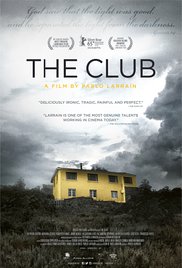
Movie Review: THE CLUB (EL CLUB) (Chile) ***1/2

Deadlines to Submit your Screenplay, Novel, Story, or Poem to the festival: http://www.wildsound.ca

the_club.jpgEL CLUB (Chile 2015) ***1/2
Directed by Pablo Larrain

Review by Gilbert Seah

Pablo Larrain’s (NO, TONY MANERO) latest film is a very different drama that is as absorbing as it is deadly slow-moving. The title of THE CLUB (EL CLUB) refers to an open prison for disgraced priests. The 4 priests and nun confined there in the seaside town of La Boca in Chile by the church are about to have their idyllic sojourn shaken to the ground.
EL CLUB is a very complex film, in a way similar to last year’s CALVARY starring Brendan Gleeson, a black comedy about a priest taking on the sins of a murderer. Both films coincidentally take place in a seaside setting.

The film begins innocently with a greyhound race that takes place in La Boca. The grey greyhound wins the race. It is slowly revealed that the animal is trained by a father who resides in the roomed building. There are three other priests who all place bets. It turns out that Father Vidal (Alfredo Castro), Father Ortega (Alejandro Goic), former army chaplain Father Silva (Jaime Vadell), and senile Father Ramirez (Alejandro Sieveking), disgraced priests are all dutifully tended to by a similarly “retired” nun, Sister Monica (Antonia Zegers), who is apparently not that innocent. She is called a bitch by one of the fathers later on in the film.

Trouble brews when another disgraced priest, Father Lazcano (Jose Soza) is delivered to the house. He shoots himself after a young local fisherman, Sandokan (Roberto Farias), recognizes him. Sandokan, kind of a crazed bum, remembers the abuses he suffered as an altar boy at Lazcano’s hands and starts screaming the abuses outside the doorstep. Then the church dispatches Father Garcia (Marcelo Alonso), a crisis counsellor, to settle things. The priests come to believe, that Father Garcia’s intention is to close the house down.

The story turns into a horrid tale of survival. It is each man for himself, even for Sandokan and Father Garcia who is disliked and looked upon with suspicion by all.

Director Larrain is a great story teller always keeping the audience in anticipation with always a twist in the story around very corner. His camera work is meticulous, capturing the tranquility and imprisonment of the subjects despite the beautiful seaside setting. Violence is kept at a minimum, and mostly left to the imagination. He also keeps each priest as interesting as the other – each having their own individuality despite being there for the identical purpose.
One of the greatest pleasures of the film is the director’s use of Arvo Part’s music. I first heard the Estonian composer’s music, ‘Spiegel I’m Speigel’ when I first saw Gus Van Sant’s 2002 film, GERRY years back. Part known for his classical and religious music, he delivers a beautiful score that adds to both the serenity and eeriness of the film’s proceedings.

Whether the film ending is a happy one is arguable – best left to the audience to decide. But EL CLUB is a story that concerns many key issues – identity, beliefs, redemption, fulfilment but mostly forgiveness and how one can live with oneself after any terrible deed.

Also, Free logline submissions. The Writing Festival network averages over 95,000 unique visitors a day.
Great way to get your story out: http://www.wildsound.ca/logline.html

Deadlines to Submit your Screenplay, Novel, Story, or Poem to the festival:http://www.wildsound.ca

Watch recent Writing Festival Videos. At least 15 winning videos a month:http://www.wildsoundfestival.com

Movie Review: WHERE TO INVADE NEXT. (USA 2015) ***

Deadlines to Submit your Screenplay, Novel, Story, or Poem to the festival: http://www.wildsound.ca

where_to_invade_nextWHERE TO INVADE NEXT. (USA 2015) ***
Directed by Michael Moore

Review by Gilbert Seah

When the title of Michael Moore’s new movie WHERE TO INVADE NEXT. was announced at the Toronto International Film Festival, it was followed by an auditorium of laughter. What would s***-disturber Michael Moore come up next to enrage his new film subject(s)? His then new film was totally hush-hush till it premeired at TIFF. Surprisingly, WHERE TO INVADE NEXT. offends no one. It is a crowd-pleaser with Moore even praising the United States, though only at the film’s very end. Moore must be getting soft in his old age.

The premise is a neat one. Moore travels to different countries, steals the ideas that work and returns with them to the United States. Moore plants the American flag wherever he travels in victory after stealing the ideas, though many countries would gladly have the U.S. adopt them. Italy is first visited first. Th idea of paid vacations, extended holidays and happy workers is the norm of the Italians. In France, it is the wonders of a different public school cafeteria food that makes the difference in healthy kids. Other countries visited include Germany, Portugal, Norway, Iceland and the highly surprising Slovenia and finally Tunisia. It is a fun trip. But the film runs long at close to 2 hours and like any vacation, no matter how entertaining, can grow a bit tiresome.

But what Moore clearly misses out on are the reasons the United States can never follow the ‘stolen’ policies of Moore’s invaded countries. One cannot just take one working concept from one country and implement it into another. Culture, upbringing of the people all come into play. Americans are known to be taught to be individualistic, and one against all, quite unlike for example the asians where, respect for oneself comes last.

Unlike Moore’s other films like ROGER AND ME and BOWLING FOR COLUMBINE in which the subjects were very focussed like GM’s auto factory and gun availablity, this film is scattered and is all over the place like the countries he hops to, one after another. Why did Moore pick most of the countries in Europe, one from Africa and none from Asia? There is also no reason for the order of his countries in terms of the importance of policies.

But Moore captures the film’s idea in one brilliant segment in which he asks a Tunisian woman to give a two-minute advice to the American people. “If you have to minutes of advice to give to the American people, what would it be?” And what she says hits the nail right on the head. This is the common theme tying in all of the film’s ideas of what makes a country work. The film contains many other moving moments like the one in which a Norwegian father of a dead son (the 2011 Norway summer camp massacre) confesses that getting revenge on his son’s killer solves nothing.

Moore’s film is nicely concluded, like a textbook with an ending to please the U.S. Moore says all the success stories from the countries have all originated from ideas in the United States. All the Americans need to do is to follow. But easier said than done. In this way, Moore tries the other way, (compared to using anger as, in his other films) i.e using niceness to get his point across.

The result is a crowd-pleasing, very entertaining film that somehow will have the same difficulty of getting Moore’s point or points implemented. The question is whether audiences like the nastier old Moore or the nicer new Moore.

Also, Free logline submissions. The Writing Festival network averages over 95,000 unique visitors a day.
Great way to get your story out: http://www.wildsound.ca/logline.html

Deadlines to Submit your Screenplay, Novel, Story, or Poem to the festival:http://www.wildsound.ca

Watch recent Writing Festival Videos. At least 15 winning videos a month:http://www.wildsoundfestival.com

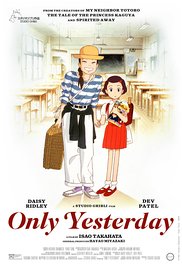
Movie Review: ONLY YESTERDAY (Japan 1991) ***1/2

Deadlines to Submit your Screenplay, Novel, Story, or Poem to the festival: http://www.wildsound.ca

only_yesterdayONLY YESTERDAY (Japan 1991) ***1/2
Directed by Isao Takahata

Starring: Miki Imai, Toshirô Yanagiba, Youko Honna

Review by Gilbert Seah

ONLY YESTERDAY is a 1991 Studio Ghibli film which was generally produced by Master Hayao Miyazaki. Takahata also directed the well-known and loved THE TALE OF PRINCESS KAGUYA and GRAVE OF THE FIREFLIES. Studio Ghibli is known to be in financial trouble, so any reworking of the studio’s animated features is a huge welcome.

Though one wonders of the reason ONLY YESTERDAY is the film chosen for the reworking. It is immediately noticeable that the film is so unlike the favourites of Ghibli Studios the most notable being Miyazaki’s HOWL’S MOVING CASTLE, PONYO, MY NEIGHBOUR TOTORO and SPIRITED AWAY. There is an absence of Japanese folklore and mythical creatures. Magic, is present though in a different form. In ONLY YESTERDAY, the magic is in the imagination of the heroine and what life has to offer.

The premise is a simple one. 27-year old Taeko (Daisy Ridley) is unmarried. She loves the countryside. She visits her relatives there and a flood of memories brings her back to the days of first romance, puberty (done with much humour and taste) and the frustration of math (division of fractions, of all things) and boys. Takeo meets a young farmer, Toshio (Dev Patel). The two connect with feelings. Taeko is taken aback and feels uncomfortable when she is pressured by Toshio’s parents into marriage with their son.

The 1991 Japanese version is available in laserdisc format but the film has been redone in an English version, with the voices of the now famous Daisy Ridely, who had the lead as Rey in STAR WARS; THE FORCE AWAKENS and SLUMDOG MILLIONAIRE’s Dev Patel.

I do not favour any dubbed version of a film, and the pleasure of ONLY YESTERDAY comes especially when the soundtrack with songs in Japanese comes on. But there are lots of American influences in the film, such as baseball and the Beatles, though they also form part of the culture that Taeko grew up with.

The best parts of the film are the simple ones – like the family sitting by the dinner table slicing a pineapple for the first time, or Takeo literally taking flight in an imaginary sequence.
But the film is not without certain flaws. For one, both Ridley and Patel could do British or American accents as Ridley is British and Patel could be coached to do American. But the strong American accent of Ridley’s character and British accent of Patel clash in the film. If one wants to argue that people from the countryside speak with a British accent to differentiate, why then only the Patel character an not the others from the countryside? The film’s imaginary happy ending also leaves the audience a bit bewildered.

But it is the animation of the Ghibli Studios, care of Takahata and his team of artists that triumphs. From the detailed shadows of the characters to the landscape of the countryside and the glorious colour and glow of the insects and background, ONLY YESTERDAY astounds and is the best of what animated films can offer. This alone is worth the visit to this breathtaking work of animated art.

ONLY YESTERDAY celebrates Studio Ghibli’s 25th anniversary (and 30 years in its founding). The studio is sadly in hiatus with no new productions after disappointing box-office receipts of their recent efforts.

Also, Free logline submissions. The Writing Festival network averages over 95,000 unique visitors a day.
Great way to get your story out: http://www.wildsound.ca/logline.html

Deadlines to Submit your Screenplay, Novel, Story, or Poem to the festival:http://www.wildsound.ca

Watch recent Writing Festival Videos. At least 15 winning videos a month:http://www.wildsoundfestival.com

Interview with Festival Director Christina Wilkinson (ITSA Film Festival)

The 7th Annual ITSA Film Festival takes place in Sonora, California in the heart of Gold Country the second Friday, Saturday and Sunday of November 2016. Run entirely by volunteers, ITSA Film Festival is dedicated to creating a wider audience and a greater awareness for all filmmakers, especially up-and-coming and students.

I recently chatted with the Festival Founder Christina Wilkinson:

Matthew Toffolo: What is yourFilm Festival ​succeeding at doing for filmmakers?

Christina Wilkinson: We strive to connect filmmakers of all ages at all levels of experience with each other. By screening films from filmmakers as young as 10 years old, we are able to be unique in that we know where our next generation of filmmakers come from; so we go out of our way to feature them at a very young age.

Matthew: What would you expect to experience if you attend the festival this year (2016)?

Christina: We feature one or two (sometimes three) workshops that are included to attend all for free at our festival. One of our favorite genres of films is music videos, so we are also bringing in live music performances for the entire weekend. The average amount of short films we screen is around 60 total over the course of the three days. After each film, we set aside time for Q&A with individual filmmakers and casts. One of our biggest highlights is our main guest speakers panel where we have up to 5 invited industry guests from Los Angeles and San Francisco. We are also planning another private filmmaker reception where they can network with each other.

Matthew: What are the qualifications for the selected films?

Christina: Under 30 minutes in any genre. We normally do not have a strict timeframe a film should have been made, but within the last 5 years is great.

Matthew: Do you think that some films really don’t get a fair shake from film festivals? And if so, why?

Christina: Yes. Sometimes we receive an abundance of films that contain the same subject matter. When this happens, we go back through and select the best of that specific topic. So sometimes a film may be very good, but if too many films about “Alzheimers” get submitted, we have to determine which ones go through and which ones do not. Successful programming is all about screening 60+ films for an audience and the audience feels as though they have not seen the same type of story over and over again. That is the key.

Also, we do program for timing. For instance, if we have already selected numerous films and our extended deadline is coming up, at this time we only set a small amount of time aside to fill. So this is where programming gets complicated. It’s like building a puzzle from scratch. We take the best of what has not been selected and give it the first amount of time. After we have gotten down to maybe seven minutes remaining, even possibly up to two minutes, we are left to determine what film can take that final spot. This could mean a fun film that is only three minutes may be selected to screen over a good 30 minute film because the longer film did not compete well with the other “good” films, and since it is too long to fit the spot, it won’t be selected.

Another reason some films may not get a “fair shake” is due to location. While we have screened many diverse films, there are those that are too strong-handed or political in many directions, and that is not what we are after. Messages can be sent subtlety, yet successfully. A few years ago we had a film submitted about homosexuality. It was star-filled and beautifully made (in the first 20 minutes). But in the last part of it, pre screeners and program directors felt as though it took a negative turn by bashing a segment of our local population. Therefore we made the decision not to accept it. This film probably lost out on winning many awards in other festivals by not being accepted for this very reason.

Our festival’s goal is to get audiences in the seats and get exposure for our filmmakers. If the majority of our audience is upset by too many of our selections, they might not attend again, and this hurts our filmmakers. Therefore we try very hard to be diverse in our official selections.

Matthew: What motivates you and your team to do this festival?

Christina: Our entire ITSA Film Festival family is made up of film fans. We are all volunteers and put any money from the festival back into the festival to make it better. As a founder, ideas on how to spend any proceeds is discussed by the team during regular meetings. So they get input too; and this doesn’t happen in a lot of film festivals. When someone attends the ITSA Film Festival, they know that the faces of Team ITSA have largely remained the same year-after-year. We are about keeping our guests, attending filmmakers and audiences happy. When we hear what a great time everyone has had and the amazing contacts they have made, that is what motivates us and drives us all to continue what we are doing each year.

Matthew: How has the festival changed since its inception?

Christina: This one is difficult to answer because the ITSA Film Festival changes every year. We are constantly trying new things, new presentations, new locations, and whatever else we can to make it fun.

Our first three years we were screening the Emerging Cinematography Award (ECA) films as something different, but these films took up a huge chunk of programming time. So we decided to showcase more submissions and cut the ECA films. We had a formal gala for several years at a substantial cost to ourselves – we actually lost money because of it. Now we have a less formal filmmakers reception for two included in each film official acceptance. This allows better one-on-one time for our guests and filmmakers at no additional cost to them.

We had multiple locations, but felt it became too spread out to handle. So we try to have our entire festival in just one location.

We’ve had live music in the past and are bringing this back.

One of our biggest changes is support from our community. And since our biggest goal is to have audiences as large as possible, our festival is free to the public. We are more about the filmmakers and less about the money – although the money is great to continue doing what we have done. Last year was the first time we did not spend our own personal money out-of-pocket, but every penny we have spent has been worth it.

We also have more sponsors than we did when we started. These relationships are important in our growth.

Matthew: Where do you see the festival by 2020?

Christina: One of our goals is to build up to the attendance numbers that the old Wild West Film Fest had before shutting down in 2000 here in Tuolumne County. We also foresee filmmakers coming back to California’s Gold Country to start making films here again. We feel that our festival is about so much more than screening films and folks will see this by 2020.

Matthew: What film have you seen the most times in your life?

Christina: There are a few; Gladiator, Bridget Jones’ Diary and Groundhog Day

Matthew: In one sentence, what makes a great film?

Christina: One that connects with an audience, because a connection pulls someone into a film and they forget they’re even watching.

Matthew: How is the film scene in your city?

Christina: As far as film festivals, ITSA is the only one based here. We hold two festivals a year; ITSA and our environmental festival called Back to Nature Film Festival. There is also a magnet high school that has an annual film festival for its film students, as well as another (traveling) environmental film festival.

Where movies and commercials are concerned, lots of indie films come through the area and one of the films starred Raj Patel. Numerous commercials are filmed in our county. Overall, there have been over 300 films and television series filmed here which include Back to the Future 3, Hidalgo, High Noon, Little House on the Prairie, among others.


***

Interviewer Matthew Toffolo is currently the CEO of the WILDsound FEEDBACK Film & Writing Festival. The festival that showcases 10-20 screenplay and story readings performed by professional actors every month. And the FEEDBACK Monthly Fesival held in downtown Toronto on the last Thursday of every single month. Go to http://www.wildsound.ca for more information and to submit your work to the festival.

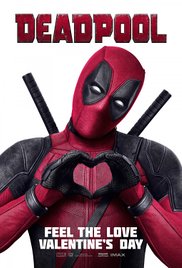
Movie Review: DEADPOOL (2016)

Deadlines to Submit your Screenplay, Novel, Story, or Poem to the festival: http://www.wildsound.ca

deadpoolDEADPOOL (USA 2016) ***
Directed by Tim Miller

Starrting: Ryan Reynolds, Morena Baccarin, T.J. Miller

Review by Gilbert Seah

DEADPOOL the latest Marvel comic book ‘hero’ movie arrives with great anticipation and fanfare of comic book fans. Fans know their comic book hero and expect to see a foul-mouthed, angry, sexy and ugly fighter in an R-rated movie.

First of all, some background on DEADPOOL. Those familiar with the marvel character, best described as an uncensored personality would best skip this paragraph. DEAD POOL is the name of the lead character previously known as Wade Wilson (Ryan Reynolds). The character is less a hero than an antihero. He describes himself in the film as a bad guy paid to take out other bad guys. At first a normal human being, then voluntarily subjected to experiments in order to cure his cancer, Deadpool ends up totally mutated but also with accelerated healing powers and fighting agility. He is badly scarred especially facial wise and wears a skin tight costume. He is angry, swears all the time and beats various people up, depending on his mood. The fans expect the film to be extremely violent, especially in the already famous touted skewer scene in which Deadpool props a baddie up with his twin blades. Director Miller satisfies the fans with the segment not only shown twice, but also in slow motion.

To director Miller’s credit, the film is energetic and funny enough for the audience to be distracted from the film’s flaws. The film begins with mock opening credits that no doubt is funny at first, but soon wears out its welcome. It says for example that the film is directed by an overpaid tool with all other members of the the filmmaking team insulted except for the writers. The real credits appear at the end of the film.

The film begins with Deadpool (Reynolds) taking a cab, driven by Dopinder (Karan Soni) to fight his enemies, the main one being Francis (Ed Skrein from the TRANSPORTER remake). Deadpool has a lengthy irrelevant but hilarious conversation with Dopinder. The fight ensues, but because Deadpool has forgotten his bag of weapons, has only 12 bullets in his gun. As a result, he has to cut off his hand from a handcuff in order to escape in a garbage truck. The film flashes back to how this scene takes place. In the process, the audience learns that the film is a love story – one between Wade Wilson and Vanessa (Morena Baccarin).

The film’s storytelling format is chopped up unnecessarily as if the target audience is assumed to have a very short attention span. There is no need for the excessive violence, except maybe to satisfy the hardcore Deadpool comic book fans. The humour is forced, the dialogue terribly crude and blunt and many characters appear out of nowhere. An example is the blind old back lady, Al (the wonderful Leslie Uggams) who ends up as Deadpool’s lover, living in his apartment. Her quotable line: “I miss my cocaine.” All this might be entertaining to some but on the other hand , terribly boring to others, like the film critics.
For what it is worth, DEADPOOL delivers to its core audience. The film turned out better than I expected, having very low expectations after watching the trailer. But I am not the core audience. DEADPOOL fans will definitely be pleased!


Also, Free logline submissions. The Writing Festival network averages over 95,000 unique visitors a day.
Great way to get your story out: http://www.wildsound.ca/logline.html

Deadlines to Submit your Screenplay, Novel, Story, or Poem to the festival:http://www.wildsound.ca

Watch recent Writing Festival Videos. At least 15 winning videos a month:http://www.wildsoundfestival.com

Interview with Aviel Silook, Founder & Creative Director (BERLIN MUSIC VIDEO AWARDS)

Berlin Music Video Awards
Follow us: Facebook | G+ | Twitter | VK | Instagram

Matthew Toffolo: What is your Film Festival succeeding at doing for filmmakers?

Aviel Silook: Our event is not a film festival, we really try to step out of this definition. The next teaser will explain: http://dai.ly/x3hcbkz

Our event is the biggest music video networking event in Europe, we already know about many nominees and winners who visited and found great job opportunities. Besides, some of the winners who traveled between Music Video’s events grasped that it is very unique, personal and fun compares to others.

We believe that getting selected by us means something special.. different than other events that their winners are always high budget productions. 2 of our final winners were winning with their first ever music video and since then they were invited to make many more videos. I believe that the fact that we nominate music videos in all languages is really appreciated as well.

We managed to get over 700 mentionings in a bit more than 3 years and we always ask to include videos from our nominees

Matthew: What would you expect to experience if you attend the festival this year (2016)?

Aviel: I am originally a nightlife events producer and my main goal is that the guests of the event will have fun! so besides the great video selection we pay a close attention to other elements like good food, after parties, live shows, fun guests and a lot of press presence.

Matthew: What are the qualifications for the selected films?

Aviel: Originality and good execution

Matthew: Do you think that some films really don’t get a fair shake from film festivals? And if so, why?

Aviel: I think that many film festivals care about big names.. that’s a pity really.

We do our best not to discriminate unknown artists and also on the other side to give a fair chance to filmmakers who did a video for famous musicians. In Berlin we have a lot of social pressure not to let those in but we always remember that behind the music video could be a young filmmaker that had his first chance to make a video for a big musician. So if the video is good we won’t exclude him but at the same time we rejected many big names before.. the fame plays no role for us. If you take a look at our previous selections.. we have Bob Dylan, Katy Perry, Cold Play and other big artists who were nominated but in the end most of them lost. Popularity plays no role for us.

Matthew: What motivates you and your team to do this festival?

Aviel: To do something unique

Matthew: How has the festival changed since its inception?

Aviel: We really grew fast.

In the first year we had 1000 guests and this year we expect 8000 (4th edition). We have better prizes and a bigger press exposure for the winners. The venues are bigger and we work with more professionals.

Matthew: Where do you see the festival by 2020?

Aviel: The real question for us is where do we see our nominees in 2020. We really hope that what we do will push them to go far, we want them all to get good job offers and keep making music videos.

Matthew: What film have you seen the most times in your life?

Aviel: I will refer this quetsion to music videos.

I think that the music videos that i watched really many times are the ones that we are getting as submissions and specifically the winners. I view them over and over again before they get nominated and then maybe 50 more times afterwards (and try to compare them to the others, which is very difficult) just to make sure that we don’t do any mistakes with the selection.

Matthew: In one sentence, what makes a great film?

Aviel: A great music video is a music video where the crew went with it all the way without a safe play (but that’s just my personal opinion).

Matthew: How is the film scene in your city?

Aviel: The independent scene in Berlin is pretty good but not really many big productions, especially not around music videos.

Originally our festival was supposed to be a local festival and our goal was to develop the local scene but in the end we received so many international good videos and changed our mind very quick.

***

Interviewer Matthew Toffolo is currently the CEO of the WILDsound FEEDBACK Film & Writing Festival. The festival that showcases 10-20 screenplay and story readings performed by professional actors every month. And the FEEDBACK Monthly Fesival held in downtown Toronto on the last Thursday of every single month. Go to www.wildsound.ca for more information and to submit your work to the festival.

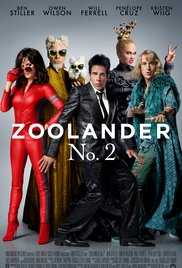
Movie Review: ZOOLANDER 2 (USA 2016) ***

Deadlines to Submit your Screenplay, Novel, Story, or Poem to the festival: http://www.wildsound.ca

zoolander_2ZOOLANDER 2 (USA 2016) ***
Directed by Ben Stiller

Starring: Ben Stiller, Owen Wilson, Penélope Cruz, Will Ferrell, Kristen Wiig, Christine Taylor

Review by Gilbert Seah

ZOOLANDER and ZOOLANDER 2 are milder versions of Sasha Baron Cohen’s BRUNO which are still pretty wild for most audiences unfamiliar with films like these that satirize the fashion/modelling industry.

It took a while, 15 years, since the first ZOOLANDER (2001) also directed by Ben Stiller hit the screens. It has been a long wait – the stars have grown older, and the plot makes use of the fact. Whatever goes on in the movie does not make much sense, but famous pop stars are being killed as they are protecting the Chosen One. “You can’t kill us all.” utters Justin Bieber, the 6th pop star killed in a year, before he kicks the bucket after posing on Instagram. Even Madonna has struck her last pose! Who is the Chosen One and who is the villain? As outrageous as the plot is, the twist is even more outrageous than anything found in any film in a while. Hilarious? It is in a way if one sits back and ponder over what has occurred. The script, by no less than 4 writers including Stiller, Justin Theroux (the writer of AMERICAN PSYCHO who also appears in the film as an evil DJ) is actually hilarious, though it might not seem so on first appearance. Perhaps ZOOLANDER 2 should be seen a second time to digest the mayhem on screen.

So, the not-so bright Zoolander (Stiller) is drawn out of recluse together with fellow model, Hansel (Owen Wilson). The villain is Mugatu (Will Farrell hamming it up, the most he can ever muster), engineering his escape from fashion prison. (Don’t ask!)

Not everything is original in the film. A lot of the jokes are similar to ZOOLANDER 1 and the ending sexy cat fight between two beauties, Penelope Cruz and Milla Jovovich, to the delight of all the males watching is way too similar to the scene from the French film (that did not get released here), OSS 117 NEST OF SPIES, directed by THE ARTIST’s Michel Hazanavicius.

The star cameo list is staggering. They include Bieber and real life fashion icons, Valentino, Vera Wang, Marc Jacobs, Tommy Hilfiger and Anna Wintour. The trouble is that these icons are not immediately recognizable, but their names are emphasized at least so audiences know who they are. Of the recognizable star cameos, Susan Sarandon (doing a ROCKY HORROR PICTURE SHOW routine), Milla Jovovich, Macaulay Culkin, Billy Zane, Katy Perry, Sting and Neil deGrasse Tyson strut their stuff, all playing themselves. But the best of these belong to Benedict Cumberbatch who surprises as he plays All, a transgender looking super model so full of himself that he marries himself.

ZOOLANDER 2 plays like a spy spoof as well as a satire of the fashion/model industry. Hate it or love it, my partner best described the film as “not that funny but sill entertaining.” Yes, and the film has lots of energy! But audiences not in the know might be totally bewildered at the goings-on!

Also, Free logline submissions. The Writing Festival network averages over 95,000 unique visitors a day.
Great way to get your story out: http://www.wildsound.ca/logline.html

Deadlines to Submit your Screenplay, Novel, Story, or Poem to the festival:http://www.wildsound.ca

Watch recent Writing Festival Videos. At least 15 winning videos a month:http://www.wildsoundfestival.com